How People Are Doing Split Testing in 2026?

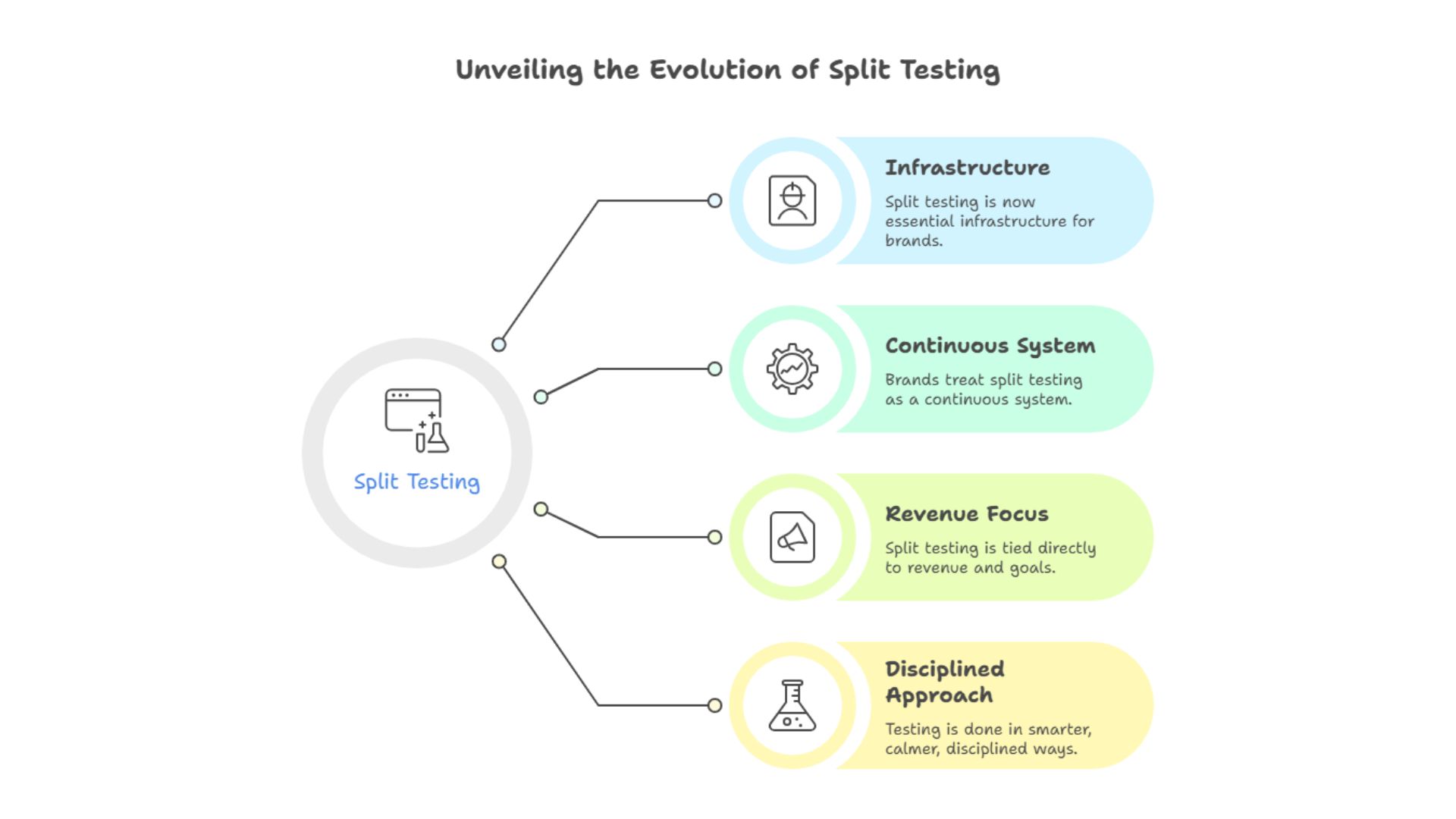
Split testing is no longer a growth hack. In 2026, it is infrastructure.

A few years ago, brands treated A/B testing as something you did occasionally. Maybe before a big sale. Maybe during a redesign. Maybe when performance dipped. Today, that approach feels outdated.

Modern ecommerce and D2C brands treat split testing as a continuous system. They do not test because something is broken. They test because that is how they learn.

If you run an ecommerce store today, you already know traffic is expensive. Paid ads fluctuate. Organic growth takes time. Influencer campaigns spike and fade. What remains constant is this.

The website is where money is made or lost.

And in 2026, people are doing split testing in smarter, calmer, and more disciplined ways. Not random experiments. Not constant design tweaks. But structured A/B testing tied directly to revenue, customer behavior, and business goals.
Unveiling the Evolution of Split Testing

In this guide, we will break down how people are doing split testing in 2026, how ecommerce brands are structuring A/B tests, how they choose tools, how they protect performance, and how they avoid common mistakes. We will also answer practical questions about tools, statistical significance, multivariate testing, mobile apps, and conversion rate optimization agencies.

Along the way, we will explain how a conversion rate optimization company like CustomFit.ai fits into this ecosystem without turning testing into an engineering project.

This is not about trends. It is about how split testing has matured.

What Split Testing Actually Means in 2026

Before we go deeper, it helps to clarify something.

Split testing and A/B testing are often used interchangeably. In practice, they mean the same thing.

Ab split testing involves showing two or more variations of a page, element, or experience to different segments of traffic and measuring which performs better against a defined goal.

In ecommerce, that goal is usually tied to:

 Conversion rate
Revenue per visitor
Add to cart rate
Checkout completion
Average order value

In 2026, split testing is no longer just about button colors. It is about behavior.

Teams are testing:

 Product page structure
Trust signal placement
Subscription framing
Bundle pricing
Checkout reassurance
Personalized messaging

And most importantly, they are testing continuously.

Why Split Testing Has Become Mandatory for Ecommerce Brands

The ecommerce landscape is more competitive than ever.

Consumers compare products across multiple tabs. They expect clarity instantly. They abandon carts for small reasons.

At the same time, acquisition costs continue to rise.

This creates pressure.

You cannot rely only on driving more traffic. You must increase conversion rate and revenue from existing visitors.

This is why split testing is no longer optional.

It is the safest way to improve performance without risking everything at once.

Instead of redesigning the entire store, brands run controlled A/B tests. Instead of debating internally, they let data decide.

How People Are Structuring A/B Testing in 2026

Modern A/B testing is structured differently than it was five years ago.

Instead of testing randomly, brands follow a disciplined approach.

 They start with data.
They form a clear hypothesis.
They isolate one variable.
They define success metrics before launching.
They limit traffic exposure initially.
They scale only after validation.

This structure reduces fear and improves trust in results.

Most importantly, it protects revenue while learning.

Read More: What’s the Best A/B Testing Platform in 2025?

How to Set Up Split Testing for an Ecommerce Website

Setting up split testing for an ecommerce website in 2026 typically follows these steps.

Step 1: Identify a Real Problem

Use analytics to find drop off points.

Is the product page conversion rate low?
Are users abandoning at checkout?
Are paid ads converting below expectation?

Do not test for the sake of testing. Test to solve a specific issue.

Step 2: Form a Hypothesis

Instead of saying, let us test something new, say:

If we move reviews higher on the page, users will trust the product more and add to cart more frequently.

Clear hypotheses improve test quality.

Step 3: Create Variations

Using an A/B Testing Platform, create:

 Control version
Variation version

Keep changes isolated. Do not change five things at once.

Step 4: Allocate Traffic Carefully

Start with a smaller percentage of traffic for the variation. Many brands in 2026 start with 20 percent exposure and scale gradually.

Step 5: Measure the Right Metrics

Do not focus only on clicks.

Measure conversion rate, revenue per visitor, and downstream effects.

Step 6: Decide Based on Evidence

If the variation improves performance without hurting other metrics, scale it. If not, learn and move on.
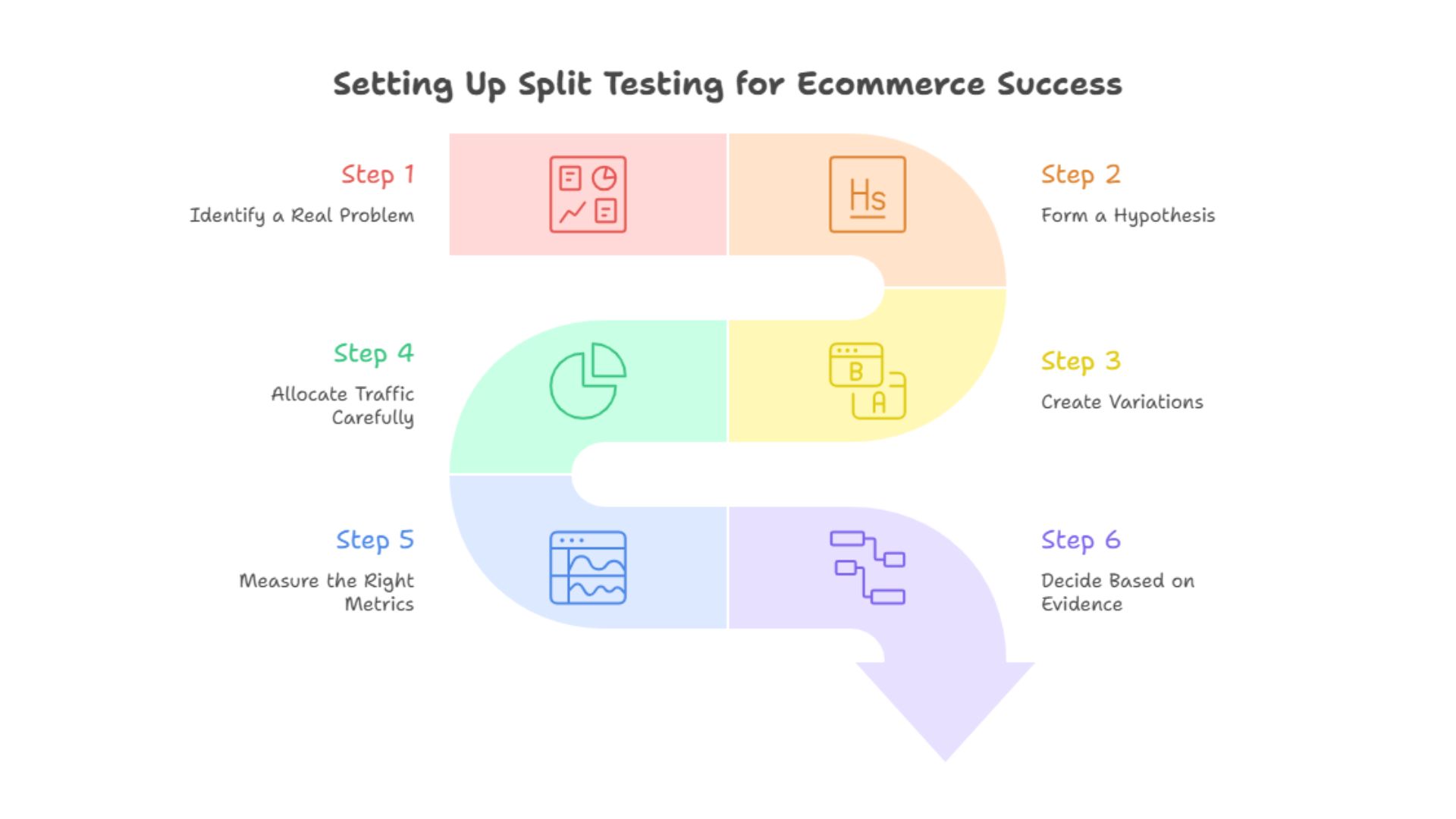
This methodical approach is how split testing is done today.

Setting Up Split Testing for Ecommerce Success

Best Tools for Split Testing in Digital Marketing

The best tools for split testing in digital marketing share common characteristics.

They allow clean traffic allocation.
They provide reliable reporting.
They do not slow down websites.
They support segmentation and personalization.
They are easy for marketers to use.

In 2026, teams look for tools that combine A/B testing software with personalization capabilities.

CustomFit.ai is one example of a platform that supports ecommerce focused A/B testing and behavioral personalization within one system.

The key is not tool complexity. It is usability and alignment with business goals.

CustomFit enables seamless A/B testing and personalised optimisation.

Download the CustomFit A/B Testing App from Shopify today!

Compare Leading Platforms for Website Optimization Experiments

When comparing platforms for website optimization experiments, brands typically evaluate:

Ease of use
Technical requirements
Speed impact
Segmentation capabilities
Integration with ecommerce platforms
Reporting clarity
Pricing model

Enterprise platforms may offer advanced features but require more setup and engineering support.

Ecommerce focused platforms prioritize speed, visual editing, and revenue tracking.

Startups often choose tools that allow them to launch tests quickly without dedicated experimentation teams.

The best platform is not the one with the most features. It is the one your team will actually use consistently.
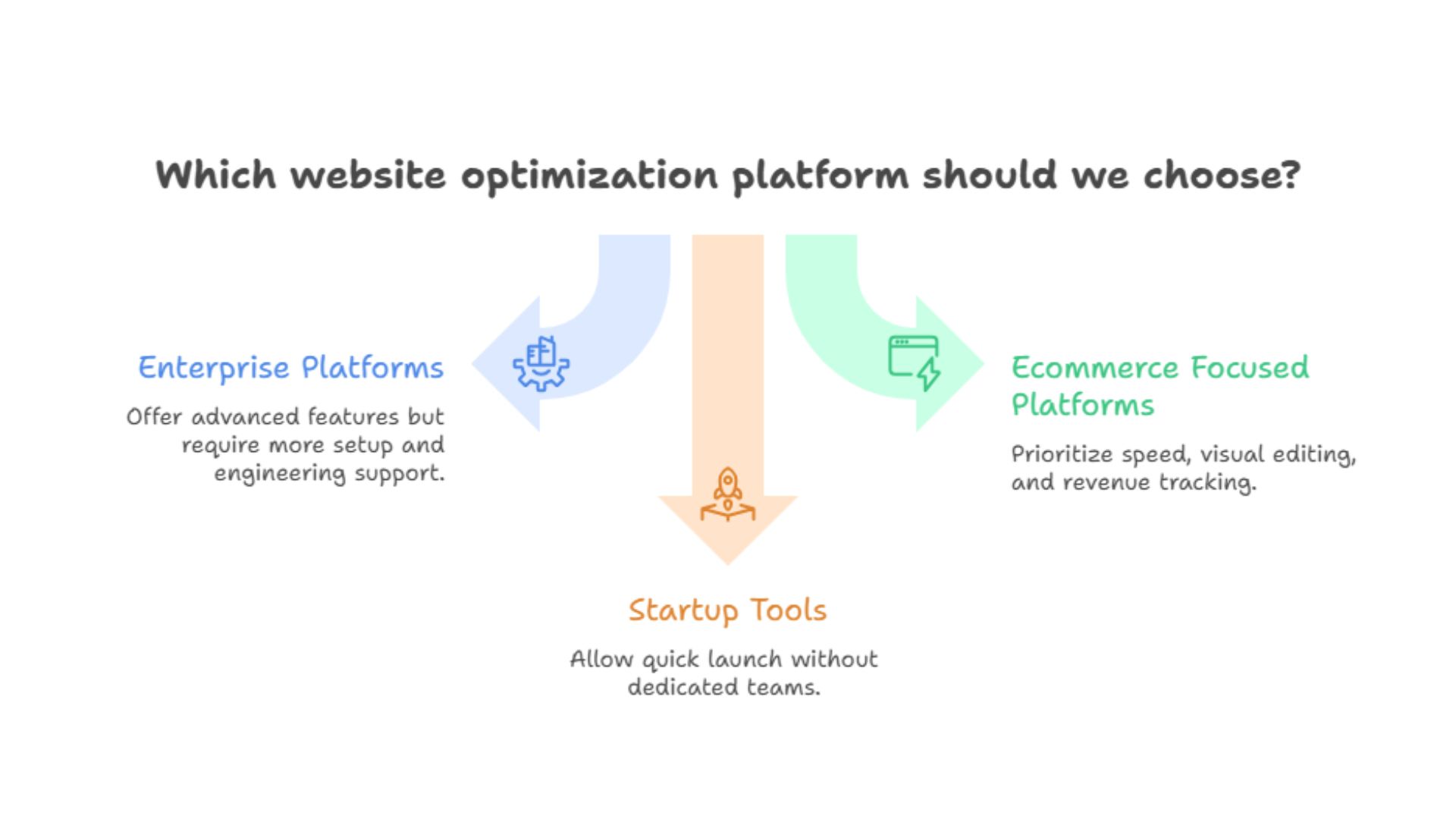
Which website optimization platform should we choose

Affordable Platforms Offering Split Testing Features in India

Cost matters, especially for growing brands.

Affordable split testing platforms in India typically appeal to:

Small and mid sized ecommerce stores
D2C startups
Performance marketing focused brands

When evaluating affordability, consider:

Pricing based on traffic volume
Hidden technical costs
Engineering overhead
Time to launch tests

An affordable platform is not just about subscription price. It is about total cost of experimentation.

How to Choose the Right Statistical Significance Level for Split Testing

Statistical significance still matters in 2026, but brands approach it more practically.

Most ecommerce brands aim for 90 to 95 percent confidence before declaring a winner.

However, context matters.

High traffic sites can reach statistical significance faster. Low traffic sites must be more patient.

It is important to avoid stopping tests too early. Early performance swings often stabilize over time.

The key principles are:

Define your significance threshold before starting
Wait for sufficient sample size
Avoid peeking too frequently
Consider business impact, not just statistical metrics

A/B testing platforms in 2026 often provide built in guidance to avoid premature decisions.

Comparison of Popular Split Testing Software for Startups

Startups prioritize speed and flexibility.

They want A/B testing software that:

Does not require complex integration
Allows visual test creation
Offers clear reporting
Scales with growth

In early stages, simplicity wins.

As startups grow, they often need more segmentation and personalization capabilities.

Platforms that support this transition without forcing migration are highly valued.

Which Companies Provide Split Testing Services for Mobile Apps

Mobile app experimentation has also grown significantly.

Companies providing split testing services for mobile apps focus on:

Onboarding flows
Feature placement
Push notification messaging
Subscription prompts
In app purchases

Mobile app A/B testing requires integration with app SDKs and careful monitoring to avoid disrupting user experience.

Many CRO agencies now support both web and mobile experimentation to ensure consistent learning across platforms.

Find Agencies Specializing in Conversion Rate Optimization Services in India

Conversion rate optimization agencies in India have expanded their capabilities significantly in recent years.

These agencies typically offer:

Website audits
Behavioral analysis
A/B testing strategy
Experiment design
Analytics implementation
Ongoing optimization programs

When choosing a CRO agency, look for:

Ecommerce experience
Data driven methodology
Transparent reporting
Clear hypothesis frameworks

Some brands prefer working with agencies alongside using platforms like CustomFit.ai to maintain in house control while benefiting from strategic guidance.

How Website Optimization Helps D2C Brands Increase Conversion Rate

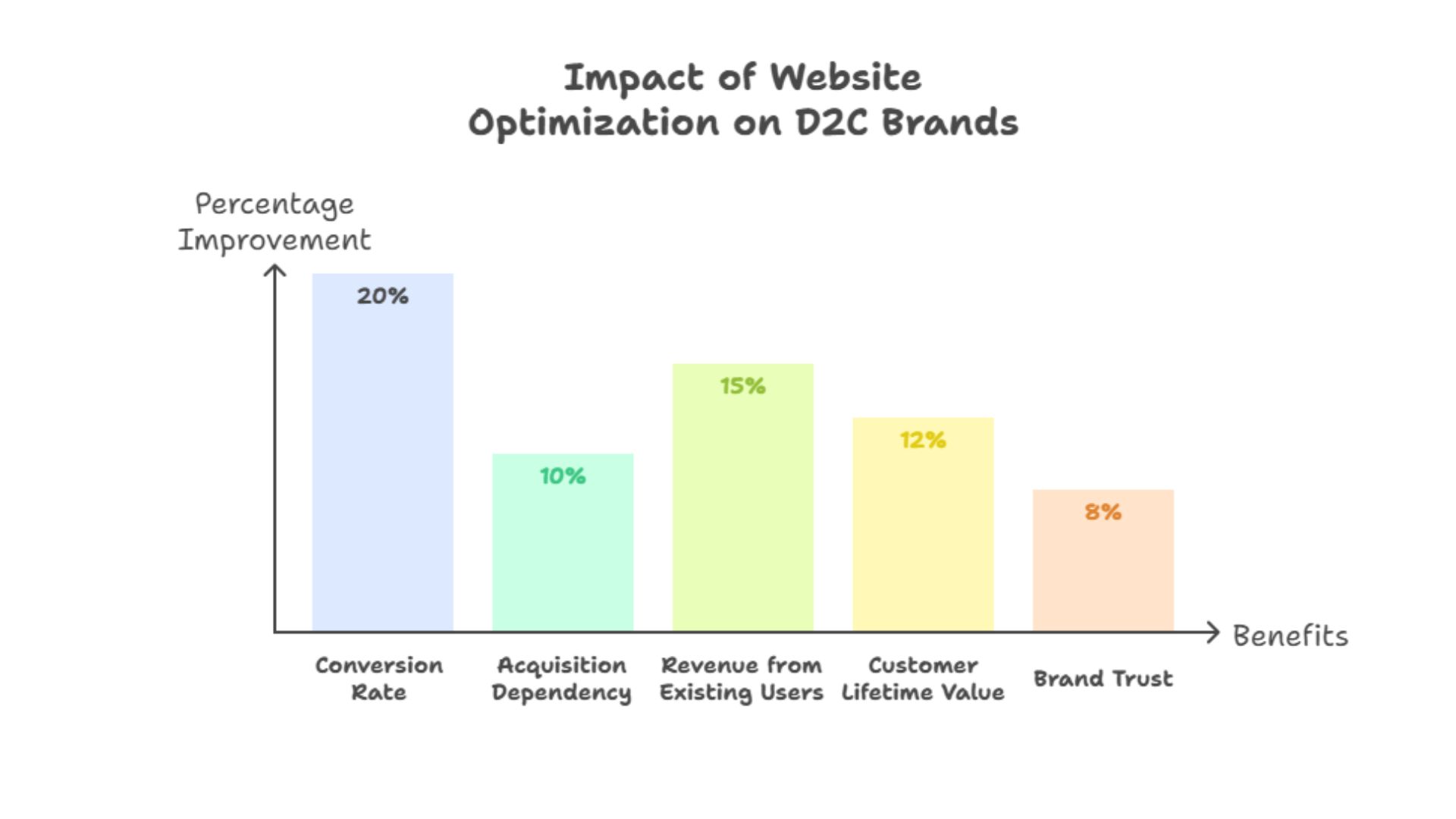
Impact of Website Optimization on D2C Brands

D2C brands often rely heavily on paid acquisition.

Small improvements in conversion rate can dramatically improve profitability.

For example:

If a store increases conversion rate from 2 percent to 2.4 percent, that 20 percent relative lift compounds across all traffic.

Website optimization helps D2C brands:

Reduce acquisition dependency
Increase revenue from existing users
Improve customer lifetime value
Enhance brand trust

Split testing allows these improvements to happen systematically rather than accidentally.

What Are Common Mistakes to Avoid When Running Multivariate Tests

Multivariate testing involves testing multiple variables at once.

While powerful, it introduces complexity.

Common mistakes include:

Insufficient traffic for multiple combinations
Confusing results interpretation
Changing too many variables without clear hypotheses
Stopping tests prematurely
Overlapping experiments

In 2026, many ecommerce brands prefer structured A/B tests over multivariate tests unless traffic volume is very high.

Simplicity often produces clearer learning.

Strategies for Running Safe Ab Split Testing in 2026

Safety is a core theme in modern split testing.

Brands protect performance by:

Starting with low traffic exposure
Avoiding tests during peak sales days
Keeping conversion tracking stable
Rolling out winners gradually
Monitoring both short term and long term impact

This approach ensures that experimentation improves revenue instead of destabilizing it.

Why Personalization Is Blending With Split Testing

In 2026, split testing and personalization are increasingly intertwined.

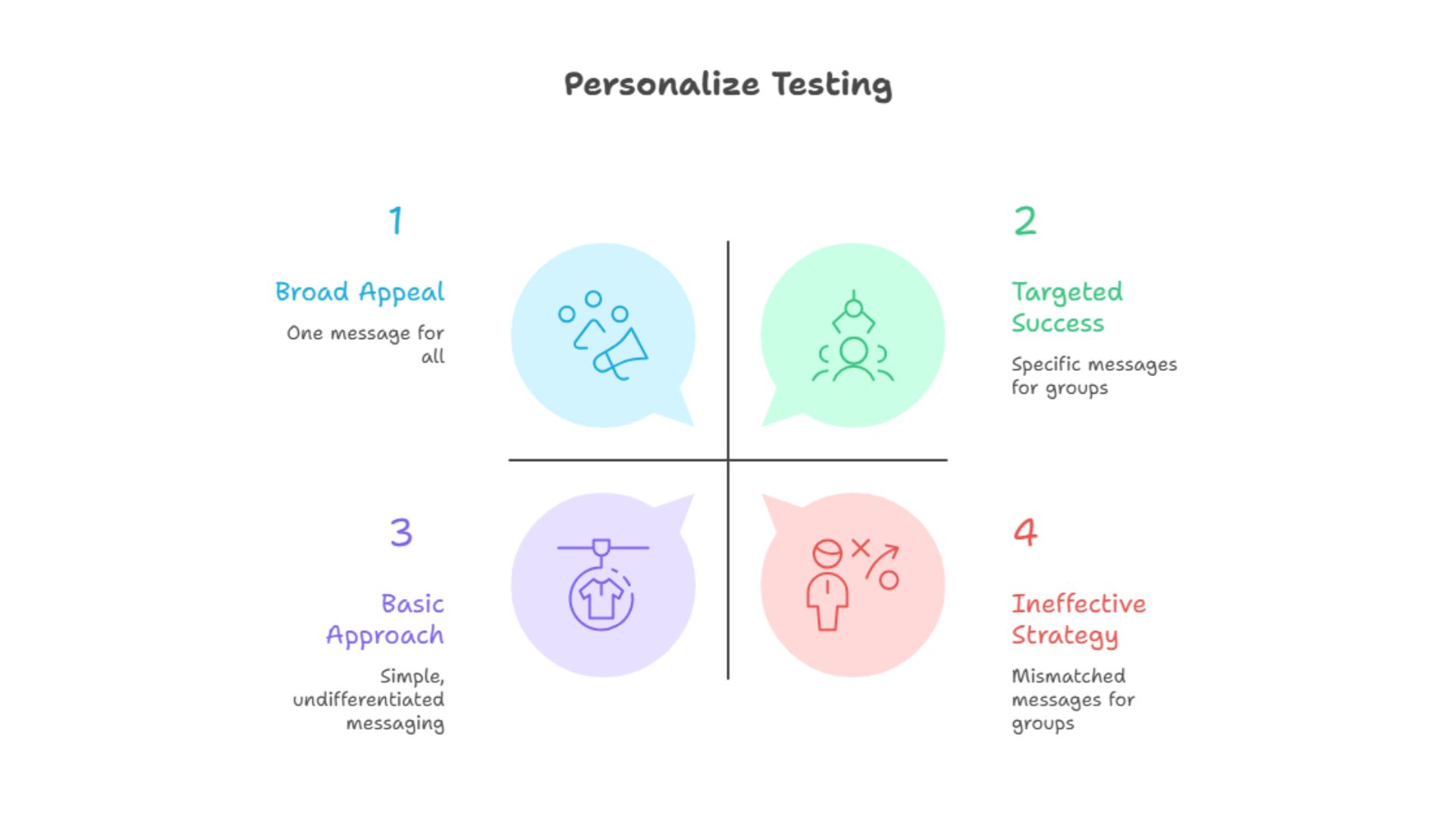
Instead of asking, which version is best for everyone, brands ask:

Which version is best for this segment?

Personalize Testing

For example:

First time visitors see educational messaging
Returning customers see faster checkout prompts
High intent users see premium bundles

A/B testing validates which personalized approach works before scaling.

Platforms like CustomFit.ai support this layered approach by combining experimentation and segmentation in one environment.

The Role of an A/B Testing Platform in Building a Testing Culture

An A/B Testing Platform is not just software.

It becomes part of how teams think.

Instead of arguing, teams test.
Instead of guessing, they measure.
Instead of fearing change, they validate.

This cultural shift is what defines how people are doing split testing in 2026.

The best A/B testing tool is the one that reduces friction enough for testing to become routine.

How CustomFit.ai Supports Modern Split Testing

CustomFit.ai is a conversion rate optimization company focused on ecommerce and D2C brands.

It supports modern split testing by enabling:

Visual A/B test creation
Safe traffic allocation
Behavior based personalization
Revenue focused reporting
Gradual scaling of winning variants

Instead of making experimentation complicated, it aims to make it accessible and repeatable.

For Shopify and ecommerce brands, this reduces reliance on engineering for everyday experiments and allows growth teams to move faster.

Transactional and Conversion Focused Benefits of Structured Split Testing

Structured split testing leads to tangible business outcomes.

Increase conversion rate
Improve checkout completion
Reduce bounce rates
Increase average order value
Improve return on ad spend

These outcomes are not theoretical. They are measurable.

When split testing becomes part of the growth strategy, revenue becomes more predictable.

Conclusion: Split Testing in 2026 Is Calm, Controlled, and Continuous

People are not doing split testing in 2026 the way they did in 2018.

They are not testing randomly. They are not chasing design trends. They are not launching risky experiments blindly.

They are running structured A/B tests tied to business outcomes. They are protecting traffic while learning. They are blending experimentation with personalization. They are building systems instead of projects.

Split testing is no longer a growth trick. It is operational discipline.

For ecommerce and D2C brands, the question is not whether to test. It is how to test safely and consistently.

Platforms like CustomFit.ai help make that discipline practical, but the mindset is what matters most.

Test calmly. Learn continuously. Scale confidently.

FAQs: How People Are Doing Split Testing in 2026

What is split testing in 2026?

Split testing in 2026 refers to structured A/B testing practices used by ecommerce and D2C brands to improve conversion rate, revenue, and user experience through controlled experiments.

What are the essential steps to conduct an effective A/B test?

Identify a problem, form a hypothesis, create controlled variations, allocate traffic carefully, measure meaningful metrics, and scale only validated winners.

How to set up split testing for an ecommerce website?

Use an A/B Testing Platform to create variations, split traffic, monitor conversion rate and revenue metrics, and gradually scale successful changes.

What are the best tools for split testing in digital marketing?

The best tools allow safe traffic allocation, clear reporting, minimal performance impact, and segmentation capabilities. Ecommerce focused platforms are often preferred.

How to choose the right statistical significance level for split testing?

Most ecommerce brands aim for 90 to 95 percent confidence while ensuring sufficient sample size and avoiding premature conclusions.

What are common mistakes to avoid in multivariate testing?

Running multivariate tests with low traffic, changing too many variables at once, and stopping tests early are common mistakes.

How does split testing help increase conversion rate?

By validating which version of a page or element performs better, split testing systematically improves user experience and revenue metrics.

How does CustomFit.ai support split testing?

CustomFit.ai enables visual A/B testing, safe traffic allocation, personalization, and revenue focused reporting for ecommerce and D2C brands.

Split testing is no longer a growth hack. In 2026, it is infrastructure.

A few years ago, brands treated A/B testing as something you did occasionally. Maybe before a big sale. Maybe during a redesign. Maybe when performance dipped. Today, that approach feels outdated.

Modern ecommerce and D2C brands treat split testing as a continuous system. They do not test because something is broken. They test because that is how they learn.

If you run an ecommerce store today, you already know traffic is expensive. Paid ads fluctuate. Organic growth takes time. Influencer campaigns spike and fade. What remains constant is this.

The website is where money is made or lost.

And in 2026, people are doing split testing in smarter, calmer, and more disciplined ways. Not random experiments. Not constant design tweaks. But structured A/B testing tied directly to revenue, customer behavior, and business goals.

Unveiling the Evolution of Split Testing

In this guide, we will break down how people are doing split testing in 2026, how ecommerce brands are structuring A/B tests, how they choose tools, how they protect performance, and how they avoid common mistakes. We will also answer practical questions about tools, statistical significance, multivariate testing, mobile apps, and conversion rate optimization agencies.

Along the way, we will explain how a conversion rate optimization company like CustomFit.ai fits into this ecosystem without turning testing into an engineering project.

This is not about trends. It is about how split testing has matured.

What Split Testing Actually Means in 2026

Before we go deeper, it helps to clarify something.

Split testing and A/B testing are often used interchangeably. In practice, they mean the same thing.

Ab split testing involves showing two or more variations of a page, element, or experience to different segments of traffic and measuring which performs better against a defined goal.

In ecommerce, that goal is usually tied to:

 Conversion rate
Revenue per visitor
Add to cart rate
Checkout completion
Average order value

In 2026, split testing is no longer just about button colors. It is about behavior.

Teams are testing:

 Product page structure
Trust signal placement
Subscription framing
Bundle pricing
Checkout reassurance
Personalized messaging

And most importantly, they are testing continuously.

Why Split Testing Has Become Mandatory for Ecommerce Brands

The ecommerce landscape is more competitive than ever.

Consumers compare products across multiple tabs. They expect clarity instantly. They abandon carts for small reasons.

At the same time, acquisition costs continue to rise.

This creates pressure.

You cannot rely only on driving more traffic. You must increase conversion rate and revenue from existing visitors.

This is why split testing is no longer optional.

It is the safest way to improve performance without risking everything at once.

Instead of redesigning the entire store, brands run controlled A/B tests. Instead of debating internally, they let data decide.

How People Are Structuring A/B Testing in 2026

Modern A/B testing is structured differently than it was five years ago.

Instead of testing randomly, brands follow a disciplined approach.

 They start with data.
They form a clear hypothesis.
They isolate one variable.
They define success metrics before launching.
They limit traffic exposure initially.
They scale only after validation.

This structure reduces fear and improves trust in results.

Most importantly, it protects revenue while learning.

Read More: What’s the Best A/B Testing Platform in 2025?

How to Set Up Split Testing for an Ecommerce Website

Setting up split testing for an ecommerce website in 2026 typically follows these steps.

Step 1: Identify a Real Problem

Use analytics to find drop off points.

Is the product page conversion rate low?
Are users abandoning at checkout?
Are paid ads converting below expectation?

Do not test for the sake of testing. Test to solve a specific issue.

Step 2: Form a Hypothesis

Instead of saying, let us test something new, say:

If we move reviews higher on the page, users will trust the product more and add to cart more frequently.

Clear hypotheses improve test quality.

Step 3: Create Variations

Using an A/B Testing Platform, create:

 Control version
Variation version

Keep changes isolated. Do not change five things at once.

Step 4: Allocate Traffic Carefully

Start with a smaller percentage of traffic for the variation. Many brands in 2026 start with 20 percent exposure and scale gradually.

Step 5: Measure the Right Metrics

Do not focus only on clicks.

Measure conversion rate, revenue per visitor, and downstream effects.

Step 6: Decide Based on Evidence

If the variation improves performance without hurting other metrics, scale it. If not, learn and move on.

This methodical approach is how split testing is done today.

Setting Up Split Testing for Ecommerce Success

Best Tools for Split Testing in Digital Marketing

The best tools for split testing in digital marketing share common characteristics.

They allow clean traffic allocation.
They provide reliable reporting.
They do not slow down websites.
They support segmentation and personalization.
They are easy for marketers to use.

In 2026, teams look for tools that combine A/B testing software with personalization capabilities.

CustomFit.ai is one example of a platform that supports ecommerce focused A/B testing and behavioral personalization within one system.

The key is not tool complexity. It is usability and alignment with business goals.

CustomFit enables seamless A/B testing and personalised optimisation.

Download the CustomFit A/B Testing App from Shopify today!

Compare Leading Platforms for Website Optimization Experiments

When comparing platforms for website optimization experiments, brands typically evaluate:

Ease of use
Technical requirements
Speed impact
Segmentation capabilities
Integration with ecommerce platforms
Reporting clarity
Pricing model

Enterprise platforms may offer advanced features but require more setup and engineering support.

Ecommerce focused platforms prioritize speed, visual editing, and revenue tracking.

Startups often choose tools that allow them to launch tests quickly without dedicated experimentation teams.

The best platform is not the one with the most features. It is the one your team will actually use consistently.

Which website optimization platform should we choose

Affordable Platforms Offering Split Testing Features in India

Cost matters, especially for growing brands.

Affordable split testing platforms in India typically appeal to:

Small and mid sized ecommerce stores
D2C startups
Performance marketing focused brands

When evaluating affordability, consider:

Pricing based on traffic volume
Hidden technical costs
Engineering overhead
Time to launch tests

An affordable platform is not just about subscription price. It is about total cost of experimentation.

How to Choose the Right Statistical Significance Level for Split Testing

Statistical significance still matters in 2026, but brands approach it more practically.

Most ecommerce brands aim for 90 to 95 percent confidence before declaring a winner.

However, context matters.

High traffic sites can reach statistical significance faster. Low traffic sites must be more patient.

It is important to avoid stopping tests too early. Early performance swings often stabilize over time.

The key principles are:

Define your significance threshold before starting
Wait for sufficient sample size
Avoid peeking too frequently
Consider business impact, not just statistical metrics

A/B testing platforms in 2026 often provide built in guidance to avoid premature decisions.

Comparison of Popular Split Testing Software for Startups

Startups prioritize speed and flexibility.

They want A/B testing software that:

Does not require complex integration
Allows visual test creation
Offers clear reporting
Scales with growth

In early stages, simplicity wins.

As startups grow, they often need more segmentation and personalization capabilities.

Platforms that support this transition without forcing migration are highly valued.

Which Companies Provide Split Testing Services for Mobile Apps

Mobile app experimentation has also grown significantly.

Companies providing split testing services for mobile apps focus on:

Onboarding flows
Feature placement
Push notification messaging
Subscription prompts
In app purchases

Mobile app A/B testing requires integration with app SDKs and careful monitoring to avoid disrupting user experience.

Many CRO agencies now support both web and mobile experimentation to ensure consistent learning across platforms.

Find Agencies Specializing in Conversion Rate Optimization Services in India

Conversion rate optimization agencies in India have expanded their capabilities significantly in recent years.

These agencies typically offer:

Website audits
Behavioral analysis
A/B testing strategy
Experiment design
Analytics implementation
Ongoing optimization programs

When choosing a CRO agency, look for:

Ecommerce experience
Data driven methodology
Transparent reporting
Clear hypothesis frameworks

Some brands prefer working with agencies alongside using platforms like CustomFit.ai to maintain in house control while benefiting from strategic guidance.

How Website Optimization Helps D2C Brands Increase Conversion Rate

Impact of Website Optimization on D2C Brands

D2C brands often rely heavily on paid acquisition.

Small improvements in conversion rate can dramatically improve profitability.

For example:

If a store increases conversion rate from 2 percent to 2.4 percent, that 20 percent relative lift compounds across all traffic.

Website optimization helps D2C brands:

Reduce acquisition dependency
Increase revenue from existing users
Improve customer lifetime value
Enhance brand trust

Split testing allows these improvements to happen systematically rather than accidentally.

What Are Common Mistakes to Avoid When Running Multivariate Tests

Multivariate testing involves testing multiple variables at once.

While powerful, it introduces complexity.

Common mistakes include:

Insufficient traffic for multiple combinations
Confusing results interpretation
Changing too many variables without clear hypotheses
Stopping tests prematurely
Overlapping experiments

In 2026, many ecommerce brands prefer structured A/B tests over multivariate tests unless traffic volume is very high.

Simplicity often produces clearer learning.

Strategies for Running Safe Ab Split Testing in 2026

Safety is a core theme in modern split testing.

Brands protect performance by:

Starting with low traffic exposure
Avoiding tests during peak sales days
Keeping conversion tracking stable
Rolling out winners gradually
Monitoring both short term and long term impact

This approach ensures that experimentation improves revenue instead of destabilizing it.

Why Personalization Is Blending With Split Testing

In 2026, split testing and personalization are increasingly intertwined.

Instead of asking, which version is best for everyone, brands ask:

Which version is best for this segment?

Personalize Testing

For example:

First time visitors see educational messaging
Returning customers see faster checkout prompts
High intent users see premium bundles

A/B testing validates which personalized approach works before scaling.

Platforms like CustomFit.ai support this layered approach by combining experimentation and segmentation in one environment.

The Role of an A/B Testing Platform in Building a Testing Culture

An A/B Testing Platform is not just software.

It becomes part of how teams think.

Instead of arguing, teams test.
Instead of guessing, they measure.
Instead of fearing change, they validate.

This cultural shift is what defines how people are doing split testing in 2026.

The best A/B testing tool is the one that reduces friction enough for testing to become routine.

How CustomFit.ai Supports Modern Split Testing

CustomFit.ai is a conversion rate optimization company focused on ecommerce and D2C brands.

It supports modern split testing by enabling:

Visual A/B test creation
Safe traffic allocation
Behavior based personalization
Revenue focused reporting
Gradual scaling of winning variants

Instead of making experimentation complicated, it aims to make it accessible and repeatable.

For Shopify and ecommerce brands, this reduces reliance on engineering for everyday experiments and allows growth teams to move faster.

Transactional and Conversion Focused Benefits of Structured Split Testing

Structured split testing leads to tangible business outcomes.

Increase conversion rate
Improve checkout completion
Reduce bounce rates
Increase average order value
Improve return on ad spend

These outcomes are not theoretical. They are measurable.

When split testing becomes part of the growth strategy, revenue becomes more predictable.

Conclusion: Split Testing in 2026 Is Calm, Controlled, and Continuous

People are not doing split testing in 2026 the way they did in 2018.

They are not testing randomly. They are not chasing design trends. They are not launching risky experiments blindly.

They are running structured A/B tests tied to business outcomes. They are protecting traffic while learning. They are blending experimentation with personalization. They are building systems instead of projects.

Split testing is no longer a growth trick. It is operational discipline.

For ecommerce and D2C brands, the question is not whether to test. It is how to test safely and consistently.

Platforms like CustomFit.ai help make that discipline practical, but the mindset is what matters most.

Test calmly. Learn continuously. Scale confidently.

FAQs: How People Are Doing Split Testing in 2026

What is split testing in 2026?

Split testing in 2026 refers to structured A/B testing practices used by ecommerce and D2C brands to improve conversion rate, revenue, and user experience through controlled experiments.

What are the essential steps to conduct an effective A/B test?

Identify a problem, form a hypothesis, create controlled variations, allocate traffic carefully, measure meaningful metrics, and scale only validated winners.

How to set up split testing for an ecommerce website?

Use an A/B Testing Platform to create variations, split traffic, monitor conversion rate and revenue metrics, and gradually scale successful changes.

What are the best tools for split testing in digital marketing?

The best tools allow safe traffic allocation, clear reporting, minimal performance impact, and segmentation capabilities. Ecommerce focused platforms are often preferred.

How to choose the right statistical significance level for split testing?

Most ecommerce brands aim for 90 to 95 percent confidence while ensuring sufficient sample size and avoiding premature conclusions.

What are common mistakes to avoid in multivariate testing?

Running multivariate tests with low traffic, changing too many variables at once, and stopping tests early are common mistakes.

How does split testing help increase conversion rate?

By validating which version of a page or element performs better, split testing systematically improves user experience and revenue metrics.

How does CustomFit.ai support split testing?

CustomFit.ai enables visual A/B testing, safe traffic allocation, personalization, and revenue focused reporting for ecommerce and D2C brands.