From the conversion glossary
Concepts referenced in this article, defined.
Learn 7 proven tactics to increase your website’s conversion rate—from personalization and CTAs to social proof, live chat, popups, analytics, and value-driven content.
 Ashwin Kumar6 min read
Concepts referenced in this article, defined.
Run rigorous A/B tests and personalize every visit on Shopify or any storefront — no engineers required.
Getting traffic to your website matters, whether it comes from organic search, paid ads, guest posts, or anything else. Most businesses spend a lot of energy driving visitors to their site.
But traffic alone does not produce revenue. Prospects landing on your pages are a starting point, not an outcome. The outcome is converting them into customers.
A surprising number of businesses still treat traffic as the end goal. If you are reading this, you already know that conversion is what actually moves the needle.
Conversion rate optimization (CRO) is a systematic process of improving your website based on how visitors interact with it, with the goal of getting more of them to take a specific action.
That action might be signing up, purchasing a product, subscribing to a newsletter, booking a demo, or anything else that counts as a meaningful outcome for your business.
The core objective is to give visitors an experience that makes the desired action feel obvious and worthwhile.
A common assumption is that high traffic is enough to generate sales. It is not.
Customers drive sales and referrals. Traffic does neither on its own. If visitors land on your site and leave without clicking anything, subscribing, or buying, they are not customers. And without customers, ROI does not improve regardless of how many sessions your analytics report.
When someone from your target audience visits, you have a limited window to move them toward an action. If they leave without acting, the odds of them returning are low.
A prospect who exits without converting is a sale you did not make. That is why a series of deliberate improvements to your website experience can have a direct impact on revenue.
A few more concrete reasons to invest in CRO:
Here are seven tactics worth implementing.
When a visitor first lands on your store, they tend to skim rather than read carefully. Anything that catches their attention at that moment has a real chance of getting a click.
A well-timed popup is one of the more reliable ways to do this. When someone is on your landing page or blog, a popup asking for their email in exchange for something valuable (a discount, a guide, exclusive content) can move them from passive browsing to an action.
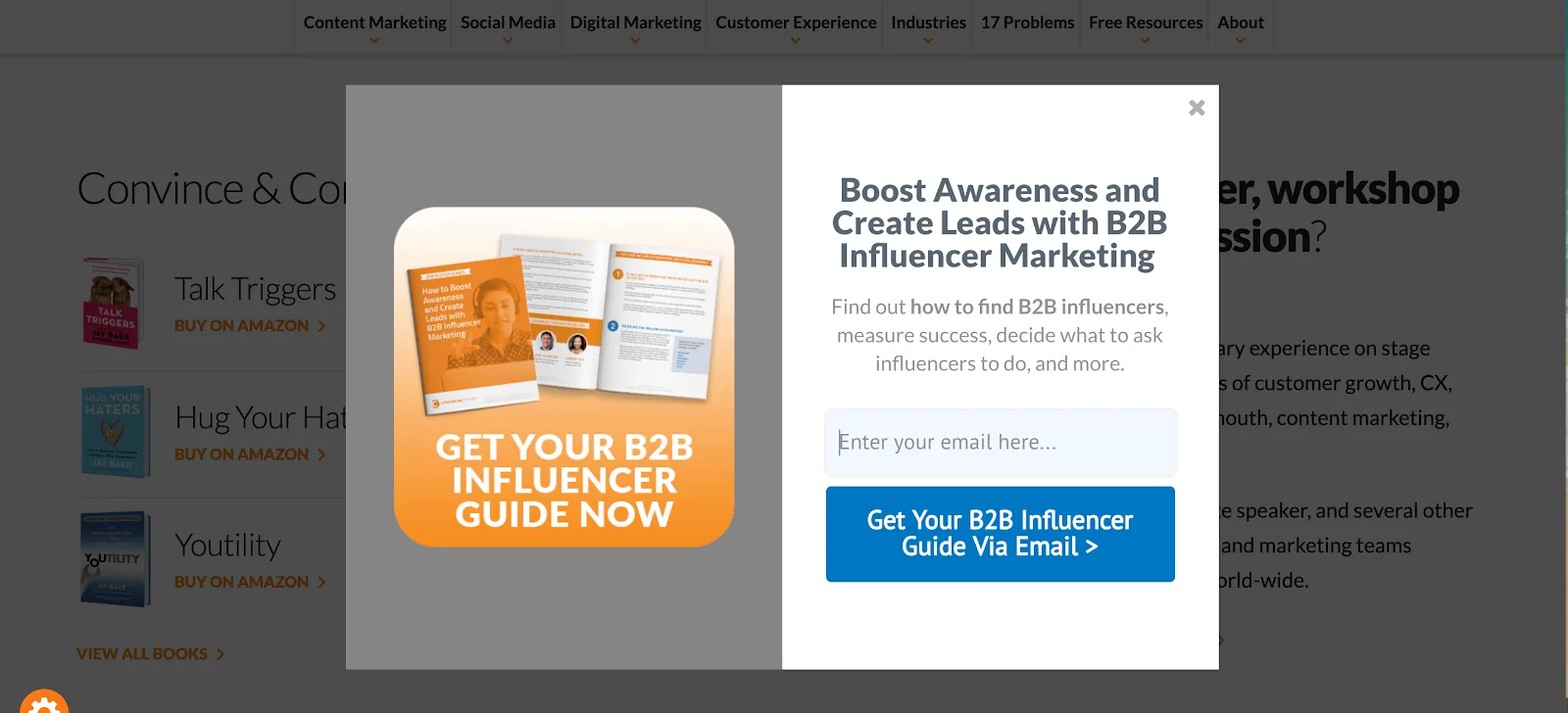
Convince & Convert does this well. Their popup makes the value of subscribing clear, which prompts visitors to enter their email. That email then feeds into their ongoing marketing.
A visitor might want to act but hesitate because they are not sure they are making the right call. You can tell them your product is great, but they are unlikely to take that at face value. What they will trust is what other customers say.
Customer testimonials, ratings, and reviews placed on your homepage give undecided visitors the third-party signal they need to move forward.
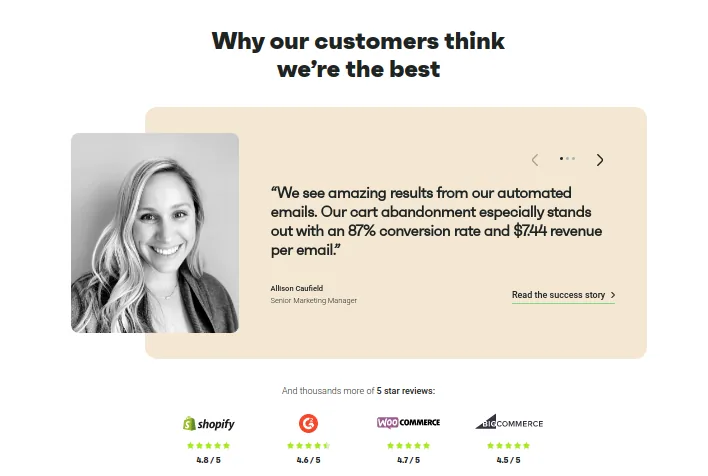
Around 61% of customers read reviews or testimonials before deciding to buy. Displaying what real customers say about your product, along with ratings from credible sources, makes social proof one of the more reliable conversion tools available to you.
You cannot improve what you cannot see. Without understanding how visitors interact with your site, it is difficult to know what is working and what is not.
Analytics tools like Hotjar and screen recording software let you see where visitors spend the most time, where they scroll through quickly, and where they drop off. With that picture in hand, you can identify which parts of the page are underperforming and fix them.
Once you know how visitors move through your site, you can use that data to personalize your website based on their behavior, location, demographics, and other signals.
For example, if a visitor comes from a specific location, you can show a homepage header image that is relevant to where they are.
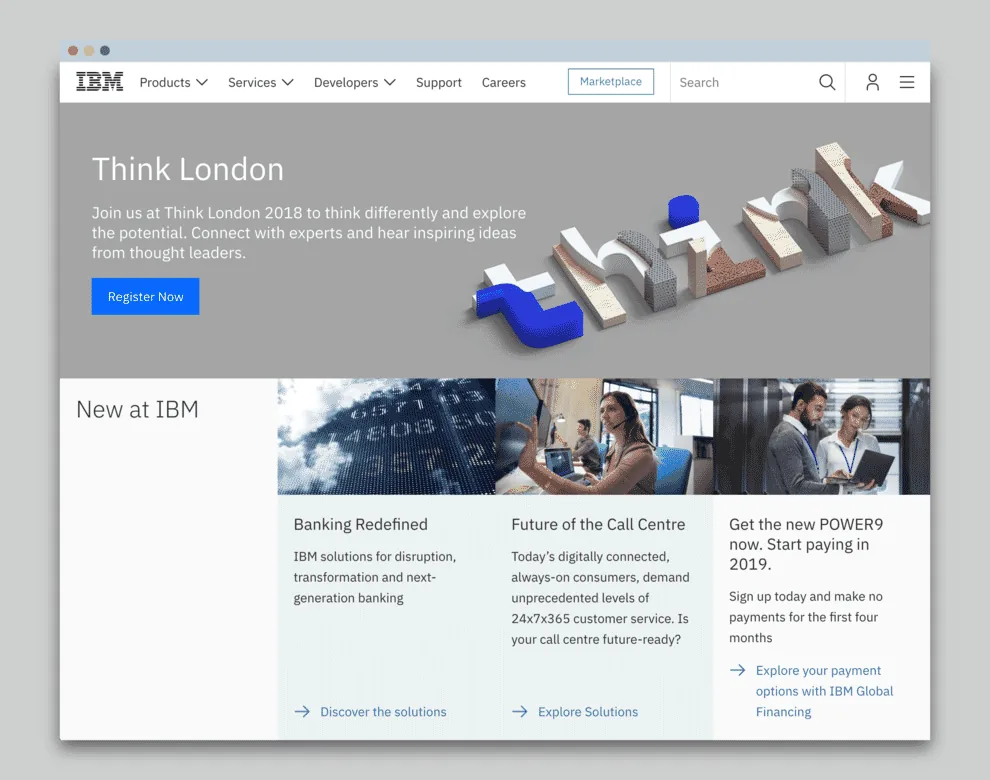
IBM does this on its homepage, surfacing location-relevant content for each visitor. Another example: if your heatmap shows that a visitor spent time on your pricing page but did not buy, you can show them a discount popup the next time they return.
That kind of targeted experience signals that you are paying attention, and it gives the visitor a concrete reason to take the next step. Platforms like CustomFit AI let you build these personalized experiences at scale for individual visitors.
Personalization is one of the highest-impact conversion tactics available.
Before writing any page copy, get clear on your audience's goals, pain points, and interests. That understanding shapes content that actually connects.
More specifically, lead with benefits rather than features. Show visitors how your product changes their situation, not just what it does. Content that speaks to real problems, and positions your product as the solution to those problems, is what moves people from browsing to buying.
A page without clear calls to action leaves visitors with no obvious next step. CTAs are how you tell visitors what to do, and they have a direct effect on conversion rates.
Use them intentionally. A common approach is three CTAs per page: one at the top, one in the middle, and one at the bottom. Use action-oriented language and make sure each button is visually distinct from the surrounding content. A CTA that blends in gets ignored.
When someone has a question about your product or service, they need an answer before they will commit. Without an easy way to get that answer, they will leave.
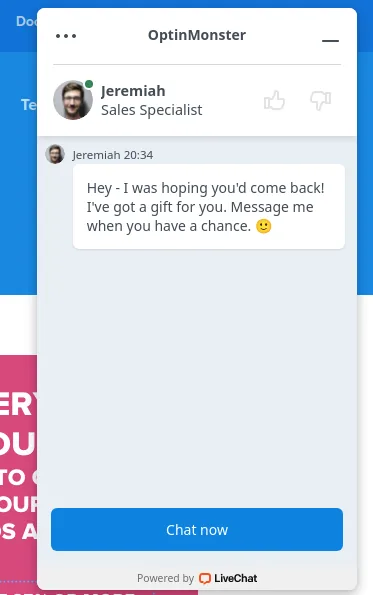
A live chat option gives visitors direct access to your team at the exact moment they need help. That removes a friction point that would otherwise cost you the conversion.
Traffic without conversion is wasted effort. Conversion rate optimization is the practice of improving your website so that more visitors take the actions that matter to your business.
Done well, CRO converts more of the visitors you already have, reduces acquisition costs, builds loyalty, and generates referrals.
Popups and social proof are good starting points. Personalizing the experience for individual visitors, making your CTAs clear and compelling, and giving visitors a way to get questions answered in real time all add to the picture. Pick the tactics that fit your current setup and put them to work.