From the conversion glossary
Concepts referenced in this article, defined.
Learn how to increase AOV for your Shopify store in 2026 using upsells, bundles, personalization, and A/B testing with CustomFit.ai.
Concepts referenced in this article, defined.
Run rigorous A/B tests and personalize every visit on Shopify or any storefront — no engineers required.
There is a point in every Shopify store's journey where growth feels harder than it should.
Traffic is coming in. Ads are running. Conversion rate looks healthy. But revenue feels capped. You push more budget into acquisition, and returns start flattening. The store is busy, yet the numbers do not move the way they used to.
This is usually when average order value enters the conversation.
Increasing AOV is one of the most overlooked growth levers in ecommerce. It does not require more traffic. It does not demand aggressive discounts. And it does not force you to redesign your entire store. It simply asks one question: how can you help customers buy a little more without making the experience feel forced?
In 2026, the brands that win are not the ones shouting the loudest. They are the ones that understand buying behavior deeply and design their Shopify store around it. They use A/B testing, thoughtful upsells, personalization, loyalty mechanics, and timing to increase order size naturally.
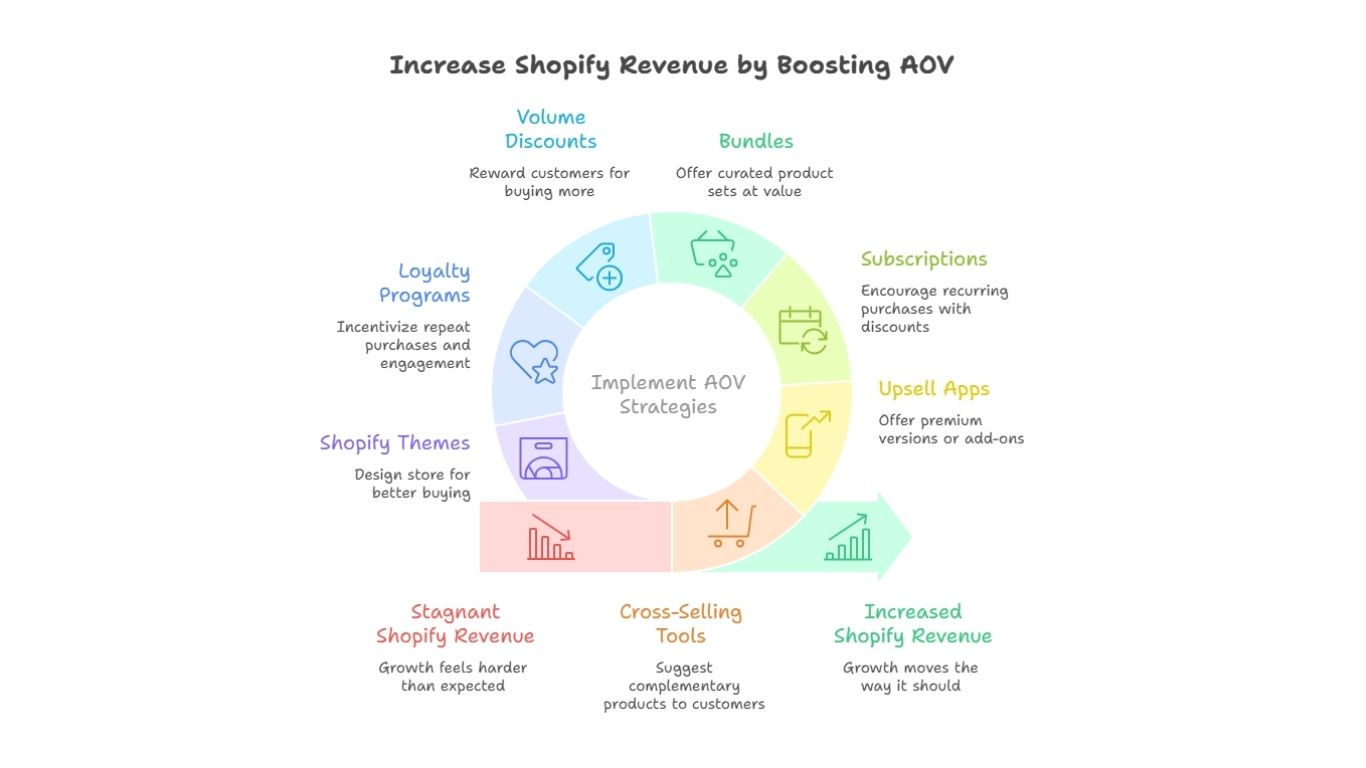
This guide walks through how to increase AOV for your Shopify store using practical strategies that work in real ecommerce environments. We cover cross selling tools, upsell apps, subscriptions, bundles, volume discounts, loyalty programs, Shopify themes, and personalized recommendations. We also explain how to validate these changes safely using an A/B testing platform, so growth does not come at the cost of conversion rate.
Along the way, we reference how a conversion rate optimization company like CustomFit.ai fits into this ecosystem by helping brands test and personalize AOV strategies instead of guessing.
This is not about tricks. It is about building a store that encourages better buying decisions.
Customer acquisition is not getting cheaper. Paid channels are more competitive. Attention spans are shorter. That means every visitor who does convert needs to be worth more.
Increasing average order value has three practical effects.
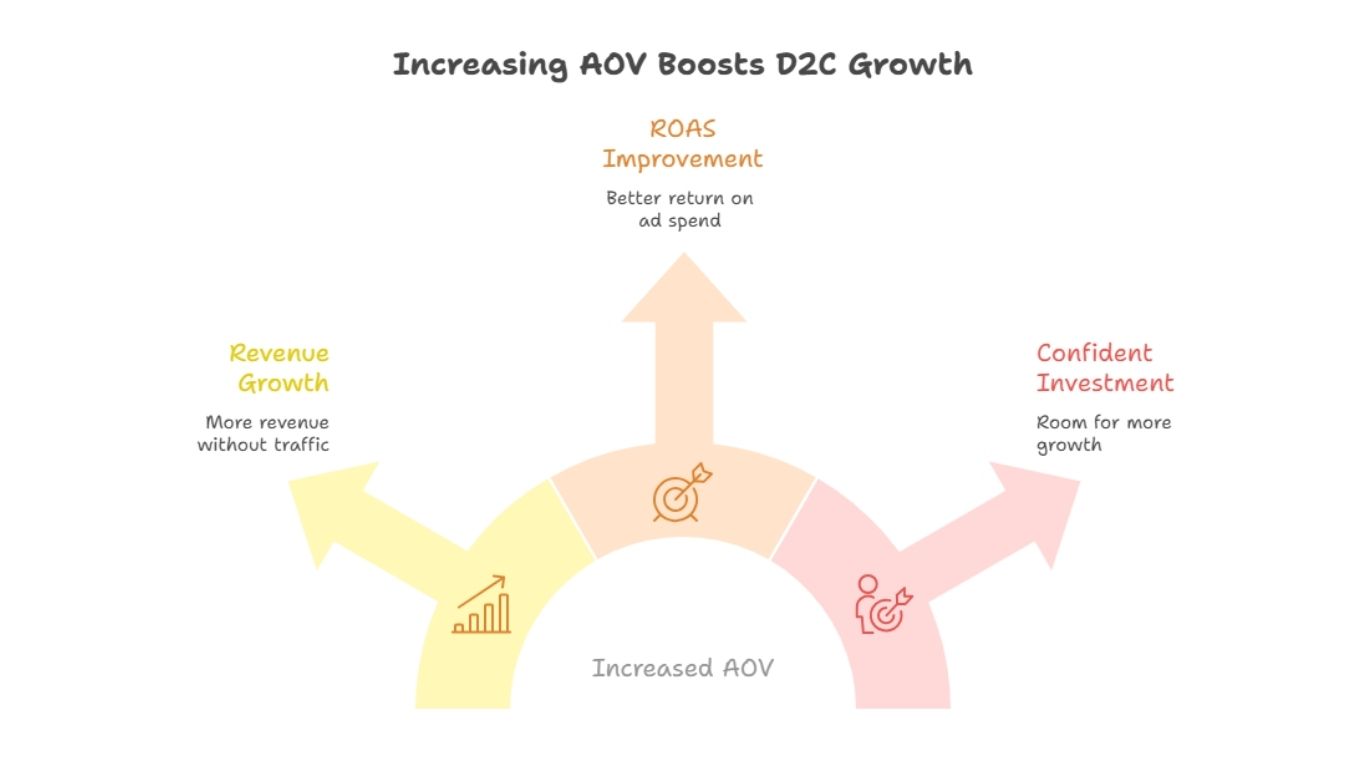
It increases revenue without increasing traffic. It improves return on ad spend. And it creates room to invest more confidently in growth.
For D2C brands especially, AOV growth often determines whether scaling feels sustainable or stressful.
There is also an important constraint to keep in mind: you cannot increase AOV by pushing harder. You increase AOV by making buying easier and more relevant.
Before adding tools or apps, it helps to understand why customers buy more in the first place.
Most higher AOV orders happen for one of these reasons.
The shopper sees clear value in adding one more item. The shopper wants to avoid future hassle, like reordering soon. The shopper feels rewarded for spending slightly more. Or the shopper feels confident the add-on is relevant and useful.
Upselling fails when it feels random. Cross selling fails when it feels pushy. Discounts fail when they feel confusing. Successful AOV strategies respect intent.
One concern many teams have is that chasing AOV will hurt conversion rate. This happens when brands add too many offers, too many popups, or too much friction.
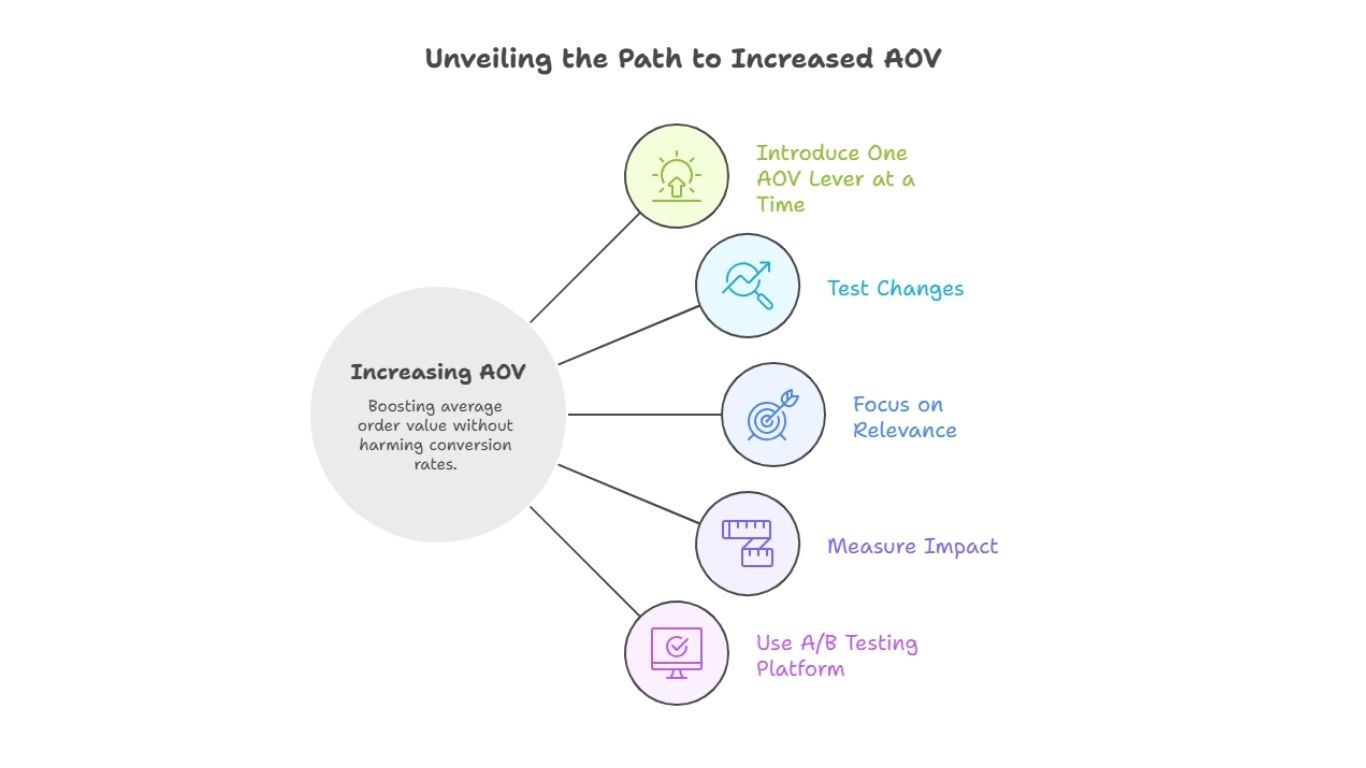
A safer approach looks like this:
This is where an A/B testing platform becomes essential. You should never assume an upsell helps. You should prove it.
CustomFit.ai, for example, allows Shopify brands to test AOV strategies on a subset of traffic before scaling, reducing risk while increasing confidence.
Cross selling works best when products naturally belong together. Think of it as helping the customer complete their purchase, not expand it.
A skincare cleanser paired with a moisturizer. Shoes paired with socks or care products. A coffee maker paired with filters or beans. A phone paired with a case or charger.
The best cross-selling tools on Shopify surface recommendations contextually, do not interrupt checkout flow, and are visually subtle enough to ignore when irrelevant.
Cross selling should feel like guidance, not pressure.
Run an A/B test where one group sees cross-sell suggestions and another does not. Measure changes in AOV and completed orders. If AOV increases but conversion drops, refine placement or product pairing before scaling.
Upsells work when they appear at the right moment. Not every page is the right place to upsell.
After Add to Cart. Inside the cart page. Post-purchase offers. At checkout entry points.
Popular upsell apps provide the mechanics, but the strategy still matters. An upsell that increases cart size by forcing urgency often hurts trust. An upsell that highlights convenience or savings tends to perform better.
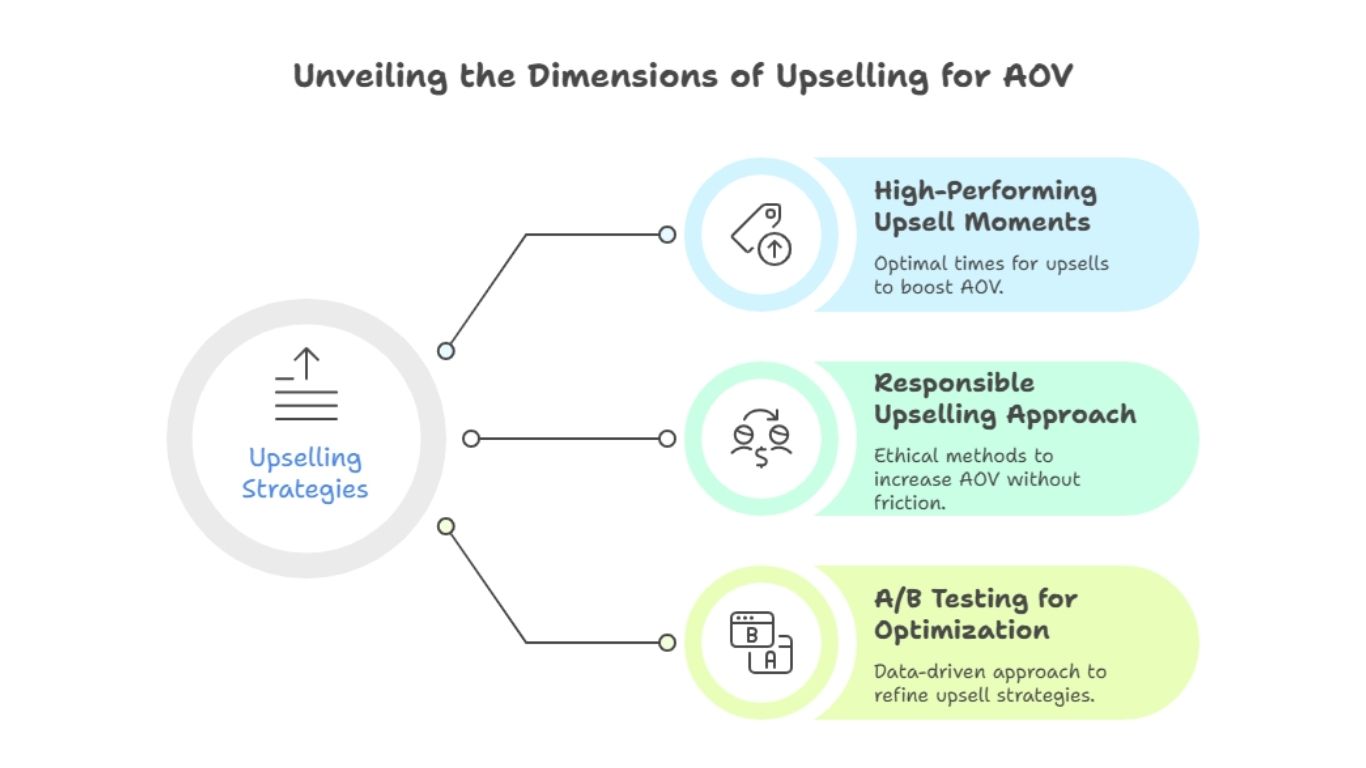
Using A/B testing to compare different upsell placements and messages ensures you increase AOV without introducing friction.
Shopify's app ecosystem is rich, but not all apps are designed with AOV growth in mind.
When evaluating plugins, look for tools that support bundles and kits, volume discounts, post-purchase upsells, personalized recommendations, and loyalty and rewards.
Top-rated plugins stand out because they integrate without slowing down the store. But even highly rated apps should be tested before full rollout. A plugin that works well for one store may not work for yours. Pairing plugins with an A/B testing platform helps you understand true impact.
Subscriptions increase AOV by changing the buying mindset. Instead of buying once, customers commit to ongoing value.
They reduce reorder friction, increase lifetime value, and stabilize revenue. Subscriptions are especially effective for consumables like supplements, skincare, food, or household products.
Even if the initial order value is similar, subscription framing often encourages customers to add more items upfront to "set it and forget it."
A/B test subscription messaging placement. Compare default one-time purchase against subscription-first framing. Measure AOV and subscription adoption together.
Bundles increase AOV by packaging value. Instead of selling one item at full price, bundles encourage customers to buy more through perceived savings.
Bundles work best when they solve a problem, not just increase quantity. Testing bundle layouts, pricing, and messaging helps refine what customers actually respond to.
Volume discounts reward customers for buying more of the same product. This strategy works well when customers already see value in the product and are open to stocking up.
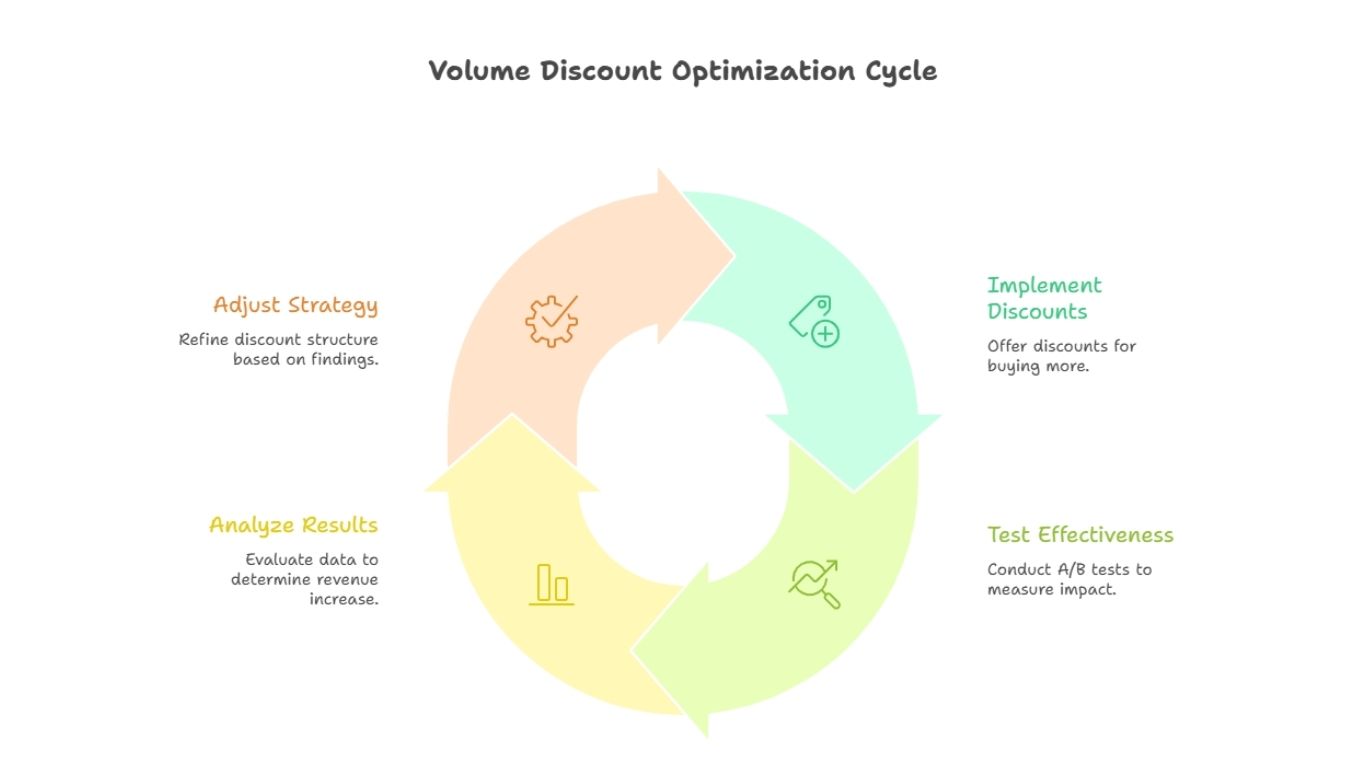
The risk with volume discounts is margin erosion. That is why testing matters. You want to know whether the increase in order size offsets the discount. An A/B test comparing volume discounts against no discounts can reveal whether the strategy truly increases revenue per visitor.
Loyalty programs increase AOV by introducing a longer-term mindset. Customers spend more when they feel progress toward rewards.
Loyalty works best when it is simple and visible. Testing loyalty prompts at different stages of the journey helps identify where they influence order size most.
Theme choice matters more than many brands realize. Some themes naturally support upselling through layout and design.
Even with a good theme, layout decisions still need validation. Testing different theme configurations ensures you are not relying on aesthetics alone.
Personalization increases AOV by increasing relevance. Generic recommendations rarely perform well. Personalized ones often do.
Personalization works best when paired with A/B testing. You test what works globally, then personalize for segments that respond differently. CustomFit.ai supports this workflow by enabling both testing and personalization within the same system.
Discounts are not the only lever. Relying too heavily on them often trains customers to wait.
Testing these strategies ensures they add value instead of clutter.
Every AOV strategy should answer one question: does this increase revenue without hurting conversion rate? A/B testing provides that answer.
An A/B testing platform helps you isolate changes and scale only what works.
CustomFit.ai is a conversion rate optimization company focused on helping ecommerce brands experiment responsibly.
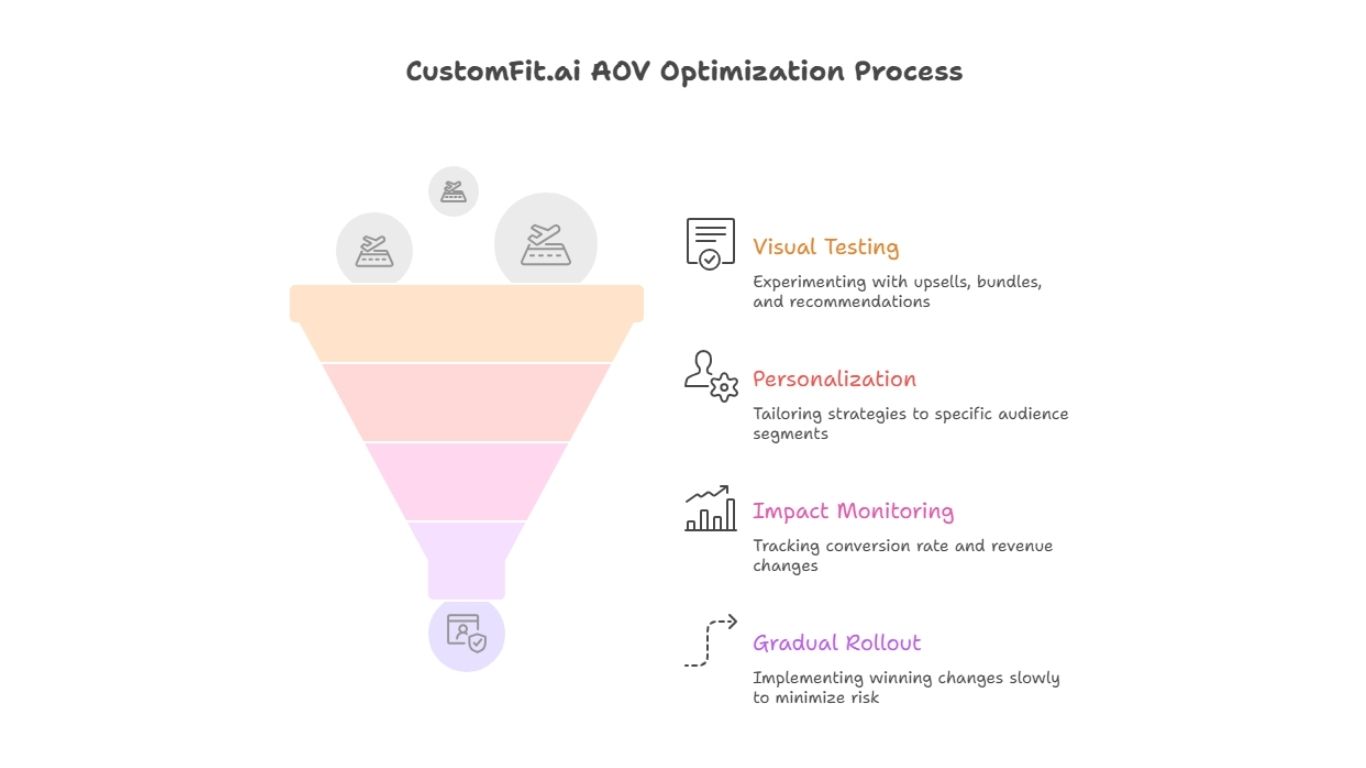
For AOV optimization, it enables teams to test upsells, bundles, and recommendations visually; personalize AOV strategies by audience; monitor impact on conversion rate and revenue; and roll out winning changes gradually. This reduces risk while accelerating learning.
Increasing AOV is not about squeezing customers. It is about understanding what they need next and offering it at the right moment.
In 2026, the most successful Shopify stores will be those that use A/B testing to validate ideas, personalize experiences thoughtfully, design upsells around value rather than pressure, and build loyalty instead of dependency on discounts.
AOV growth compounds when done correctly. Tools like CustomFit.ai help brands build this discipline, but the real advantage comes from a mindset shift: design better, not harder.
FAQs: how to increase AOV for your Shopify store 2026
You can increase AOV by using upsells, cross selling, bundles, subscriptions, loyalty programs, and personalized recommendations. Testing these strategies using an A/B testing platform ensures growth without hurting conversion rate.
The best cross-selling tools recommend relevant products at the right moment, such as in the cart or on the product page. These tools should integrate without friction and allow testing for impact.
Subscriptions encourage customers to commit to recurring purchases and often increase initial order size. They also improve long-term customer value.
Shopify's app store offers many plugins for bundles, upsells, volume discounts, and loyalty. Always test plugins before scaling to ensure they actually increase AOV.
Apps that support fixed bundles, dynamic bundles, and build-your-own bundles are effective when paired with clear value messaging.
Personalized recommendations increase relevance, making customers more likely to add additional items. Testing and segmentation improve results further.
Yes. A/B testing allows you to validate AOV strategies on a portion of traffic and scale only those that improve both AOV and conversion rate.
Increasing AOV often delivers higher ROI because it improves revenue per visitor without additional acquisition costs.
CustomFit.ai helps ecommerce brands test, personalize, and optimize AOV strategies safely, ensuring sustainable revenue growth.