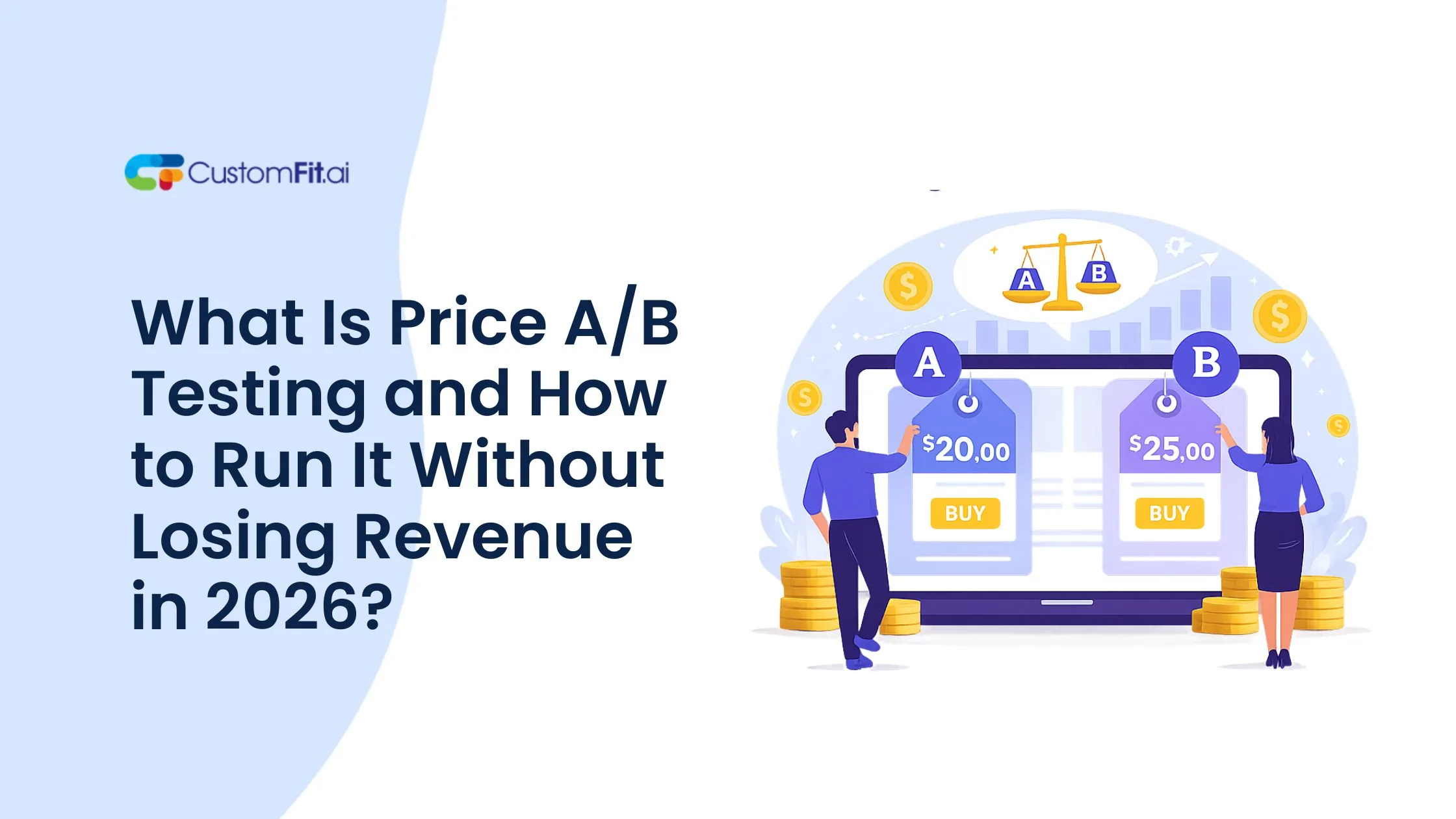
What Is Price A/B Testing and How to Run It Without Losing Revenue in 2026?

Price is the most sensitive lever in ecommerce.

Change your headline and a few users may notice. Change your button color and almost no one complains. Change your price and everything shifts.

Conversion rate moves. Revenue per visitor moves. Customer perception shifts. Brand positioning evolves. Even refund requests can change.

This is why many ecommerce and D2C brands hesitate to experiment with pricing. They know price is powerful, but they are afraid of getting it wrong.

At the same time, not testing price is also a risk.

If your product could convert at a slightly higher price without hurting demand, you are leaving margin on the table. If a small price reduction could significantly increase volume and overall revenue, you may be underperforming without realizing it.

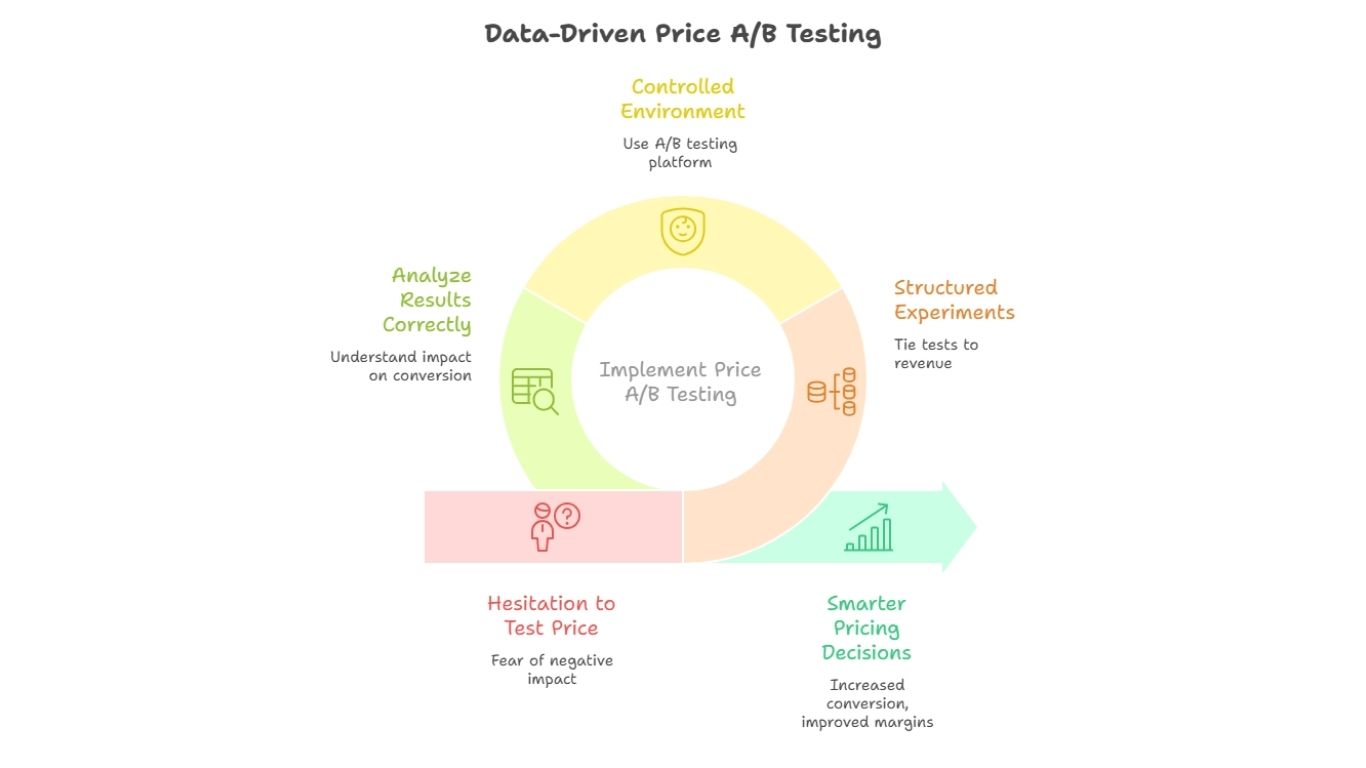
Data-Driven Price A/B Testing

In 2026, price A/B testing has become more disciplined and data driven. Brands are no longer randomly increasing prices to see what happens. They are running structured price experiments tied directly to revenue and profitability.

In this guide, we will explore what price A/B testing is, why it matters, how to run it safely, how to analyze results correctly, and how to avoid losing revenue during experiments. We will also answer practical questions around tools, statistical methods, agencies, and payment gateway integration.

Along the way, we will explain how an ecommerce focused A/B Testing Platform like CustomFit.ai can support price experimentation in a controlled and measurable way.

If you want to increase conversion rate, improve margins, and make smarter pricing decisions in 2026, this article will give you a clear framework.

What Is Price A/B Testing?

Price A/B testing is a structured experiment where you show different pricing variations to different segments of your website traffic and measure which variation performs better against predefined goals.

Those goals are usually tied to:

 Conversion rate
Revenue per visitor
Gross profit
Average order value
Customer lifetime value

Instead of assuming the optimal price, brands test two or more price points in a controlled way.
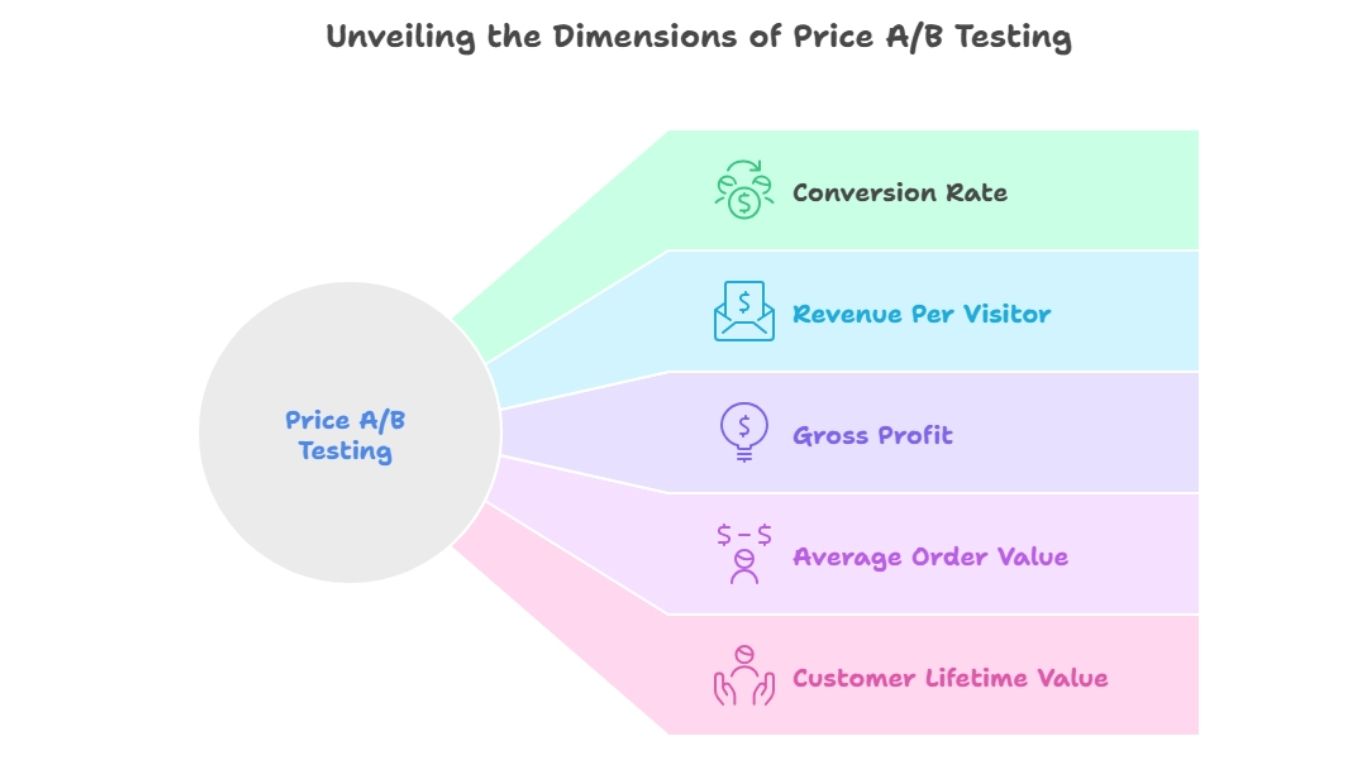
Unveiling the Dimensions of Price AB Testing

For example:

 Version A shows a product at 49 dollars
Version B shows the same product at 54 dollars

Traffic is split between the two versions. After collecting sufficient data, brands compare not just conversion rate but total revenue and profitability.

This is not discounting. It is structured pricing experimentation.

What Is the Purpose of Conducting A/B Tests on Product Pricing?

The purpose of price A/B testing is not to randomly raise or lower prices.

It is to understand price sensitivity and revenue elasticity.

In simple terms, brands want to know:

If we increase price slightly, does revenue increase or decrease?
If we reduce price, does volume grow enough to offset lower margins?
Is our current pricing leaving profit unrealized?
Are customers perceiving our product as underpriced or overpriced?

Many ecommerce brands assume that lower prices always convert better. In reality, this is not always true.

Sometimes a higher price signals quality and improves conversion rate among the right audience.

Price A/B testing allows brands to test these assumptions without committing to permanent changes.

Why Price A/B Testing Is More Important in 2026

In 2026, ecommerce margins are under pressure.

Acquisition costs are higher. Competition is stronger. Consumers are more price aware.

At the same time, brands are expanding internationally, selling across currencies and regions with different purchasing power.

A single static price often fails to capture maximum value across diverse audiences.

This is why structured price experimentation has become part of mature CRO strategies.

Brands that treat pricing as dynamic and testable gain a measurable advantage over those who rely purely on intuition.

How to Run Price A/B Tests on an Online Store Platform

Running price experiments requires discipline.

Here is a step by step framework used by modern ecommerce teams.

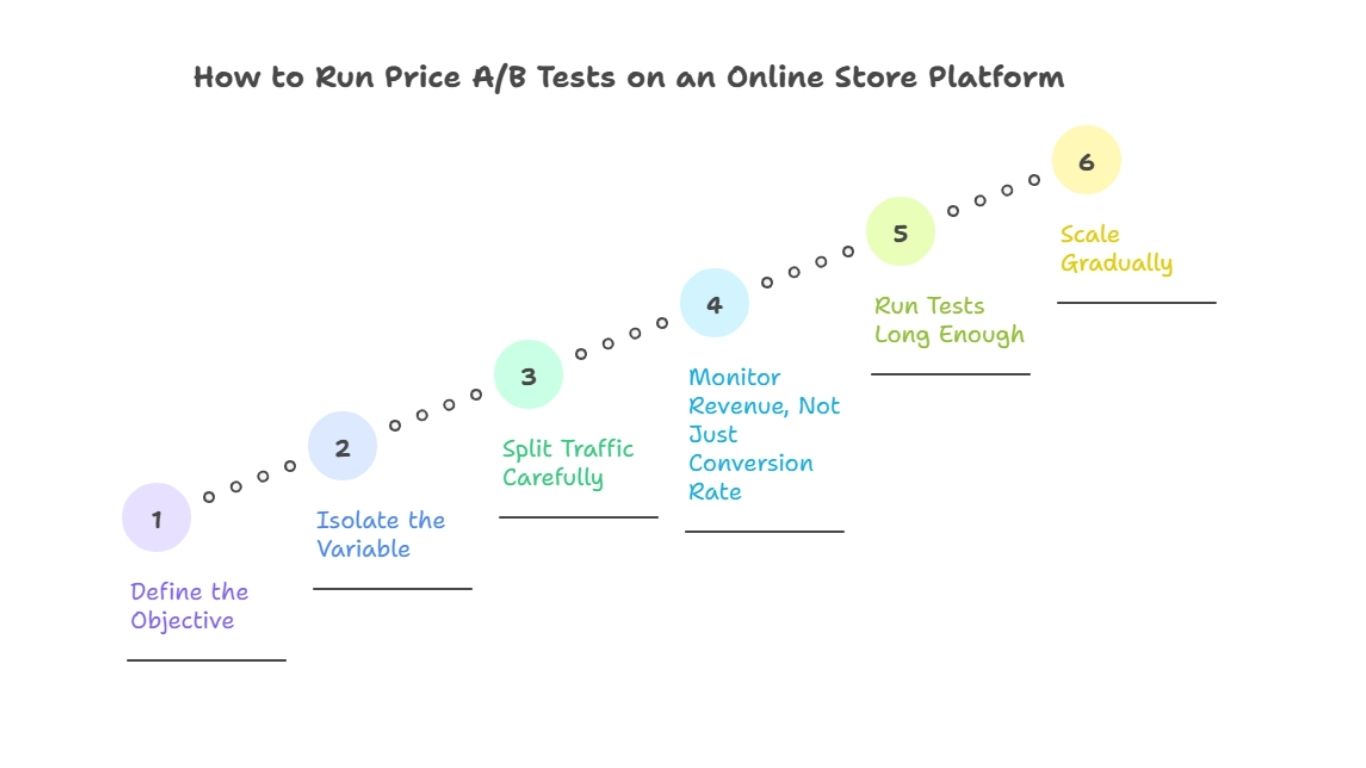
Step 1: Define the Objective

Before testing, clarify what success means.

 Are you optimizing for maximum revenue?
Are you prioritizing gross profit?
Are you trying to increase subscription adoption?
Are you testing entry price sensitivity?

Without a clear objective, pricing experiments become confusing.

Step 2: Isolate the Variable

Do not change messaging, layout, and bundles at the same time as price.

Keep everything constant except the price point.

This ensures that results reflect pricing impact, not unrelated changes.

Step 3: Split Traffic Carefully

Use an A/B Testing Platform to split traffic between control and variation.

Many brands in 2026 start with a smaller exposure, such as 20 to 30 percent of traffic on the new price.

This protects revenue during early testing.

Step 4: Monitor Revenue, Not Just Conversion Rate

Lower prices may increase conversion rate but reduce overall revenue.

Higher prices may reduce conversion rate slightly but increase revenue per visitor.

Focus on total impact.

Step 5: Run Tests Long Enough

Price sensitivity often varies by day of week, traffic source, and device type.

Run the test long enough to capture meaningful patterns.

Step 6: Scale Gradually

If a price variation clearly outperforms, increase exposure gradually before full rollout.

This controlled scaling protects performance.
How to Run Price AB Tests on an Online Store Platform

How to Run Price A/B Tests Without Losing Revenue

This is the biggest concern for brands.

Here are practical safeguards used in 2026.

Start with a small traffic percentage
Avoid testing during peak sales periods
Monitor gross profit, not just revenue
Avoid extreme price changes
Test within reasonable price bands
Maintain consistent shipping and return policies

The goal is incremental learning, not dramatic swings.

Modern A/B testing software allows traffic allocation control, which reduces downside risk.

Best Tools for Price A/B Testing in Ecommerce

The best tools for price A/B testing in ecommerce share several characteristics.

They allow traffic segmentation
They integrate with ecommerce platforms
They provide revenue tracking
They do not interfere with payment processing
They allow gradual rollout

An ecommerce focused A/B testing tool is preferable over generic website experimentation platforms when running pricing tests.

CustomFit.ai, for example, allows brands to test pricing variations while tracking conversion rate and revenue impact clearly.

The key is choosing a tool that aligns with ecommerce workflows rather than abstract experimentation models.

How Do I Choose the Right Platform for Price Experimentation?

When selecting an A/B Testing Platform for price experimentation, evaluate:

Ease of integration with your ecommerce store
Ability to control traffic allocation
Clarity of revenue reporting
Compatibility with your checkout system
Minimal impact on site performance
Support for segmentation

Avoid platforms that require heavy engineering for simple price experiments.

You want flexibility without complexity.

Top Software for Automated Price A/B Testing in India

For brands operating in India, additional considerations include:

Integration with local payment gateways
Support for regional pricing variations
Compatibility with Indian tax structures
Ability to test across high mobile traffic

Automated price testing software should handle currency differences and payment gateway compatibility without creating inconsistencies at checkout.

Platforms that integrate cleanly with ecommerce storefronts and maintain stable pricing display logic are ideal.

Price A/B Testing Services With Integration for Indian Payment Gateways

In markets like India, payment gateway compatibility matters.

When running pricing experiments, ensure:

Displayed price matches checkout price
Payment gateway calculations remain accurate
Taxes are applied consistently
Refund logic remains stable

A reliable A/B testing platform should not interfere with backend payment flows.

Many ecommerce brands work with a conversion rate optimization company alongside their internal team to ensure pricing experiments are implemented correctly.

Methods for Statistically Analyzing Results From Pricing Variations

Statistical analysis is critical for price testing.

Here are key principles.

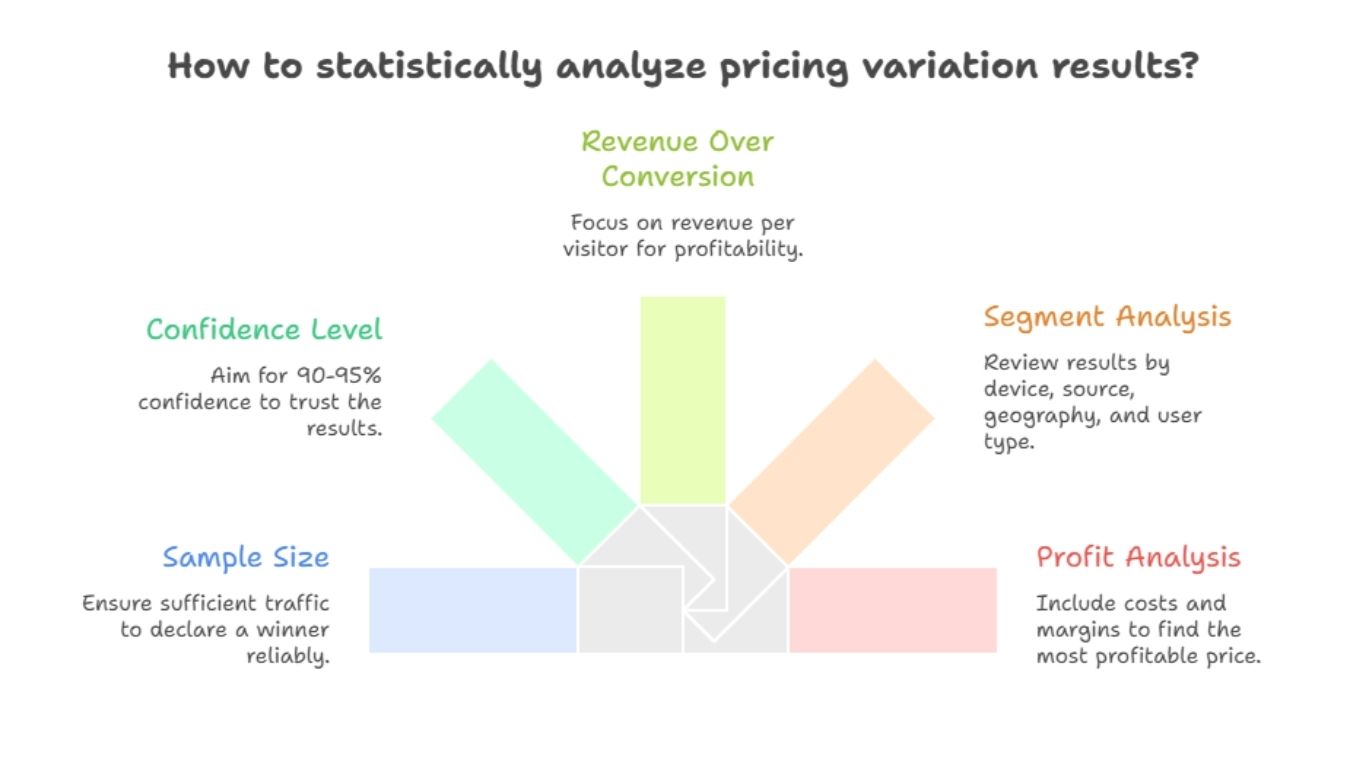
Sample Size Matters

Ensure sufficient traffic volume before declaring a winner.

Confidence Level

Most ecommerce brands aim for 90 to 95 percent statistical confidence.

Revenue Over Conversion

Analyze revenue per visitor, not just conversion rate.
How to statistically analyze pricing variation results

Segment Analysis

Review results by:

Device type
Traffic source
Geography
New versus returning users

Sometimes a price works better for one segment but not another.

Profit Analysis

Include cost of goods and margins in evaluation.

The winning price is not always the one with the highest revenue. It is the one with the best profitability profile.

Examples of Brands Using Price A/B Testing Successfully

While individual brand data is often confidential, common successful use cases include:

Testing premium pricing for best selling products
Testing entry level pricing for new product launches
Testing subscription discounts versus one time purchase pricing
Testing psychological price points such as 49 versus 50

Brands often discover that small price differences can have outsized impact on revenue.

The lesson is clear. Assumptions about pricing are rarely perfect.

Agencies Specializing in Conversion Rate Optimization and Pricing Strategy

Many ecommerce brands partner with CRO agencies when running price experiments.

These agencies typically offer:

Pricing elasticity analysis
Experiment design
Revenue modeling
Behavioral insights
Statistical evaluation

When selecting an agency, look for:

Experience in ecommerce pricing
Data driven frameworks
Transparent reporting
Clear risk management approach

Some brands combine agency strategy with platforms like CustomFit.ai to maintain operational control while benefiting from external expertise.

Recommended Tools for Running Price Tests on a Website

When running price tests, recommended tools should provide:

Clean A/B testing capabilities
Revenue and profit tracking
Traffic segmentation
Gradual rollout control
Easy rollback

Avoid tools that:

Require heavy code changes
Disrupt checkout flow
Create mismatched pricing between product page and cart

An ecommerce specific A/B testing platform simplifies this process significantly.

Read about How People Are Doing Split Testing in 2026?

Price A/B Testing for Subscription Models

Subscription ecommerce adds another layer of complexity.

Brands may test:

One time price versus subscription discount
Different subscription discount percentages
Bundled pricing for recurring orders

In subscription businesses, lifetime value matters more than immediate conversion.

Price experiments should include LTV projections, not just first order revenue.

Common Mistakes in Price A/B Testing

Price testing can backfire if done poorly.

Common mistakes include:

Testing during major sales campaigns
Making large price jumps
Ignoring profit margins
Stopping tests too early
Not segmenting by traffic source
Testing multiple variables simultaneously

Disciplined experimentation reduces these risks.

Why Price Testing Should Be Part of Your CRO Strategy

Price is not separate from conversion rate optimization.

It is central to it.

CRO is about aligning value perception with price.

A strong CRO strategy includes:

Message testing
Layout optimization
Trust building
Checkout refinement
Price experimentation

All of these elements work together.

Platforms like CustomFit.ai support this holistic approach by combining A/B testing, segmentation, and revenue tracking within one system.

How CustomFit.ai Supports Price Experimentation

CustomFit.ai is a conversion rate optimization company focused on ecommerce and D2C brands.

customfit ab testing and website personalization platform

It enables price experimentation by:

Allowing controlled A/B split testing
Supporting segmentation by audience
Providing revenue focused reporting
Ensuring minimal impact on site performance
Allowing gradual exposure of price variations

Instead of making pricing experiments risky, it helps teams run them calmly and methodically.

Transactional and Conversion Focused Benefits of Price A/B Testing

When done correctly, price A/B testing can:

Increase revenue per visitor
Improve gross margins
Enhance perceived value
Optimize promotional strategy
Improve subscription adoption
Increase average order value

These outcomes directly impact profitability.

Conclusion: Price Testing in 2026 Is Strategic, Not Reckless

In 2026, price A/B testing is not about gambling with revenue.

It is about controlled learning.

Brands that refuse to test pricing risk leaving profit unrealized. Brands that test recklessly risk short term instability.

The winners are those who test methodically.

Define objectives.
Isolate variables.
Protect revenue.
Analyze profit.
Scale gradually.

Price is powerful. But disciplined experimentation makes it manageable.

With the right A/B testing platform and a structured approach, price testing becomes a strategic advantage rather than a threat.

FAQs: What Is Price A/B Testing and How to Run It Without Losing Revenue in 2026?

What is price A/B testing?

Price A/B testing is the process of showing different price variations to different segments of traffic to measure which version maximizes revenue, conversion rate, or profit.

What is the purpose of conducting A/B tests on product pricing?

The purpose is to understand price sensitivity, optimize revenue, and improve margins without making permanent pricing changes blindly.

How to run price A/B tests on an online store platform?

Use an A/B Testing Platform to create controlled price variations, split traffic carefully, measure revenue impact, and scale winning versions gradually.

What are the best tools for price A/B testing in ecommerce?

The best tools allow revenue tracking, segmentation, controlled traffic exposure, and seamless ecommerce integration.

How do I choose the right platform for price experimentation?

Choose a platform that integrates cleanly with your ecommerce store, supports segmentation, offers revenue reporting, and allows safe rollout.

How do you statistically analyze pricing variations?

Analyze revenue per visitor, conversion rate, and profit margins while ensuring sufficient sample size and appropriate confidence levels.

Can price A/B testing be done safely without losing revenue?

Yes. By limiting traffic exposure, testing incremental changes, and monitoring profit impact, brands can experiment without significant revenue risk.

How does CustomFit.ai help with price A/B testing?

CustomFit.ai supports controlled split testing, segmentation, and revenue tracking to help ecommerce brands optimize pricing strategically.

Sapna Johar
CRO Engineer at Customfit.ai

Price is the most sensitive lever in ecommerce.

Change your headline and a few users may notice. Change your button color and almost no one complains. Change your price and everything shifts.

Conversion rate moves. Revenue per visitor moves. Customer perception shifts. Brand positioning evolves. Even refund requests can change.

This is why many ecommerce and D2C brands hesitate to experiment with pricing. They know price is powerful, but they are afraid of getting it wrong.

At the same time, not testing price is also a risk.

If your product could convert at a slightly higher price without hurting demand, you are leaving margin on the table. If a small price reduction could significantly increase volume and overall revenue, you may be underperforming without realizing it.

Data-Driven Price A/B Testing

In 2026, price A/B testing has become more disciplined and data driven. Brands are no longer randomly increasing prices to see what happens. They are running structured price experiments tied directly to revenue and profitability.

In this guide, we will explore what price A/B testing is, why it matters, how to run it safely, how to analyze results correctly, and how to avoid losing revenue during experiments. We will also answer practical questions around tools, statistical methods, agencies, and payment gateway integration.

Along the way, we will explain how an ecommerce focused A/B Testing Platform like CustomFit.ai can support price experimentation in a controlled and measurable way.

If you want to increase conversion rate, improve margins, and make smarter pricing decisions in 2026, this article will give you a clear framework.

What Is Price A/B Testing?

Price A/B testing is a structured experiment where you show different pricing variations to different segments of your website traffic and measure which variation performs better against predefined goals.

Those goals are usually tied to:

 Conversion rate
Revenue per visitor
Gross profit
Average order value
Customer lifetime value

Instead of assuming the optimal price, brands test two or more price points in a controlled way.

Unveiling the Dimensions of Price AB Testing

For example:

 Version A shows a product at 49 dollars
Version B shows the same product at 54 dollars

Traffic is split between the two versions. After collecting sufficient data, brands compare not just conversion rate but total revenue and profitability.

This is not discounting. It is structured pricing experimentation.

What Is the Purpose of Conducting A/B Tests on Product Pricing?

The purpose of price A/B testing is not to randomly raise or lower prices.

It is to understand price sensitivity and revenue elasticity.

In simple terms, brands want to know:

If we increase price slightly, does revenue increase or decrease?
If we reduce price, does volume grow enough to offset lower margins?
Is our current pricing leaving profit unrealized?
Are customers perceiving our product as underpriced or overpriced?

Many ecommerce brands assume that lower prices always convert better. In reality, this is not always true.

Sometimes a higher price signals quality and improves conversion rate among the right audience.

Price A/B testing allows brands to test these assumptions without committing to permanent changes.

Why Price A/B Testing Is More Important in 2026

In 2026, ecommerce margins are under pressure.

Acquisition costs are higher. Competition is stronger. Consumers are more price aware.

At the same time, brands are expanding internationally, selling across currencies and regions with different purchasing power.

A single static price often fails to capture maximum value across diverse audiences.

This is why structured price experimentation has become part of mature CRO strategies.

Brands that treat pricing as dynamic and testable gain a measurable advantage over those who rely purely on intuition.

How to Run Price A/B Tests on an Online Store Platform

Running price experiments requires discipline.

Here is a step by step framework used by modern ecommerce teams.

Step 1: Define the Objective

Before testing, clarify what success means.

 Are you optimizing for maximum revenue?
Are you prioritizing gross profit?
Are you trying to increase subscription adoption?
Are you testing entry price sensitivity?

Without a clear objective, pricing experiments become confusing.

Step 2: Isolate the Variable

Do not change messaging, layout, and bundles at the same time as price.

Keep everything constant except the price point.

This ensures that results reflect pricing impact, not unrelated changes.

Step 3: Split Traffic Carefully

Use an A/B Testing Platform to split traffic between control and variation.

Many brands in 2026 start with a smaller exposure, such as 20 to 30 percent of traffic on the new price.

This protects revenue during early testing.

Step 4: Monitor Revenue, Not Just Conversion Rate

Lower prices may increase conversion rate but reduce overall revenue.

Higher prices may reduce conversion rate slightly but increase revenue per visitor.

Focus on total impact.

Step 5: Run Tests Long Enough

Price sensitivity often varies by day of week, traffic source, and device type.

Run the test long enough to capture meaningful patterns.

Step 6: Scale Gradually

If a price variation clearly outperforms, increase exposure gradually before full rollout.

This controlled scaling protects performance.

How to Run Price AB Tests on an Online Store Platform

How to Run Price A/B Tests Without Losing Revenue

This is the biggest concern for brands.

Here are practical safeguards used in 2026.

Start with a small traffic percentage
Avoid testing during peak sales periods
Monitor gross profit, not just revenue
Avoid extreme price changes
Test within reasonable price bands
Maintain consistent shipping and return policies

The goal is incremental learning, not dramatic swings.

Modern A/B testing software allows traffic allocation control, which reduces downside risk.

Best Tools for Price A/B Testing in Ecommerce

The best tools for price A/B testing in ecommerce share several characteristics.

They allow traffic segmentation
They integrate with ecommerce platforms
They provide revenue tracking
They do not interfere with payment processing
They allow gradual rollout

An ecommerce focused A/B testing tool is preferable over generic website experimentation platforms when running pricing tests.

CustomFit.ai, for example, allows brands to test pricing variations while tracking conversion rate and revenue impact clearly.

The key is choosing a tool that aligns with ecommerce workflows rather than abstract experimentation models.

How Do I Choose the Right Platform for Price Experimentation?

When selecting an A/B Testing Platform for price experimentation, evaluate:

Ease of integration with your ecommerce store
Ability to control traffic allocation
Clarity of revenue reporting
Compatibility with your checkout system
Minimal impact on site performance
Support for segmentation

Avoid platforms that require heavy engineering for simple price experiments.

You want flexibility without complexity.

Top Software for Automated Price A/B Testing in India

For brands operating in India, additional considerations include:

Integration with local payment gateways
Support for regional pricing variations
Compatibility with Indian tax structures
Ability to test across high mobile traffic

Automated price testing software should handle currency differences and payment gateway compatibility without creating inconsistencies at checkout.

Platforms that integrate cleanly with ecommerce storefronts and maintain stable pricing display logic are ideal.

Price A/B Testing Services With Integration for Indian Payment Gateways

In markets like India, payment gateway compatibility matters.

When running pricing experiments, ensure:

Displayed price matches checkout price
Payment gateway calculations remain accurate
Taxes are applied consistently
Refund logic remains stable

A reliable A/B testing platform should not interfere with backend payment flows.

Many ecommerce brands work with a conversion rate optimization company alongside their internal team to ensure pricing experiments are implemented correctly.

Methods for Statistically Analyzing Results From Pricing Variations

Statistical analysis is critical for price testing.

Here are key principles.

Sample Size Matters

Ensure sufficient traffic volume before declaring a winner.

Confidence Level

Most ecommerce brands aim for 90 to 95 percent statistical confidence.

Revenue Over Conversion

Analyze revenue per visitor, not just conversion rate.

How to statistically analyze pricing variation results

Segment Analysis

Review results by:

Device type
Traffic source
Geography
New versus returning users

Sometimes a price works better for one segment but not another.

Profit Analysis

Include cost of goods and margins in evaluation.

The winning price is not always the one with the highest revenue. It is the one with the best profitability profile.

Examples of Brands Using Price A/B Testing Successfully

While individual brand data is often confidential, common successful use cases include:

Testing premium pricing for best selling products
Testing entry level pricing for new product launches
Testing subscription discounts versus one time purchase pricing
Testing psychological price points such as 49 versus 50

Brands often discover that small price differences can have outsized impact on revenue.

The lesson is clear. Assumptions about pricing are rarely perfect.

Agencies Specializing in Conversion Rate Optimization and Pricing Strategy

Many ecommerce brands partner with CRO agencies when running price experiments.

These agencies typically offer:

Pricing elasticity analysis
Experiment design
Revenue modeling
Behavioral insights
Statistical evaluation

When selecting an agency, look for:

Experience in ecommerce pricing
Data driven frameworks
Transparent reporting
Clear risk management approach

Some brands combine agency strategy with platforms like CustomFit.ai to maintain operational control while benefiting from external expertise.

Recommended Tools for Running Price Tests on a Website

When running price tests, recommended tools should provide:

Clean A/B testing capabilities
Revenue and profit tracking
Traffic segmentation
Gradual rollout control
Easy rollback

Avoid tools that:

Require heavy code changes
Disrupt checkout flow
Create mismatched pricing between product page and cart

An ecommerce specific A/B testing platform simplifies this process significantly.

Read about How People Are Doing Split Testing in 2026?

Price A/B Testing for Subscription Models

Subscription ecommerce adds another layer of complexity.

Brands may test:

One time price versus subscription discount
Different subscription discount percentages
Bundled pricing for recurring orders

In subscription businesses, lifetime value matters more than immediate conversion.

Price experiments should include LTV projections, not just first order revenue.

Common Mistakes in Price A/B Testing

Price testing can backfire if done poorly.

Common mistakes include:

Testing during major sales campaigns
Making large price jumps
Ignoring profit margins
Stopping tests too early
Not segmenting by traffic source
Testing multiple variables simultaneously

Disciplined experimentation reduces these risks.

Why Price Testing Should Be Part of Your CRO Strategy

Price is not separate from conversion rate optimization.

It is central to it.

CRO is about aligning value perception with price.

A strong CRO strategy includes:

Message testing
Layout optimization
Trust building
Checkout refinement
Price experimentation

All of these elements work together.

Platforms like CustomFit.ai support this holistic approach by combining A/B testing, segmentation, and revenue tracking within one system.

How CustomFit.ai Supports Price Experimentation

CustomFit.ai is a conversion rate optimization company focused on ecommerce and D2C brands.

customfit ab testing and website personalization platform

It enables price experimentation by:

Allowing controlled A/B split testing
Supporting segmentation by audience
Providing revenue focused reporting
Ensuring minimal impact on site performance
Allowing gradual exposure of price variations

Instead of making pricing experiments risky, it helps teams run them calmly and methodically.

Transactional and Conversion Focused Benefits of Price A/B Testing

When done correctly, price A/B testing can:

Increase revenue per visitor
Improve gross margins
Enhance perceived value
Optimize promotional strategy
Improve subscription adoption
Increase average order value

These outcomes directly impact profitability.

Conclusion: Price Testing in 2026 Is Strategic, Not Reckless

In 2026, price A/B testing is not about gambling with revenue.

It is about controlled learning.

Brands that refuse to test pricing risk leaving profit unrealized. Brands that test recklessly risk short term instability.

The winners are those who test methodically.

Define objectives.
Isolate variables.
Protect revenue.
Analyze profit.
Scale gradually.

Price is powerful. But disciplined experimentation makes it manageable.

With the right A/B testing platform and a structured approach, price testing becomes a strategic advantage rather than a threat.

FAQs: What Is Price A/B Testing and How to Run It Without Losing Revenue in 2026?

What is price A/B testing?

Price A/B testing is the process of showing different price variations to different segments of traffic to measure which version maximizes revenue, conversion rate, or profit.

What is the purpose of conducting A/B tests on product pricing?

The purpose is to understand price sensitivity, optimize revenue, and improve margins without making permanent pricing changes blindly.

How to run price A/B tests on an online store platform?

Use an A/B Testing Platform to create controlled price variations, split traffic carefully, measure revenue impact, and scale winning versions gradually.

What are the best tools for price A/B testing in ecommerce?

The best tools allow revenue tracking, segmentation, controlled traffic exposure, and seamless ecommerce integration.

How do I choose the right platform for price experimentation?

Choose a platform that integrates cleanly with your ecommerce store, supports segmentation, offers revenue reporting, and allows safe rollout.

How do you statistically analyze pricing variations?

Analyze revenue per visitor, conversion rate, and profit margins while ensuring sufficient sample size and appropriate confidence levels.

Can price A/B testing be done safely without losing revenue?

Yes. By limiting traffic exposure, testing incremental changes, and monitoring profit impact, brands can experiment without significant revenue risk.

How does CustomFit.ai help with price A/B testing?

CustomFit.ai supports controlled split testing, segmentation, and revenue tracking to help ecommerce brands optimize pricing strategically.