From the conversion glossary
Concepts referenced in this article, defined.
Discover the best A/B testing tools for ecommerce in 2026. Compare platforms, features, and CRO tools like CustomFit.ai to improve conversion rate and revenue.
Concepts referenced in this article, defined.
Run rigorous A/B tests and personalize every visit on Shopify or any storefront — no engineers required.
Running an ecommerce business in 2026 comes with a familiar set of pressures. Traffic is expensive, attention is short, and customers expect more than they used to.
A few years ago, growth often came from acquiring more visitors. That approach is getting harder to sustain. Advertising costs keep rising, competition keeps growing, and organic visibility takes patience to build.
Because of this shift, many ecommerce and D2C brands have turned to a different lever: conversion rate.
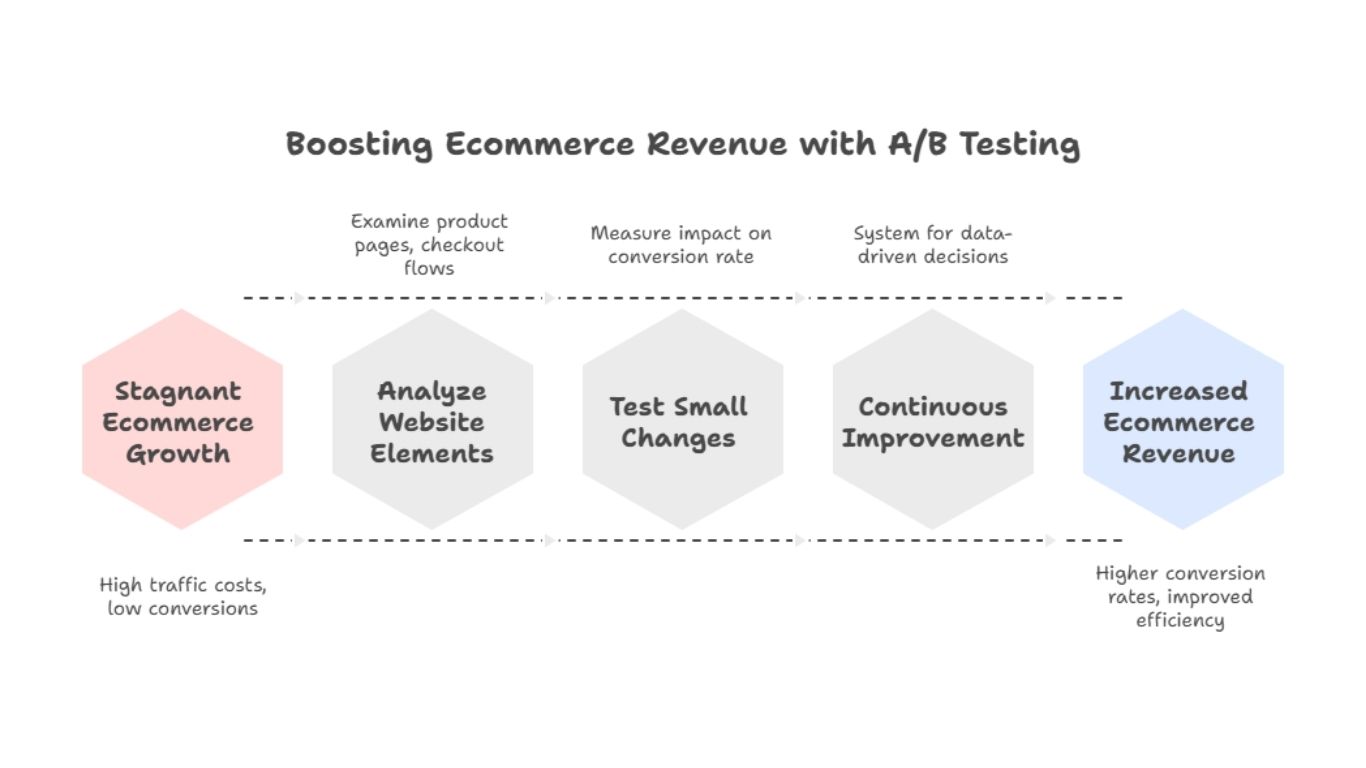
Instead of focusing only on traffic, brands now pay attention to what happens after visitors arrive. They look at product pages, checkout flows, pricing presentation, trust signals, and shipping messaging, then test changes to see which version performs better.
This is where A/B testing earns its place.
A/B testing lets ecommerce brands run controlled experiments on their website. Rather than redesigning a whole store on a hunch, teams test small changes and measure the effect on conversion rate and revenue. The result is a system of continuous improvement instead of guesswork.
This guide covers the best A/B testing tools for ecommerce in 2026, how ecommerce brands evaluate them, which features actually matter, and how businesses use experimentation platforms to lift conversion rate and improve revenue efficiency.
Along the way we discuss how platforms like CustomFit.ai, a conversion rate optimization company built for ecommerce experimentation, help brands run structured tests without turning experimentation into a complicated engineering project.
If you run an ecommerce store or a D2C brand, this article will help you see how modern experimentation platforms fit into your growth strategy.
Over the last decade, ecommerce brands have learned that design opinions do not reliably increase conversion rate.
Teams often debate which product image layout looks better, which call to action should come first, or which pricing presentation feels more persuasive. Without testing, those decisions rest on intuition. A/B testing replaces intuition with evidence.
Instead of launching a new design for everyone, an A/B test splits traffic between two versions. Half of the visitors see the original, and the other half see the variation. Comparing conversion rates shows which experience performs better.
Even small improvements can add up to meaningful revenue growth. Raising conversion rate from 2 percent to 2.4 percent, for example, is a 20 percent relative increase in sales without any extra traffic.
That is why A/B testing platforms have become standard in modern ecommerce stacks.
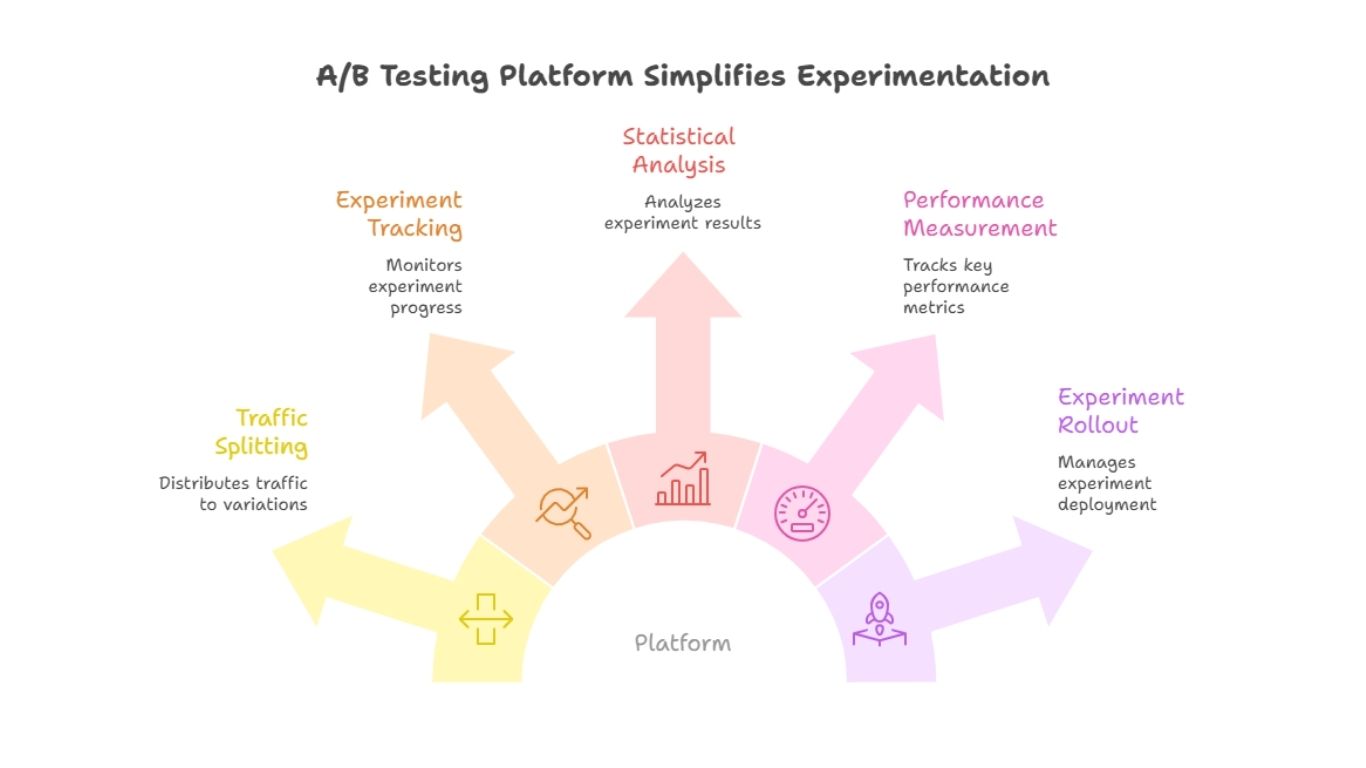
An A/B testing platform is the infrastructure for experimentation. It handles several jobs.
Traffic splitting
Experiment tracking
Statistical analysis
Performance measurement
Experiment rollout
Without a dedicated platform, controlled experiments are hard to run. Teams have to split traffic by hand, watch the metrics, and make sure variations show up consistently. An A/B testing tool takes care of that by providing a structured environment for experimentation.
For ecommerce brands, that environment has to integrate cleanly with the website while keeping site performance and user experience intact.
Choosing the right A/B testing software comes down to a few factors.
Marketing teams often need to launch experiments quickly. Tools that lean on developer support slow down testing cycles.
Ecommerce experiments have to measure more than clicks. Metrics like revenue per visitor, average order value, and checkout completion are what count.
Experiments should not slow down page load times or introduce visible flicker.
Many brands want to go beyond simple A/B tests and build personalized experiences based on user behavior.
The testing platform has to work with ecommerce storefronts, payment gateways, and analytics systems.
These criteria help brands figure out which experimentation platform fits their workflow.
Below are some of the most widely used categories of A/B testing tools for ecommerce in 2026. Rather than a simple ranking, it helps to understand the different approaches these platforms take.
CustomFit.ai is built specifically for ecommerce experimentation.
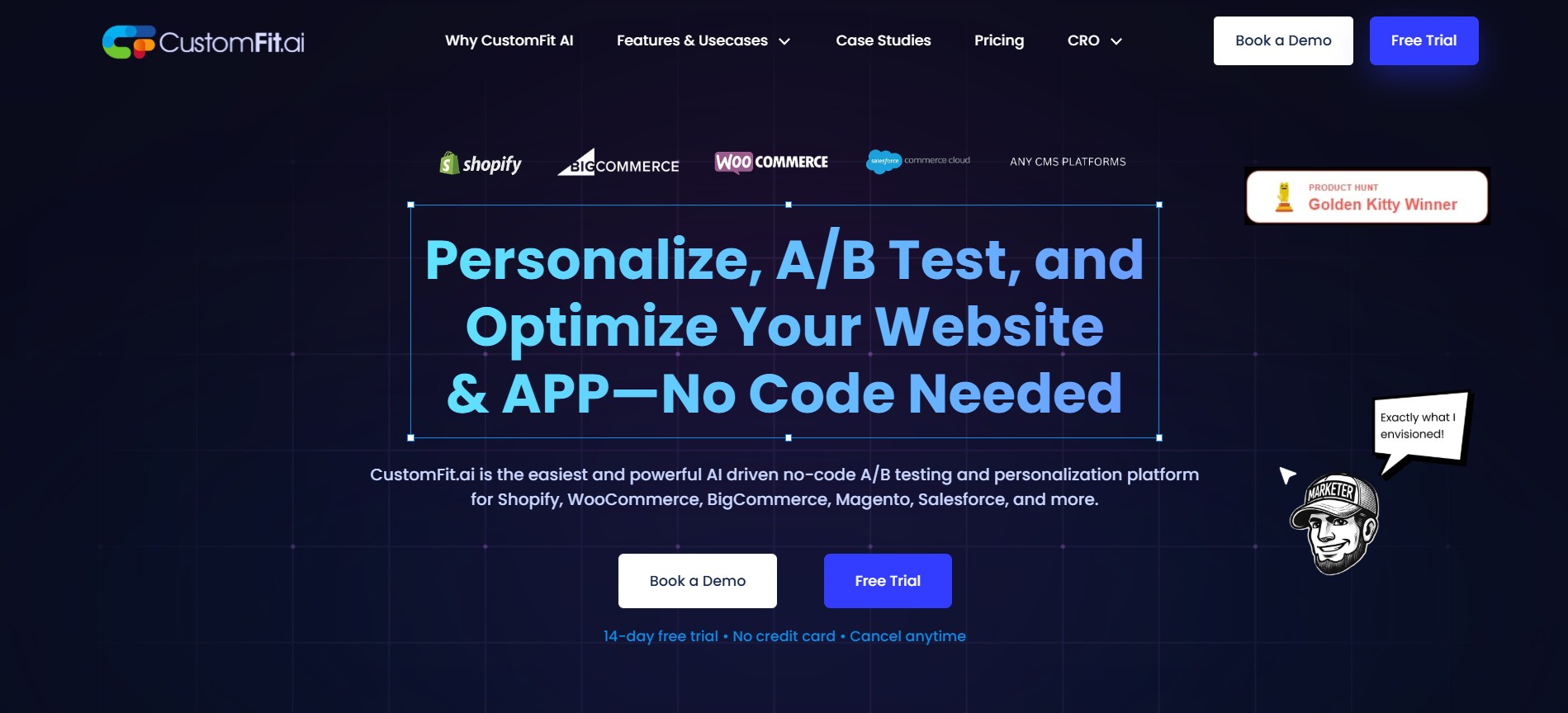
The platform helps ecommerce and D2C brands run A/B tests, personalization campaigns, and website optimization experiments without heavy engineering involvement.
For many ecommerce teams, speed of experimentation matters. Marketing wants to test ideas quickly without waiting on developer resources. CustomFit.ai supports that workflow with visual experimentation.
Instead of editing website code directly, marketers build variations through a visual interface, which makes it faster to launch experiments on product pages, landing pages, and checkout flows.
The platform also leans on revenue-focused metrics. Experiments can be judged on conversion rate, revenue per visitor, and customer behavior patterns.
By concentrating on ecommerce use cases, CustomFit.ai helps brands run continuous experimentation programs that raise conversion rate over time.
Some experimentation tools are built mainly for enterprise environments. They tend to offer advanced experimentation frameworks, deep statistical modeling, and complex audience segmentation.
Large organizations with dedicated experimentation teams may get value from those capabilities. Smaller ecommerce teams sometimes struggle to implement enterprise platforms because they demand more technical resources.
That gap points to a trend in 2026: many D2C brands prefer experimentation tools built specifically for ecommerce workflows over general-purpose experimentation systems.
Some A/B testing tools focus on simplicity and speed. They let you launch basic experiments quickly with minimal setup. They are easy to adopt, but they may lack advanced capabilities such as deep segmentation, personalization, or revenue-focused analytics.
For early-stage ecommerce stores, lightweight testing tools may be enough. As brands grow, they often move to more comprehensive experimentation platforms.
Some platforms focus mainly on behavioral analytics and user journey tracking. They help ecommerce teams understand how visitors interact with the website, for example by showing where users drop off in checkout or which pages get the most engagement.
Those insights are useful, but they do not directly optimize the website experience. Many brands pair behavioral analytics tools with dedicated A/B testing platforms to build a complete optimization workflow.
A/B testing programs usually focus on a few key areas of the ecommerce experience.
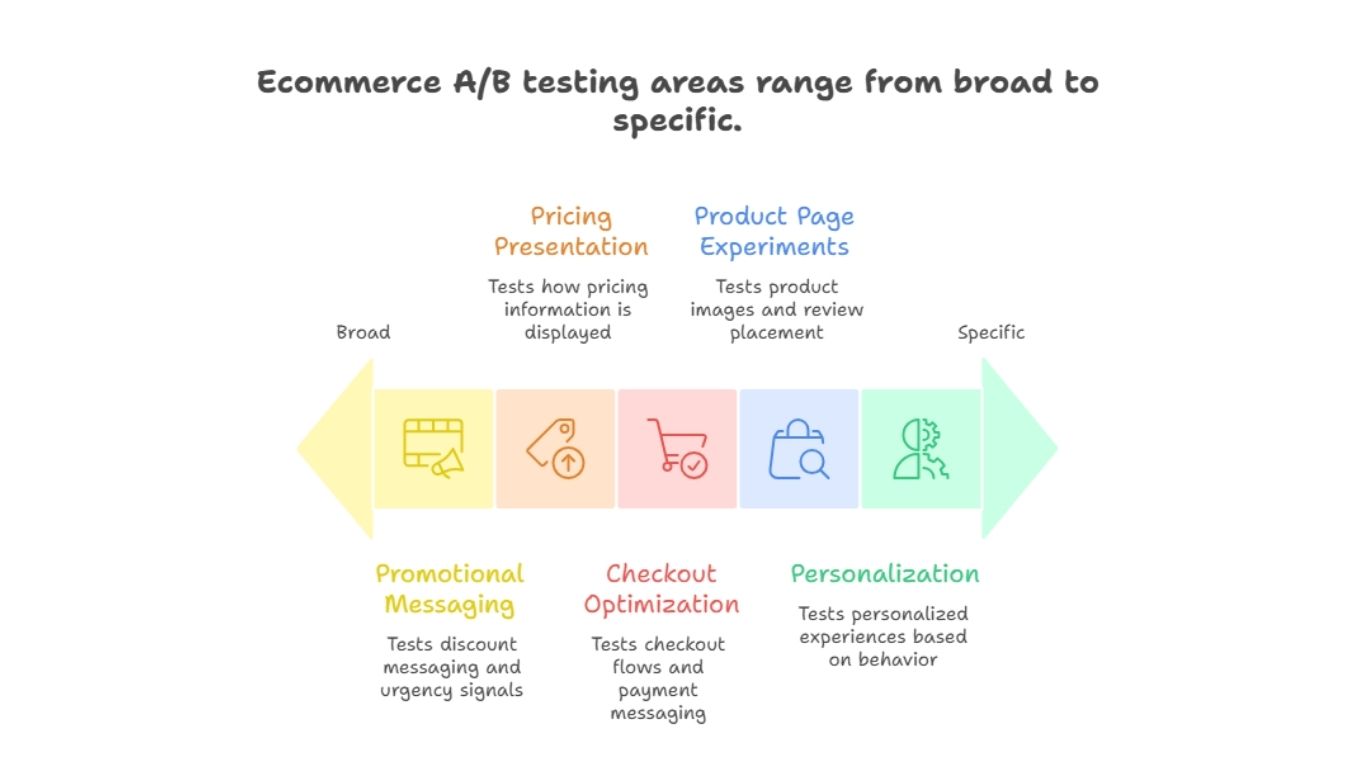
Testing product images, descriptions, trust badges, and review placement.
Testing checkout flows, payment messaging, and shipping transparency.
Testing how pricing information is displayed to improve perceived value.
Testing discount messaging, urgency signals, and limited-time offers.
Testing personalized experiences based on user behavior or traffic source.
These experiments help brands understand how customers interact with the website and which changes improve conversion rate.
In 2026 many ecommerce brands are expanding beyond simple A/B testing. Instead of showing the same experience to every visitor, they personalize content based on behavior.
For example:
New visitors may see educational messaging
Returning customers may see loyalty offers
Visitors arriving from ads may see promotional messaging
Personalization helps brands create more relevant experiences for different audience segments. Modern experimentation platforms increasingly combine A/B testing and personalization within a single system.
Experimentation speed has become a competitive advantage. Brands that test frequently learn faster than their competitors, and that learning leads to better decisions across product pages, marketing campaigns, and checkout flows.
Experimentation still has to be safe. Poorly implemented experiments can disrupt the customer experience or cause performance problems. Platforms built for ecommerce experimentation put stability first while still enabling rapid testing. CustomFit.ai holds that balance by letting teams launch experiments quickly without hurting site performance.
Technology alone does not create a successful experimentation program. Culture matters just as much. Teams have to feel comfortable launching experiments and learning from the results.
Not every test produces a winning variation. Sometimes an experiment shows that the original design performs better, and that outcome is still useful. Over time, the accumulated insights lead to better design decisions and stronger customer experiences. An A/B testing platform supports that culture by keeping experimentation accessible and manageable.
The point of A/B testing is not experimentation for its own sake. It is business improvement.
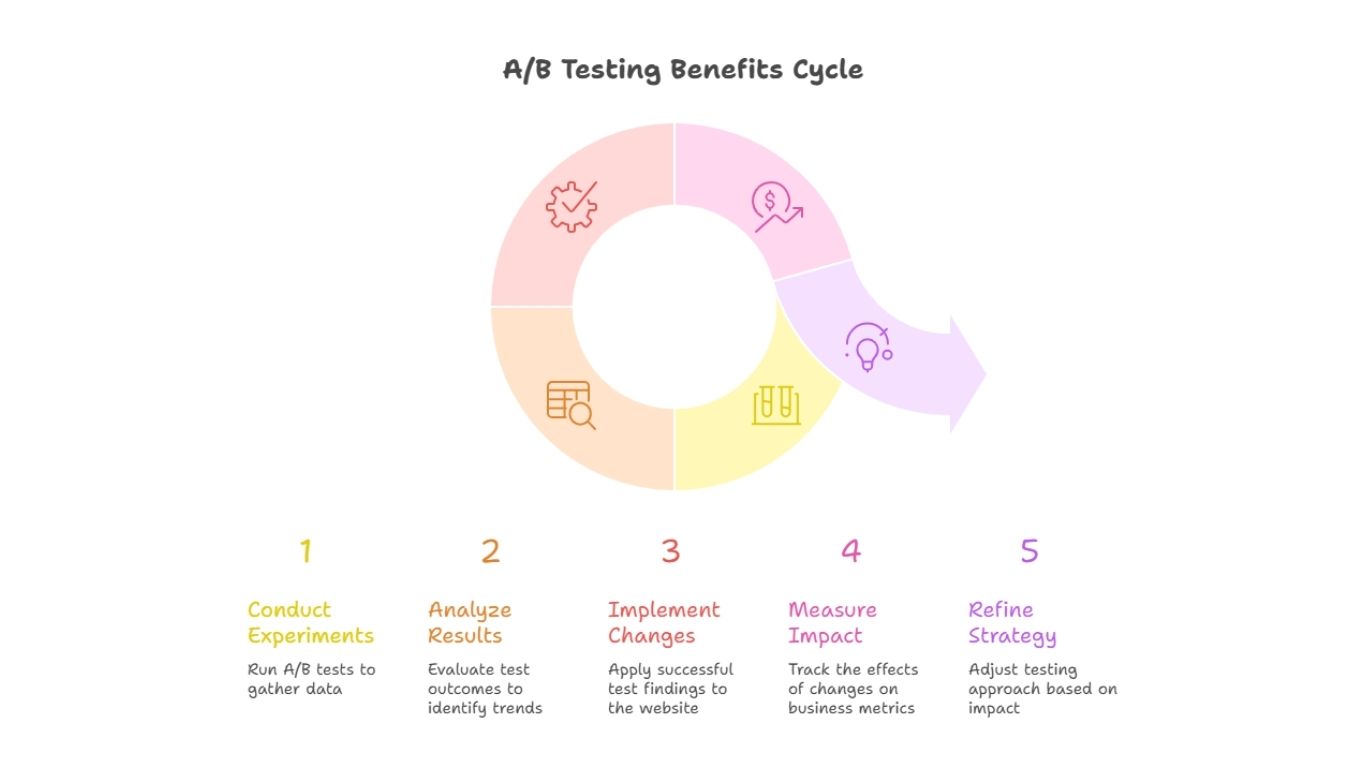
Structured experimentation programs often produce measurable gains.
Higher conversion rate
Improved average order value
Better checkout completion
More efficient advertising campaigns
Higher revenue per visitor
These outcomes feed straight into profitability. For ecommerce brands that want to increase conversion rate without spending more on marketing, A/B testing is one of the most effective growth tools available.
Conversion rate optimization platforms give teams the infrastructure to run experiments consistently. They let teams spot opportunities, launch tests, analyze results, and apply improvements.
Platforms like CustomFit.ai help ecommerce brands build that infrastructure. Instead of running occasional tests, brands develop continuous optimization programs. Over time, those programs deliver incremental improvements that compound into real revenue growth.
Experimentation will likely become even more central to ecommerce strategy. A few trends are shaping where A/B testing goes next.
Personalization will become more sophisticated.
Experiments will incorporate machine learning insights.
Testing will expand beyond websites to include mobile apps and messaging channels.
Revenue-focused metrics will become the primary measure of success.
Brands that adopt structured experimentation early will be better positioned to adapt as these changes arrive.
Choosing the best A/B testing tools for ecommerce in 2026 is not about finding the most complex platform. It is about finding one that lets your team test ideas consistently, read results clearly, and improve the customer experience over time.
Experimentation lets ecommerce brands move past assumptions and decide based on real customer behavior. Platforms like CustomFit.ai help ecommerce teams run structured A/B testing programs without slowing down development or disrupting site performance.
The goal is not to keep redesigning the website. It is to learn what actually helps customers feel confident enough to buy. Over time, those insights become one of the most valuable assets an ecommerce brand can build.
The best A/B testing tools for ecommerce let brands run controlled experiments on their website, measure the effect on conversion rate, and roll out winning variations safely. These tools usually include visual experiment creation, traffic segmentation, and revenue-focused analytics.
A/B testing compares two versions of a webpage or element to see which performs better. By shipping the winning version, ecommerce brands can increase conversion rate without adding traffic.
Useful features include experiment creation tools, traffic allocation controls, revenue analytics, personalization capabilities, and integration with ecommerce platforms.
D2C brands use A/B testing software to optimize product pages, checkout flows, and marketing messaging. These experiments help improve the customer experience and increase revenue.
CustomFit.ai provides an A/B testing platform that lets ecommerce brands create experiments, measure results, and apply improvements without heavy engineering involvement.
Yes. Run through a structured experimentation platform, A/B testing lets brands test website changes safely while keeping the user experience consistent.
Key metrics include conversion rate, revenue per visitor, average order value, and checkout completion rate.