From the conversion glossary
Concepts referenced in this article, defined.
Learn conversion rate optimization (CRO) for ecommerce in 2026. Improve conversions using A/B testing, personalization, and data-driven strategies to increase revenue without more traffic.
Concepts referenced in this article, defined.
Run rigorous A/B tests and personalize every visit on Shopify or any storefront — no engineers required.
If you run an ecommerce business today, you've probably noticed that getting traffic is getting expensive. Ad costs are rising, competition is everywhere, and organic reach takes time. Even when you do get visitors, most of them leave without buying.
That is where conversion rate optimization matters. Instead of focusing only on bringing more people to your website, CRO focuses on getting more of your existing visitors to take action. That action could be making a purchase, adding to cart, signing up, or clicking a key button.
Even a small improvement in conversion rate can move revenue by a lot. Improving your conversion rate from 2% to 3% is not just a 1% increase. It is a 50% increase in conversions from the same traffic. That is why CRO has become a core growth lever in 2026.
Conversion rate optimization (CRO) is the process of improving your website or landing pages so that a higher percentage of visitors complete a desired action.
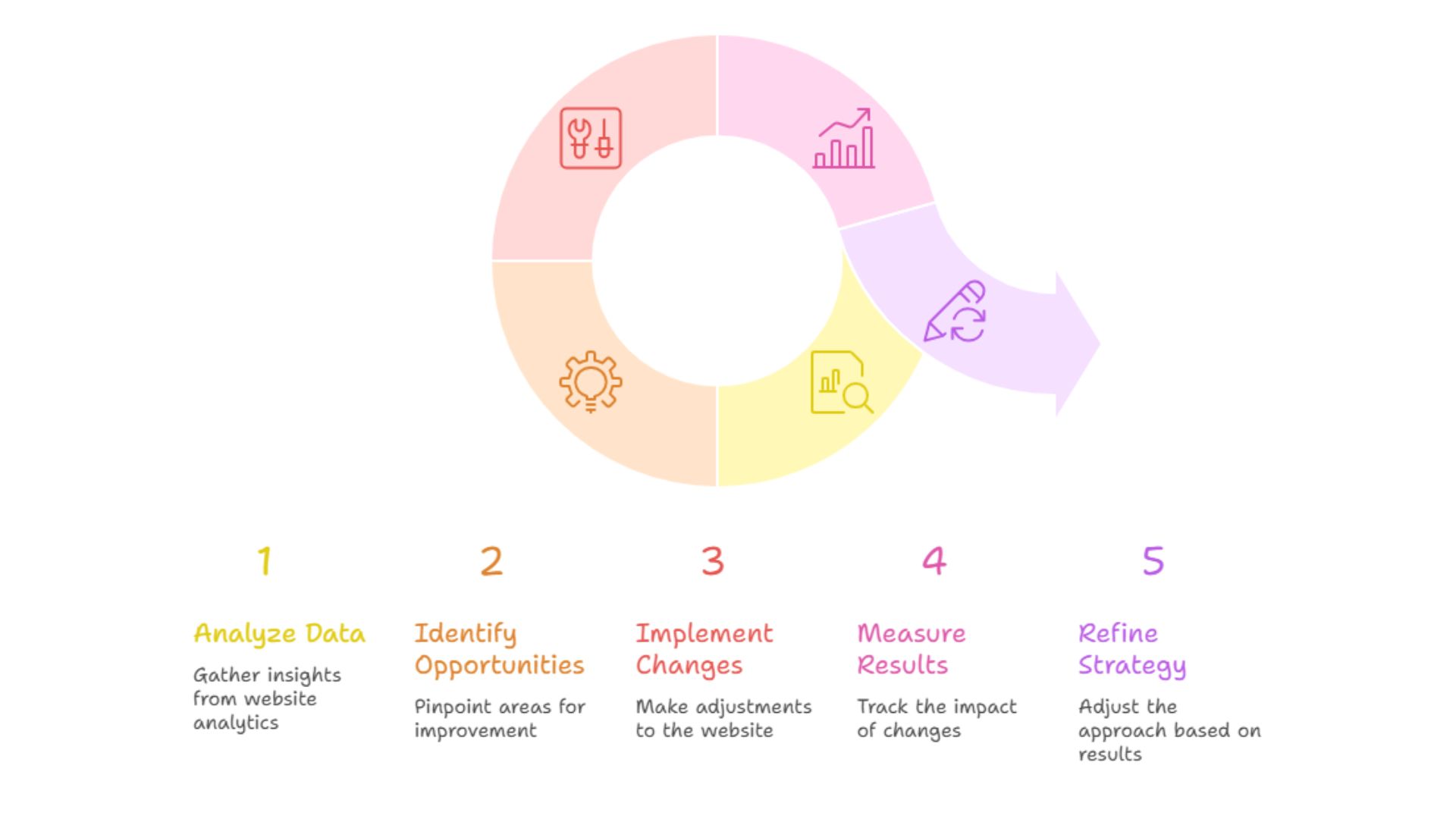
It is not about redesigning your website at random. You work through understanding user behaviour, identifying friction points, testing changes, and measuring the results. CRO is a continuous process, not a one-time activity. Instead of guessing what works, you validate ideas using data.
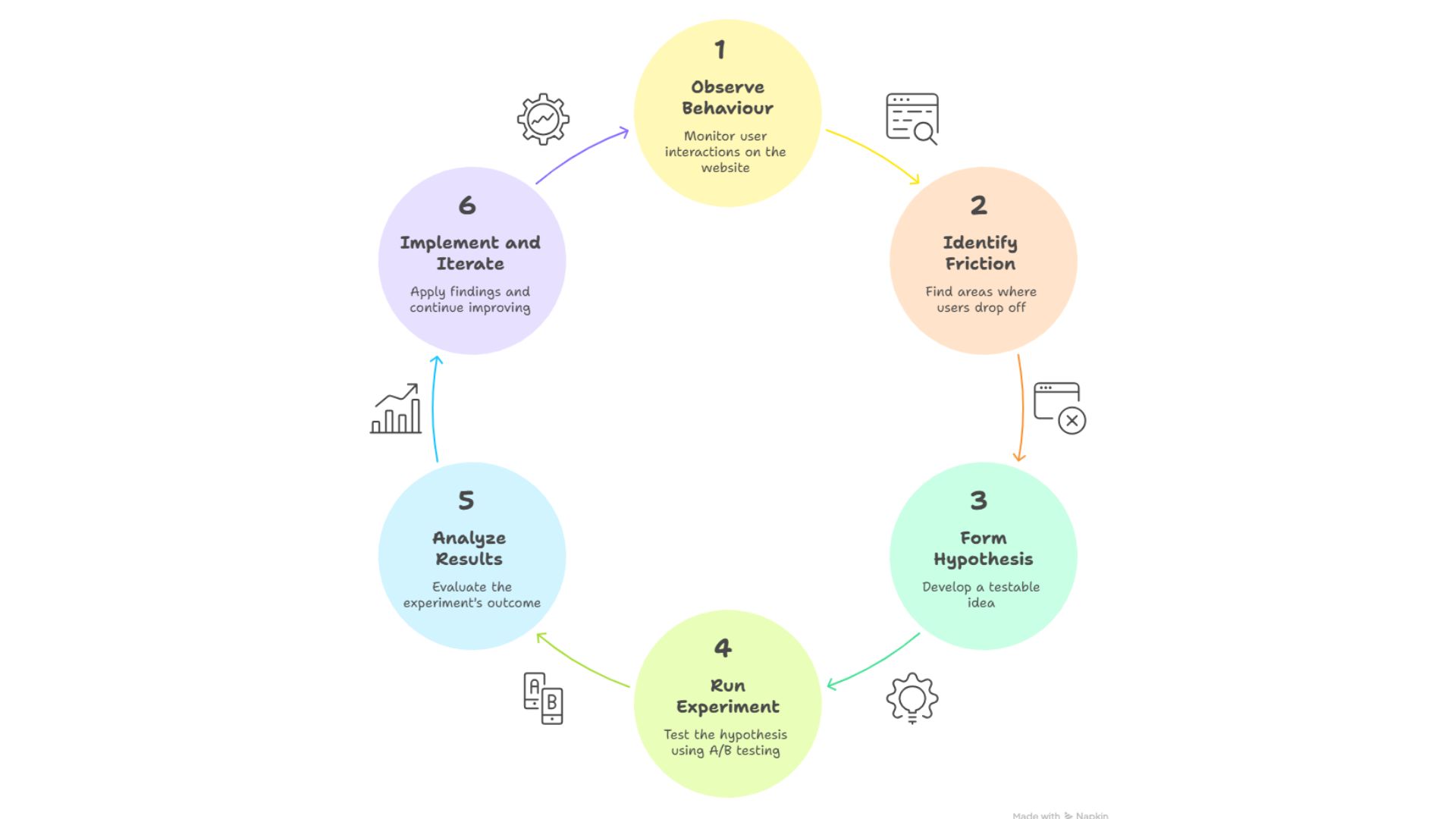
At a practical level, CRO follows a simple loop:
Most websites fail not because they lack traffic, but because they lack this structured approach.
Ecommerce has changed. Earlier, growth came from increasing traffic, running more ads, and expanding reach. Now, growth comes from efficiency. Here is what has changed.
Paid traffic is more competitive than ever. If your website does not convert, you are wasting money on every click.
Visitors decide within seconds whether to stay or leave.
Users compare, research, and evaluate before purchasing.
People expect fast, relevant, and smooth experiences. Conversion rate optimization helps you meet those expectations.
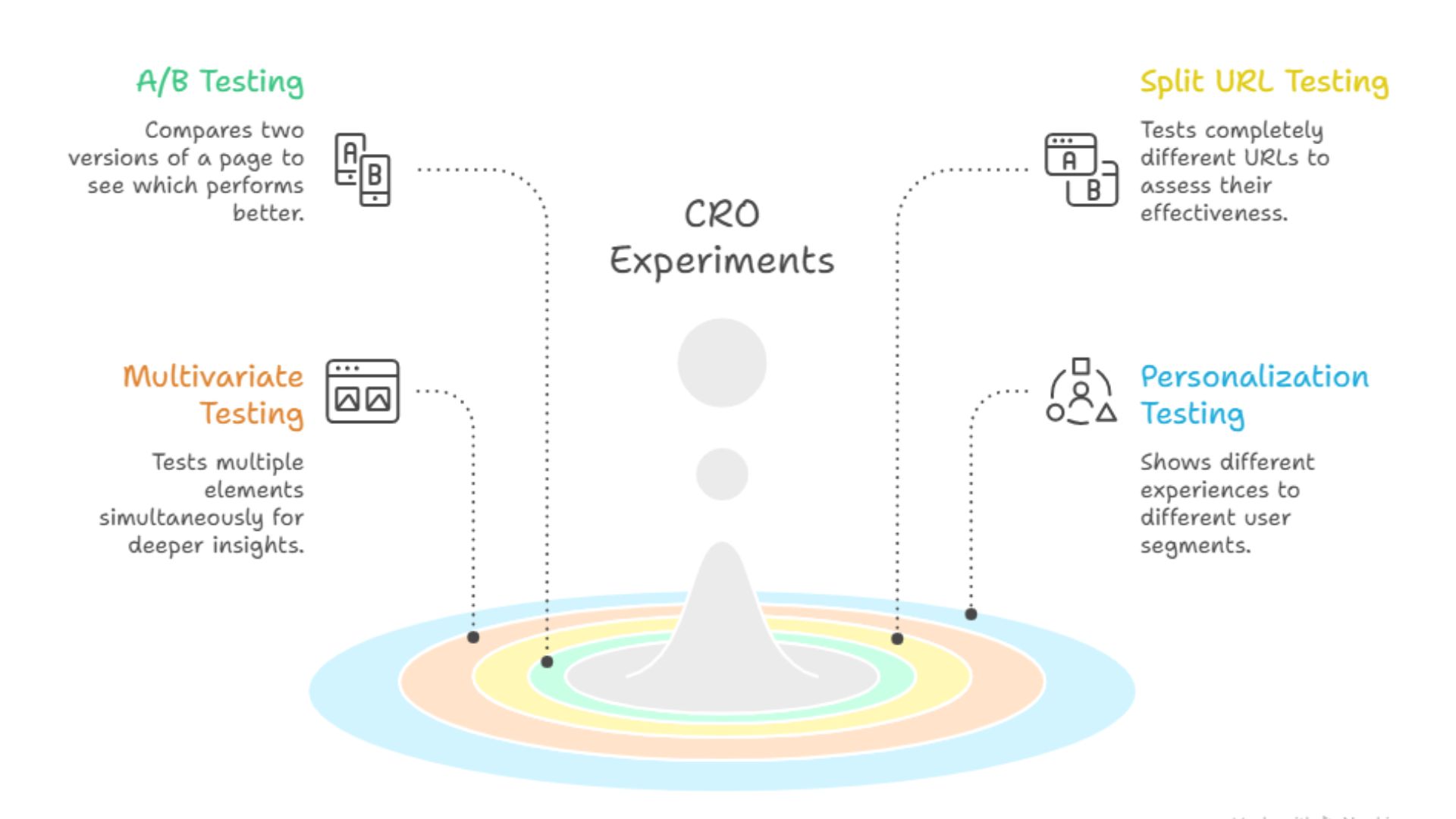
Not all tests are the same. Here are the most common types used in CRO.
This is the most widely used method. You create two versions of a page: Version A (original) and Version B (variation). Then you split traffic and measure which performs better. Common A/B tests cover headlines, product layouts, CTA buttons, and pricing displays.
Instead of modifying the same page, you test completely different URLs. This is useful for landing pages and full redesigns.
You test multiple elements at once, such as headline, image, and CTA together. This requires more traffic but gives deeper insights.
You show different experiences to different users. For example, new versus returning visitors, mobile versus desktop, or experiences based on traffic source. This is where CRO and personalization start working together.
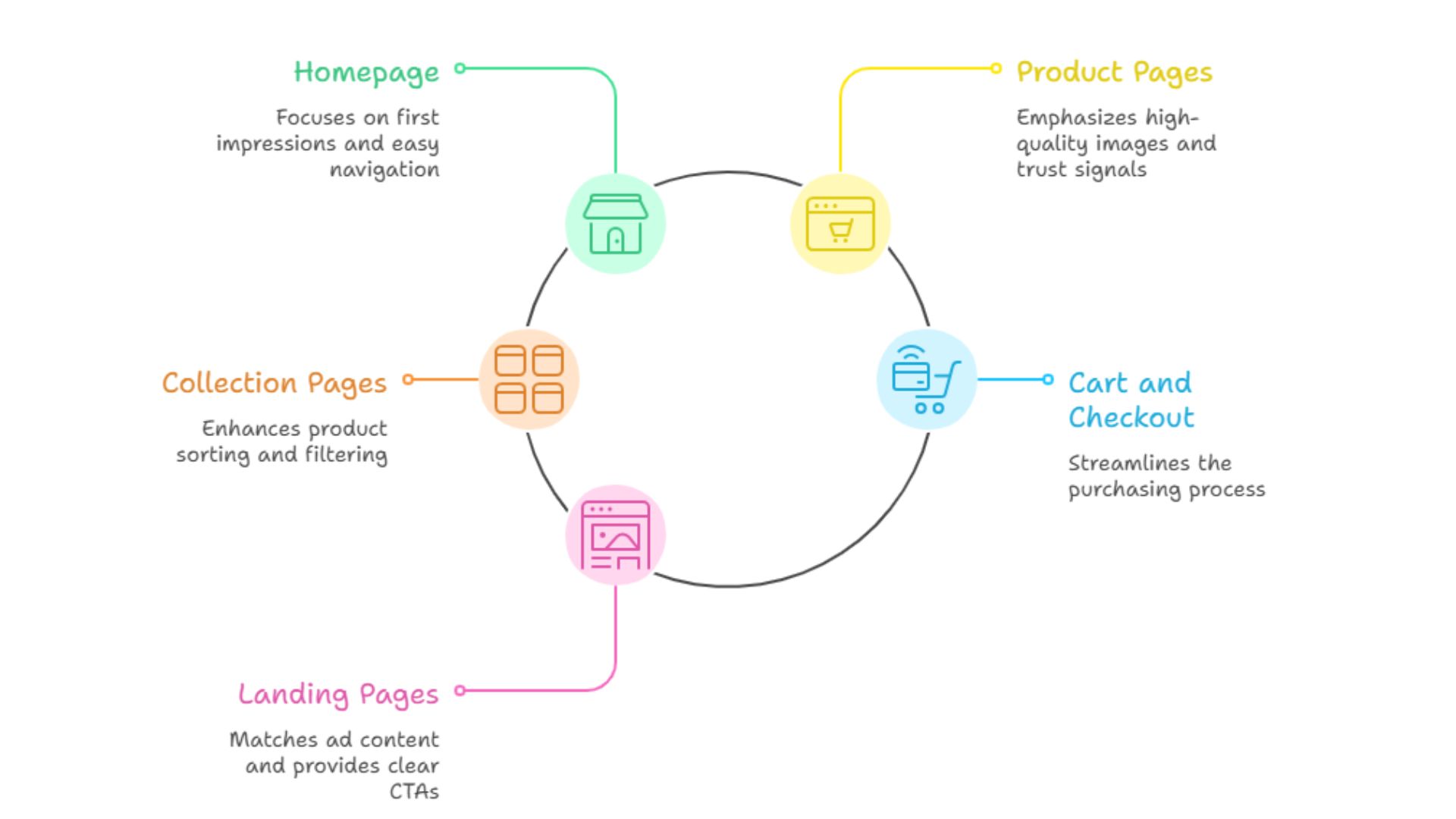
If you are running a Shopify or D2C store, focus on these.
Give it a clear value proposition, a strong first impression, and easy navigation.
Use high-quality images, trust signals, pricing clarity, and reviews.
Get product sorting, filtering, and recommendation logic right.
Aim for a frictionless flow, shipping clarity, and minimal distractions.
Match the message to the ad, keep the content focused, and use a clear CTA.
CRO is the strategy. A/B testing is the execution. Without A/B testing, CRO becomes guesswork.
With A/B testing, you validate ideas, reduce risk, and learn what actually works. Instead of assuming "free shipping works better," you test it: free shipping versus a discount, or a threshold versus no threshold. This is how real insights are built.
Not all users are the same. A new visitor behaves differently from a returning one. Personalization lets you show relevant products, tailor messaging, and adjust offers. First-time users might see trust signals, while returning users see urgency or offers. This improves relevance and increases the chance a visitor converts.
Many brands struggle with CRO because of avoidable mistakes.
This leads to unreliable results.
Decisions get made without statistical significance.
It becomes hard to understand what worked.
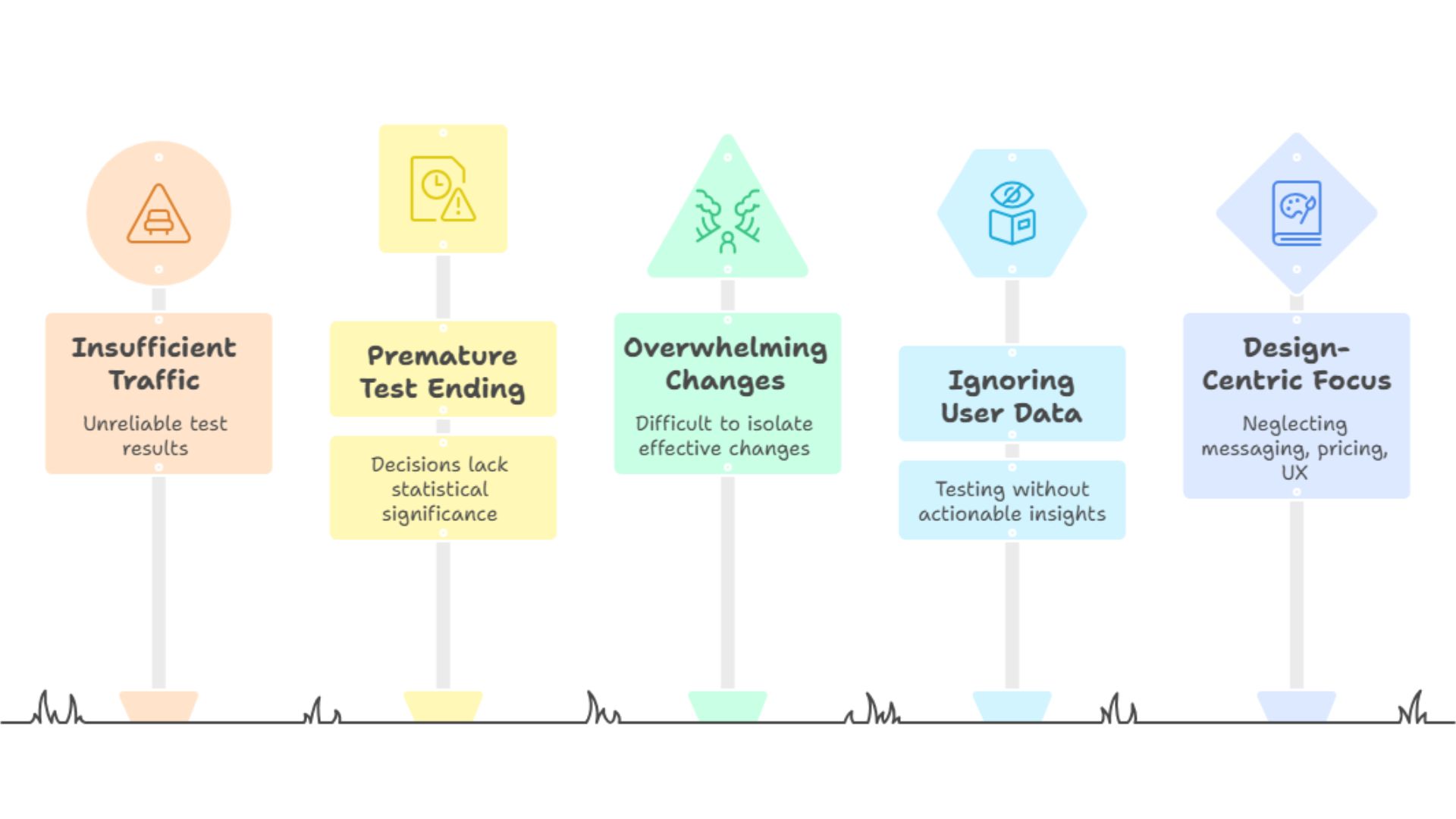
Testing blindly instead of using insights.
Ignoring messaging, pricing, and UX.
To run CRO effectively, you need tools for experimentation, analytics, and behaviour tracking. Some tools focus on general experimentation, while others are built specifically for ecommerce.
Platforms like CustomFit.ai are designed to help ecommerce brands run A/B tests and personalise experiences without heavy developer dependency. That means faster experimentation and quicker iteration cycles, which matters in a fast-moving environment.
Say you have 100,000 monthly visitors, a 2% conversion rate, and 2,000 orders. If you improve the conversion rate to 3%, orders become 3,000. That is 1,000 additional orders without increasing traffic.
If you are starting today:
Start small. Improve continuously.
Conversion rate optimization is not a trick or a hack. It is a structured way of improving how your website performs. In 2026, the brands that win are not the ones that get the most traffic, but the ones that use their traffic best.
If you focus on understanding your users, testing ideas, and improving experiences step by step, CRO becomes one of the most reliable ways to grow your business.
Conversion rate optimization is the process of improving a website so that more visitors take a desired action, such as making a purchase or signing up.
CRO helps ecommerce stores increase revenue without increasing traffic by improving how effectively visitors convert.
It varies by industry, but most ecommerce websites fall between 1% and 3%. The goal is continuous improvement.
A/B testing lets businesses compare different versions of a page and identify which one performs better based on real data.
Tools include A/B testing platforms, analytics tools, and personalization platforms like CustomFit.ai.