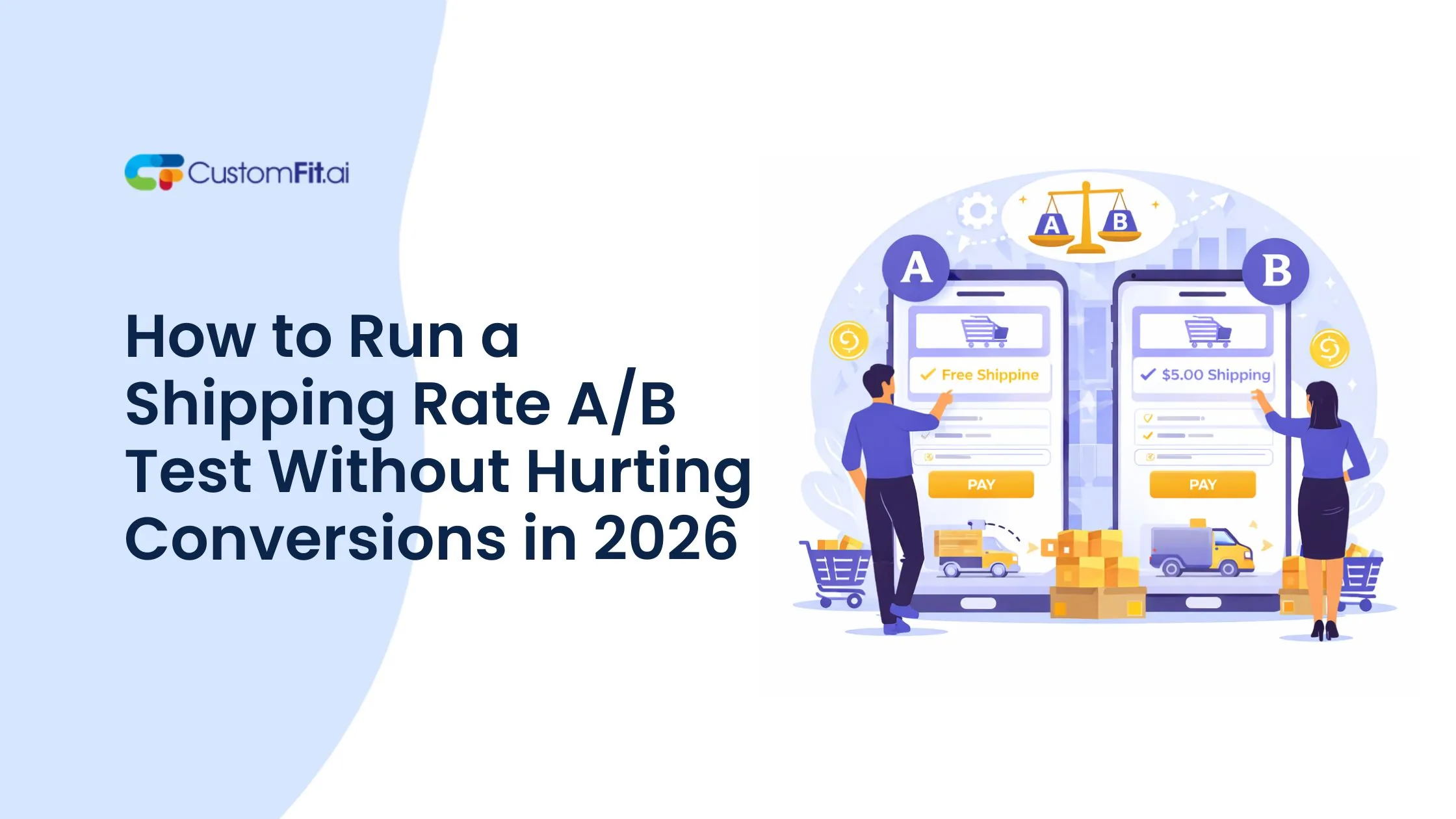
How to Run a Shipping Rate A/B Test Without Hurting Conversions in 2026

Shipping can quietly decide whether a sale happens or not.

A visitor may love your product. They may add it to cart. They may even start checkout. But the moment they see shipping charges, the emotional momentum changes.

Shipping is not just a cost. It is a perception trigger.

Too high and customers feel penalized. Too low and your margins disappear. Free shipping sounds attractive, but if structured poorly, it can reduce profitability instead of increasing revenue.

This is why shipping rate A/B testing has become one of the most important and misunderstood experiments in ecommerce in 2026.
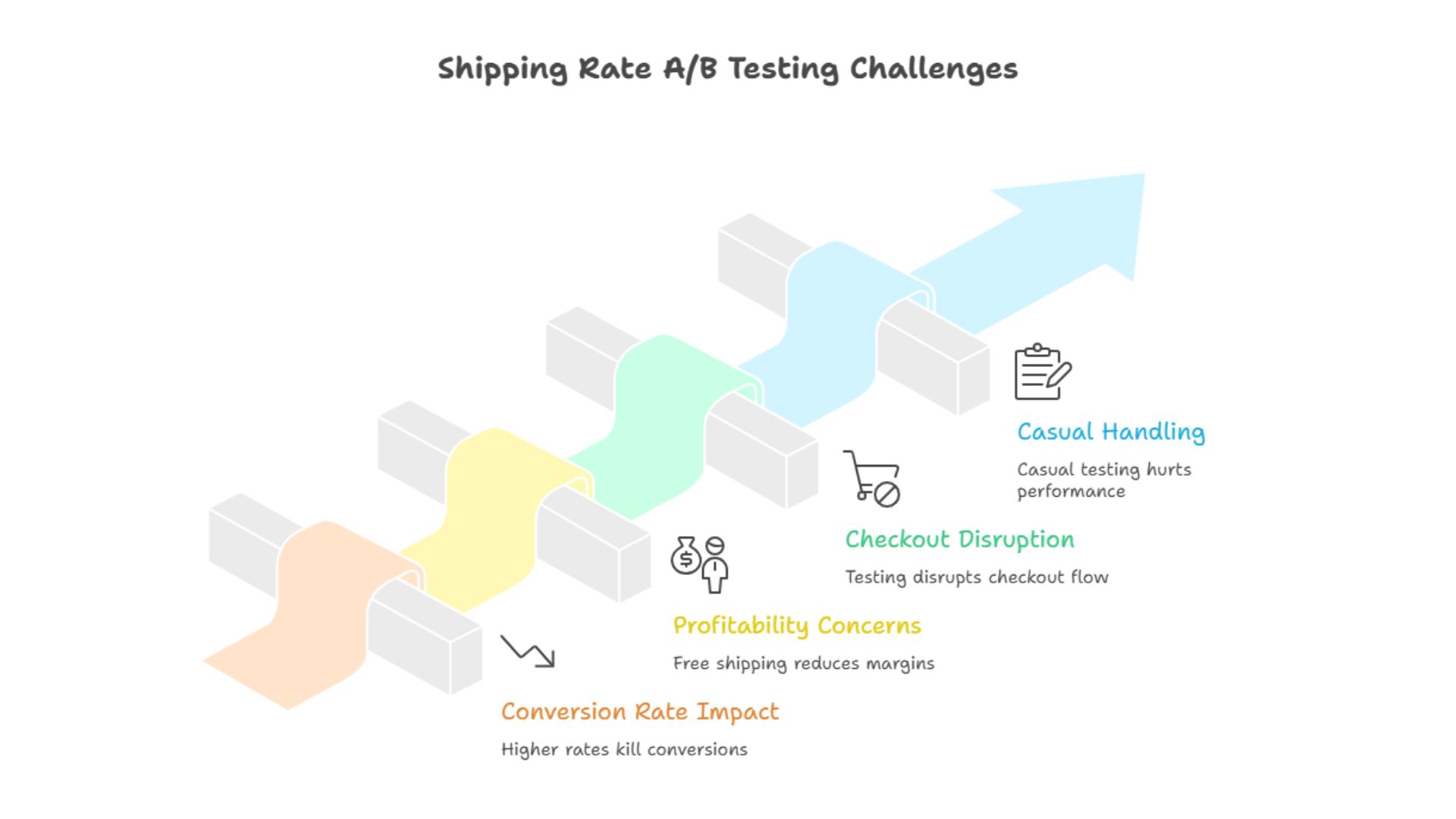
Shipping Rate AB Testing Challenges

Brands want to optimize shipping fees, but they are afraid.

What if higher shipping kills conversions?
What if free shipping reduces average order value?
What if testing shipping disrupts checkout flow?

The truth is, shipping rate A/B testing can increase conversion rate and revenue when done properly. It can also hurt performance if handled casually.

In this guide, we will break down what A/B testing for shipping costs really means, how to run shipping rate A/B tests safely, how to analyze results correctly, and how ecommerce brands in India and globally are optimizing delivery charges without hurting conversions.

We will also answer practical questions about tools, platforms, best practices, and real world case scenarios. Along the way, we will explain how an ecommerce focused A/B Testing Platform like CustomFit.ai can support structured shipping experiments without introducing instability.

If you run an ecommerce store and want to increase conversion rate while protecting margins, this guide will give you a disciplined framework.

What Is A/B Testing for Shipping Costs?

A/B testing for shipping costs is the process of showing different shipping fee structures to different segments of your website traffic and measuring which version performs better against defined business goals.

Those goals may include:

Higher conversion rate
Higher average order value
Improved checkout completion
Higher revenue per visitor
Improved gross profit

Instead of permanently changing shipping charges and hoping for the best, brands test controlled variations.

For example:
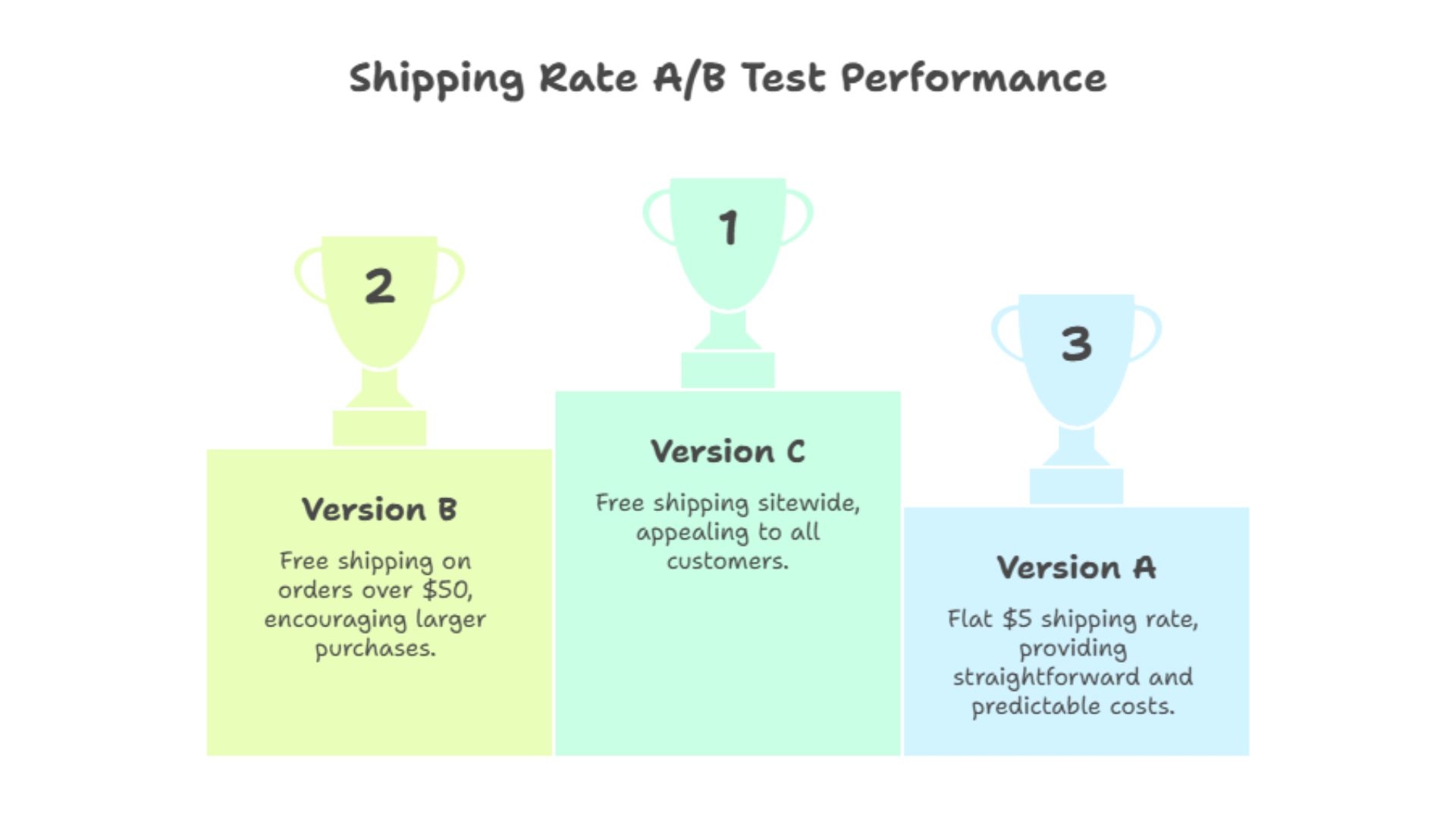
Version A: Flat 5 dollar shipping
Version B: Free shipping over 50 dollars
Version C: Free shipping sitewide

Shipping Rate AB Test Performance

Traffic is split between these variations. Performance is measured. Decisions are based on data rather than assumption.

Shipping rate A/B testing is not about discounting randomly. It is about understanding customer psychology and price sensitivity.

Why Shipping Rates Influence Conversion More Than Most People Realize

Shipping fees influence trust, fairness perception, and buying momentum.

Here is what typically happens.

When a user sees product pricing, they anchor to that number. When shipping is revealed later, especially if it is higher than expected, they experience friction.

This friction shows up as:

Cart abandonment
Checkout drop offs
Increased bounce rates
Lower conversion rate

On the other hand, offering free shipping without structure can reduce profitability or increase returns if customers over order.

This is why split testing shipping models is critical.

Shipping is not a fixed policy. It is a strategic lever.

Impact of Various Shipping Rate Models on Customer Conversion Rates

Different shipping models influence behavior differently.

Flat Shipping Fee

Simple and predictable. Works well for lower priced items. May discourage large orders if threshold incentives are missing.

Free Shipping Over a Threshold

Encourages higher average order value. Creates a psychological target. Often improves revenue per visitor.

Sitewide Free Shipping

Strong conversion booster for some brands. Can reduce margin if product pricing is not adjusted.

Real Time Calculated Shipping

More transparent but sometimes unpredictable. Can create friction if charges vary too much.

A/B testing helps brands identify which model aligns best with their audience and pricing structure.

What Is the Purpose of Shipping Rate A/B Testing?

The purpose is not just to reduce shipping fees.

The real purpose is to optimize the balance between:

Conversion rate
Average order value
Gross profit
Customer satisfaction

For example, free shipping over 75 dollars may reduce conversion rate slightly but increase average order value significantly. The net result may be higher revenue.

Only structured experimentation reveals these trade offs clearly.

How to Set Up Shipping Rate A/B Testing on Popular Online Store Platforms

Setting up shipping rate A/B testing requires careful coordination between frontend display and backend checkout logic.

Here is a practical framework.

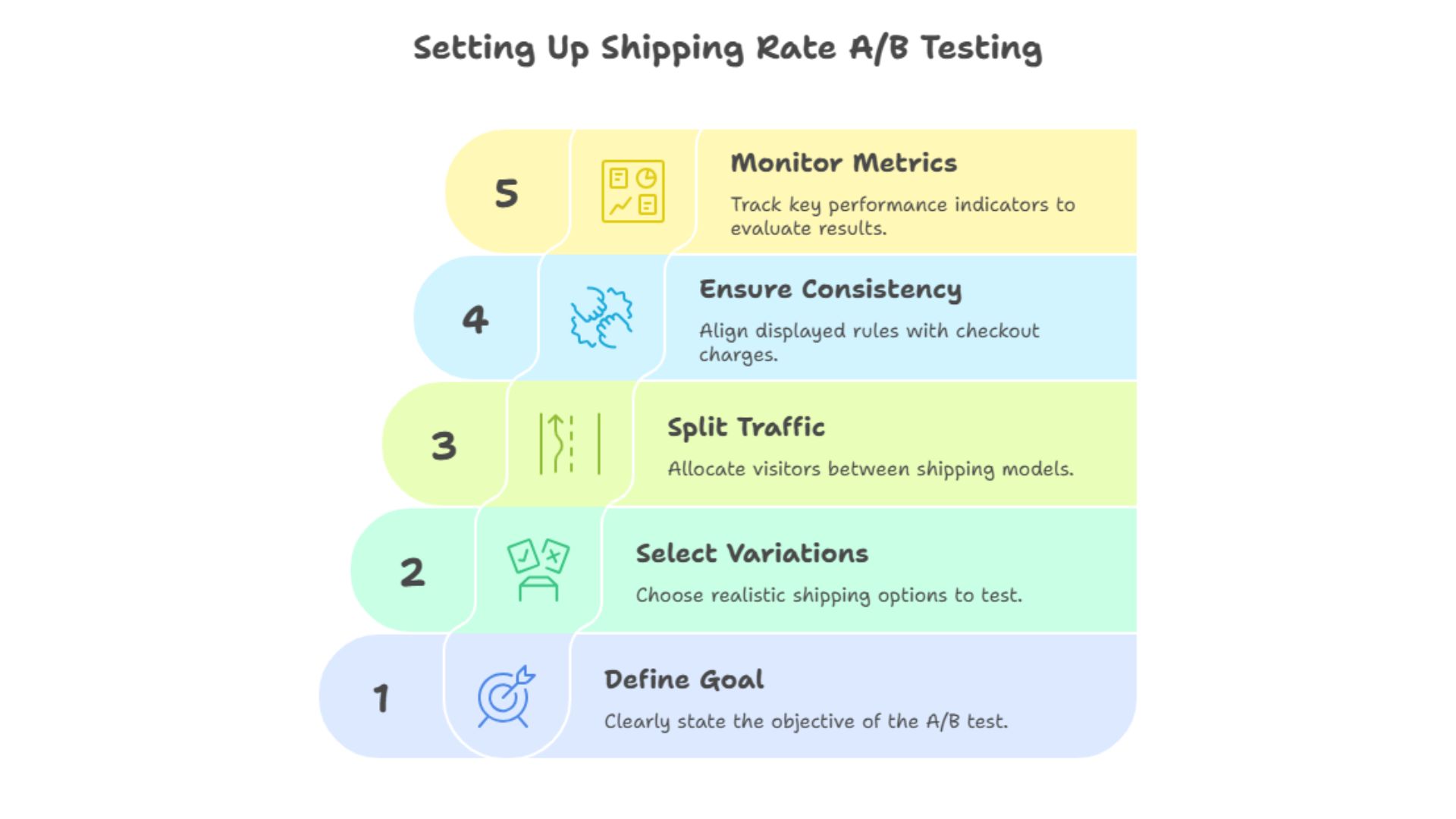
Step 1: Define Your Goal

Are you optimizing for conversion rate?
Are you trying to increase average order value?
Are you testing profitability thresholds?

Without a clear objective, results become confusing.

Step 2: Select Shipping Variations

Keep variations realistic.

Example:

Version A: Flat 5 dollar shipping
Version B: Free shipping above 60 dollars

Avoid extreme differences that could distort behavior.
Setting Up Shipping Rate AB Testing

Step 3: Split Traffic Carefully

Use an A/B Testing Platform to allocate traffic between shipping models.

Start with a smaller percentage, such as 20 to 30 percent exposure for the variation.

This protects revenue during early testing.

Step 4: Ensure Checkout Consistency

Displayed shipping rules must match checkout charges.

Mismatch destroys trust and invalidates results.

Step 5: Monitor Multiple Metrics

Track:

Conversion rate
Cart abandonment
Checkout completion
Average order value
Revenue per visitor
Gross profit

Shipping experiments are multi dimensional.

Read about What Is Price A/B Testing and How to Run It Without Losing Revenue in 2026?

How to Set Up an A/B Test for Delivery Charges on an Online Store

For ecommerce stores, especially in India, additional considerations include:

Tax calculations
Regional shipping zones
Cash on delivery fees
Payment gateway compatibility

A structured process looks like this:

Define hypothesis
Implement shipping rule variations
Segment traffic
Validate payment gateway behavior
Launch controlled experiment
Monitor performance daily
Scale cautiously

An ecommerce focused A/B testing software simplifies this process by handling traffic allocation and measurement while leaving core checkout logic stable.

Best Practices for Optimizing Shipping Fees Using Experimentation Platforms

Modern ecommerce brands follow these best practices.

Test incremental differences
Avoid testing during peak sales periods
Segment by new versus returning users
Analyze device level performance
Include profitability in evaluation
Run tests long enough to capture behavior patterns
Avoid overlapping experiments

Shipping testing is not about rushing. It is about controlled learning.

Best Tools for Shipping Rate A/B Testing for Ecommerce in India

When evaluating tools for shipping rate A/B testing in India, consider:

Compatibility with Indian payment gateways
Support for mobile heavy traffic
Ability to test shipping thresholds
Revenue tracking clarity
Ease of rollback

The best A/B Testing Platform for shipping experiments should allow traffic segmentation and controlled exposure without interfering with checkout stability.

CustomFit.ai is an example of a conversion rate optimization company that supports ecommerce experimentation through visual A/B testing and controlled deployment.

The goal is not complexity. It is clarity.

Platforms for Conducting Split Tests on Shipping Price Display

Split testing shipping price display involves testing not just the fee but how it is presented.

For example:

Displaying shipping cost on product page
Showing shipping threshold banners
Using sticky cart reminders
Highlighting free shipping incentives

An effective A/B testing tool allows visual experimentation on these elements without deep code changes.

Testing presentation often yields as much impact as testing the fee itself.

Step by Step Guide to Running Shipping Rate A/B Tests for Small Indian Retailers

Small retailers often worry that shipping tests are too complex.

In reality, the framework remains simple.

Step 1: Identify a clear shipping challenge
Step 2: Choose one variation only
Step 3: Use controlled traffic allocation
Step 4: Monitor both conversion rate and average order value
Step 5: Evaluate profit impact
Step 6: Scale gradually

Small retailers should avoid aggressive changes. Modest, incremental experiments reduce risk.
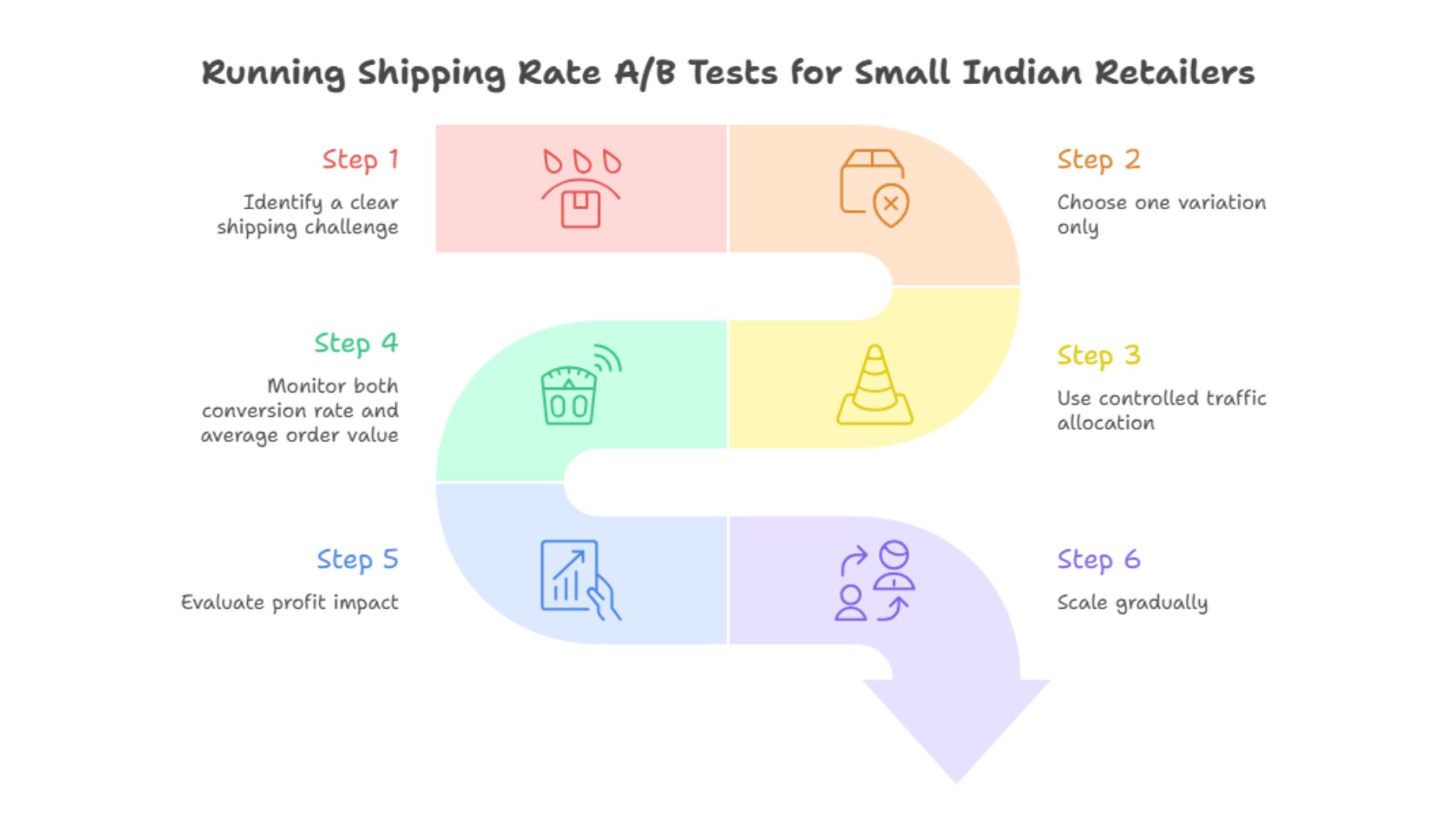
Running Shipping Rate AB Tests for Small Indian Retailers

Case Studies of Businesses Improving Sales Through Shipping Rate A/B Testing

While individual data is often confidential, typical success patterns include:

A D2C apparel brand increased average order value by 18 percent by introducing free shipping above a realistic threshold rather than offering flat low shipping.

A supplement brand improved checkout completion by clarifying shipping timelines and testing free shipping messaging rather than lowering actual shipping cost.

An electronics store improved revenue per visitor by bundling shipping with product pricing instead of displaying it separately.

These examples highlight a key insight.

Shipping perception often matters more than shipping cost itself.

Which Companies Offer Shipping Rate Optimization With A/B Testing Features?

Companies specializing in conversion rate optimization often include shipping rate testing as part of broader experimentation strategies.

These companies typically focus on:

Checkout optimization
Pricing experiments
Cart abandonment reduction
Behavioral personalization

An ecommerce focused A/B testing platform like CustomFit.ai allows brands to run shipping experiments internally while maintaining strategic control.

Brands can choose between in house testing or working with CRO agencies depending on scale and expertise.

Methods for Analyzing Results From Shipping Rate Variations

Shipping tests require multi layer analysis.

Conversion Rate Analysis

Did more users complete purchase?

Revenue Per Visitor

Did revenue increase or decrease overall?

Average Order Value

Did shipping thresholds encourage larger carts?

Profitability

Did margin improve or decline?

Segment Level Performance

Did new visitors behave differently from returning customers?

Device Level Impact

Did mobile users respond differently?

Statistical significance should be defined before launching the test. Most ecommerce brands aim for 90 to 95 percent confidence before making decisions.

Avoid stopping tests too early.

Shipping Rate A/B Testing and Paid Ads Performance

Shipping tests can influence paid ads performance.

If shipping incentives improve checkout completion, paid return on ad spend improves.

If poorly structured, shipping changes can increase cart abandonment and hurt ad performance.

To protect paid campaigns:

Start with low traffic exposure
Avoid testing during aggressive ad scaling
Monitor cost per acquisition closely
Scale gradually

Disciplined testing prevents paid disruption.
How CustomFit.ai Supports Shipping Rate Experimentation

customfit ab testing and website personalization platform

CustomFit.ai is a conversion rate optimization company built for ecommerce and D2C brands.

It supports shipping rate A/B testing by enabling:

Controlled traffic segmentation
Visual testing of shipping messaging
Revenue focused reporting
Gradual rollout of variations
Minimal impact on site performance

Instead of making shipping experiments risky, it helps teams test safely and measure clearly.
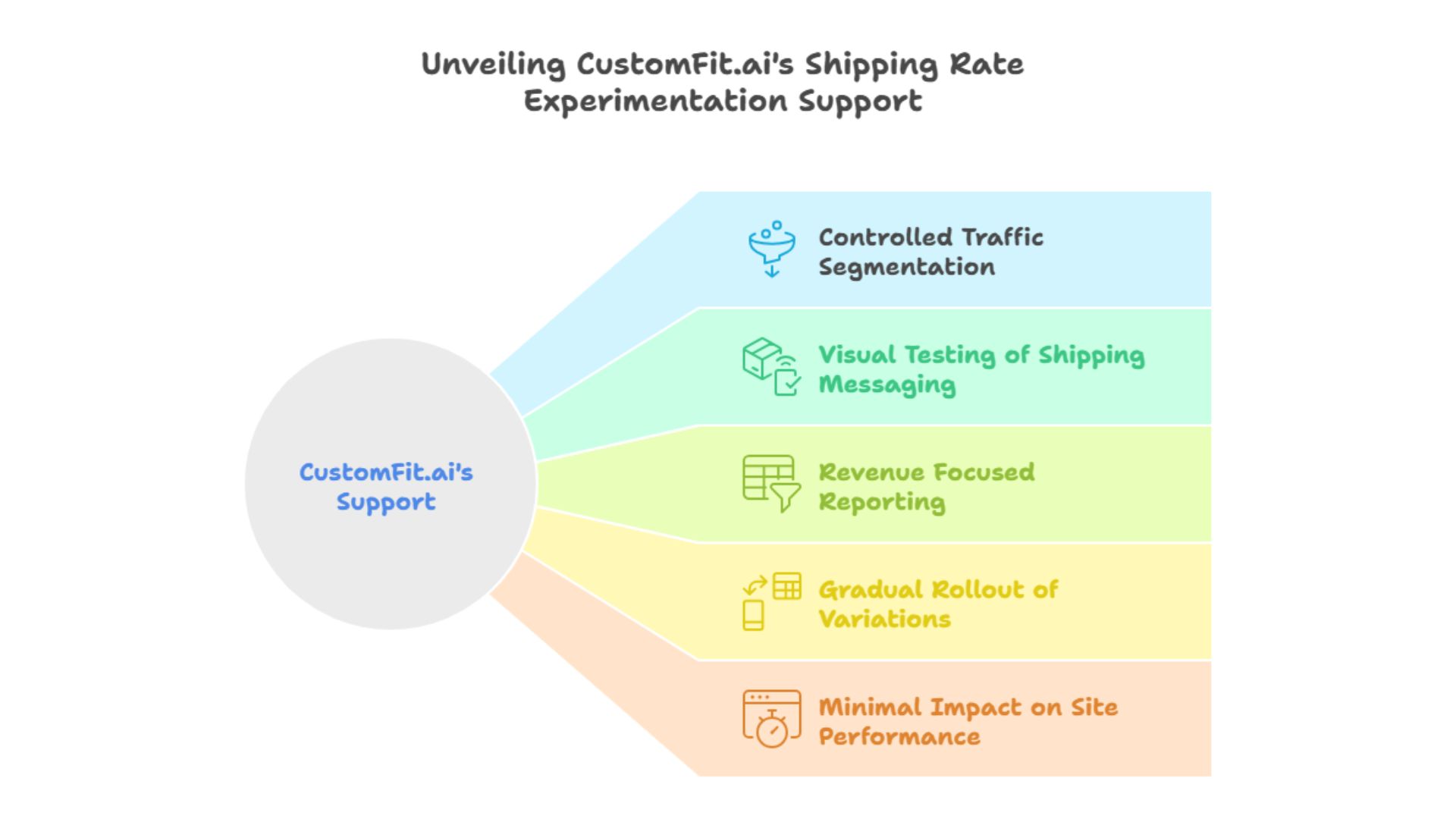
Unveiling CustomFit.ai's Shipping Rate Experimentation Support

Transactional and Conversion Focused Outcomes of Shipping A/B Testing

When done properly, shipping rate A/B testing can:

Increase conversion rate
Improve checkout completion
Increase average order value
Reduce cart abandonment
Improve revenue per visitor
Enhance profitability

These are measurable, business critical outcomes.

Shipping is not a minor detail. It is a conversion lever.

Common Mistakes to Avoid When Running Shipping Experiments

Testing during high traffic sale days
Changing too many variables at once
Ignoring payment gateway compatibility
Not analyzing profitability
Stopping tests prematurely
Testing unrealistic shipping thresholds

Avoiding these mistakes preserves revenue.

Conclusion: Shipping Testing in 2026 Is Strategic, Not Reactive

In 2026, shipping rate A/B testing is no longer about guessing what customers want.

It is about disciplined experimentation.

Brands that refuse to test shipping often leave revenue unrealized. Brands that test recklessly risk damaging trust.

The most successful ecommerce and D2C brands approach shipping testing calmly.

Define objectives.
Isolate variables.
Protect margins.
Analyze profit.
Scale gradually.

Shipping is not just a cost. It is a psychological trigger.

When optimized correctly through structured split testing, it becomes a competitive advantage.

With the right A/B testing platform and a measured approach, shipping experiments can increase conversion rate without sacrificing profitability.

FAQs: How to Run a Shipping Rate A/B Test Without Hurting Conversions

What is A/B testing for shipping costs?

A/B testing for shipping costs involves showing different shipping fee structures to different traffic segments to determine which model maximizes conversion rate and revenue.

How to set up shipping rate A/B testing on an online store?

Define objectives, create controlled shipping variations, split traffic using an A/B Testing Platform, monitor conversion and revenue metrics, and scale gradually.

What are the best tools for shipping rate A/B testing for ecommerce in India?

The best tools allow clean traffic allocation, revenue tracking, payment gateway compatibility, and minimal checkout disruption.

How does shipping model impact conversion rate?

Shipping fees influence buyer psychology. Transparent or incentive based shipping models often improve checkout completion and average order value.

Can shipping A/B testing hurt conversions?

Yes, if done recklessly. Structured testing with controlled exposure minimizes risk.

Which companies offer shipping rate optimization services?

Conversion rate optimization companies often provide shipping rate testing as part of broader ecommerce optimization strategies.

How does CustomFit.ai help with shipping experiments?

CustomFit.ai enables controlled split testing, revenue analysis, and safe rollout for ecommerce brands running shipping rate experiments.

Focus Keywords List

Primary Keywords:

  • Shipping rate A/B testing
  • A/B testing for shipping costs
  • Shipping A/B test
  • How to run shipping rate A/B test
  • Shipping rate split testing

Secondary Keywords:

  • A/B Testing Platform
  • A/B Testing
  • AB Testing
  • ab split testing
  • split testing
  • ecommerce A/B testing
  • ecommerce shipping optimization
  • increase conversion rate ecommerce
  • D2C brand shipping optimization
  • shipping threshold testing
  • checkout optimization shipping
  • shipping price experimentation
  • shipping rate conversion impact
  • ecommerce shipping strategy

Transactional and Conversion Keywords:

  • A/B testing software for ecommerce
  • A/B testing tool for Shopify
  • conversion rate optimization company
  • CRO platform for ecommerce
  • optimize shipping fees
  • improve checkout conversion
  • increase revenue per visitor
  • ecommerce experimentation platform
  • controlled traffic split testing
  • revenue focused A/B testing

Sapna Johar
CRO Engineer at Customfit.ai

Shipping can quietly decide whether a sale happens or not.

A visitor may love your product. They may add it to cart. They may even start checkout. But the moment they see shipping charges, the emotional momentum changes.

Shipping is not just a cost. It is a perception trigger.

Too high and customers feel penalized. Too low and your margins disappear. Free shipping sounds attractive, but if structured poorly, it can reduce profitability instead of increasing revenue.

This is why shipping rate A/B testing has become one of the most important and misunderstood experiments in ecommerce in 2026.

Shipping Rate AB Testing Challenges

Brands want to optimize shipping fees, but they are afraid.

What if higher shipping kills conversions?
What if free shipping reduces average order value?
What if testing shipping disrupts checkout flow?

The truth is, shipping rate A/B testing can increase conversion rate and revenue when done properly. It can also hurt performance if handled casually.

In this guide, we will break down what A/B testing for shipping costs really means, how to run shipping rate A/B tests safely, how to analyze results correctly, and how ecommerce brands in India and globally are optimizing delivery charges without hurting conversions.

We will also answer practical questions about tools, platforms, best practices, and real world case scenarios. Along the way, we will explain how an ecommerce focused A/B Testing Platform like CustomFit.ai can support structured shipping experiments without introducing instability.

If you run an ecommerce store and want to increase conversion rate while protecting margins, this guide will give you a disciplined framework.

What Is A/B Testing for Shipping Costs?

A/B testing for shipping costs is the process of showing different shipping fee structures to different segments of your website traffic and measuring which version performs better against defined business goals.

Those goals may include:

Higher conversion rate
Higher average order value
Improved checkout completion
Higher revenue per visitor
Improved gross profit

Instead of permanently changing shipping charges and hoping for the best, brands test controlled variations.

For example:

Version A: Flat 5 dollar shipping
Version B: Free shipping over 50 dollars
Version C: Free shipping sitewide

Shipping Rate AB Test Performance

Traffic is split between these variations. Performance is measured. Decisions are based on data rather than assumption.

Shipping rate A/B testing is not about discounting randomly. It is about understanding customer psychology and price sensitivity.

Why Shipping Rates Influence Conversion More Than Most People Realize

Shipping fees influence trust, fairness perception, and buying momentum.

Here is what typically happens.

When a user sees product pricing, they anchor to that number. When shipping is revealed later, especially if it is higher than expected, they experience friction.

This friction shows up as:

Cart abandonment
Checkout drop offs
Increased bounce rates
Lower conversion rate

On the other hand, offering free shipping without structure can reduce profitability or increase returns if customers over order.

This is why split testing shipping models is critical.

Shipping is not a fixed policy. It is a strategic lever.

Impact of Various Shipping Rate Models on Customer Conversion Rates

Different shipping models influence behavior differently.

Flat Shipping Fee

Simple and predictable. Works well for lower priced items. May discourage large orders if threshold incentives are missing.

Free Shipping Over a Threshold

Encourages higher average order value. Creates a psychological target. Often improves revenue per visitor.

Sitewide Free Shipping

Strong conversion booster for some brands. Can reduce margin if product pricing is not adjusted.

Real Time Calculated Shipping

More transparent but sometimes unpredictable. Can create friction if charges vary too much.

A/B testing helps brands identify which model aligns best with their audience and pricing structure.

What Is the Purpose of Shipping Rate A/B Testing?

The purpose is not just to reduce shipping fees.

The real purpose is to optimize the balance between:

Conversion rate
Average order value
Gross profit
Customer satisfaction

For example, free shipping over 75 dollars may reduce conversion rate slightly but increase average order value significantly. The net result may be higher revenue.

Only structured experimentation reveals these trade offs clearly.

How to Set Up Shipping Rate A/B Testing on Popular Online Store Platforms

Setting up shipping rate A/B testing requires careful coordination between frontend display and backend checkout logic.

Here is a practical framework.

Step 1: Define Your Goal

Are you optimizing for conversion rate?
Are you trying to increase average order value?
Are you testing profitability thresholds?

Without a clear objective, results become confusing.

Step 2: Select Shipping Variations

Keep variations realistic.

Example:

Version A: Flat 5 dollar shipping
Version B: Free shipping above 60 dollars

Avoid extreme differences that could distort behavior.

Setting Up Shipping Rate AB Testing

Step 3: Split Traffic Carefully

Use an A/B Testing Platform to allocate traffic between shipping models.

Start with a smaller percentage, such as 20 to 30 percent exposure for the variation.

This protects revenue during early testing.

Step 4: Ensure Checkout Consistency

Displayed shipping rules must match checkout charges.

Mismatch destroys trust and invalidates results.

Step 5: Monitor Multiple Metrics

Track:

Conversion rate
Cart abandonment
Checkout completion
Average order value
Revenue per visitor
Gross profit

Shipping experiments are multi dimensional.

Read about What Is Price A/B Testing and How to Run It Without Losing Revenue in 2026?

How to Set Up an A/B Test for Delivery Charges on an Online Store

For ecommerce stores, especially in India, additional considerations include:

Tax calculations
Regional shipping zones
Cash on delivery fees
Payment gateway compatibility

A structured process looks like this:

Define hypothesis
Implement shipping rule variations
Segment traffic
Validate payment gateway behavior
Launch controlled experiment
Monitor performance daily
Scale cautiously

An ecommerce focused A/B testing software simplifies this process by handling traffic allocation and measurement while leaving core checkout logic stable.

Best Practices for Optimizing Shipping Fees Using Experimentation Platforms

Modern ecommerce brands follow these best practices.

Test incremental differences
Avoid testing during peak sales periods
Segment by new versus returning users
Analyze device level performance
Include profitability in evaluation
Run tests long enough to capture behavior patterns
Avoid overlapping experiments

Shipping testing is not about rushing. It is about controlled learning.

Best Tools for Shipping Rate A/B Testing for Ecommerce in India

When evaluating tools for shipping rate A/B testing in India, consider:

Compatibility with Indian payment gateways
Support for mobile heavy traffic
Ability to test shipping thresholds
Revenue tracking clarity
Ease of rollback

The best A/B Testing Platform for shipping experiments should allow traffic segmentation and controlled exposure without interfering with checkout stability.

CustomFit.ai is an example of a conversion rate optimization company that supports ecommerce experimentation through visual A/B testing and controlled deployment.

The goal is not complexity. It is clarity.

Platforms for Conducting Split Tests on Shipping Price Display

Split testing shipping price display involves testing not just the fee but how it is presented.

For example:

Displaying shipping cost on product page
Showing shipping threshold banners
Using sticky cart reminders
Highlighting free shipping incentives

An effective A/B testing tool allows visual experimentation on these elements without deep code changes.

Testing presentation often yields as much impact as testing the fee itself.

Step by Step Guide to Running Shipping Rate A/B Tests for Small Indian Retailers

Small retailers often worry that shipping tests are too complex.

In reality, the framework remains simple.

Step 1: Identify a clear shipping challenge
Step 2: Choose one variation only
Step 3: Use controlled traffic allocation
Step 4: Monitor both conversion rate and average order value
Step 5: Evaluate profit impact
Step 6: Scale gradually

Small retailers should avoid aggressive changes. Modest, incremental experiments reduce risk.

Running Shipping Rate AB Tests for Small Indian Retailers

Case Studies of Businesses Improving Sales Through Shipping Rate A/B Testing

While individual data is often confidential, typical success patterns include:

A D2C apparel brand increased average order value by 18 percent by introducing free shipping above a realistic threshold rather than offering flat low shipping.

A supplement brand improved checkout completion by clarifying shipping timelines and testing free shipping messaging rather than lowering actual shipping cost.

An electronics store improved revenue per visitor by bundling shipping with product pricing instead of displaying it separately.

These examples highlight a key insight.

Shipping perception often matters more than shipping cost itself.

Which Companies Offer Shipping Rate Optimization With A/B Testing Features?

Companies specializing in conversion rate optimization often include shipping rate testing as part of broader experimentation strategies.

These companies typically focus on:

Checkout optimization
Pricing experiments
Cart abandonment reduction
Behavioral personalization

An ecommerce focused A/B testing platform like CustomFit.ai allows brands to run shipping experiments internally while maintaining strategic control.

Brands can choose between in house testing or working with CRO agencies depending on scale and expertise.

Methods for Analyzing Results From Shipping Rate Variations

Shipping tests require multi layer analysis.

Conversion Rate Analysis

Did more users complete purchase?

Revenue Per Visitor

Did revenue increase or decrease overall?

Average Order Value

Did shipping thresholds encourage larger carts?

Profitability

Did margin improve or decline?

Segment Level Performance

Did new visitors behave differently from returning customers?

Device Level Impact

Did mobile users respond differently?

Statistical significance should be defined before launching the test. Most ecommerce brands aim for 90 to 95 percent confidence before making decisions.

Avoid stopping tests too early.

Shipping Rate A/B Testing and Paid Ads Performance

Shipping tests can influence paid ads performance.

If shipping incentives improve checkout completion, paid return on ad spend improves.

If poorly structured, shipping changes can increase cart abandonment and hurt ad performance.

To protect paid campaigns:

Start with low traffic exposure
Avoid testing during aggressive ad scaling
Monitor cost per acquisition closely
Scale gradually

Disciplined testing prevents paid disruption.

How CustomFit.ai Supports Shipping Rate Experimentation

customfit ab testing and website personalization platform

CustomFit.ai is a conversion rate optimization company built for ecommerce and D2C brands.

It supports shipping rate A/B testing by enabling:

Controlled traffic segmentation
Visual testing of shipping messaging
Revenue focused reporting
Gradual rollout of variations
Minimal impact on site performance

Instead of making shipping experiments risky, it helps teams test safely and measure clearly.

Unveiling CustomFit.ai's Shipping Rate Experimentation Support

Transactional and Conversion Focused Outcomes of Shipping A/B Testing

When done properly, shipping rate A/B testing can:

Increase conversion rate
Improve checkout completion
Increase average order value
Reduce cart abandonment
Improve revenue per visitor
Enhance profitability

These are measurable, business critical outcomes.

Shipping is not a minor detail. It is a conversion lever.

Common Mistakes to Avoid When Running Shipping Experiments

Testing during high traffic sale days
Changing too many variables at once
Ignoring payment gateway compatibility
Not analyzing profitability
Stopping tests prematurely
Testing unrealistic shipping thresholds

Avoiding these mistakes preserves revenue.

Conclusion: Shipping Testing in 2026 Is Strategic, Not Reactive

In 2026, shipping rate A/B testing is no longer about guessing what customers want.

It is about disciplined experimentation.

Brands that refuse to test shipping often leave revenue unrealized. Brands that test recklessly risk damaging trust.

The most successful ecommerce and D2C brands approach shipping testing calmly.

Define objectives.
Isolate variables.
Protect margins.
Analyze profit.
Scale gradually.

Shipping is not just a cost. It is a psychological trigger.

When optimized correctly through structured split testing, it becomes a competitive advantage.

With the right A/B testing platform and a measured approach, shipping experiments can increase conversion rate without sacrificing profitability.

FAQs: How to Run a Shipping Rate A/B Test Without Hurting Conversions

What is A/B testing for shipping costs?

A/B testing for shipping costs involves showing different shipping fee structures to different traffic segments to determine which model maximizes conversion rate and revenue.

How to set up shipping rate A/B testing on an online store?

Define objectives, create controlled shipping variations, split traffic using an A/B Testing Platform, monitor conversion and revenue metrics, and scale gradually.

What are the best tools for shipping rate A/B testing for ecommerce in India?

The best tools allow clean traffic allocation, revenue tracking, payment gateway compatibility, and minimal checkout disruption.

How does shipping model impact conversion rate?

Shipping fees influence buyer psychology. Transparent or incentive based shipping models often improve checkout completion and average order value.

Can shipping A/B testing hurt conversions?

Yes, if done recklessly. Structured testing with controlled exposure minimizes risk.

Which companies offer shipping rate optimization services?

Conversion rate optimization companies often provide shipping rate testing as part of broader ecommerce optimization strategies.

How does CustomFit.ai help with shipping experiments?

CustomFit.ai enables controlled split testing, revenue analysis, and safe rollout for ecommerce brands running shipping rate experiments.

Focus Keywords List

Primary Keywords:

  • Shipping rate A/B testing
  • A/B testing for shipping costs
  • Shipping A/B test
  • How to run shipping rate A/B test
  • Shipping rate split testing

Secondary Keywords:

  • A/B Testing Platform
  • A/B Testing
  • AB Testing
  • ab split testing
  • split testing
  • ecommerce A/B testing
  • ecommerce shipping optimization
  • increase conversion rate ecommerce
  • D2C brand shipping optimization
  • shipping threshold testing
  • checkout optimization shipping
  • shipping price experimentation
  • shipping rate conversion impact
  • ecommerce shipping strategy

Transactional and Conversion Keywords:

  • A/B testing software for ecommerce
  • A/B testing tool for Shopify
  • conversion rate optimization company
  • CRO platform for ecommerce
  • optimize shipping fees
  • improve checkout conversion
  • increase revenue per visitor
  • ecommerce experimentation platform
  • controlled traffic split testing
  • revenue focused A/B testing