From the conversion glossary
Concepts referenced in this article, defined.
Learn how to run A/B tests without hurting paid ads performance using controlled testing, traffic splits, and CRO tools like CustomFit.ai.
Concepts referenced in this article, defined.
Run rigorous A/B tests and personalize every visit on Shopify or any storefront — no engineers required.
At some point, every growth or performance marketer runs into this conflict.
You want to run A/B tests. You know testing improves conversion rates, landing pages, and long-term revenue. But paid ads are already expensive. Budgets are tight. Every dip in performance gets noticed, and the fear is real: what if testing hurts my ads? What if conversion rate drops and algorithms punish me? What if I waste spend while experimenting?
These concerns are not irrational. Poorly planned A/B tests can damage paid ads performance. But avoiding testing entirely is far more dangerous.
Brands that scale sustainably learn how to test without destabilizing acquisition. Brands that avoid testing end up squeezing harder on ads while the website stays weak.
This is a practical guide to running A/B tests safely when paid ads are a major growth channel. It covers how to structure A/B tests, how to protect ad performance, how to test landing pages and creatives responsibly, and which frameworks help minimize risk. It also touches on how CustomFit.ai, a conversion rate optimization platform built for ecommerce and D2C brands, supports controlled experimentation through its A/B testing tools.
Paid ads operate on fragile systems.
Algorithms optimize based on conversion signals. Small fluctuations affect learning phases, delivery, and costs. When something changes suddenly, performance marketers feel it immediately.
A/B testing introduces variation by design. When these two worlds collide without planning, problems follow:
This is why many teams either avoid testing or test too aggressively. Neither works. The answer is to test with structure.
The first shift is recognizing that you do not test everything at once, and you do not test on all traffic.
Safe A/B testing follows three principles.
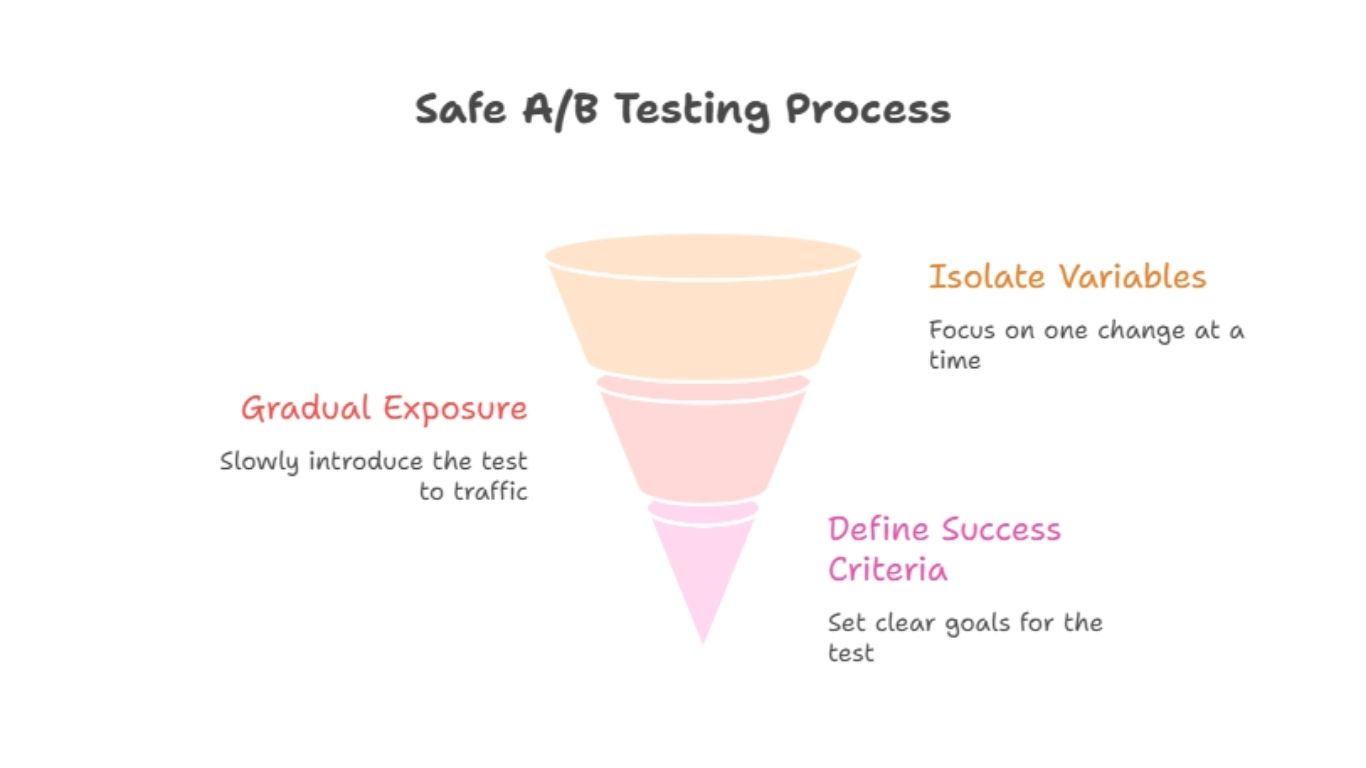
Isolation. Test one variable at a time so you know what caused any change in performance.
Gradual exposure. Start with a small percentage of traffic before expanding.
Clear success criteria. Define what a winning or losing test looks like before you launch it.
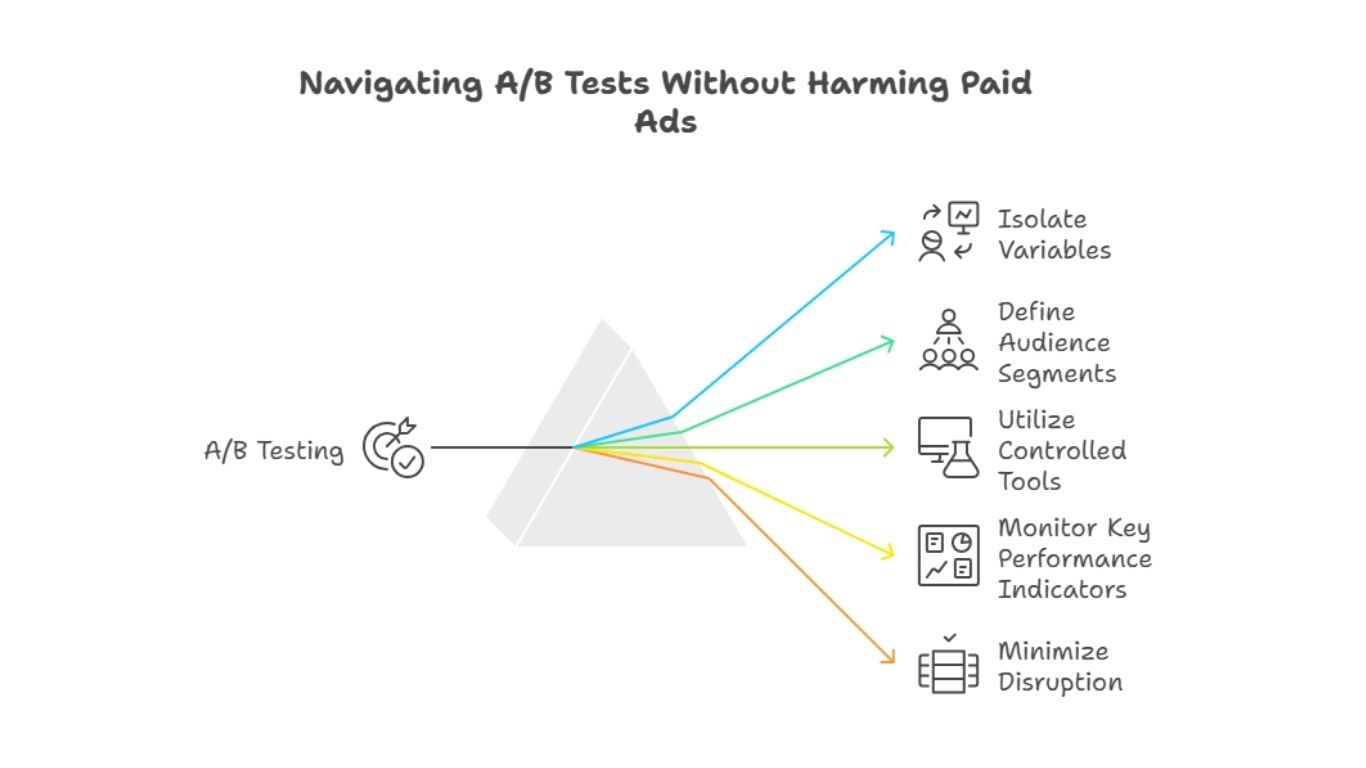
When you isolate variables, limit exposure, and set guardrails in advance, A/B tests become predictable rather than scary.
One of the most common mistakes teams make is mixing these concerns. They blame ads when the website changes, or blame the website when ad creatives change. This creates confusion and reinforces the fear of testing.
Before running any test, separate these layers:
When you test website changes, the goal is to improve how traffic converts, not how ads deliver. Keeping this distinction clear makes it much easier to diagnose results without panic.
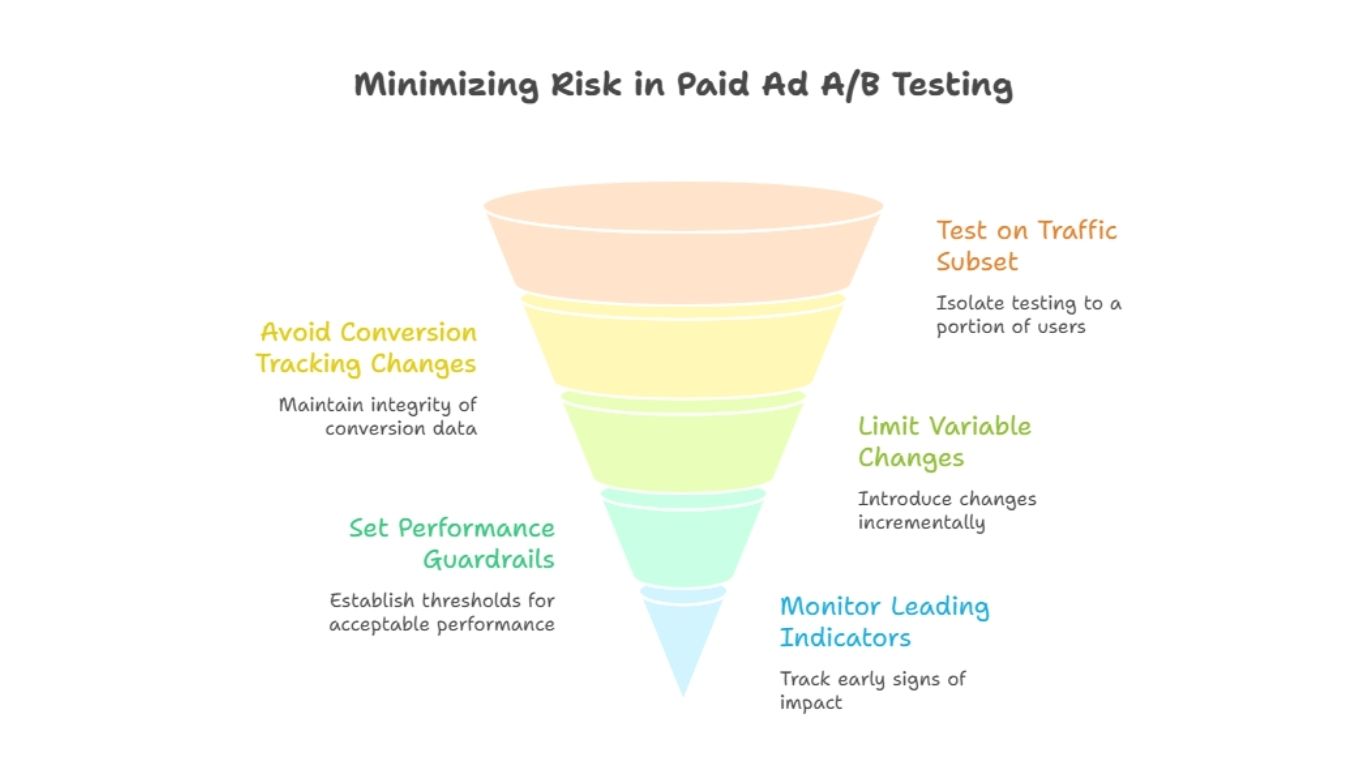
Risk does not come from testing. It comes from uncontrolled testing. These core strategies protect paid performance:
When teams follow these principles, testing becomes a safety net rather than a threat.
Traffic splitting is one of the most misunderstood parts of A/B testing. Many teams assume that running a test means half of paid traffic will see an unproven version. That is not required.
Safer traffic splitting looks like this:
Modern A/B testing platforms allow precise traffic allocation, so you are never forced into a risky 50/50 split. Even if a test underperforms, the majority of paid traffic stays protected.
Landing pages are often the biggest lever for improving paid performance. They are also the biggest risk when changed carelessly.
When landing page tests hurt ads, it is usually because conversion rate drops temporarily, algorithms interpret lower conversion quality, and costs increase before learning stabilizes.
To test landing pages safely:
For example, test headline clarity or trust signals before redesigning the entire page. Using an A/B testing tool like CustomFit.ai lets teams run visual tests without changing URLs, tracking, or ad destinations, which keeps ad platforms stable.
One of the safest ways to test without affecting ads is segmentation. Instead of testing across all paid traffic, isolate specific segments first:
Testing on lower-risk segments first builds confidence before exposing high-cost paid traffic. Segmentation also improves the quality of what you learn, since different audiences behave differently.
Display ads and programmatic placements can burn budget quickly if tested without structure.
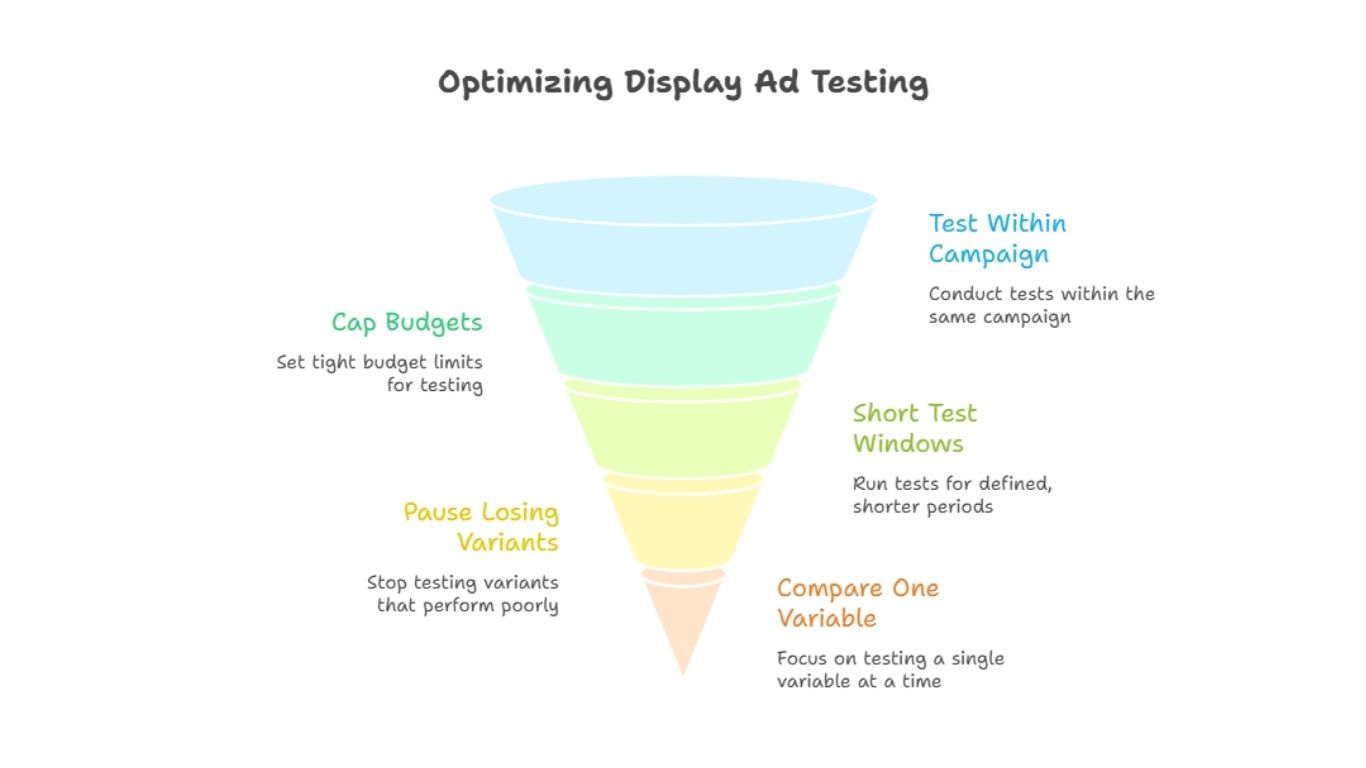
A safer structure for display ad testing:
Avoid launching multiple new creatives at once. Compare one controlled variable at a time, such as imagery or headline. This keeps budget waste low while still producing useful learning.
Search ads are intent-driven. Even small wording changes can move performance in either direction.
To test search ad copy safely:
Search platforms often provide built-in experiment features that isolate changes and protect baseline performance. Paired with landing page A/B testing, search copy tests become more informative.
Social platforms like Facebook and Instagram reward consistency. Abrupt changes can reset learning phases.
A step-by-step approach to safely testing Facebook ads:
Avoid editing live ads that are performing well. Create controlled experiments alongside them rather than modifying what is already working.
Safe testing depends on the right tooling. The best tools share a few characteristics:
An A/B testing platform that integrates cleanly with ecommerce sites lets teams test landing pages without touching ad setup. CustomFit.ai, for example, supports controlled website experimentation while keeping ad destinations stable, which reduces risk to paid campaigns.
You can do A/B testing on CTA button using Customfit App which is compatible with Shopify, Shoplazza, Shopline, Woocommerce, Wordpress, Magento, Bigcommerce, Custom coded website, Salesforce commerce cloud and many more.
Scaling is exactly when many teams stop testing. This is a mistake. When you are scaling, every small conversion gain multiplies across a larger volume of spend. The stakes for getting the website right are higher, not lower.
During scaling phases, keep tests conservative:
Done this way, A/B testing makes scaling more durable rather than slowing it down.
Paid ads rarely fail because targeting is wrong. They fail because the landing experience is weak.
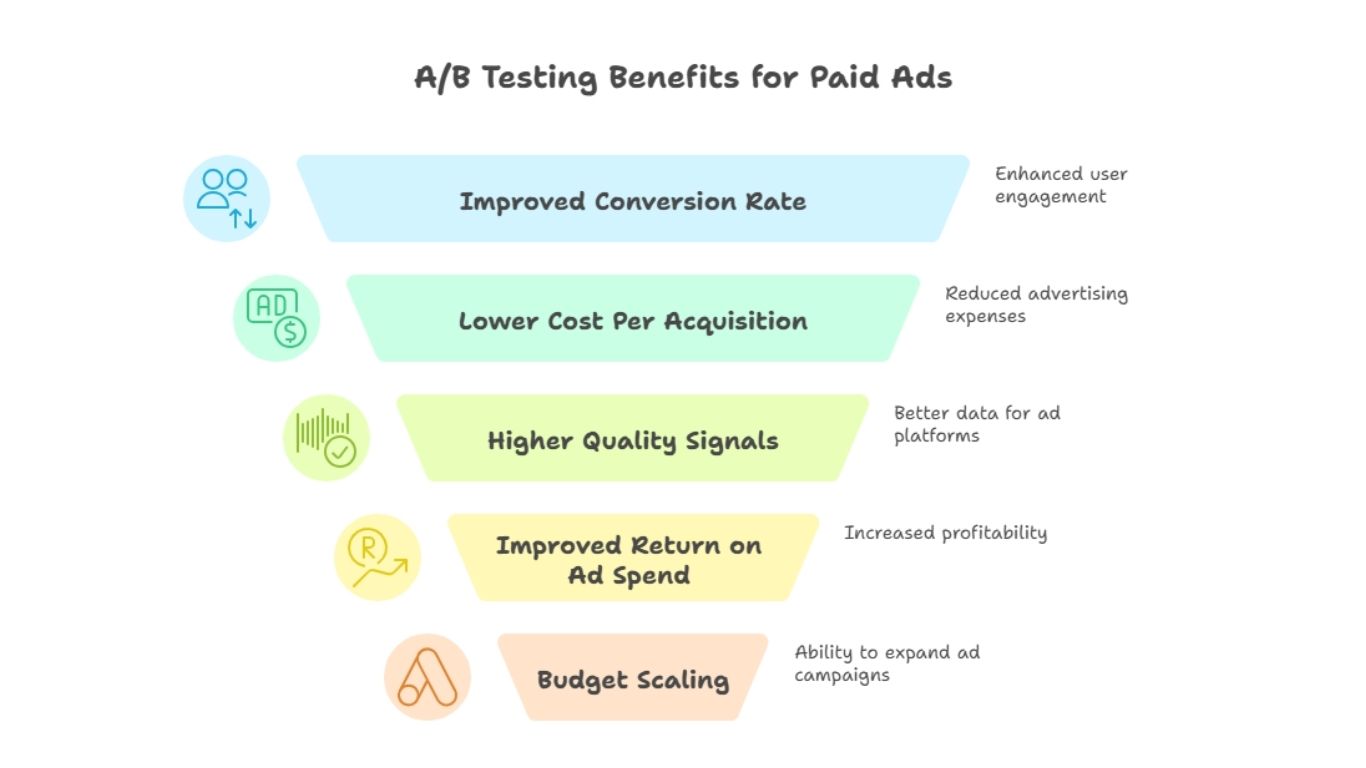
A better conversion rate produces downstream effects across paid performance:
Testing is not an enemy of paid ads. It is a long-term ally. The key is patience and consistency.
A conversion rate optimization company brings structure to experimentation. Instead of running tests randomly, they focus on clear hypotheses, incremental changes, business-aligned metrics, and risk management.
CustomFit.ai supports this approach by helping brands test and personalize experiences without destabilizing acquisition, which makes experimentation safer for teams that rely heavily on paid traffic.
The most mature teams treat ads and experimentation as integrated, not separate. Ads drive intent. Website tests improve how that intent is fulfilled. Learnings from website tests inform future creatives. Performance compounds over time rather than plateauing.
This creates a feedback loop where paid acquisition and conversion optimization strengthen each other continuously.
These are the pitfalls worth watching:
Most testing failures trace back to process problems, not tool problems.
Not every test needs to run to statistical perfection. Define guardrails before launch so decisions are not made emotionally:
Setting these criteria in advance protects budgets and removes guesswork from the decision.
CustomFit.ai is a conversion rate optimization platform focused on controlled experimentation for ecommerce and D2C brands.
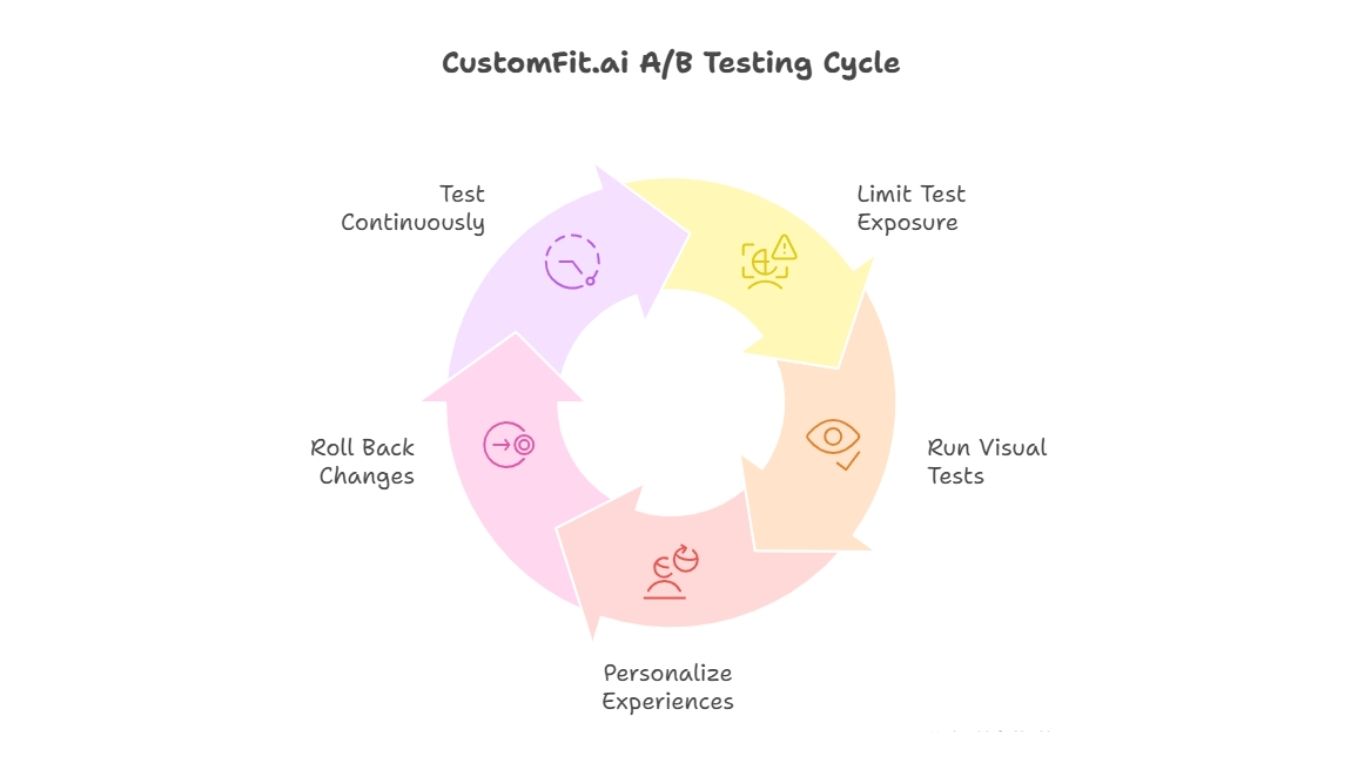
It helps teams:
This allows teams to test continuously without fearing a collapse in paid performance.
The deeper benefit of structured A/B testing is organizational. Teams stop treating changes as risky events. Stakeholders trust the process because results are measured, not guessed. Learning becomes systematic, and growth becomes more predictable.
Treating A/B testing as a disciplined practice rather than a gamble is what separates brands that improve steadily from those that stall.
Paid ads and A/B testing do not have to conflict. When testing is structured, controlled, and measured properly, it improves paid performance rather than weakening it.
The brands that win are not those who avoid testing. They are the ones who learn how to test without panic, by isolating variables, limiting exposure, segmenting audiences, and using the right tools.
CustomFit.ai helps make this process safer, but the mindset matters most. Testing is not about risking performance. It is about protecting it over time.
Limit traffic exposure, isolate variables, set performance guardrails, and test on specific segments before rolling out to all paid traffic.
The best tools allow controlled traffic splits, fast rollbacks, and minimal performance overhead. A dedicated A/B testing platform built for ecommerce is ideal.
Yes. Duplicate the ad set, limit the budget, and test one variable at a time. This lets you explore creative options without destabilizing a performing campaign.
Start with a small percentage of traffic for variants and scale only after early validation. Avoid exposing all paid traffic at once.
They can if done carelessly. When structured correctly and run through controlled tools, landing page A/B tests tend to improve paid performance over time.
A/B testing improves conversion rate, which lowers acquisition costs, improves the quality signals sent to ad platforms, and creates more room to scale budgets.
CustomFit.ai helps brands run controlled website experiments, personalize experiences, and protect paid performance through careful traffic management and measurement.