VWO (Wingify) and AB Tasty Merger: What Happened, Why It Matters, and What Customers Should Expect | Customfit.ai

In January 2026, the digital experimentation space saw one of its biggest consolidation moves in recent years: Wingify (best known for VWO) and AB Tasty announced they’re joining forces under the ownership umbrella of Everstone Capital.

If you work in growth, CRO, product, or performance marketing, you’ve probably used (or evaluated) at least one of these platforms. And if you’re currently running A/B tests, personalization, or experiment-driven product improvements, this merger is worth understanding, because it can impact:

  • Your current pricing and contract renewals

  • product roadmap, pace and support experience

  • long-term tooling decisions for experimentation and personalization

If you’re reading this as a D2C team, there’s a practical angle too: most “experimentation decisions” aren’t really about dashboards. They’re about execution speed, how quickly you can ship changes, and whether your setup stays lightweight as your store grows. That’s the gap a lot of teams feel when they evaluate big-suite tools.

This is also where CustomFit.ai tends to fit for ecommerce teams: it’s a no code A/B testing platform and website personalization platform built to help marketers ship tests and targeted experiences quickly, without turning every experiment into a development project.

This article breaks down what happened, why the merger is happening now, and what it could mean for brands using VWO or AB Tasty.
vwo merger ab tasty

Quick summary: VWO + AB Tasty merger in one paragraph

Everstone-owned Wingify is acquiring/merging with Paris-based AB Tasty, creating a combined digital experience optimization company reportedly valued at around $500M, with $100M+ annual recurring revenue, 4,000+ customers, and 800+ employees. As part of the combined entity, Sparsh Gupta (VWO/Wingify) will lead the merged business, with leadership roles shared across both organizations.

What is A/B testing (and why teams still care in 2026)?

Before we go deeper, a quick refresher helps, because people use “A/B testing,” “split testing,” and “personalization” interchangeably, even though they’re not the same thing.

A/B testing (also called split testing) is a controlled experiment where you show two or more versions of a page or experience to similar visitors at the same time, then measure which version performs better on a goal (purchases, add-to-cart, lead submissions, signups, etc.). It’s the core mechanic behind CRO marketing: you stop arguing based on opinions and start deciding based on observed behavior.

Website personalization is slightly different. Instead of one winner for everyone, personalization shows different experiences to different audiences (new vs returning, high-intent vs low-intent, geo-based segments, traffic source segments, cart value segments, and so on). A lot of modern teams treat personalization as “always-on targeting,” and A/B testing as “proof.”

In practice, most brands do both:

  • A/B testing to validate what changes improve conversion rate reliably
  • Website personalization to tailor messaging and offers without running a new experiment every week
  • A consistent feedback loop that powers CRO optimization as a system, not a one-off project

That’s why mergers like VWO + AB Tasty matter: they’re a sign that the market is shifting from “testing tools” into broader experience suites, and buyers are being pushed toward bundled plaforms.

What exactly happened?

1) Everstone acquired Wingify (VWO) in 2025

Everstone Capital took a majority stake in Wingify in January 2025 as part of a deal widely reported at around $200M.

2) Wingify (VWO) is now combining with AB Tasty in 2026

In January 2026, reports confirmed Wingify is acquiring/merging with AB Tasty, with deal value estimates in the range of $150M–$200M, creating a combined platform in the experimentation and personalization category.

3) AB Tasty and VWO have also publicly announced the “joining forces” message

Both companies published official posts describing a single combined platform and a unified leadership team.

Timeline: Everstone → Wingify (VWO) → AB Tasty

  • Jan 2025: Everstone announced it was acquiring a majority stake in Wingify (VWO’s parent company). Multiple reports put the deal at around $200M.
  • Jan 20, 2026: VWO and AB Tasty publicly announced they’re joining forces (subject to closing conditions). The companies describe the combined platform as having $100M+ revenue, 4,000+ customers, and ~800 people.
  • Reported deal math (press): Several outlets reported the AB Tasty transaction in the $150M–$200M range and the combined entity valued around $500M. Treat these as reported estimates until closing details are fully public.

What is VWO (Wingify)?

VWO is Wingify’s flagship experimentation product. Most teams know it as an A/B testing and conversion optimization platform used by marketing, growth, and product teams to test changes on websites and apps, measure impact, and scale what works. Over time, platforms like VWO expanded from “run an A/B test” into broader capability areas like targeting, personalization, analytics/insights, and experimentation workflows.

What is AB Tasty?

AB Tasty is a Paris-based experimentation and personalization platform used by mid-market and enterprise teams. Like VWO, it sits in the “digital experience optimization” category, helping teams run tests, personalize journeys, and learn what nudges customers toward conversion. In the official announcement, AB Tasty positions the combination as building a larger platform across experimentation, personalization, and insights.

Everstone Capital (the owner behind the combination)

Everstone Capital is the private equity firm that took a majority stake in Wingify in January 2025, and is backing the combined VWO + AB Tasty entity. This is important because PE-backed combinations usually aim to accelerate distribution, consolidate product lines over time, and standardize packaging and pricing.

Who are the companies involved?

Wingify / VWO

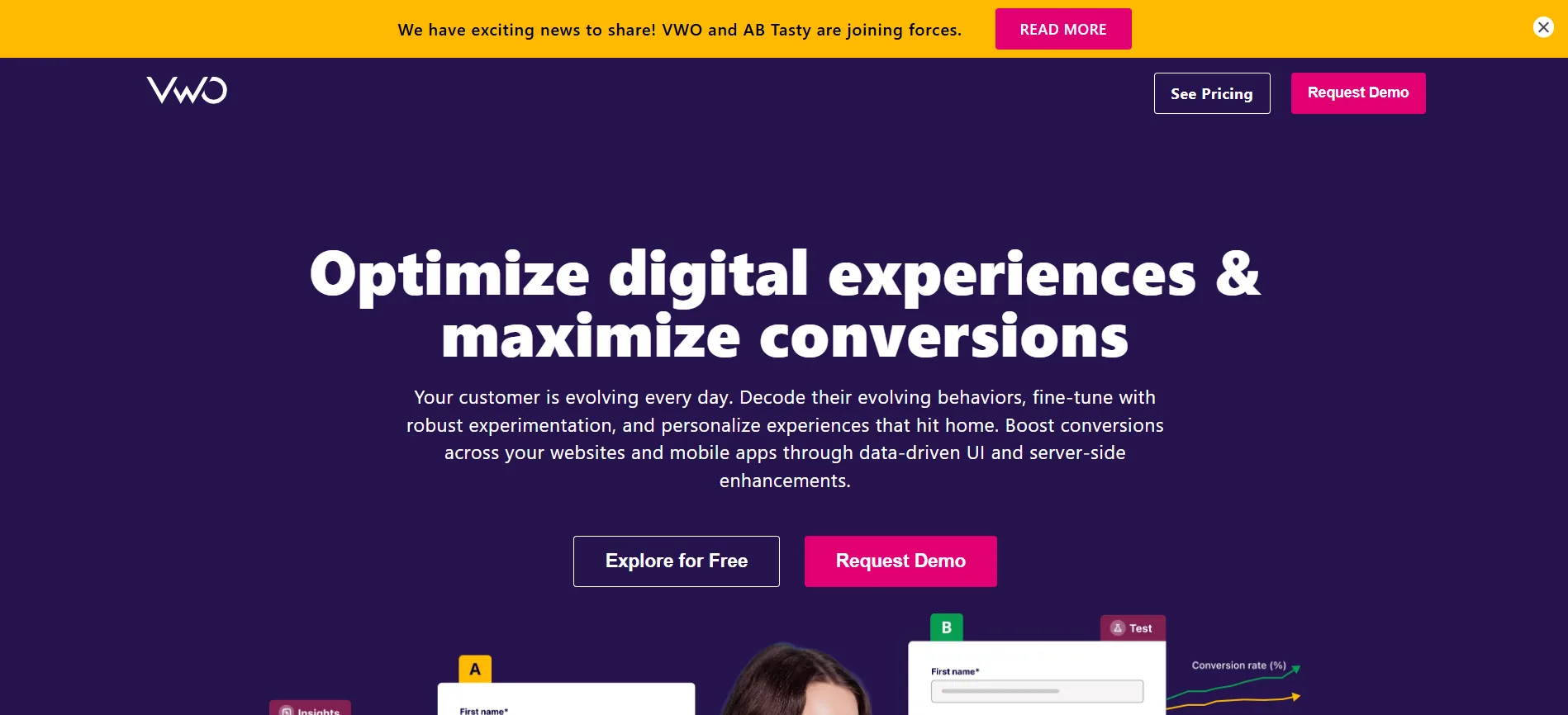
Wingify is the company behind VWO, a well-known experimentation platform used by marketing and product teams for A/B testing, website optimization, and conversion rate improvements.
vwo

AB Tasty

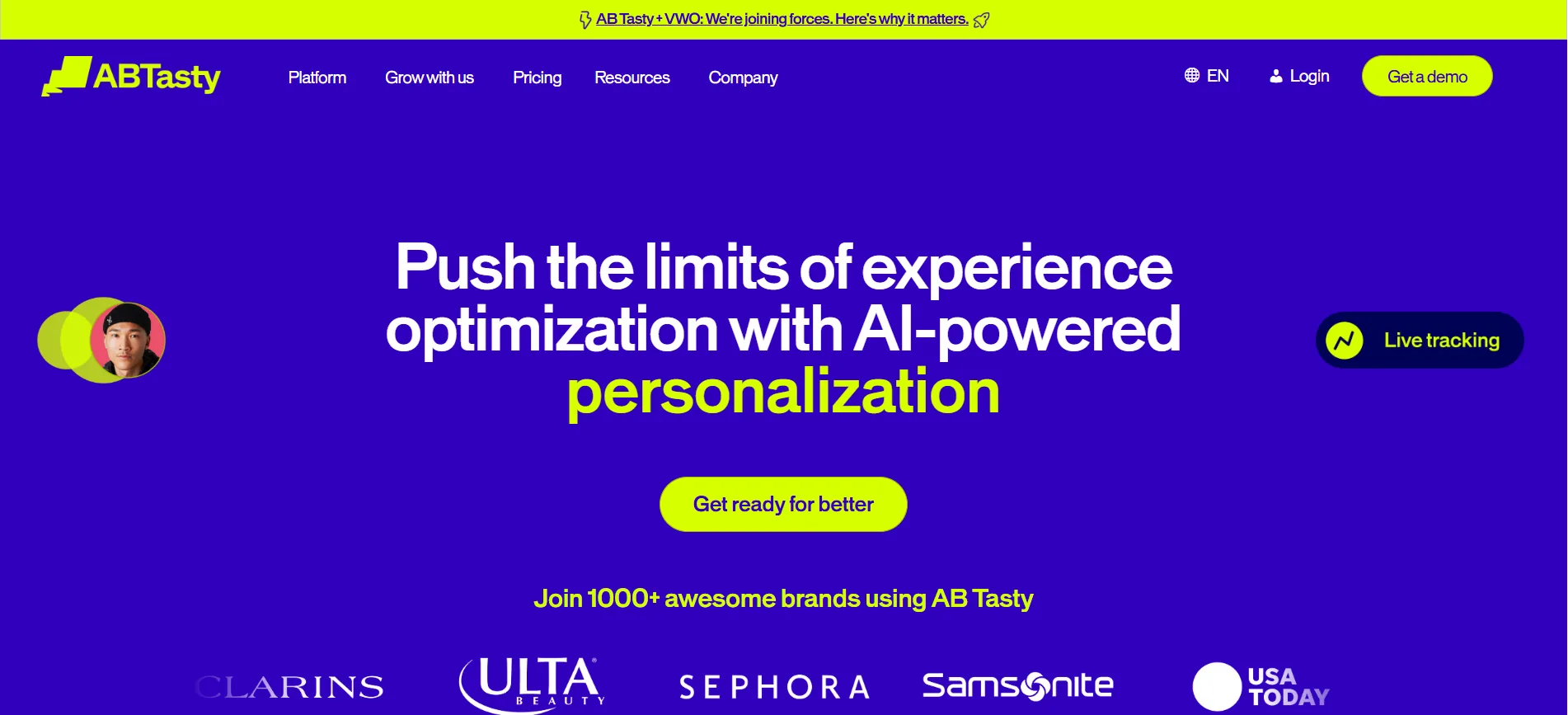
AB Tasty is a Paris-based platform known for experimentation and personalization, used by many mid-market and enterprise teams across regions.
ab tasty

Everstone Capital

Everstone is a private equity firm that acquired Wingify in 2025 and is now backing the combined VWO + AB Tasty entity.

Why did this merger happen?

Mergers in SaaS don’t happen randomly. They usually happen when one (or more) of these forces show up:

1) The experimentation market is consolidating

Over the last few years, “A/B testing platforms” have stopped being simple A/B tools. Most buyers now want a single suite that includes:

  • A/B testing (site + app)

  • personalization and targeting

  • analytics/insights

  • performance and flicker control

  • integrations with product and data stacks

So consolidation becomes a shortcut to scale.

This VWO + AB Tasty move fits into that exact pattern: build a bigger “experience optimization” platform faster than doing it from scratch.

2) Bigger product + enterprise coverage

VWO historically has a strong global presence, and AB Tasty is known for its own enterprise footprint, so the combined entity is positioned to compete harder in the US and European markets (where much of its revenue already comes from).

3) Financial and operational efficiency

This is the part most customers don’t talk about openly, but it’s real:

When two tools operate in the same category, merging them can create efficiencies in:

  • go-to-market teams

  • support operations

  • regional coverage

  • product overlap and engineering cost

In the long run, this can make the combined company “cleaner” to operate and easier to position as a single global platform.

The official leadership plan (and why it matters)

According to the official merger announcements:

  • Sparsh Gupta will serve as the CEO of the combined entity

  • VWO’s leadership and AB Tasty’s leadership will both have major roles in the merged organization

For customers, leadership matters because it signals:

  • how quickly the roadmap could unify

  • what priorities will dominate (product-led vs sales-led)

  • what changes may happen to onboarding, support, and pricing

What will change for existing VWO and AB Tasty customers?

Let’s be practical, if you’re a customer today, you mostly care about:

1) Will the products merge immediately?

No. Most “mergers” take time to fully unify in a clean way.

Usually, what happens first is:

  • sales and GTM alignment

  • integration planning

  • backend consolidation begins slowly

  • cross-sell starts earlier than true product unification

So customers should expect a period of transition, not an overnight switch.

2) Will pricing change?

Not always immediately, but pricing is one of the most common outcomes of consolidation.

When two large tools join forces, brands often see:

  • repackaging of features

  • changes in add-ons vs bundled plans

  • Higher enterprise pricing floors

  • migration plans for legacy contracts

If you’re up for renewal soon, it’s worth keeping an eye on contract terms.

3) Will support quality improve or dip?

This varies by execution.

In many SaaS mergers, support goes through a transition phase:

  • ticket routing changes

  • internal tooling changes

  • New processes slow things down initially

Long-term support can improve. In the short term, there may be some friction.

If you’re a Shopify brand, this matters in a very specific way

A lot of merger commentary is written for big enterprise stacks. But for D2C brands, the day-to-day reality is simpler: your wins come from how fast you can launch tests on product pages, collections, cart, and landing pages, not from owning the biggest suite.

Here’s what to keep in mind if you do Shopify A/B testing today:

1) Shopify A/B testing is mostly “theme + storefront,” not checkout

For most stores, A/B testing on Shopify happens across storefront pages: PDPs, PLPs, homepage modules, cart, upsell surfaces, and landing pages. Checkout is more restricted because Shopify limits how checkout can be customized and how third-party scripts can run there. Shopify’s Checkout Extensibility framework defines what’s possible, and many developers note there isn’t a straightforward built-in rule-based A/B testing mechanism inside checkout extensibility today.

Practical takeaway: focus your roadmap on tests that affect conversion upstream:

  • product page clarity and offer framing
  • shipping/returns messaging
  • trust modules and urgency modules
  • cart friction reduction and AOV boosters

2) Theme experiments matter more than people admit

Many brands think “theme tests” are cosmetic. In reality, A/B testing in Shopify theme changes can impact speed, scroll depth, product discovery, and add-to-cart rate. If you’re evaluating tools during a market consolidation, ask one direct question:
How fast can we ship theme-level experiments without breaking performance or relying on dev sprints?

That question often decides whether a tool feels like leverage or overhead.

3) What a Shopify A/B testing app should do well

Whether you call it an A/B testing Shopify app or a Shopify A/B testing app, the bar is pretty practical:

  • fast launch and rollback
  • minimal flicker and minimal performance impact
  • clear targeting (new vs returning, geo, source, device, etc.)
  • clean measurement you can trust

This is also why a lot of D2C teams end up preferring a lighter setup over a big-suite migration.

4) Where CustomFit.ai fits for Shopify teams

If your priority is speed, CustomFit.ai is built as a shopify ab testing app and website personalization tool that helps marketers run experiments and targeted experiences without heavy dev dependency. It’s a no code A/B testing tool (and no code A/B testing software) designed around the workflows Shopify teams actually run: quick storefront iterations, faster learning loops, and shipping more experiments per month.

If you’re trying to pick the best A/B testing app for Shopify, a simple filter helps: choose the platform that makes it easiest to launch, measure, and iterate, without turning experimentation into a quarterly project.

What if you’re not on Shopify? A quick note on Magento A/B testing

Teams on Magento often have more flexibility in how they implement experiments, but that flexibility usually comes with a tradeoff: heavier engineering involvement, more QA cycles, and more chances for experiment code to drift over time.

If you’re running Magento A/B testing, the same principle still applies: the best tool is the one that lets your team execute a consistent testing cadence without slowing down releases. That’s true whether you’re a pure performance team or building a broader D2C marketing strategy that depends on continuous experimentation.

What does this merger mean for the A/B testing industry?

This merger is a signal that the industry is shifting from “testing tools” into “experience platforms.”

Here are the trends it reinforces:

1) CRO tooling is moving toward suites

Brands don’t want:

  • one A/B tool

  • one analytics tool

  • one personalization engine

  • one separate frontend widget tool

They want fewer tools doing more, with less integration headache.

2) Buyers will demand faster execution, not just dashboards

The real value of experimentation isn’t in having a beautiful interface.

It’s in:

  • shipping experiments quickly

  • reducing dev dependency

  • creating flicker-free experiences

  • building reliable measurement

Platforms that win long-term are usually the ones that make execution easy.

3) More choice for buyers, but also more confusion

Consolidation reduces the number of large independent players.
But it also creates a new kind of confusion:

“Do I need the full suite, or do I need a faster tool that does the core job well?”

That question will become more common.

If you’re evaluating tools right now: what you should do next

If you’re currently using VWO or AB Tasty (or evaluating them), here’s a smart checklist:

1) Ask what happens to your current plan

Before you renew:

  • will your plan be renamed or migrated?

  • will your current features remain included?

  • will support SLAs change?

2) Confirm roadmap timelines

It’s fair to ask:

  • what’s the roadmap for “one platform” versus “two platforms”?

  • what will stay separate for the next 12–24 months?

3) Focus on execution speed

The fastest ROI usually comes from:

  • running more experiments per month

  • improving time-to-launch

  • minimizing reliance on dev cycles

Which matters more than which logo is on the contract.

Where CustomFit.ai fits in (for teams that want speed and simplicity)

If you’re a D2C or ecommerce brand (especially on Shopify), one of the most overlooked parts of experimentation is how fast you can actually ship changes.
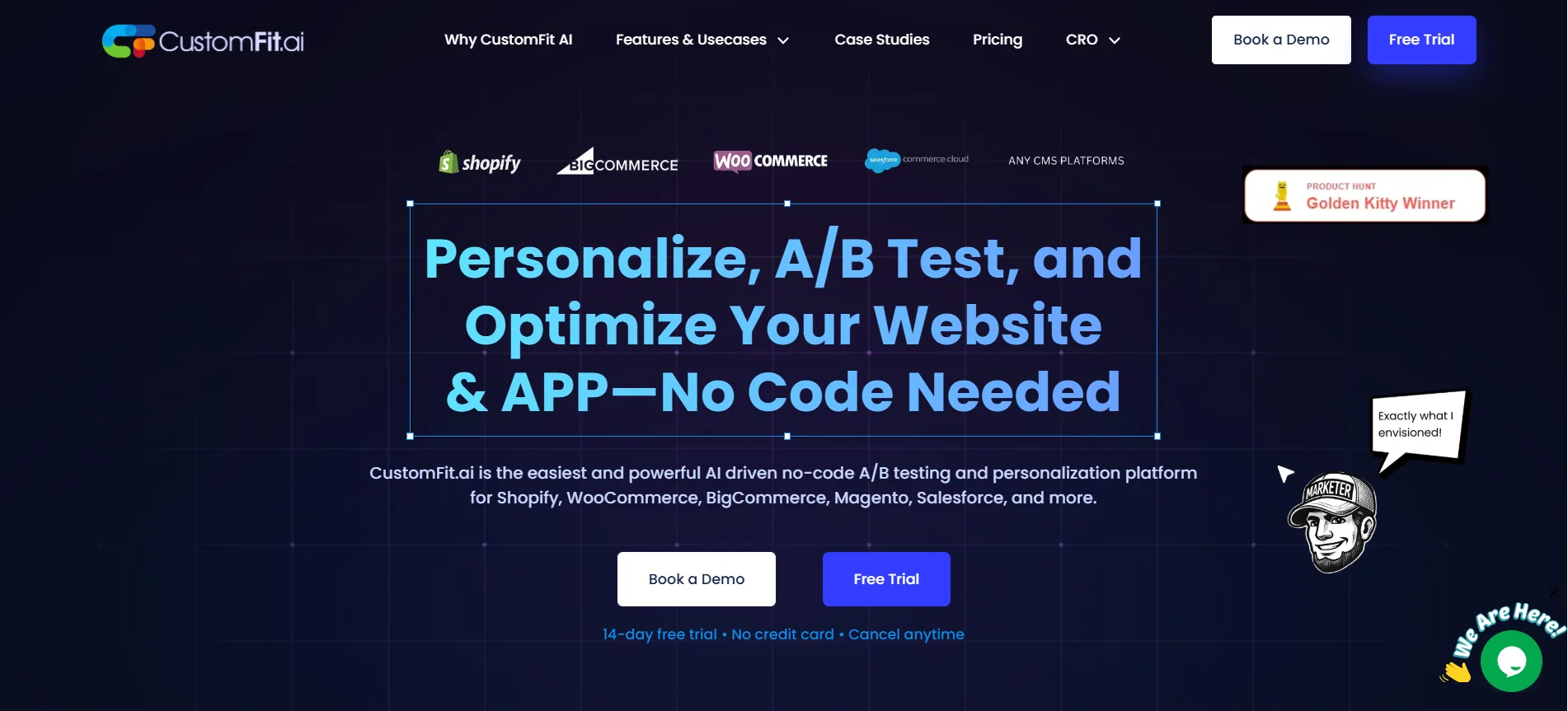
customfit

At CustomFit.ai, no code a/b testing software, we’ve seen that many teams don’t struggle with “ideas.”
They struggle with:

  • getting experiments live fast

  • pushing changes without developer bottlenecks

  • reducing flicker and performance issues

  • running personalization without heavy setup

That’s why CustomFit.ai is built to help marketers and growth teams:

  • run no-code A/B tests

  • launch real-time personalization

  • deploy conversion-focused widgets

  • move faster without depending on sprints

If you’re watching the VWO + AB Tasty merger and wondering what’s the safest move, a good approach is simply: Pick a platform that keeps experimentation simple, fast, and measurable.

Final thoughts

The VWO (Wingify) and AB Tasty merger is one of the biggest signals that experimentation is becoming a consolidated “platform game.”

For customers, the best move isn’t panic.
The best move is clarity:

  • know what you’re paying for

  • know what your renewal terms look like

  • know what your team needs most (speed vs enterprise breadth)

Because in conversion optimization, execution beats theory every single time.

FAQ: VWO and AB Tasty merger

Is AB Tasty acquired by VWO?

Wingify (the company behind VWO), backed by Everstone, is merging with / acquiring AB Tasty as part of creating a combined digital experience optimization platform.

Who owns VWO now?

Everstone Capital acquired a majority stake in Wingify (VWO’s parent company) in January 2025.

When was the VWO AB Tasty merger announced?

The merger news was reported publicly around January 20–21, 2026, with multiple media publications covering it and both companies posting official announcements.

What happens to existing VWO customers after the merger?

Typically, customers continue as-is in the short term, while the company aligns teams, product direction, and packaging. Larger platform changes take time.

Will VWO pricing change because of the AB Tasty merger?

Pricing doesn’t always change immediately, but packaging and plans often evolve after consolidation. If you’re close to renewal, it’s worth confirming contract terms early.

Sapna Johar
CRO Engineer at Customfit.ai

In January 2026, the digital experimentation space saw one of its biggest consolidation moves in recent years: Wingify (best known for VWO) and AB Tasty announced they’re joining forces under the ownership umbrella of Everstone Capital.

If you work in growth, CRO, product, or performance marketing, you’ve probably used (or evaluated) at least one of these platforms. And if you’re currently running A/B tests, personalization, or experiment-driven product improvements, this merger is worth understanding, because it can impact:

  • Your current pricing and contract renewals

  • product roadmap, pace and support experience

  • long-term tooling decisions for experimentation and personalization

If you’re reading this as a D2C team, there’s a practical angle too: most “experimentation decisions” aren’t really about dashboards. They’re about execution speed, how quickly you can ship changes, and whether your setup stays lightweight as your store grows. That’s the gap a lot of teams feel when they evaluate big-suite tools.

This is also where CustomFit.ai tends to fit for ecommerce teams: it’s a no code A/B testing platform and website personalization platform built to help marketers ship tests and targeted experiences quickly, without turning every experiment into a development project.

This article breaks down what happened, why the merger is happening now, and what it could mean for brands using VWO or AB Tasty.

vwo merger ab tasty

Quick summary: VWO + AB Tasty merger in one paragraph

Everstone-owned Wingify is acquiring/merging with Paris-based AB Tasty, creating a combined digital experience optimization company reportedly valued at around $500M, with $100M+ annual recurring revenue, 4,000+ customers, and 800+ employees. As part of the combined entity, Sparsh Gupta (VWO/Wingify) will lead the merged business, with leadership roles shared across both organizations.

What is A/B testing (and why teams still care in 2026)?

Before we go deeper, a quick refresher helps, because people use “A/B testing,” “split testing,” and “personalization” interchangeably, even though they’re not the same thing.

A/B testing (also called split testing) is a controlled experiment where you show two or more versions of a page or experience to similar visitors at the same time, then measure which version performs better on a goal (purchases, add-to-cart, lead submissions, signups, etc.). It’s the core mechanic behind CRO marketing: you stop arguing based on opinions and start deciding based on observed behavior.

Website personalization is slightly different. Instead of one winner for everyone, personalization shows different experiences to different audiences (new vs returning, high-intent vs low-intent, geo-based segments, traffic source segments, cart value segments, and so on). A lot of modern teams treat personalization as “always-on targeting,” and A/B testing as “proof.”

In practice, most brands do both:

  • A/B testing to validate what changes improve conversion rate reliably
  • Website personalization to tailor messaging and offers without running a new experiment every week
  • A consistent feedback loop that powers CRO optimization as a system, not a one-off project

That’s why mergers like VWO + AB Tasty matter: they’re a sign that the market is shifting from “testing tools” into broader experience suites, and buyers are being pushed toward bundled plaforms.

What exactly happened?

1) Everstone acquired Wingify (VWO) in 2025

Everstone Capital took a majority stake in Wingify in January 2025 as part of a deal widely reported at around $200M.

2) Wingify (VWO) is now combining with AB Tasty in 2026

In January 2026, reports confirmed Wingify is acquiring/merging with AB Tasty, with deal value estimates in the range of $150M–$200M, creating a combined platform in the experimentation and personalization category.

3) AB Tasty and VWO have also publicly announced the “joining forces” message

Both companies published official posts describing a single combined platform and a unified leadership team.

Timeline: Everstone → Wingify (VWO) → AB Tasty

  • Jan 2025: Everstone announced it was acquiring a majority stake in Wingify (VWO’s parent company). Multiple reports put the deal at around $200M.
  • Jan 20, 2026: VWO and AB Tasty publicly announced they’re joining forces (subject to closing conditions). The companies describe the combined platform as having $100M+ revenue, 4,000+ customers, and ~800 people.
  • Reported deal math (press): Several outlets reported the AB Tasty transaction in the $150M–$200M range and the combined entity valued around $500M. Treat these as reported estimates until closing details are fully public.

What is VWO (Wingify)?

VWO is Wingify’s flagship experimentation product. Most teams know it as an A/B testing and conversion optimization platform used by marketing, growth, and product teams to test changes on websites and apps, measure impact, and scale what works. Over time, platforms like VWO expanded from “run an A/B test” into broader capability areas like targeting, personalization, analytics/insights, and experimentation workflows.

What is AB Tasty?

AB Tasty is a Paris-based experimentation and personalization platform used by mid-market and enterprise teams. Like VWO, it sits in the “digital experience optimization” category, helping teams run tests, personalize journeys, and learn what nudges customers toward conversion. In the official announcement, AB Tasty positions the combination as building a larger platform across experimentation, personalization, and insights.

Everstone Capital (the owner behind the combination)

Everstone Capital is the private equity firm that took a majority stake in Wingify in January 2025, and is backing the combined VWO + AB Tasty entity. This is important because PE-backed combinations usually aim to accelerate distribution, consolidate product lines over time, and standardize packaging and pricing.

Who are the companies involved?

Wingify / VWO

Wingify is the company behind VWO, a well-known experimentation platform used by marketing and product teams for A/B testing, website optimization, and conversion rate improvements.

vwo

AB Tasty

AB Tasty is a Paris-based platform known for experimentation and personalization, used by many mid-market and enterprise teams across regions.

ab tasty

Everstone Capital

Everstone is a private equity firm that acquired Wingify in 2025 and is now backing the combined VWO + AB Tasty entity.

Why did this merger happen?

Mergers in SaaS don’t happen randomly. They usually happen when one (or more) of these forces show up:

1) The experimentation market is consolidating

Over the last few years, “A/B testing platforms” have stopped being simple A/B tools. Most buyers now want a single suite that includes:

  • A/B testing (site + app)

  • personalization and targeting

  • analytics/insights

  • performance and flicker control

  • integrations with product and data stacks

So consolidation becomes a shortcut to scale.

This VWO + AB Tasty move fits into that exact pattern: build a bigger “experience optimization” platform faster than doing it from scratch.

2) Bigger product + enterprise coverage

VWO historically has a strong global presence, and AB Tasty is known for its own enterprise footprint, so the combined entity is positioned to compete harder in the US and European markets (where much of its revenue already comes from).

3) Financial and operational efficiency

This is the part most customers don’t talk about openly, but it’s real:

When two tools operate in the same category, merging them can create efficiencies in:

  • go-to-market teams

  • support operations

  • regional coverage

  • product overlap and engineering cost

In the long run, this can make the combined company “cleaner” to operate and easier to position as a single global platform.

The official leadership plan (and why it matters)

According to the official merger announcements:

  • Sparsh Gupta will serve as the CEO of the combined entity

  • VWO’s leadership and AB Tasty’s leadership will both have major roles in the merged organization

For customers, leadership matters because it signals:

  • how quickly the roadmap could unify

  • what priorities will dominate (product-led vs sales-led)

  • what changes may happen to onboarding, support, and pricing

What will change for existing VWO and AB Tasty customers?

Let’s be practical, if you’re a customer today, you mostly care about:

1) Will the products merge immediately?

No. Most “mergers” take time to fully unify in a clean way.

Usually, what happens first is:

  • sales and GTM alignment

  • integration planning

  • backend consolidation begins slowly

  • cross-sell starts earlier than true product unification

So customers should expect a period of transition, not an overnight switch.

2) Will pricing change?

Not always immediately, but pricing is one of the most common outcomes of consolidation.

When two large tools join forces, brands often see:

  • repackaging of features

  • changes in add-ons vs bundled plans

  • Higher enterprise pricing floors

  • migration plans for legacy contracts

If you’re up for renewal soon, it’s worth keeping an eye on contract terms.

3) Will support quality improve or dip?

This varies by execution.

In many SaaS mergers, support goes through a transition phase:

  • ticket routing changes

  • internal tooling changes

  • New processes slow things down initially

Long-term support can improve. In the short term, there may be some friction.

If you’re a Shopify brand, this matters in a very specific way

A lot of merger commentary is written for big enterprise stacks. But for D2C brands, the day-to-day reality is simpler: your wins come from how fast you can launch tests on product pages, collections, cart, and landing pages, not from owning the biggest suite.

Here’s what to keep in mind if you do Shopify A/B testing today:

1) Shopify A/B testing is mostly “theme + storefront,” not checkout

For most stores, A/B testing on Shopify happens across storefront pages: PDPs, PLPs, homepage modules, cart, upsell surfaces, and landing pages. Checkout is more restricted because Shopify limits how checkout can be customized and how third-party scripts can run there. Shopify’s Checkout Extensibility framework defines what’s possible, and many developers note there isn’t a straightforward built-in rule-based A/B testing mechanism inside checkout extensibility today.

Practical takeaway: focus your roadmap on tests that affect conversion upstream:

  • product page clarity and offer framing
  • shipping/returns messaging
  • trust modules and urgency modules
  • cart friction reduction and AOV boosters

2) Theme experiments matter more than people admit

Many brands think “theme tests” are cosmetic. In reality, A/B testing in Shopify theme changes can impact speed, scroll depth, product discovery, and add-to-cart rate. If you’re evaluating tools during a market consolidation, ask one direct question:
How fast can we ship theme-level experiments without breaking performance or relying on dev sprints?

That question often decides whether a tool feels like leverage or overhead.

3) What a Shopify A/B testing app should do well

Whether you call it an A/B testing Shopify app or a Shopify A/B testing app, the bar is pretty practical:

  • fast launch and rollback
  • minimal flicker and minimal performance impact
  • clear targeting (new vs returning, geo, source, device, etc.)
  • clean measurement you can trust

This is also why a lot of D2C teams end up preferring a lighter setup over a big-suite migration.

4) Where CustomFit.ai fits for Shopify teams

If your priority is speed, CustomFit.ai is built as a shopify ab testing app and website personalization tool that helps marketers run experiments and targeted experiences without heavy dev dependency. It’s a no code A/B testing tool (and no code A/B testing software) designed around the workflows Shopify teams actually run: quick storefront iterations, faster learning loops, and shipping more experiments per month.

If you’re trying to pick the best A/B testing app for Shopify, a simple filter helps: choose the platform that makes it easiest to launch, measure, and iterate, without turning experimentation into a quarterly project.

What if you’re not on Shopify? A quick note on Magento A/B testing

Teams on Magento often have more flexibility in how they implement experiments, but that flexibility usually comes with a tradeoff: heavier engineering involvement, more QA cycles, and more chances for experiment code to drift over time.

If you’re running Magento A/B testing, the same principle still applies: the best tool is the one that lets your team execute a consistent testing cadence without slowing down releases. That’s true whether you’re a pure performance team or building a broader D2C marketing strategy that depends on continuous experimentation.

What does this merger mean for the A/B testing industry?

This merger is a signal that the industry is shifting from “testing tools” into “experience platforms.”

Here are the trends it reinforces:

1) CRO tooling is moving toward suites

Brands don’t want:

  • one A/B tool

  • one analytics tool

  • one personalization engine

  • one separate frontend widget tool

They want fewer tools doing more, with less integration headache.

2) Buyers will demand faster execution, not just dashboards

The real value of experimentation isn’t in having a beautiful interface.

It’s in:

  • shipping experiments quickly

  • reducing dev dependency

  • creating flicker-free experiences

  • building reliable measurement

Platforms that win long-term are usually the ones that make execution easy.

3) More choice for buyers, but also more confusion

Consolidation reduces the number of large independent players.
But it also creates a new kind of confusion:

“Do I need the full suite, or do I need a faster tool that does the core job well?”

That question will become more common.

If you’re evaluating tools right now: what you should do next

If you’re currently using VWO or AB Tasty (or evaluating them), here’s a smart checklist:

1) Ask what happens to your current plan

Before you renew:

  • will your plan be renamed or migrated?

  • will your current features remain included?

  • will support SLAs change?

2) Confirm roadmap timelines

It’s fair to ask:

  • what’s the roadmap for “one platform” versus “two platforms”?

  • what will stay separate for the next 12–24 months?

3) Focus on execution speed

The fastest ROI usually comes from:

  • running more experiments per month

  • improving time-to-launch

  • minimizing reliance on dev cycles

Which matters more than which logo is on the contract.

Where CustomFit.ai fits in (for teams that want speed and simplicity)

If you’re a D2C or ecommerce brand (especially on Shopify), one of the most overlooked parts of experimentation is how fast you can actually ship changes.

customfit

At CustomFit.ai, no code a/b testing software, we’ve seen that many teams don’t struggle with “ideas.”
They struggle with:

  • getting experiments live fast

  • pushing changes without developer bottlenecks

  • reducing flicker and performance issues

  • running personalization without heavy setup

That’s why CustomFit.ai is built to help marketers and growth teams:

  • run no-code A/B tests

  • launch real-time personalization

  • deploy conversion-focused widgets

  • move faster without depending on sprints

If you’re watching the VWO + AB Tasty merger and wondering what’s the safest move, a good approach is simply: Pick a platform that keeps experimentation simple, fast, and measurable.

Final thoughts

The VWO (Wingify) and AB Tasty merger is one of the biggest signals that experimentation is becoming a consolidated “platform game.”

For customers, the best move isn’t panic.
The best move is clarity:

  • know what you’re paying for

  • know what your renewal terms look like

  • know what your team needs most (speed vs enterprise breadth)

Because in conversion optimization, execution beats theory every single time.

FAQ: VWO and AB Tasty merger

Is AB Tasty acquired by VWO?

Wingify (the company behind VWO), backed by Everstone, is merging with / acquiring AB Tasty as part of creating a combined digital experience optimization platform.

Who owns VWO now?

Everstone Capital acquired a majority stake in Wingify (VWO’s parent company) in January 2025.

When was the VWO AB Tasty merger announced?

The merger news was reported publicly around January 20–21, 2026, with multiple media publications covering it and both companies posting official announcements.

What happens to existing VWO customers after the merger?

Typically, customers continue as-is in the short term, while the company aligns teams, product direction, and packaging. Larger platform changes take time.

Will VWO pricing change because of the AB Tasty merger?

Pricing doesn’t always change immediately, but packaging and plans often evolve after consolidation. If you’re close to renewal, it’s worth confirming contract terms early.