Why Does Your Website Get Traffic but Fail to Convert in 2026?

At some point, almost every ecommerce or D2C brand hits this wall.

Traffic is coming in. Ads are running. SEO dashboards look healthy. Social media links are driving visitors. On paper, the website seems busy.

But sales tell a different story.

Visitors arrive, scroll, maybe click around, and then leave. Some add products to cart but never check out. Others reach the landing page and bounce within seconds. The numbers do not add up.

This situation is more common than most brands admit. And it is rarely caused by a single, obvious problem.

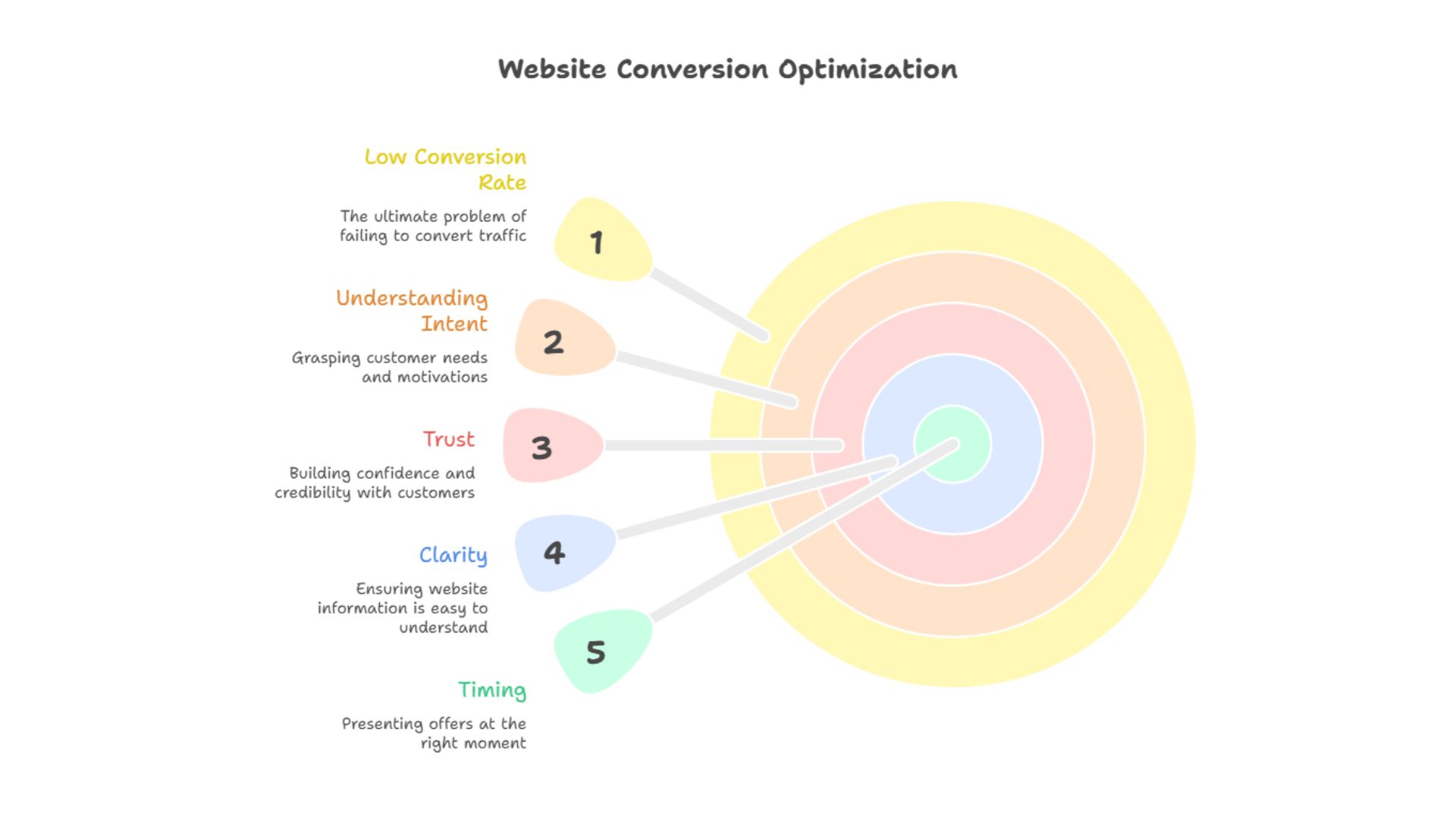
When a website gets traffic but fails to convert, it usually means the gap is not in acquisition. It is in understanding intent, trust, clarity, and timing.

In this guide, we will unpack why websites struggle to convert traffic into customers, even when visitor numbers are strong. We will explore behavioral reasons, technical friction, messaging gaps, and measurement blind spots. We will also cover practical tools and methods that help diagnose and fix conversion issues, including analytics, heatmaps, landing page optimization, retargeting, email, CRM integration, and A/B Testing.

Website Conversion Optimization through customfit

Throughout the article, we will reference how a conversion rate optimization company like CustomFit.ai supports this process by helping brands test, analyze, and personalize experiences instead of relying on guesswork.

This is not about chasing hacks. It is about understanding why people hesitate and how to remove those reasons step by step.

Why Is My Website Getting Visitors but Not Generating Sales?

The short answer is this.

Traffic only tells you that people arrived. Conversion tells you whether they trusted you enough to act.

Many websites are good at attracting attention but weak at guiding decisions. They bring people in but fail to answer the unspoken questions visitors have.

Questions like:

Is this product right for me?
Can I trust this brand?
Is the price fair?
Will this arrive on time?
What happens if I want to return it?

If a website does not answer these questions quickly and clearly, visitors leave, even if the product itself is good.

Here are some of the most common reasons traffic does not convert.

The value proposition is unclear.
The page does not match visitor intent.
The site feels slow or confusing.
Trust signals are missing or hidden.
Calls to action are weak or vague.
The checkout experience feels risky.

Most conversion problems are not dramatic. They are subtle. And subtle problems require careful observation, not assumptions.

The Traffic Quality Myth

Before diving into tools and fixes, it is important to address a common misconception.

Not all traffic is bad traffic.

Many brands immediately blame traffic quality when conversions are low. Sometimes this is true. Often it is an easy excuse.

If visitors are landing on the page you sent them to, the real question is not where they came from. It is what they experienced next.

Even high-intent traffic will leave if the experience does not align with expectations.

This is why conversion optimization starts on the website, not in the ad dashboard.

Which Tools Can Help Analyse Website Visitor Behaviour to Improve Conversions?

You cannot fix what you cannot see.

One of the biggest reasons websites fail to convert is that teams rely only on surface-level metrics. Pageviews, sessions, bounce rate. These numbers tell you what happened, but not why.

To understand why visitors leave, you need behavioral insight.

Categories of tools that help diagnose conversion issues

Analytics platforms to track funnels and drop-offs
Heatmaps and session recordings to see interaction patterns
A/B Testing tools to validate improvements
CRM and customer data platforms to connect behavior to outcomes

A/B Testing Platforms and A/B testing software play a crucial role here, because they turn observations into validated decisions.

A conversion rate optimization company like CustomFit.ai typically combines behavioral analysis with testing to avoid making changes based on opinions alone.
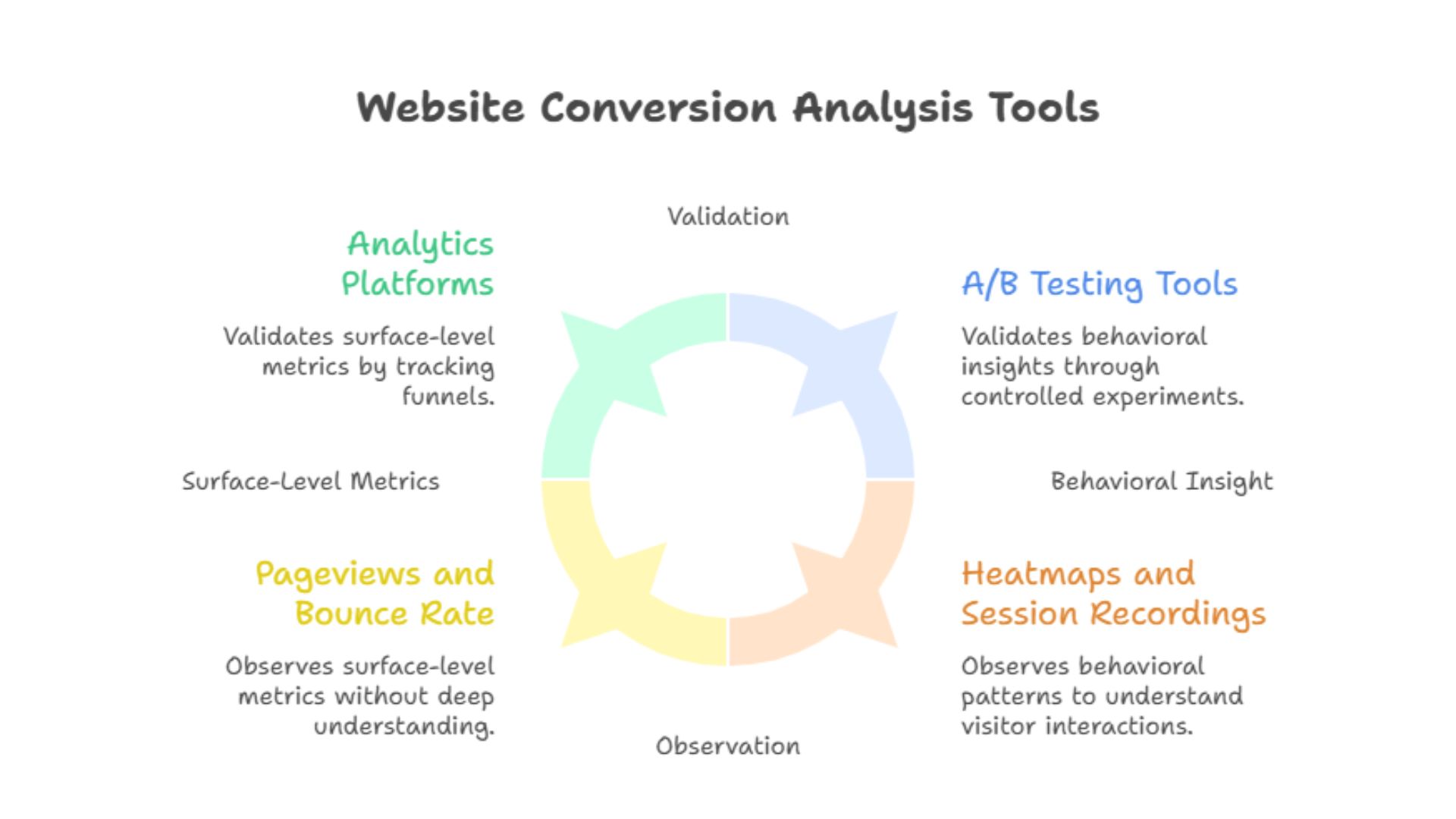
Website Conversion Analysis Tools using customfit

Which Analytics Services Are Best for Identifying Drop-Off Points on My Website?

Analytics tools help answer one critical question.

Where are people leaving?

For ecommerce websites, common drop-off points include:

Landing pages
Product pages
Cart pages
Checkout steps

Good analytics services allow you to break down funnels step by step.

You should be able to see:

How many visitors move from product page to cart
How many drop off before checkout
How many abandon during payment

This data highlights where friction exists, but it does not explain the reason. That is where qualitative tools come in.

How to Use Heatmaps to Increase Website Conversion Rates?

Heatmaps show how visitors interact with your pages visually.

They reveal patterns that numbers alone cannot.

What heatmaps can tell you

Where users click expecting something to happen
How far they scroll before losing interest
Which sections are ignored entirely
Where attention clusters
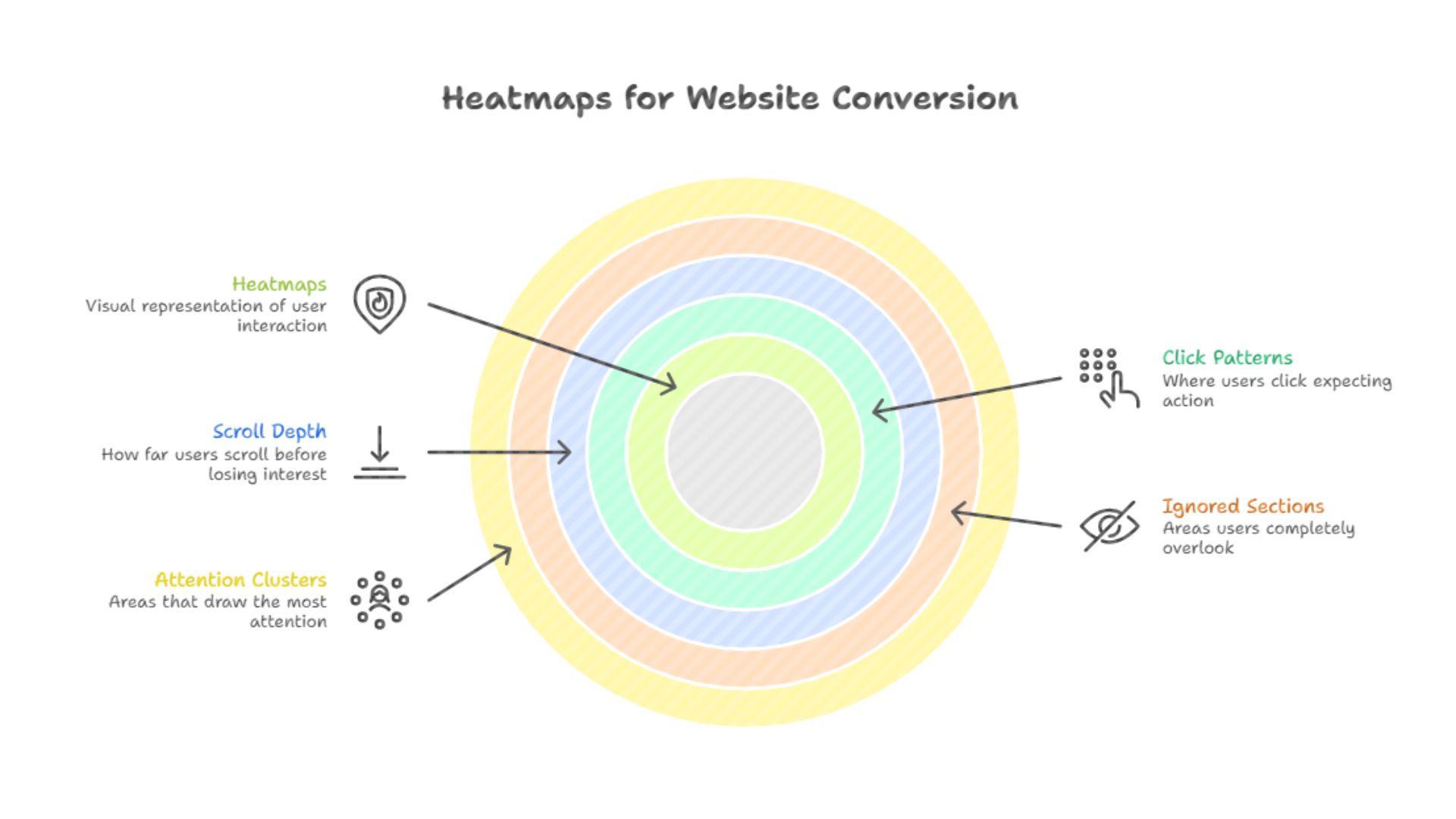
Heatmaps for Website Conversion - customfit

For example, a heatmap might show that users never scroll far enough to see your key benefits or trust badges. Or it might reveal that visitors click on non-clickable elements, signaling confusion.

Heatmaps are especially useful for diagnosing why landing pages fail to convert.

Once you identify a potential issue, you can use A/B Testing to validate a fix instead of rolling it out blindly.

The Landing Page Mismatch Problem

One of the most common conversion killers is mismatch.

A visitor clicks an ad or search result expecting one thing, and the landing page delivers something else.

This does not have to be extreme. Even small mismatches matter.

The headline talks about features while the ad promised outcomes.
The page focuses on brand story while the visitor wants pricing.
The product shown is not the one mentioned in the ad.

When this happens, visitors bounce not because they dislike the product, but because the page does not respect their intent.

What Are Effective Landing Page Builders for Boosting Website Conversions?

Landing page builders are useful when they help teams create focused, intent-driven pages quickly.

The most effective landing pages share a few traits.

Clear headline aligned with traffic source
Simple structure with one main goal
Strong visual hierarchy
Focused call to action
Minimal distractions

However, building pages is only half the job. Optimizing them requires testing.

An A/B Testing Platform allows you to test different headlines, layouts, and CTAs to see which version actually increases conversion rate.

Without testing, landing page builders often lead to endless redesigns without measurable improvement.
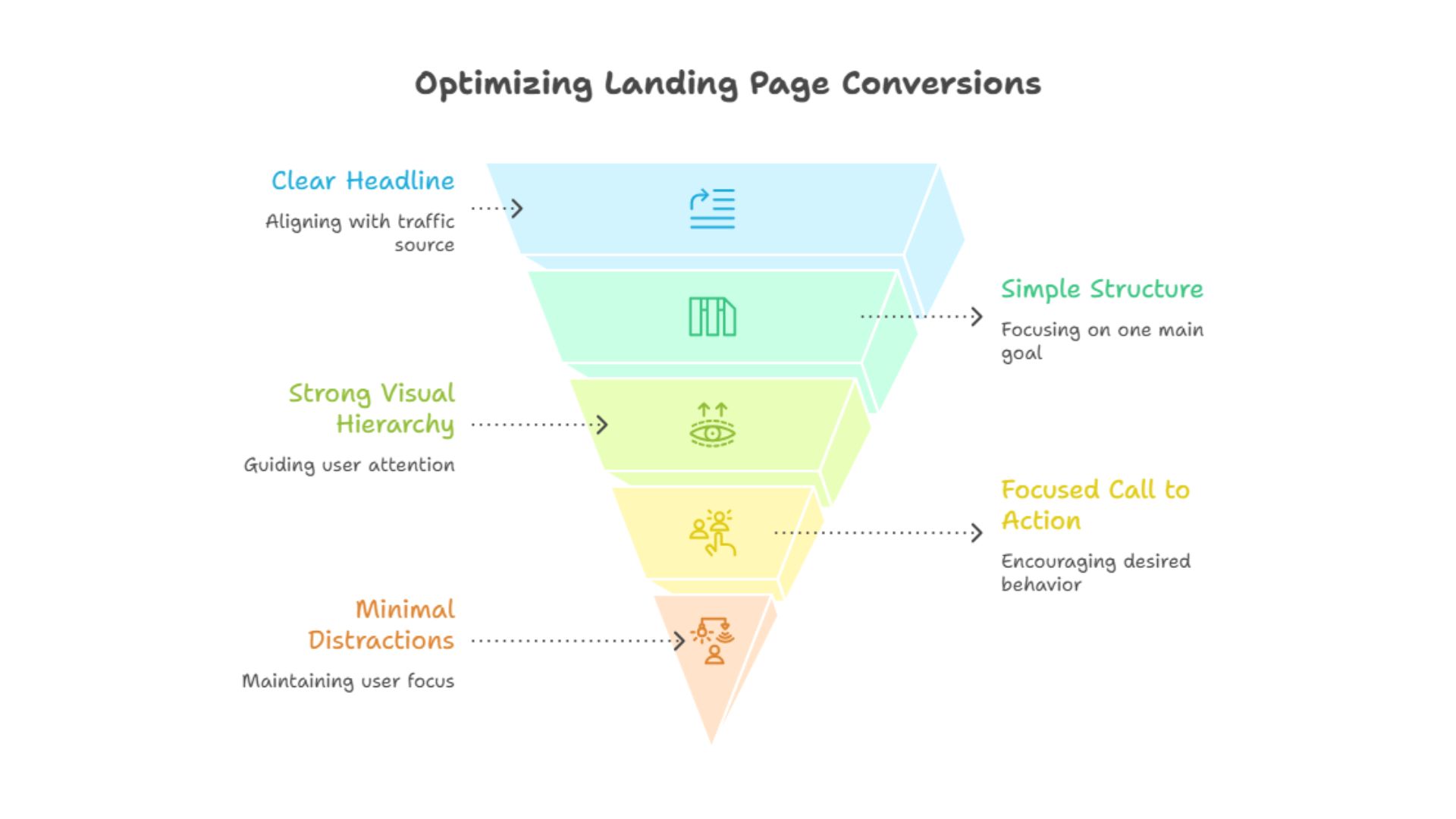
Optimizing Landing Page Conversions | customfit

How Can I Improve My Website’s Call-to-Action Buttons to Increase Conversions?

Calls to action are where intent turns into action.

Weak CTAs do not fail because they are ugly. They fail because they are unclear or misaligned.

Common CTA problems

Generic labels like “Submit” or “Learn More”
CTAs that appear too early or too late
Buttons that blend into the page visually
Too many competing CTAs on one page

Improving CTAs is one of the highest ROI optimization tasks, but only when done thoughtfully.

Effective CTAs communicate value, not just action.

Instead of “Buy Now,” try clarity like “Get Your Free Trial” or “Add to Cart and Save.”

Testing different CTA copy, color, placement, and timing using A/B Testing software ensures improvements are real, not assumed.

You can do A/B testing on CTA button using Customfit App which is compatible with Shopify, Shoplazza, Shopline, Woocommerce, Wordpress, Magento, Bigcommerce, Custom coded website, Salesforce commerce cloud and many more.

Why Trust Is the Silent Conversion Killer

Visitors rarely say, “I do not trust this site.”

They simply leave.

Trust issues show up in subtle ways.

Missing contact information
No clear return or refund policy
Few or no reviews
Poor visual quality
Unexpected fees late in checkout

If your website does not actively reduce perceived risk, visitors will not convert, no matter how good the offer is.

Trust-building elements should appear where doubt appears, not buried in the footer.

Testing trust signals is a powerful use of A/B testing tools. For example, testing where reviews appear or how guarantees are worded can significantly impact conversion rate.

Best Platforms for Running Retargeting Ads to Convert Website Traffic

Not all visitors will convert on the first visit. This is normal.

Retargeting exists to bring back high-intent users who left without converting.

Effective retargeting platforms allow you to segment visitors based on behavior, not just visits.

For example:

Viewed product but did not add to cart
Added to cart but did not check out
Visited pricing page multiple times

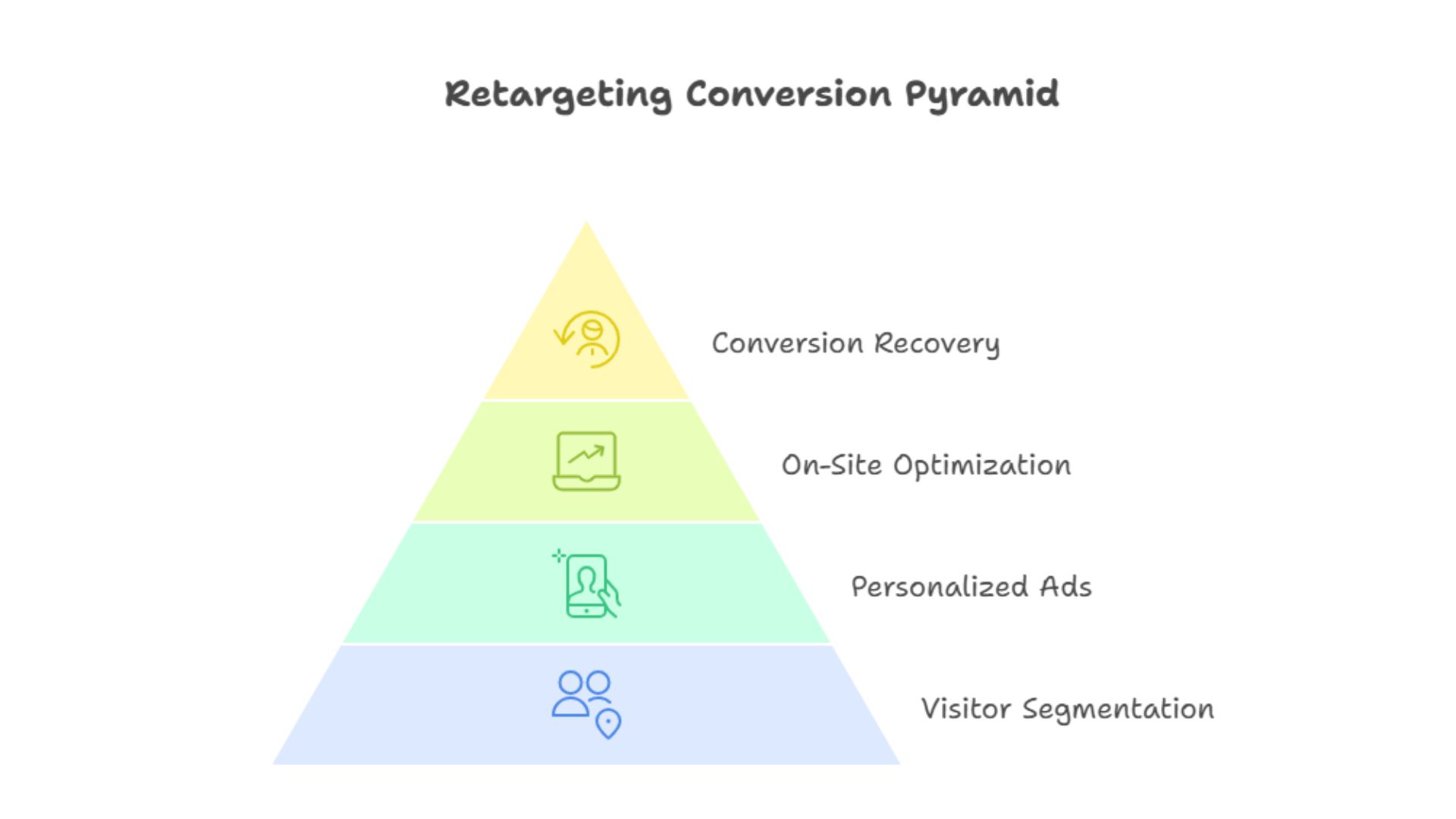
Retargeting works best when ads reflect what the user already saw and address likely objections.

Retargeting alone does not fix a broken website, but when paired with on-site optimization, it helps recover lost opportunities.

Retargeting Conversion Pyramid | customfit

How Do Email Marketing Services Help Convert Website Visitors into Customers?

Email remains one of the most reliable conversion channels when used correctly.

Email marketing services help convert traffic by continuing the conversation after visitors leave.

Common high-performing email flows include:

Cart abandonment reminders
Browse abandonment emails
Post-visit follow-ups
Welcome sequences

Email works best when it reinforces the same message users saw on the website.

If your landing page promised a benefit, the email should remind them of that benefit, not introduce something new.

Tracking email-driven conversions alongside on-site behavior helps identify where messaging breaks down.

What CRM Software Integrates Well With Indian E-commerce Sites for Better Conversion Tracking?

CRMs help connect user behavior to long-term outcomes.

For Indian ecommerce brands, CRM integration is especially valuable because buying cycles and repeat behavior vary widely.

A good CRM setup allows you to:

Track first touch to purchase
Understand repeat purchase patterns
Segment users based on behavior
Personalize communication

When CRM data feeds into your A/B Testing Platform, optimization becomes more informed.

Instead of optimizing for clicks, you optimize for customers who stay.

The Role of A/B Testing in Fixing Conversion Gaps

Observation identifies problems. Testing confirms solutions.

This is where A/B Testing becomes central.

A/B Testing allows you to compare two versions of a page, message, or flow and see which one performs better under real conditions.

Instead of guessing why visitors leave, you test hypotheses.

Examples include:

Testing two different headlines
Comparing product page layouts
Trying different checkout messaging
Experimenting with trust badge placement

An A/B Testing Platform ensures these tests run cleanly without disrupting the experience.

A/B testing tools are not about constant change. They are about confident change.

How CustomFit.ai Fits Into Conversion Diagnosis and Optimization

CustomFit.ai is a conversion rate optimization company focused on helping ecommerce and D2C brands understand and improve on-site behavior.

It supports teams by enabling:

Visual A/B Testing without heavy development
Behavior-based personalization
Controlled rollouts of changes
Clear measurement tied to business outcomes

By combining observation with testing, it helps brands fix conversion problems systematically instead of reacting emotionally to metrics.

Why Conversion Problems Rarely Have One Fix

It is tempting to look for a single solution.

A new theme. A new popup. A new discount.

In reality, conversion issues are layered.

A slow page amplifies weak messaging.
Poor trust signals amplify pricing hesitation.
Confusing CTAs amplify intent mismatch.

This is why conversion optimization is a process, not a project.

Each improvement builds on the last.

How to Build a System for Converting Traffic Consistently

Websites that convert well do not rely on luck.

They follow a system.

Observe behavior using analytics and heatmaps.
Identify friction points.
Form clear hypotheses.
Validate with A/B Testing.
Scale what works.
Repeat.

This system protects teams from chasing shiny ideas and focuses effort where it matters.

Conclusion: Traffic Is an Opportunity, Not a Result

Traffic is not success. It is an opportunity.

When a website gets visitors but fails to convert, the solution is rarely to bring in more people. It is to understand the people already there.

By using behavioral tools, analytics, heatmaps, retargeting, email, CRM integration, and A/B Testing, ecommerce brands can turn confusion into clarity.

Conversion rate improves not when you push harder, but when you remove reasons to hesitate.

Tools like CustomFit.ai support this journey by giving teams a way to test and personalize experiences responsibly.

When traffic finally converts, it is not because of one change. It is because the website learned to listen.

FAQs: Why Does Your Website Get Traffic but Fail to Convert?

Why is my website getting visitors but not generating sales?

This usually happens when the website does not clearly communicate value, trust, or relevance. Visitors arrive but leave due to confusion, friction, or lack of confidence.

Which tools help analyze website visitor behavior to improve conversions?

Analytics platforms, heatmaps, session recordings, A/B Testing tools, and CRM systems all help identify where and why visitors drop off.

How can heatmaps increase website conversion rates?

Heatmaps reveal how users interact with pages, showing ignored content, confusing elements, and areas of high attention. These insights guide effective optimization.

What are the best platforms for retargeting website visitors?

Retargeting platforms that allow behavior-based segmentation work best, especially when ads reflect what users previously viewed.

How do landing page builders help improve conversions?

Landing page builders allow teams to create focused, intent-driven pages quickly. Pairing them with A/B Testing ensures improvements are validated.

How can I improve call-to-action buttons to increase conversions?

Clear, value-driven CTAs placed at the right moment perform better. Testing CTA copy, placement, and design helps identify what works.

Which analytics services are best for finding drop-off points?

Services that provide funnel analysis and step-level drop-off data are best for identifying where users leave the journey.

Can A/B Testing really fix conversion issues?

Yes. A/B Testing validates changes under real conditions, helping teams scale only what improves conversion rate.

How does CustomFit.ai help improve website conversions?

CustomFit.ai helps brands analyze behavior, run controlled A/B tests, personalize experiences, and measure impact, enabling systematic conversion optimization.

Sapna Johar
CRO Engineer at Customfit.ai

At some point, almost every ecommerce or D2C brand hits this wall.

Traffic is coming in. Ads are running. SEO dashboards look healthy. Social media links are driving visitors. On paper, the website seems busy.

But sales tell a different story.

Visitors arrive, scroll, maybe click around, and then leave. Some add products to cart but never check out. Others reach the landing page and bounce within seconds. The numbers do not add up.

This situation is more common than most brands admit. And it is rarely caused by a single, obvious problem.

When a website gets traffic but fails to convert, it usually means the gap is not in acquisition. It is in understanding intent, trust, clarity, and timing.

In this guide, we will unpack why websites struggle to convert traffic into customers, even when visitor numbers are strong. We will explore behavioral reasons, technical friction, messaging gaps, and measurement blind spots. We will also cover practical tools and methods that help diagnose and fix conversion issues, including analytics, heatmaps, landing page optimization, retargeting, email, CRM integration, and A/B Testing.

Website Conversion Optimization through customfit

Throughout the article, we will reference how a conversion rate optimization company like CustomFit.ai supports this process by helping brands test, analyze, and personalize experiences instead of relying on guesswork.

This is not about chasing hacks. It is about understanding why people hesitate and how to remove those reasons step by step.

Why Is My Website Getting Visitors but Not Generating Sales?

The short answer is this.

Traffic only tells you that people arrived. Conversion tells you whether they trusted you enough to act.

Many websites are good at attracting attention but weak at guiding decisions. They bring people in but fail to answer the unspoken questions visitors have.

Questions like:

Is this product right for me?
Can I trust this brand?
Is the price fair?
Will this arrive on time?
What happens if I want to return it?

If a website does not answer these questions quickly and clearly, visitors leave, even if the product itself is good.

Here are some of the most common reasons traffic does not convert.

The value proposition is unclear.
The page does not match visitor intent.
The site feels slow or confusing.
Trust signals are missing or hidden.
Calls to action are weak or vague.
The checkout experience feels risky.

Most conversion problems are not dramatic. They are subtle. And subtle problems require careful observation, not assumptions.

The Traffic Quality Myth

Before diving into tools and fixes, it is important to address a common misconception.

Not all traffic is bad traffic.

Many brands immediately blame traffic quality when conversions are low. Sometimes this is true. Often it is an easy excuse.

If visitors are landing on the page you sent them to, the real question is not where they came from. It is what they experienced next.

Even high-intent traffic will leave if the experience does not align with expectations.

This is why conversion optimization starts on the website, not in the ad dashboard.

Which Tools Can Help Analyse Website Visitor Behaviour to Improve Conversions?

You cannot fix what you cannot see.

One of the biggest reasons websites fail to convert is that teams rely only on surface-level metrics. Pageviews, sessions, bounce rate. These numbers tell you what happened, but not why.

To understand why visitors leave, you need behavioral insight.

Categories of tools that help diagnose conversion issues

Analytics platforms to track funnels and drop-offs
Heatmaps and session recordings to see interaction patterns
A/B Testing tools to validate improvements
CRM and customer data platforms to connect behavior to outcomes

A/B Testing Platforms and A/B testing software play a crucial role here, because they turn observations into validated decisions.

A conversion rate optimization company like CustomFit.ai typically combines behavioral analysis with testing to avoid making changes based on opinions alone.

Website Conversion Analysis Tools using customfit

Which Analytics Services Are Best for Identifying Drop-Off Points on My Website?

Analytics tools help answer one critical question.

Where are people leaving?

For ecommerce websites, common drop-off points include:

Landing pages
Product pages
Cart pages
Checkout steps

Good analytics services allow you to break down funnels step by step.

You should be able to see:

How many visitors move from product page to cart
How many drop off before checkout
How many abandon during payment

This data highlights where friction exists, but it does not explain the reason. That is where qualitative tools come in.

How to Use Heatmaps to Increase Website Conversion Rates?

Heatmaps show how visitors interact with your pages visually.

They reveal patterns that numbers alone cannot.

What heatmaps can tell you

Where users click expecting something to happen
How far they scroll before losing interest
Which sections are ignored entirely
Where attention clusters

Heatmaps for Website Conversion - customfit

For example, a heatmap might show that users never scroll far enough to see your key benefits or trust badges. Or it might reveal that visitors click on non-clickable elements, signaling confusion.

Heatmaps are especially useful for diagnosing why landing pages fail to convert.

Once you identify a potential issue, you can use A/B Testing to validate a fix instead of rolling it out blindly.

The Landing Page Mismatch Problem

One of the most common conversion killers is mismatch.

A visitor clicks an ad or search result expecting one thing, and the landing page delivers something else.

This does not have to be extreme. Even small mismatches matter.

The headline talks about features while the ad promised outcomes.
The page focuses on brand story while the visitor wants pricing.
The product shown is not the one mentioned in the ad.

When this happens, visitors bounce not because they dislike the product, but because the page does not respect their intent.

What Are Effective Landing Page Builders for Boosting Website Conversions?

Landing page builders are useful when they help teams create focused, intent-driven pages quickly.

The most effective landing pages share a few traits.

Clear headline aligned with traffic source
Simple structure with one main goal
Strong visual hierarchy
Focused call to action
Minimal distractions

However, building pages is only half the job. Optimizing them requires testing.

An A/B Testing Platform allows you to test different headlines, layouts, and CTAs to see which version actually increases conversion rate.

Without testing, landing page builders often lead to endless redesigns without measurable improvement.

Optimizing Landing Page Conversions | customfit

How Can I Improve My Website’s Call-to-Action Buttons to Increase Conversions?

Calls to action are where intent turns into action.

Weak CTAs do not fail because they are ugly. They fail because they are unclear or misaligned.

Common CTA problems

Generic labels like “Submit” or “Learn More”
CTAs that appear too early or too late
Buttons that blend into the page visually
Too many competing CTAs on one page

Improving CTAs is one of the highest ROI optimization tasks, but only when done thoughtfully.

Effective CTAs communicate value, not just action.

Instead of “Buy Now,” try clarity like “Get Your Free Trial” or “Add to Cart and Save.”

Testing different CTA copy, color, placement, and timing using A/B Testing software ensures improvements are real, not assumed.

You can do A/B testing on CTA button using Customfit App which is compatible with Shopify, Shoplazza, Shopline, Woocommerce, Wordpress, Magento, Bigcommerce, Custom coded website, Salesforce commerce cloud and many more.

Why Trust Is the Silent Conversion Killer

Visitors rarely say, “I do not trust this site.”

They simply leave.

Trust issues show up in subtle ways.

Missing contact information
No clear return or refund policy
Few or no reviews
Poor visual quality
Unexpected fees late in checkout

If your website does not actively reduce perceived risk, visitors will not convert, no matter how good the offer is.

Trust-building elements should appear where doubt appears, not buried in the footer.

Testing trust signals is a powerful use of A/B testing tools. For example, testing where reviews appear or how guarantees are worded can significantly impact conversion rate.

Best Platforms for Running Retargeting Ads to Convert Website Traffic

Not all visitors will convert on the first visit. This is normal.

Retargeting exists to bring back high-intent users who left without converting.

Effective retargeting platforms allow you to segment visitors based on behavior, not just visits.

For example:

Viewed product but did not add to cart
Added to cart but did not check out
Visited pricing page multiple times

Retargeting works best when ads reflect what the user already saw and address likely objections.

Retargeting alone does not fix a broken website, but when paired with on-site optimization, it helps recover lost opportunities.

Retargeting Conversion Pyramid | customfit

How Do Email Marketing Services Help Convert Website Visitors into Customers?

Email remains one of the most reliable conversion channels when used correctly.

Email marketing services help convert traffic by continuing the conversation after visitors leave.

Common high-performing email flows include:

Cart abandonment reminders
Browse abandonment emails
Post-visit follow-ups
Welcome sequences

Email works best when it reinforces the same message users saw on the website.

If your landing page promised a benefit, the email should remind them of that benefit, not introduce something new.

Tracking email-driven conversions alongside on-site behavior helps identify where messaging breaks down.

What CRM Software Integrates Well With Indian E-commerce Sites for Better Conversion Tracking?

CRMs help connect user behavior to long-term outcomes.

For Indian ecommerce brands, CRM integration is especially valuable because buying cycles and repeat behavior vary widely.

A good CRM setup allows you to:

Track first touch to purchase
Understand repeat purchase patterns
Segment users based on behavior
Personalize communication

When CRM data feeds into your A/B Testing Platform, optimization becomes more informed.

Instead of optimizing for clicks, you optimize for customers who stay.

The Role of A/B Testing in Fixing Conversion Gaps

Observation identifies problems. Testing confirms solutions.

This is where A/B Testing becomes central.

A/B Testing allows you to compare two versions of a page, message, or flow and see which one performs better under real conditions.

Instead of guessing why visitors leave, you test hypotheses.

Examples include:

Testing two different headlines
Comparing product page layouts
Trying different checkout messaging
Experimenting with trust badge placement

An A/B Testing Platform ensures these tests run cleanly without disrupting the experience.

A/B testing tools are not about constant change. They are about confident change.

How CustomFit.ai Fits Into Conversion Diagnosis and Optimization

CustomFit.ai is a conversion rate optimization company focused on helping ecommerce and D2C brands understand and improve on-site behavior.

It supports teams by enabling:

Visual A/B Testing without heavy development
Behavior-based personalization
Controlled rollouts of changes
Clear measurement tied to business outcomes

By combining observation with testing, it helps brands fix conversion problems systematically instead of reacting emotionally to metrics.

Why Conversion Problems Rarely Have One Fix

It is tempting to look for a single solution.

A new theme. A new popup. A new discount.

In reality, conversion issues are layered.

A slow page amplifies weak messaging.
Poor trust signals amplify pricing hesitation.
Confusing CTAs amplify intent mismatch.

This is why conversion optimization is a process, not a project.

Each improvement builds on the last.

How to Build a System for Converting Traffic Consistently

Websites that convert well do not rely on luck.

They follow a system.

Observe behavior using analytics and heatmaps.
Identify friction points.
Form clear hypotheses.
Validate with A/B Testing.
Scale what works.
Repeat.

This system protects teams from chasing shiny ideas and focuses effort where it matters.

Conclusion: Traffic Is an Opportunity, Not a Result

Traffic is not success. It is an opportunity.

When a website gets visitors but fails to convert, the solution is rarely to bring in more people. It is to understand the people already there.

By using behavioral tools, analytics, heatmaps, retargeting, email, CRM integration, and A/B Testing, ecommerce brands can turn confusion into clarity.

Conversion rate improves not when you push harder, but when you remove reasons to hesitate.

Tools like CustomFit.ai support this journey by giving teams a way to test and personalize experiences responsibly.

When traffic finally converts, it is not because of one change. It is because the website learned to listen.

FAQs: Why Does Your Website Get Traffic but Fail to Convert?

Why is my website getting visitors but not generating sales?

This usually happens when the website does not clearly communicate value, trust, or relevance. Visitors arrive but leave due to confusion, friction, or lack of confidence.

Which tools help analyze website visitor behavior to improve conversions?

Analytics platforms, heatmaps, session recordings, A/B Testing tools, and CRM systems all help identify where and why visitors drop off.

How can heatmaps increase website conversion rates?

Heatmaps reveal how users interact with pages, showing ignored content, confusing elements, and areas of high attention. These insights guide effective optimization.

What are the best platforms for retargeting website visitors?

Retargeting platforms that allow behavior-based segmentation work best, especially when ads reflect what users previously viewed.

How do landing page builders help improve conversions?

Landing page builders allow teams to create focused, intent-driven pages quickly. Pairing them with A/B Testing ensures improvements are validated.

How can I improve call-to-action buttons to increase conversions?

Clear, value-driven CTAs placed at the right moment perform better. Testing CTA copy, placement, and design helps identify what works.

Which analytics services are best for finding drop-off points?

Services that provide funnel analysis and step-level drop-off data are best for identifying where users leave the journey.

Can A/B Testing really fix conversion issues?

Yes. A/B Testing validates changes under real conditions, helping teams scale only what improves conversion rate.

How does CustomFit.ai help improve website conversions?

CustomFit.ai helps brands analyze behavior, run controlled A/B tests, personalize experiences, and measure impact, enabling systematic conversion optimization.