From the conversion glossary
Concepts referenced in this article, defined.
Learn why websites get traffic but fail to convert, and how A/B testing, analytics, and CRO tools like CustomFit.ai fix conversion gaps in 2026.
Concepts referenced in this article, defined.
Run rigorous A/B tests and personalize every visit on Shopify or any storefront — no engineers required.
By 2026, selling supplements online is no longer just about having the right formulation or a strong brand story. The market is crowded, customer skepticism is high, and attention spans are short. Every supplement brand, whether it sells vitamins, protein, probiotics, or herbal wellness products, faces the same challenge.
Traffic is expensive. Trust is fragile. Conversions are never guaranteed.
Two brands can sell similar products, source from similar manufacturers, and even price within the same range. Yet one brand consistently grows while the other struggles to convert visitors into buyers. The difference often has nothing to do with the product itself. It comes down to how the website communicates value, builds confidence, and guides decisions.
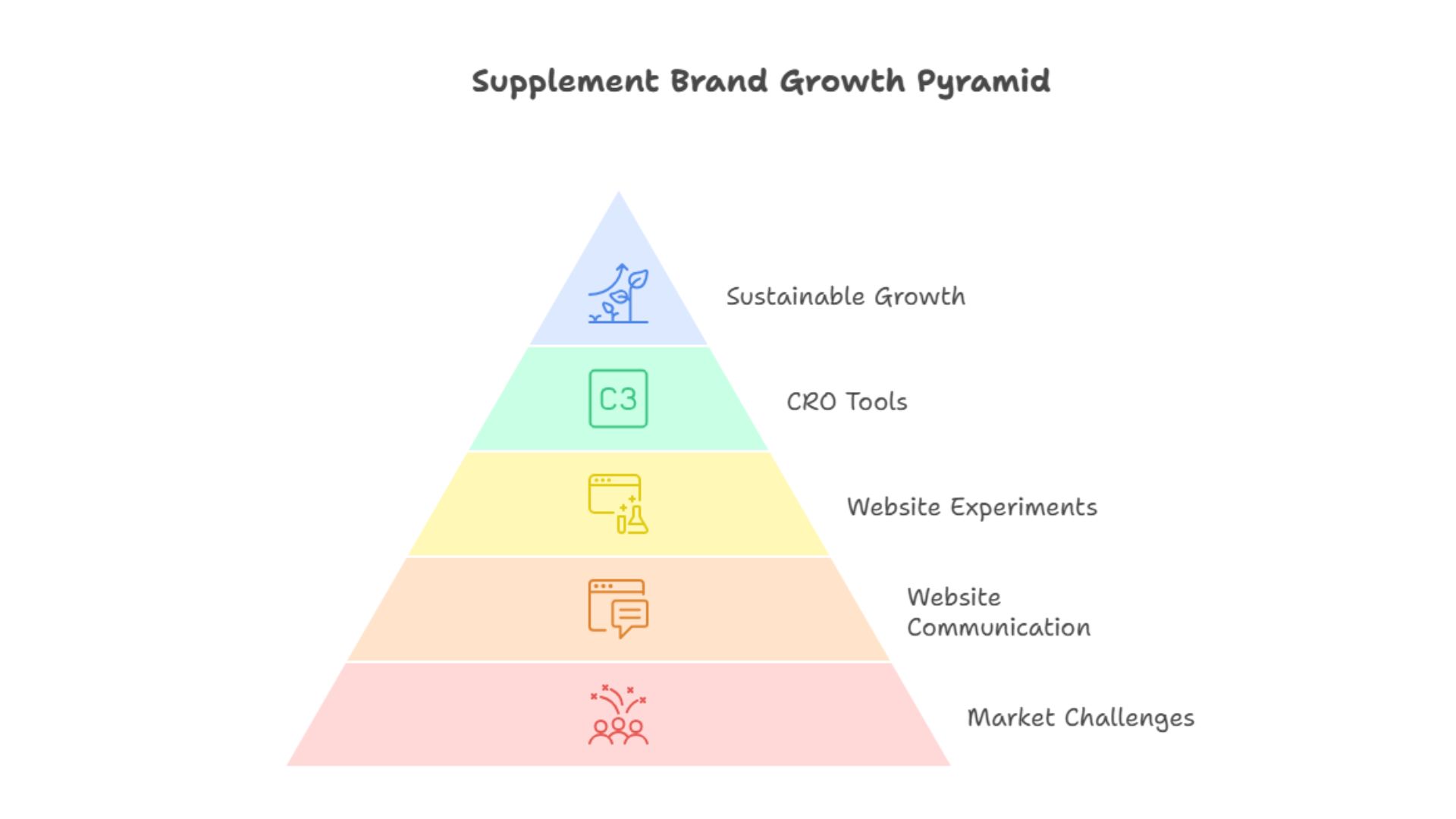
Website experiments are no longer optional for supplement brands. They are essential.
This guide covers why supplement brands need to run website experiments in 2026 and outlines five experiments that consistently improve conversion rate, average order value, and revenue. It also explains how A/B testing, user experience experiments, and personalization help health and wellness brands grow without compromising trust or compliance.
Throughout, we reference how CustomFit.ai, conversion rate optimization software, supports supplement brands by enabling controlled experimentation through a reliable A/B testing platform and A/B testing tools built for ecommerce.
This is not about chasing trends. It is about building a system that allows your website to learn, adapt, and perform better over time.
Supplement brands operate in one of the most trust-sensitive ecommerce categories.
Customers are not just buying a product. They are buying into a promise about health, energy, sleep, immunity, or longevity. Hesitation is natural, and visitors want reassurance before they commit.
At the same time, regulations limit what supplement brands can claim. You cannot rely on aggressive messaging or exaggerated promises, which means your website experience has to do more of the convincing.
Website experiments help supplement brands answer critical questions:
Without experimentation, brands rely on assumptions. With experimentation, they rely on evidence. That shift from guessing to testing is what separates growing supplement brands from stagnant ones.
Health product companies often invest heavily in formulation, certifications, and supply chain quality, but many underinvest in how these strengths are communicated online.
Testing the online store lets health brands:
In categories like supplements, small changes in clarity and reassurance can have outsized impact. Testing how certifications are displayed, or where ingredient transparency appears, can significantly influence purchase decisions. These are not things you should decide by instinct alone.
A/B testing provides a safe, measurable way to improve without risking brand credibility.
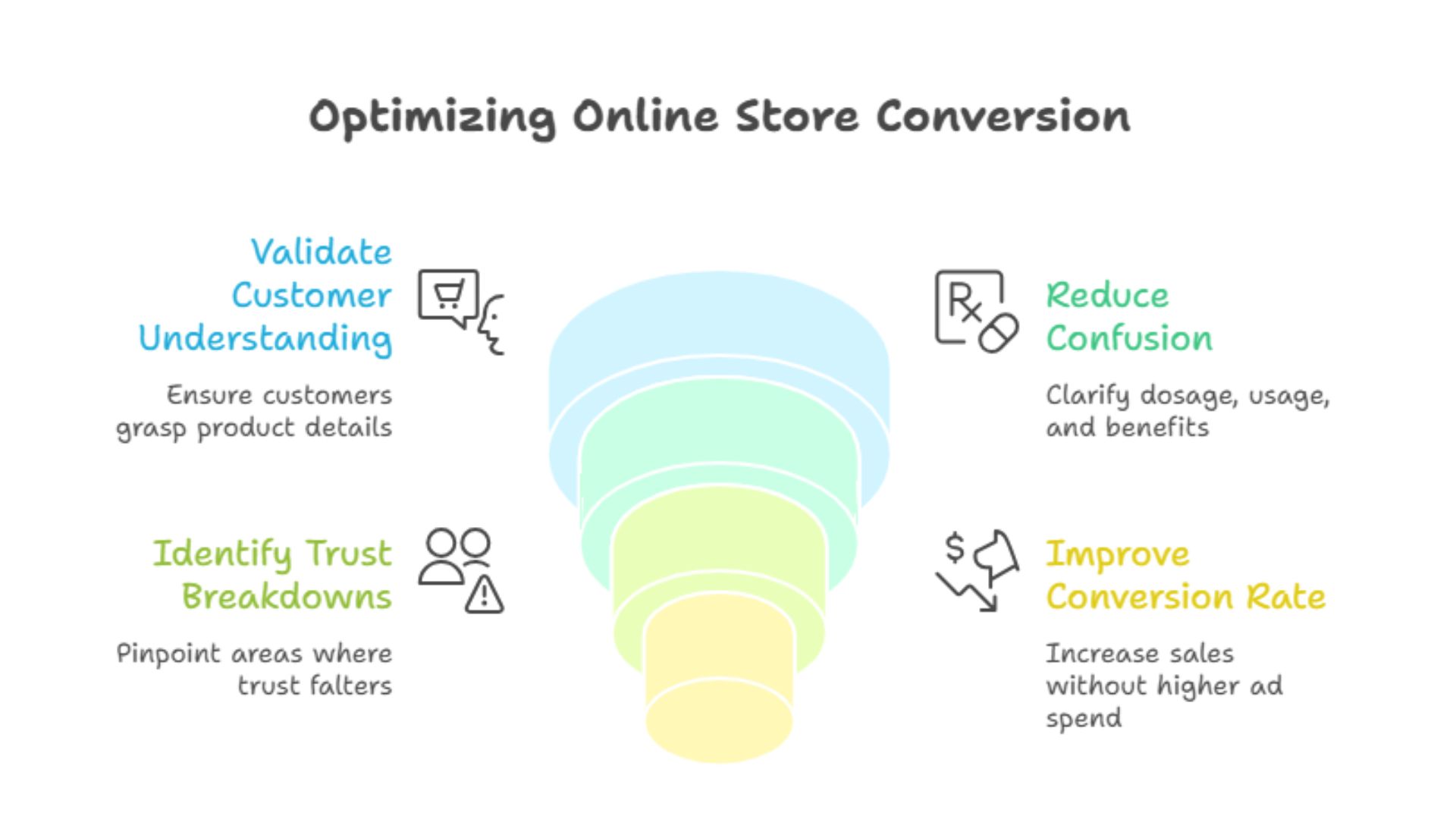
Website experiments improve sales by reducing friction and increasing confidence.
Most supplement purchases fail not because the product is bad, but because the visitor is unsure: unsure if it will work for them, unsure if it is safe, unsure if the brand is trustworthy, unsure if the price is justified. Website experiments target these uncertainties directly.
By testing different versions of product pages, messaging, layouts, and flows, supplement brands can see which experiences move users closer to purchase. Over time, these improvements compound. Conversion rate improves, average order value increases, and revenue grows without relying solely on discounts.
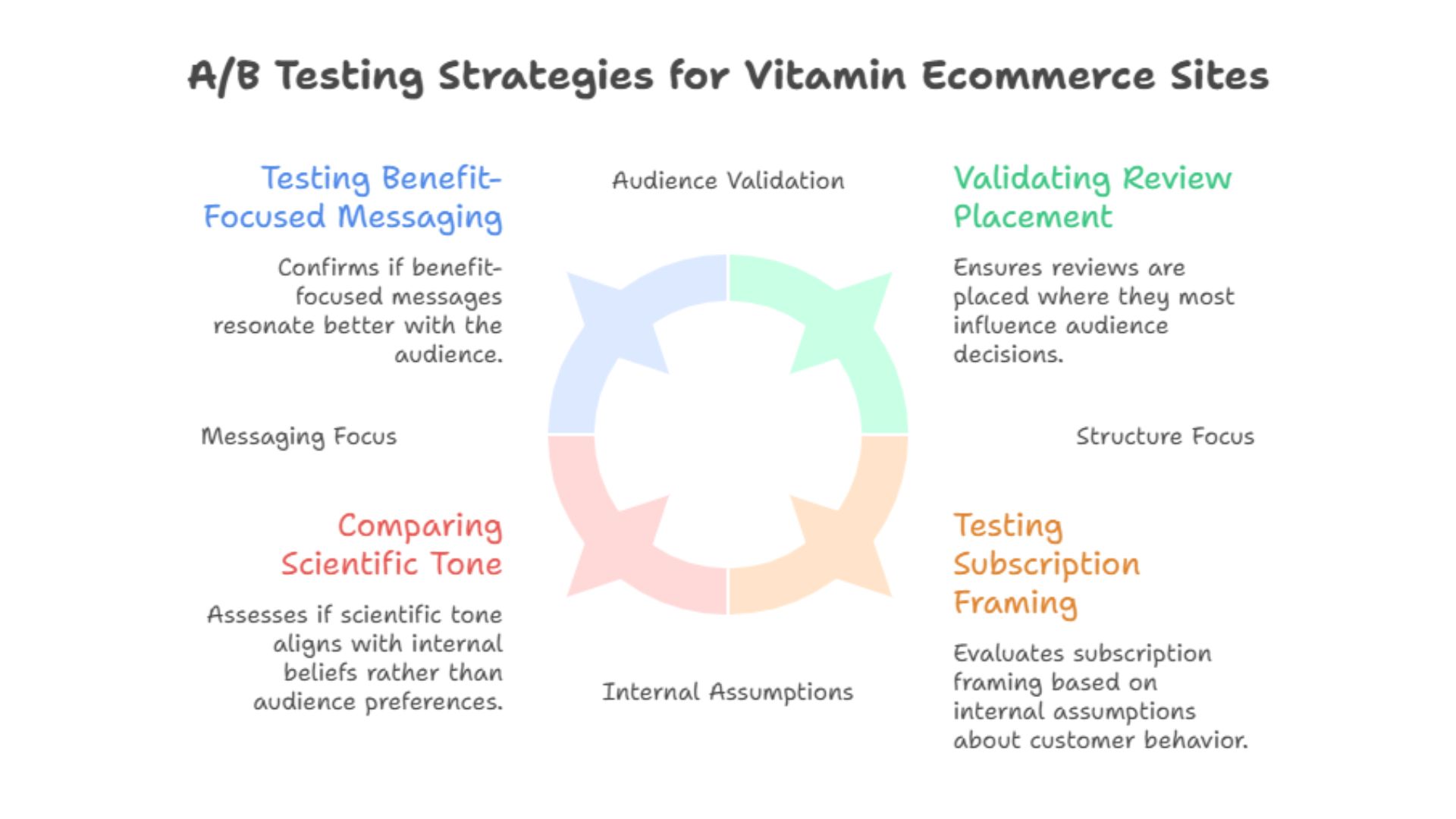
Vitamin and supplement ecommerce sites benefit from A/B testing in a particular way because customer decision-making is nuanced. Unlike impulse categories, supplements often involve research and comparison, which makes page structure and content hierarchy critical.
A/B testing helps vitamin brands:
Using an A/B testing platform lets brands measure what actually works for their audience, not what sounds good internally. This is especially important for vitamin brands expanding into new markets or launching new formulations.
The product page is the heart of any supplement website. It is where curiosity turns into consideration and consideration turns into purchase. Yet many supplement product pages are overloaded or poorly structured.
Visitors often skim. If the most important information is buried or unclear, they leave.
Testing different product page structures helps answer questions like:
Create two versions of a product page:
Version A focuses on benefits first, followed by ingredients and certifications. Version B leads with ingredients, sourcing, and scientific backing, followed by benefits.
Measure conversion rate, add-to-cart rate, and time on page. A/B testing software lets you run this experiment without redesigning the entire site or risking compliance issues.
Trust is the biggest conversion driver in the supplement category, but not all trust signals work equally well. Some brands rely heavily on certifications. Others emphasize reviews. Some highlight expert endorsements. The right mix depends on the audience.
Too much social proof can feel fake. Too little feels risky. Testing helps find the balance.
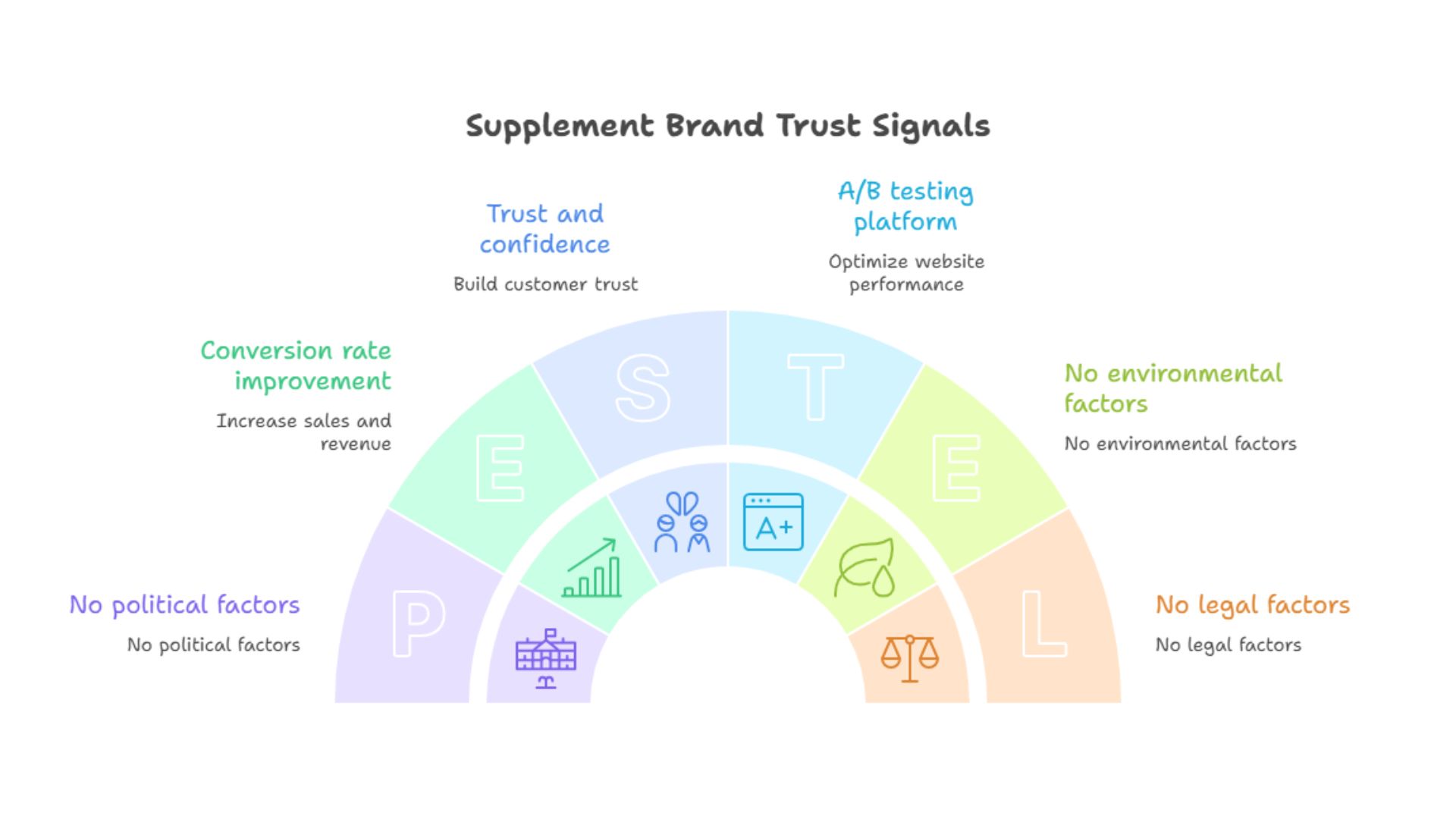
By testing these elements, supplement brands can identify what actually increases confidence and improves conversion rate.
Subscriptions can work well for supplements, but only when framed correctly. Many brands push subscriptions aggressively and end up hurting conversions. Others hide subscriptions and miss recurring revenue opportunities.
Subscriptions can increase lifetime value and average order value, but only if customers feel in control.
Version A defaults to one-time purchase with subscription as an option. Version B highlights subscription benefits first while keeping opt-out clear.
Measure not only subscription adoption, but also overall conversion rate and revenue per visitor. Using an A/B testing platform ensures that you see the full impact, not just surface-level subscription signups.
Checkout is where doubt peaks. Even users who believe in the product may hesitate at the final step.
Unexpected shipping costs, unclear return policies, or missing reassurance can kill conversions.
These experiments often deliver some of the highest ROI improvements for supplement brands. A/B testing tools let you test checkout changes safely by limiting exposure and measuring impact before full rollout.
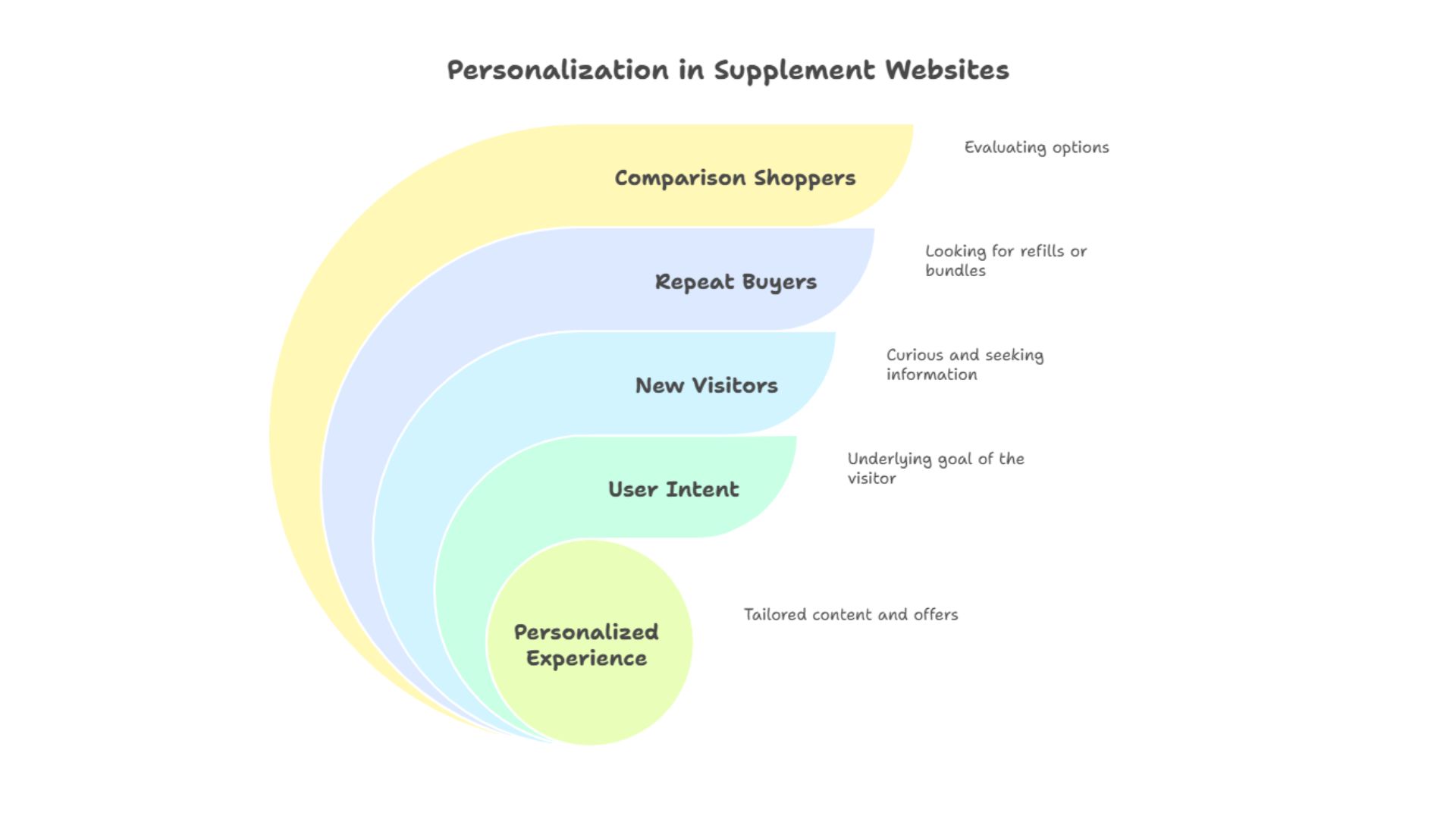
Not every visitor comes to a supplement website with the same goal. Some are new and curious. Some are repeat buyers. Some are comparison shoppers. Some are looking for a specific benefit.
Showing the same experience to everyone ignores intent.
Personalized experiments help supplement brands:
Using personalization alongside A/B testing lets brands scale what works for different segments instead of forcing a one-size-fits-all experience. CustomFit.ai, conversion rate optimization software, supports this approach by combining experimentation and personalization within a single system.
Nutrition products often require explanation. Users want to know what they are putting into their bodies, and website optimization helps simplify this decision. Clearer content hierarchy, better visual cues, reduced cognitive load, and an improved mobile experience all contribute to higher conversion rates.
Optimization is not about persuasion. It is about clarity.
Product launches are high-stakes moments for supplement brands. Assumptions made during launch can shape long-term performance.
Website experiments during launches help brands:
Running controlled experiments during launch reduces the risk of locking in decisions that underperform.
User experience experiments focus on how easy and comfortable it is to move through the site. For supplement brands, UX improvements often lead directly to revenue gains.
Examples include:
Each improvement reduces friction and increases the likelihood of purchase.
Website experiments turn UX from a subjective debate into an objective process. Instead of arguing over design choices, teams test them, which creates alignment across marketing, product, and leadership.
Experiments help answer:
When UX improves, conversion rate tends to follow.
Wellness brands benefit most from experiments that focus on education without overwhelm, trust without hype, and guidance without pressure.
Effective experiments include:
These experiments respect the customer's intelligence and build long-term brand equity.
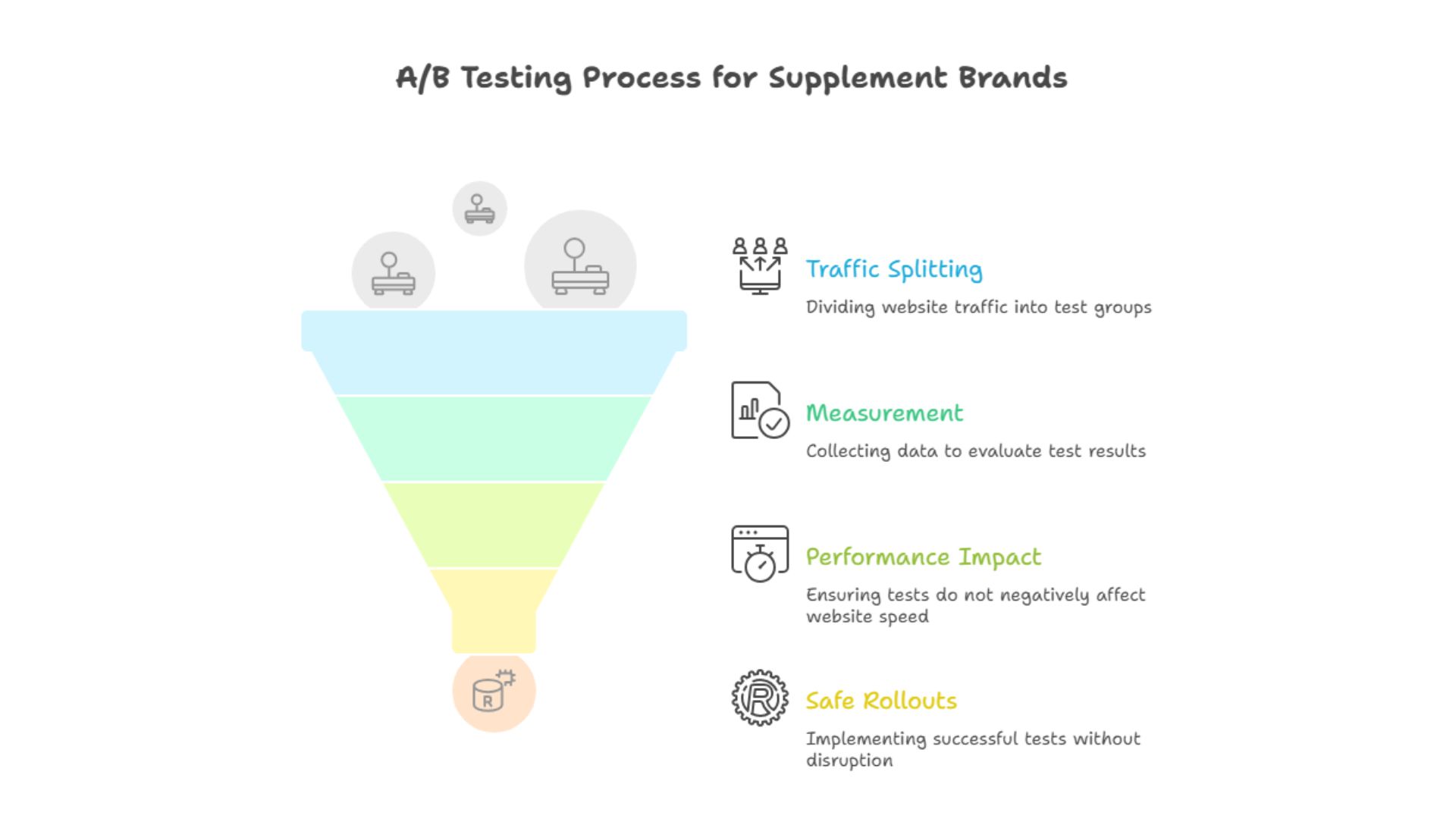
A/B testing platforms provide the infrastructure to run experiments responsibly. They ensure clean traffic splitting, accurate measurement, minimal performance impact, and safe rollouts.
A/B testing software turns experimentation from a risky activity into a repeatable process. For supplement brands operating in regulated environments, this level of control matters.
CustomFit.ai is a conversion rate optimization company that works with ecommerce and D2C brands, including supplement and wellness companies.
It supports supplement brands by enabling:
Rather than pushing aggressive tactics, it helps brands test responsibly and scale what works.
The biggest advantage of running website experiments is not any single test. It is the culture it creates. Teams stop guessing, decisions become data-driven, risk is managed rather than avoided, and learning accelerates.
By 2026, supplement brands that do not experiment will struggle to compete with those that do.
The supplement industry will only get more competitive. Products will look similar. Prices will converge. Claims will be regulated.
What will differentiate brands is experience.
Website experiments let supplement brands refine that experience continuously. By focusing on product clarity, trust, checkout reassurance, subscriptions, and personalization, brands can increase conversion rate, grow revenue, and build long-term loyalty.
Tools like CustomFit.ai provide the structure to do this responsibly, but the mindset matters most. Experimentation is the foundation of sustainable growth.
Supplement brands need website experiments to understand customer behavior, build trust, and improve conversion rate without relying on aggressive marketing or discounts.
Website experiments reduce friction, clarify messaging, and optimize user experience, leading to higher conversion rates and increased revenue.
A/B testing helps vitamin ecommerce sites validate messaging, layout, trust signals, and subscription framing, ensuring decisions are backed by data.
Product page structure, trust signal placement, subscription framing, checkout reassurance, and personalization experiments are most effective.
They turn subjective design decisions into measurable outcomes, improving clarity, usability, and confidence.
Experiments focused on clarity, trust, education, and user intent consistently improve conversion rates.
CustomFit.ai helps supplement brands run controlled A/B tests, personalize experiences, and measure impact, supporting sustainable conversion optimization.