From the conversion glossary
Concepts referenced in this article, defined.
Discover how AI can optimize your Shopify store for higher conversions. From personalized product recommendations to AI-powered A/B testing, learn key strategies to enhance user experience and boost sales.
Concepts referenced in this article, defined.
Run rigorous A/B tests and personalize every visit on Shopify or any storefront — no engineers required.
Getting traffic to your Shopify store is only half the job. Converting that traffic into paying customers is where the real work happens, and AI tools have made that work more tractable. They can personalise product recommendations, run A/B tests automatically, and surface patterns in user behaviour that would take weeks to find manually. The result is a store that responds to real data rather than guesswork.
This post covers the main areas where AI applies to Shopify conversion optimisation and offers concrete starting points for each.
AI processes large volumes of behavioural data and adapts in real time as new interactions come in. That's the core difference from traditional optimisation methods, which typically require manual analysis and periodic updates. Because AI adjusts continuously, it can personalise each visitor's experience at a level that static rules cannot match.
AI recommendation engines analyse browsing and purchase behaviour to surface relevant products. Factors that typically drive recommendations include:
Showing visitors products that align with their interests raises the likelihood of a purchase and tends to increase average order value (AOV).
AI can adjust pricing in real time by analysing market trends, competitor pricing, and customer behaviour. A product in high demand might be priced higher; a slow-moving SKU might get a temporary reduction to encourage purchases. The goal is to stay competitive while protecting margins.
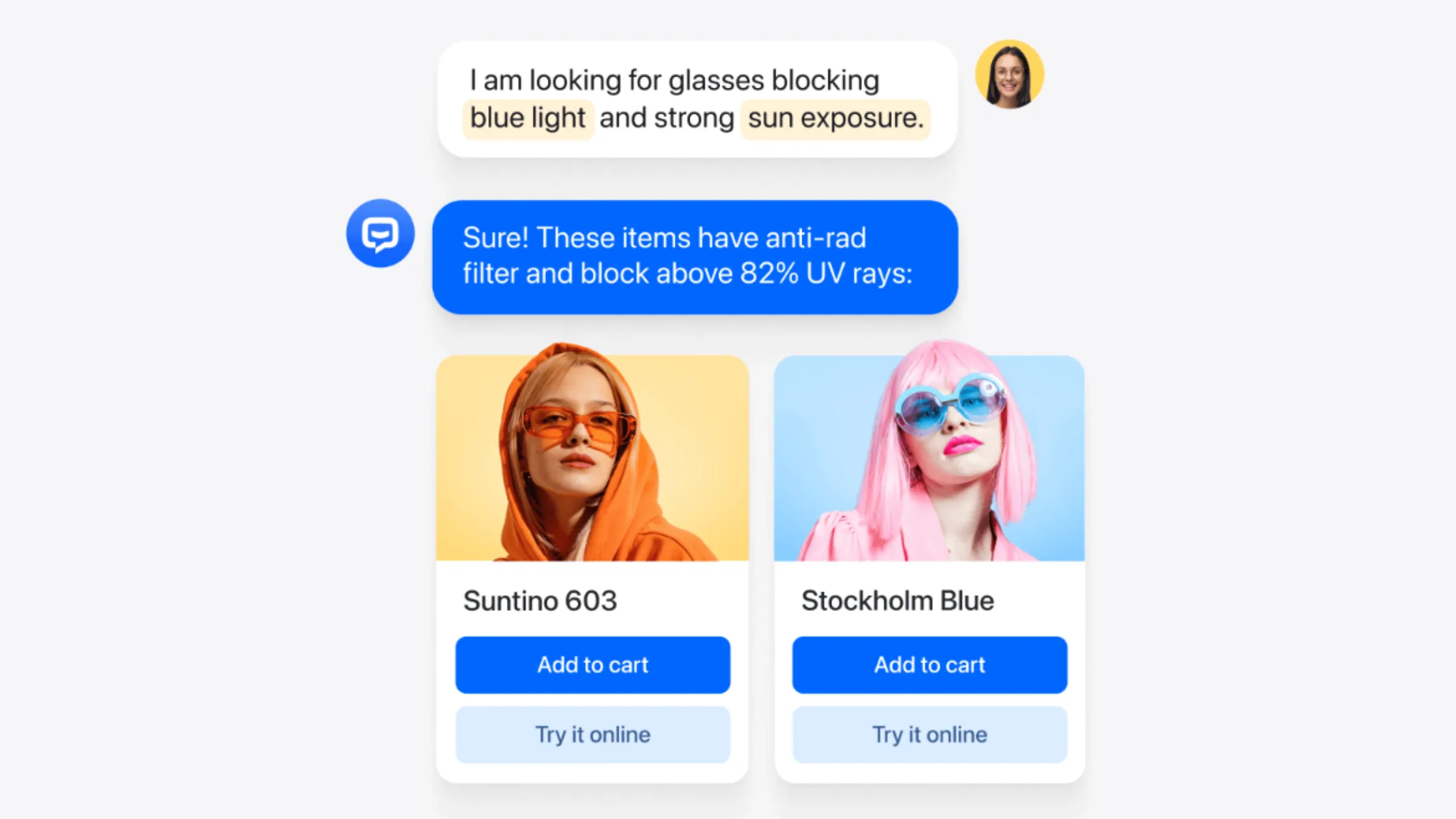
AI chatbots handle common questions, assist with product searches, and guide users through checkout without requiring a human agent. Immediate responses reduce friction at the moments when shoppers are most likely to abandon their carts.
Standard A/B testing needs substantial traffic and time to reach statistical significance. AI-powered testing tools automate test setup, data collection, and variant selection, which compresses that timeline. Elements worth testing include:
Some AI tools can also predict which variant is likely to win before the test concludes, letting you act on results sooner.
AI can track each step a visitor takes through your store and flag where people drop off. Those drop-off points become the highest-priority targets for improvement. AI tools can also segment users by behaviour, so you can tailor the experience for different visitor types rather than applying a single layout to everyone.
When AI detects that a visitor is about to leave, it can trigger a personalised message, such as a discount, free shipping offer, or a reminder about items in the cart. This reduces bounce rates and recovers sales that would otherwise be lost.
The clearest win from AI is personalised shopping experiences. Use it to deliver product recommendations, content, and promotions tailored to individual users. Personalisation improves user experience and increases the likelihood of a purchase.
AI improves as it processes more data, but it still needs human oversight. Review AI-driven tool performance regularly and adjust your strategies based on the findings. Tweak recommendation logic, refine pricing rules, and update test priorities based on what the data shows.
AI is useful beyond automation. Run A/B tests more frequently, test more variations simultaneously, and use the resulting insights to prioritise changes. Faster iteration means more improvements shipped in the same period.
AI can identify distinct customer segments based on browsing habits, purchase history, and demographics. Targeting each segment with relevant offers and messaging produces better engagement than a one-size-fits-all approach.
AI surfaces patterns in customer behaviour as they emerge. If traffic for a particular product spikes, you can respond quickly by promoting it further or adjusting inventory. Real-time data makes those responses faster and more accurate.
A few practical reasons to add AI to your Shopify optimisation work:
A few situations where AI delivers the most immediate value:
Ready to boost your Shopify store conversions?
Download the CustomFit.ai Shopify A/B Testing App today and gain access to AI-powered optimisation tools that will increase sales and improve the customer experience.
AI helps optimise your Shopify store by analysing user behaviour, personalising product recommendations, automating A/B testing, and improving the overall shopping experience. It provides data-driven insights that lead to better decision-making and higher conversions.
AI can boost conversions by delivering personalised product recommendations, offering dynamic pricing, improving the checkout process with AI-powered chatbots, and optimising page layouts with smart A/B testing. It allows for real-time adjustments based on user behaviour, making your store more responsive to customer needs.
AI can optimise various elements, including:
AI-powered A/B testing automates the process of running tests, collecting data, and analysing results. It allows you to test multiple elements at once and identify the best-performing variants faster, helping you optimise your Shopify store more efficiently.
AI offers several benefits for optimising Shopify stores:
AI-powered chatbots provide instant assistance to customers, helping them find products, answering questions, and guiding them through the checkout process. By reducing friction in the buying journey, chatbots help lower cart abandonment rates and improve conversions.
You should start using AI for Shopify optimisation:
Key metrics to track include:
AI analyses market trends, competitor pricing, and customer behaviour in real time to recommend the best prices for your products. Dynamic pricing ensures that your store remains competitive while maximising profits.
Yes, AI can help reduce cart abandonment by offering real-time assistance through chatbots, triggering exit-intent popups