From the conversion glossary
Concepts referenced in this article, defined.
Concepts referenced in this article, defined.
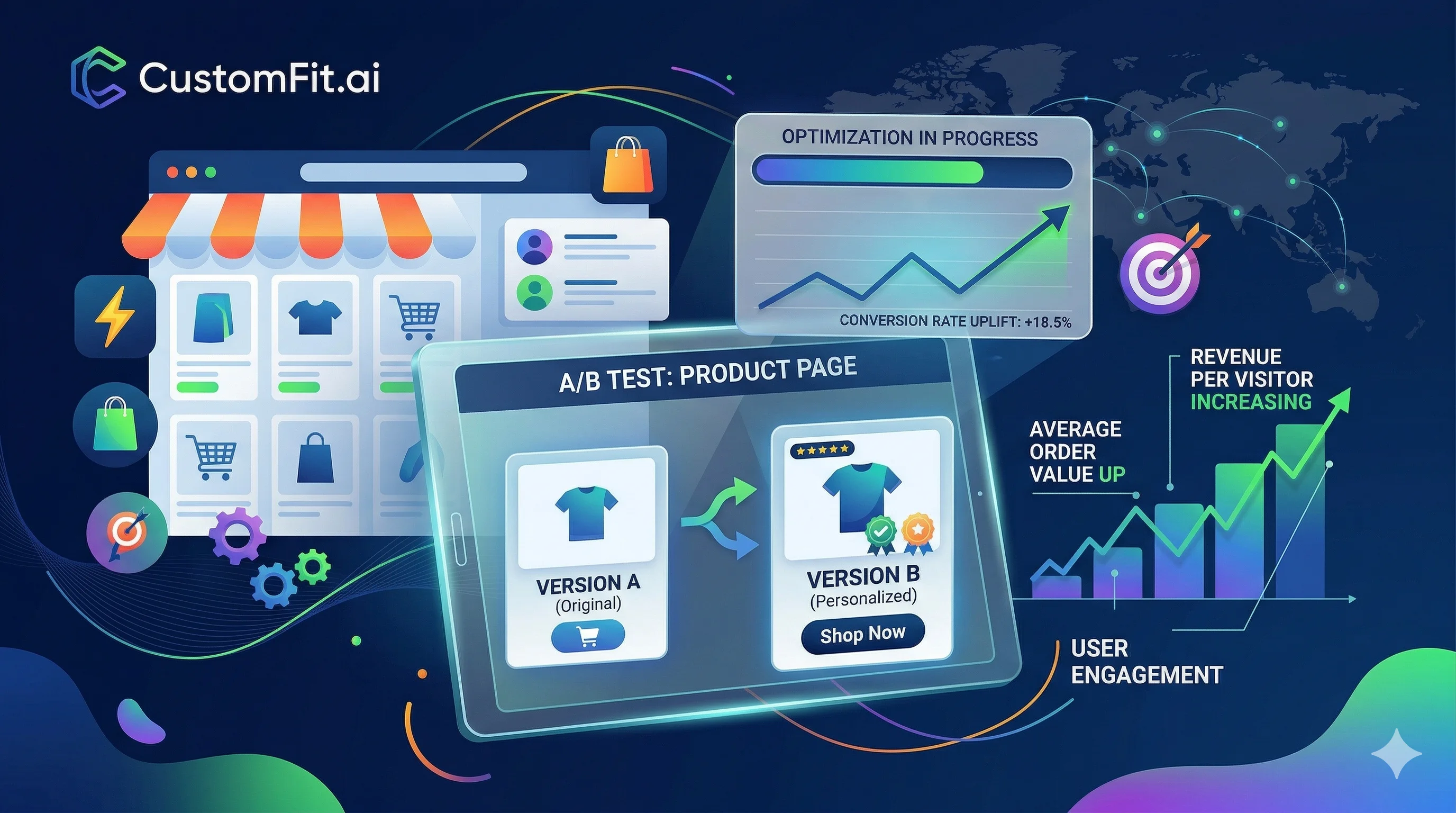
Run rigorous A/B tests and personalize every visit on Shopify or any storefront — no engineers required.
Shopify's checkout has historically been a black box — merchants could add CSS and limited script, but substantive changes required Shopify Plus access to checkout.liquid. Checkout Extensibility changes this with a structured framework for checkout UI extensions, blocks, and customizations that extend checkout functionality without raw template editing. For Indian D2C brands, this opens CRO opportunities at the highest-value point in the purchase funnel — where a 5% improvement in checkout completion translates directly into revenue.
Checkout abandonment is the most expensive leak in the D2C funnel. Industry averages show 65–75% of customers who initiate checkout do not complete it. For Indian D2C stores, the rates are higher — 70–80% checkout abandonment is common, driven by:
A 5% improvement in checkout completion (from 25% to 30% completion rate) increases revenue by 20% with zero additional traffic or marketing spend.
Checkout UI extensions are React components that render within the checkout at defined positions — above payment methods, in the order summary, in the contact information step, etc. Apps build these extensions; merchants install them from the App Store.
Available positions:
purchase.checkout.contact.render-after — below the email/phone fieldpurchase.checkout.shipping-option-list.render-after — below shipping optionspurchase.checkout.payment-method-list.render-before — above payment methodspurchase.checkout.block.render — in the order summary sidebarCheckout blocks are configurable content blocks added via the checkout editor (available with Shopify Plus). They allow adding trust badges, text blocks, and custom content without code.
Post-purchase customization via extensions on the order confirmation page — for upsell offers, review requests, and loyalty enrollment (works on all Shopify plans).
Impact: 5–10% checkout completion lift for new visitors
What to show:
How to implement: Apps like Trust Badges Bear or Checkout Blocks (Shopify Plus) add trust badge sections via checkout UI extensions.
Impact: 8–12% abandonment reduction at shipping step
After customers enter their address, show "Expected delivery: [specific date]" next to the shipping option. This converts the abstract "3–5 business days" into a tangible commitment that motivates completion.
Implementation requires integration with your shipping provider (Shiprocket, Delhivery) API to calculate estimated delivery based on customer pincode and your warehouse location.
Impact: 10–15% checkout completion lift for COD-eligible customers who aren't sure if COD is available
For Indian D2C, showing "Cash on Delivery available at your pincode" in the shipping step confirmation dramatically reduces the trust-based abandonment where customers close the checkout to verify COD availability elsewhere.
Impact: 8–15% attach rate for well-matched products
A small product recommendation in the order summary sidebar ("Customers also love...") with a one-click add-to-order is accessible in checkout for Shopify Plus stores via checkout UI extensions. Apps like ReConvert provide this functionality.
Impact: Converts B2B customers who need invoice GSTIN
Add a "Business GSTIN (optional)" field in the contact information step. B2B buyers who need input tax credit (ITC) will not complete checkout if they can't provide their GSTIN. This is a significant conversion issue for Indian D2C brands targeting business buyers.
Impact: 10–20% of COD customers shift to prepaid when offered a meaningful incentive
In the payment method step, show "Pay with UPI/Netbanking and get ₹50 off your order" as a checkout UI extension. This shifts COD customers to prepaid at the highest-intent moment — during checkout.
Implementation via checkout UI extension that applies a discount when UPI is selected (Shopify Plus enables this; standard Shopify requires a workaround via apps like Bold Discounts).
Not everything is accessible on standard Shopify plans:
For standard Shopify plan users, checkout CRO is primarily limited to:
Since full checkout customization requires Plus, standard Shopify brands should treat the cart page as their primary checkout CRO surface.
High-impact cart page changes:
CustomFit.ai enables personalizing the cart page experience without developer involvement — showing different trust signals, free shipping thresholds, and urgency messaging to different customer segments. This is the accessible equivalent of checkout personalization for standard Shopify plans, and brands using CustomFit.ai see 11% average CVR improvement from these touchpoints.
A/B testing in checkout (Shopify Plus): Shopify's native experimentation tools and third-party apps enable checkout A/B tests on Plus.
Pre-checkout testing (all plans): Test variations on the cart page that you then roll out to the checkout — winning cart page messaging and trust signals apply to checkout as well.
Qualitative research: Hotjar on the cart page, session recordings up to checkout initiation, exit polls asking "What almost stopped you from buying?" — these give direct insight into checkout friction points without requiring checkout A/B access.
Related reading: Shopify Hydrogen Headless CRO | Shopify Plus vs Shopify CRO | Shopify Migration Checklist CRO | Checkout Abandonment | Conversion Rate | A/B Testing