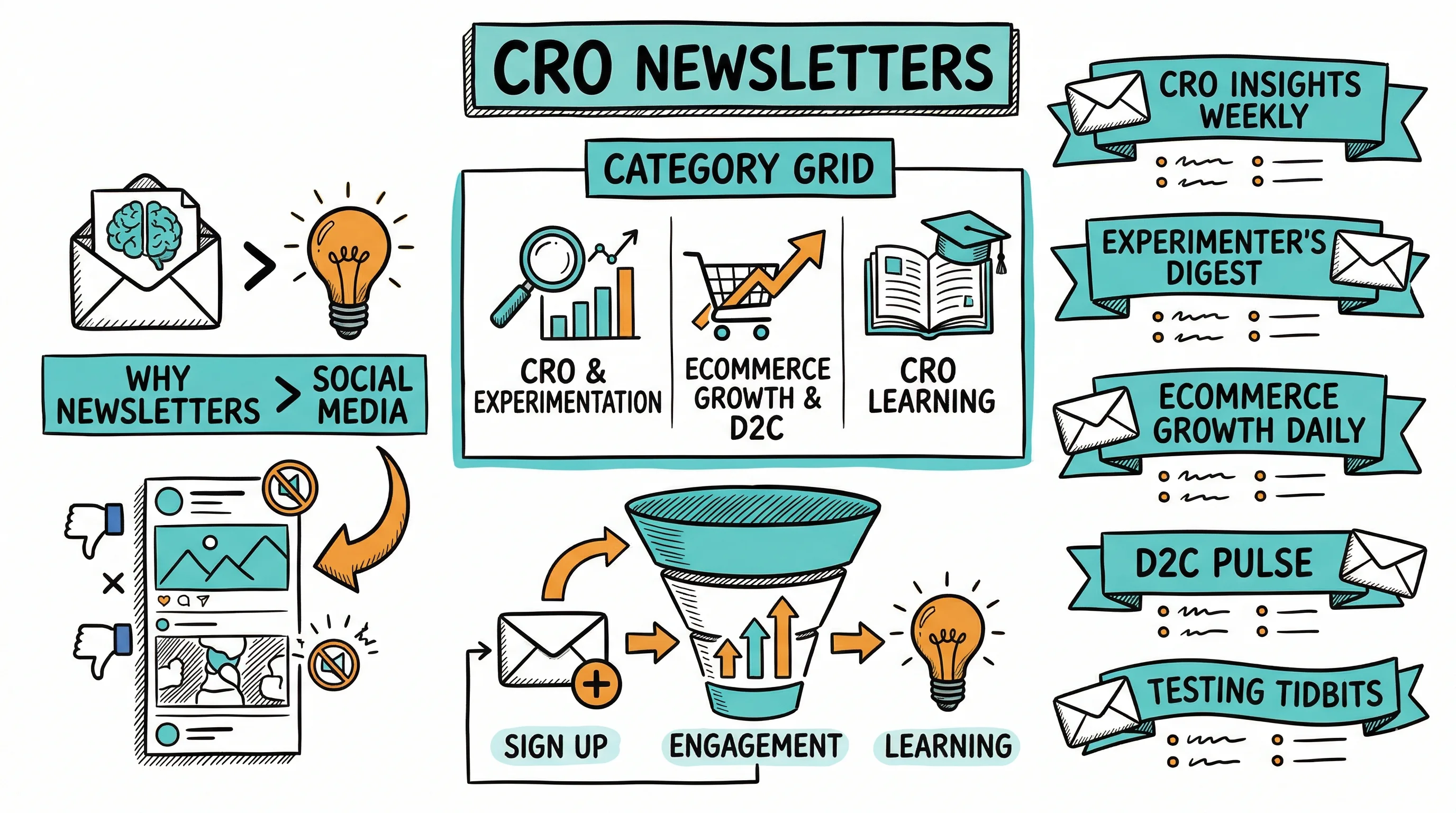
From the conversion glossary
Concepts referenced in this article, defined.
Concepts referenced in this article, defined.
 ai ecommerce
How reinforcement learning personalization works for ecommerce - self-learning targeting that improves with every visitor, and how it differs from rules.
 ai ecommerce
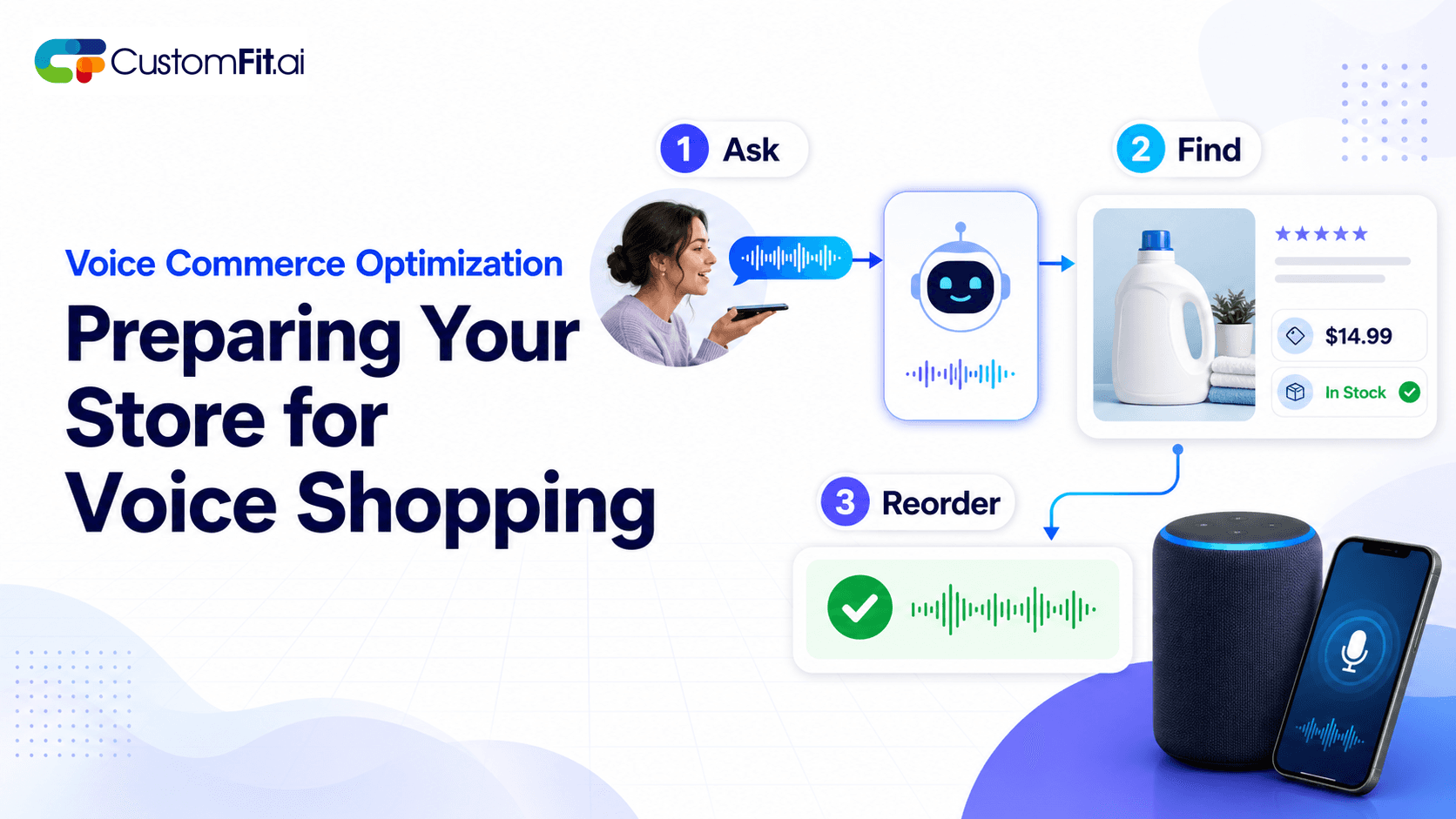
A practical guide to voice commerce optimization - how to prepare your product pages, catalog, and UX for Alexa, Siri, and voice-first shopping.
 ai ecommerce
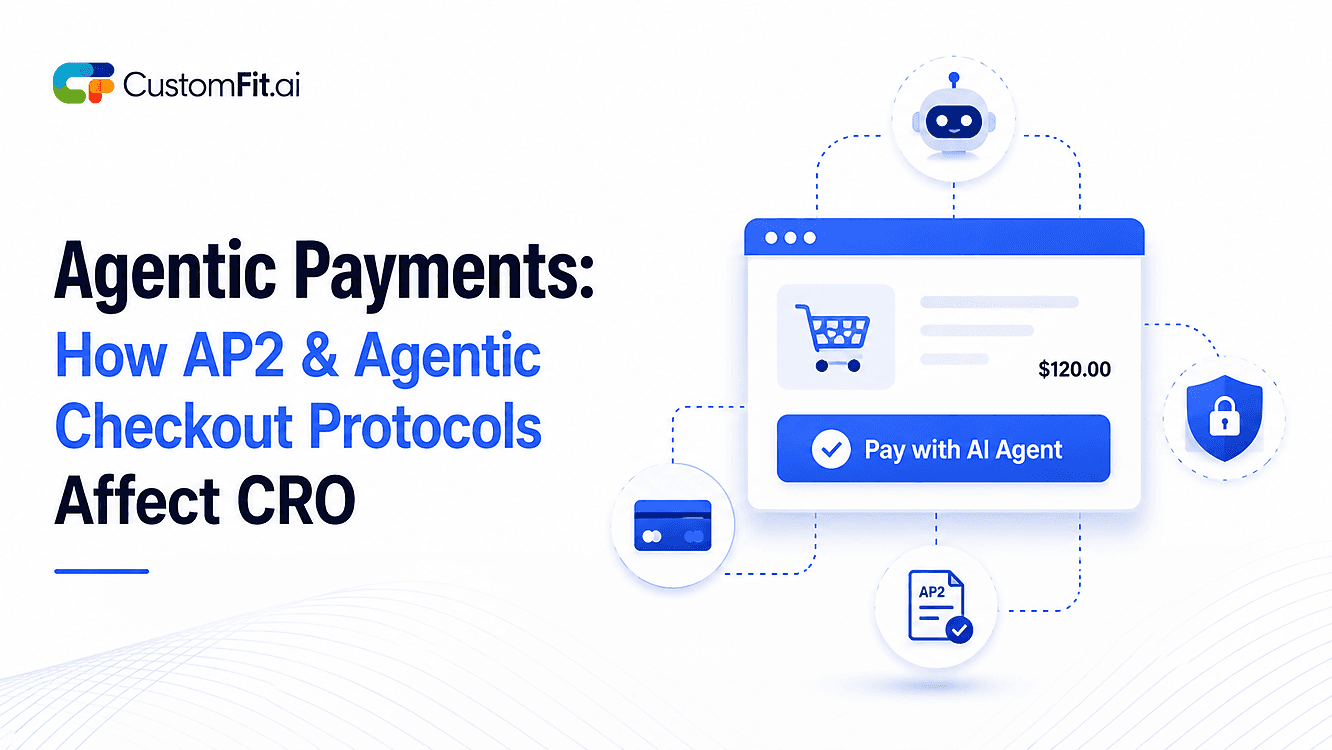
How agentic payments and Google's AP2 protocol are changing checkout and what ecommerce brands need to know about AI agent payment authorization and CRO.
Run rigorous A/B tests and personalize every visit on Shopify or any storefront — no engineers required.
AI product recommendations predict what a specific shopper is most likely to buy next and surface those products at the right moment. When they work well, they increase average order value, reduce time-to-purchase, and make repeat buying feel natural rather than pushy. When they're set up poorly, showing random best-sellers or recently viewed items without context, they add noise without adding value. This guide explains how the algorithms actually work and what you need to do to make recommendations drive real revenue.
There are three main approaches, often combined in modern recommendation engines:
"People who bought X also bought Y."
Collaborative filtering finds users similar to the current visitor (based on purchase or browsing history) and recommends what those similar users bought. It uncovers non-obvious connections: customers who buy protein powder also tend to buy shakers, but in a specific segment, they also buy sleep supplements.
The catch is that it requires substantial data. If you have fewer than 1,000 customers with multiple purchases, collaborative filtering models are too sparse to be reliable. You'll end up recommending based on very thin signals.
"You viewed a moisturizer with SPF 30, here are other moisturizers with SPF."
Content-based filtering looks at product attributes (category, ingredients, price range, tags) and recommends similar items to what the user is currently viewing or has viewed. It works without much behavioral data, making it useful for newer stores or new visitors.
The limitation is that it tends toward obvious recommendations. If someone is looking at a blue kurta, it shows more blue kurtas. It misses the cross-category insights that collaborative filtering finds.
Most sophisticated recommendation systems combine both: content-based filtering for new visitors (no history yet), collaborative filtering for returning customers (enough data to find patterns), and rule-based overrides for specific business cases (new arrivals, high-margin products, clearance).
This is what Amazon, Flipkart, and Myntra use. Tools available to D2C brands via Shopify apps, like LimeSpot, Frequently Bought Together, or CustomFit.ai's personalization engine, use versions of hybrid models calibrated for smaller data sets.
Not all recommendation placements are equal. Data from multiple ecommerce studies shows:
| Placement | Typical CVR Impact | Best Use |
|---|---|---|
| Product page "Customers also bought" | High | Cross-sell adjacent products |
| Cart page "Complete your order" | Very high | Last-chance upsell before checkout |
| Homepage "Recommended for you" | Medium | Returning visitors only |
| Post-purchase "You might also like" | Medium | Drives repeat purchase |
| Email "Based on your last order" | High | Retention trigger |
| Search results "Related products" | Medium | Discovery for explorers |
The cart page is the highest-value placement for most brands. A visitor adding a ₹800 face wash to their cart is warm traffic with clear intent. Showing a complimentary toner or a value bundle at that moment converts at significantly higher rates than any other page.
Most "AI recommendations" on D2C stores aren't actually working. They're showing best-sellers disguised as personalized picks. Here's what goes wrong:
Problem 1: Not enough product catalog depth. If your store has 30 SKUs, recommendations have limited utility. The algorithm has too few options to find meaningful patterns. At this scale, hand-curated bundles and cross-sells outperform algorithmic recommendations.
Problem 2: Showing out-of-stock products. Nothing kills trust faster than recommending a product that's sold out. Your recommendation engine must sync with real-time inventory. This sounds obvious but is commonly broken.
Problem 3: Ignoring price cohesion. Recommending a ₹4,500 item to someone browsing ₹600 products is jarring. Good recommendation engines weight by price proximity unless there's a specific upsell intent signal (the customer has already bought at that price point).
Problem 4: Cannibalizing the primary conversion. On a product page, showing "similar products" can distract from the original purchase intent. Frame recommendations as complements ("goes well with"), not alternatives ("similar products"). The latter invites comparison shopping.
Problem 5: Ignoring Indian shopping patterns. Gifting occasions (Diwali, Raksha Bandhan, weddings) change recommendation logic entirely. A visitor buying a kurta in October may need a dupatta, jewelry, and a gift box, not another kurta. Seasonal context matters, and generic recommendation engines don't account for Indian festive shopping behavior.
Step 1: Choose your recommendation approach.
For brands with under 2,000 monthly orders, use a Shopify app with content-based plus manual override capability. You want control over what's recommended while the algorithm learns.
For brands with 2,000 or more monthly orders, collaborative filtering starts to work well. Look for apps that show "frequently bought together" based on your actual order data, not generic Shopify catalog data.
Step 2: Define your recommendation goals.
Before installing anything, decide what you're optimizing for: AOV (upsell and cross-sell at cart), repeat purchase rate (post-purchase and email recommendations), or discovery (helping users find products they didn't know you carry). Each goal leads to different placement and algorithm choices.
Step 3: Set up merchandising rules.
Even with AI recommendations, you need manual controls:
Pure AI without merchandising rules often under-promotes strategic products.
Step 4: A/B test your recommendation logic.
Don't assume the default setup is optimal. Test:
CustomFit.ai lets you A/B test which recommendation widgets and placements drive the most revenue without developer involvement. You can show different recommendation styles to different visitor segments and measure the impact directly.
See how CustomFit.ai powers product recommendations and personalization →
During Diwali, Republic Day sales, or Women's Day campaigns, visitor intent shifts. More gift buyers, more first-time visitors, more mobile traffic. Your recommendation engine needs to adapt:
Kapiva, a D2C Ayurveda brand, uses seasonal recommendation logic to shift from their standard wellness bundles to festive gift packs during October, November, contributing to their 9.48% CVR improvement during peak periods.
The metrics that matter:
Revenue per visitor (RPV): Does the page with recommendations generate more revenue per visitor than without? This is more reliable than conversion rate alone because it captures both CVR and AOV effects.
Recommendation click-through rate: What percentage of visitors click on a recommendation? Under 2% suggests wrong placement or wrong products. Above 5% is strong.
Post-recommendation purchase rate: Of visitors who click a recommendation, what percentage buy? If CTR is high but purchase rate is low, the recommended products aren't matching intent.
AOV with vs. without recommendation interaction: Compare AOV for orders where a recommended product was added vs. orders where it wasn't. This shows the true upsell value.