From the conversion glossary
Concepts referenced in this article, defined.
Concepts referenced in this article, defined.
Run rigorous A/B tests and personalize every visit on Shopify or any storefront — no engineers required.
Smile.io is the simpler, more affordable choice for Shopify stores that want points and referral programs up and running quickly. LoyaltyLion offers deeper customer data, more flexible program rules, and better analytics, but at a significantly higher price. For most early-stage D2C brands, Smile.io is the right starting point. As your customer base grows past roughly 10,000 active loyalty members and you need advanced segmentation or custom earning rules, LoyaltyLion becomes worth evaluating seriously. Neither tool is objectively "better." The right answer depends on your customer volume, team capacity, and how sophisticated your retention program needs to be.
Smile.io (formerly Sweet Tooth) is a loyalty and rewards platform built primarily for Shopify merchants. It lets you create points programs, referral programs, and VIP tiers with a no-code setup. Smile.io powers over 100,000 stores and is consistently one of the most-installed loyalty apps in the Shopify App Store. Its appeal is simplicity: most stores can have a working loyalty program live within a day, without a developer or a dedicated CRM manager.
LoyaltyLion is a loyalty platform targeting mid-market and enterprise ecommerce brands. It integrates with Shopify, Magento, BigCommerce, and custom platforms. LoyaltyLion focuses on data-driven loyalty, giving brands detailed analytics on which rewards drive repeat purchases, plus the ability to build complex earning and redemption rules. It's used by brands that want to treat their loyalty program as a strategic retention asset rather than just a points counter.
| Feature | Smile.io | LoyaltyLion |
|---|---|---|
| Points program | Yes | Yes |
| Referral program | Yes (paid plans) | Yes |
| VIP tiers | Yes (paid plans) | Yes |
| Custom earning rules | Limited | Extensive |
| Bonus point events (birthdays, etc.) | Yes | Yes |
| Customer segmentation | Basic | Advanced |
| Analytics dashboard | Basic | Detailed |
| Email marketing integrations | Klaviyo, Mailchimp | Klaviyo, Dotdigital, many more |
| Shopify POS support | Yes | Yes |
| Headless/custom builds | Limited | Yes |
| Loyalty page customization | Moderate | Extensive |
| Pricing model | Per-plan (flat) | Per-orders or custom |
| Free plan | Yes (limited) | No |
Smile.io offers a free plan for stores with up to 200 monthly orders, enough to test loyalty mechanics before committing budget. Paid plans start around $49/month (Starter) and go to $199/month (Growth), with enterprise pricing available for high-volume stores. The free plan covers basic points programs only; referrals and VIP tiers require paid plans.
LoyaltyLion does not publish flat pricing publicly. Pricing is typically based on monthly order volume and starts around $359/month for most mid-market brands. For high-volume stores, custom enterprise contracts are common. The pricing gap versus Smile.io is significant. LoyaltyLion costs roughly 6 to 7x more at entry level, so it only makes financial sense if your customer lifetime value (LTV) is high enough that incremental loyalty gains justify the spend.
A practical way to evaluate: if your average customer LTV is under $100 and your repeat purchase rate is below 25%, you won't generate enough lift from LoyaltyLion's advanced features to justify the cost. If your LTV is high and you have a team actively managing loyalty campaigns, the investment calculation looks different.
Smile.io wins clearly on setup speed. A basic points program can go live in under an hour using the Shopify admin. The interface is clean, the default templates work, and the documentation is thorough. For a lean D2C team without a dedicated CRM manager, this matters a lot. The best loyalty tool is the one you actually configure and optimize, not the one gathering dust because it was too complex to set up properly.
LoyaltyLion takes longer to configure correctly. The flexibility that makes it capable also means more decisions upfront: how many points per ₹ or $ spent, redemption thresholds, tier qualification windows, expiry rules, earning rules for different product categories, and bonus point campaigns. The payoff is a program that fits your brand more precisely, but expect a 1 to 2 week setup cycle and possibly help from their onboarding team for the initial configuration.
The ongoing management difference is also meaningful. Smile.io requires minimal ongoing attention once set up, and it runs on autopilot. LoyaltyLion benefits from active management: building loyalty segments, running targeted offers, and analyzing which reward types drive incremental repeat purchases. If you have the team for it, that active management is what generates the ROI that justifies LoyaltyLion's price.
Both platforms integrate with Klaviyo, which is the integration most D2C brands care about most. Klaviyo is used for email and SMS marketing, and feeding loyalty data into it enables detailed segmentation: rewarding high-tier members with exclusive early access emails, triggering win-back campaigns when points are about to expire, or creating flows specifically for customers who have accumulated significant unredeemed points.
Smile.io also connects with Mailchimp, Omnisend, Okendo (reviews), and a range of Shopify-native tools. LoyaltyLion has a broader integration library that includes Dotdigital, Gorgias (customer support), Yotpo, and more enterprise-grade tools. If your stack includes enterprise marketing tools, LoyaltyLion's integration depth is an advantage.
For Shopify POS, both platforms work, which matters if you run physical retail locations alongside your D2C store. Customers can earn and redeem loyalty points in-store as well as online. Specific POS features differ by plan level, though, so verify your exact use case with each vendor before committing.
Smile.io offers solid customization for its tier: you can name your program, set your own point name (e.g., "Sparks" instead of "Points"), define tier names and thresholds, and customize the loyalty widget appearance. For most brands, this level of branding flexibility is enough.
LoyaltyLion allows significantly more sophisticated program design. You can build multi-tier programs with complex qualification rules (based on total spend, order count, or specific product engagement), set earning multipliers for specific product categories, create birthday bonus events, and build custom loyalty landing pages that reflect your brand's full design language. For brands where loyalty is a centerpiece of their retention strategy rather than a nice-to-have, this design depth is valuable.
This is one of the clearest differences between the platforms. Smile.io's analytics are enough for monitoring program health: how many active members, points issued, points redeemed, and referrals generated. It answers "is the program working?" but not "what should I change to make it work better?"
LoyaltyLion's analytics go significantly further. You can segment loyalty members by cohort and compare retention rates, identify which reward types drive incremental purchases (not just redemptions), see which customer segments are most engaged with the program, and track the revenue contribution of your loyalty program specifically. For a brand treating loyalty as a performance marketing channel, LoyaltyLion's analytics support that orientation.
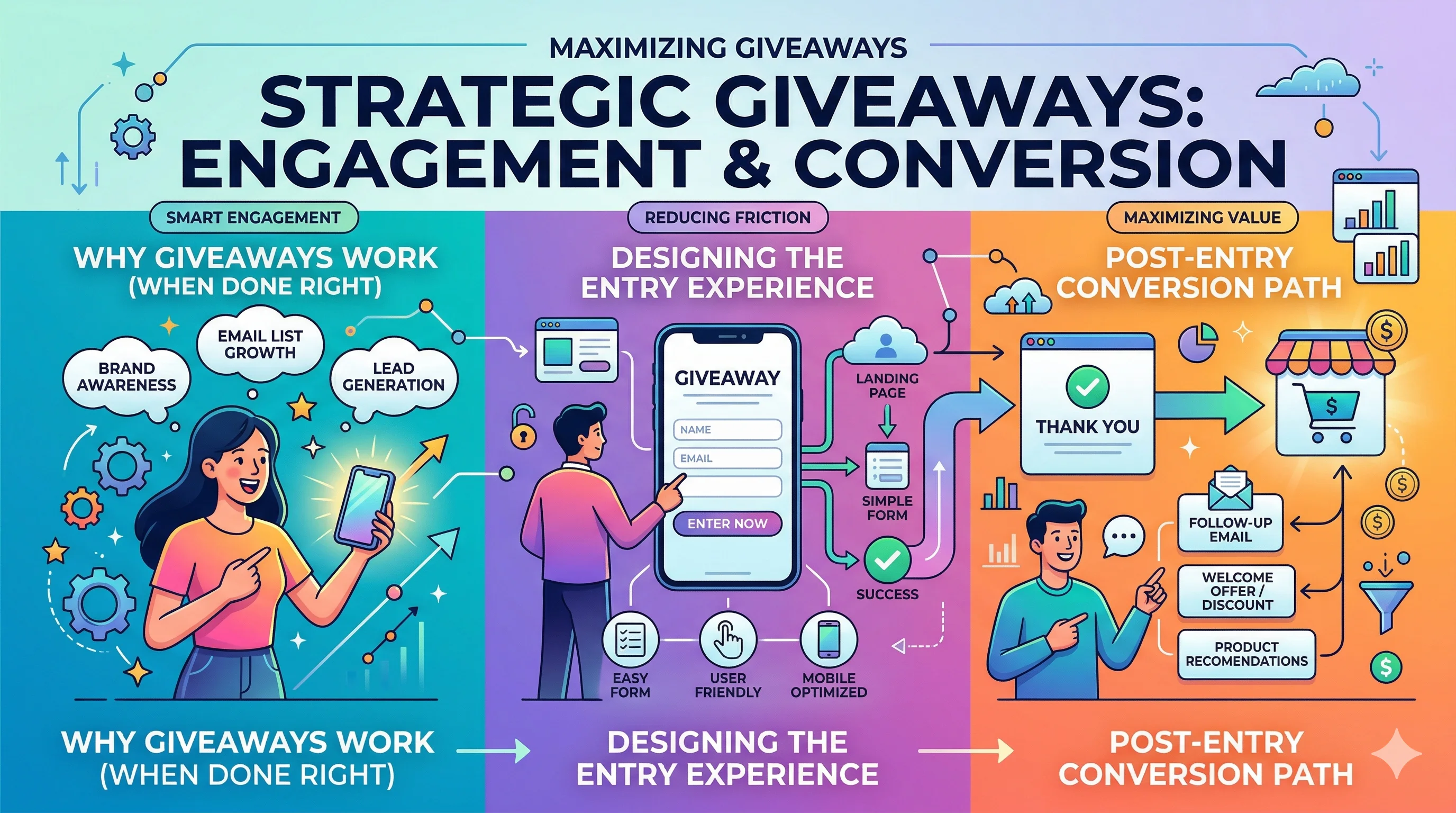
Loyalty programs directly affect conversion rate and average order value, but neither Smile.io nor LoyaltyLion tells you which loyalty mechanics actually convert better for your specific store and customer base.
Should you offer 10% off or a free product as a reward? Does a "Spend ₹2,000 more to unlock VIP status" banner on the cart page increase average order value? Does showing a customer's points balance in your site header increase repeat visit frequency? Does promoting a referral program on the post-purchase confirmation page perform better than promoting it via email? Loyalty platforms don't answer these questions. They show you redemption rates and member counts, but not the causal relationship between program presentation and customer behavior.
That's where CustomFit.ai fills the gap. CustomFit.ai lets you run A/B tests on your Shopify storefront, testing loyalty-related UI elements like reward banners, points display placement, referral CTAs, VIP tier messaging, and loyalty widget positioning, without writing any code. You can measure which loyalty offer variant actually drives more conversions, not just which one gets more clicks.
The combination works well in practice: use Smile.io or LoyaltyLion to run your loyalty program infrastructure, and use CustomFit.ai to test and optimize how that program is presented and communicated throughout your store experience. The program provides the mechanics; the testing makes sure you're surfacing those mechanics in the most conversion-effective way.
Is Smile.io free? Yes, Smile.io has a permanent free plan that supports up to 200 monthly orders with a basic points program. Referrals and VIP tiers require a paid plan starting at $49/month. The free plan is a genuine way to evaluate whether a loyalty program fits your store before committing.
Does LoyaltyLion work with Shopify? Yes, LoyaltyLion has a native Shopify integration. It also supports Magento, BigCommerce, and custom/headless builds, giving it broader platform coverage than Smile.io. For Shopify-only brands, this multi-platform support is not particularly relevant but does indicate LoyaltyLion's technical maturity.
Can I switch from Smile.io to LoyaltyLion later? Yes, but migrating requires transferring member points data and rebuilding your program rules in LoyaltyLion's configuration. Both platforms have migration documentation, and LoyaltyLion's onboarding team typically assists with data transfer. Some brands start with Smile.io and migrate to LoyaltyLion once their customer base grows large enough to justify the investment.
Which has better Klaviyo integration? Both integrate with Klaviyo. LoyaltyLion's Klaviyo integration passes more granular loyalty data (tier status, points balance, redemption history, and engagement scores) as custom properties, enabling more precise campaign segmentation. Smile.io's Klaviyo integration is functional but less detailed at the data property level.
Do either of these tools support COD (cash on delivery) orders for loyalty points? Smile.io and LoyaltyLion both allow you to configure when points are awarded, typically triggered after order fulfillment rather than order placement. For COD orders, points should only be awarded after payment confirmation to avoid issuing points on orders that are ultimately returned or unpaid. Check your specific plan's settings for COD handling, as this is an important consideration for Indian D2C brands with significant COD order volumes.
How do loyalty programs affect customer lifetime value? Well-designed loyalty programs increase customer lifetime value by incentivizing repeat purchases, increasing purchase frequency, and raising average order value through tier-based spend thresholds. The typical benchmark is that loyalty members have 2 to 3x higher LTV than non-members, but this depends heavily on program design, reward attractiveness, and how actively the program is promoted.