From the conversion glossary
Concepts referenced in this article, defined.
Concepts referenced in this article, defined.
 d2c ecommerce
Quick commerce conversion optimization for D2C brands selling on Blinkit, Zepto, and Instamart - how 10-minute delivery changes the CRO playbook.
 d2c ecommerce
 d2c ecommerce
Run rigorous A/B tests and personalize every visit on Shopify or any storefront — no engineers required.
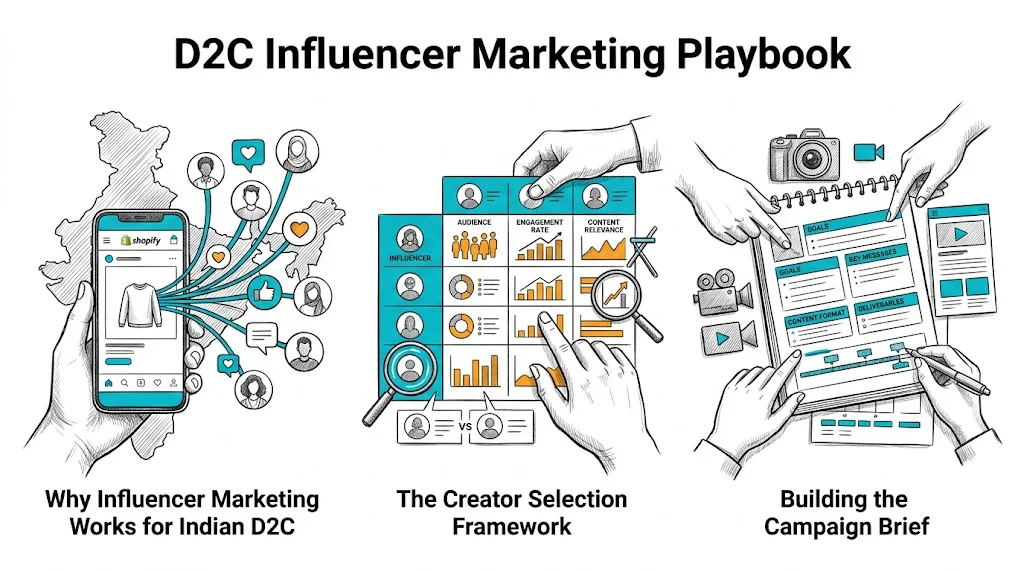
D2C influencer marketing is the most scalable customer acquisition channel available to Indian D2C brands that don't have ₹50 lakh monthly Meta budgets—and when executed with the right creator selection, structured briefs, and proper tracking, it delivers conversion rate and AOV improvements that paid ads alone cannot match. This playbook covers the full cycle from finding creators to measuring return on every rupee spent.
India's influencer ecosystem is uniquely well-suited to D2C commerce. The trust gap between Indian consumers and online brands is large—first-time buyers are cautious, and traditional advertising has low credibility with urban millennials. An influencer they follow, trust, and have watched for months is a more credible endorsement than any ad creative.
The numbers support this at scale: Indian D2C brands in personal care, food, and fashion consistently find that influencer-driven customers have 20–30% higher lifetime value than performance ad-driven customers. They come in pre-sold on the brand story, return more often, and complain less.
The challenge is that most brands manage influencer marketing reactively—responding to DMs from creators who pitch themselves, sending product, and hoping for content. This produces inconsistent results. A structured playbook produces predictable results.
| Creator Tier | Followers | Cost/Post | Best For |
|---|---|---|---|
| Nano | 1K–10K | ₹0–₹5,000 or barter | Community building, sampling |
| Micro | 10K–100K | ₹5,000–₹25,000 | Direct response, CVR |
| Mid-tier | 100K–500K | ₹25,000–₹75,000 | Brand + performance |
| Macro | 500K–2M | ₹75,000–₹3,00,000 | Brand awareness |
| Celebrity | 2M+ | ₹3,00,000–₹50,00,000 | Mass reach, PR |
For most Indian D2C brands under ₹10 crore ARR, micro-influencers deliver the best ROI. Their audiences are smaller but more niche, their engagement rates are genuinely higher, and their content is often indistinguishable from organic posts—which is what makes it effective.
Engagement rate: Calculated as (likes + comments) / followers × 100. For Indian micro-influencers, 3–6% is healthy. Below 1% often indicates bought followers.
Comment quality: Read 10–15 comments on recent posts. Genuine engagement looks like "I use this every day!" and "Where do I buy?" Fake engagement looks like emojis and generic phrases like "Great post!"
Audience city distribution: Use paid tools (Heepsy, Social Blade, Phyllo) or ask the influencer for their Instagram analytics screenshot. For Indian D2C, you want at least 60% Indian audience; for category-specific targeting, check Tier-1 vs. Tier-2 split.
Content-brand fit: Would their usual audience believe this person actually uses your product? A fitness influencer promoting protein supplements is believable. The same influencer promoting luxury home décor is not.
Past brand partnerships: Check their feed and stories for previous brand partnerships. Multiple concurrent brand deals can signal an audience that's fatigued by sponsored content and converts poorly.
A good influencer brief is the difference between content that converts and content that gets skipped. Include:
Brand one-pager: What the brand is, who it's for, what makes it different, and what you must never say (banned words: "luxury" without credentials, competitor mentions, unsubstantiated health claims).
Content deliverables: Be specific. "One Instagram Reel (45–60 seconds), two Instagram Stories with swipe-up link, one static feed post" is a brief. "Some posts about our product" is not.
Key messages (max 3): The 3 things the content should communicate. Don't give 10 bullet points and expect a coherent post.
Creative freedom range: What's mandatory (show the product, include the discount code) and what they can interpret (how they demonstrate it, what story they tell).
Disclosure requirements: Per ASCI guidelines, all paid partnerships must be disclosed. Use "#ad" or "#brandpartner" in the post—not buried in a string of hashtags.
Tracking setup: Provide their unique UTM link and discount code before shooting begins.
Barter (sending product without payment) works only for nano-influencers and creates low commitment. For anyone with 10K+ followers, a paid deal signals you're serious and produces higher-quality content.
Pay per post is the industry standard and gives creators predictability. Performance-based (pay per sale) is growing in India but requires trust and transparency about attribution.
Hybrid models work well for repeat partnerships: a base fee that covers content creation costs, plus a performance bonus (₹100 per verified sale or ₹50 per app install) for creators who want upside. This aligns incentives without putting all the risk on the creator.
A creator who posts about your brand once is an ad. A creator who posts monthly for 6 months is a brand touchpoint that builds familiarity and trust over time. 6-month ambassador programs at 20–30% discount vs. one-off rates deliver significantly better CAC because the audience hears about your brand multiple times from a source they trust.
Every influencer needs:
?utm_source=instagram&utm_medium=influencer&utm_campaign=riya_oct)—trackable in Google AnalyticsDirect response campaigns: Primary metric is tracked purchases via discount code. Secondary: click-through rate on swipe-up or bio link.
Brand awareness campaigns: Primary metric is reach and brand search volume increase in Google Search Console. Secondary: follower growth rate, brand mention volume.
Product launch campaigns: Primary metric is product page visits within 72 hours of post. Secondary: add-to-cart rate for new visitors.
Once you have 5–10 influencer campaigns tracked, patterns emerge: certain content formats (tutorial vs. unboxing vs. "routine" reels), certain creator archetypes (doctor influencers for health, chef influencers for food), and certain audience segments convert significantly better than others.
Double down on what works. If tutorial content from micro-influencers in the fitness space drives ₹3,000+ in tracked orders per ₹10,000 spent, that's a 3x return worth scaling—not diversifying into celebrity partnerships with untrackable reach.
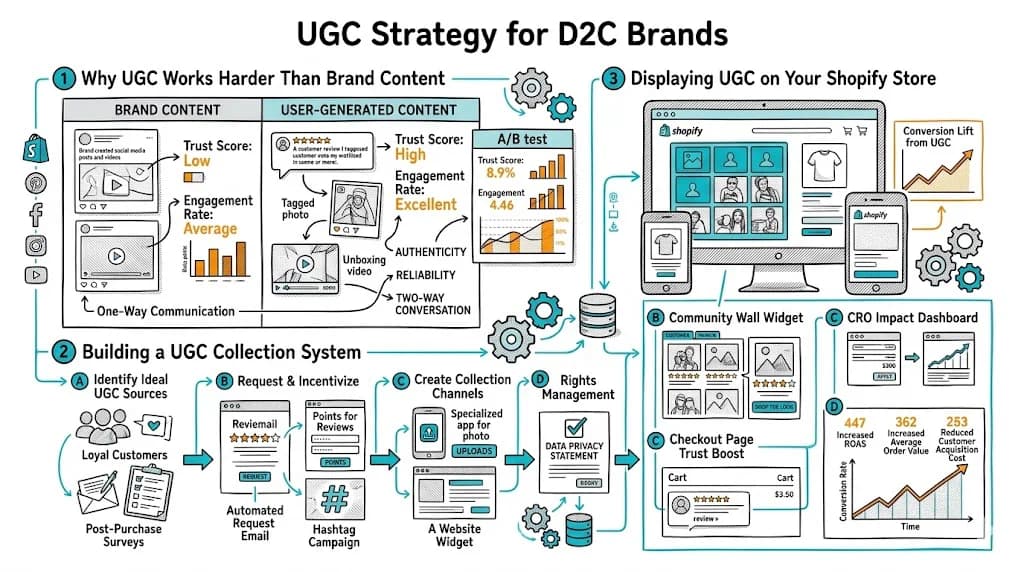
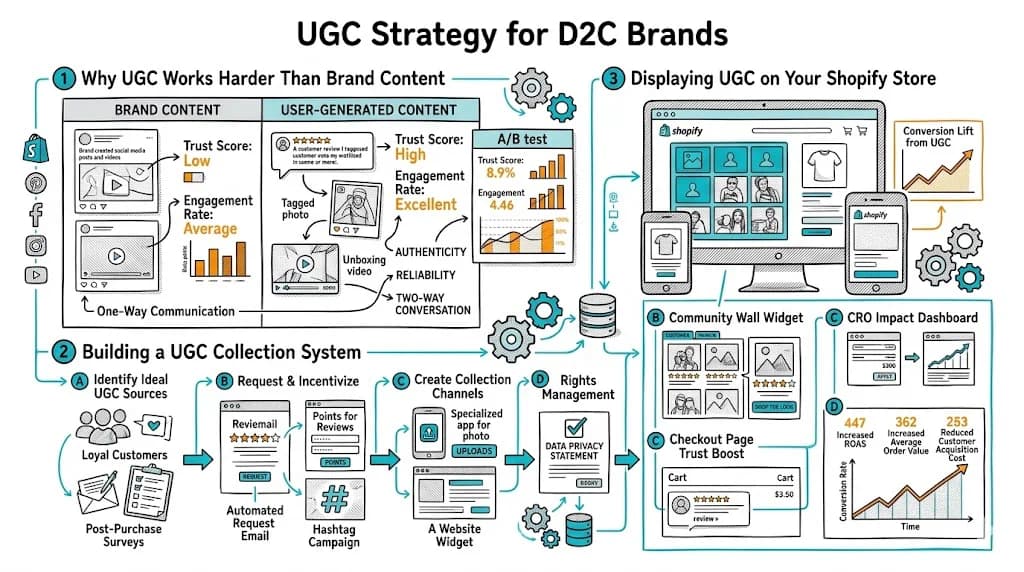
Use CustomFit.ai to A/B test the landing pages that influencer traffic hits. If 10,000 visitors arrive from an influencer campaign in one month, even a 0.5% CVR improvement on those pages is 50 extra orders. Personalise the landing page to show the influencer's face and the specific discount code—personalised landing pages convert influencer traffic at 2–3x generic landing pages.