From the conversion glossary
Concepts referenced in this article, defined.
Concepts referenced in this article, defined.
Run rigorous A/B tests and personalize every visit on Shopify or any storefront — no engineers required.
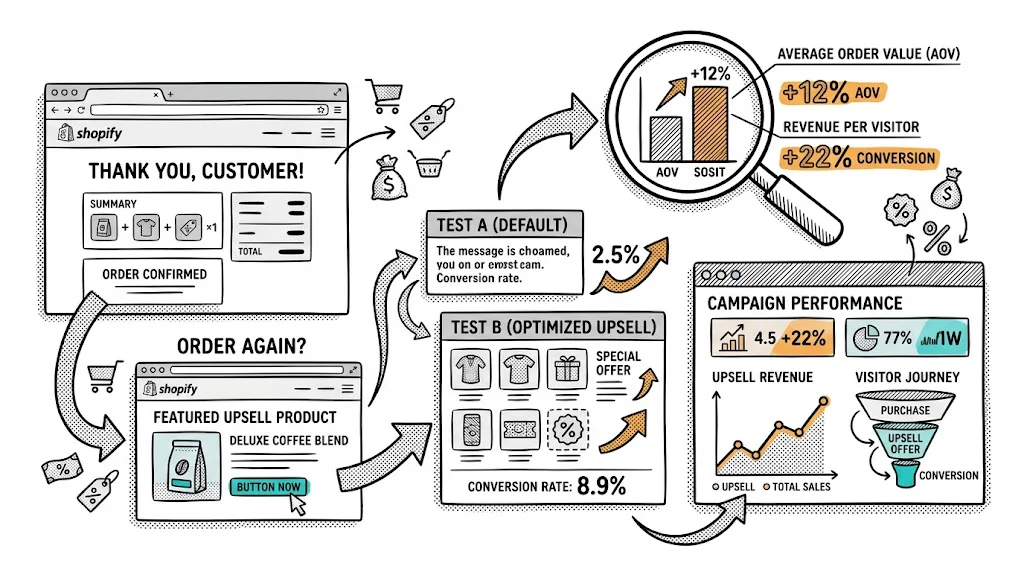
The Shopify thank you page is the highest-trust moment in your customer relationship. Someone has just handed you their money and their address, which means their guard is fully down and their satisfaction is at its peak. A well-designed thank you page upsell converts at 3 to 5 times the rate of a product page upsell, costs nothing in ad spend, and directly lifts average order value without adding friction to the original purchase. Indian D2C brands that treat the thank you page as a growth channel rather than a receipt stub consistently outperform peers on AOV.
Most D2C brands treat the thank you page as a formality: order number, delivery estimate, "thank you for your purchase." That's a missed opportunity worth real money.
The psychology is straightforward. A buyer who has just completed a purchase is in a "yes" mindset. They've already committed to your brand, they're feeling good about their decision, and their payment information is still warm. Every friction point that existed on the product page ("Should I trust this brand? Will it really work? Is the price fair?") has already been resolved.
This means your upsell on the thank you page faces a much lower bar than a cold product page upsell. The question shifts from "Should I buy from this brand?" to "Is this specific add-on worth it right now?"
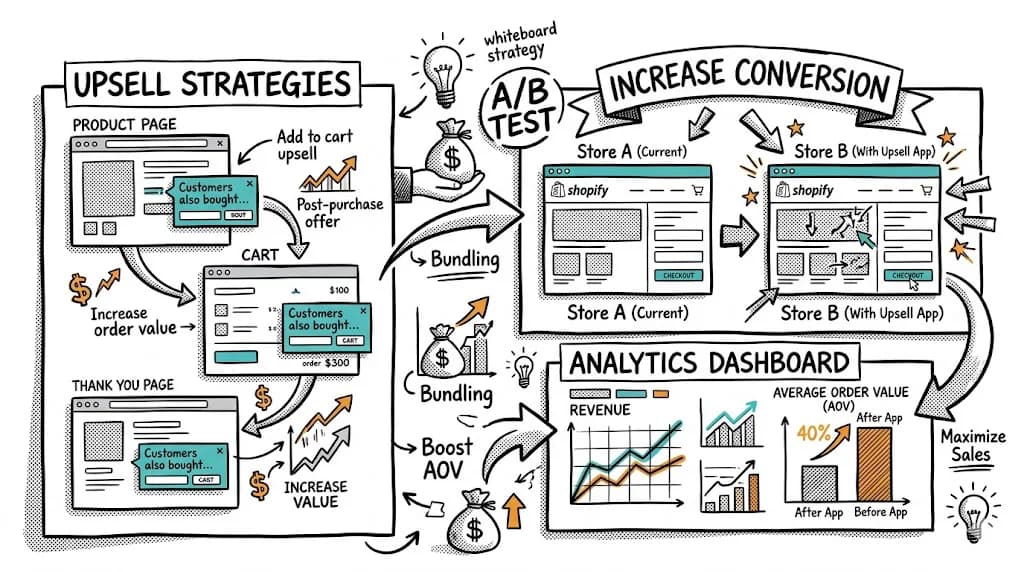
Brands like Chargebee have seen 40% AOV lifts with post-purchase optimisation strategies. Even conservative thank you page upsell implementations routinely deliver 8 to 15% AOV increases for Indian D2C brands.
Before anything else, confirm the order clearly:
This is not where you A/B test; this is where you set expectations and prevent panic support calls.
Place your upsell below the order confirmation, not above it. The order confirmation must come first. Shoppers who don't see it immediately panic and either email support or refresh the page, which can cause duplicate order issues.
The upsell structure that works:
Complete your routine, just for you Since you ordered [Product A], we think you'll love [Product B]. It [specific benefit] and works best when paired together.
₹[price] ₹[original price], 15% off for the next 30 minutes [Add to my order] [No thanks, I'm good]
Key elements:
A single customer quote about the upsell product, with a name and photo placed near the offer, increases acceptance rates by 20 to 30%. Testimonials about the combination ("I bought the cleanser first, then added the toner and my skin completely changed") are especially effective because they validate the exact purchase behaviour you're encouraging.
The thank you page is the right moment to introduce your referral programme: "Love your order? Share with a friend and you both get ₹200 off your next purchase." Buyers who are most satisfied immediately post-purchase are most likely to share.
For Indian D2C brands, WhatsApp sharing is significantly more effective than email referral links. Include a WhatsApp share button pre-filled with the message and a unique referral code.
For COD orders, a thank you page that offers a prepaid upgrade incentive ("Switch to prepaid and get ₹100 cashback") can shift buyers to lower-cost fulfilment while rewarding them. This works particularly well for brands with high COD return rates.
During Dussehra and Diwali, replace your standard upsell with a gift-packaging option: "Add festive gift packaging for ₹99 and we'll include a personalised message card." This is a ₹99 AOV bump that also improves gifting purchase intent.
If your upsell product is above ₹1,500, mention EMI availability: "Or pay ₹500/month with no-cost EMI via HDFC/ICICI." This removes the price objection for bigger add-ons.
Test 1: Single product upsell vs. choice of two Single product upsell wins most of the time (choice paralysis is real), but for stores with diverse product catalogues, giving two options ("Which do you want to add?") can increase total upsell value.
Test 2: Discount framing "₹300 off" vs. "15% off" vs. "Save ₹300 today only." Absolute value ("Save ₹300") tends to win for higher-priced items; percentage tends to win for lower-priced items.
Test 3: Timer presence Countdown timer vs. no timer. Timers increase urgency but can feel manipulative. Test whether your specific audience converts better with or without the clock, and if you use it, make the time limit real.
Test 4: Upsell placement Below order confirmation vs. as a modal popup 5 seconds after page load. Modals achieve higher visibility but interrupt the confirmation experience and can cause anxiety.
Use CustomFit.ai to run these tests directly on the thank you page URL, targeting confirmed buyers, and measure AOV impact within 2 to 3 weeks of sufficient sample size.
Connect thank you page optimisation with your Shopify announcement bar strategy and overall Shopify CRO guide for compounding revenue gains.