From the conversion glossary
Concepts referenced in this article, defined.
By testing multiple versions of a campaign, brands can quickly identify their customers.
 Ashwin Kumar7 min read
Concepts referenced in this article, defined.
Run rigorous A/B tests and personalize every visit on Shopify or any storefront — no engineers required.
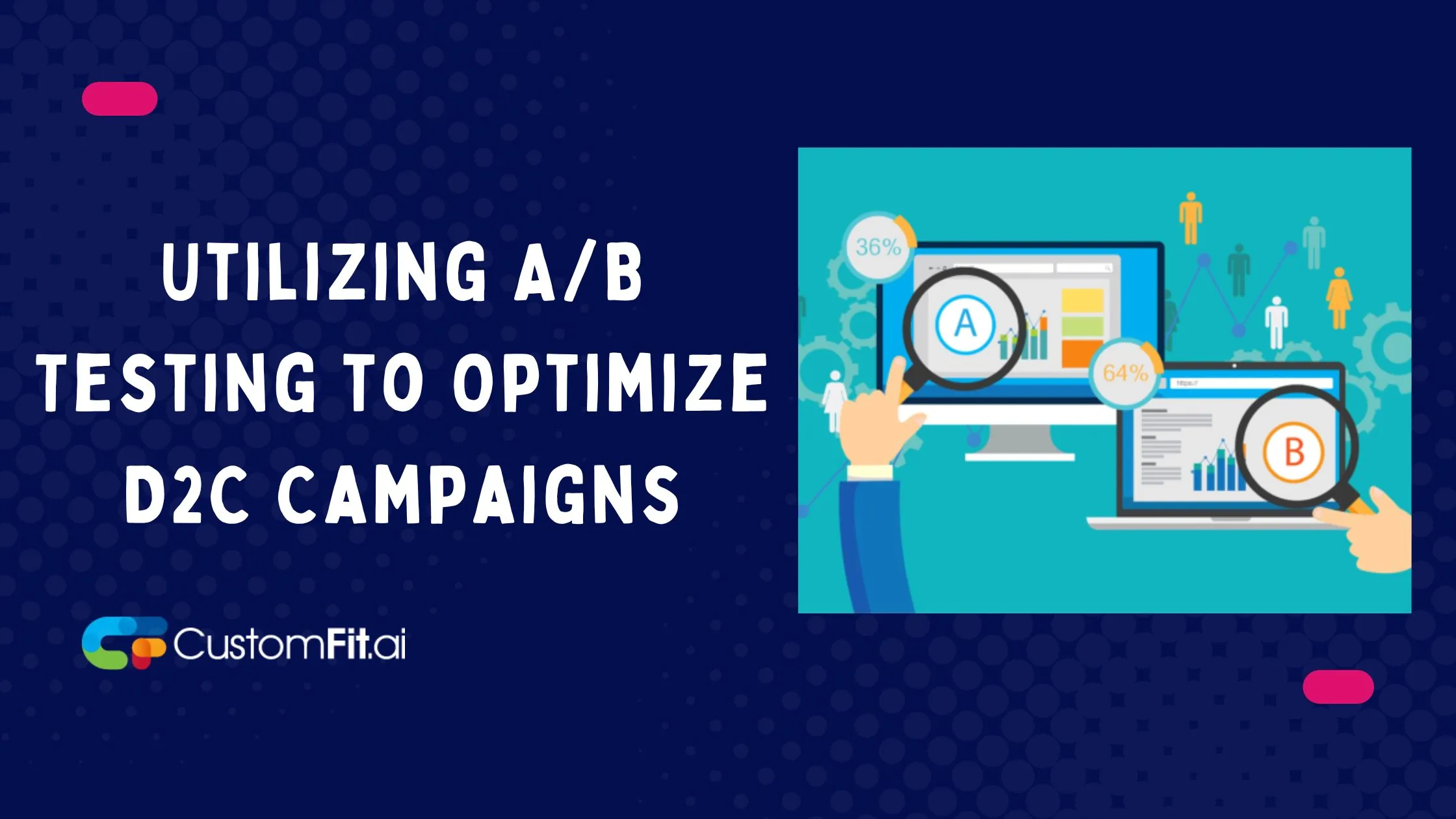
A/B testing is a key tool for optimizing direct-to-consumer (D2C) campaigns. It is the process of comparing two versions of a website or app to see which one performs better. This kind of testing lets you measure the impact of different design elements, such as website personalization, and identify which version does more for user engagement and conversions. In this blog, we'll cover how A/B testing can be used to optimize D2C campaigns, and the part website personalization plays in that.
A/B testing, also known as split testing, is an experimentation technique used to compare two versions of a web page, app, or campaign to determine which one does a better job of hitting the goal you set. By testing multiple versions of a campaign, brands can quickly see which elements are resonating with their customers and which ones need work. This blog covers the ways brands can use A/B testing to optimize their D2C campaigns, including website personalization, optimization, and website personalization tools.
Content and copy are two of the most important elements of any D2C campaign. By split testing different versions of content and copy, brands can see which versions do a better job of engaging their customers and converting them into leads. Brands should also try different types of content, such as videos, infographics, images, and text, to see which type resonates most with their customers.
For email marketing campaigns, the subject line is often what decides whether a customer opens and reads the message. Brands can use A/B testing to try different subject lines and see which ones do a better job of getting customers to open their emails.
The design of a landing page can make or break a D2C campaign. By split testing different designs, brands can see which layout and design elements do a better job of converting visitors into customers.
Call-to-action buttons are an important element of any D2C campaign, since they guide customers towards taking the action you want. Brands can use A/B testing to try different colors, sizes, and shapes of call-to-action buttons and see which one works best.
Ads are a key element of any successful D2C campaign, and brands should use A/B testing to try different ad designs and formats to see which ones do more for conversions.
Product pages are the first point of contact between customers and brands, so they need to be designed for customer engagement and conversions. Brands can use A/B testing to try different product page designs and see which ones do a better job of driving conversions.
Forms are used to capture customer information, so they need to be designed for customer engagement and conversions. Brands can use A/B testing to try different form designs and layouts and see which ones work better.
The checkout page is the final step in the customer journey, so it needs to be designed for customer engagement and conversions. Brands can use A/B testing to try different checkout page designs and layouts and see which ones do a better job of driving conversions.
Pricing models can have a big impact on customer engagement and conversions, so brands should use A/B testing to try different pricing models and see which ones work best.
Social media is a strong tool for connecting with customers and driving conversions. Brands should use A/B testing to try different types of social media posts, such as images, videos, and text, and see which ones work best.
Pop-ups are an effective way to capture customer information and encourage conversions. Brands can use A/B testing to try different types of pop-ups, such as opt-in forms, surveys, and notifications, and see which ones work best.
Offers are a good way to engage customers and encourage conversions. Brands can use A/B testing to try different types of offers, such as discounts, free shipping, and buy one, get one free, and see which ones work best.
Product descriptions are a critical element of the customer journey, since they help inform customers about the product and encourage conversions. Brands can use A/B testing to try different product descriptions and see which ones work better.
Ads Banner ads are a good way to reach out to potential customers. Brands can use A/B testing to try different banner ad designs, sizes, and placements and see which ones do a better job of driving conversions.
Website personalization is a good way to create a more personalized experience for customers. Brands can use A/B testing to try different website personalization techniques, such as products or services.
Website optimization matters for any successful D2C campaign. Brands can use A/B testing to try different website optimization techniques, such as page speed, image optimization, and code optimization, and see which ones do more for conversions.
Website personalization tools are a good way to create a more personalized experience for customers. Brands can use A/B testing to try different website personalization tools, such as customer segmentation and machine learning, and see which ones do a better job of driving conversions.
User experience is a critical element of any successful D2C campaign, since it helps create a more engaging and enjoyable experience for customers. Brands can use A/B testing to try different user experience elements, such as navigation, page loading times, and page layouts, and see which ones work better.
Retargeting is a good way to reconnect with customers who have already shown interest in a brand's products or services. Brands can use A/B testing to try different retargeting strategies, such as lookalike audiences and dynamic ads, and see which ones work best.
A/B testing can be used across a wide range of different elements, such as content, copy, designs, and user experience. Brands should use A/B testing to run different experiments and find out which ones do the most for conversions.
With A/B testing, brands can quickly and easily see which elements of their D2C campaigns are working and which ones need work. By split testing different elements, such as content and copy, email subject lines, landing page designs, call-to-action buttons, ad designs, product pages, forms, checkout pages, pricing models, social media posts, pop-ups, offer types, product descriptions, banner ads, website personalization, optimization, and website personalization tools, brands can identify which ones do more for conversions. A/B testing can also be used to run different experiments and determine which ones do the most for conversions. With A/B testing, brands can optimize their D2C campaigns and get more conversions. Correct recommendations and localized content, to determine which ones are more successful in driving conversions.