From the conversion glossary
Concepts referenced in this article, defined.
Concepts referenced in this article, defined.
 ab testing
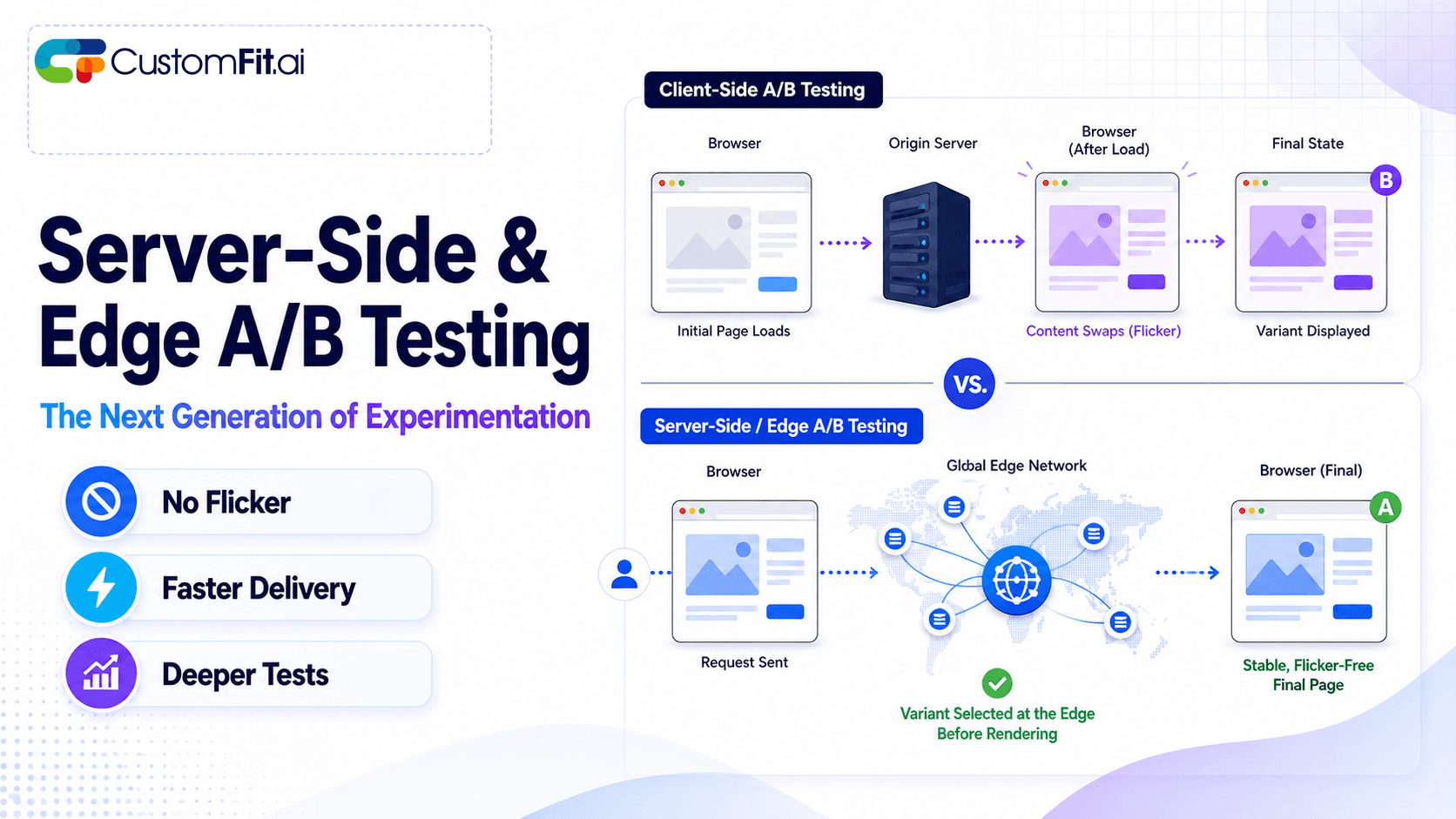
Server-side A/B testing and edge experimentation explained - how they eliminate flicker, improve speed, and where they fit vs client-side testing.
 ab testing
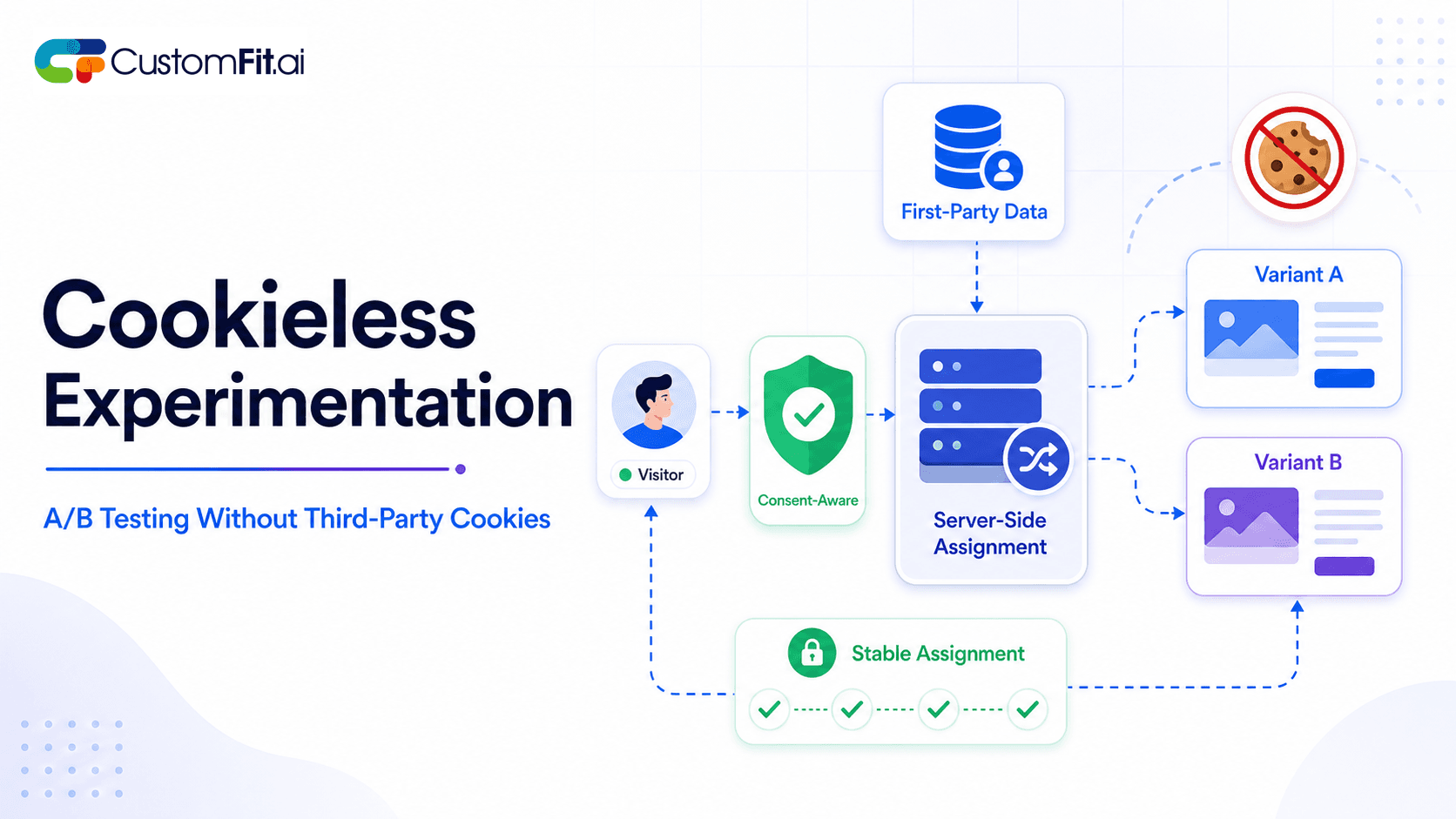
How to run cookieless A/B testing correctly in 2026 - first-party data, GDPR compliant methods, and what actually changed with third-party cookies.
 ab testing
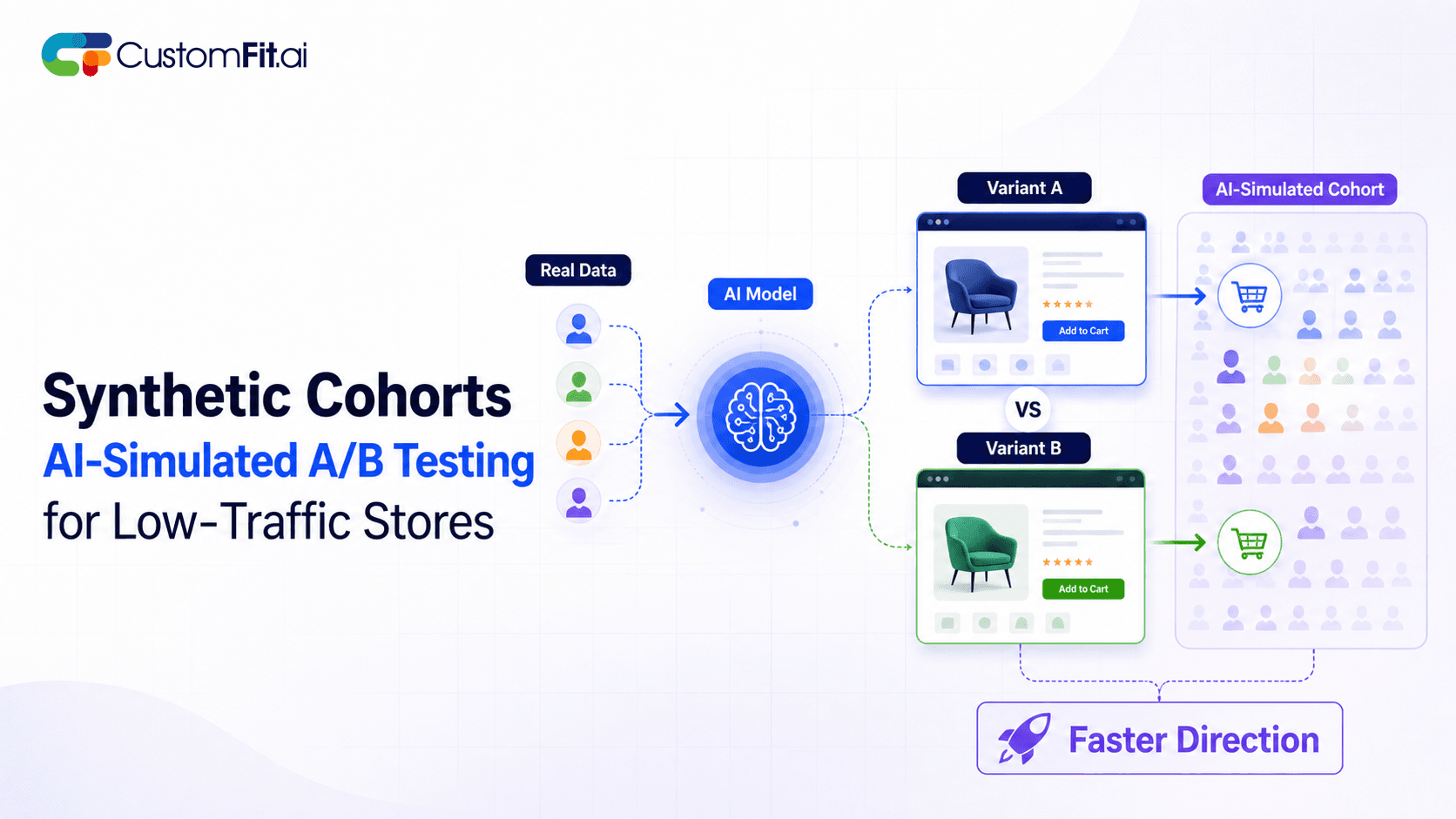
Not enough traffic to A/B test properly? Here's how synthetic cohort testing and AI-simulated experimentation help low-traffic stores test with confidence.
Run rigorous A/B tests and personalize every visit on Shopify or any storefront — no engineers required.
Online eyewear is one of the highest-consideration purchases in ecommerce. Customers face a unique triple uncertainty: Will the frames fit my face? Will the prescription be correct? Will they look good on me? Every A/B test you run in this category is an opportunity to reduce one of these uncertainties and move a hesitant shopper toward purchase. Brands like Lenskart, John Jacobs, and Titan Eye+ have built their D2C growth on systematic reduction of this friction — and you can too, without a development team.
The average CVR for online eyewear is 1.5–2.5%, significantly below general ecommerce, because of the try-before-you-buy instinct. Yet Lenskart's home trial programme and virtual try-on tool have pushed their repeat purchase rate far above category norms. These 10 tests address the specific friction points that hold eyewear shoppers back from completing their purchase online.
Understanding split testing principles — particularly around sample size and statistical significance — is essential before you run experiments on conversion-critical pages like prescription upload and checkout.
Description: Move the "Try On" button from below the image gallery to a persistent position directly below the first product image on mobile, with an icon that makes it immediately visible.
Why it works: Virtual try-on is the single biggest objection resolver for eyewear — but only if customers find and use it. Most stores bury it at the bottom of the image gallery, where 60% of mobile visitors never scroll. Moving it above the fold makes it the primary CTA before "Add to Cart."
Best for: All frame categories on mobile.
Expected lift: 15–25% add-to-cart rate improvement.
Description: Add a "Find Frames for Your Face Shape" tool at the top of frame category pages — a 5-question guide (face shape, nose bridge width, temple preference, style preference) that filters to 8–10 recommended frames.
Why it works: Frame selection is paralysing for first-time buyers. A filter guide that asks the right questions and surfaces the most likely fits reduces decision effort and increases purchase confidence. This is personalisation serving as a conversion rate tool.
Best for: All frame category pages.
Expected lift: 10–18% click-through to product pages from guided visitors.
Description: For frames above ₹2,500, test replacing the primary CTA "Add to Cart" with a dual CTA: "Buy Now" (primary) + "Try at Home — 5 Frames, 5 Days, Free" (secondary).
Why it works: The home trial option de-risks the purchase and will convert shoppers who would otherwise leave. Even if some customers choose home trial over direct purchase, the trial-to-purchase conversion rate for home trials in eyewear is typically 60–70%.
Best for: Premium frames, first-time buyers, customers browsing from a new device.
Expected lift: 8–15% total conversion rate (direct + trial combined).
Description: Add an interactive "Check if Your Power is Compatible" widget on product pages — a simple dropdown (Sphere: -0.25 to -8.00, Cylinder: etc.) that confirms whether the frame supports the customer's prescription range.
Why it works: Power compatibility anxiety is a major abandonment trigger for prescription eyewear. "Will this frame work with my power?" is a question shoppers have no easy way to answer. A compatibility checker answers it instantly and removes the objection.
Best for: All prescription frame categories.
Expected lift: 9–16% checkout initiation for prescription lens buyers.
Description: Test adding a visual comparison at the cart stage showing "Standard Lenses" vs. "Anti-Glare + Blue-Light Block + UV400 Lenses" with a side-by-side clarity illustration and ₹799 upgrade price.
Why it works: Most eyewear buyers don't proactively consider lens coatings. A visual comparison that shows the tangible difference (glare simulation) rather than just listing features converts the upgrade more effectively. This is a classic AOV test.
Best for: All prescription lens orders.
Expected lift: 15–25% lens upgrade take-rate; 20–30% AOV increase on upgrading customers.
Description: For each frame, add at least 3 product model images showing different face shapes, skin tones, and face widths wearing the same frame — not just the "brand face."
Why it works: Indian customers want to see how a frame looks on someone who looks like them — not on a European model. A dark-skinned customer with a wide nose bridge wants to see how the frame sits on someone with similar features. This is representation driving conversion rate.
Best for: All frame categories.
Expected lift: 7–14% add-to-cart rate improvement on frame pages.
Description: Add "EMI from ₹199/month" directly below the price for frames above ₹2,500, linking to an expandable EMI breakdown section.
Why it works: Premium frames are considered purchases. Monthly payment framing reduces price sensitivity and enables buyers to justify the upgrade from ₹999 to ₹3,499. This is price anchoring applied to the consideration phase.
Best for: Premium and designer frame categories.
Expected lift: 10–18% checkout initiation rate for frames above ₹2,500.
Description: At the checkout confirmation screen (after the first pair is in cart), show a "Add a Second Pair — 30% Off" offer that allows the customer to add a second frame (perhaps sunglasses or a backup pair) at a significant discount.
Why it works: The moment a customer has committed to buying (cart stage) is the highest-intent moment for an upsell. A second-pair discount with a single click is low-friction and high-value for both parties — customers get variety, you increase AOV dramatically.
Best for: All eyewear stores with multiple frame categories.
Expected lift: 12–20% AOV increase on customers who see the offer.
Description: Test replacing the prescription upload instructions (currently a PDF or text paragraph) with a 3-step visual guide (Step 1: Photo of your prescription, Step 2: Upload here, Step 3: Our optometrist verifies within 24 hours) and a WhatsApp upload option.
Why it works: Prescription upload is the biggest drop-off point in the eyewear checkout funnel. Making it visual and offering WhatsApp as an alternative upload channel (familiar to Indian shoppers) removes the biggest friction point in the purchase process.
Best for: All prescription lens orders.
Expected lift: 12–20% checkout completion rate improvement.
Description: Add a small "Optometrist Verified Fit" badge on each product page, indicating that the frame dimensions have been reviewed by a licensed optometrist for specific power ranges.
Why it works: Professional verification is a trust signal that addresses the "is this prescription correct?" fear that stops many online optical buyers from completing their purchase. It positions your store as medically responsible, not just commercially motivated.
Best for: All prescription frame categories.
Expected lift: 5–10% CVR improvement from hesitant prescription buyers.
| Test Idea | Difficulty | Expected CVR Lift | Best Page |
|---|---|---|---|
| Virtual try-on above fold | Low | 15–25% | Mobile product |
| Face shape guide | High | 10–18% CTR | Category page |
| Home trial dual CTA | Medium | 8–15% combined | Product page |
| Power compatibility checker | High | 9–16% | Product page |
| Visual lens coating upsell | Medium | 15–25% upgrade rate | Cart |
| Model diversity in images | Medium | 7–14% | Product page |
| EMI messaging | Low | 10–18% | Product page |
| Second pair at checkout | Low | 12–20% AOV | Checkout |
| Prescription upload simplification | Medium | 12–20% | Checkout |
| Optometrist verified badge | Low | 5–10% | Product page |
Prioritise the checkout funnel for eyewear. The prescription upload step kills more purchases than any product page element. Fix that first before optimising top-of-funnel. See checkout A/B testing ideas for the complete checkout optimisation playbook.
Don't test virtual try-on adoption without measuring its impact on CVR. Virtual try-on engagement is a vanity metric if it doesn't lift conversions. Always measure the conversion rate of try-on users vs. non-users as your test's primary outcome.
Segment by first-time vs. returning customers. Returning customers (reordering their prescription) need a completely different experience from first-time buyers. Personalise the homepage and category page for known customers using their prescription history.
Use WhatsApp as a trust channel. "Chat with our optometrist on WhatsApp" positioned on the product page and checkout is a uniquely effective trust signal in India. Test it against a standard FAQ section for prescription-related anxiety resolution.