From the conversion glossary
Concepts referenced in this article, defined.
Concepts referenced in this article, defined.
 ab testing
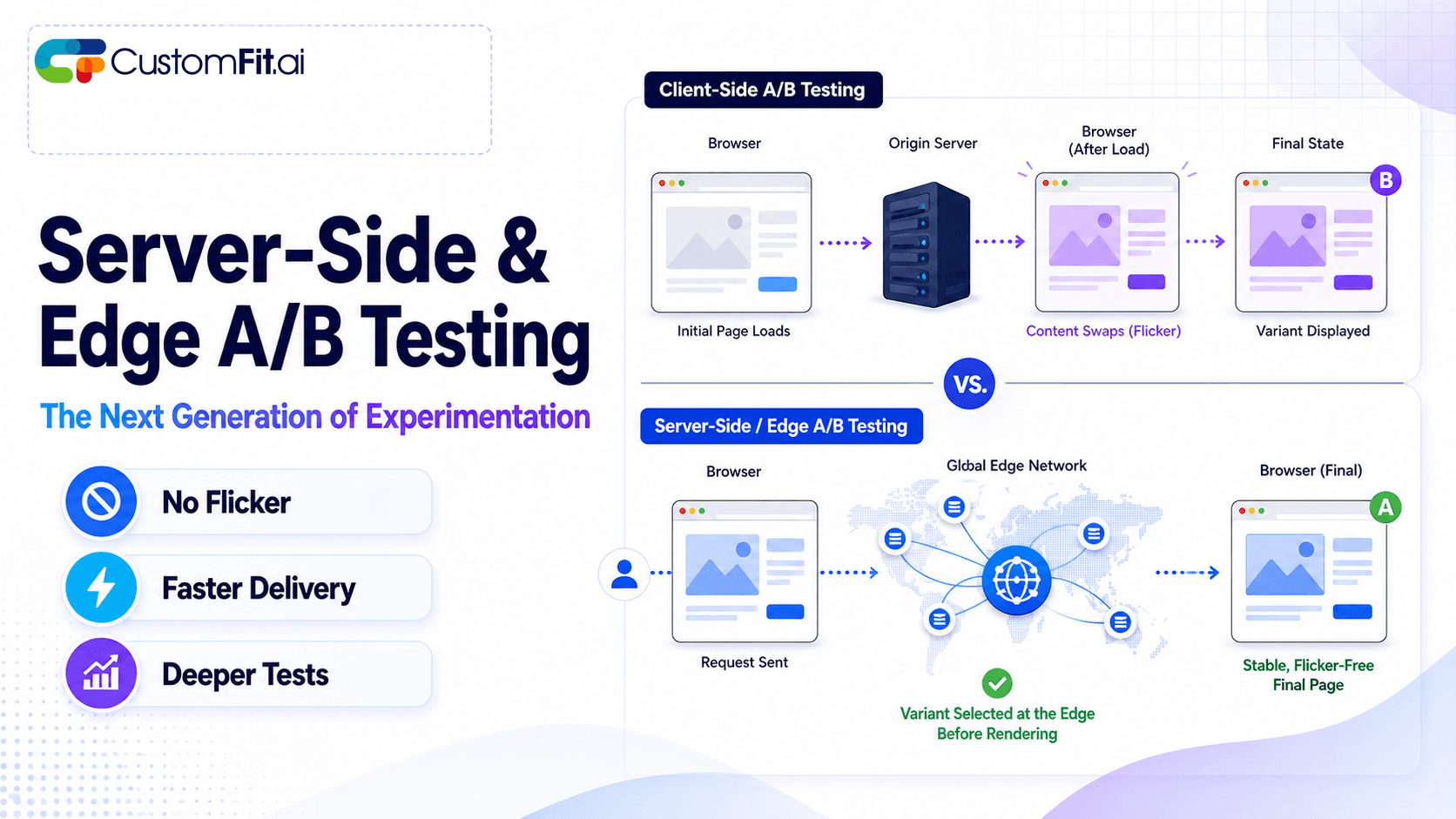
Server-side A/B testing and edge experimentation explained - how they eliminate flicker, improve speed, and where they fit vs client-side testing.
 ab testing
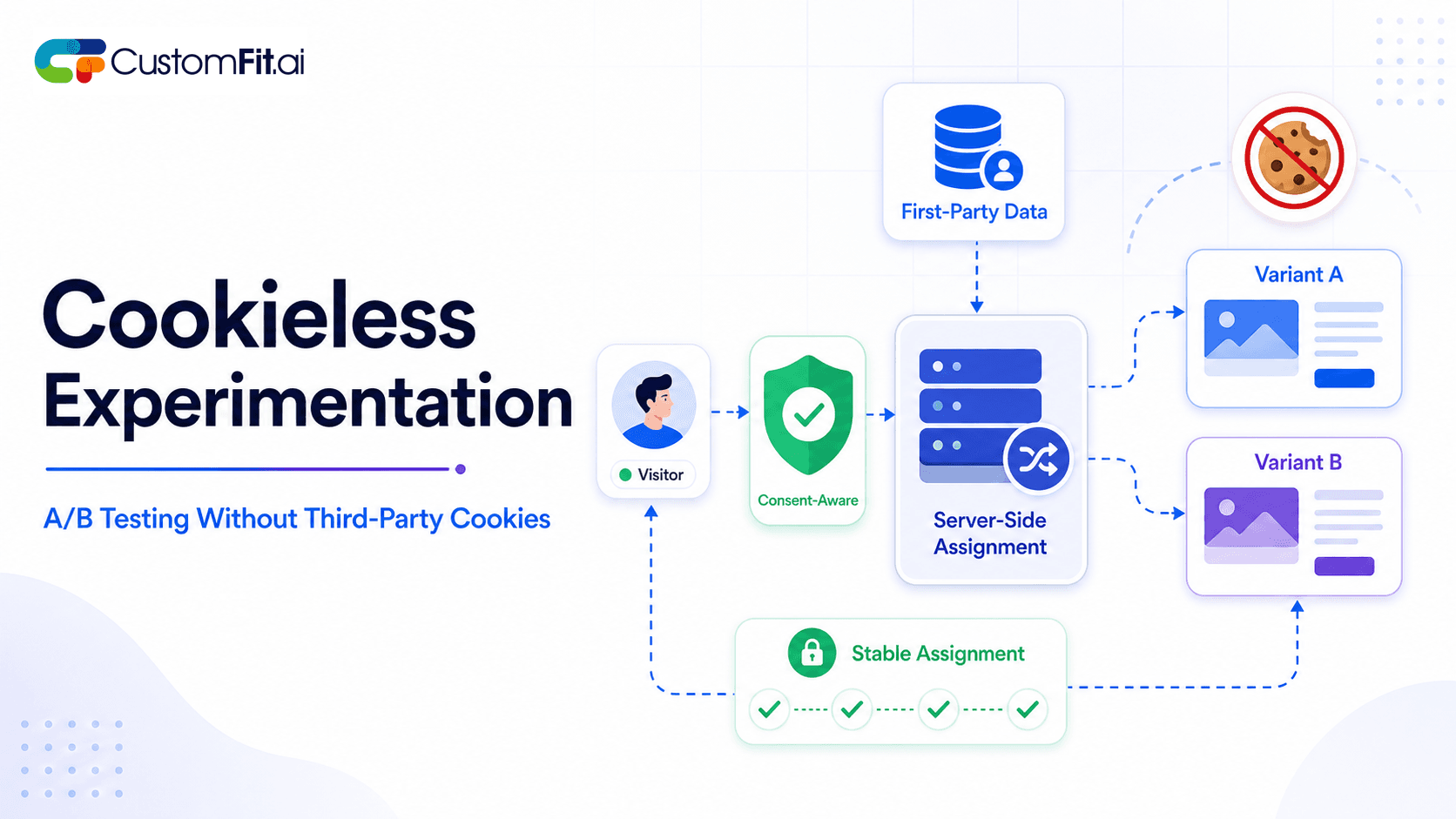
How to run cookieless A/B testing correctly in 2026 - first-party data, GDPR compliant methods, and what actually changed with third-party cookies.
 ab testing
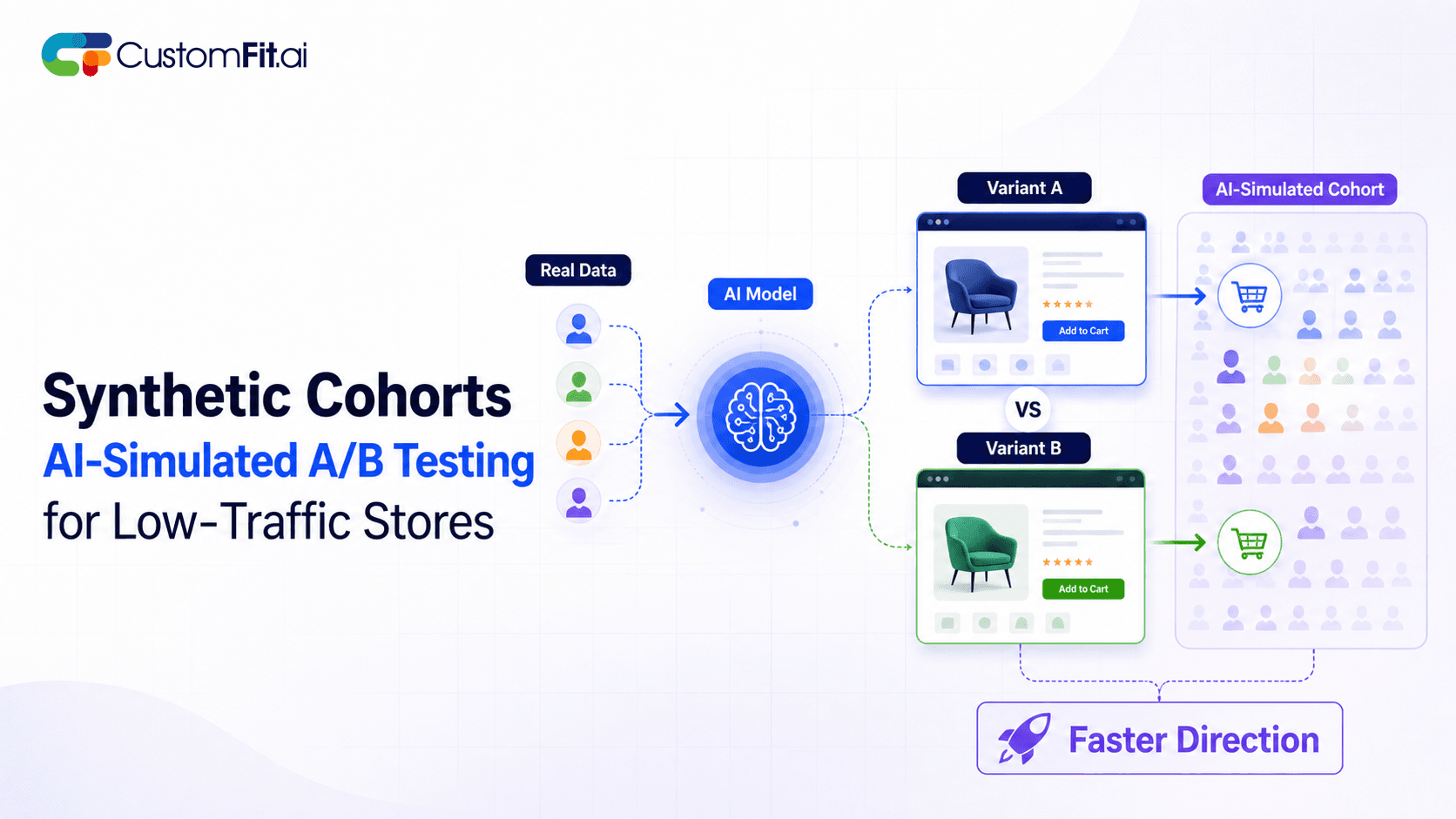
Not enough traffic to A/B test properly? Here's how synthetic cohort testing and AI-simulated experimentation help low-traffic stores test with confidence.
Run rigorous A/B tests and personalize every visit on Shopify or any storefront — no engineers required.
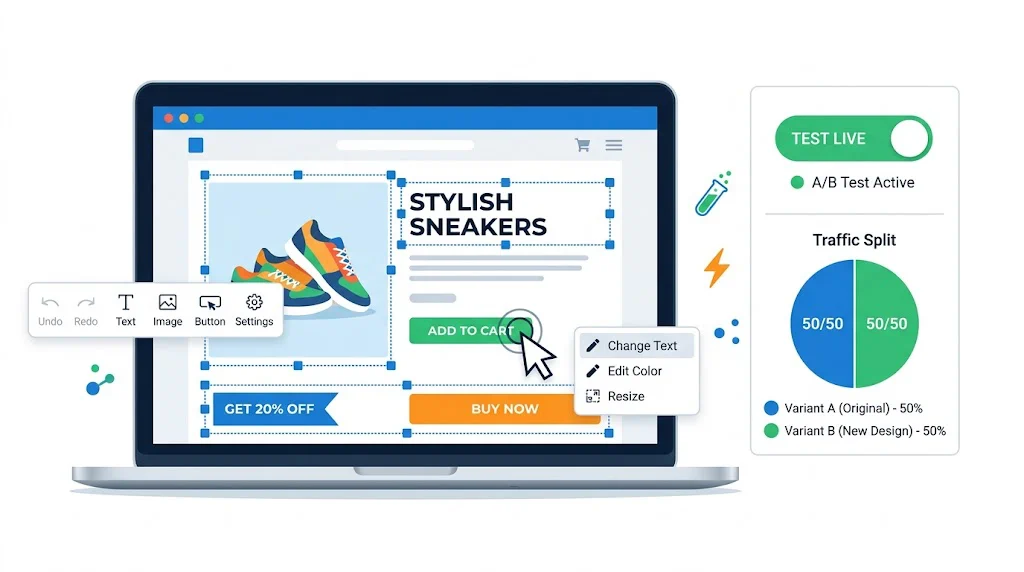
No-code A/B testing tools let marketers run split tests, analyze results, and roll out winners — all without writing a single line of code or waiting on a developer. The best options in 2026 are CustomFit.ai (built for Shopify D2C), AB Tasty, and Convert.com, each offering a visual editor that non-technical teams can use within minutes of signing up. If your team is losing weeks waiting for developer bandwidth to run a simple headline test, a no-code tool will pay for itself within the first month.
This guide covers how no-code A/B testing tools work, what to look for, and which platforms deliver genuine no-code experiences — not just "low-code" tools that still require a developer for setup.
The term "no-code" is overused. Here's what it genuinely means for A/B testing:
True no-code:
"Low-code" (requires some developer work):
Requires a developer:
Most tools marketed as "no-code" are actually "low-code" — they still require initial developer setup. The tools below genuinely meet the no-code standard for ecommerce.
CustomFit.ai is the clearest example of genuine no-code A/B testing for ecommerce. It installs directly into Shopify (no script, no developer), and the visual editor works across all Shopify themes without configuration.
What you can do without a developer:
D2C metrics tracked automatically:
Pricing: $99/mo Starter · $249/mo Growth · 14-day free trial, no credit card
Brands like Bellavita and Kapiva use CustomFit.ai to run continuous tests without depending on development sprints — a critical advantage for D2C brands where speed-to-insight determines who wins the festive season.
AB Tasty offers a solid visual editor alongside built-in engagement widgets: countdown timers, social proof notifications, exit-intent popups, and product recommendation carousels. Marketing teams that want to run promotions and A/B tests from one tool will find AB Tasty appealing.
No-code capabilities:
Where it falls short:
Convert.com offers a genuinely good visual editor and is one of the few tools that takes a serious privacy-first stance: no third-party data sharing, first-party cookies only, GDPR-compliant by default.
No-code capabilities:
Where it falls short:
Pricing: ~$199/mo
If your A/B testing is focused on landing pages (paid ad landing pages, campaign landing pages, lead generation pages), Unbounce is genuinely no-code. Its drag-and-drop page builder and Smart Traffic auto-routing make it easy for marketers to create and test without any code.
Best for: Landing page tests, not store-wide testing Limitation: Not designed for full ecommerce store testing — product pages, checkout, navigation
Pricing: ~$99/mo
A good visual editor should:
The tool must track what matters for D2C brands without custom development:
If a tool only tracks "goal completions" and requires you to define what counts as a conversion via code, it's not truly no-code for ecommerce.
There's a meaningful difference between:
The best no-code tools let you target by:
Non-technical marketers need results presented clearly: which variant is winning, what the statistical significance is (without explaining p-values), and a clear recommendation to roll out or stop the test.
1. Testing too many changes at once No-code editors make it easy to change everything simultaneously. Resist the urge. Test one variable at a time (or run multivariate tests if you have sufficient traffic). Otherwise, you can't identify which change caused the result.
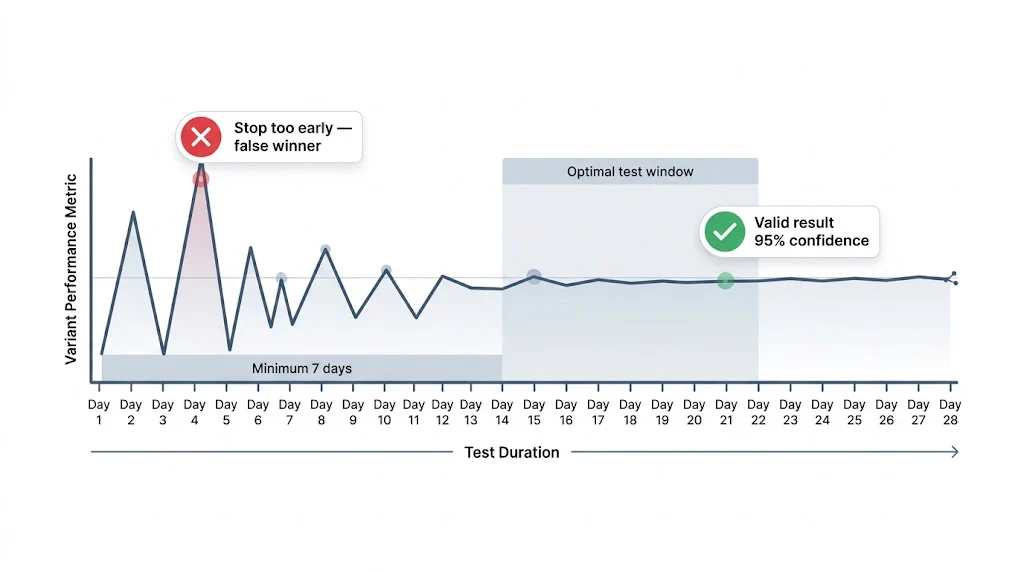
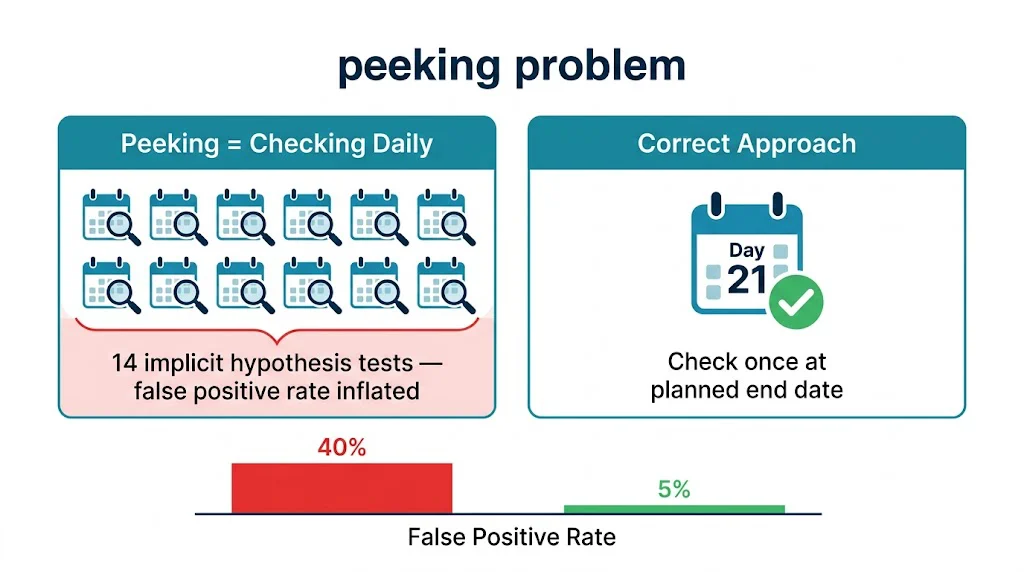
2. Stopping tests too early No-code tools often show "X% lift" on day one of a test, which is tempting to act on. Never stop a test before reaching statistical significance or running for at least two full business cycles. Most Shopify stores need 2+ weeks minimum.
3. Not accounting for mobile vs. desktop In India, 75–85% of D2C traffic is mobile. A button color that works on desktop may perform differently on mobile. Segment your results by device and run mobile-specific tests.
4. Forgetting to test revenue, not just clicks A CTA button change might increase clicks but hurt AOV if it attracts window shoppers. Always track RPV as your primary metric, not just conversion rate.
5. Running tests during atypical periods Festive season traffic (Diwali, Big Billion Days) behaves differently from regular traffic. Tests run during these periods may not represent your typical customer. Schedule tests to pause during unusual traffic spikes unless you specifically want festive-season insights.
Here's the end-to-end workflow for a marketer using CustomFit.ai (or any quality no-code tool):
Total time from hypothesis to launched test: under 30 minutes.