From the conversion glossary
Concepts referenced in this article, defined.
Concepts referenced in this article, defined.
 ai ecommerce
How reinforcement learning personalization works for ecommerce - self-learning targeting that improves with every visitor, and how it differs from rules.
 ai ecommerce
A practical guide to voice commerce optimization - how to prepare your product pages, catalog, and UX for Alexa, Siri, and voice-first shopping.
 ai ecommerce
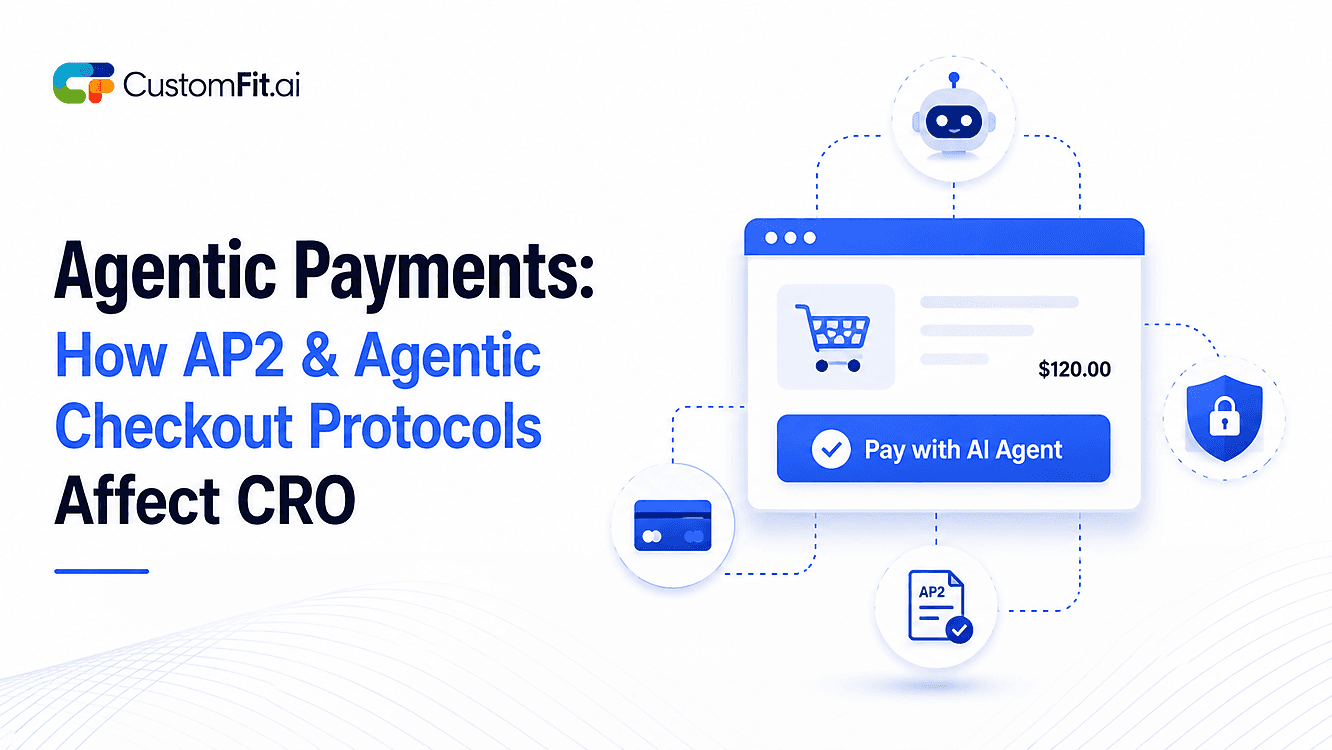
How agentic payments and Google's AP2 protocol are changing checkout and what ecommerce brands need to know about AI agent payment authorization and CRO.
Run rigorous A/B tests and personalize every visit on Shopify or any storefront — no engineers required.
AI dynamic pricing tools automatically adjust ecommerce product prices based on demand, inventory, competitor data, and buyer behavior — moving beyond fixed pricing to maximize revenue without manual effort. For Indian D2C brands navigating festive season spikes, competitor undercutting on marketplaces, and margin pressure, the right dynamic pricing tool can add 10–30% to revenue without changing a single product. This comparison covers the top tools available in 2025, their actual capabilities, and which scenarios they fit best.
Consider two scenarios:
Scenario A: It's October 30th. Your Diwali gifting set is nearly sold out, demand is at peak, and your competitors are out of stock. Your price is the same as it was in August.
Scenario B: It's January 10th. Post-festive inventory is piling up, conversion rates are dropping, and you need to move stock. Your price is still the same as peak season.
Static pricing fails at both ends. You undersell during peak demand and oversell margin during clearance. AI dynamic pricing addresses both by continuously calibrating prices to market conditions.
The conversion rate implications are significant:
Before diving into specific tools, understand what features matter:
Demand-based pricing: Adjusts prices based on traffic, page views, and conversion signals. High demand = price can go up. Low demand = price comes down to drive conversion.
Competitor price monitoring: Tracks competitor prices on marketplaces (Amazon, Flipkart) and direct sites. Automatically adjusts to maintain relative positioning (cheapest, parity, premium).
Inventory-aware pricing: Increases prices as stock depletes (scarcity premium). Decreases prices as inventory builds up (clearance logic).
Rule-based floors and ceilings: Lets you set minimum and maximum prices so AI doesn't price below cost or above a brand-perception threshold.
A/B testing integration: Tests price variants against each other before full deployment.
Shopify compatibility: Native integration vs. API-based vs. Shopify Plus only.
Best for: Competitor price tracking + rule-based adjustment
How it works: Monitors competitor prices across marketplaces and websites. You set rules: "always be 5% cheaper than competitor X" or "price at parity with market average." AI handles the monitoring; rules handle the adjustment.
Shopify compatibility: API integration, works on all Shopify plans
Pricing: ~₹4,000–₹12,000/mo depending on SKU count
Strengths: Excellent competitor monitoring, reliable data, good dashboard
Limitations: Rule-based rather than true demand-based AI. You set the logic; the tool executes it. Less sophisticated than pure AI tools but more predictable.
Best for Indian brands selling in categories where competitor prices on Amazon/Flipkart directly affect DTC conversion.
Best for: Large catalog, multi-channel price optimization
How it works: True AI pricing engine that incorporates demand signals, competitor data, and sales velocity. Used by larger ecommerce brands and retailers.
Shopify compatibility: Via integration
Pricing: Custom, typically ₹15,000–₹50,000+/mo. Enterprise-focused.
Strengths: Deep analytics, strong AI, handles complex catalog pricing
Limitations: Pricing and complexity puts it out of reach for most D2C brands under ₹50 Cr revenue
Best for: Mid-to-large D2C brands with 1,000+ SKUs needing sophisticated price optimization
Best for: Margin-focused pricing optimization
How it works: Focuses on optimizing margin rather than just revenue. Incorporates cost data to ensure pricing decisions maximize profit, not just topline.
Shopify compatibility: Direct integration
Pricing: ~₹5,000–₹15,000/mo
Strengths: Margin-focused, good for brands with variable costs (e.g., brands that source ingredients with price volatility)
Limitations: Less sophisticated competitor monitoring than Prisync
Best for: Brands where ingredient or manufacturing costs fluctuate and margin protection is the primary goal
Best for: Multi-marketplace price monitoring
How it works: Monitors prices across 100+ sites, generates competitive intelligence reports, and enables manual or rule-based adjustments.
Shopify compatibility: API integration
Pricing: ~₹2,500–₹8,000/mo
Strengths: Affordable, excellent multi-site monitoring, good reporting
Limitations: More of a monitoring tool than a full pricing engine. You still need to act on the data manually or via rules.
Best for: D2C brands that sell on multiple marketplaces and need to maintain pricing consistency
What Shopify offers natively:
What it lacks: True demand-based AI pricing. Shopify's tools are manual/scheduled, not dynamic.
When it's sufficient: For simple festive season pricing (set Diwali prices in advance, revert after), Shopify's native tools are free and adequate.
When to upgrade: When you need real-time demand-based adjustment, competitor monitoring, or you're leaving money on the table with manual pricing.
A different approach: instead of automated price changes, run A/B tests on prices across visitor segments to find optimal price points.
Tools like CustomFit.ai let you test ₹999 vs. ₹1,199 vs. ₹1,499 on the same product page across different visitor segments. This is "dynamic" in the sense that different visitors see different prices, and you collect data on which price optimizes for revenue (price × conversion).
Advantages: No special pricing tool needed; works on standard Shopify; gives you data before committing to a price change
Limitations: Not real-time; requires statistical significance periods; can't react to instant demand changes
India's festive calendar (Navratri, Dussehra, Diwali, Christmas, Pongal) creates predictable demand spikes. Dynamic pricing rules can:
Some Indian D2C brands charge a small premium for COD orders to offset higher return rates and logistics costs. Dynamic pricing tools can implement this via cart-level rules (requires Shopify Plus for native implementation).
If you sell on Amazon and Flipkart alongside your DTC store, keeping prices consistent (or offering a slight DTC advantage) is important for brand integrity. Competitor monitoring tools like Prisync help enforce this automatically.
Post-festive season often leaves excess inventory. Dynamic pricing can automatically move to clearance pricing when stock levels exceed a threshold, without manual intervention.
| If you need... | Use... |
|---|---|
| Simple competitor monitoring + rules | Prisync |
| Margin-focused optimization | Blackcurve |
| Multi-marketplace monitoring | Price2Spy |
| Simple scheduled festive pricing | Shopify native |
| Price point testing | CustomFit.ai A/B testing |
| Enterprise-scale AI pricing | Wiser |
For most Indian D2C brands on Shopify under ₹25 Cr revenue, the practical choice is either:
Track these metrics:
Connect pricing insights to your personalization strategy — a buyer who has visited multiple times without converting may respond to a targeted price offer, while a first-time visitor may need social proof more than a discount.