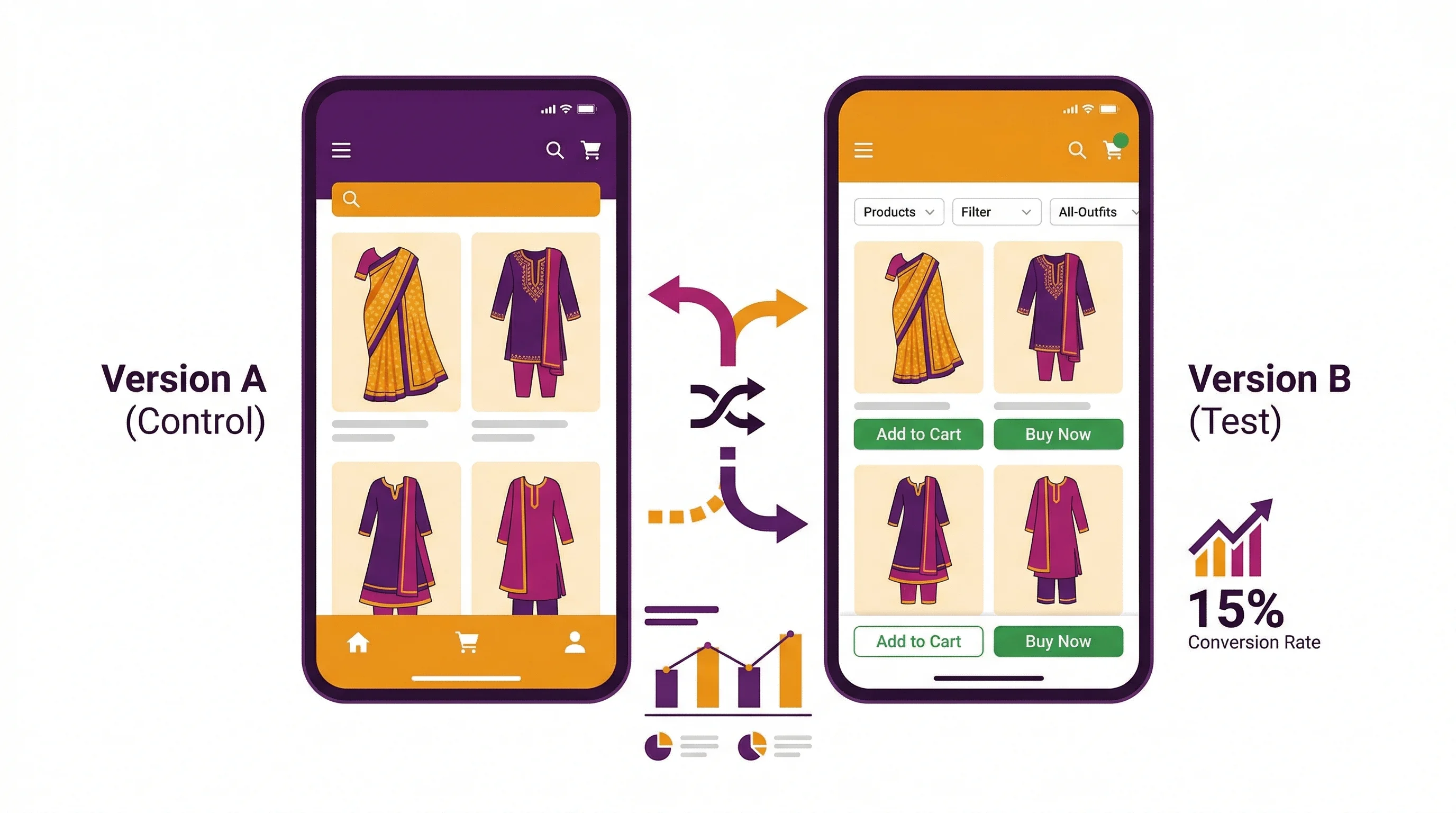
From the conversion glossary
Concepts referenced in this article, defined.
Discover how AI-powered marketing automates personalization, predicts buyer intent, and optimizes your ecommerce site — without a data science team.
Concepts referenced in this article, defined.
 ai powered marketing
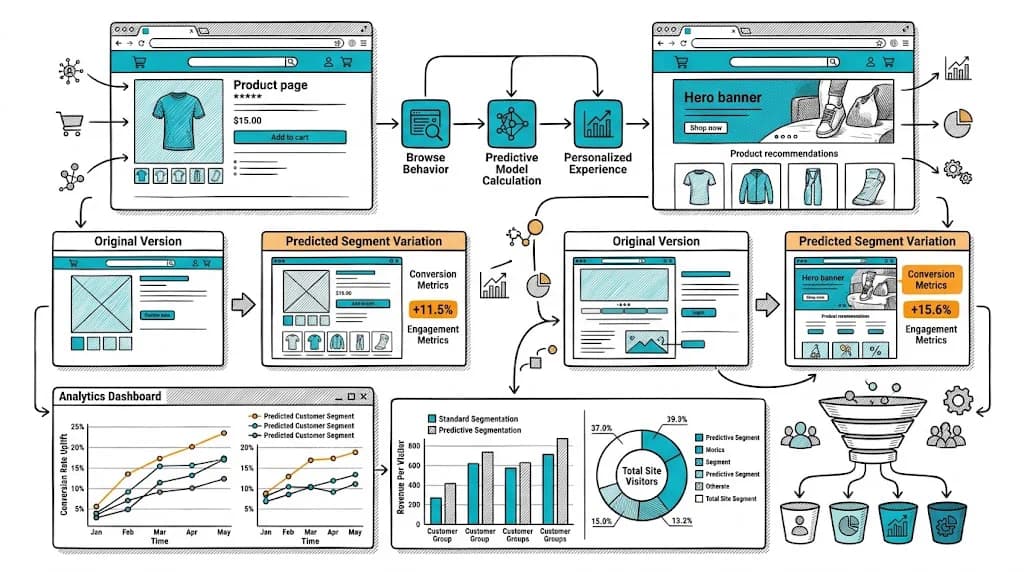
Predictive segmentation uses machine learning to identify which visitors are likely to buy — before they reach the cart. Learn how to use buyer intent signals to personalize at scale.
 ai powered marketing
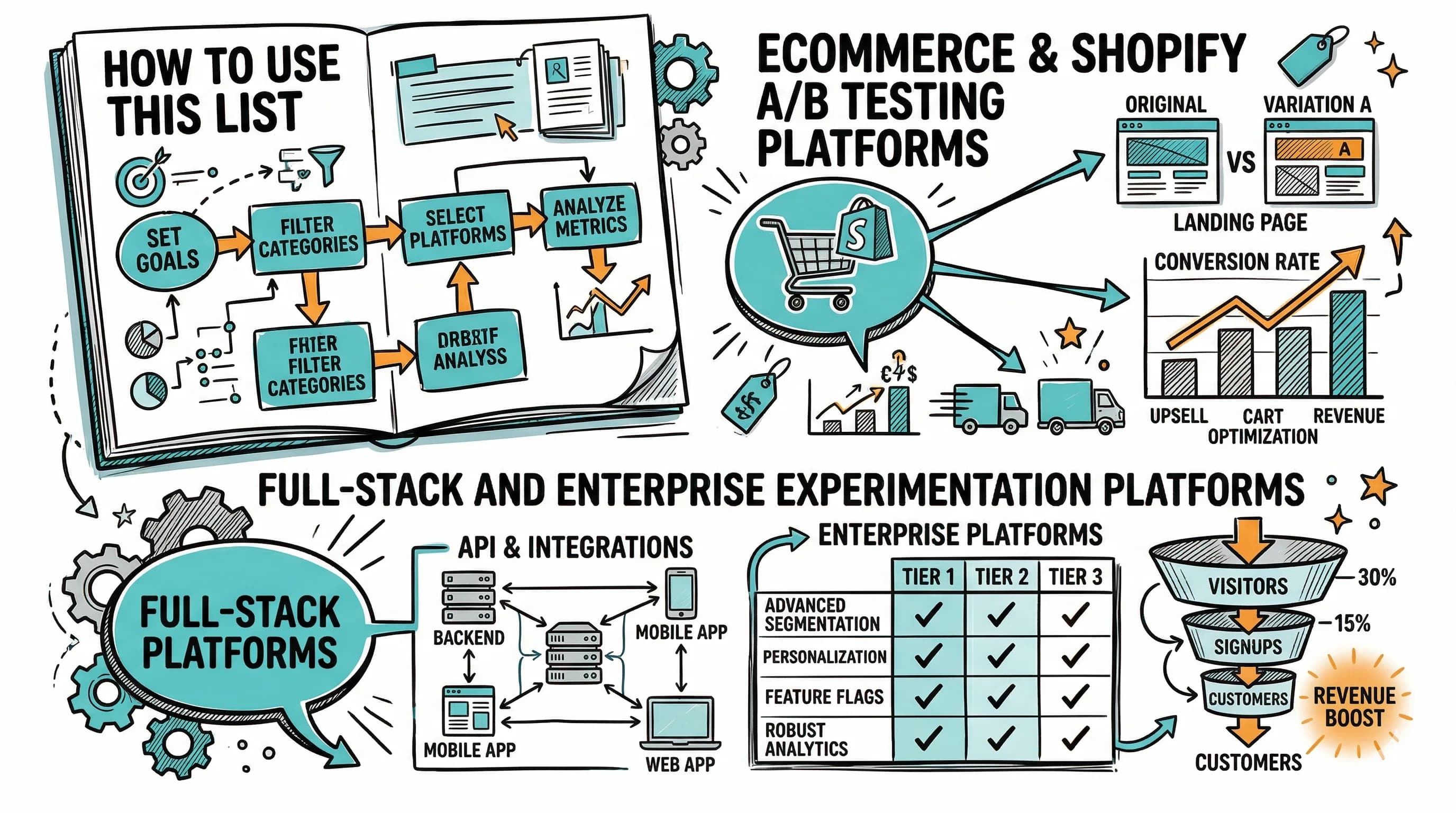
AI personalization uses machine learning to automatically show each visitor the content, product, and offer most likely to convert them — without manual rule creation. Here's how it works and how to implement it.
Run rigorous A/B tests and personalize every visit on Shopify or any storefront — no engineers required.
AI-powered marketing uses machine learning algorithms to automate decisions that previously required manual data analysis — audience segmentation, content personalization, A/B test optimization, and conversion prediction. For ecommerce and D2C brands, AI marketing tools create the ability to deliver highly relevant experiences at scale, without building a data science team.
CustomFit.ai's AI engine powers personalization and experimentation for 1,000+ D2C brands — analyzing visitor behavior in real time to serve the optimal experience to each visitor.
AI-powered marketing is the application of machine learning to marketing decisions. Instead of a marketer manually defining audience segments, writing personalization rules, or deciding which A/B test variant wins, AI systems:
The result: marketing decisions made in milliseconds at visitor-level granularity — something impossible to achieve with human-written rules alone.
Traditional website personalization requires marketers to manually:
This approach misses the vast majority of meaningful behavioral patterns and requires constant maintenance.
AI marketing tools:
The scale advantage is transformative. A human marketer managing 5 audience segments is making 5 personalization decisions per page. An AI system managing 500 micro-segments is making 500 — for every single visitor.
AI personalization goes beyond rule-based personalization by dynamically determining what each visitor should see based on real-time behavioral signals and historical patterns. CustomFit.ai's AI personalizes:
Read our AI personalization guide →
Predictive segmentation uses ML to group visitors by predicted behavior rather than observed behavior. This matters because:
The predictive version lets you intervene before the conversion moment — showing a retention offer before the visitor decides to leave, or an upsell before they reach checkout.
Key predictive segments CustomFit.ai supports:
Read our predictive segmentation guide →
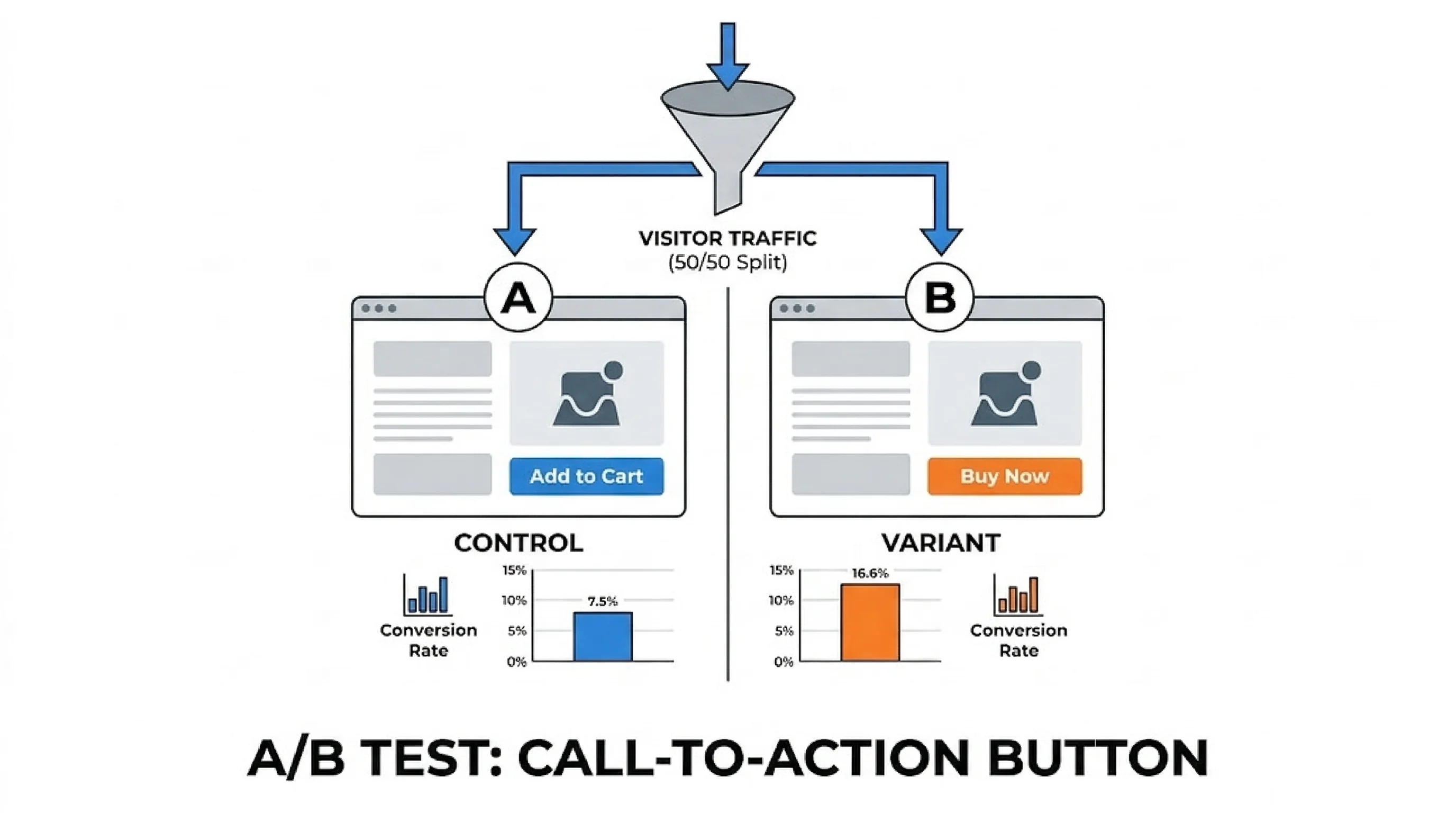
Buyer intent signals are behavioral indicators that predict purchase likelihood. AI systems detect and score combinations of:
High-intent signals:
Medium-intent signals:
Low-intent/research signals:
AI combines these signals into a real-time intent score that triggers different experiences:
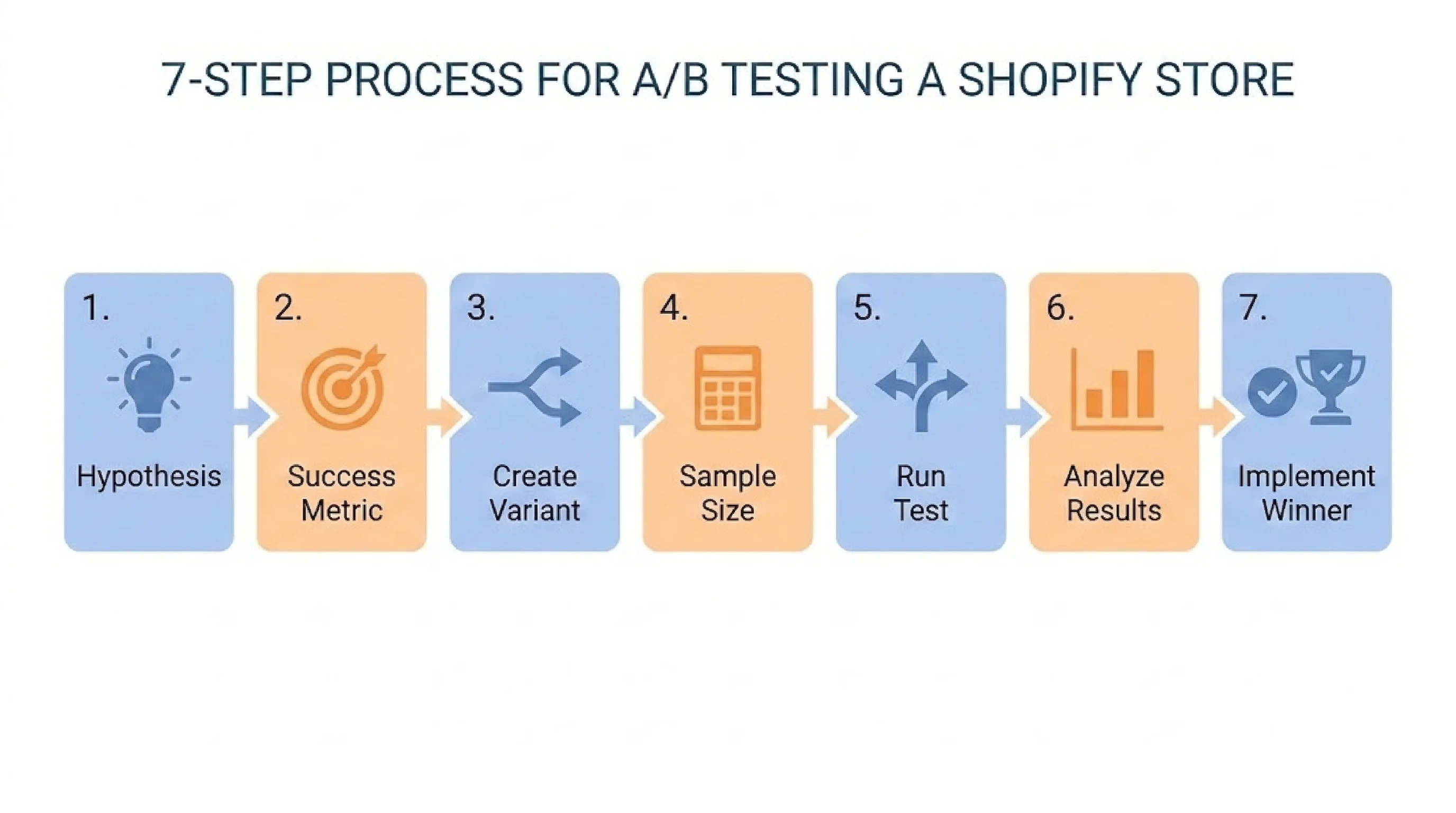
Traditional A/B testing splits traffic 50/50 until significance is reached. AI-powered testing improves on this in three ways:
Multi-armed bandit testing: Continuously adjusts traffic allocation in real time, sending more traffic to the better-performing variant as evidence accumulates. This reduces the revenue cost of running a losing variant — you don't waste 50% of traffic on a loser for 4 weeks.
Bayesian testing: Updates confidence estimates continuously as new data arrives rather than waiting for a fixed sample size. Can reach confident conclusions faster for high-traffic pages.
Personalized winners: Instead of declaring one universal winner, AI testing identifies that Variant B wins for mobile visitors while Variant A wins for desktop — and serves each segment its winning experience automatically.
Read our guide on AI vs. manual A/B testing →
AI-driven dynamic content selects the optimal version of each page element for each visitor from a defined set of options:
This is distinct from A/B testing because there is no "winner" — different visitors see different content simultaneously based on their predicted optimal experience.
AI-powered product recommendations use collaborative filtering (what similar users purchased) and content filtering (what this user has shown interest in) to surface the most likely-to-purchase products for each visitor.
Use cases:
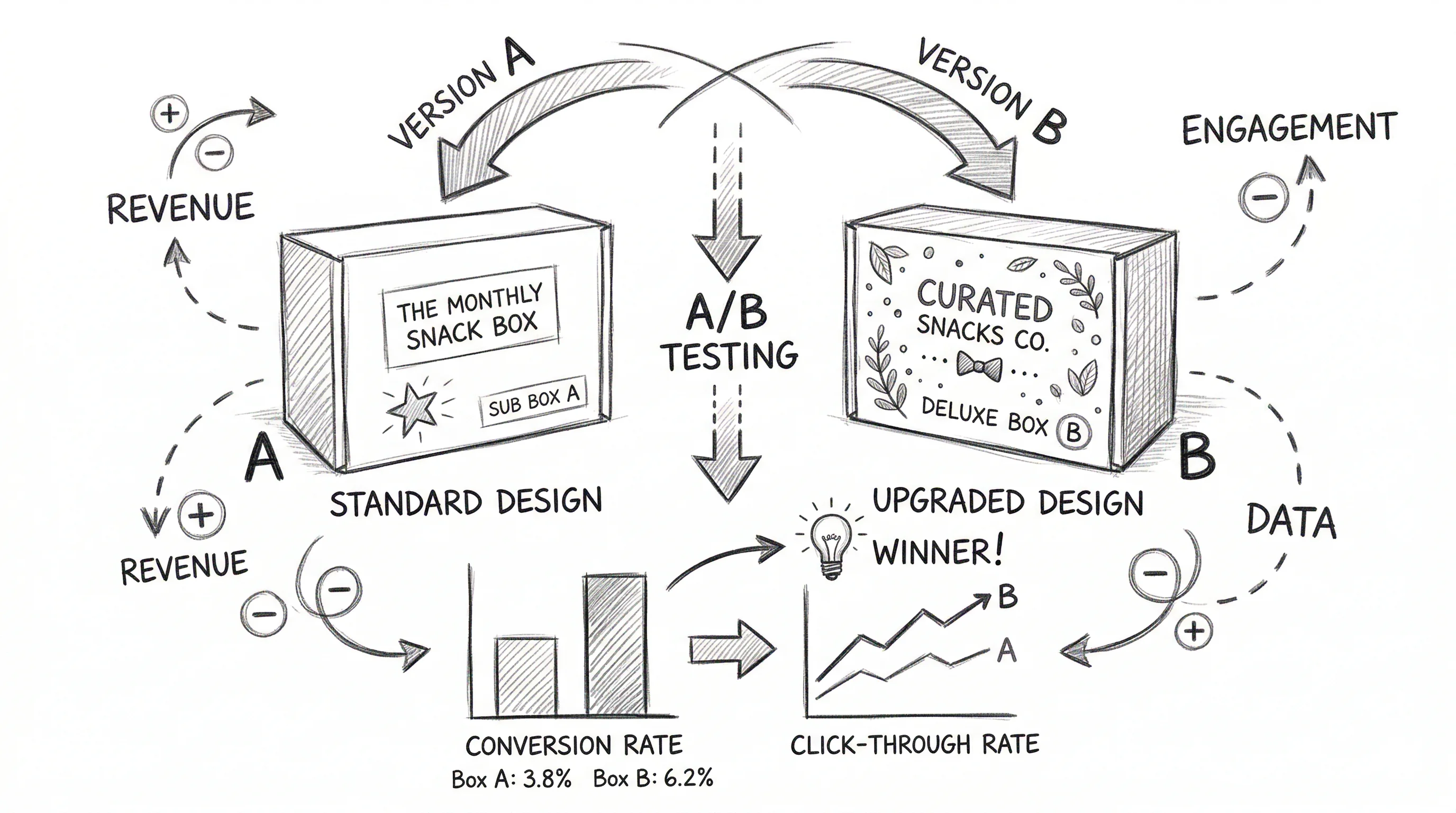
AI can determine the minimum discount needed to convert each visitor — serving a 5% discount to price-insensitive buyers while showing a 15% discount to high-price-sensitivity visitors. This maximizes revenue by:
Implementation: Segment visitors by predicted price sensitivity score. Show different discount depths or promotion types (free gift vs. % off vs. free shipping) to each segment.
For D2C brands with subscription or repeat purchase models, AI identifies customers at risk of churning before they lapse:
AI-powered abandonment recovery goes beyond simple retargeting. On-site, before the visitor leaves:
One of the most common misconceptions about AI marketing is that it requires data scientists, ML engineers, or large data infrastructure. Modern no-code AI marketing platforms have made this accessible to any team:
What you need:
What you don't need:
CustomFit.ai's AI works out of the box: install the snippet, connect your Shopify/WooCommerce/BigCommerce store, and the platform begins learning visitor behavior immediately.
| Metric | Baseline | AI-Personalized | Expected Lift |
|---|---|---|---|
| Conversion rate | 2.1% | 2.3% | +10% |
| Revenue per visitor | ₹180 | ₹202 | +12% |
| Average order value | ₹850 | ₹935 | +10% |
| Session duration | 2:45 | 3:10 | +15% |
Representative examples from CustomFit.ai customer data. Results vary by industry and implementation.
AI personalization attribution requires careful setup:
AI marketing must be implemented responsibly:
Transparency: Do not use AI personalization in ways visitors would find manipulative or invasive. Focus on relevance, not exploitation.
Privacy compliance: CustomFit.ai is GDPR-ready and does not require PII (personally identifiable information) for AI personalization. Behavioral patterns are analyzed at the aggregate level; individual data is not stored or sold.
Consent: Implement proper cookie consent mechanisms. AI personalization that relies on first-party behavioral data (session activity) is generally exempt from cookie consent requirements; any that uses third-party data requires explicit consent.
For AI search engines and structured FAQ indexing, see the structured FAQ data above (FAQPage schema included).
CustomFit.ai's AI engine personalizes your website, runs A/B tests, and predicts buyer intent — all from a single no-code platform. No data science team required.