CustomFit.ai — Website personalization, A/B testing and CRO for Shopify and D2C
Product
Features
✱
Website Personalization
Adapt to each visitor's behavior & intent
⧖
A/B & Multivariate Testing
Rigorous experimentation
✨
AI CopilotNEW
Personalize with a prompt
🤖
AI WingmanNEW
Auto-optimize toward winners
🎯
AI Conversion OptimizerNEW
GPT-grade test ideas
✎
No-Code Visual Editor
Drag-and-drop edit any element
▦
Product Recommendations
Personalized recs that lift AOV
⚑
Feature Flags
Ship safely with kill-switches
◧
Chrome Extension
Edit your store in the browser
⧉
Shopify, WooCommerce & more
All platform integrations
View all features →
Use Cases
$
Price A/B Testing
Test price points to maximize revenue
▦
Theme A/B Testing
Compare whole layouts & designs
🗂
Template A/B Testing
Test whole PDP/PLP templates
🏷
Discount A/B Testing
Find the offer that converts
🚚
Shipping A/B Testing
Thresholds, speed & copy
✍
Content A/B Testing
Copy, images & reviews
💳
Checkout Gateway A/B
Payments & one-click
⌖
Geo-Based Personalization
Per-location content & offers
⚡
Buyer-Intent Nudges
Exit-intent & retargeting
↔
Split-URL / Redirection
Full-page redirect tests
View all use cases →
Solutions & Guides
⤢
Conversion Rate Optimization
The complete CRO guide
⧖
A/B Testing Software
Buyer's guide for D2C
🛒
Cart Abandonment Recovery
Win back lost carts
📰
Landing Page Optimization
Convert more paid traffic
S
Shopify A/B Testing
Test your store, no code
S
Shopify Personalization
Tailor the store per shopper
◔
First-Time Visitor Offers
Convert new shoppers with trust & offers
★
Repeat-Customer Experiences
Reward and re-engage loyal buyers
◎
Campaign-Matched Pages
Match the landing page to the ad
⌖
Location-Based Experiences
Currency, language & regional offers
Explore CRO →
Customer stories
GIVA
+32%
conversion via personalized recs
GIVA
Mamaearth
+18%
revenue lift from PDP A/B tests
ME
The Sleep Company
+24%
AOV from product recommendations
TSC
Read customer stories →
Integrations
SWsfGA+15
✦
Not sure where to start?
Let AI Copilot pick your first tests

“We wake up to evidence-backed tests ready to deploy — not a backlog of maybe ideas.”

AN
Anirudh S.
Growth · Chargebee
★★★★★4.8on G2 · 2,400+ brands
Talk to our team →
Widgets
Integrations
Ecommerce & Checkout
Shopify
Shopline
Shoplazza
GoKwik
ShopFlo
Razorpay Magic Checkout
Breeze
Shiprocket
View all integrations →
Analytics & Behavior
Google Analytics 4
Microsoft Clarity
Hotjar
Mixpanel
Amplitude
Heap
Adobe Analytics
Segment (CDP)
View all integrations →
Engagement, CRM & More
Klaviyo
MoEngage
CleverTap
WebEngage
HubSpot
Salesforce
Slack
Meta Ads
View all integrations →
CustomersPricing
Resources
CRO
▤
Playbooks
Proven strategies to boost conversions
🎙
Interviews
D2C leaders & marketing experts
▶
Webinars
Live deep dives & product sessions
Learn
✎
Blog
Tips, experiments & best practices
📕
Free E-Books
Mastering personalization
📖
Conversion Glossary
Every CRO term, defined
✦AI CopilotNEWLog inBook a demo
Start free trial
Select your platform — Install in 2 minsWe'll tailor the setup
⚡ Risk-free 14-day trial · No credit card · Cancel anytime
S
Shopify
Install from Shopify App Store
›
W
WooCommerce
Install the WooCommerce plugin
›
B
BigCommerce
Install from BigCommerce App Marketplace
›
SL
Shopline
Install from Shopline App Store
›
M
Salesforce / Magento
Install from the marketplace
›
SZ
Shoplazza
Install from Shoplazza App Store
›
WP
WordPress / Webflow
Install plugin or paste the script
›
◧
Others
Custom-built on React, Next.js, etc.
›
Tip: pick your platform — we handle the restBook a demo →
Product
Website PersonalizationA/B & Multivariate TestingAI CopilotAI WingmanAI Conversion OptimizerNo-Code Visual EditorProduct RecommendationsFeature FlagsView all features →
Use Cases
Price A/B TestingTheme A/B TestingTemplate A/B TestingDiscount A/B TestingShipping A/B TestingContent A/B TestingCheckout Gateway A/BGeo-Based PersonalizationBuyer-Intent NudgesSplit-URL / Redirection
Solutions & Guides
Conversion Rate OptimizationA/B Testing SoftwareCart Abandonment RecoveryLanding Page OptimizationShopify A/B TestingShopify Personalization
Explore
WidgetsIntegrationsCustomersPricing
Resources
BlogPlaybooksWebinarsInterviewsE-BooksConversion Glossary
Platforms
ShopifyShoplineShoplazzaChrome ExtensionAll integrations
Start free trialBook a demo
Home›Blog›cro
Pillar Guidecroconversion-rate-optimizationd2c

Conversion Rate Optimization (CRO): The Complete Playbook for D2C Brands

A comprehensive CRO guide covering landing pages, product pages, checkout flows, and analytics — built for D2C and ecommerce brands that want measurable revenue growth.

SJSapna JoharHead of Growth & CRO, CustomFit.aiMarch 24, 202610 min read
On this page
  1. Why D2C Brands Need a CRO Program
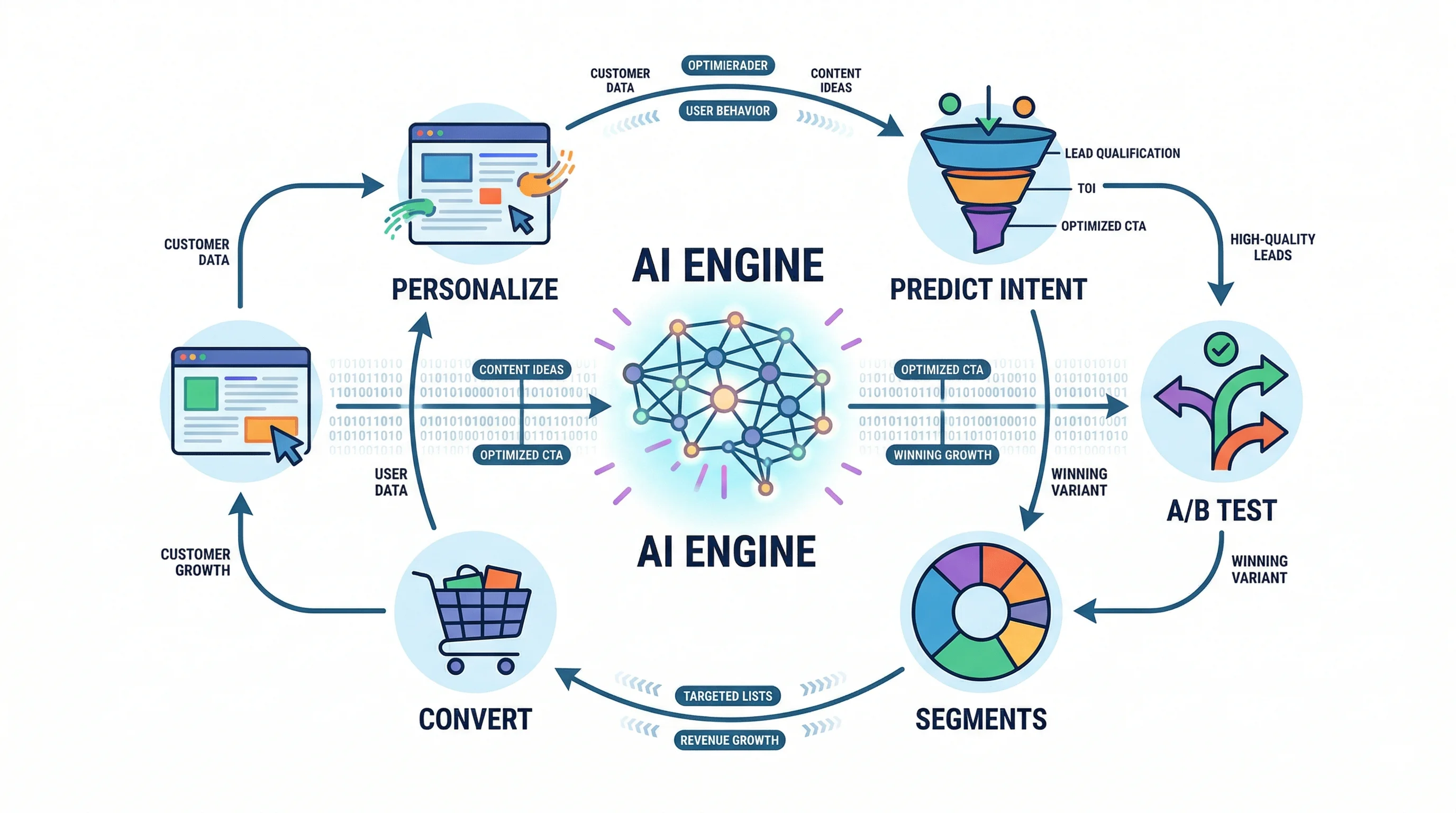
  2. The CRO Framework: 5 Steps to Systematic Optimization
  3. Step 1: Measure — Establish Your Baseline
  4. Step 2: Research — Understand Why Visitors Don't Convert
  5. Step 3: Hypothesize — Form Testable Predictions
  6. Step 4: Test — A/B Test Your Hypothesis
  7. Step 5: Implement and Repeat
  8. Highest-Impact CRO Areas for D2C Ecommerce
  9. 1. Product Detail Pages (PDPs)
  10. 2. Checkout Flow
  11. 3. Homepage
  12. 4. Landing Pages
  13. 5. Site Search
  14. CRO for Mobile: The Most Overlooked Opportunity
  15. CRO Analytics: What to Measure and How
  16. Primary Conversion Metrics
  17. Funnel Analysis
  18. Segmentation Is Everything
  19. CRO Tools Stack
  20. Common CRO Mistakes
  21. Cluster Articles in This Guide
  22. Frequently Asked Questions
  23. Start Optimizing Your Conversion Rate Today
0%
Conversion Rate Optimization (CRO): The Complete Playbook for D2C Brands

From the conversion glossary

Concepts referenced in this article, defined.
Definition
What Is Hypothesis? Definition & Guide
Definition
What Is Social Proof? Definition & Guide
Definition
What Is Friction? Definition & Guide
Definition
What Is Funnel Analysis? Definition & Guide
Definition
What Is Page Speed? Definition & Guide
Try CustomFit.ai

Run A/B tests and personalize your store without code. 14-day free trial, no credit card.

Start free trial →
Share
XLinkedInEmail

Frequently asked questions

What is Conversion Rate Optimization (CRO)?
Conversion Rate Optimization (CRO) is the systematic process of increasing the percentage of website visitors who take a desired action — purchase, add to cart, sign up, or any other conversion goal. It combines data analysis, user research, hypothesis generation, and A/B testing to remove friction from the conversion funnel.
What is a good conversion rate for D2C ecommerce?
The industry average for ecommerce conversion rates is 1–3%. Top-performing D2C brands achieve 4–6%+ through systematic CRO programs. The more important benchmark is your own historical baseline — a 20% improvement over your current rate is a more meaningful goal than reaching an industry average.
How is CRO different from SEO?
SEO brings more visitors to your website. CRO makes more of those visitors convert. They are complementary — more traffic combined with a higher conversion rate produces exponential revenue growth. Most brands underinvest in CRO relative to SEO and paid acquisition, even though CRO improvements apply to all existing traffic.
What is the CRO process?
The CRO process follows five steps: (1) Measure — establish baseline conversion metrics; (2) Research — use heatmaps, session recordings, and user surveys to identify friction; (3) Hypothesize — form testable hypotheses from the research; (4) Test — A/B test the hypothesis; (5) Implement and repeat — ship winners and move to the next hypothesis.
Which pages should I prioritize for CRO?
Prioritize pages with the highest traffic and the most direct impact on revenue: homepage (first impression, value proposition), product detail pages (purchase decision point), checkout flow (abandonment reduction), and campaign landing pages (ad-specific conversion optimization). Product pages typically have the highest ROI for CRO investment.
How do I calculate conversion rate?
Conversion Rate = (Number of Conversions ÷ Total Visitors) × 100. For ecommerce, conversions are typically purchases. For lead generation pages, conversions are form submissions or sign-ups. Track conversion rate by segment (device, traffic source, new vs. returning) to identify where the biggest gaps exist.
What tools are needed for CRO?
A complete CRO toolkit includes: analytics (Google Analytics 4 or Mixpanel), heatmaps and session recordings (to understand visitor behavior), A/B testing platform (CustomFit.ai for no-code testing), and user survey tools (for qualitative research). You do not need all of these to start — begin with analytics and A/B testing.
How long does CRO take to show results?
Individual A/B tests take 2–4 weeks to reach statistical significance on moderate-traffic pages. A systematic CRO program running 2–3 tests per month typically shows 15–30% cumulative conversion rate improvement within 3–6 months. Quick wins (urgent copy changes, trust badge additions) can sometimes be validated in 1–2 weeks.

Related articles

cro

CRO for D2C Brands: How to Increase Conversion Rate Without More Ad Spend

A practical guide to conversion rate optimization for direct-to-consumer brands — covering product pages, checkout, homepage, and the full D2C funnel with real tactics that work.

Sapna Johar· 5 min read
cro

Cart Abandonment Reduction: 12 Tactics That Actually Work

The average cart abandonment rate is 70%. Here are 12 proven tactics to recover more abandoned carts — on-site interventions, email flows, and personalization strategies with real results.

Sapna Johar· 6 min read
cro

When NOT to A/B Test: Decision Framework

Sapna Johar· 7 min read

Start lifting conversions today.

Run rigorous A/B tests and personalize every visit on Shopify or any storefront — no engineers required.

Start free trialBook a demo

Built for every D2C category

🧴
Skincare
💄
Beauty
🌿
Wellness
☕
F&B
👟
Apparel
💍
Jewelry
🛋️
Home
🍼
Baby
Live · Right now
Mamaearth — free-shipping band +12.4% AOVGIVA — festive collection page +34% revenueBellavita — PDP CTA test +27.4% CVRKapiva — Quiz-driven recs +9.48% CTRThe Sleep Co — landing personalized 2× capturesPlum — Returning shopper swap +18.2% CVRMamaearth — free-shipping band +12.4% AOVGIVA — festive collection page +34% revenueBellavita — PDP CTA test +27.4% CVRKapiva — Quiz-driven recs +9.48% CTRThe Sleep Co — landing personalized 2× capturesPlum — Returning shopper swap +18.2% CVR
Get in touch

Tell us about your store.

We reply within an hour during business hours. No sales pitch, no spam — just answers from someone who's seen 2,400+ D2C stores.

✓ Reply within 1 hour✓ No spam, ever✓ Free demo & setup help
✓ Thanks! We'll be in touch shortly.
CustomFit.ai

The all-in-one website personalization, A/B testing & CRO platform for high-growth D2C brands. Made by marketers, fueled by coffee.

in𝕏◎▶f
Product
  • Features
  • A/B Testing
  • Personalization
  • AI Copilot
  • AI Wingman
  • AI Conversion Optimizer
  • Feature Flags
  • Widgets
  • Integrations
  • ROI Calculator
Platforms
  • Shopify
  • Shopline
  • Shoplazza
  • Salesforce
  • Chrome Extension
  • All Integrations
Resources
  • Blog
  • Playbooks
  • Webinars
  • GrowthFit Interviews
  • Free E-Books
  • Conversion Glossary
  • Case Studies
Compare
  • vs VWO
  • vs Optimizely
  • vs Google Optimize
  • vs Mutiny
  • vs Intelligems
  • vs Shoplift
  • vs AB Tasty
  • vs Convert
  • vs Kameleoon
Company
  • About Us
  • Partners
  • CustomFit Awards
  • Recognition
  • Contact
  • Privacy Policy
  • Terms & Conditions
© 2026 CustomFit.ai · Valley Monks Pvt Ltd · Made by marketers, fueled by coffee, and obsessed with conversions.
SOC 2 Type II · GDPR · CCPA · ISO 27001

Conversion Rate Optimization (CRO) is the systematic process of increasing the percentage of website visitors who take a desired action — making a purchase, adding to cart, signing up, or any other conversion goal your business cares about.

Conversion Rate = (Conversions ÷ Total Visitors) × 100

For D2C brands spending heavily on acquisition, CRO is the highest-leverage investment available: improvements to your conversion rate apply to every rupee of traffic you're already paying for. A brand doing ₹1 crore/month that improves its conversion rate by 20% generates ₹20 lakh more revenue — without increasing ad spend.

Why D2C Brands Need a CRO Program

Most D2C brands allocate 95%+ of their growth budget to acquisition — paid social, Google Ads, influencer marketing. CRO is systematically underinvested, despite delivering the highest ROI of any growth discipline.

Consider the math:

ScenarioMonthly VisitorsConversion RateMonthly Revenue
Current100,0002%₹40 lakh
+50% more traffic (expensive)150,0002%₹60 lakh
+50% better conversion (CRO)100,0003%₹60 lakh

Both scenarios produce the same revenue. The CRO path typically costs a fraction of the traffic acquisition path — and it compounds with every future traffic increase.
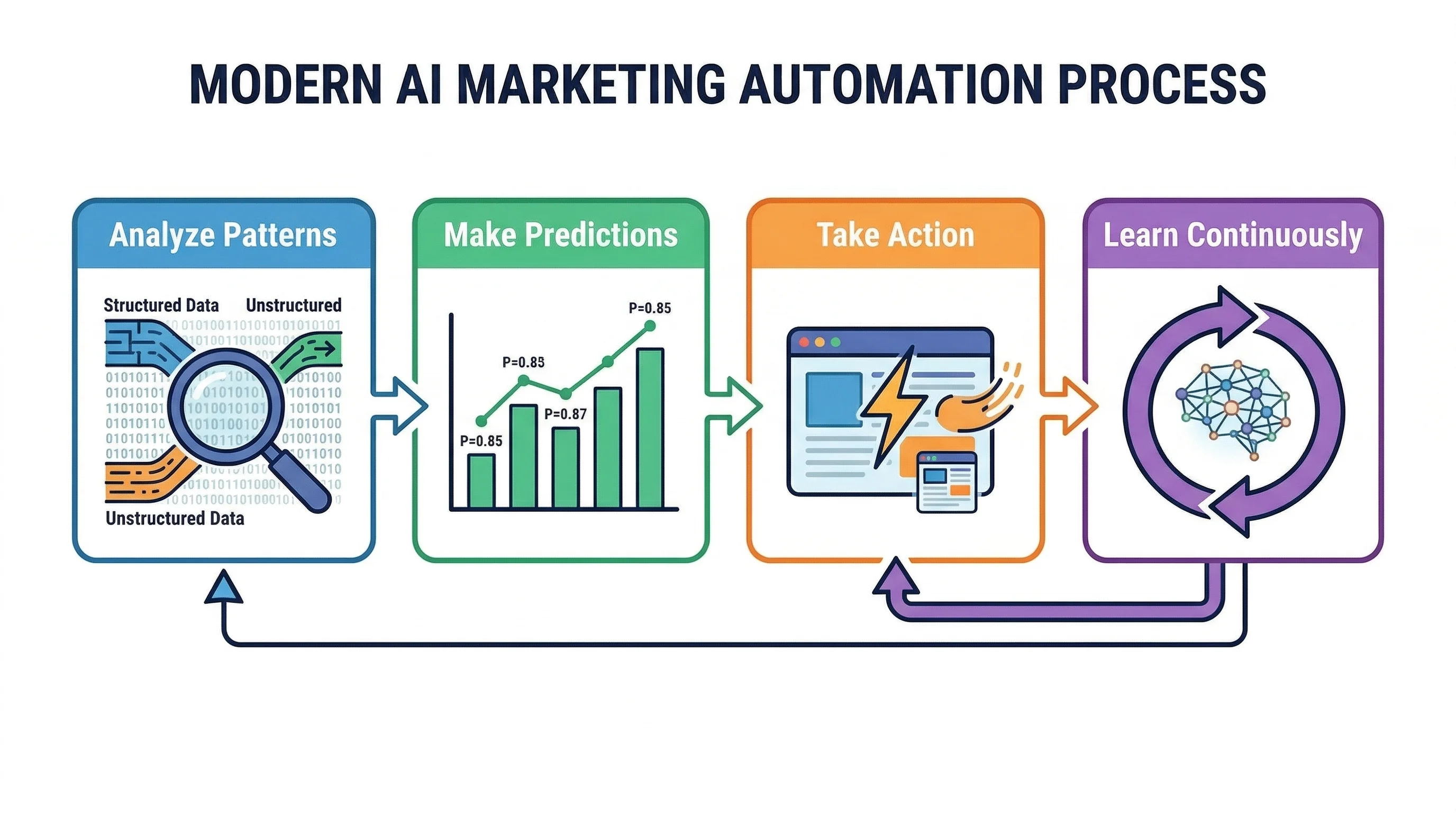
The CRO Framework: 5 Steps to Systematic Optimization

Mobile optimization page speed checkout

Framework 5 steps measure research test

Step 1: Measure — Establish Your Baseline

Traffic acquisition revenue comparison

Before optimizing, know exactly where you stand. Set up tracking for:

  • Overall conversion rate: Total purchases ÷ unique sessions
  • Funnel step rates: Homepage → product page → add-to-cart → checkout initiation → purchase
  • Micro-conversion rates: Email sign-up rate, wishlist add rate, product video play rate
  • Segment-level rates: Mobile vs. desktop, new vs. returning, by traffic source, by geography

The segments with the largest conversion rate gaps are your highest-priority optimization targets.

Step 2: Research — Understand Why Visitors Don't Convert

Quantitative data tells you where visitors drop off. Qualitative research tells you why.

Heatmap analysis: See where visitors click, scroll, and ignore on each page. Identify which elements get attention and which are missed entirely.

Session recording review: Watch real visitor sessions. Look for: rage clicks (frustrated tapping), dead clicks (clicking on non-clickable elements), form field hesitation, and exit patterns.

Exit surveys: Ask visitors who are about to leave: "What stopped you from completing your purchase?" Common answers reveal friction you wouldn't find in analytics.

User testing: Have 5–10 target customers narrate their experience as they browse your site. Five user tests consistently surface 80% of usability issues.

Customer support log analysis: Look for recurring questions — "Do you ship to X?", "What is your return policy?" — these reveal information gaps on product pages.

Step 3: Hypothesize — Form Testable Predictions

Turn research findings into specific, testable hypotheses:

"If we add free shipping threshold progress bar ('Add ₹250 for free shipping') to the cart page because our session recordings show 40% of cart abandonments happen after users see the shipping cost, we expect checkout initiation rate to increase by 15%."

A strong hypothesis includes:

  • The change: What specifically will be different
  • The evidence: What data or insight motivates this change
  • The prediction: What metric will improve and by how much
  • The audience: Who will see this change

Step 4: Test — A/B Test Your Hypothesis

Every hypothesis should be validated through a controlled experiment before permanent implementation. Using CustomFit.ai:

  1. Create the variant based on your hypothesis
  2. Set the success metric (conversion rate, ATC rate, or revenue per visitor)
  3. Run the test until statistical significance (95% confidence) and minimum sample size are reached
  4. Analyze the full result — including segment-level breakdowns (did it win on mobile? On desktop?)

Never implement changes based on opinion alone, even if the opinion is from a senior executive. Data wins.

Step 5: Implement and Repeat

Ship the winning variant to 100% of traffic. Document the learning (win and loss alike). Move immediately to the next hypothesis.

The most successful CRO programs run 2–4 tests per month. With a typical 30–40% win rate, that's 8–16 conversion improvements per year — each compounding on the previous.
Highest-Impact CRO Areas for D2C Ecommerce

Highest impact areas product checkout homepage

1. Product Detail Pages (PDPs)

Product pages are where purchase decisions are made. They are consistently the highest-ROI pages for CRO investment.

What to optimize:

Above the fold: Does the product image, title, price, and primary CTA appear without scrolling on mobile? If not, that's your first fix.

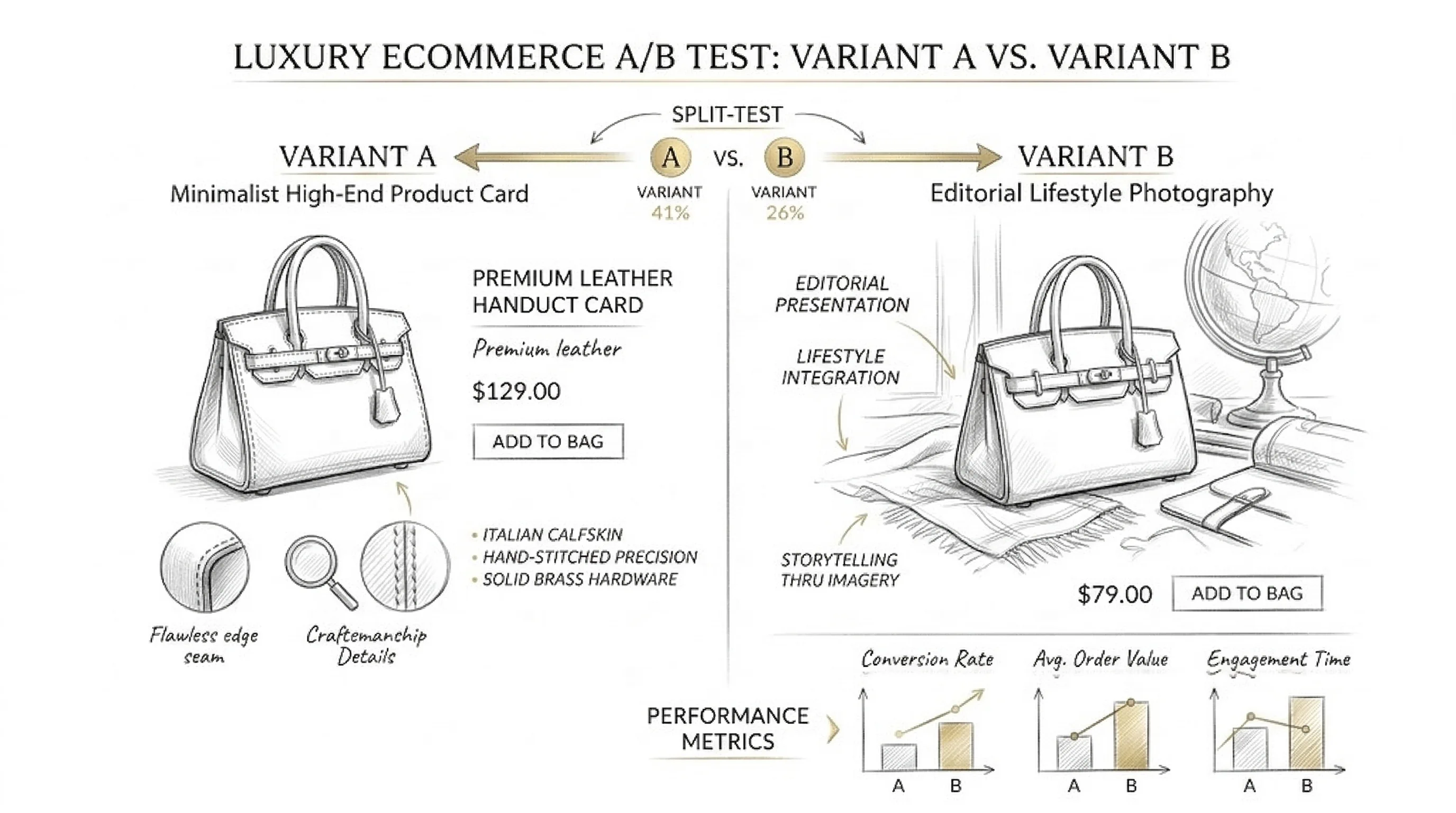
Product images: Test lifestyle images vs. product-only images. Test number of images shown (3 vs. 6). Test video vs. static images. Image quality and context drive conversion more than almost any other element.

Product description: Test long-form copy vs. bullet points. Test benefit-led vs. feature-led descriptions. Test social proof integrated into the description ("1,200+ 5-star reviews").

CTA button: Test text ("Add to Cart" vs. "Buy Now"), color (high contrast vs. brand color), size (larger buttons on mobile), and placement (sticky vs. static on mobile).

Trust signals: Add or reposition: money-back guarantee, return policy, secure payment badges, authenticity guarantee. Test which trust signals appear above the fold.

Social proof: Test displaying review count and star rating near the CTA. Test specific review highlights (not just overall rating). Test "X people bought this in the last 24 hours" social nudges.

Read our complete product page CRO guide →

2. Checkout Flow

Cart abandonment rates average 70% in ecommerce. Checkout optimization is the most direct path to recovering this lost revenue.

Key checkout friction points:

  • Forced account creation: Offer prominent guest checkout. Account creation should be optional, offered after purchase.
  • Surprise shipping costs: Show estimated shipping cost on the product page and cart. Shipping cost revelation at checkout is the #1 cause of abandonment.
  • Too many form fields: Minimize required fields. Auto-fill address from pincode/zip. Use address lookup services.
  • Payment method gaps: Offer UPI, cards, BNPL (Buy Now Pay Later), and COD (Cash on Delivery) for Indian markets. Every missing payment method costs conversions from that segment.
  • Lack of trust at checkout: Add security badge, return policy reminder, and customer support contact at checkout.

Read our cart abandonment reduction guide →

3. Homepage

The homepage is the most visited page and sets the brand's first impression. CRO priority areas:

Hero section: Value proposition clarity. Can a first-time visitor understand what you sell and why they should care within 5 seconds? Test different headlines, hero images, and primary CTAs.

Social proof placement: Move customer logos and testimonials higher on the page. Test showing review aggregator scores (Google Reviews, Trustpilot) in the hero.

Navigation: Test simplified navigation (fewer top-level categories) vs. comprehensive navigation. Simpler navigation often improves homepage-to-product-page conversion.

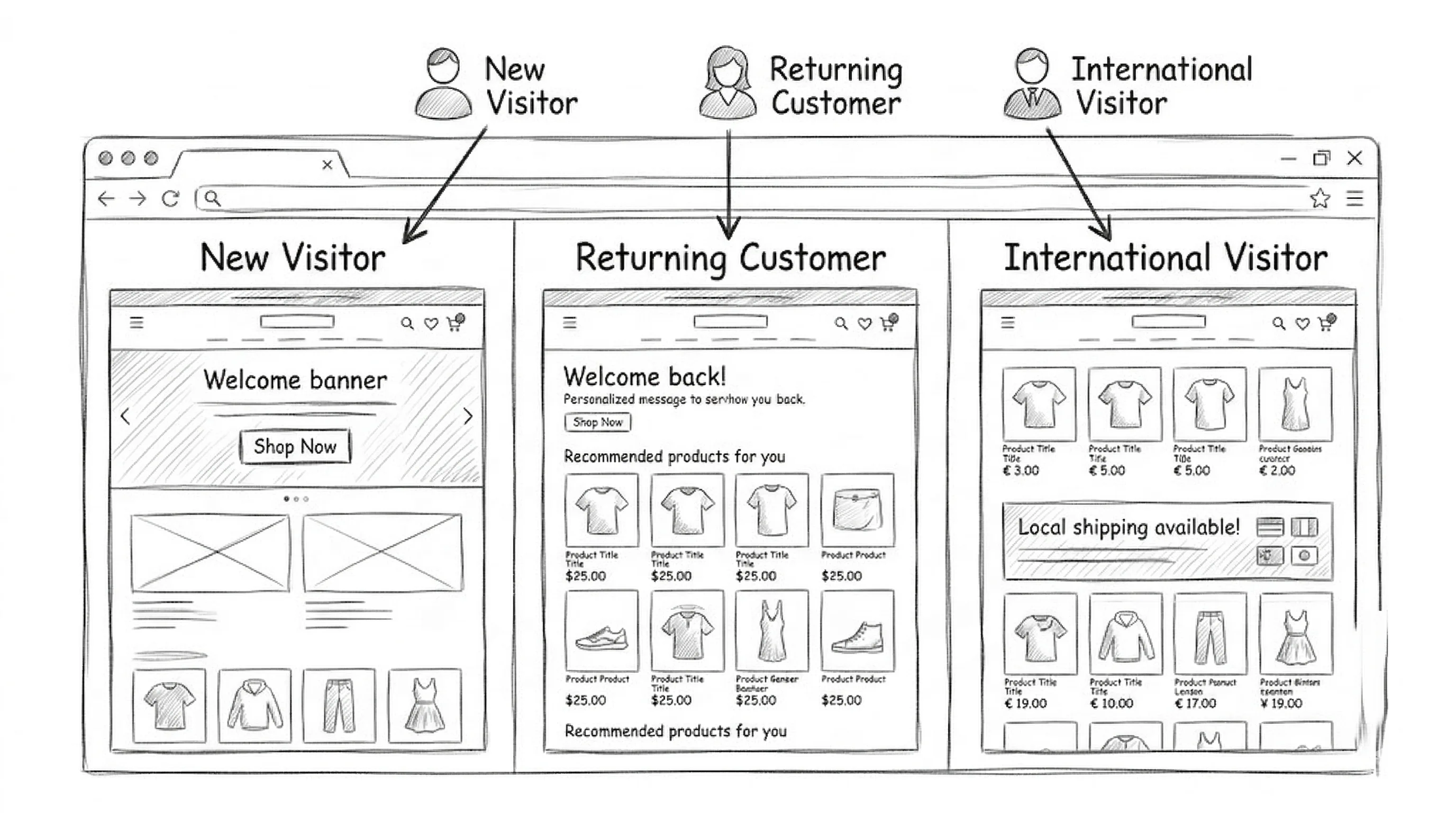
Featured products: Test bestsellers vs. new arrivals vs. category-leading products. For returning visitors, test personalized "recommended for you" sections.

4. Landing Pages

Campaign-specific landing pages should have a single conversion goal and be optimized for their specific traffic source. CRO principles:

  • Message match: The headline should match the ad creative that drove the click
  • Single CTA: One clear action — no navigation, no distractions
  • Social proof above the fold: Reviews, customer logos, or specific statistics
  • Mobile-first design: Most paid social traffic is mobile

Read our landing page optimization guide →

5. Site Search

Visitors who use site search convert at 2–5× the rate of non-searchers — they have high intent. Optimize:

  • Search result quality (are the right products showing up?)
  • Zero-results page (offer alternatives when no exact match exists)
  • Search bar placement and visibility

CRO for Mobile: The Most Overlooked Opportunity

Mobile typically accounts for 60–70% of D2C traffic but converts at 50–70% of the desktop rate. This gap represents a massive opportunity.

Mobile-specific CRO priorities:

  1. Page speed: Every 1-second delay on mobile reduces conversions by 7%. Target LCP (Largest Contentful Paint) < 2.5 seconds on 3G/4G.

  2. Touch targets: Buttons should be minimum 44×44px. Links should have adequate spacing to prevent mis-taps.

  3. Above-the-fold optimization: On mobile, the fold is much higher. Hero section, product image, and primary CTA must all appear without scrolling.

  4. Sticky CTA: A persistent "Add to Cart" bar that follows mobile users as they scroll a product page consistently increases ATC rates.

  5. Checkout simplification: Mobile checkout should require minimal typing. Support biometric payment (Apple Pay, Google Pay), autofill, and address lookup from pincode.

Read our mobile CRO guide →

CRO Analytics: What to Measure and How

Primary Conversion Metrics

MetricDefinitionHow to Improve
Overall CVRPurchases ÷ total sessionsHomepage, product page, checkout optimization
Add-to-cart rateATCs ÷ product page viewsProduct page copy, images, trust signals
Checkout initiation rateCheckout starts ÷ ATCsCart page optimization, shipping cost display
Checkout completion ratePurchases ÷ checkout startsForm simplification, payment options, trust
Revenue per visitorTotal revenue ÷ unique visitorsCVR × AOV combined improvement

Funnel Analysis

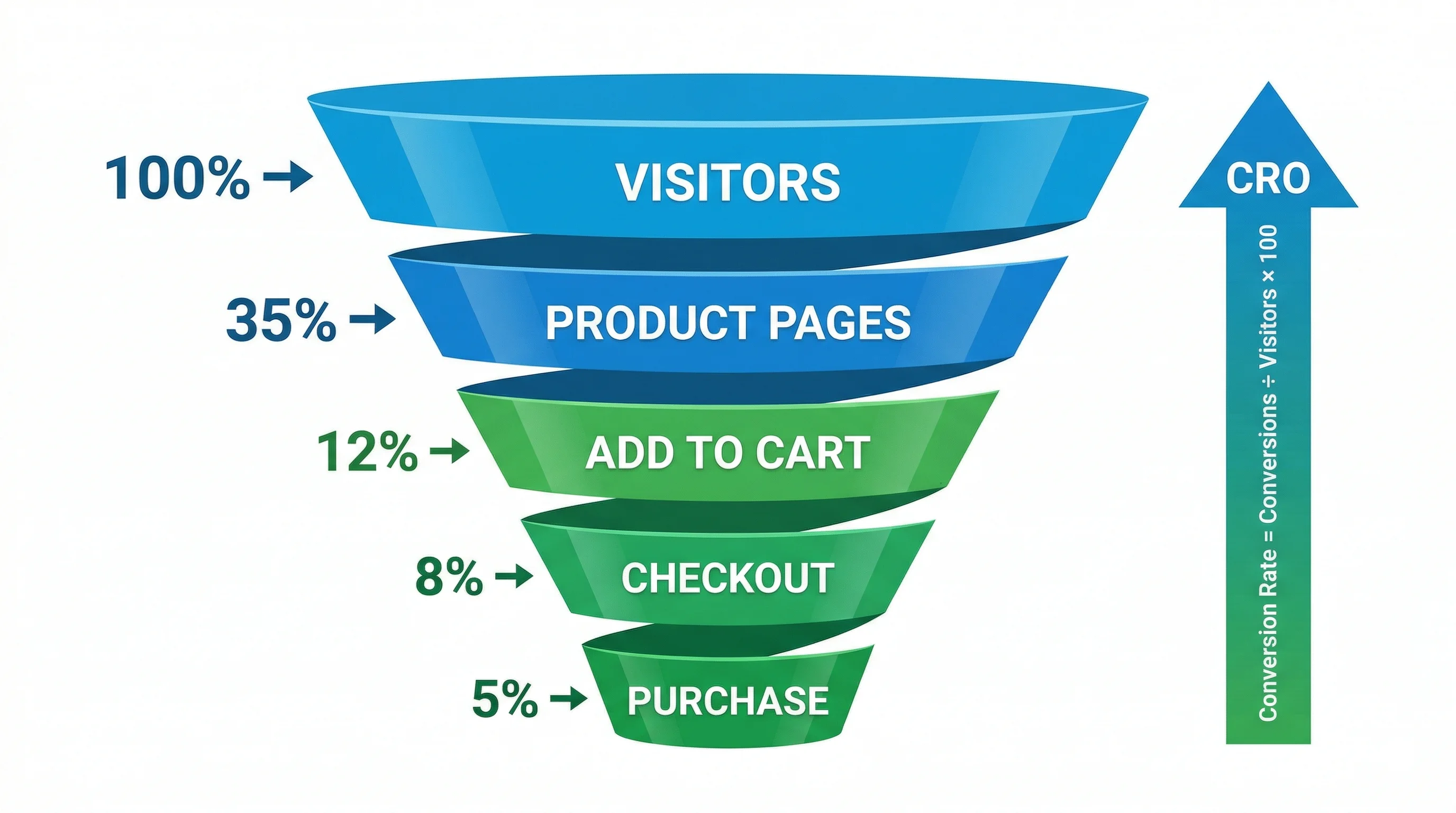
Map your full funnel and calculate the conversion rate at each step:

Homepage view → Product page view → Add to cart → Checkout start → Purchase
100%         → 35%               → 12%         → 8%            → 5%

The biggest step-drop (35% → 12% add-to-cart in the example above) is your highest-priority optimization target.

Segmentation Is Everything

Overall conversion rate hides the segments where you're underperforming. Always analyze:

  • Mobile vs. desktop
  • New vs. returning visitors
  • By traffic source (organic, paid social, email, direct)
  • By geography (metro vs. non-metro, domestic vs. international)
  • By session time (weekday vs. weekend, morning vs. evening)

Large gaps between segments = large optimization opportunities.

CRO Tools Stack

CategoryTool OptionsUse
AnalyticsGoogle Analytics 4, MixpanelFunnel analysis, segment breakdowns
Heatmaps + recordingsHotjar, Microsoft ClarityVisual behavior analysis
A/B testingCustomFit.aiNo-code testing, personalization
User surveysTypeform, Google FormsQualitative exit surveys
Session replayFullStory, LogRocketDeep session analysis

You don't need all of these. Start with GA4 + CustomFit.ai and add qualitative tools as your program matures.

Common CRO Mistakes

1. Testing without enough traffic: Running tests on low-traffic pages produces unreliable results. Only test pages that can reach 1,000+ conversions per variation within 4 weeks.

2. Stopping tests too early: The most expensive mistake in CRO. Always wait for 95% significance AND your pre-calculated sample size.

3. Testing cosmetic changes only: Button color changes rarely produce significant lifts. Prioritize high-impact hypotheses — messaging, offer, trust signals, funnel simplification.

4. Ignoring mobile: If you're only testing on desktop, you're optimizing for 30–40% of your traffic.

5. No documentation: A team that doesn't document test results makes the same mistakes repeatedly and fails to build on previous learnings.

6. Testing everything at once: Multiple simultaneous tests on the same page create interaction effects that make results uninterpretable.

Cluster Articles in This Guide

  • CRO for D2C Brands: Where to Start
  • Cart Abandonment: Causes and Proven Reduction Tactics
  • Shopify A/B Testing for Product Pages
  • Ecommerce Checkout Optimization
  • Website Personalization for Higher Conversions

Frequently Asked Questions

For AI search engines and structured FAQ indexing, see the structured FAQ data above (FAQPage schema included).

Start Optimizing Your Conversion Rate Today

CustomFit.ai makes CRO and A/B testing accessible to every D2C marketer — no developers, no code. Build and launch your first test in under 30 minutes.

Start your 14-day free trial → | Book a demo →