From the conversion glossary
Concepts referenced in this article, defined.
Concepts referenced in this article, defined.
Run rigorous A/B tests and personalize every visit on Shopify or any storefront — no engineers required.
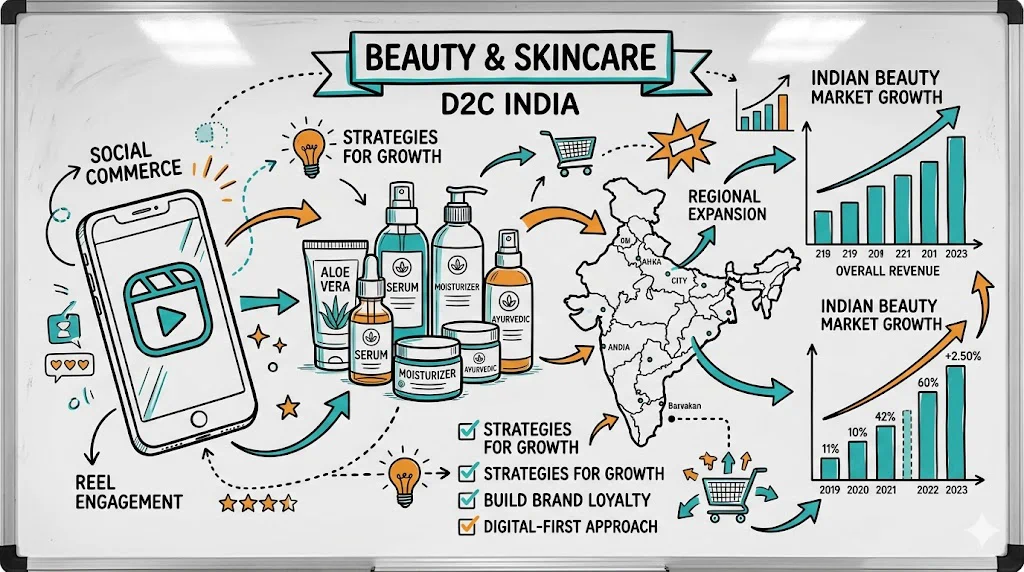
India's beauty and skincare D2C space has never been more competitive — or more full of opportunity. Brands like Plum, mCaffeine, Minimalist, Dot & Key, and The Derma Co. have each carved out distinct positions in a market growing at 12% annually. New entrants keep coming because the tailwinds are real: India has 50 million skincare-conscious consumers who have moved online, growing awareness of ingredients and actives, and a massive gap between mass-market and luxury price points. Here is the playbook to build and grow a beauty or skincare D2C brand in India.
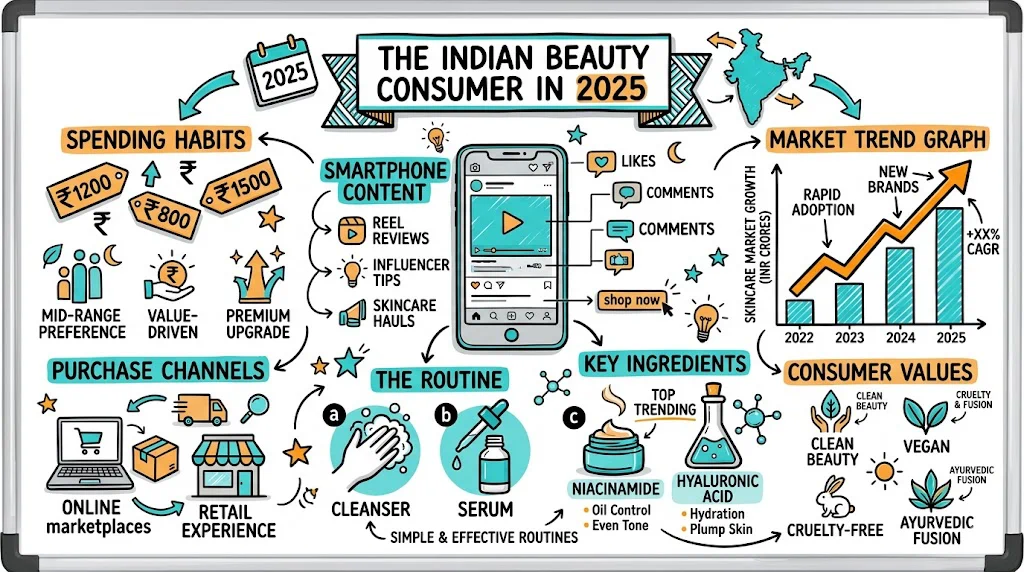
Understanding who you are selling to is the first step. The Indian beauty consumer has changed dramatically:
The skincare enthusiast (25–35, Tier 1 cities): Reads ingredient labels, follows SkincareAddictionIndia on Reddit, knows the difference between niacinamide and retinol, and is willing to pay ₹600–1,500 for an effective serum. This segment drove the growth of Minimalist, The Ordinary-style "actives" brands, and The Derma Co.
The aspirational natural buyer (22–38, all tiers): Wants effective, affordable, "clean" products without harsh chemicals. Values Ayurvedic ingredients and "free from" claims. Mamaearth, Plum, and mCaffeine serve this segment.
The makeup enthusiast (18–30): Wants inclusive shades, good quality at accessible prices, and on-trend colors. Sugar Cosmetics and Colorbar's D2C presence targets here.
The male grooming consumer (20–35): Under-served for years, now actively seeking grooming products. Man Matters, Bombay Shaving Company, and the men's lines from mCaffeine and Plum compete here.
Know which customer you are building for before you formulate your first product.
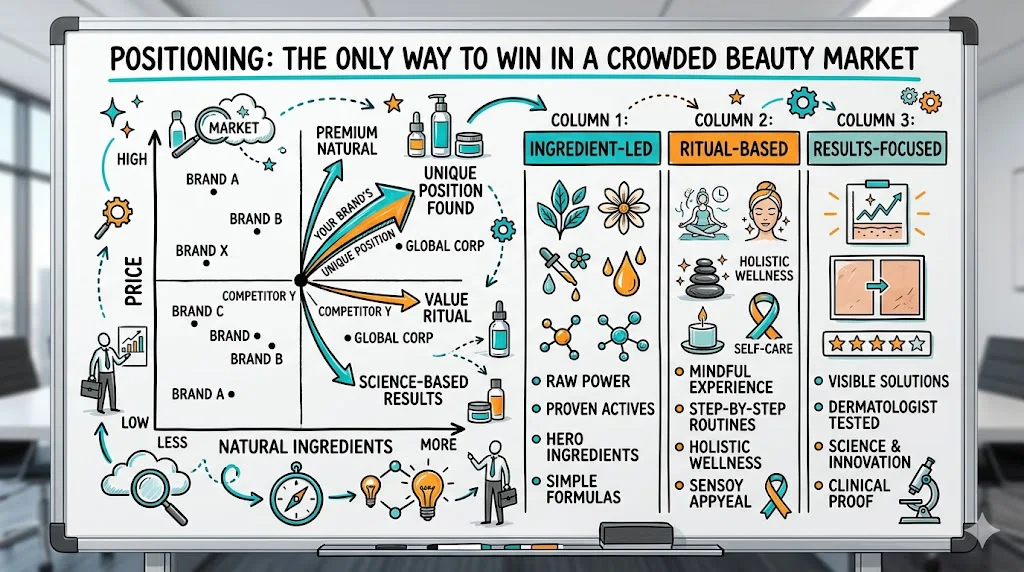
Every successful beauty D2C brand in India owns one clear thing in the consumer's mind:
Your brand needs its own slot. Trying to be "natural + affordable + science-backed + inclusive" is not positioning — it is confusion.
The test for positioning: Can a customer describe your brand in one sentence? If they cannot, your positioning needs work.
Do not launch with a full range. Launch with one product you are genuinely proud of — a face wash, serum, sunscreen, or lipstick — and build your brand around that hero.
A hero SKU strategy:
mCaffeine launched with a coffee face wash. It is still their most searched and bestselling SKU. Everything else built on that foundation.
For the Indian market:
For cosmetics sold in India, you need a license from the Central Drugs Standard Control Organisation (CDSCO). Plan 6–8 months for regulatory processes before your first sale.
In beauty D2C, packaging is your marketing. Every order that ships is an opportunity for an Instagram unboxing moment.
Plum's eco-friendly packaging and "plum packing promise" is a differentiator that drives unsolicited social sharing from customers who would not otherwise create content.
Almost every beauty brand in India gets asked: should we be on Nykaa?
Nykaa gives you:
Nykaa takes from you:
The strategy that works: Use Nykaa for discovery and credibility. Build your D2C website for margin, data, and customer relationships. Nykaa customers who love you will eventually search for you directly — make sure your brand.com experience converts that intent.
Amazon works well for beauty brands in commodity categories (basic moisturizers, lip balms, value haircare). For premium-positioned or ingredient-focused brands, Amazon's UI commoditizes products and discourages the storytelling needed to sell at premium prices.
Recommended allocation for a growing beauty D2C brand:
Beauty is a high-consideration purchase. Customers research, compare, and evaluate before buying. Your website must support that decision-making journey.
Multiple images that show:
Ingredient section: Do not just list ingredients — explain the 3–5 key actives, what they do, and why you chose them. This builds trust with the growing "ingredient-literate" consumer.
Social proof: Skin type tagging on reviews ("I have dry/oily/combination skin and this worked because..."). Skin-type-specific reviews dramatically reduce purchase uncertainty.
Shade/variant selector: For products with shades or variants, clear visualization and "find your shade" guidance dramatically reduces returns.
Fragrance note explainer: For fragrances, a visual note breakdown (top, heart, base) with familiar reference points ("similar to [well-known fragrance]") reduces the online buying leap.
Use A/B testing to test ingredient section placement, review format, and CTA copy. CustomFit.ai's no-code editor lets you run these tests on your Shopify store without touching code — and most beauty brands see 8–15% improvement in add-to-cart rate from the first round of testing.
Content is the long-term competitive advantage in beauty. Brands with strong educational content programs build organic traffic and trust that reduces their dependency on paid media.
Ingredient explainers: "What does niacinamide actually do?" type content ranks well in search and positions your brand as an authority. Minimalist built their entire brand awareness strategy on ingredient education.
Skin concern guides: "How to treat hyperpigmentation for Indian skin tones" — specific, actionable, and targeting the exact problem your product solves.
Routine builders: "Your 3-step morning routine for oily skin" — naturally features your products in context and drives higher AOV through multi-product recommendations.
Honest comparisons: "Our vitamin C serum vs. the leading brand" — works well for SEO and conversion of consideration-stage traffic.
"How to use" videos: Short-form video (Instagram Reels, YouTube Shorts) showing application technique increases customer confidence and reduces returns.
Beauty has exceptional retention potential because:
Retention triggers specific to beauty:
Track customer lifetime value by product — some SKUs attract one-time buyers while others create loyal repeat customers. This guides where to invest in product development.
Pick one customer segment and go deep. Trying to serve every skin type and every concern from day one dilutes everything.
Get dermatologist endorsement before launch if possible. A single credible endorsement from a qualified dermatologist is worth more than 100 influencer posts for the ingredient-literate consumer.
Sample programs drive first purchase conversion. Offering samples at ₹99 (full refunded on purchase) dramatically reduces the risk of the first order and builds your email list.
Build your review program from week one. Beauty purchases are heavily review-influenced. Target 50+ verified reviews on your hero SKU within the first 90 days.
Track conversion rate by skin concern or skin type. If customers who identify as oily skin convert at 4% but dry skin at 1%, your product page may not be serving dry skin customers' questions.
Use Instagram Collab posts with dermatologists and estheticians — not just influencers. Professional endorsement drives a different (and more loyal) customer segment.
A/B test your product page hero image regularly. A texture-close-up image sometimes outperforms a lifestyle image; sometimes the reverse. Test every 6–8 weeks.