From the conversion glossary
Concepts referenced in this article, defined.
Concepts referenced in this article, defined.
Run rigorous A/B tests and personalize every visit on Shopify or any storefront — no engineers required.
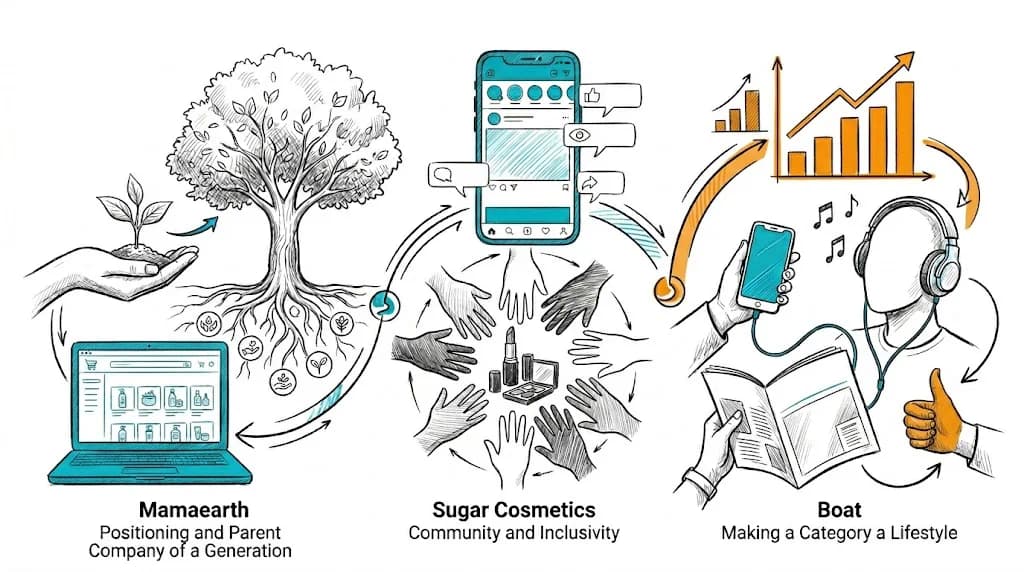
India's direct-to-consumer market crossed $12 billion in 2024 and is still in its early innings. Brands like Mamaearth, Sugar Cosmetics, Boat, and mCaffeine have proven that Indian consumers will pay premium prices for brands that speak to them directly — without a retail middleman. If you are building a D2C brand in India today, the playbook is clearer than ever. Here is the complete guide to launching your brand, from idea validation to your first 1,000 orders.
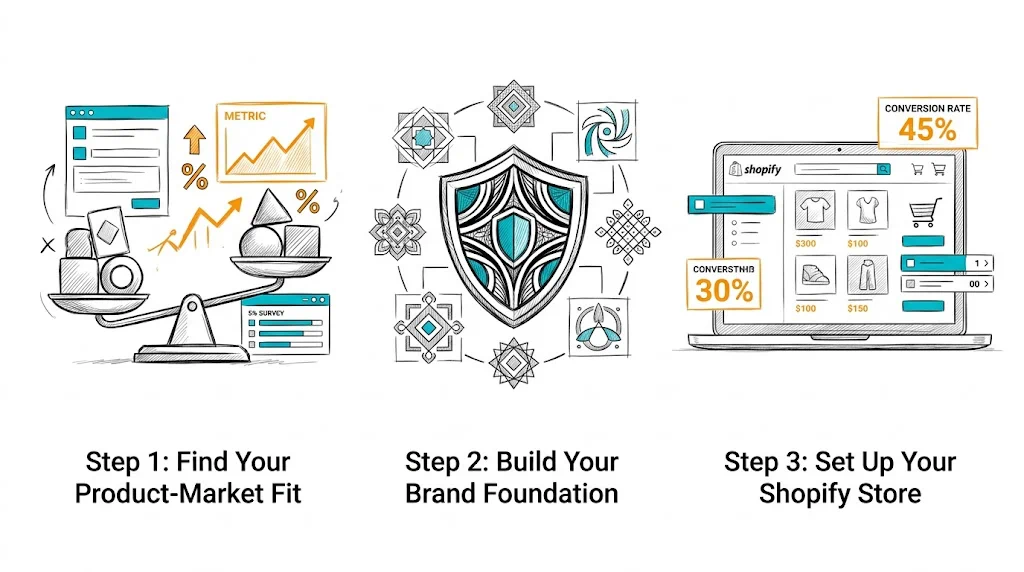
The D2C brands that survive the first two years all have one thing in common: they solve a real problem for a specific customer before they try to be everything to everyone.
Define your target customer precisely: Not "women who use skincare" but "working women aged 25–35 in Tier 1 cities who want clean-label skincare under ₹500 per product." Specificity drives every other decision — from formulation to packaging to ad creative.
Talk to 50 potential customers: Surveys on Instagram stories, WhatsApp group conversations, or Reddit threads in relevant communities. Ask what they currently use, what frustrates them, and what they would pay for something better.
Test with a waiting list: Before manufacturing, run a simple Instagram page or landing page that describes your product. Collect email signups. 500+ signups before launch is a strong signal.
The competitive gap question: Identify what existing brands do not do well — Sugar Cosmetics won on inclusive shades, mCaffeine won on caffeine-infused personal care as a distinct category, Pilgrim won on K-beauty inspired formulations at Indian prices. Your brand needs its own reason to exist.
Your brand name, visual identity, and brand story need to work on Instagram reels, WhatsApp forwards, and physical packaging alike.
Brand name criteria:
Packaging for D2C: Your packaging is your unboxing experience. Brands like Plum use eco-friendly, photogenic packaging that customers share on social media — free UGC. Budget for packaging design seriously; it is your physical marketing.
Brand story that connects: Indian D2C consumers respond to founder stories, ingredient transparency, and cause-based missions. Mamaearth's toxin-free promise, Sugar's inclusivity story, and Kapiva's Ayurveda-meets-modern-science positioning are all clear brand stories.
Before your first sale:
Shopify is the default choice for Indian D2C launches. It handles payments, logistics integrations, and inventory well, and has a large Indian merchant ecosystem.
Essential apps for Indian D2C:
Store pages you need at launch:
Payment options: Offer UPI, cards, net banking, and COD. COD typically drives 40–60% of orders for new D2C brands in India. Reduce COD over time by incentivizing prepaid — see our RTO reduction guide.
Your product page is where buying decisions happen. At launch, make sure every product page has:
Use social proof — real reviews from real people — as prominently as your product imagery.
Brands that launch to an existing audience dramatically outperform cold launches. Spend 4–8 weeks before launch building:
Instagram and YouTube: Document your brand-building journey. Behind-the-scenes content (factory visits, formulation development, packaging choices) builds authenticity and an audience before you have a product to sell.
Email list: A simple landing page with "Be the first to know" captures early adopters. Offer a launch discount or free gift for signing up. Target 1,000 emails before launch.
WhatsApp community: Indian consumers are more comfortable on WhatsApp than email. A WhatsApp broadcast list or community group of 200–500 early fans is a powerful launch asset.
Micro-influencer relationships: Identify 20–30 nano-influencers (5,000–50,000 followers) in your niche. Send them free product 2–3 weeks before launch and coordinate a launch-day posting moment.
Start with Meta (Instagram + Facebook) for most D2C categories. It offers the best targeting and creative flexibility for Indian audiences.
Budget allocation for first 90 days (assuming ₹3–5 lakh media budget):
What to test first: Your hero creative. A single winning video creative can carry a brand's early growth. Test founder-story UGC, before/after demonstrations, and ingredient explainer formats.
Track your conversion rate from day one. Set up Google Analytics 4 and Meta Pixel properly before spending a rupee on ads.
Most D2C founders wait until they have "enough traffic" to optimize. Do not. Even with 500 sessions per month, you can identify friction points using heatmaps and session recordings. With CustomFit.ai, you can run your first A/B test on your product page CTA or hero image within 30 minutes of setup — and start learning what converts.
Customer lifetime value is what separates D2C brands that grow from those that stall. Acquiring a new customer in India costs ₹300–800+ for most categories. A repeat customer costs ₹30–80 to reactivate.
Retention mechanics to implement at launch:
Track your customer lifetime value and cohort analysis from the start. Brands that cannot answer "what percentage of month 1 customers bought again in month 3?" cannot fix retention.
Most D2C brands take 12–18 months to reach ₹1 crore in annual revenue. The brands that get there faster share a pattern:
At ₹1 crore ARR, reinvest in:
Start with one hero product, not a full range. Focus drives better unit economics and clearer marketing.
Master your supply chain before scaling marketing. Inventory stockouts during a viral moment are painful and reputation-damaging.
Photograph your products professionally from day one. Product photography ROI is higher than almost any other early investment.
Build your email list from visit one. Offer a 10% welcome discount or a useful resource. Email remains the highest ROI channel for D2C in India.
Do not ignore COD — manage it. COD drives volume in India. Manage it with confirmation flows and prepaid incentives rather than eliminating it.
Test your checkout with real users before launch. Have 10 people from your target audience try to buy on your store while you watch. The friction points will surprise you.
Track average order value from day one. Bundle recommendations and upsells at checkout are your fastest AOV levers.
India's D2C market rewards brands that know their customer deeply and execute with discipline. The brands that launch with clarity on their customer, a single strong product, and a commitment to optimization consistently outperform those that launch broad and hope for the best.