From the conversion glossary
Concepts referenced in this article, defined.
Concepts referenced in this article, defined.
Run rigorous A/B tests and personalize every visit on Shopify or any storefront — no engineers required.
WhatsApp marketing for D2C brands in India delivers open rates above 85% and cart recovery rates of 15–25% — numbers that email and SMS simply don't match in the Indian market. With 500+ million active WhatsApp users in India, the channel is where your customers already live. The brands winning with it use WhatsApp not just for promotions, but as a full-funnel CRO tool: recovering abandoned carts, confirming COD orders, running post-purchase flows, and reactivating lapsed customers.
Email marketing in India has a structural problem: delivery rates to personal inboxes hover around 60–70% in practice, and open rates for ecommerce brands rarely exceed 20%. SMS has better open rates but is increasingly filtered and feels transactional.
WhatsApp occupies a different psychological space. Indians use WhatsApp to communicate with family and friends — which means a brand message arriving there feels personal, not like spam. The data bears this out:
For D2C brands running paid acquisition on Meta and Google, WhatsApp is also the natural destination for remarketing — "Saw our ad? Chat with us and get 10% off" flows consistently outperform standard retargeting in Indian markets.
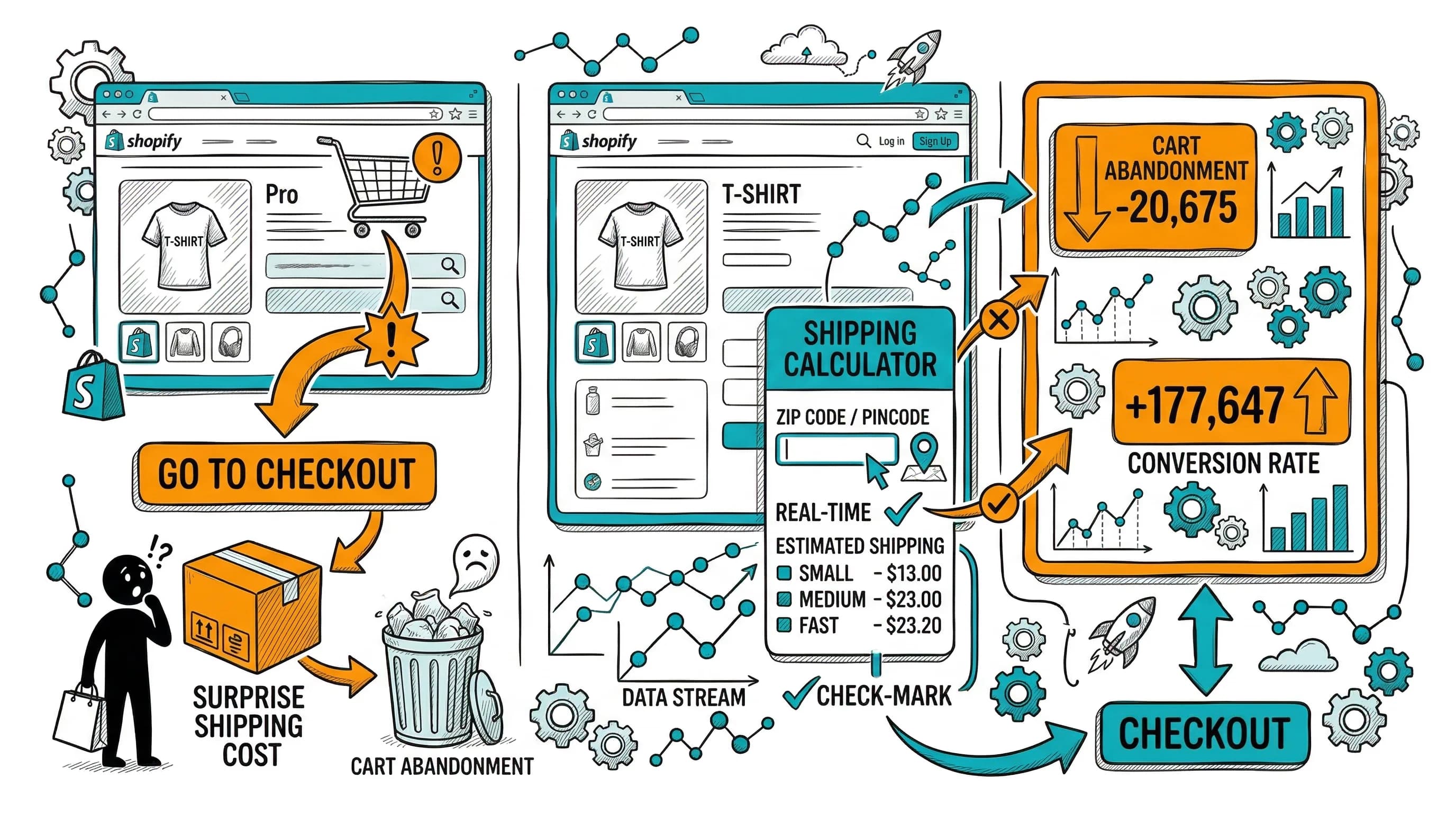
The highest-ROI WhatsApp automation. When a visitor adds to cart but doesn't purchase, trigger a WhatsApp message within 30–60 minutes.
What works:
What kills conversion: Hard-sell language, multiple CTAs, and messages that arrive more than 2 hours after abandonment (the intent window closes fast).
A typical D2C brand recovers ₹50,000–₹2,00,000 per month in revenue from cart abandonment WhatsApp flows alone, depending on traffic volume.
This is India-specific and massively underused. COD (Cash on Delivery) orders have a 25–40% return-to-origin (RTO) rate industry-wide — customers who mark an order but aren't home, or ordered impulsively and changed their mind.
A WhatsApp confirmation flow immediately after COD order placement — "Confirm your order with one tap" — reduces RTO by 30–40%. The message asks the customer to reply "YES" to confirm they want the order, and "NO" if they want to cancel (which is far cheaper than a returned shipment).
Brands like Mamaearth and Boat have COD verification flows that save crores in logistics costs annually.
Timing is everything. Send a WhatsApp message:
For Ayurveda and supplements brands like Kapiva, a 30-day reorder WhatsApp message converts at 20–35% for subscription-adjacent products. The personalization angle ("Based on what you ordered, you might want to try...") dramatically outperforms generic blast messages.
Diwali, Holi, Rakhi, Valentine's Day — Indian D2C brands run major sales events around these dates. WhatsApp broadcast campaigns to your opted-in list consistently outperform email blasts in both open rate and revenue per message.
Best practices for festive WhatsApp campaigns:
Step 1: Apply for WhatsApp Business API access You need a Meta Business Manager account with a verified business. Apply directly through Meta or via an official BSP (Business Solution Provider) like Interakt, Wati, AiSensy, or Zoko. Indian D2C brands typically use BSPs because they offer pre-built ecommerce integrations.
Step 2: Connect your phone number The number you use for WhatsApp Business API can't be used on the regular WhatsApp app. Use a dedicated business number (can be a virtual number).
Step 3: Get message templates approved All outbound messages must use pre-approved templates. Submit templates for cart recovery, order confirmation, and shipping updates. Approval takes 24–72 hours.
Step 4: Build your opt-in list You must have explicit consent. Collect opt-ins via:
Step 5: Integrate with your Shopify store Most BSPs have direct Shopify integrations. Events (cart abandoned, order placed, order shipped) trigger WhatsApp automations automatically.
WhatsApp marketing and on-site conversion rate optimization are more connected than most brands realize. If your WhatsApp cart recovery message brings someone back to your product page, the page itself still needs to convert.
This is where combining WhatsApp with personalization pays off. A visitor returning via a WhatsApp cart recovery link should see:
Use CustomFit.ai to build personalization rules that detect WhatsApp referral traffic (via UTM parameters) and show a conversion-optimized version of your product page to returning cart abandoners.
Keep messages under 160 words. Long WhatsApp messages get ignored. Lead with the most important information — what you're offering and why they should act now.
Personalize with name and product. "Hi Rahul, your Vitamin C serum is waiting" converts far better than "Hi, you left something in your cart."
Don't blast your full list more than once a week. WhatsApp is a high-trust channel — abusing it kills opt-in quality and increases blocks. Reserve it for high-value messages.
Test message timing. In India, WhatsApp messages sent between 9–11 AM and 7–9 PM consistently outperform afternoon sends. Run an A/B test on timing across a 2-week period.
Use social proof in cart recovery. "1,200 customers bought this last week" or "⭐ 4.8 stars from 3,400 reviews" within the cart recovery message meaningfully lifts recovery rates.
COD prominently for Tier 2/3 audiences. If your analytics show a high cart drop-off rate in smaller cities, a WhatsApp cart recovery message that leads with "COD available — no advance payment needed" can dramatically recover those sessions.
For related strategies, see our WhatsApp Commerce guide and the cart abandonment glossary entry.