From the conversion glossary
Concepts referenced in this article, defined.
Concepts referenced in this article, defined.
Run rigorous A/B tests and personalize every visit on Shopify or any storefront — no engineers required.
Building a testing culture means creating an environment where decisions about your ecommerce store are driven by data from experiments rather than by instinct, seniority, or whoever speaks loudest in meetings. Getting there requires leadership buy-in, and getting leadership buy-in requires speaking business language — revenue impact, competitive advantage, risk reduction — not testing jargon. This guide covers how to make the case, win early support, and sustain a testing culture through the inevitable friction of results that challenge assumptions.
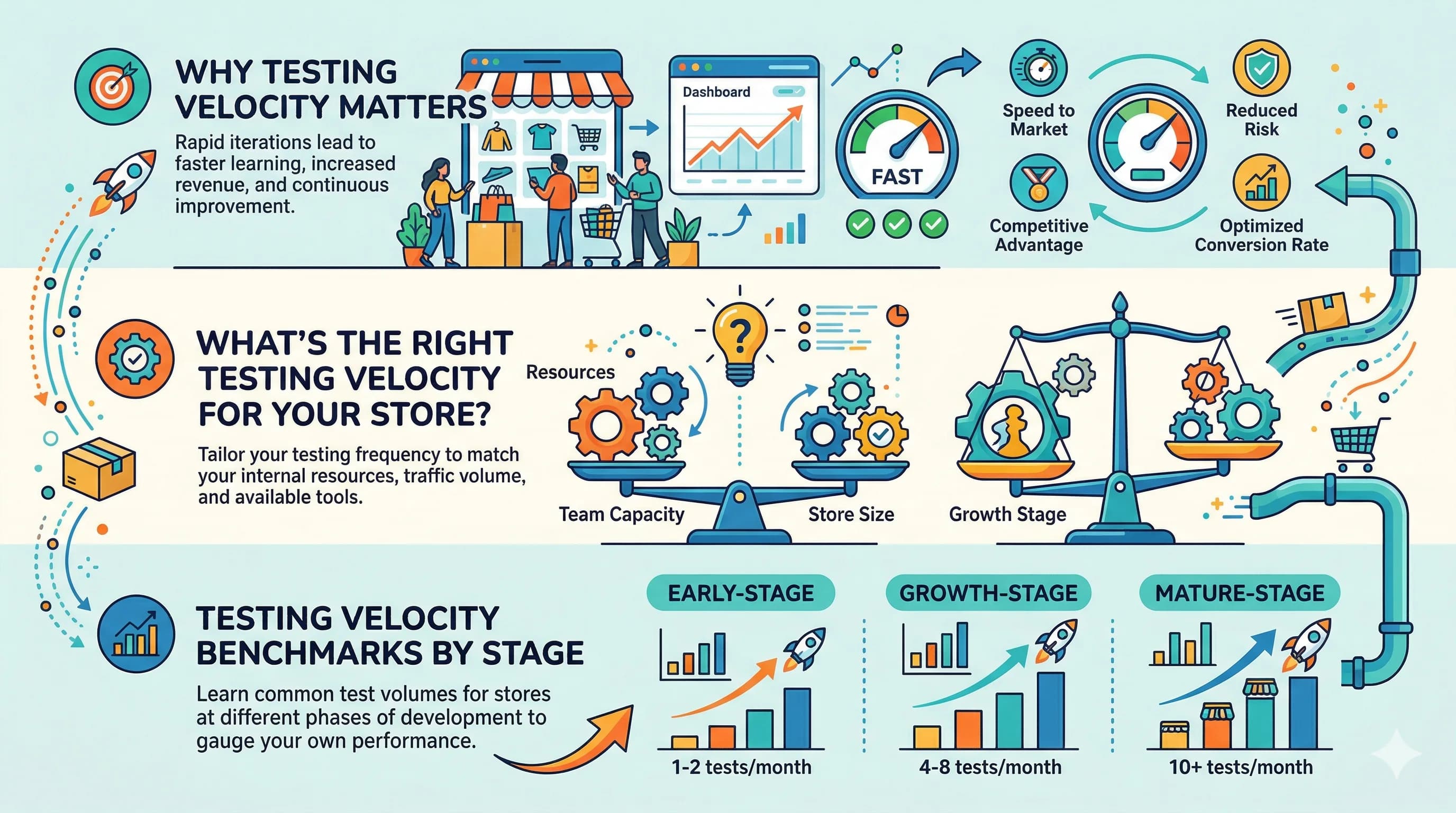
Teams that run 10 mediocre A/B tests per month outperform teams that run 2 carefully-designed tests per month. Testing is a volume game: more experiments mean more learnings, faster improvement, and higher accumulated CRO gains over time.
The constraint isn't usually tools or traffic. It's culture.
A team without testing culture:
A team with testing culture:
The business impact compounds. Teams with strong testing cultures generate 20–30% annual conversion rate improvements through accumulated small wins. Teams without testing culture make changes based on guesses, sometimes winning, sometimes losing, never knowing which.
Understanding the resistance helps you address it directly:
"We don't have time to test — we need results now." This is actually an argument for testing faster. Without testing, you might ship a change that hurts conversion — and you won't know it. The time cost of reversing a bad change exceeds the time cost of the test that would have caught it.
"I've done this for 15 years — I know what works." Experience is valuable but not infallible. Data from Google shows that CRO experts' predictions about test outcomes are correct only 35–40% of the time. Even expert intuition fails often enough that testing is worth the effort.
"Our traffic is too low to get significant results." Low traffic means longer tests, not impossible tests. And low-traffic stores can focus tests on high-impact pages where traffic concentrates (homepage, hero PDP, cart page). This is a resource constraint, not a reason to abandon testing.
"We've tested before and it didn't change much." Weak results often indicate weak hypotheses or poor test design, not that testing doesn't work. Review the previous program: were hypotheses evidence-based? Were tests run to significance? This is a process problem with a process solution.
The best way to get leadership buy-in is to show them the money. Present testing as a revenue protection and growth mechanism.
Frame it as risk reduction: "We're planning a homepage redesign. If we ship it without testing and it hurts our CVR by 10%, that's ₹X in monthly revenue lost. A 4-week A/B test costs us [tool cost + implementation time]. The expected value of the test is [avoided revenue loss] minus [test cost] = ₹X in protected revenue."
Frame it with opportunity cost: "If we can run 8 tests per month and 30% produce winners with an average 5% CVR improvement, we'll compound to a 15–20% CVR improvement over the year. At our current revenue, that's ₹[X] in annual impact."
Use competitor reference: If you can point to a competitor who visibly A/B tests (you can often tell from changes you observe on their site), that creates urgency: "Our competitors are running experiments. We're not. They're learning faster."
Start with a specific number: Don't ask for an "experimentation program." Ask for: "I'd like permission to run 2 tests per month for the next quarter using [tool], which costs ₹8,200/month. My goal is to demonstrate [specific metric improvement] by [date]."
The fastest way to build credibility is a visible win early in the program.
Choose your pilot test strategically:
Good pilot tests for Indian D2C brands:
Run the test to full statistical significance. Document the result clearly: "We tested X vs. Y. X produced [metric] of [value]. Y produced [metric] of [value]. The difference is statistically significant at 95% confidence. If we implement X across similar pages, we estimate ₹[X] in annual revenue impact."
Present this to leadership in business terms. A win validates the program; even a loss (no significant difference) shows the value of not shipping a change based on assumption.
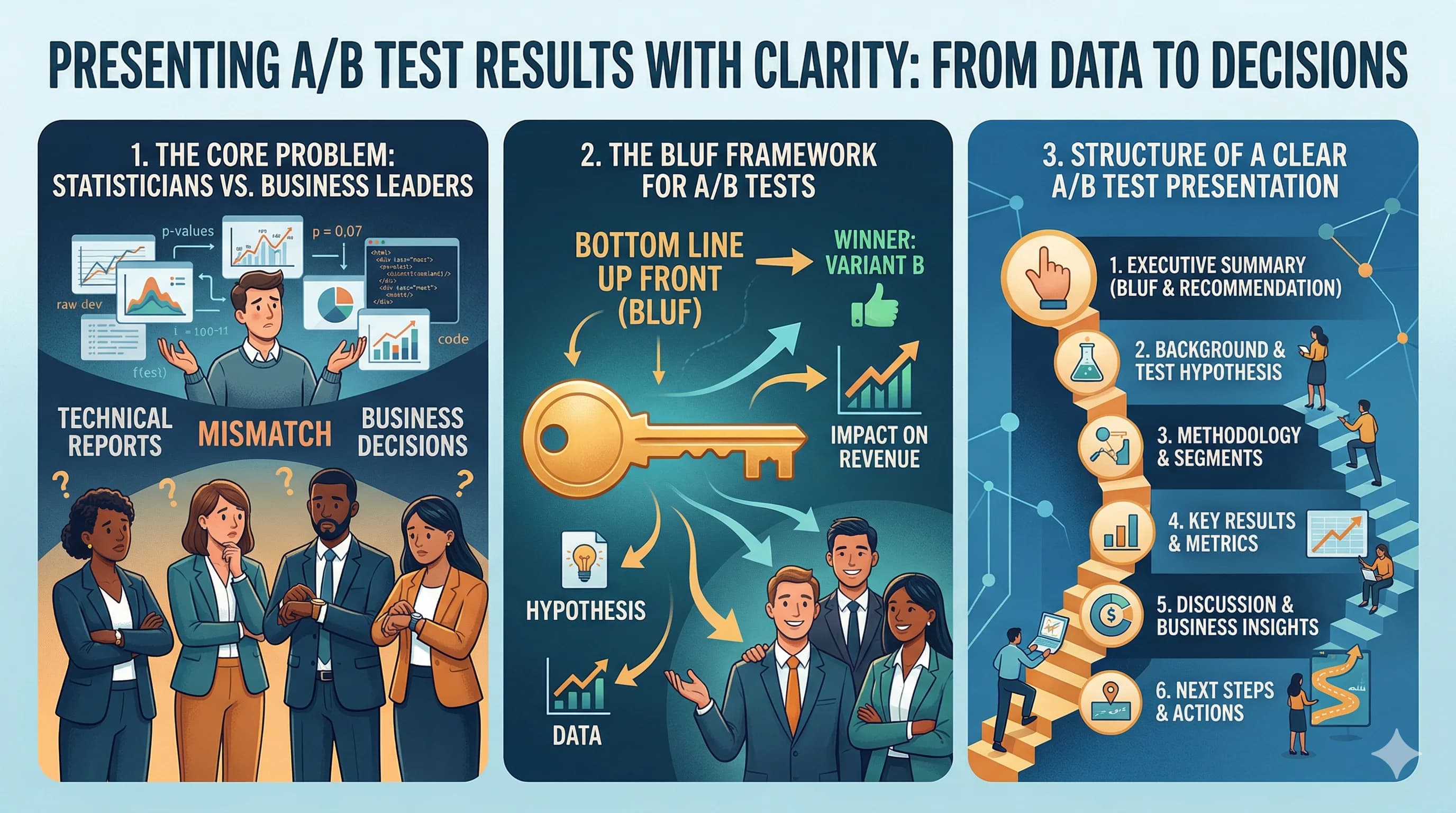
Leadership reports should be simple and business-focused:
One-page test summary:
Avoid in leadership communications:
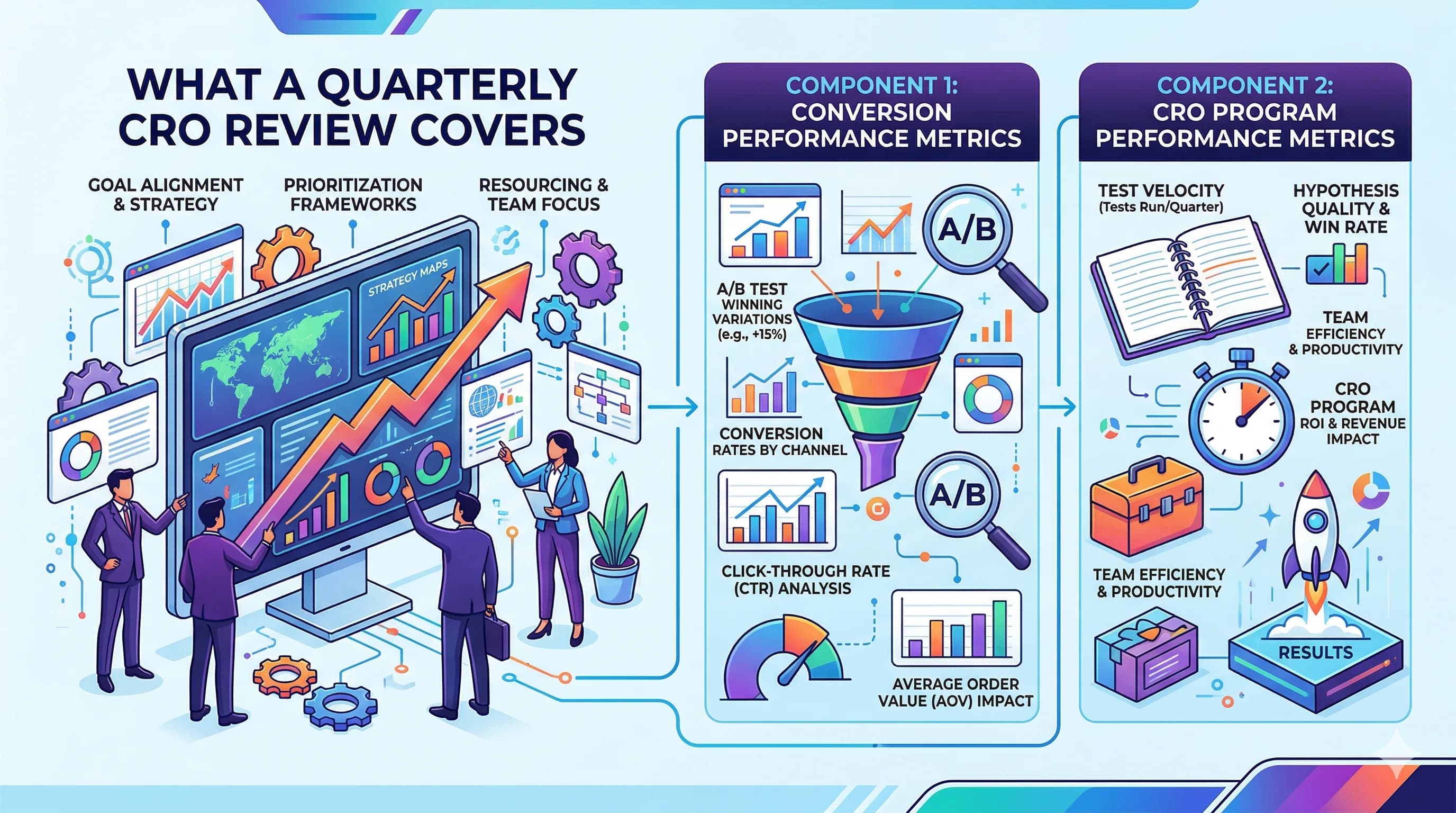
Monthly CRO report:
This report format makes the program tangible and business-relevant to leadership.
The real test of testing culture is when results challenge leadership assumptions.
Scenario: Leadership was certain that adding a "founder's story" section to the homepage would increase conversion. The test shows it has no significant impact.
Wrong response: "The test must be wrong. Ship the change anyway."
Right response: Present the data clearly. Explain that "no significant impact" is a valid and valuable result — it tells you the story section didn't move the needle, which means you don't need to prioritize it. Ask: "What would it take for you to be convinced the data is right?"
This conversation — handled well — is more valuable than the test result itself. It's the moment where testing culture either takes root or dies.
Tips for these conversations:
A testing culture becomes self-sustaining when more teams start generating hypotheses and requesting tests.
Product team: If engineering builds it, they should also want to test it before full rollout. Introduce feature flags vs. A/B tests to their workflow.
Marketing team: Email subject line tests, landing page tests, ad creative tests all connect to the same experimentation mindset. Share testing learnings in cross-functional standups.
Customer success: Support teams see buyer friction daily. Their input should be the best source of hypotheses. Create a simple channel (Slack channel, monthly meeting) where support observations become hypothesis candidates.
Hiring: When hiring growth, product, or marketing roles, explicitly value experimentation mindset. "Give me an example of a test you ran and what you learned" should be a standard interview question.