From the conversion glossary
Concepts referenced in this article, defined.
Concepts referenced in this article, defined.
Run rigorous A/B tests and personalize every visit on Shopify or any storefront — no engineers required.
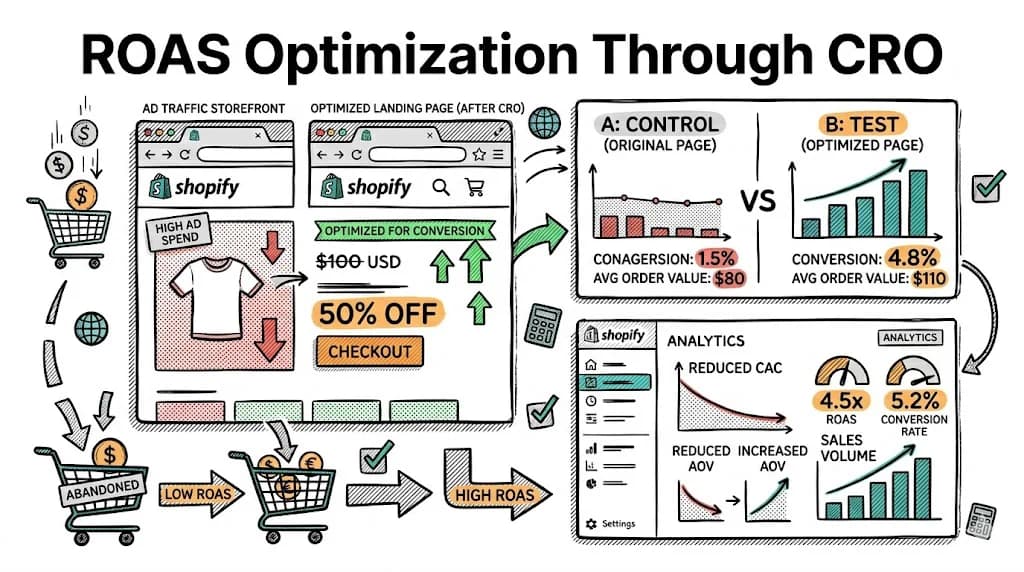
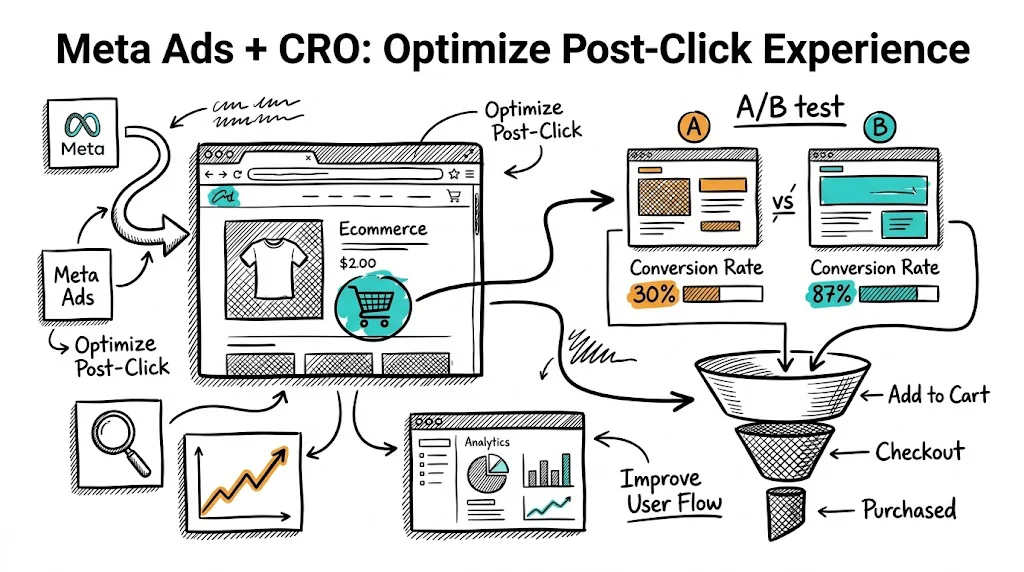
Most brands spend 90% of their optimization budget on Meta ad creative and 10% on what happens after the click — but the landing page experience is where most conversions are actually won or lost. A compelling ad that sends a visitor to a mismatched, slow, or trust-deficient landing page is wasted spend. Optimizing your post-click experience for Meta traffic can lift your effective ROAS by 30–50% without changing a single ad.
When someone clicks your Instagram ad, they've made a micro-commitment: "this looks interesting, I want to learn more." That interest lasts about 4 seconds on the landing page. If those 4 seconds don't confirm the promise made in the ad — the same offer, the same aesthetic, the same emotional angle — the visitor bounces and you've paid for nothing.
This "ad-to-page message mismatch" is the most common and most costly mistake in D2C paid advertising. The ad for Bellavita's "Luxury fragrance under ₹699" campaign should land on a page that immediately shows the product, the price, and the exact claim from the ad — not the homepage or a generic collection page.
The fix isn't complicated, but it requires deliberate attention to what your ad says vs. what your landing page says.
The headline on your landing page should mirror the core claim in your ad creative within the first 3 seconds of page load. If your ad says "India's #1 vitamin C serum, now ₹299," your product page headline should echo "India's #1 vitamin C serum" and display the ₹299 price visibly above the fold.
Message match doesn't mean copying the ad verbatim. It means maintaining emotional continuity — the visitor should feel they've arrived at the right place, not been redirected.
Meta ads traffic is predominantly mobile. Indian mobile networks on 4G have average speeds of 15–25 Mbps, but page load is still critical — every additional second of load time increases bounce rate by 7–12% for mobile visitors. A page that takes 5 seconds to load on mobile will lose a quarter of your Meta ad clicks before they even see your offer.
Optimize for mobile page speed first. Compress images, defer non-critical JavaScript, and use lazy loading. Test your landing page on Google PageSpeed Insights after any design change. See our page speed and conversion rate guide for a detailed breakdown.
Meta ad visitors, especially cold traffic, are skeptical. They clicked because the creative was interesting — but they don't know your brand. Your landing page needs to resolve that skepticism immediately with:
For Indian D2C brands, COD availability is a critical trust signal for first-time buyers from Tier 2 and 3 cities. Making it visually prominent on the product page (not buried in the checkout) can dramatically reduce bounce rates for this segment.
Meta and Instagram traffic is 80–90% mobile for most D2C brands. Your product page needs to be designed mobile-first, not adapted from desktop:
The most advanced post-click optimization treats different Meta ad audiences differently on your landing page.
Cold traffic (interest-based audiences): These visitors don't know your brand. Lead with social proof and credibility. Your hero section should answer "why should I trust this brand?" before "why should I buy this product?"
Warm traffic (video view / page engagement retargeting): These visitors have seen your brand before. They don't need the brand introduction — they need a reason to act now. Show urgency (limited stock, sale ending), specific offers (bundle deals, first-order discount), or remind them of the specific product they engaged with.
Hot traffic (cart abandoners / past site visitors): They were almost buyers. Your landing page should show the exact product they viewed, address the likely objection (price? trust? shipping cost?), and make the path to purchase frictionless.
This type of segment-aware landing page personalization is where tools like CustomFit.ai create compounding value. Using UTM parameters from your Meta ads, you can show different versions of your product page hero to cold vs. warm vs. hot traffic — each optimized for where that visitor is in their purchase journey. This approach typically lifts overall Meta ads CVR by 25–40% compared to a single undifferentiated landing page.
A/B testing your landing page for Meta traffic specifically — not your entire site traffic — gives you much cleaner signal. Meta ad visitors have different intent and behavior patterns than organic visitors or email traffic. A hero section optimized for Meta cold traffic might actually hurt conversion for returning email subscribers.
Set up UTM-segmented tests:
High-impact tests for Meta ad landing pages:
Landing page bounce rate by source: Compare your Meta traffic bounce rate to email and organic. If Meta bounce rate is >70% and email is <40%, your landing page isn't matching Meta visitor expectations.
Add-to-cart rate by segment: Break down add-to-cart rate by cold, warm, and hot audiences. Your personalization efforts should close the gap between warm audience performance (typically 2–3x higher than cold).
Conversion rate by ad creative x landing page: The combination that matters is the full unit — creative + landing page. A winning ad with a weak landing page is less profitable than a moderate ad with a great landing page.
Cost per acquisition (CPA) over time: If your post-click optimization is working, CPA should decrease even as ad spend stays flat — because more of the paid clicks convert.
Never send Meta ad traffic to your homepage. The homepage serves everyone. Paid traffic should go to a product page or dedicated landing page that matches the specific ad.
Match image aesthetics, not just text. If your ad uses warm, golden-hour photography, your landing page hero image should use similar tones. Visual discontinuity creates subconscious distrust.
Add urgency that's real. Fake countdown timers ("offer ends in 23:47:12" that reset on every visit) are increasingly distrusted by Indian consumers. Use real scarcity — actual stock levels, actual sale end dates.
Test your landing page on a 4G connection. Open Chrome DevTools, throttle to "Fast 4G," and experience your landing page as most of your visitors do. The result is often humbling.
Review your Meta Pixel events. Ensure AddToCart, InitiateCheckout, and Purchase events are firing correctly in Meta's Events Manager. Misattribution in Meta's data means your campaign optimization is working on incorrect signals.
Related reading: Google Ads Quality Score & Landing Page CRO | How to A/B Test Without Hurting Paid Ads | Landing page optimization guide.