From the conversion glossary
Concepts referenced in this article, defined.
Concepts referenced in this article, defined.
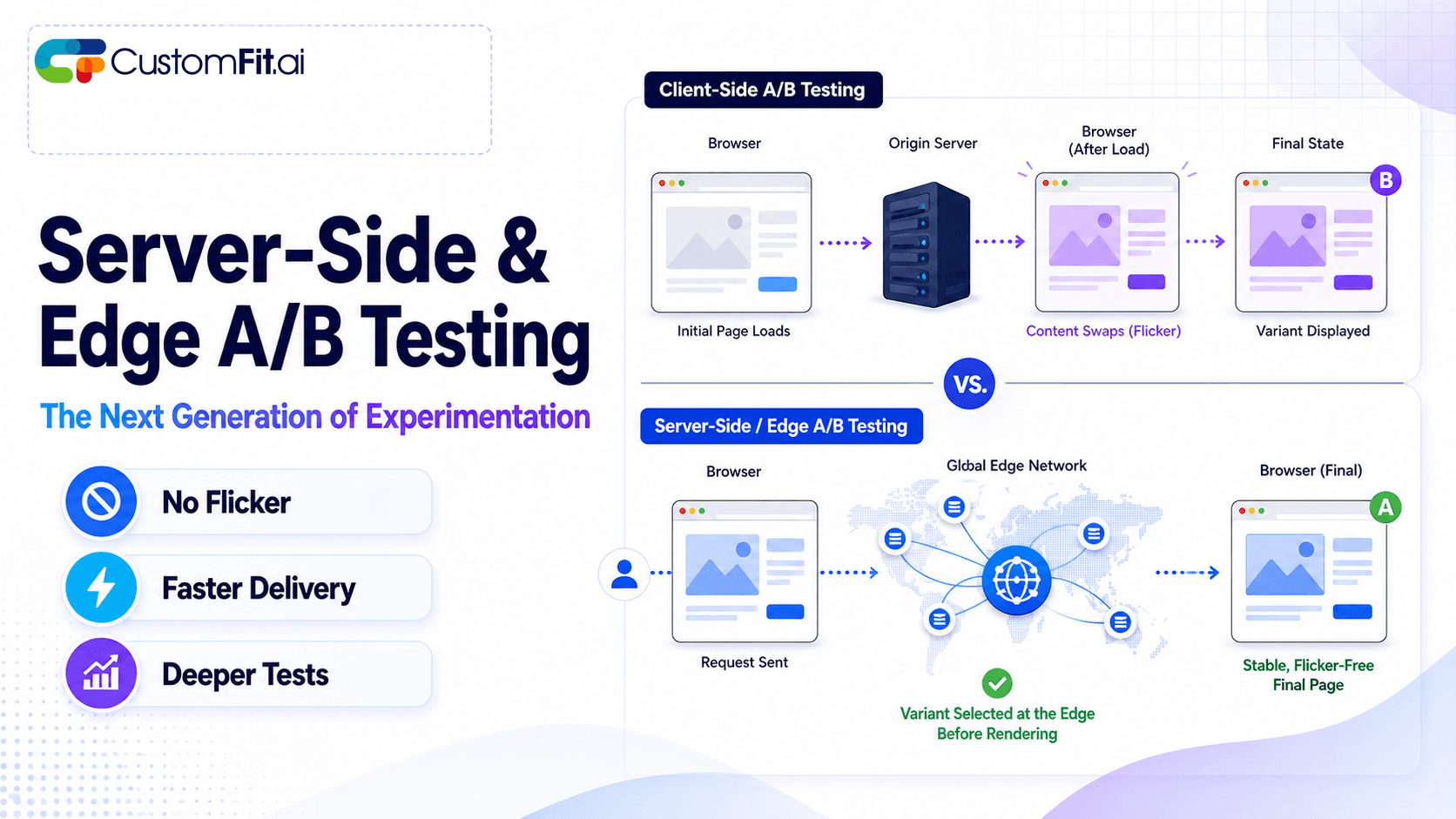 ab testing
Server-side A/B testing and edge experimentation explained - how they eliminate flicker, improve speed, and where they fit vs client-side testing.
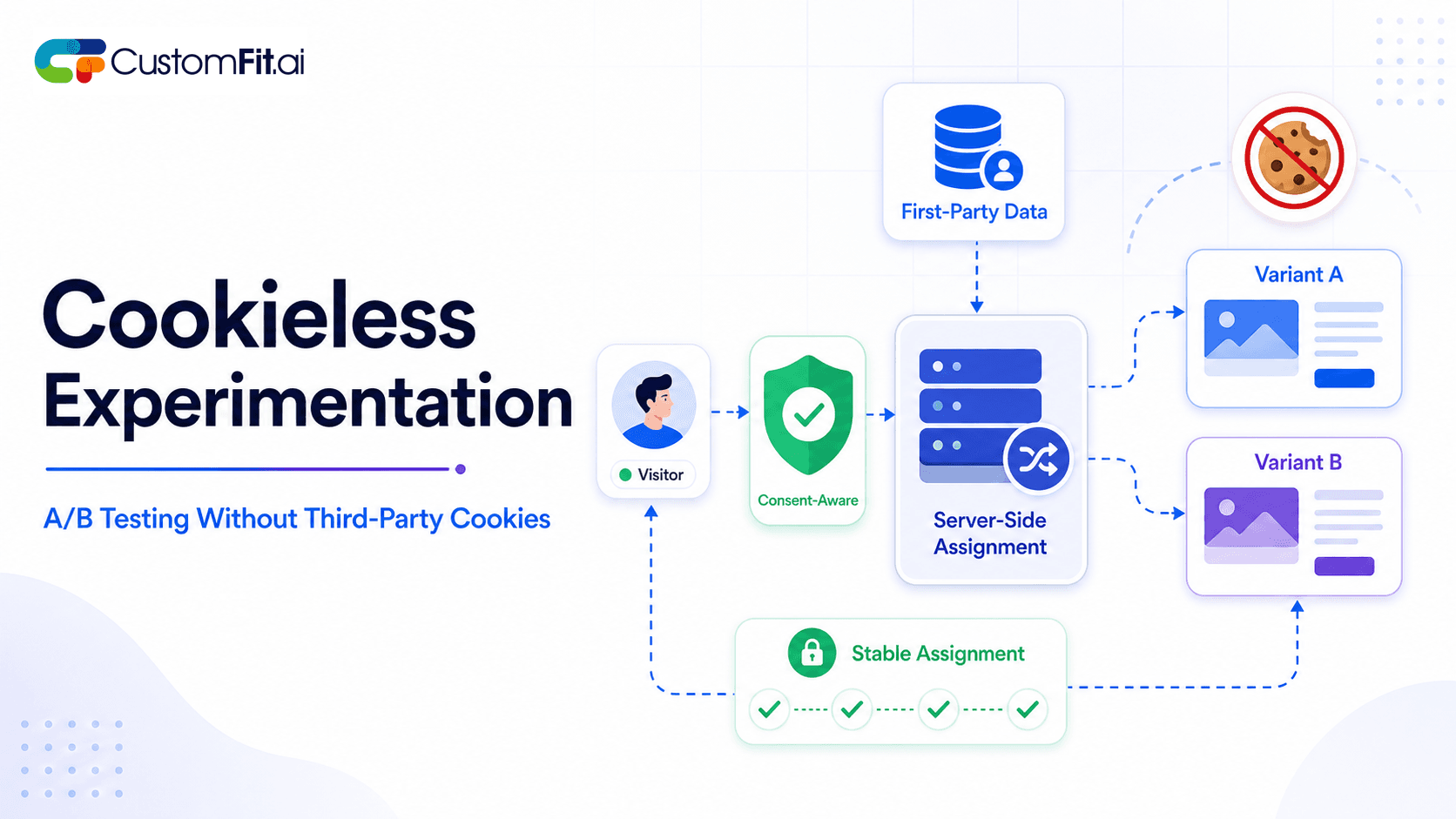 ab testing
How to run cookieless A/B testing correctly in 2026 - first-party data, GDPR compliant methods, and what actually changed with third-party cookies.
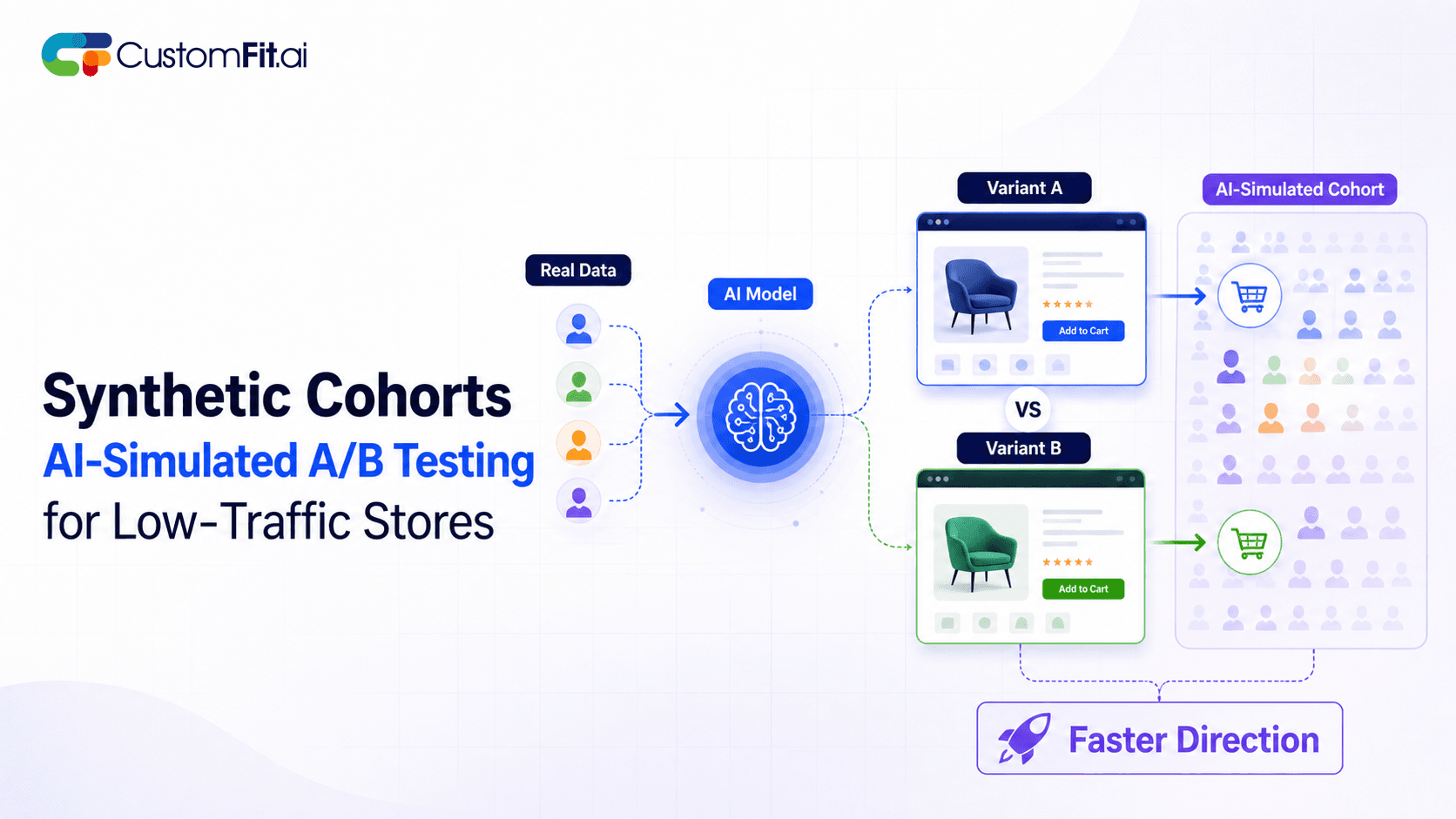 ab testing
Not enough traffic to A/B test properly? Here's how synthetic cohort testing and AI-simulated experimentation help low-traffic stores test with confidence.
Run rigorous A/B tests and personalize every visit on Shopify or any storefront — no engineers required.
Fitness equipment is a considered purchase. A customer shopping for a treadmill or adjustable dumbbell set will visit your store multiple times, compare specs, watch videos, and hesitate at checkout. Each of these touchpoints is an A/B testing opportunity. The 10 ideas below are ranked by expected impact for D2C fitness brands — from entry-level resistance bands at ₹499 to commercial-grade multi-gyms above ₹1 lakh.
Average CVR for fitness equipment stores sits around 1–2%, lower than general ecommerce because of high consideration time and price sensitivity. The good news: small page changes compound. A 2% absolute CVR improvement on ₹80 lakh monthly revenue is ₹1.6 lakh in additional monthly sales. Split testing is the most reliable path there.
Before running any test, define your hypothesis clearly: "We believe showing no-cost EMI options above the fold will increase checkout initiations by reducing price objection." This discipline keeps tests focused and results interpretable.
Description: Move the EMI breakdown (e.g., "₹1,499/month for 12 months, 0% interest") from the fine print below the product description to immediately below the product price.
Why it works: Price is the #1 objection for gym equipment. Making the monthly cost the headline price removes the sticker shock of the full ₹17,988 and reframes the purchase as affordable. This directly addresses loss aversion around large lump-sum payments.
Best for: Products priced above ₹5,000 — treadmills, exercise bikes, multi-gyms.
Expected lift: 12–20% checkout initiation rate.
Description: Replace the static product image gallery with a short 60–90 second demo video showing the equipment in use, with real customer testimonials in the last 15 seconds.
Why it works: Customers can't test gym equipment before buying online. Video reduces uncertainty and builds confidence. Brands like Decathlon India have seen significant lifts from in-use video content.
Best for: Multi-function equipment, barbells, cable machines, rowing machines.
Expected lift: 8–18% add-to-cart rate.
Description: Add a prominent "Free Delivery + Professional Installation in Delhi NCR / Mumbai / Bengaluru" badge near the CTA button, visible above the fold on desktop and mobile.
Why it works: Installation anxiety is a hidden objection for heavy equipment. Removing it explicitly — rather than burying it in FAQs — at the moment of decision drives action.
Best for: Heavy equipment requiring assembly: treadmills, Smith machines, benches.
Expected lift: 6–14% checkout initiation rate.
Description: Show different homepage hero sections based on visitor's stated goal — "Lose Weight," "Build Muscle," "Home Gym Setup," "Rehabilitation" — captured via a quick quiz on first visit.
Why it works: A person building a home gym has different needs than someone rehabilitating a knee injury. Relevant product surfacing reduces browse time and increases purchase intent. This is audience split testing applied to personalisation.
Best for: Stores with diverse product ranges across goals.
Expected lift: 10–15% engagement and click-through rate on featured products.
Description: Replace the single-product spec sheet with a side-by-side comparison table showing your product vs. two competitors on key metrics (weight capacity, warranty, motor power, dimensions).
Why it works: Fitness customers are research-heavy buyers. Giving them the comparison they're going to do anyway — on your page — keeps them on your site and positions your product favourably.
Best for: Mid-range equipment where your specs are genuinely competitive.
Expected lift: 7–12% time-on-page and 4–8% CVR improvement.
Description: Test moving warranty information ("5-Year Motor Warranty | 2-Year Frame Warranty | 1-Year Parts") from the product description to a dedicated badge strip below the product title.
Why it works: Warranty is a primary trust signal for high-ticket fitness equipment. Customers scan for it and if they can't find it quickly, they leave. Making it scannable reduces friction at a key trust-building moment.
Best for: Motorised equipment: treadmills, exercise bikes, ellipticals.
Expected lift: 5–10% conversion rate improvement.
Description: Add a "Complete Your Home Gym" section on individual product pages showing a curated bundle (e.g., treadmill + yoga mat + resistance bands + water bottle at ₹24,999 vs. ₹29,500 individually).
Why it works: Customers setting up a home gym need multiple items. Bundling reduces decision fatigue and significantly increases AOV. This mirrors what brands like Boldfit have tested successfully.
Best for: Post-lockdown home gym setup segment, new fitness beginners.
Expected lift: 20–30% AOV increase on bundle purchasers.
Description: Display reviews sorted by "Most Recent" by default instead of "Most Helpful" or "Highest Rated."
Why it works: Recent reviews signal that a product is actively selling and that the company is still servicing customers well. For equipment, customers worry about after-sales support — recent reviews address that fear.
Best for: All product categories, especially electronics-enabled equipment.
Expected lift: 3–7% checkout initiation rate.
Description: Trigger an exit-intent popup for visitors who have spent more than 60 seconds on a product page and move to exit, offering a special "EMI from ₹999/month" or a limited-time discount.
Why it works: These are high-intent visitors who haven't converted. A targeted rescue offer addressing their price objection can recover 5–8% of exiting visitors.
Best for: Products above ₹8,000 with available EMI options.
Expected lift: 5–8% conversion rate on exiting visitors.
Description: Add a sticky "Add to Cart — EMI from ₹1,299/month" bar at the bottom of the screen on mobile product pages that remains visible as the user scrolls.
Why it works: Mobile visitors scroll extensively on product pages. A persistent, price-anchored CTA keeps the action option visible without requiring the user to scroll back up. Given that 70%+ of Indian D2C traffic is mobile, this has outsized impact.
Best for: All product categories, highest impact on mobile-first audiences.
Expected lift: 8–15% mobile add-to-cart rate.
| Test Idea | Difficulty | Expected CVR Lift | Best Page |
|---|---|---|---|
| No-cost EMI above fold | Low | 12–20% | Product page |
| Video demo vs. images | Medium | 8–18% | Product page |
| Free installation badge | Low | 6–14% | Product page |
| Goal-based personalisation | High | 10–15% | Homepage |
| Comparison table | Medium | 4–8% | Product page |
| Warranty messaging | Low | 5–10% | Product page |
| Home gym bundle CTA | Medium | 20–30% AOV | Product page |
| Review recency default | Low | 3–7% | Product page |
| Exit-intent EMI popup | Medium | 5–8% | Product page |
| Mobile sticky CTA | Low | 8–15% | Mobile product |
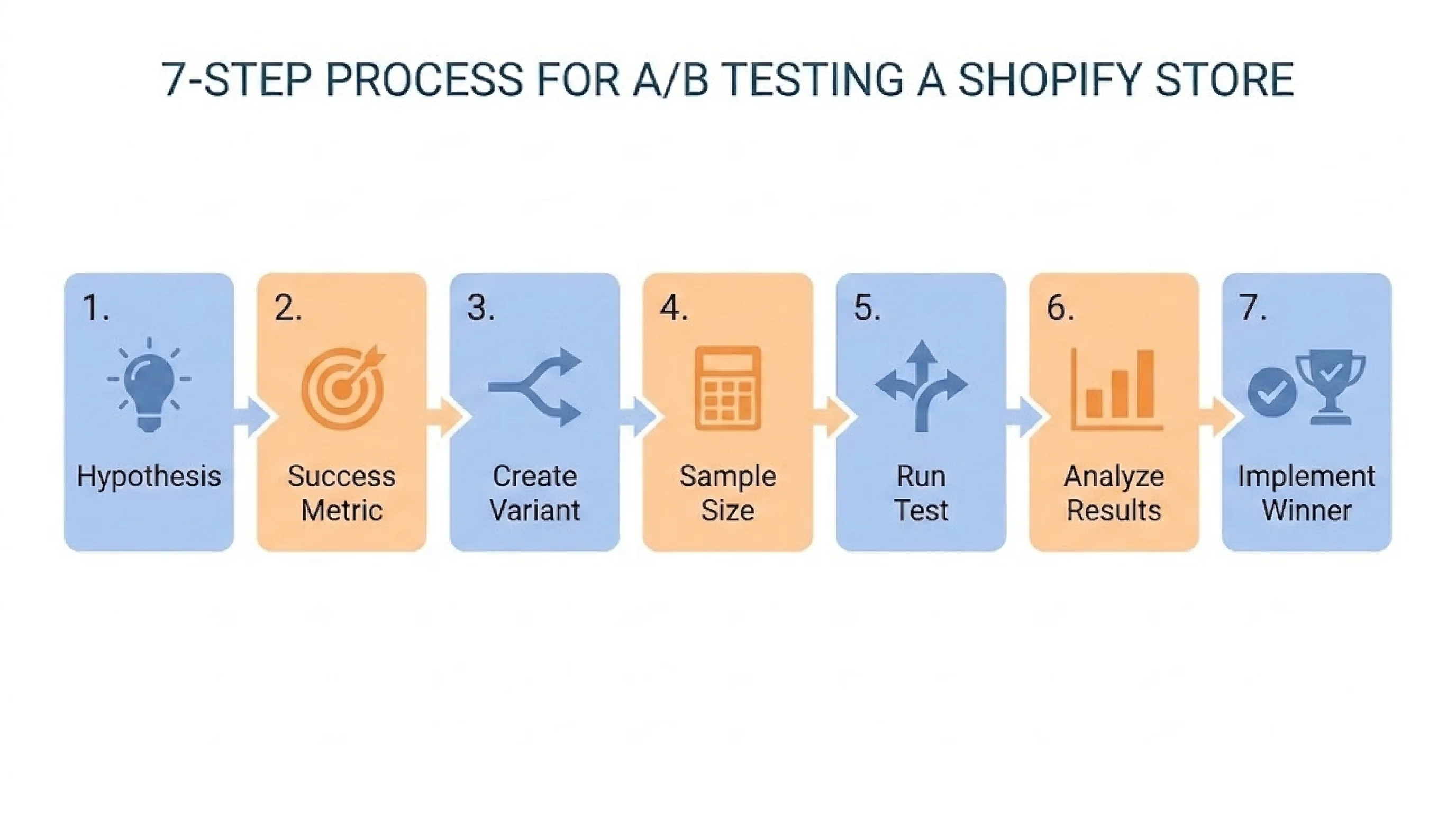
Prioritise mobile tests first. Indian fitness ecommerce skews 70%+ mobile. Tests that work on mobile have a larger revenue impact than desktop-only wins.
Test one variable at a time. Don't test EMI messaging AND video simultaneously on the same page — you won't know which drove the lift. Statistical significance requires clean isolation.
Align tests with seasonal demand. New Year (January), pre-summer (March–April), and post-Diwali (November) are peak fitness shopping seasons. Plan your test calendar accordingly and activate proven winners before these windows.
Track downstream metrics. A test that increases add-to-cart but decreases checkout completion is a net loss. Always track the full funnel from add-to-cart through to completed purchase.
Build a retargeting experiment. If a visitor has viewed your treadmill page 3+ times without buying, test personalised homepage banners and email sequences that show them the specific product they viewed with an EMI offer.
See also: checkout A/B testing ideas and mobile A/B testing ideas for related experiments that complement these product page tests.