From the conversion glossary
Concepts referenced in this article, defined.
Concepts referenced in this article, defined.
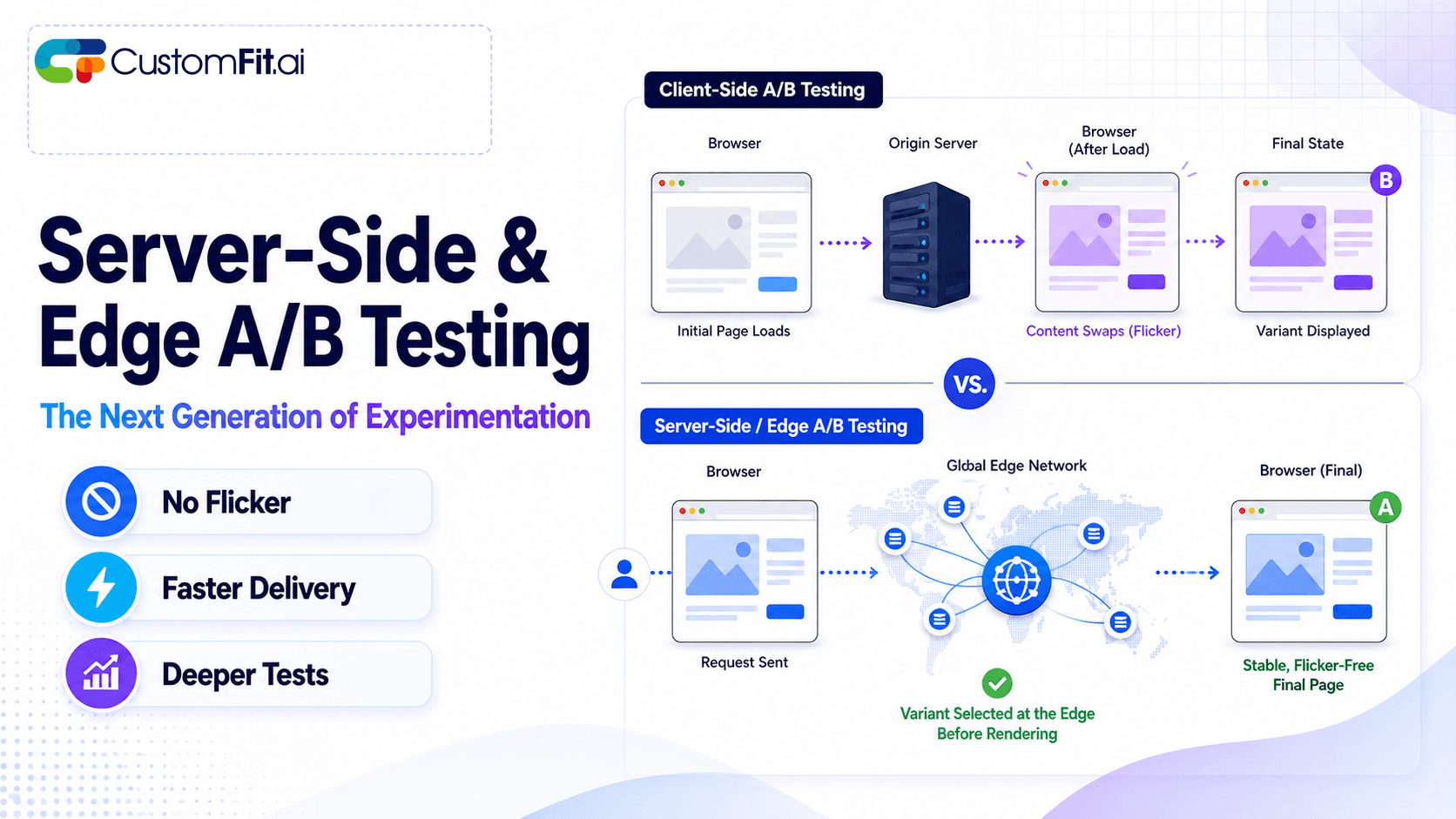 ab testing
Server-side A/B testing and edge experimentation explained - how they eliminate flicker, improve speed, and where they fit vs client-side testing.
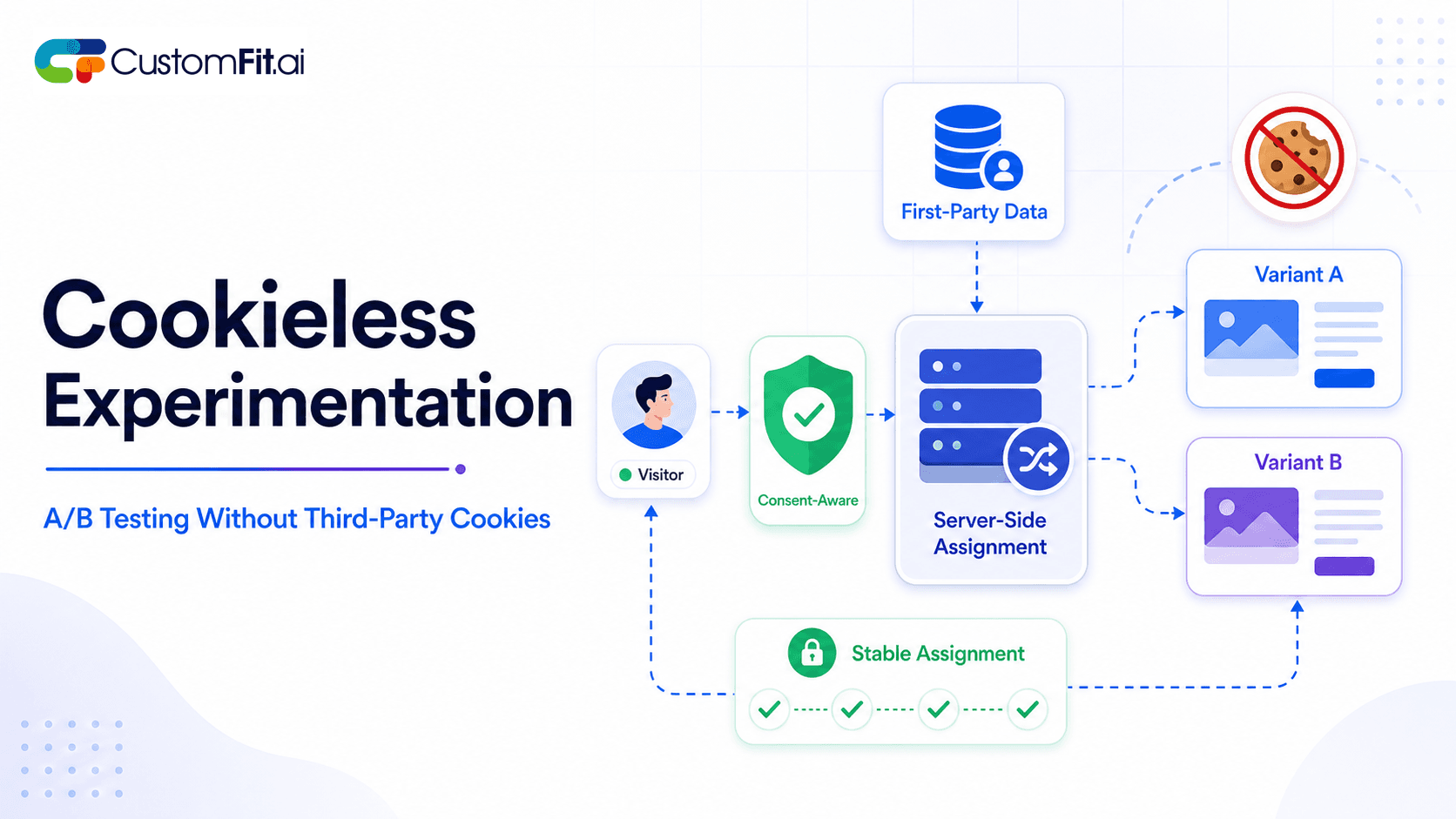 ab testing
How to run cookieless A/B testing correctly in 2026 - first-party data, GDPR compliant methods, and what actually changed with third-party cookies.
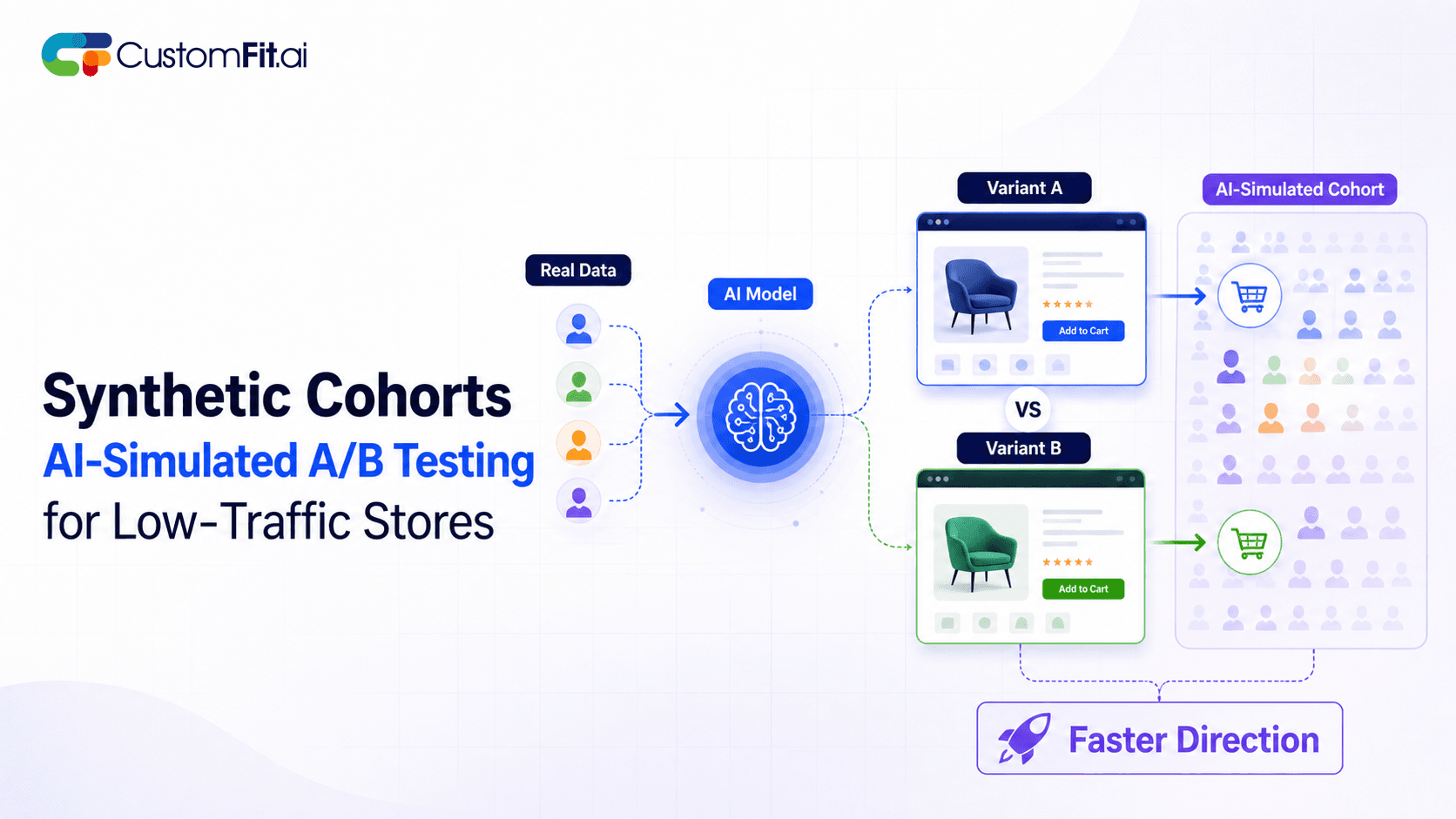 ab testing
Not enough traffic to A/B test properly? Here's how synthetic cohort testing and AI-simulated experimentation help low-traffic stores test with confidence.
Run rigorous A/B tests and personalize every visit on Shopify or any storefront — no engineers required.
A/B testing email subject lines means sending two versions of a subject line to different portions of your list and measuring which drives more opens, clicks, and purchases. For ecommerce brands, subject lines are the single highest-leverage copy element — they determine whether anyone reads the rest of your email. When done systematically, subject line testing consistently produces 10–20% open rate gains and measurable revenue lifts without spending a rupee more on acquisition.
Your email's design, product images, and body copy all matter — but none of them matter if the subject line fails to earn the open. Subject lines are also the fastest element to test: you can run a statistically valid experiment on a list of 5,000 subscribers in 48 hours.
For Indian D2C brands, the stakes are especially high. Email inboxes are crowded across categories — beauty, wellness, fashion, home. Brands like Mamaearth send 3–5 campaigns a week; Nykaa competes against dozens of brands for the same inbox slot. The brands that test consistently outperform those that guess.
Why subject lines beat other email elements for testing:
Step 1: Define your hypothesis
Every test starts with a hypothesis: "I believe [change] will increase open rates because [reason]." Example: "I believe adding '₹200 off' to the subject line will increase open rates because price anchoring triggers curiosity among price-conscious buyers."
Step 2: Choose one variable
Test only one element per experiment:
Step 3: Split your list correctly
Send Variant A to 25% of your list, Variant B to another 25%. Hold the remaining 50% for your winner. Most email platforms (Klaviyo, Mailchimp, WebEngage) support this split automatically.
Step 4: Define your success metric
Open rate is the primary metric for subject line tests. But also track click-to-open rate (CTOR) and revenue per email — a high-open subject line that attracts unqualified browsers has less value than a slightly lower-open line that brings buyers.
Step 5: Wait for significance
Do not call a winner after 2 hours. Wait at least 48 hours and verify you have reached 95% statistical significance. Then send the winning variant to the remaining 50% of your list.
Step 6: Document and iterate
Log every test in a shared sheet: hypothesis, variants, result, confidence level, and what you learned. Build a "subject line playbook" specific to your brand and audience.
Adding a subscriber's first name or referencing their last purchase is the fastest win for most brands. "Priya, your skin routine is incomplete 🌿" consistently outperforms "Your skin routine is incomplete 🌿" for brands like Plum and mCaffeine.
Test ideas:
Urgency drives action, but overuse creates fatigue. Indian D2C buyers respond strongly to time-bound offers, especially around COD availability windows and festive deadlines.
Test ideas:
Emojis increase open rates in some segments (mobile-first, younger buyers) and hurt in others (B2B, premium buyers). Test before assuming.
Test ideas:
Short subjects (under 40 characters) often win on mobile. Long subjects can win when the extra words add specific value ("Get 30% off Kapiva Aloe Vera Juice — only for members").
Test ideas:
Questions create an open loop the brain wants to close. But they can feel gimmicky if overused.
Test ideas:
| Industry | Average Open Rate | Top Quartile |
|---|---|---|
| D2C Beauty | 18–22% | 28–35% |
| D2C Wellness | 20–24% | 30–38% |
| D2C Fashion | 15–19% | 24–30% |
| General Ecommerce | 16–20% | 25–32% |
For context: Bellavita achieved an 11% CVR improvement by optimizing the full funnel including email touchpoints. Systematic A/B testing — starting with subject lines — was a core part of that program.
Subject lines that consistently outperform across Indian D2C brands:
Ending tests too early. A 5-point difference in opens at hour 4 can disappear by hour 48. Always wait for significance.
Testing too many variables. If you change length, emoji, and tone simultaneously, you cannot learn what worked. One variable per test.
Ignoring send time interaction. A subject line that wins at 8 AM may lose at 8 PM. If your list is large enough, test send time as a separate variable.
Only optimizing for opens. A clickbait subject line ("You won't believe this deal") can spike opens while tanking revenue. Track the full funnel.
Not segmenting by buyer stage. New subscribers respond differently than repeat buyers. A "welcome back" subject line is irrelevant to someone who has never purchased.
Build a swipe file. Every time you see a subject line that makes you open, save it. Brands like Boat, Pilgrim, and Kapiva run some of the most creative email programs in India — study them.
Test seasonally. Subject lines that work in January may fail in October. Festive season (Diwali, Holi, Eid) creates different emotional contexts — test accordingly.
Match subject line to body. The best open rate means nothing if the email disappoints. Ensure your subject line promise is delivered in the first three lines of body copy.
Run a test-per-week cadence. 52 tests per year compounds into a significant advantage. Even small wins (3–5% open rate lifts) translate to thousands of additional monthly visitors when multiplied across your list.
Use your learnings to write the next hypothesis. If personalization won, ask why — and test a more specific form of personalization. Build on winners rather than testing random elements.
A/B test your preview text too. The preview text appears next to the subject in most email clients and functions as a second subject line. Test it as a separate experiment once you've stabilized your subject line approach.
Related reading: