From the conversion glossary
Concepts referenced in this article, defined.
Define a push notification A/B test campaign schema, structure message variants, choose a traffic split, and measure each variant consistently.
Concepts referenced in this article, defined.
 ab testing
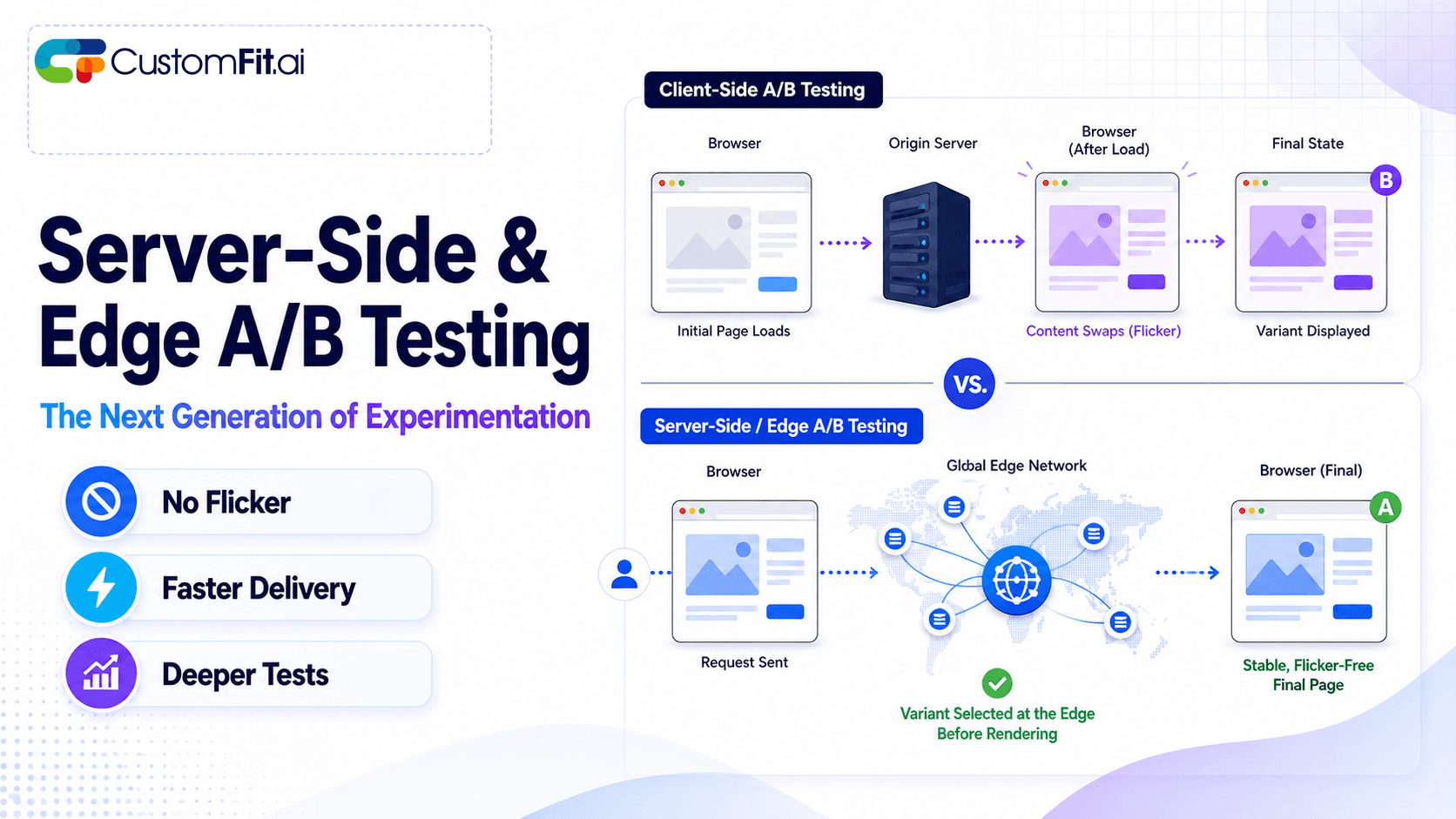
Server-side A/B testing and edge experimentation explained - how they eliminate flicker, improve speed, and where they fit vs client-side testing.
 ab testing
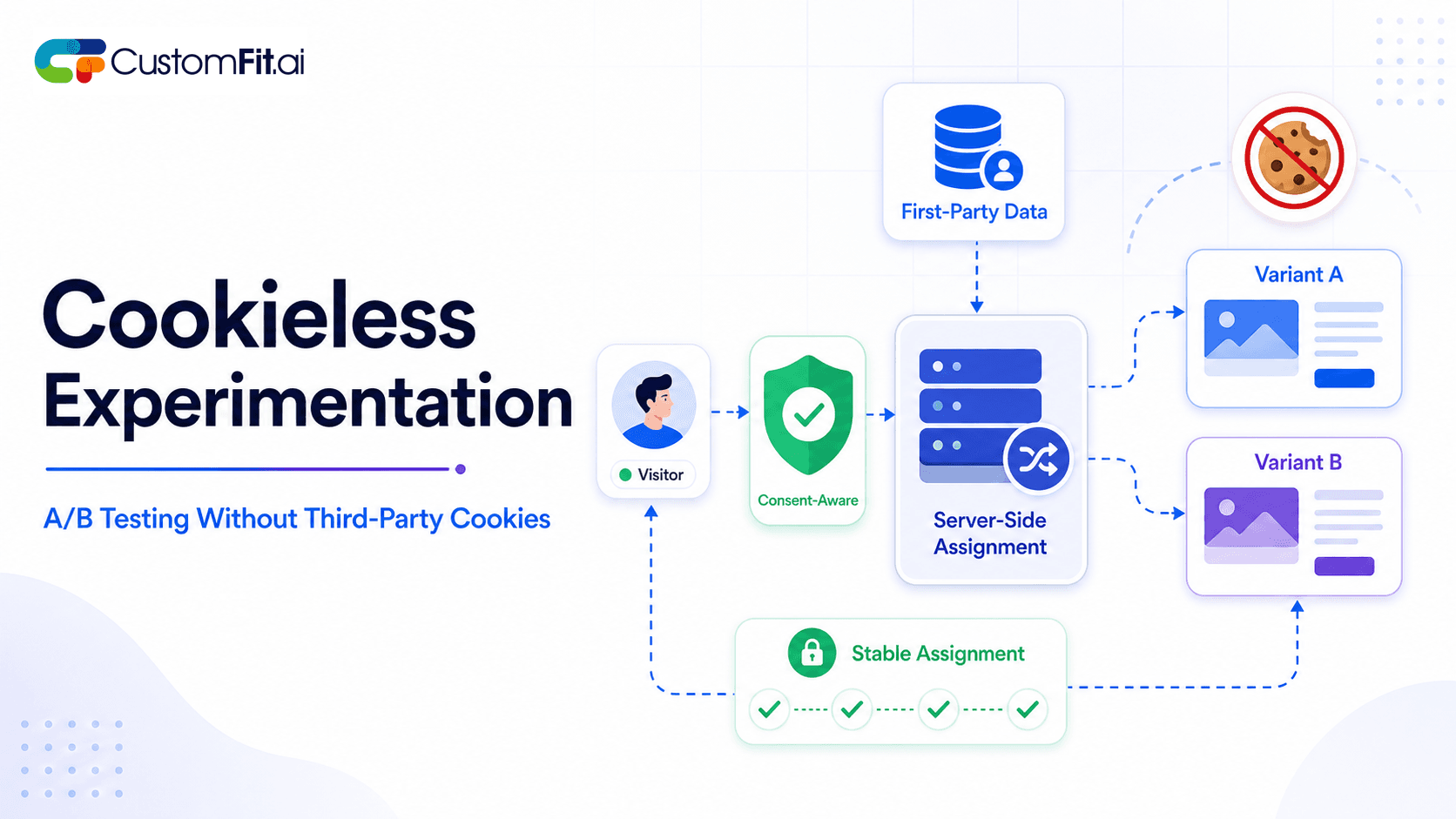
How to run cookieless A/B testing correctly in 2026 - first-party data, GDPR compliant methods, and what actually changed with third-party cookies.
 ab testing
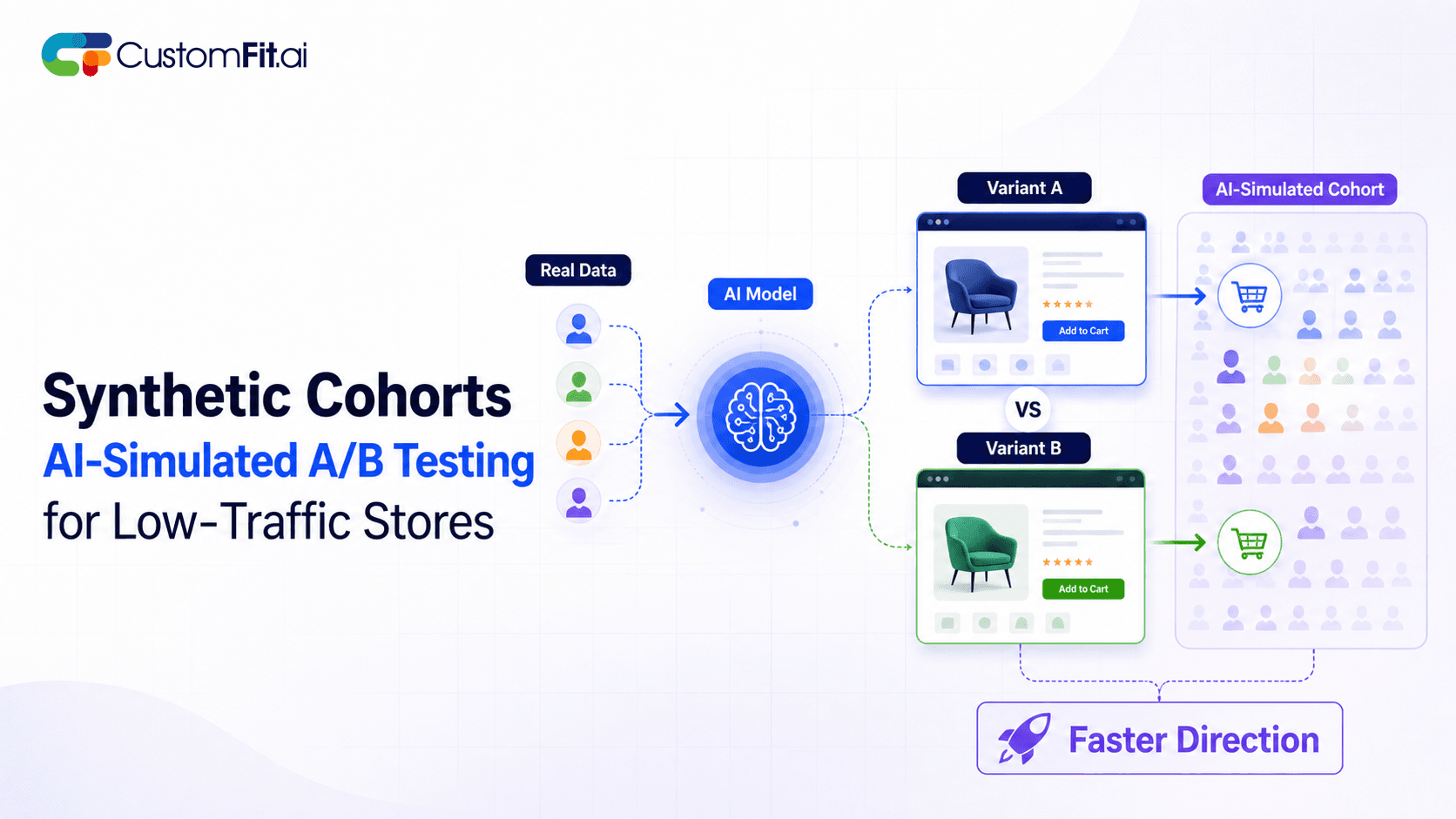
Not enough traffic to A/B test properly? Here's how synthetic cohort testing and AI-simulated experimentation help low-traffic stores test with confidence.
Run rigorous A/B tests and personalize every visit on Shopify or any storefront — no engineers required.
A push notification A/B test campaign schema should store the campaign ID, hypothesis, eligible audience, message variants, traffic weight for each variant, schedule, primary metric, guardrail metrics, attribution window, and status. Define variants as an array with stable IDs and complete notification payloads. For a two-variant test, start with a 50/50 split unless you have a documented reason to limit exposure, and keep each subscriber assigned to one variant for the whole campaign.
Keep campaign settings separate from the content and allocation of each variant. This makes the experiment easier to validate before launch and prevents reporting code from confusing a message label with a campaign identifier.
| Field | What it records | Example |
|---|---|---|
campaign_id | Stable identifier used across delivery and reporting | push_cart_2026_09 |
hypothesis | The single expected behavior change | A specific title will increase notification opens |
audience | Eligibility rules and exclusions | Cart abandoners who can receive push |
assignment_unit | The ID used to keep assignment consistent | subscriber_id |
variants | Message payload and traffic weight for every version | Control and variant B |
schedule | Start time, end time, and time zone | ISO 8601 timestamps with a named time zone |
primary_metric | The metric used to choose the winner | Notification click-through rate |
guardrail_metrics | Measures that can disqualify an apparent win | Opt-out rate and conversion rate |
attribution_window | How long an event counts after delivery | A window chosen before launch |
status | Campaign lifecycle state | draft, scheduled, running, or complete |
A compact, platform-neutral representation looks like this:
{
  "campaign_id": "push_cart_2026_09",
  "hypothesis": "A specific product reminder will increase notification CTR",
  "audience": {
    "segment": "cart_abandoners",
    "exclusions": ["push_opt_out"]
  },
  "assignment_unit": "subscriber_id",
  "variants": [
    {
      "variant_id": "control",
      "traffic_weight": 50,
      "payload": {
        "title": "Your cart is waiting",
        "body": "Return to finish your order"
      }
    },
    {
      "variant_id": "title_specific",
      "traffic_weight": 50,
      "payload": {
        "title": "Still deciding? Review your cart",
        "body": "Return to finish your order"
      }
    }
  ],
  "primary_metric": "notification_ctr",
  "guardrail_metrics": ["push_opt_out_rate", "conversion_rate"],
  "status": "draft"
}
The variant weights must add up to 100% of the experiment audience. Assign on a stable subscriber or device identifier, not separately on every send; otherwise one person can receive both versions and contaminate the comparison. If the campaign includes a no-message holdout, model that group explicitly rather than treating it as another notification payload.
Push notifications compete for attention on locked screens alongside messages from family, social apps, and every other brand the customer has installed. The difference between a notification that gets clicked and one that gets dismissed — or leads to an unsubscribe — often comes down to a single word in the title.
Indian D2C brands face a particularly crowded push environment. Consumers who shop across Nykaa, Mamaearth, Boat, mCaffeine, and Plum receive dozens of push notifications daily. Without testing, you are publishing based on intuition in a channel where intuition has a poor track record.
What makes push notifications uniquely testable:
Step 1: Choose your test variable
Pick one element to test. The most impactful variables, in order:
Step 2: Write your hypothesis
Example: "I believe leading with a ₹ discount in the title ('Get ₹300 off today') will increase CTR vs. a benefit headline ('Your skin routine just got better') because Indian shoppers are price-motivated and discount-first framing triggers immediate action."
Step 3: Split your audience randomly
Most push platforms (OneSignal, CleverTap, WebEngage, MoEngage) allow you to split subscribers randomly for A/B tests. Use a 50/50 split for push notification tests — unlike email where you hold a winner group, push notifications are typically sent to the full audience at once.
Step 4: Send simultaneously
Both variants must go out at exactly the same time. A 30-minute gap between variants introduces send-time bias that will contaminate your results.
Step 5: Measure the right metrics
Primary: Click-through rate (CTR) — percentage of recipients who tap the notification Secondary: Conversion rate — percentage of clickers who complete a purchase Tertiary: Opt-out rate — if a variant drives more unsubscribes, that "win" on CTR may be net negative
Step 6: Document and apply learnings
A test without documentation is a lost learning. Record every experiment in a running log and use winners as your new control for future tests.
The title is the first — and often only — line a user reads before deciding to tap or dismiss. Test these approaches:
Body copy expands the title promise. Test:
Time of day and day of week are among the highest-variance push notification variables:
Test at least two send times with matched content before drawing conclusions.
Push notifications with images (product photos, offer banners) consistently outperform text-only in ecommerce categories. Test:
On Android, you can add up to 3 action buttons. Test:
Use a chi-square test on your click counts. Most push platforms calculate this automatically, but understanding the inputs helps you design better tests:
| Subscribers per variant | Minimum detectable effect |
|---|---|
| 500 | ~8 percentage points |
| 1,000 | ~5 percentage points |
| 5,000 | ~2 percentage points |
| 10,000+ | ~1 percentage point |
Target 95% confidence (p < 0.05) before declaring a winner. For most ecommerce push programs, this means a minimum of 1,000 subscribers per variant.
Testing too many variables at once. Changing the title, image, and send time simultaneously makes it impossible to know what moved the metric. Test one variable per experiment.
Ignoring the opt-out signal. A notification variant that drives 10% more clicks but 5% more unsubscribes is probably net negative. Track both.
Sending to everyone before testing. Many brands send campaigns to their full list and then wish they had tested. Reserve 20% of your list for an ongoing test cadence before scaling winning variants.
Stopping at CTR. Push notifications are a gateway, not a destination. Track session depth, add-to-cart rate, and purchase rate for every campaign — not just click counts.
Ignoring notification fatigue. Sending more than 1–2 pushes per day accelerates opt-outs. Test frequency as a separate variable rather than assuming "more is better."
Match notification content to user segment. Buyers who purchased last week respond differently than subscribers who have never purchased. Segment first, then test within segments.
Test festive messaging early. Diwali, Holi, Valentine's Day, and Independence Day push notifications have a short window. Run your festive format tests 2–3 weeks before the event so you deploy proven variants during the peak window.
Personalize with purchase history. "[Name], you're almost out of your [product]" outperforms generic restock reminders. Most push platforms support this variable substitution.
Create a "push playbook". After 10–15 tests, you will have a clear picture of what works for your brand. Document winning formulas (e.g., "[Discount] + [product name] + urgency cue") and train your content team to write to them.
Connect push to the full A/B testing program. Learnings from push notification tests often inform email subject line and SMS copy decisions. Share data across channels.
Related reading: