From the conversion glossary
Concepts referenced in this article, defined.
A practical framework for discussing winning, losing and inconclusive A/B tests in growth, CRO and ecommerce job interviews.
Concepts referenced in this article, defined.
 ab testing
A/B testing isn't magic. Learn about the common myths that waste traffic and skew results, plus how to run smarter tests that improve conversions.
 ab testing
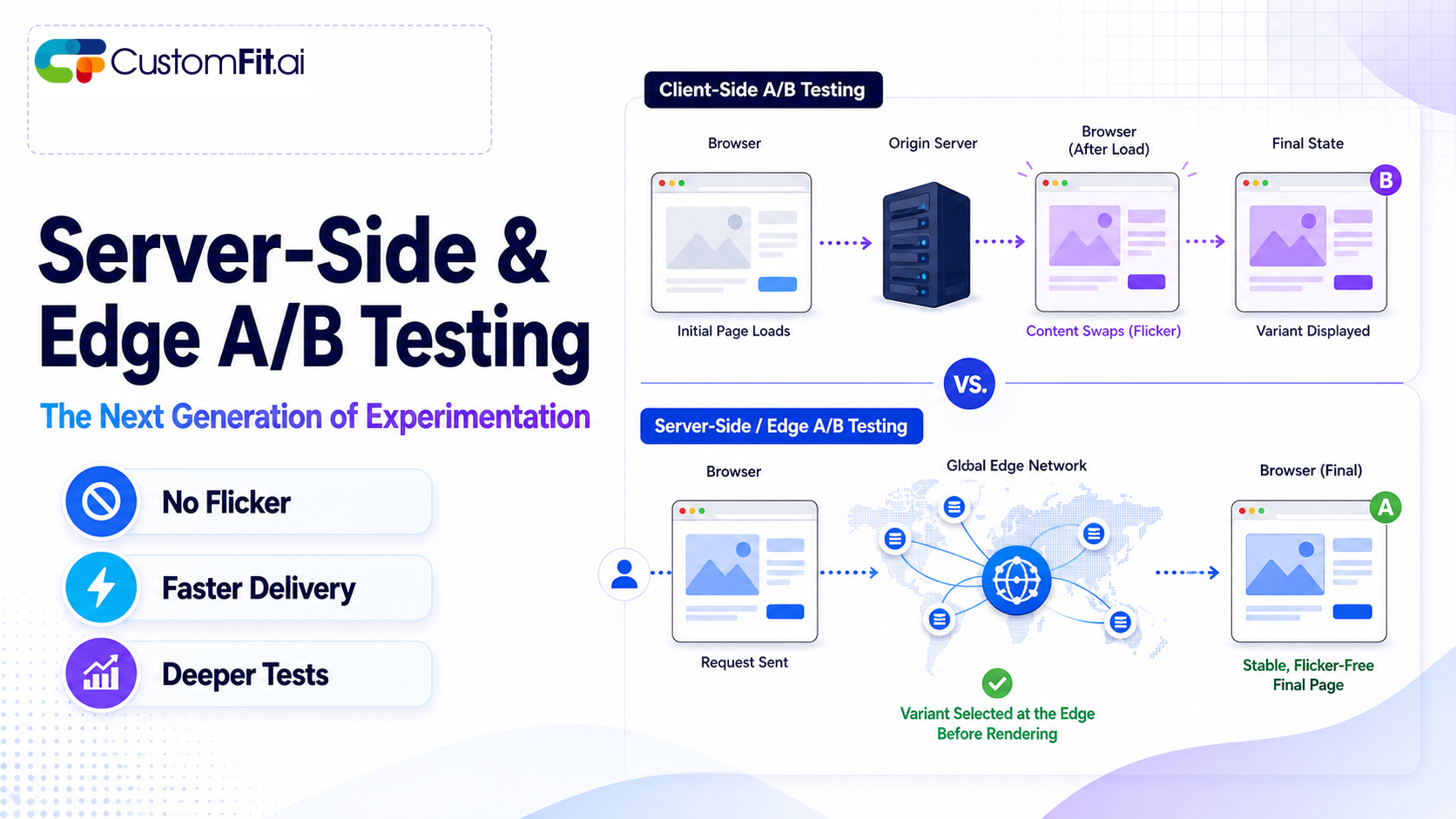
Server-side A/B testing and edge experimentation explained - how they eliminate flicker, improve speed, and where they fit vs client-side testing.
 ab testing
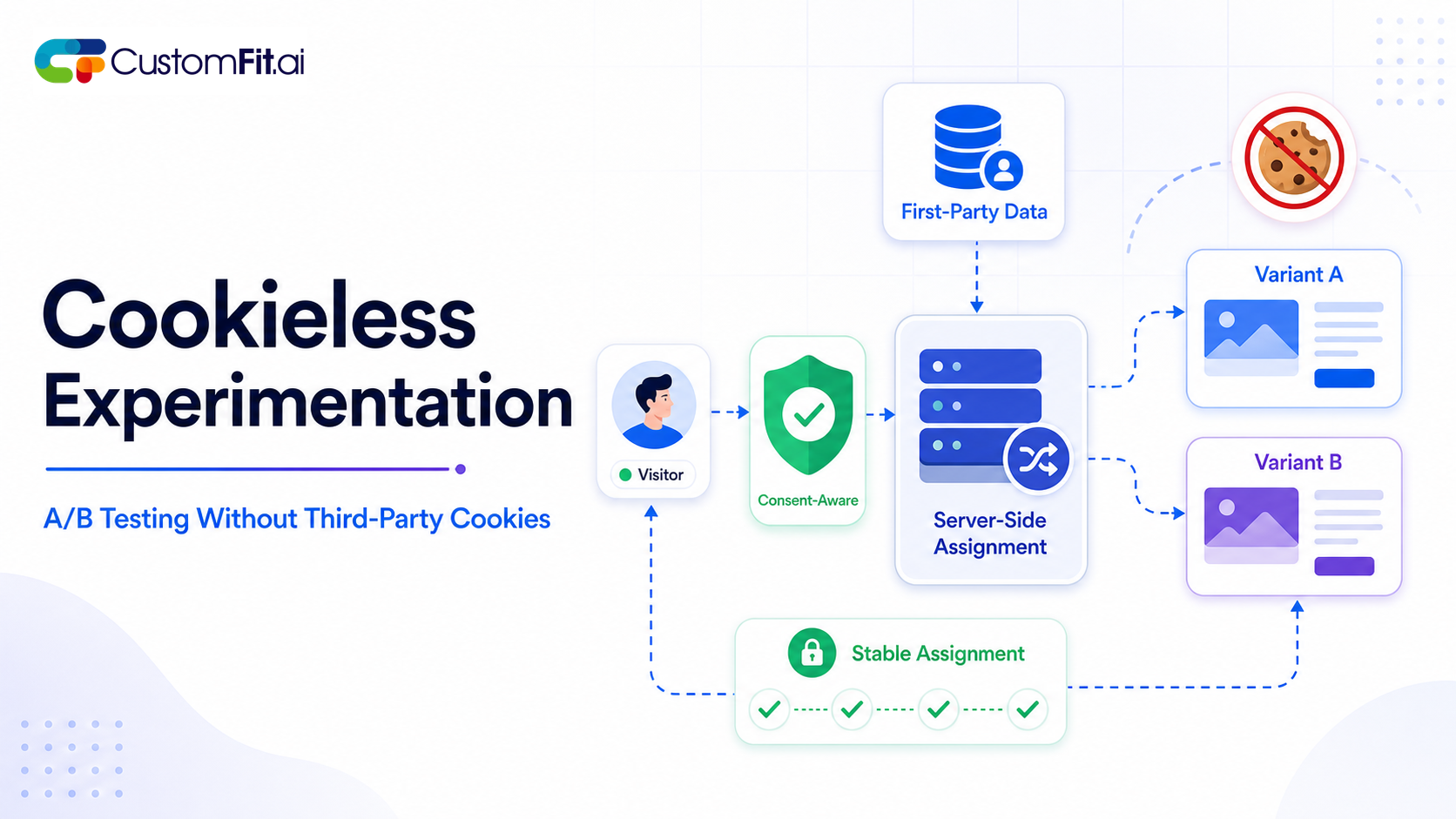
How to run cookieless A/B testing correctly in 2026 - first-party data, GDPR compliant methods, and what actually changed with third-party cookies.
Run rigorous A/B tests and personalize every visit on Shopify or any storefront — no engineers required.
If you work in ecommerce growth or conversion rate optimisation, your experiments are your portfolio. A designer brings a case study; you bring tests. And in almost every growth, CRO or ecommerce marketing interview, there is a moment where the hiring manager leans in and says some version of: "Walk me through a test you ran."
It sounds like the easiest question in the room. You ran the test. You know the result. But this is where a surprising number of strong candidates lose the interview, not because their work was weak, but because of how they described it.
The problem is that the people interviewing you for a growth role have usually run hundreds of experiments themselves. They know what a fragile result looks like. They know how often a "+27% conversion lift" turns out to be a novelty effect, a tracking bug or a test that was stopped the day it hit significance. So they are not just listening to your result. They are listening to how you think about evidence.
Here is how to talk about your experiments so that an experienced interviewer comes away trusting your judgement, not just your numbers.
When a hiring manager asks about a test, they are quietly checking four things:
Notice that "how big was the lift" is not on the list. A big number with no reasoning behind it worries an experienced interviewer more than a small number with clean reasoning.
Most candidates tell experiment stories in chronological order and run out of time before the interesting part. A tighter structure, borrowed from how good experimentation teams write up their tests, keeps you on track:
That last step is the one most people skip, and it is often the most impressive. "We rolled it out, and then realised the same message was hurting average order value for returning customers, so we split it by segment" shows far more maturity than the original win.
Keep the whole story to about two minutes. The interviewer will ask follow-ups on whatever part interests them, and that is where the real conversation happens.
The fastest way to earn trust in a growth interview is to mention the weaknesses of your own test before the interviewer has to dig for them.
Compare two answers to the same question.
Answer A: "We changed the add-to-cart button copy to 'Ships tonight' and conversion went up 27%."
Answer B: "We changed the add-to-cart copy to 'Ships tonight' and saw about a 27% lift in add-to-cart over two weeks. We were fairly confident in it, but two things made me cautious. The test ran during a promotion week, so traffic was unusually high-intent, and add-to-cart isn't revenue. So we kept it running a further two weeks outside the promotion and tracked completed orders. The lift held, but it settled closer to 10% on purchases, which is the number I'd actually stand behind."
Answer B has a smaller headline number and is far more convincing. It tells the interviewer that you understand seasonality, that you know the difference between a proxy metric and the business outcome, and that you will not walk into a leadership meeting with a number that collapses a month later.
A few honest caveats that interviewers respect:
None of these make you look weak. They make you look like someone who has run real experiments.
Almost every senior growth interviewer will eventually ask about a test that failed. Some candidates treat this as a trap and offer a disguised win: "It failed, but we learned so much that it was really a success." Interviewers see through that immediately.
Instead, pick a test that genuinely lost or came back flat, and focus on what it taught you about your customers. Most experiments in mature programmes do not produce a clear winner, and people who have run many tests know it. A candidate who can talk calmly about a flat result signals experience. A candidate whose every test was a winner signals either luck, a very young programme or selective memory.
A good losing-test story sounds like this: "We were sure a countdown timer on the product page would create urgency. It lost on conversion and we saw an increase in support tickets asking whether the offer was real. That changed how we thought about urgency for that brand. Our customers were buying considered, higher-priced products, and pressure tactics made them trust us less. The next three tests we ran were about reassurance instead, and two of those won."
That answer shows hypothesis, evidence, a real customer insight and a change in strategy. It is a stronger story than most wins.
You do not need to derive a p-value on a whiteboard, but you should be comfortable with the basics, because a sharp interviewer will test them in passing:
If your tool used Bayesian statistics and reported a "probability to beat control", be ready to explain that in one sentence too. You are not being examined on maths. You are being checked for whether you would make a costly decision based on a misread dashboard.
Growth and CRO roles sit close to revenue, so the interviewer wants to know that you think beyond the test itself. Where you can, translate results into business terms: "That change was worth roughly this much a month in additional revenue at our traffic levels", or "It reduced checkout support tickets, which mattered to the operations team."
If you do not have exact revenue numbers, say so, and explain how you would have estimated them. An honest "I don't have the final revenue figure, but at our average order value and traffic it was in the range of a few thousand a month" is fine. A suspiciously precise number you cannot explain is not.
It also helps to show that you understand experiment prioritisation. Mention how you chose which tests to run, such as by expected impact, confidence and effort, and what you deliberately did not test. Hiring managers for growth roles are often hiring someone to decide where limited traffic and development time should go, not just someone to run whatever is next on the list.
The first answer is the easy part. The interview is decided by the second and third questions:
The only reliable way to handle these is to rehearse your stories out loud and have someone push back on them. Write down your three or four strongest experiments, plus one honest failure, using the problem, hypothesis, design, result and decision structure. Then practise them with a colleague who will ask awkward questions, or use an AI mock interview tool such as InterviewAce to rehearse answers and follow-up questions based on your own resume and the job description. The goal is not to memorise a script. It is to know your own work so well that any follow-up feels like a normal conversation.
Before you walk in, make sure you can do each of these without notes:
Growth interviews reward the same thing good experimentation programmes do: clear hypotheses, honest measurement and decisions that follow the evidence. If you talk about your tests the way you would want a colleague to report a result to you, the interviewer will hear exactly what they are hiring for.
CustomFit.ai helps growth and CRO teams plan focused experiments, validate results and turn evidence into decisions stakeholders can trust.
Book a CRO strategy callAbout the author: Iliya is the founder of InterviewAce, an AI interview coach that helps candidates practise with realistic, resume-based mock interviews and get real-time support during live interviews.