
From the conversion glossary
Concepts referenced in this article, defined.
A/B testing isn't magic. Learn about the common myths that waste traffic and skew results, plus how to run smarter tests that improve conversions.
Concepts referenced in this article, defined.
 ab testing
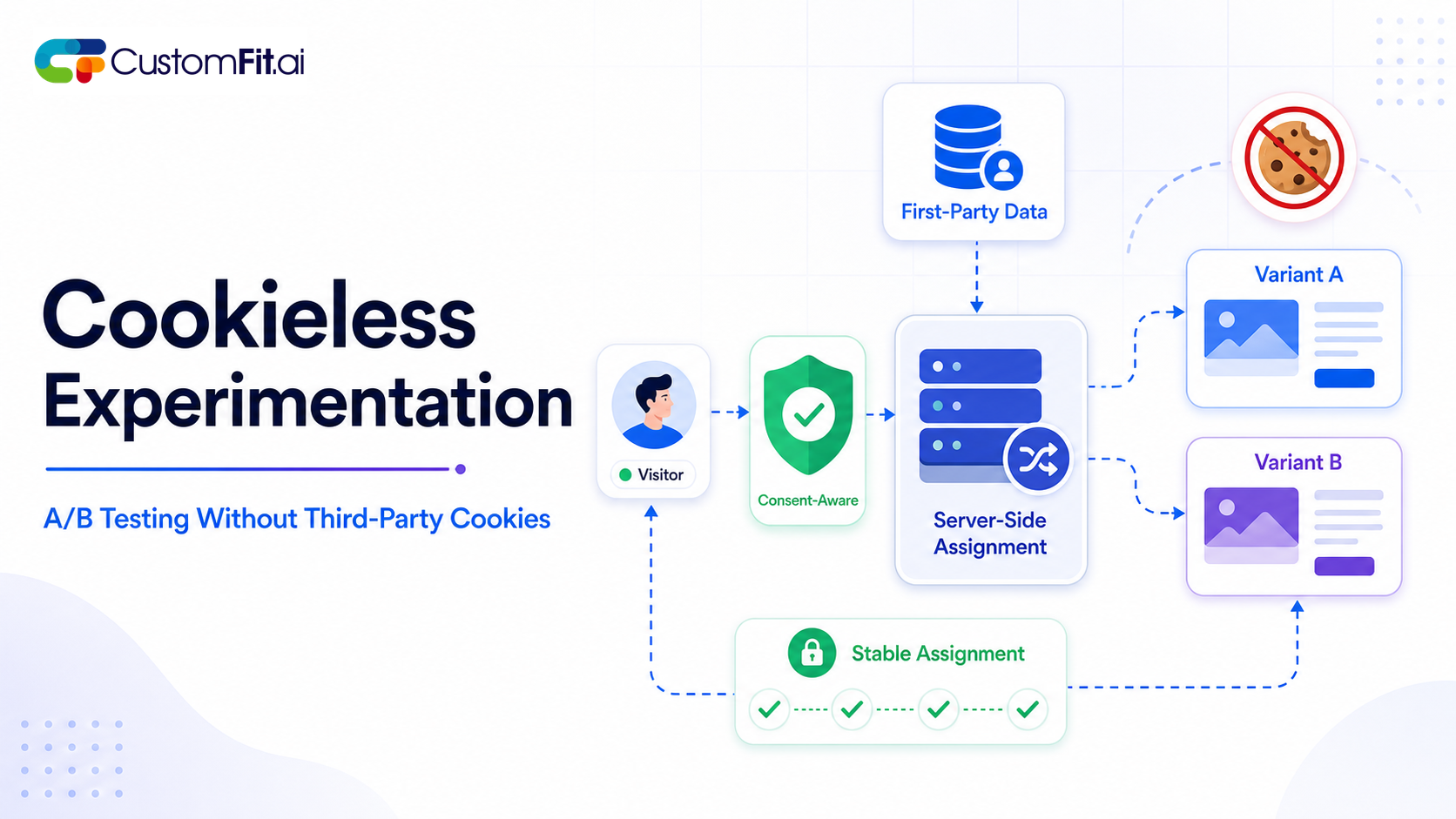
Server-side A/B testing and edge experimentation explained - how they eliminate flicker, improve speed, and where they fit vs client-side testing.
 ab testing
How to run cookieless A/B testing correctly in 2026 - first-party data, GDPR compliant methods, and what actually changed with third-party cookies.
 ab testing
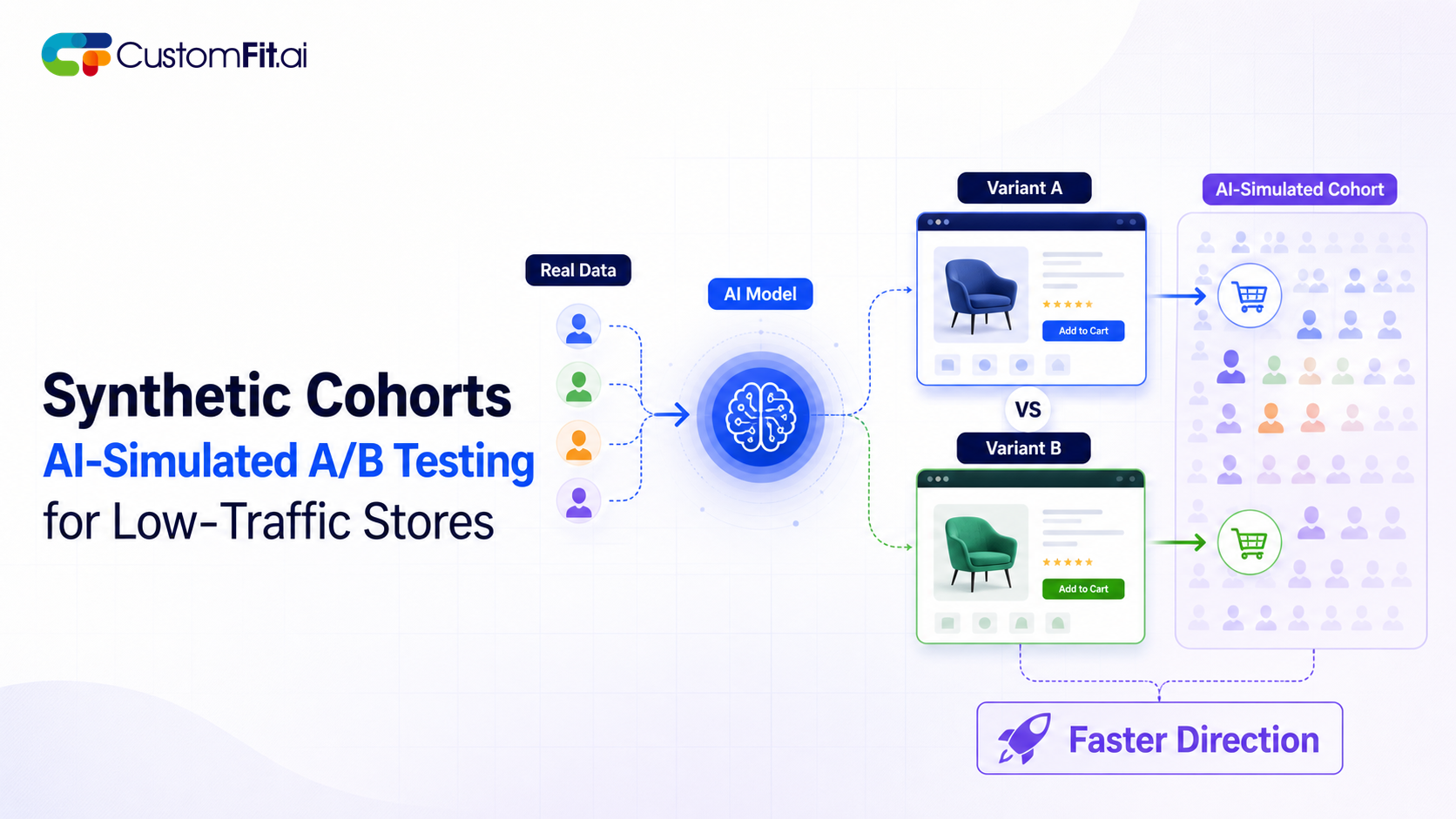
Not enough traffic to A/B test properly? Here's how synthetic cohort testing and AI-simulated experimentation help low-traffic stores test with confidence.
Run rigorous A/B tests and personalize every visit on Shopify or any storefront — no engineers required.
The process of A/B testing has developed a complicated reputation. Some marketers believe that A/B testing tools work like magic wands: make any change to a website, run a test, and watch the conversion rate increase.
A/B testing is based on science, so the process does not work for teams that rely on myths instead of sound experimentation. Seven of the most common myths are listed below.
Many teams feel that a test has failed if there is no clear winner. That is the wrong way to look at it.
Flat results tell you that the tested change did not have enough impact on user behavior to produce a measurable difference. That can save you from implementing changes that provide no real benefit.
Experiments that reject a hypothesis and experiments that confirm one are both valuable because they increase your understanding of users. Sometimes an experiment simply does not produce a positive result. Teams that understand this tend to run better experiments over time.
Some case studies claim huge sales growth after a button color changes from green to red. These examples are memorable, but they are rarely representative.
Button colors rarely change why someone buys or leaves. Bigger conversion levers include:
Build tests around real user problems. Minor variations often produce changes that cannot be measured, especially when traffic is limited.
This is one of the most harmful habits in experimentation. On day three, you look at the dashboard, see a 95 percent confidence level, and celebrate.
Significance calculations often assume that the sample size was defined before analysis began. Repeatedly checking results and stopping as soon as they look favorable greatly increases the likelihood of Type I errors. Early data frequently contains noise, and noise can look like a meaningful result.
Before starting, calculate the required sample size. Run the test for the planned period, ideally long enough to cover both weekdays and weekends. If continuous analysis is required, use a method designed for sequential analysis.
Read Also: How Long Should You Run an A/B Test?
A result can be statistically significant and still be commercially meaningless.
An improvement of 0.1 percent can be statistically significant when traffic is high enough. But if implementing that improvement costs more than the value it creates, it is not a useful win.
Consider both effect size and the p-value or confidence level. Then ask the practical question: what is the monetary value of the lift?
Tests can be highly effective, but they need enough traffic and conversions to produce reliable evidence. A website that receives only a few hundred visitors per month will struggle to generate useful test data.
If you do not have the volume, do not force it. Better alternatives at a smaller scale include:
Qualitative research often gives you stronger hypotheses than an underpowered test. Once traffic grows, you can reintroduce structured experimentation.
Read Also: A/B Testing for Low-Traffic Websites
Impatient teams sometimes change the headline, image, layout, and CTA in one test, or run multiple overlapping tests at the same time.
When too many things change at once, it becomes impossible to identify what caused the result. Overlapping tests can interfere with each other and distort the data.
Separate variables whenever possible and maintain a clear testing roadmap. Use multivariate testing only when your goal is specifically to test combinations.
You ran a sound test, selected the winner, and launched it. Six months later, the result is no longer improving performance. Why?
Seasonality, traffic sources, product changes, competitors, and customer expectations can all affect whether a variation continues to win. Novelty can also influence an early result: people may click because something is new, then return to their normal behavior.
A winning test only proves that something worked during a particular period and under particular circumstances. Retest important pages occasionally to make sure the result still holds.
Dropping the myths is half the job. The other half is building good habits.
Write down the change you are making, why you are making it, and how you will measure success. "Let's try it and see" is not a hypothesis.
Decide what success means before the test starts. Tracking many metrics and selecting whichever one looks positive afterward is an easy way to mislead yourself.
Record every result, whether the test wins, loses, or ends without a clear difference. Over time, this creates a knowledge base that helps your team avoid repeating the same mistakes.
A/B testing is not magic. It is a decision-making method that works only when it is used carefully. Pay attention to sample size, test changes that can produce meaningful differences, use appropriate statistics, and interpret every result in its business context. That is how experimentation becomes a strong business tool.
Read Also: How to Write a Strong A/B Testing Hypothesis
From ABTesting.world: SEO A/B Testing: Myths, Best Practices, and How to Run SEO Tests
See how CustomFit.ai can help your team launch focused A/B tests without adding development bottlenecks.
Book a CRO strategy call