From the conversion glossary
Concepts referenced in this article, defined.
Not enough traffic to A/B test properly? Here's how synthetic cohort testing and AI-simulated experimentation help low-traffic stores test with confidence.
 Yuvraj Singh6 min read
Concepts referenced in this article, defined.
 ab testing
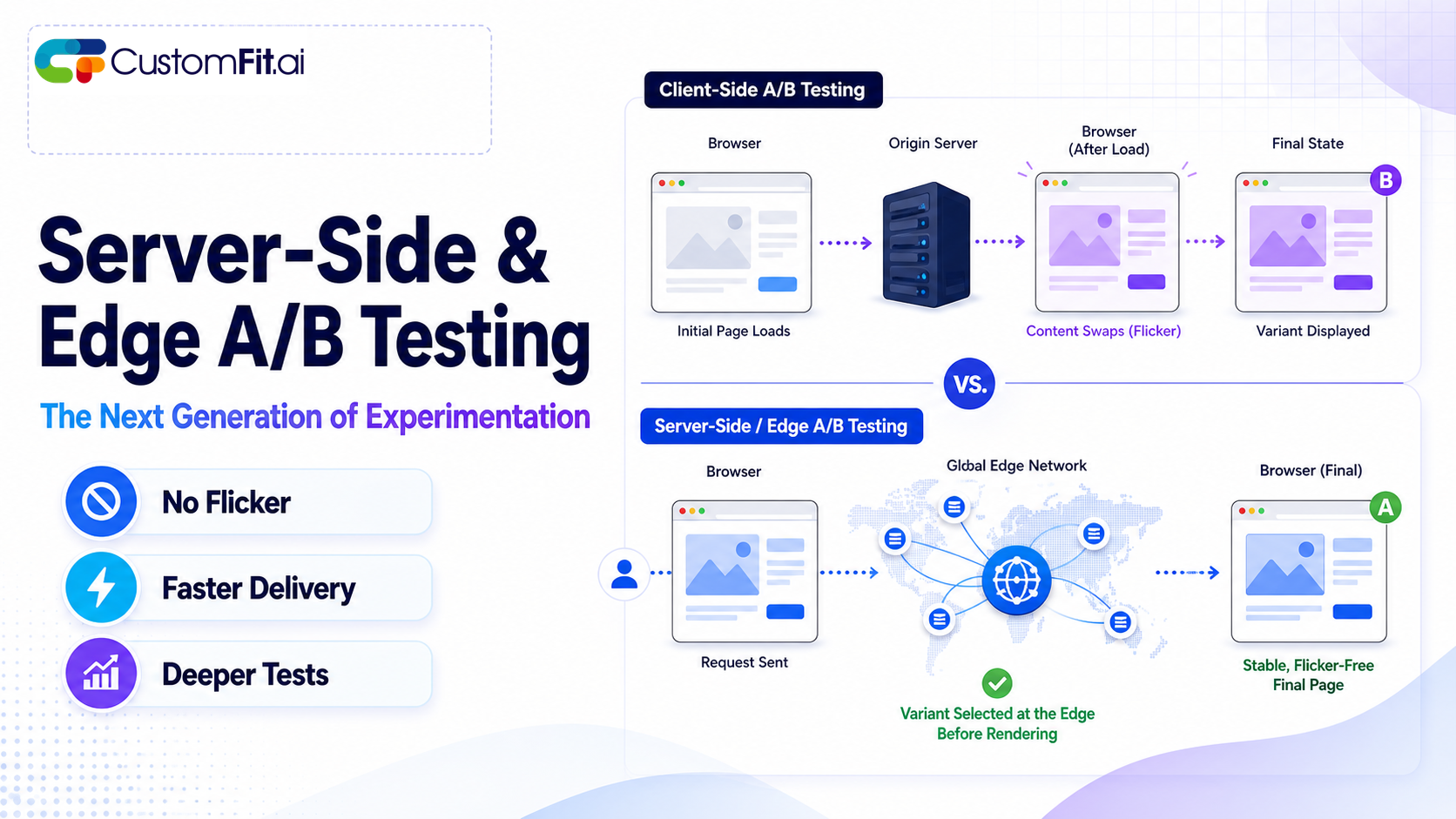
Server-side A/B testing and edge experimentation explained - how they eliminate flicker, improve speed, and where they fit vs client-side testing.
 ab testing
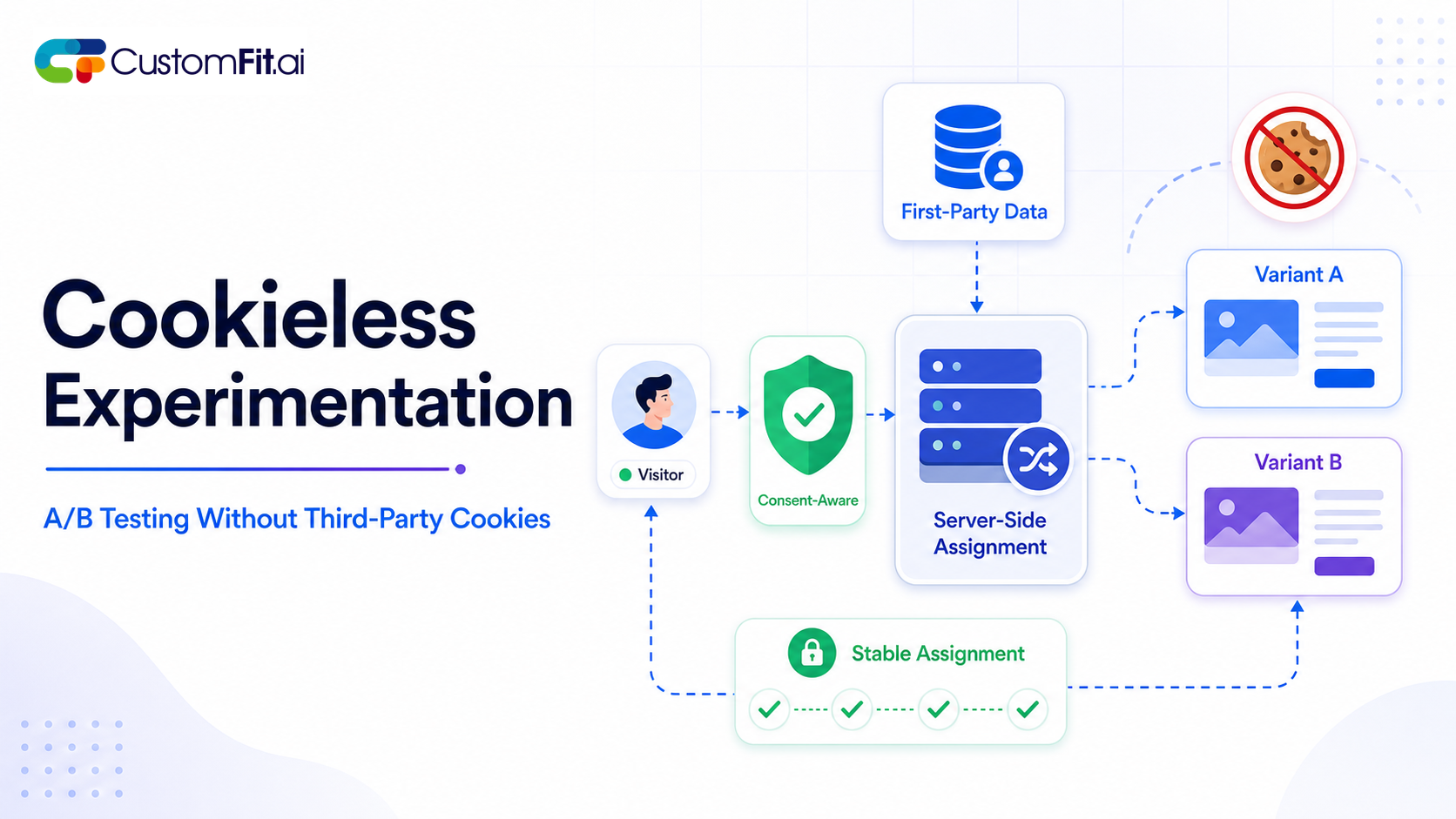
How to run cookieless A/B testing correctly in 2026 - first-party data, GDPR compliant methods, and what actually changed with third-party cookies.
 ab testing
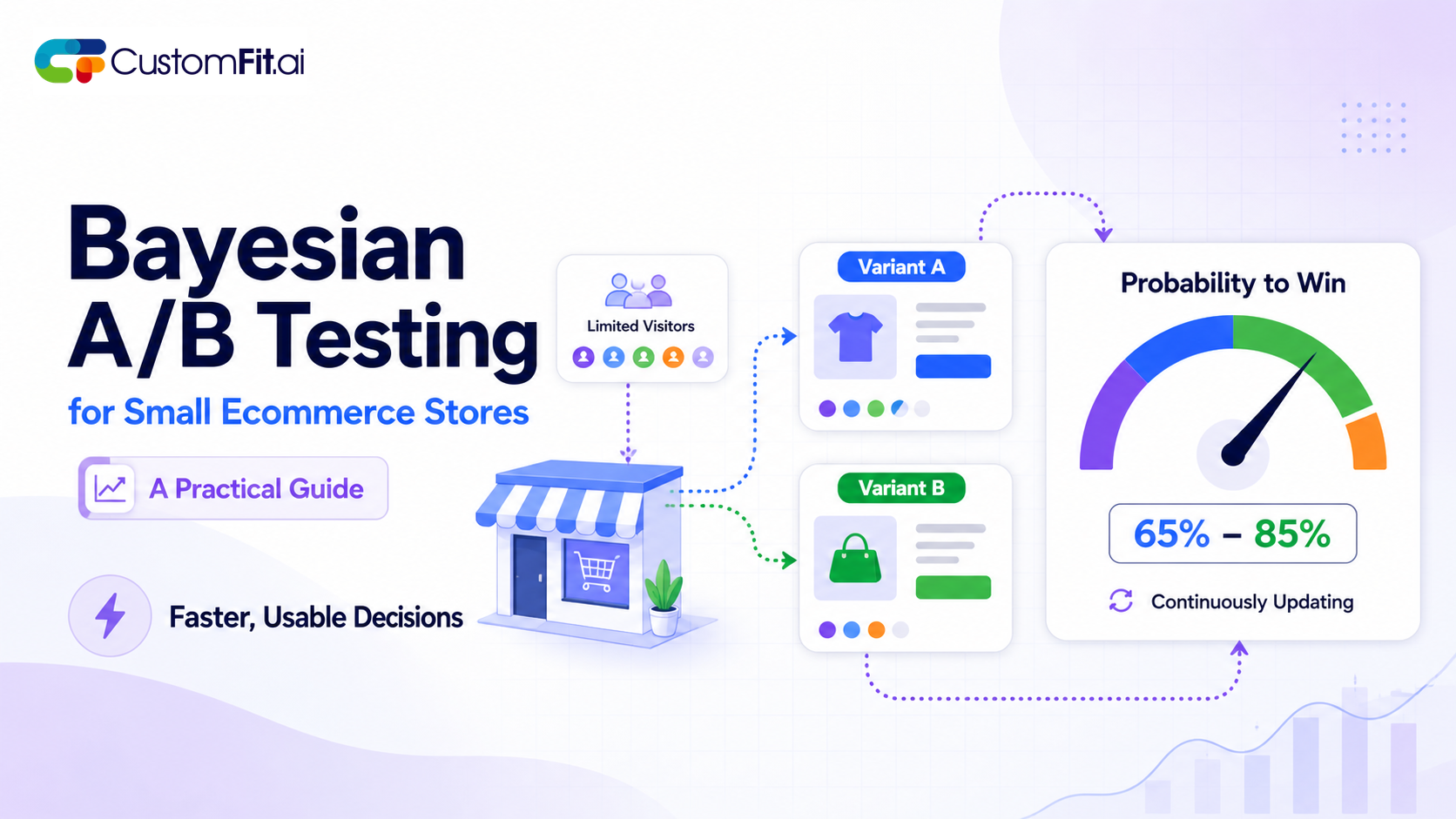
A practical guide to Bayesian A/B testing for small stores - how to get faster, more usable test results without the traffic a big brand has.
Run rigorous A/B tests and personalize every visit on Shopify or any storefront — no engineers required.
Every guide to A/B testing eventually hits the same wall: "you need enough traffic to reach statistical significance." For an enterprise brand pulling in tens of thousands of visitors a day, that's a footnote. For a growing D2C store doing a few hundred sessions a day, it's the whole problem. You can have a genuinely good test idea and simply never get a clean answer, because your sample size never catches up to your patience.
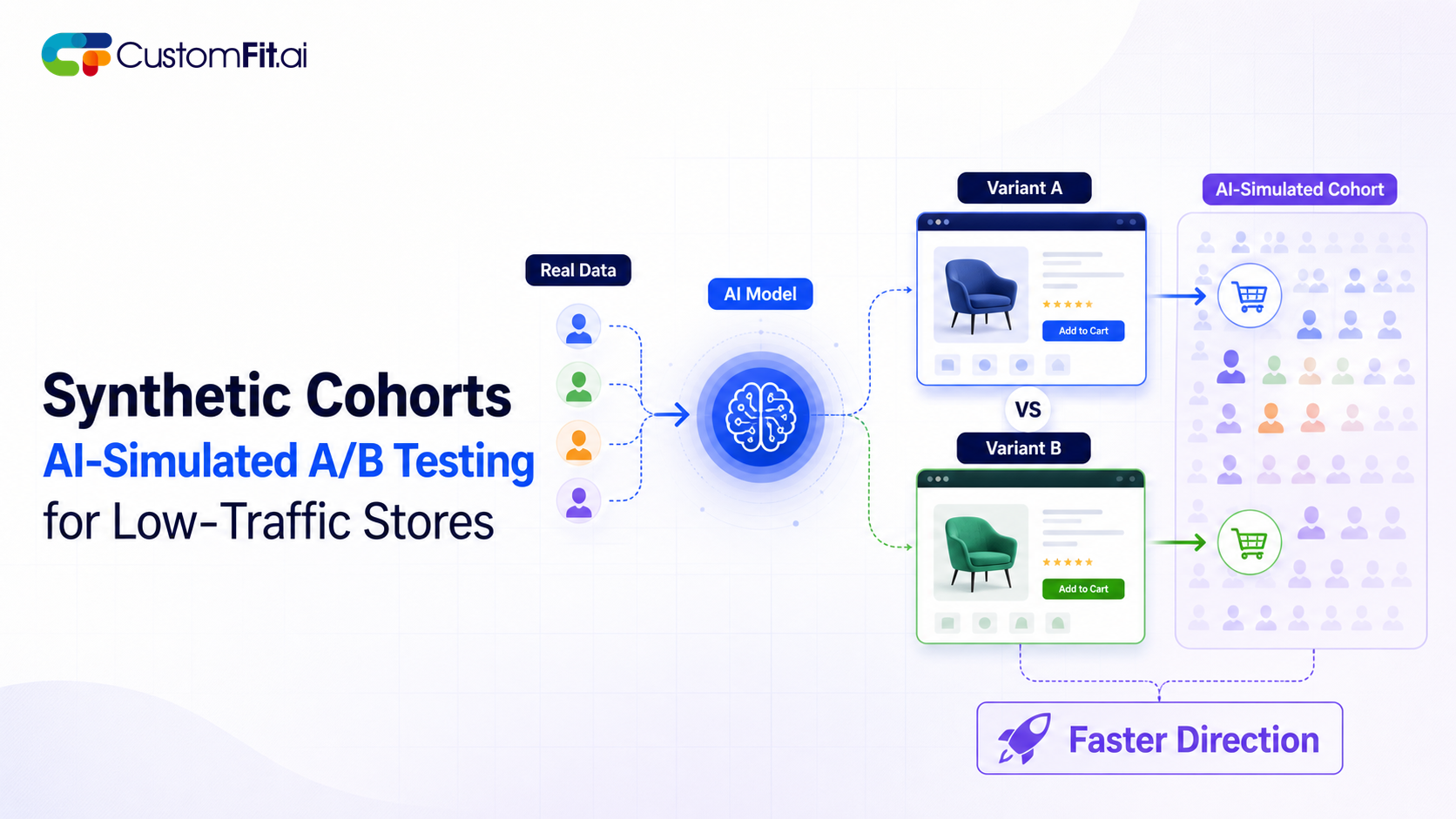
Synthetic cohort testing ecommerce is one of the more interesting answers to that problem: using AI-generated or AI-modeled visitor behavior to fill in the gaps real traffic can't cover fast enough, without pretending you have data you don't.
A synthetic cohort isn't fake traffic sent to your site. It's a statistically modeled population, built from patterns in your existing real visitor data, that a testing platform can use to simulate how a larger group would likely respond to a change. Think of it less like "inventing users" and more like the way weather forecasting models run thousands of simulated scenarios based on real atmospheric data to predict a range of outcomes, rather than waiting for the actual storm to arrive before saying anything useful.
In A/B testing terms, AI-simulated A/B testing uses this kind of modeling to estimate how a variant is likely to perform across a much larger population than your real traffic alone could confirm in a reasonable timeframe, while being explicit about the uncertainty involved rather than presenting a guess as a fact.
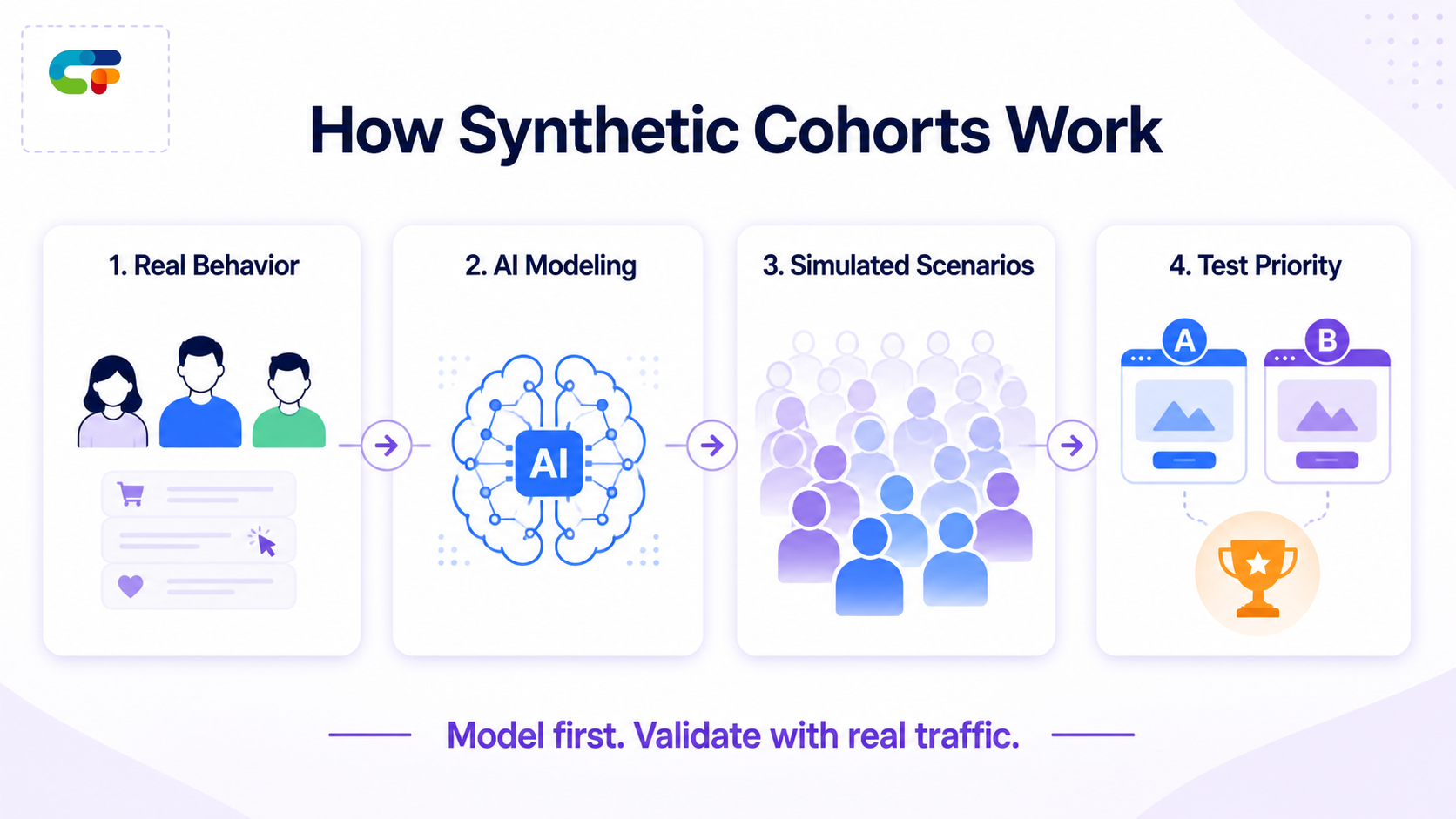
Standard frequentist A/B testing needs a minimum sample size to detect a given effect size at a given confidence level; that's just statistics, not a platform limitation. A store with low traffic testing methods built around waiting it out faces a bad trade-off: either run tests for months to reach significance, during which the market, product, or season may have already changed, or make decisions on incomplete data and risk shipping a change that actually hurts conversion.
Synthetic data experimentation doesn't eliminate that trade-off, but it narrows it by using what you do know - real behavioral patterns, historical conversion data, and similar-page performance - to build a more informed prior rather than starting every test from a blank slate.
This approach pairs naturally with Bayesian statistics rather than traditional frequentist testing. A Bayesian framework already works by combining a prior belief with new evidence to update a probability estimate. Synthetic cohorts are essentially a more sophisticated way of building that prior, informed by modeled behavior rather than a flat assumption. The result tends to be faster, more actionable readouts for stores that can't wait weeks for a frequentist significance threshold to clear.
It's worth being honest about the limits here. Predictive testing models are genuinely useful for:
They're not a substitute for real-world validation on meaningful changes. A pricing test, a checkout redesign, or anything with real revenue risk still deserves live traffic confirmation before you commit fully. Synthetic modeling should shorten your path to a decision, not replace the decision-making process entirely.
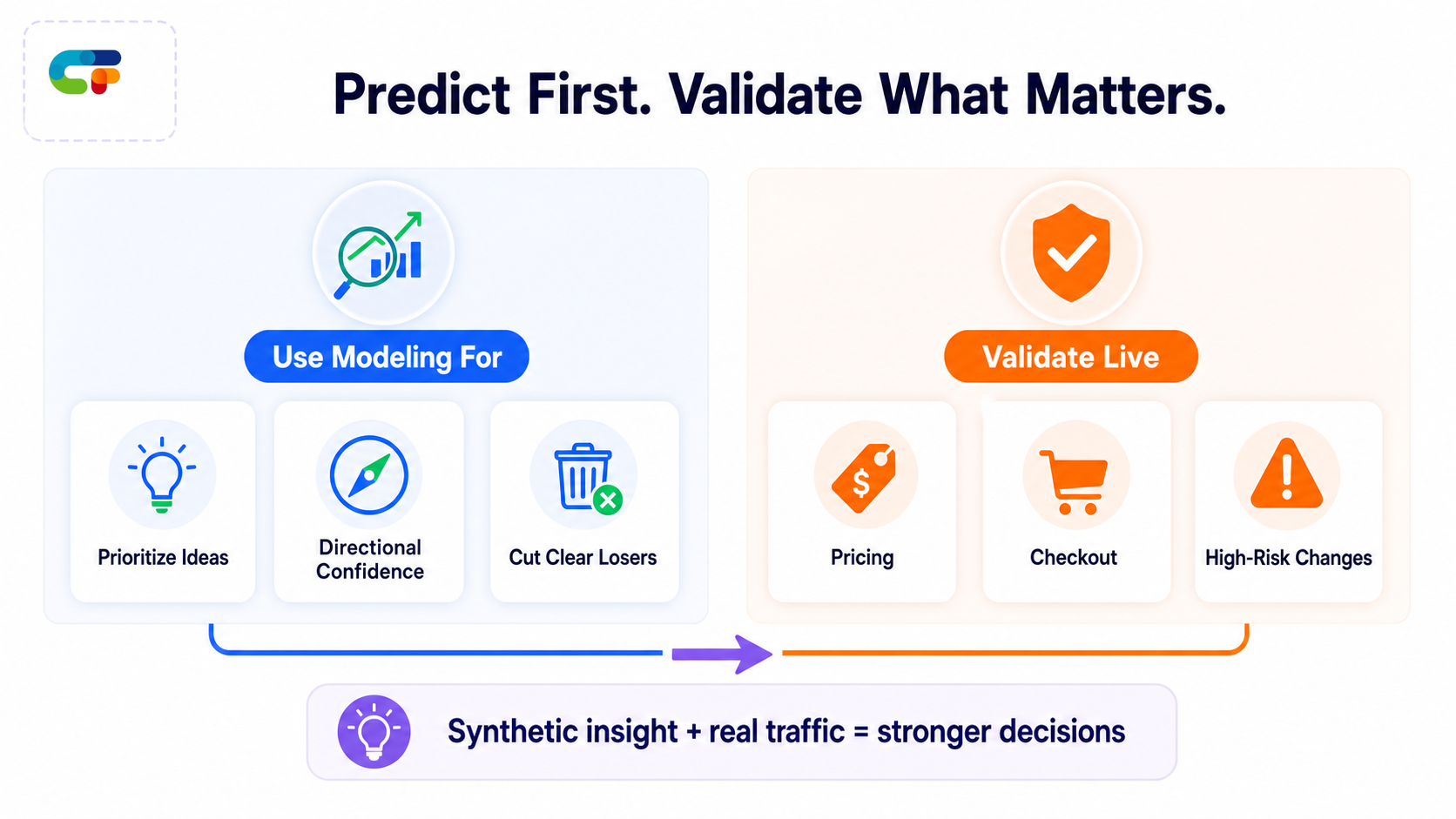
The most common one is treating a synthetic or modeled result as equivalent to a real statistically significant one when reporting to stakeholders. That erodes trust the first time reality doesn't match the model. The second is ignoring the approach entirely out of skepticism and continuing to make gut-call decisions on tiny, genuinely underpowered live tests, which is arguably worse.
Synthetic cohort testing ecommerce isn't a shortcut around good statistics. It's a way for stores that don't have enterprise-scale traffic to make better-informed decisions faster, using the real data they do have more intelligently. Used honestly, alongside real traffic validation for anything high-stakes, it closes a gap that's frustrated small and mid-sized ecommerce teams for years.