From the conversion glossary
Concepts referenced in this article, defined.
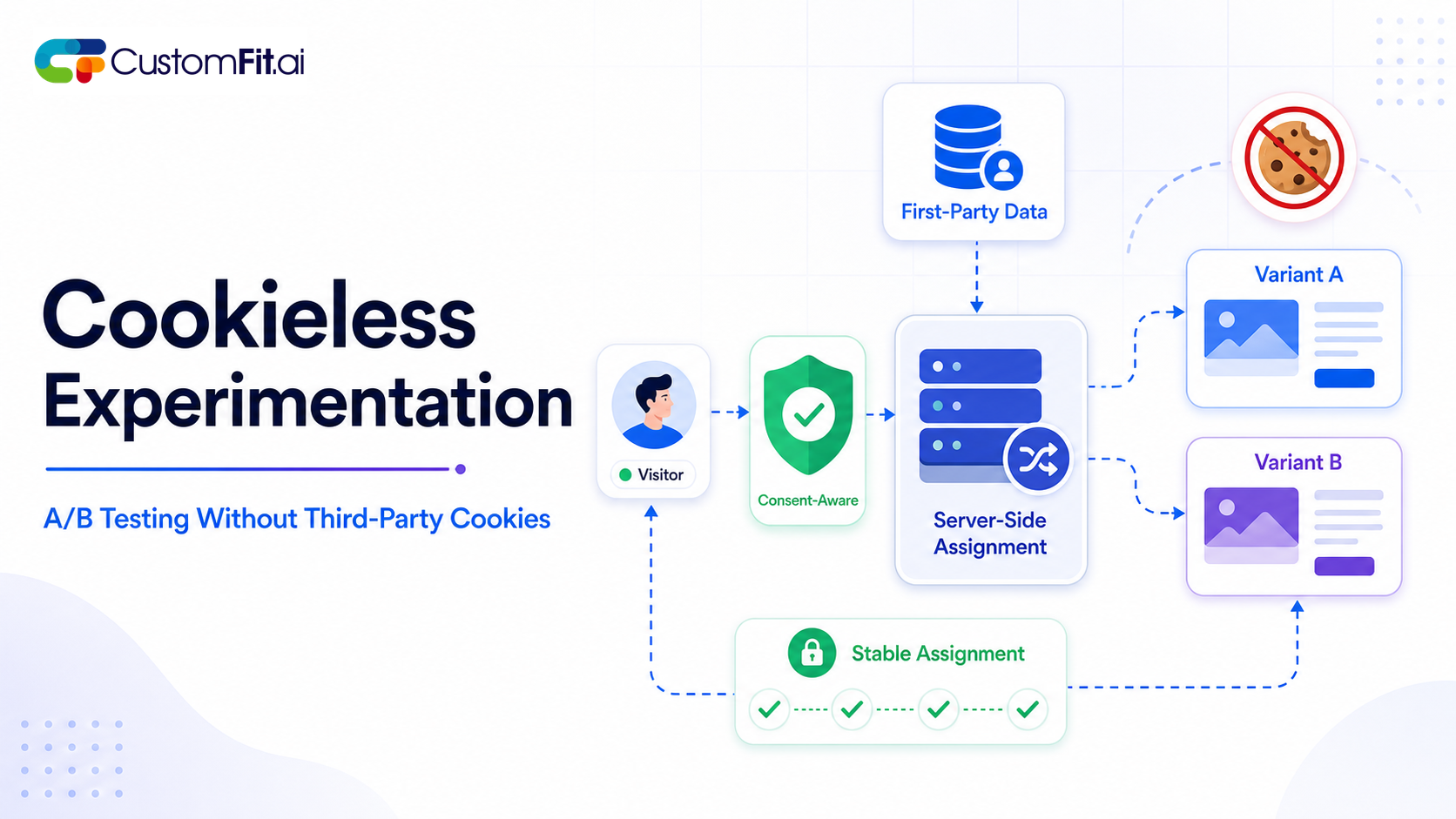
How to run cookieless A/B testing correctly in 2026 - first-party data, GDPR compliant methods, and what actually changed with third-party cookies.
Concepts referenced in this article, defined.
Run rigorous A/B tests and personalize every visit on Shopify or any storefront — no engineers required.
For several years, ecommerce teams were told to prepare for a fully cookieless web. Google had announced it would phase out third-party cookies in Chrome, and the industry scrambled to prepare.
Then, in 2025, Google reversed course. It paused the deprecation plan and later shut down most of the Privacy Sandbox APIs it had spent years developing as replacements. Third-party cookies remain enabled by default in Chrome, with no current removal timeline.
Does that mean cookieless A/B testing is no longer a real concern? The honest answer is that it is still worth getting right - just not for the reason most teams originally expected.
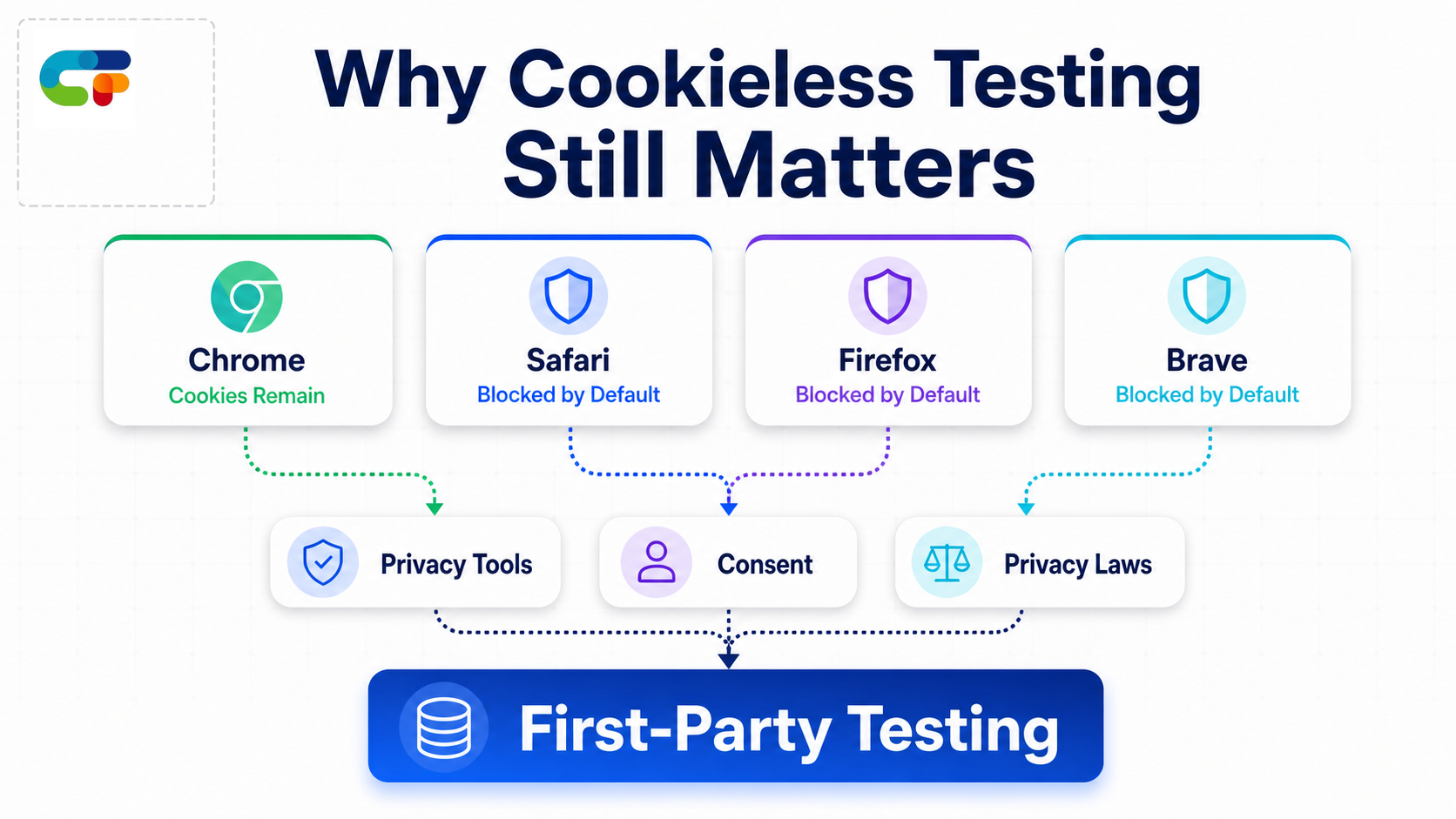
Chrome's decision did not make the wider web cookie-friendly again. Safari, Firefox, and Brave have blocked third-party cookies by default for years - together, that's a meaningful chunk of global traffic that was already effectively cookieless before Chrome's announcement and remains so today.
Add ad blockers, browser privacy extensions, and increasingly privacy-aware users declining consent, and a real share of visitors was never consistently trackable through third-party cookies in the first place.
Privacy-focused experimentation and consent requirements under GDPR and similar laws have not disappeared either. The obligation to obtain appropriate consent before setting non-essential cookies comes from privacy law, not Chrome's default settings.
Many experimentation tools historically used cookies for a basic but essential task: remembering which variant a visitor was assigned so they see the same version on their next visit instead of flickering randomly between A and B.
When the assignment cookie is blocked, declined, or expires early, a visitor may be placed into a different variant during a later session. That quietly contaminates the test data without necessarily producing an obvious error.
This is where the storage distinction matters. First-party testing - using a cookie or storage set by your own domain - has a very different reliability profile from infrastructure that specifically depends on third-party cookies.
The most common mistake is assuming Google's reversal made the problem disappear. It did not: Safari, Firefox, and Brave never depended on Chrome's decision, and privacy law was never tied to it.
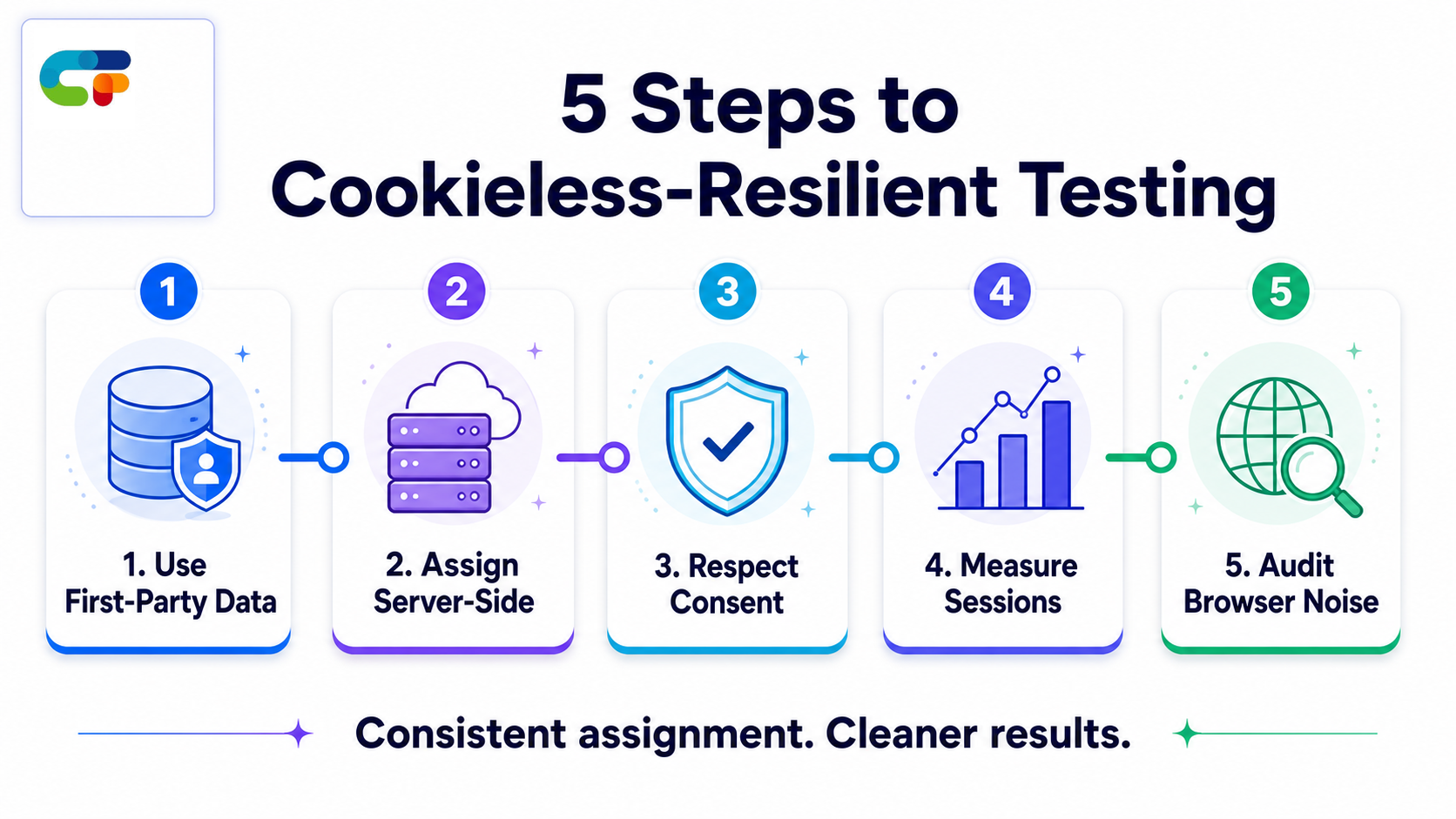
The second mistake is treating "cookieless" as an all-or-nothing switch instead of auditing which parts of the experimentation stack depend on third-party cookies and which already rely on first-party data.
Cookieless A/B testing is not a crisis that appeared and disappeared when Google changed its plans. It is an ongoing reality shaped by different browsers, privacy regulation, and more cautious users - none of which moved in lockstep with Chrome.
Building your experimentation on first-party data and consent-respecting infrastructure was the right decision regardless of what Chrome ultimately did, and it remains the right decision today.