From the conversion glossary
Concepts referenced in this article, defined.
Concepts referenced in this article, defined.
 ai ecommerce
How reinforcement learning personalization works for ecommerce - self-learning targeting that improves with every visitor, and how it differs from rules.
 ai ecommerce
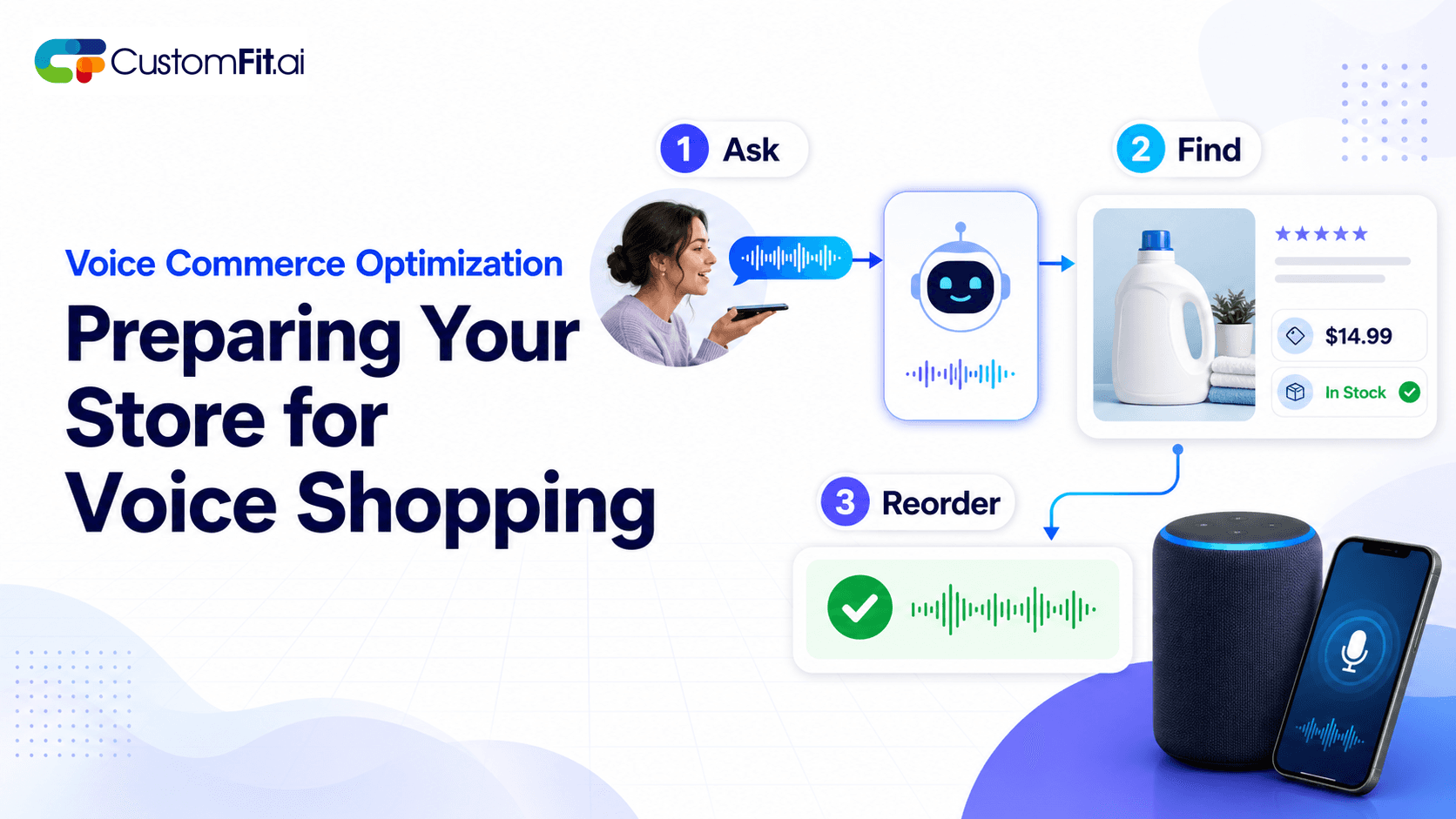
A practical guide to voice commerce optimization - how to prepare your product pages, catalog, and UX for Alexa, Siri, and voice-first shopping.
 ai ecommerce
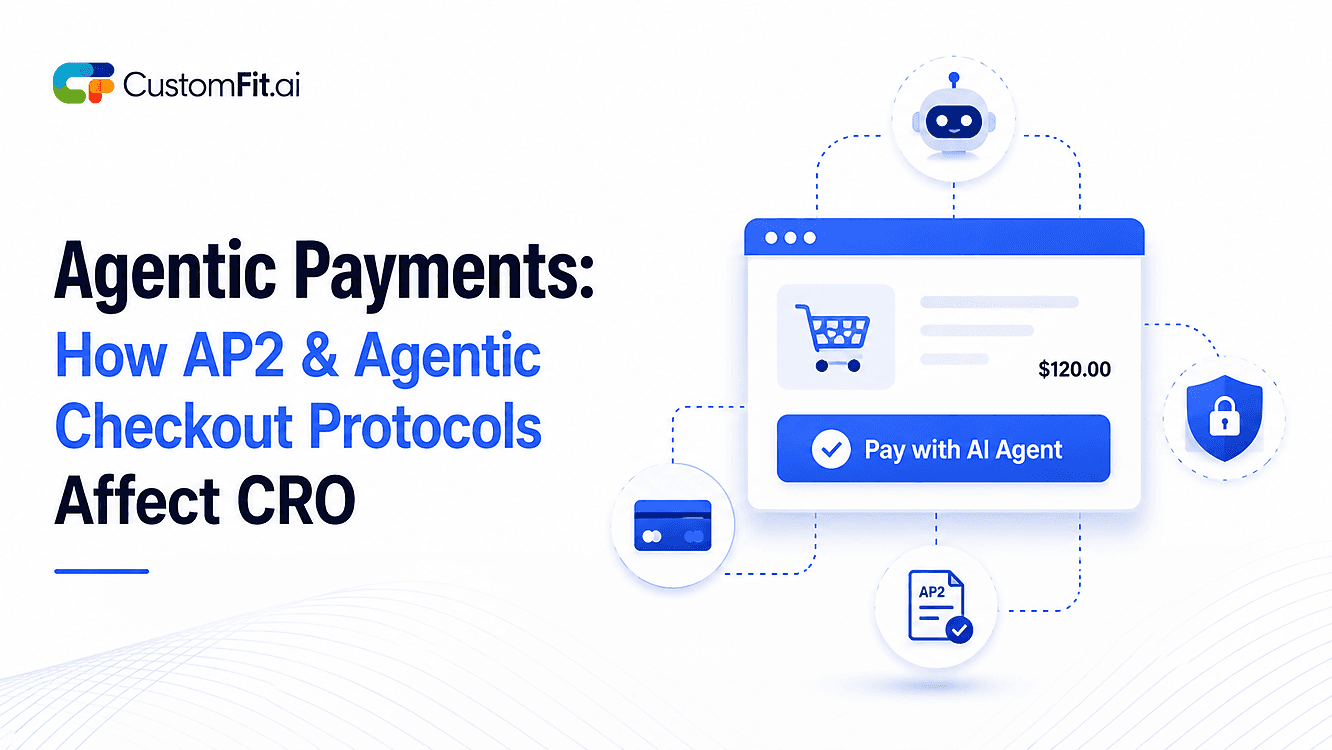
How agentic payments and Google's AP2 protocol are changing checkout and what ecommerce brands need to know about AI agent payment authorization and CRO.
Run rigorous A/B tests and personalize every visit on Shopify or any storefront — no engineers required.
AI personalization for ecommerce means automatically showing each visitor the product recommendations, hero messages, offers, or layouts most likely to convert them, based on who they are, where they came from, and what they've done on your site. Brands using it consistently report 10 to 20% conversion lifts because they stop treating all visitors as identical. The practical starting point isn't building a recommendation engine from scratch. It's using AI-powered targeting to show the right variant to the right segment, automatically.
Your homepage was designed for one visitor. But on any given day, your traffic includes:
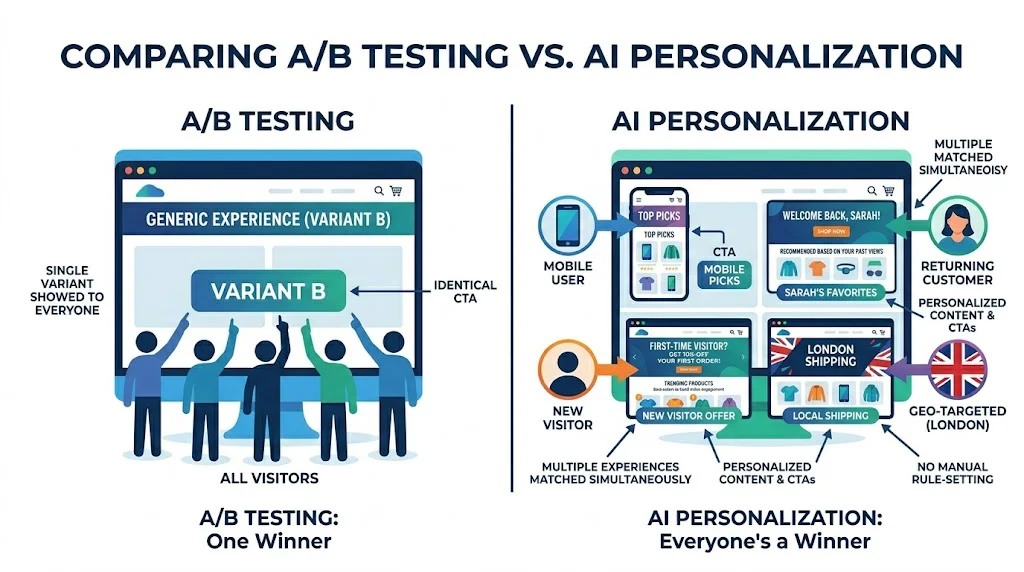
Each of these people has different intent, different objections, and different conversion triggers. Showing all of them the same homepage, the same CTA, and the same social proof is like a physical store where every salesperson gives the same pitch regardless of who walks in.
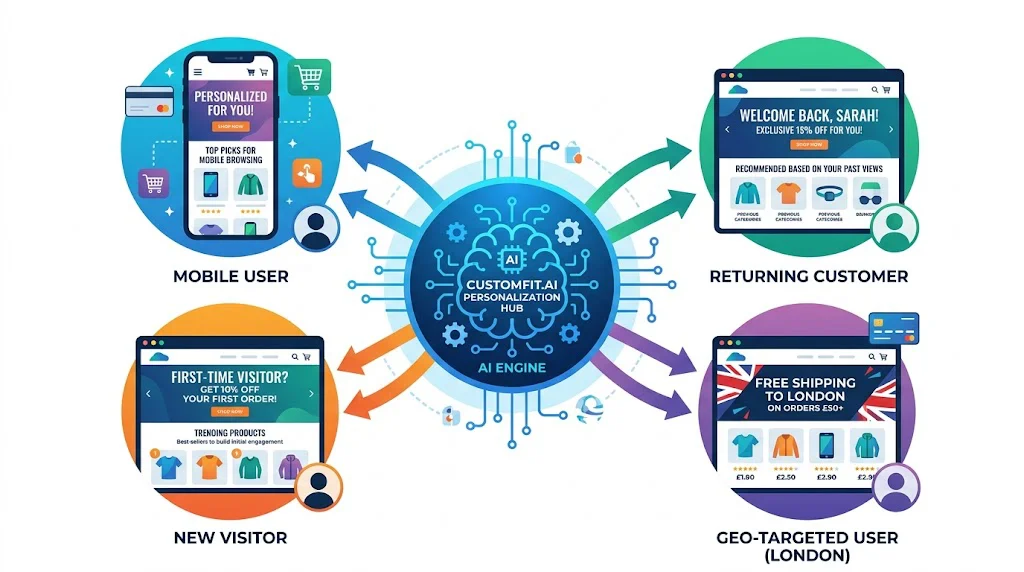
This is the core problem AI personalization solves. It identifies visitor segments in real time and adjusts the experience accordingly, without any manual work per segment.
AI personalization starts by collecting signals: device type, traffic source, location, time of day, pages visited, products viewed, previous purchase history (for returning customers), and behavioral cues like scroll depth and click patterns. These signals feed into a machine learning model that continuously updates its predictions.
The AI groups visitors into segments. Not just broad buckets like "mobile users," but dynamic micro-segments like "mobile users from paid social who viewed the hero banner for more than 3 seconds." With 1000+ targeting attributes available in advanced platforms, these segments can be highly specific.
Each segment gets matched to the variant most likely to convert them. This matching can cover:
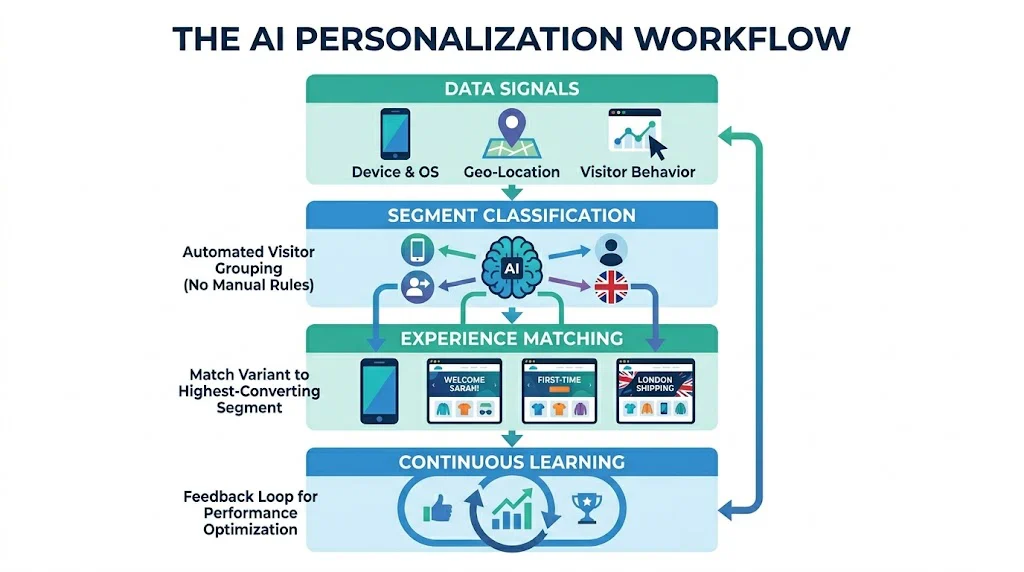
Unlike static rules ("show this banner to Delhi visitors"), AI models update based on actual conversion outcomes. If the segment classification is wrong, the model corrects itself. This is what separates true AI personalization from manual rule-based targeting.
Bellavita, the Indian fragrance brand, saw an 11% CVR lift by personalizing their hero section based on the ad creative the visitor clicked. If the ad showed a "gift for her" angle, the landing page hero matched that message. Visitors from Instagram ads saw social proof ("2M happy customers"); visitors from Google Shopping saw product specs and ratings.
Returning visitors already know your brand. They don't need an explainer. They need a reason to act now. Showing returning visitors a loyalty nudge ("Welcome back, here's 10% off your next order") while showing first-time visitors social proof and trust badges is a basic personalization win that most D2C brands haven't implemented.
Kapiva, the Ayurveda supplements brand, uses geo-targeting to show COD (Cash on Delivery) as the primary payment option in Tier 2 and Tier 3 cities, while highlighting UPI and card payment for metro visitors. COD anxiety (the fear of advance payment for unknown brands) is a conversion killer in smaller cities. Geo-aware personalization addresses it directly. Kapiva achieved a 9.48% CVR lift with similar targeting approaches.
During Diwali, a home decor brand showing "Diwali gifts under ₹999" to first-time visitors from gifting-related searches converts far better than showing the standard catalog. Brands like Nykaa and Mamaearth run festive personalization layers that activate automatically based on the date and traffic source.
Mobile visitors on D2C sites in India account for 75 to 85% of traffic. AI personalization can surface different product image sequences, shorter product descriptions, and sticky "Add to Cart" bars on mobile, while showing detailed comparison tables and ingredient lists on desktop, where users are more likely to be in research mode.
Here's a practical framework for a D2C brand starting with personalization:
Step 1: Identify your highest-traffic, highest-drop-off page. Use funnel analysis to find where visitors are leaving. Product pages and the homepage are typically where personalization has the biggest impact.
Step 2: Define your first two segments. Start with the highest-contrast split: new visitors vs. returning customers. This is easy to implement and typically shows meaningful results quickly.
Step 3: Choose the experience element to personalize. Pick one element to start, the hero headline, the primary CTA, or the trust badge positioning. Don't try to personalize everything at once.
Step 4: Build both variants in a visual editor. With CustomFit.ai's no-code editor, you can build variant experiences directly on your live Shopify page, no staging environment, no developer required.
Step 5: Set targeting rules and go live. Define who sees which variant. Set your primary metric (add-to-cart rate or purchase). Launch.
Step 6: Review performance weekly. Look at segment-level conversion rates, not just overall CVR. A variant that underperforms overall might still be the clear winner for your target segment.
| Goal | Use |
|---|---|
| Find the best single experience for all visitors | A/B testing |
| Show different experiences to different segments | Personalization |
| Discover which segments exist and what they respond to | AI-powered A/B testing |
| Maximize revenue from current traffic | Personalization layer on top of tested winners |
The most effective approach is to use A/B testing to find winning variants, then layer personalization on top to serve those variants to the right segments.
Start with behavioral signals, not demographics. What a visitor does on your site is more predictive than where they're from. Scroll depth, product page views, and time-on-page are stronger personalization signals than city or age.
Don't personalize everything on day one. Brands that try to personalize every element simultaneously can't debug what's working. Start with the highest-impact element and expand from there.
Respect COD preferences. In the Indian D2C market, not highlighting COD for Tier 2 visitors is a major conversion leak. Make payment method display one of your first personalization experiments.
Keep festive personalization layers ready in advance. Diwali, Holi, Rakhi, and Valentine's Day campaigns need to be built 4 to 6 weeks before the event. Build a festive template library you can activate each year.
Measure customer lifetime value (CLV) over time. Short-term CVR lifts are good, but personalization that brings in the wrong customers (discount-hunters who never return) can hurt long-term metrics. Track 90-day repurchase rates by segment.
Explore our AI in Ecommerce guide and personalization glossary entry for related context.