From the conversion glossary
Concepts referenced in this article, defined.
Concepts referenced in this article, defined.
Run rigorous A/B tests and personalize every visit on Shopify or any storefront — no engineers required.
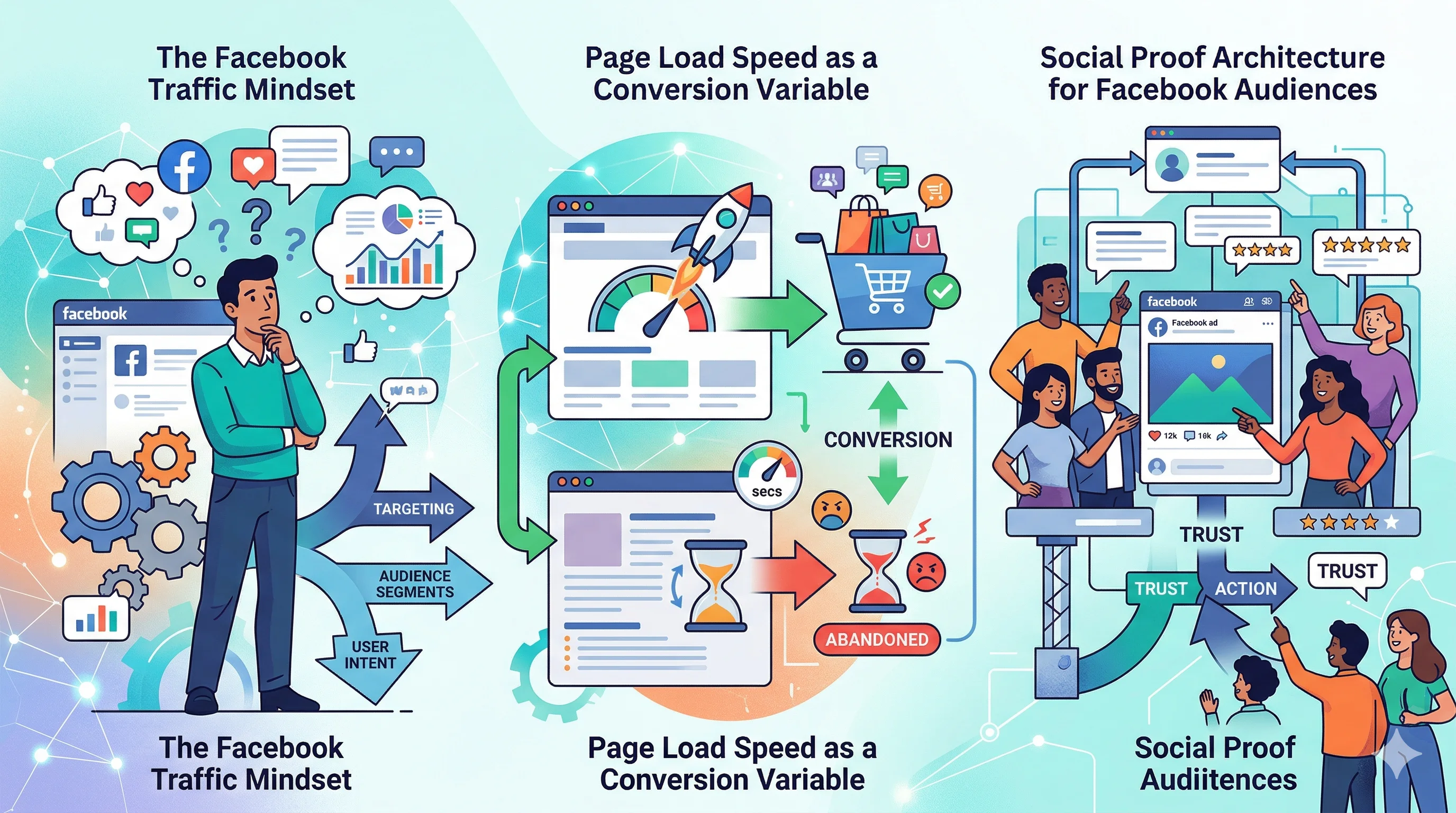
Facebook ad traffic arrives cold. These shoppers were not searching for your product — they were scrolling their feed when your ad interrupted them. This changes everything about how your landing page must work. Unlike Google search ad traffic (high intent, actively searching), Facebook visitors need to be reminded why they clicked, shown proof that the product is worth their time, and given a frictionless path to purchase — all within the first 5 seconds of landing.
When someone clicks a Facebook or Instagram ad, they:
This means your landing page must do one thing above all else: honor the promise the ad made.
If your ad showed a "Get glowing skin in 7 days" before/after image, your landing page must open with that exact claim. If your ad offered "25% off for new customers," your landing page must show that offer prominently. Any gap between ad and landing page — called "message mismatch" — causes immediate bounce.
Facebook traffic is particularly sensitive to page load time because:
Speed targets for Facebook landing pages:
To achieve this on Shopify:
For Facebook ad traffic, everything that matters must appear without scrolling on a mobile screen. This means fitting into approximately 600px of vertical space:
No navigation bar. No multiple CTAs. No long product description above the fold.
Facebook visitors have never heard of your brand. Generic claims ("Amazing product!") do not build trust. Use proof that is credible to a first-time visitor:
What works for Facebook landing pages:
What does not work for cold Facebook traffic:
For Indian audiences, featuring customer photos from recognizable Indian cities ("Priya from Bengaluru," "Rahul from Pune") adds an extra layer of relatability.
A Facebook visitor did not Google the product category first. They may not know what your product is or why it is different. Your landing page must quickly bridge this gap:
The 3-second explanation formula:
Example for a Neem face wash: "India's first 100% Neem face wash — clears acne without stripping moisture. No sulphates. No parabens."
This can live as a 2-line subheadline beneath your main headline.
A significant portion of Facebook ad traffic in India from Tier 2/3 cities will have payment hesitation — they are not comfortable entering card details for a brand they discovered 30 seconds ago. Address this:
Brands like Mamaearth and Boat have invested heavily in COD availability because it reduces the trust barrier for first-time Facebook-acquired customers.
Key tests to run:
Test 1: Hero image vs hero video Short (15–30 second) product demo videos consistently outperform static images for Facebook traffic because video aligns with the feed format visitors just came from. But video increases load time — test carefully.
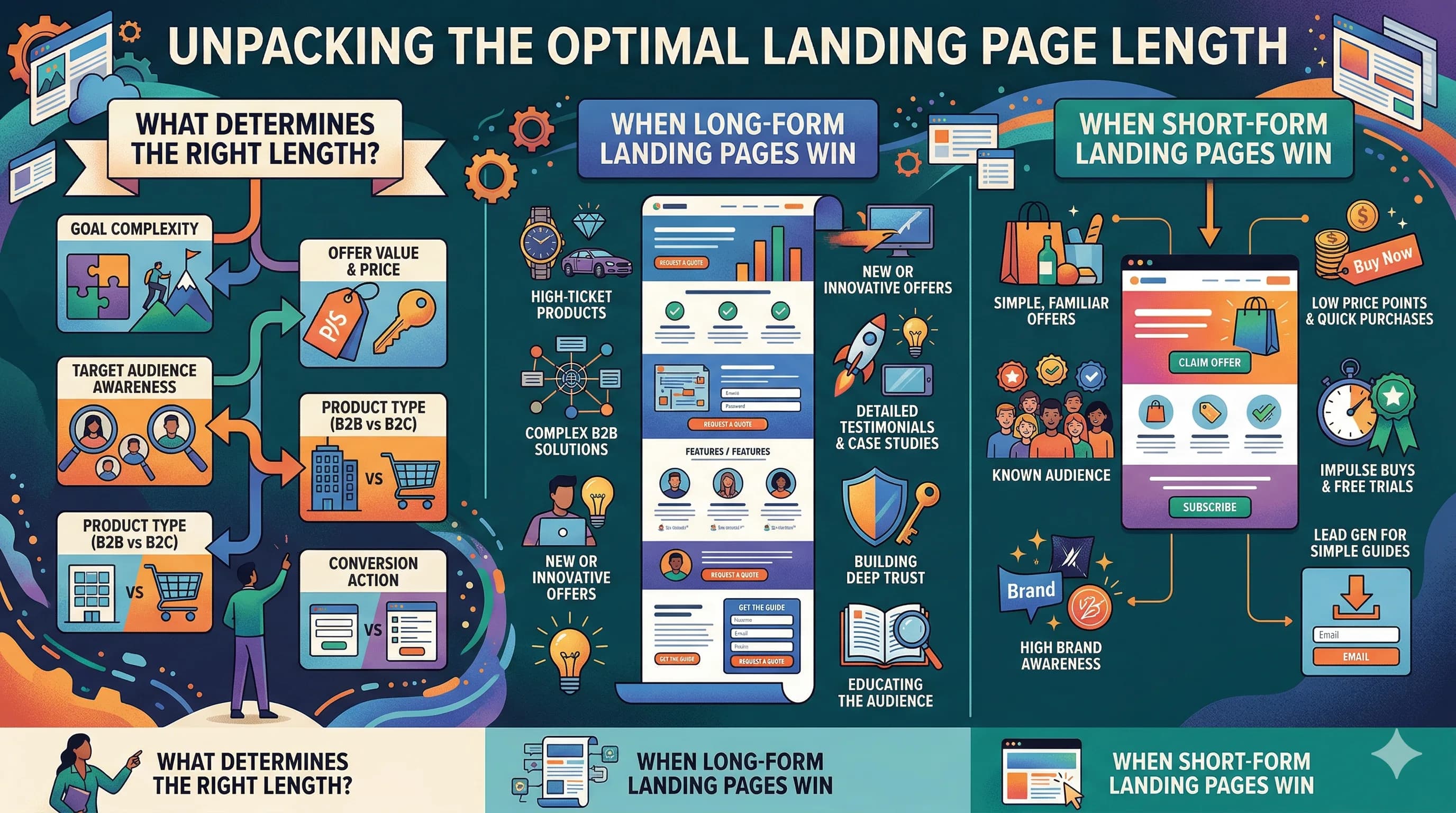
Test 2: Long-form vs short-form Long pages (1,500+ words, many sections) vs short pages (600–800 words, minimal scrolling). For awareness-stage products (new category or innovation), long-form educates better. For known product categories, short-form converts faster.
Test 3: CTA copy "Shop Now" vs "Get 25% Off" vs "Try Risk-Free" vs "Add to Cart." "Get [specific benefit/offer]" consistently outperforms generic "Shop Now" for Facebook cold traffic.
Test 4: Social proof format Photo testimonials vs video reviews vs aggregate star rating bar.
Use CustomFit.ai to run these tests on your Shopify landing pages.
Related reading: