From the conversion glossary
Concepts referenced in this article, defined.
Concepts referenced in this article, defined.
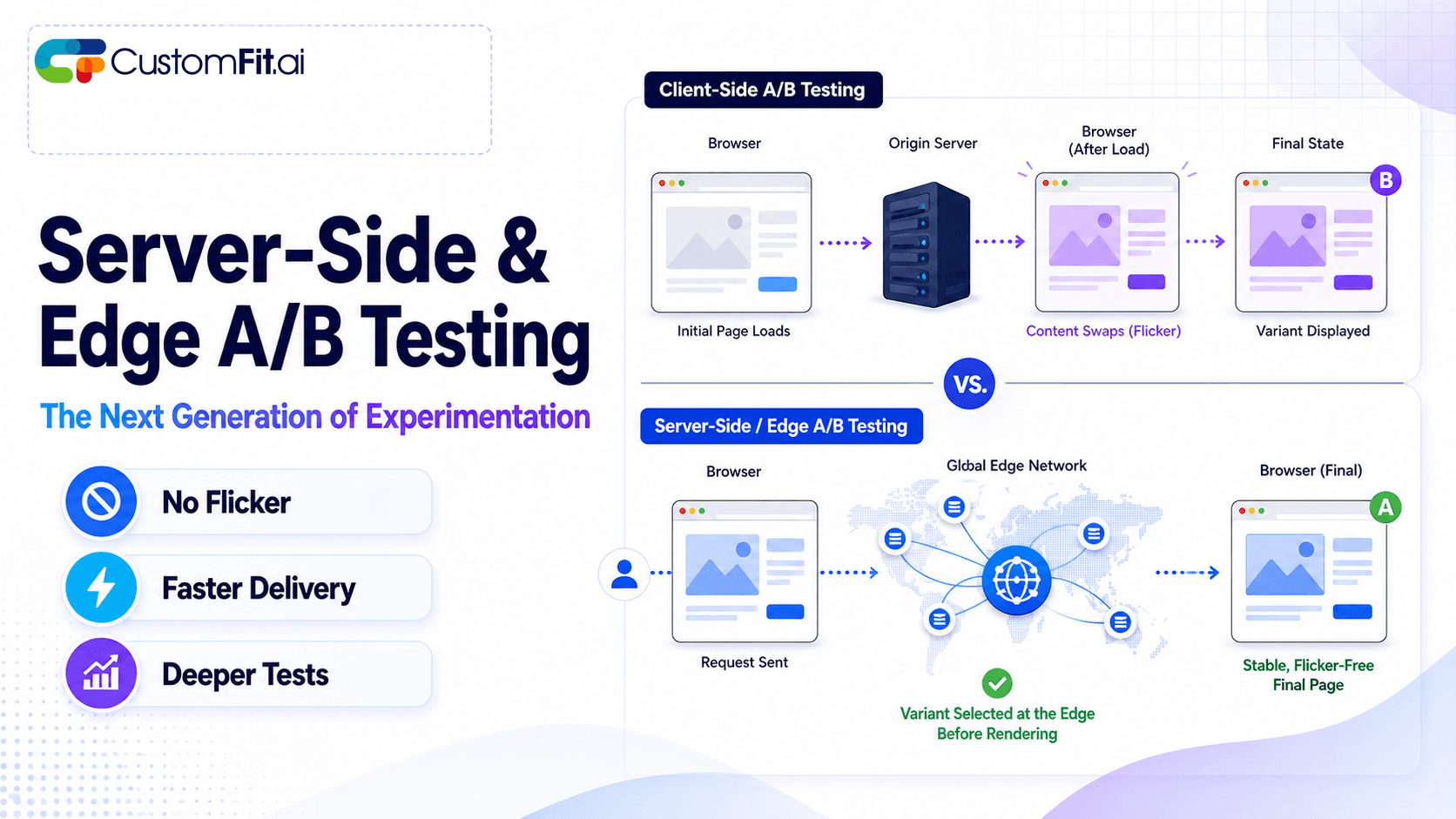 ab testing
Server-side A/B testing and edge experimentation explained - how they eliminate flicker, improve speed, and where they fit vs client-side testing.
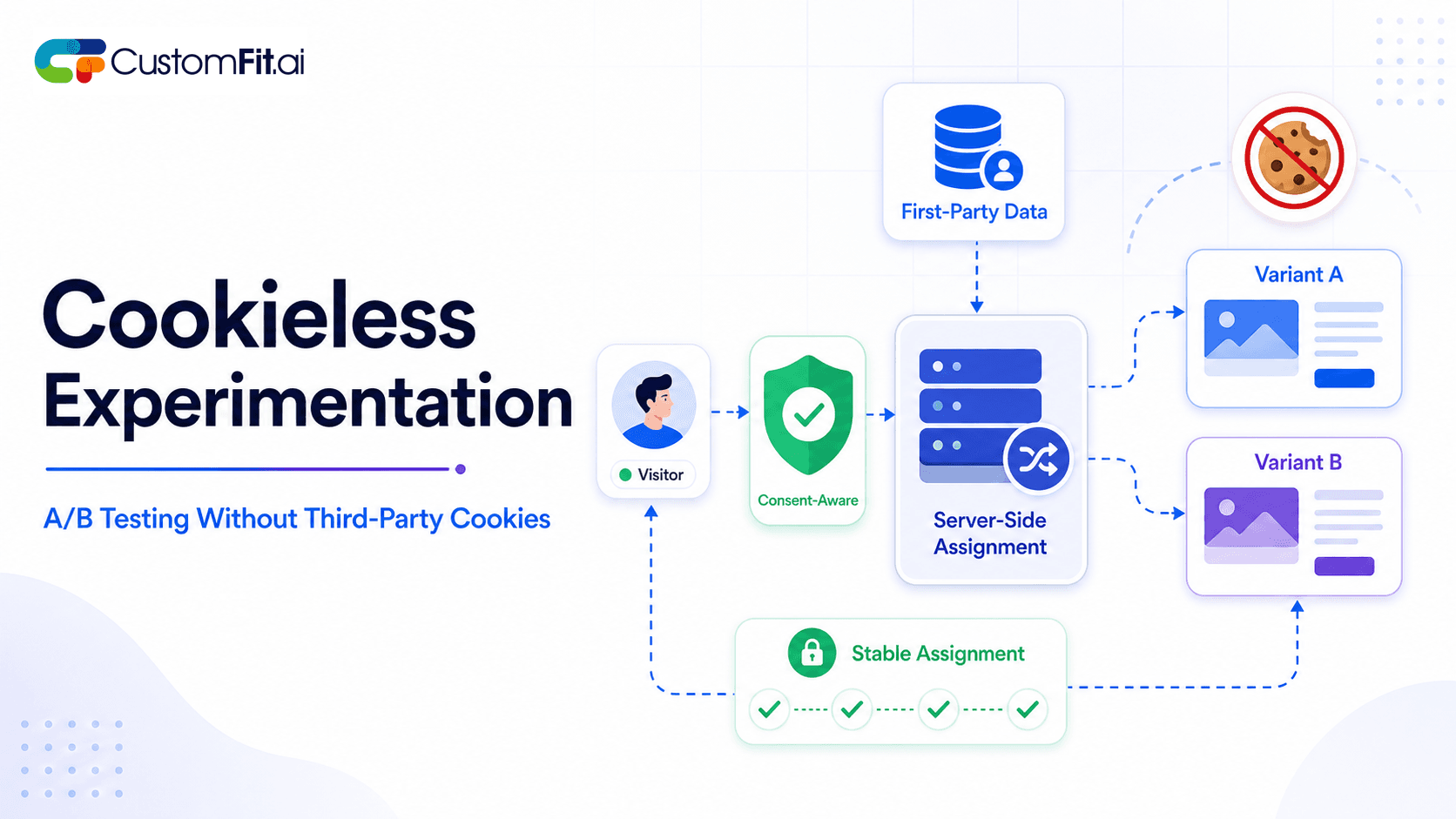 ab testing
How to run cookieless A/B testing correctly in 2026 - first-party data, GDPR compliant methods, and what actually changed with third-party cookies.
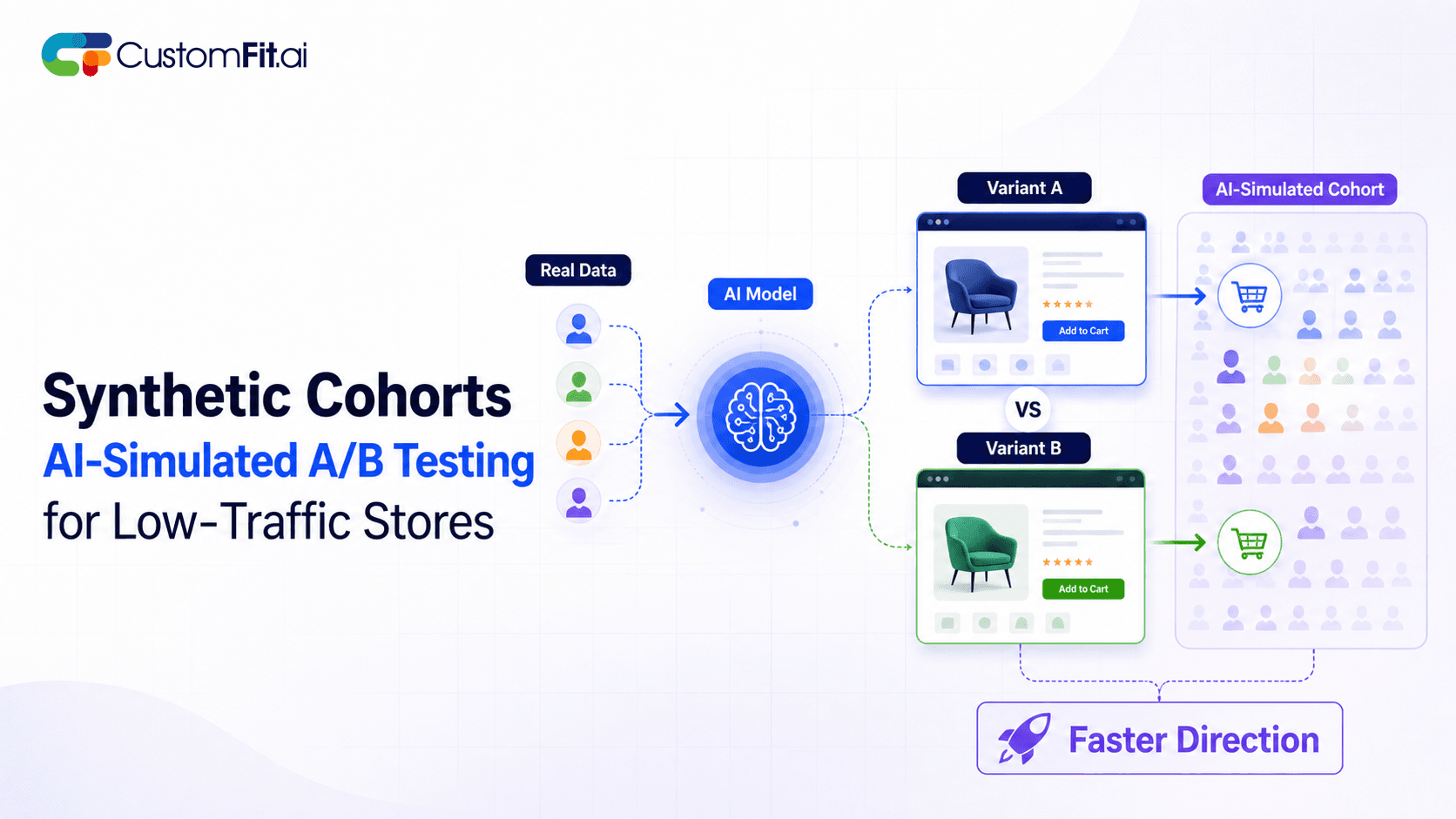 ab testing
Not enough traffic to A/B test properly? Here's how synthetic cohort testing and AI-simulated experimentation help low-traffic stores test with confidence.
Run rigorous A/B tests and personalize every visit on Shopify or any storefront — no engineers required.
Pet product stores have one powerful advantage over most ecommerce niches: customers are emotionally invested in their purchases. Every test you run is an opportunity to connect with that emotion and turn browsers into loyal subscribers. The 10 ideas below are ranked by potential impact, drawn from real patterns in the D2C pet space — think brands like Heads Up For Tails and Supertails — and each can be launched without writing a single line of code.
Pet owners in India spend an average of ₹2,000–₹8,000 per month on their animals, and that number rises sharply during festive periods and monsoon grooming seasons. Yet most pet stores leave conversion rate (CVR) improvement to guesswork. Structured split testing lets you make decisions from data rather than instinct — and even a 1% CVR lift on ₹50 lakh monthly revenue is worth ₹50,000 per month.
Understanding statistical significance before you start prevents you from calling a winner too early. And knowing your sample size requirements means you'll never waste time on underpowered tests.
Description: Swap your product page hero image from a plain white-background packshot to a lifestyle photo showing a real dog or cat using/enjoying the product.
Why it works: Pet owners buy for their animal's benefit. A golden retriever happily chewing a dental treat is more persuasive than a photo of the treat alone. This taps directly into conversion rate principles around emotional resonance.
Best for: Food, treats, toys, dental care, grooming products.
How to run it: Use CustomFit.ai's visual editor to swap the image in Variant B. Run for 14 days or until you hit 200 conversions per variant.
Expected lift: 8–15% add-to-cart rate improvement.
Description: Change the default purchase option on product pages from "one-time" to "subscribe & save" (with the discount pre-selected).
Why it works: Inertia is powerful. If subscription is pre-selected at 15% off, many shoppers will leave it checked rather than switch back. This is a classic hypothesis around friction reduction.
Best for: Pet food, flea & tick treatments, monthly grooming supplies.
How to run it: Variant A shows one-time selected; Variant B shows subscribe & save (15% off) pre-selected.
Expected lift: 10–20% subscription sign-up rate increase.
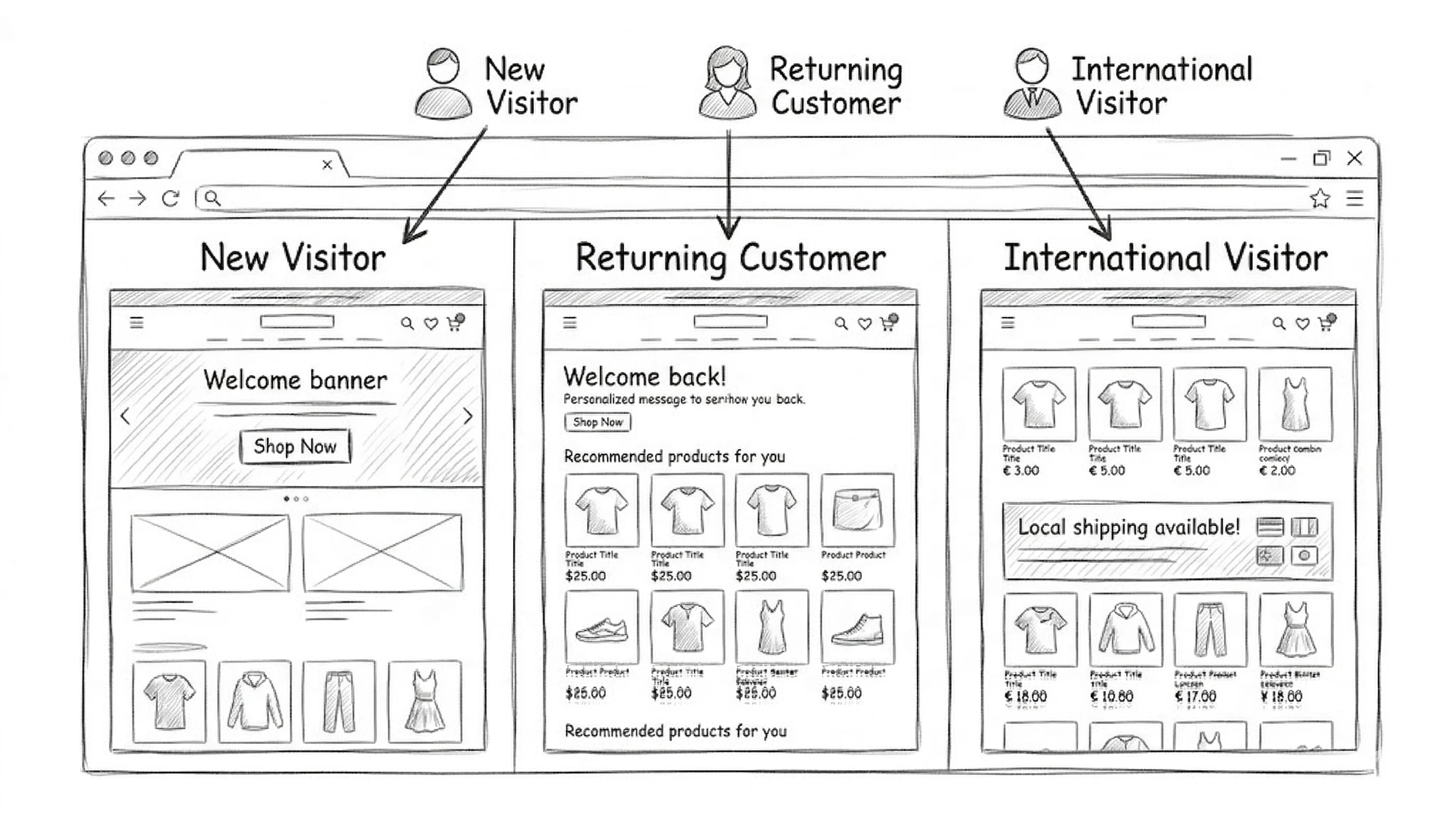
Description: Show different homepage banners to dog owners vs. cat owners based on browsing history or a quick "What's your pet?" quiz at first visit.
Why it works: Personalised experiences reduce cognitive load and increase relevance. A cat owner landing on a page full of dog images will bounce faster. This is audience segmentation driving conversion rate gains.
Best for: Multi-species stores selling both dog and cat products.
How to run it: CustomFit.ai can segment visitors by product category viewed in the last session, then show the matching banner variant.
Expected lift: 5–12% engagement rate improvement.
Description: Move quality/certification badges (e.g., "Vet Approved," "Made in India," "No Artificial Preservatives") from the product description to directly below the Add to Cart button.
Why it works: Trust signals closest to the action point reduce purchase anxiety at the moment of decision. Pet owners are especially concerned about ingredient safety.
Best for: All product categories, especially food, supplements, and treats.
How to run it: Variant B repositions badges from the description section to under the CTA button.
Expected lift: 4–9% checkout initiation increase.
Description: Test different ways to communicate the free shipping threshold — "Add ₹299 more to get free shipping" vs. a progress bar showing how close the customer is.
Why it works: Progress bars create visual momentum and tap into loss aversion — customers don't want to "lose" the progress they've made.
Best for: Stores with AOV near the free shipping threshold.
How to run it: Variant A shows text; Variant B shows an animated progress bar on the cart page and product pages.
Expected lift: 6–12% AOV increase.
Description: Replace the standard star rating + review count display with a photo review carousel showing real customer pets using the product.
Why it works: Pet owners trust other pet owners. Photo reviews with names like "Buddy's mum, Bengaluru" build social proof far more effectively than anonymous star ratings.
Best for: Food, treats, grooming, and toys.
How to run it: Variant B adds a photo review carousel above the text reviews section.
Expected lift: 7–14% add-to-cart rate improvement.
Description: Test whether prominently featuring COD (Cash on Delivery) as the first payment option increases overall conversions vs. UPI/card first.
Why it works: A significant portion of Indian D2C customers, especially first-time buyers, prefer COD for trust reasons. Burying it behind digital payment options creates friction.
Best for: Tier 2 and Tier 3 city customer segments.
How to run it: Variant B reorders checkout payment options to show COD first, followed by UPI and cards.
Expected lift: 5–10% checkout completion rate in non-metro segments.
Description: Create a test where the product page CTA for a single item also prominently offers a "Starter Bundle" (e.g., food + bowl + treats at ₹999 vs. ₹1,400 individually).
Why it works: First-time pet owners are in "setup mode" — they need multiple products at once. Bundles increase AOV and reduce acquisition cost per order.
Best for: New pet owner segments, first-purchase campaigns.
How to run it: Variant B adds a bundle offer section above the fold on single product pages.
Expected lift: 15–25% AOV lift on first orders.
Description: Test adding a real-time stock indicator ("Only 12 left — order before Friday for Diwali delivery") vs. no urgency message.
Why it works: Genuine scarcity messaging — especially tied to festive delivery windows (Diwali, Pongal, Christmas) — drives purchase decisions forward. This is a core split testing principle.
Best for: Limited edition products, festive bundles, seasonal items.
How to run it: Variant B shows a live stock count and next-day delivery cutoff when inventory is below a threshold.
Expected lift: 8–16% conversion rate during festive periods.
Description: Add a "Recommended for [Breed]" section on product pages, personalised based on the breed filter selected in a quiz or filter bar.
Why it works: A Labrador owner and a Shih Tzu owner have very different needs. Breed-specific recommendations reduce research effort and increase purchase confidence.
Best for: Food, supplements, grooming products where breed matters.
How to run it: Capture breed preference via a homepage quiz (using CustomFit.ai's no-code personalisation), then surface matching products on subsequent pages.
Expected lift: 10–18% click-through on recommended products.
| Test Idea | Difficulty | Expected CVR Lift | Best Page |
|---|---|---|---|
| Lifestyle hero image | Low | 8–15% | Product page |
| Subscription default | Low | 10–20% | Product page |
| Pet-type personalisation | Medium | 5–12% | Homepage |
| Trust badge placement | Low | 4–9% | Product page |
| Free shipping progress bar | Medium | 6–12% | Cart page |
| UGC photo review carousel | Medium | 7–14% | Product page |
| COD first in checkout | Low | 5–10% | Checkout |
| Bundle offer section | Medium | 15–25% | Product page |
| Urgency/scarcity messaging | Low | 8–16% | Product page |
| Breed-specific recommendations | High | 10–18% | Product page |
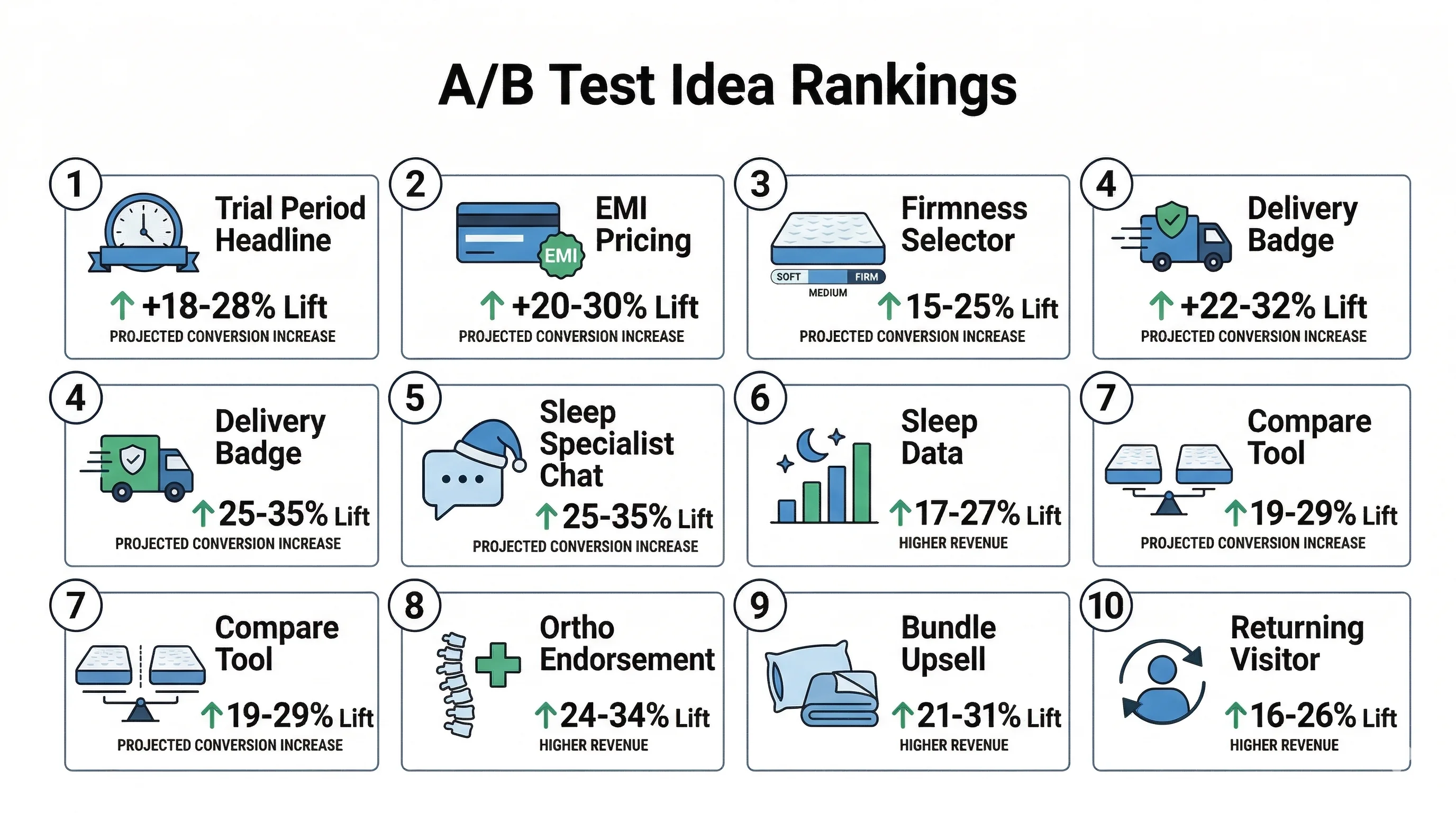
Start with one test at a time. Running multiple tests on the same page simultaneously muddles your data. Pick the highest-impact idea from the table above and run it for the full duration.
Define your primary metric before you start. Add-to-cart rate, checkout initiation rate, or completed purchase rate — choose one conversion rate metric as your north star for each test.
Segment your results. A COD test might win for Tier 2 cities but show no effect for metros. Always cut results by device, geography, and traffic source.
Use India-specific timing. Avoid launching tests during major festive weeks (Navratri, Diwali) when traffic patterns are abnormal. Plan tests in quieter periods and activate proven winners during peak traffic.
Document every test. Build a testing log: hypothesis, variants, dates, result, next action. This becomes your store's CRO playbook over time.
For related reading, see product page A/B testing ideas and homepage A/B testing ideas.