From the conversion glossary
Concepts referenced in this article, defined.
Concepts referenced in this article, defined.
 ab testing
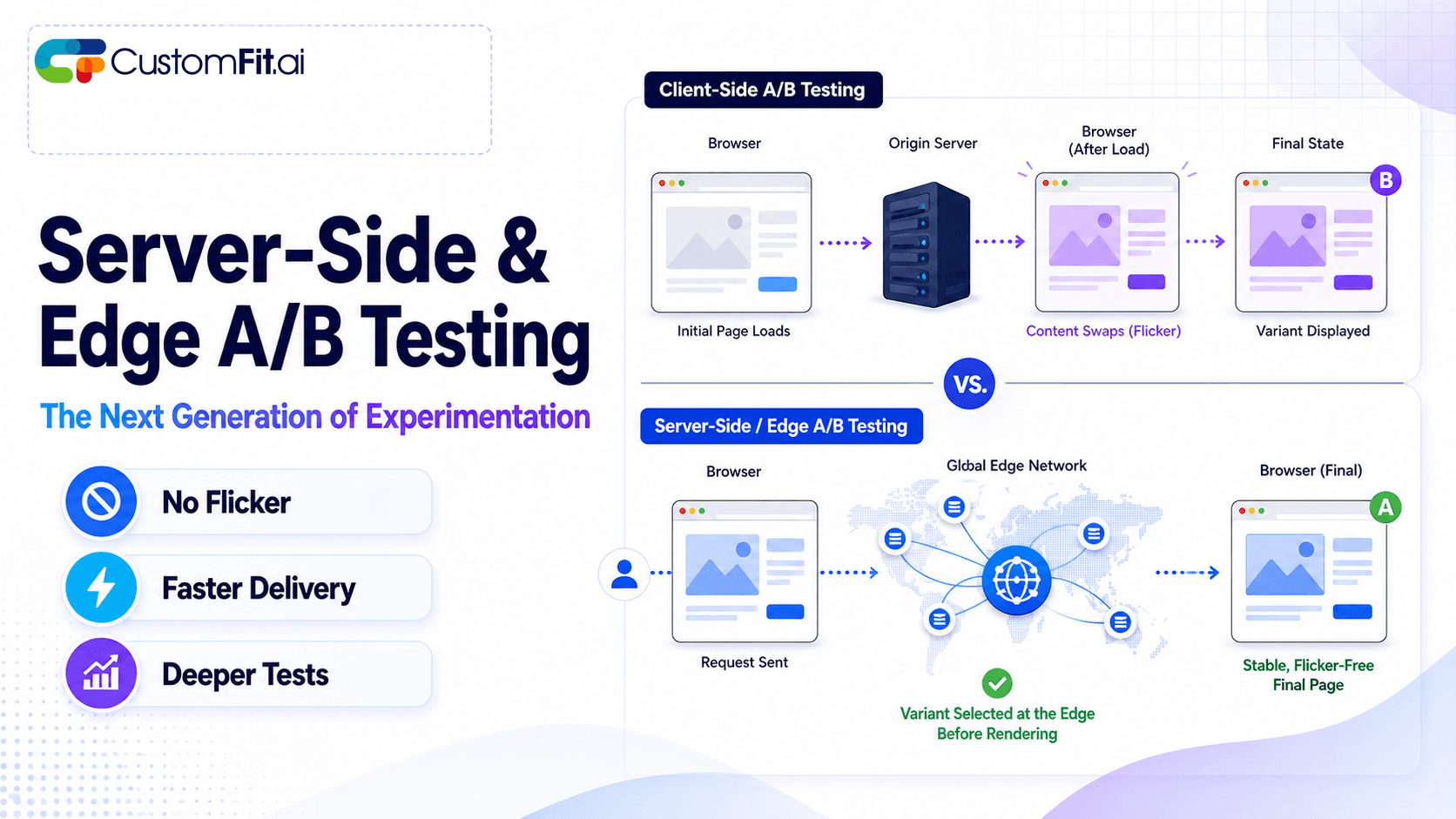
Server-side A/B testing and edge experimentation explained - how they eliminate flicker, improve speed, and where they fit vs client-side testing.
 ab testing
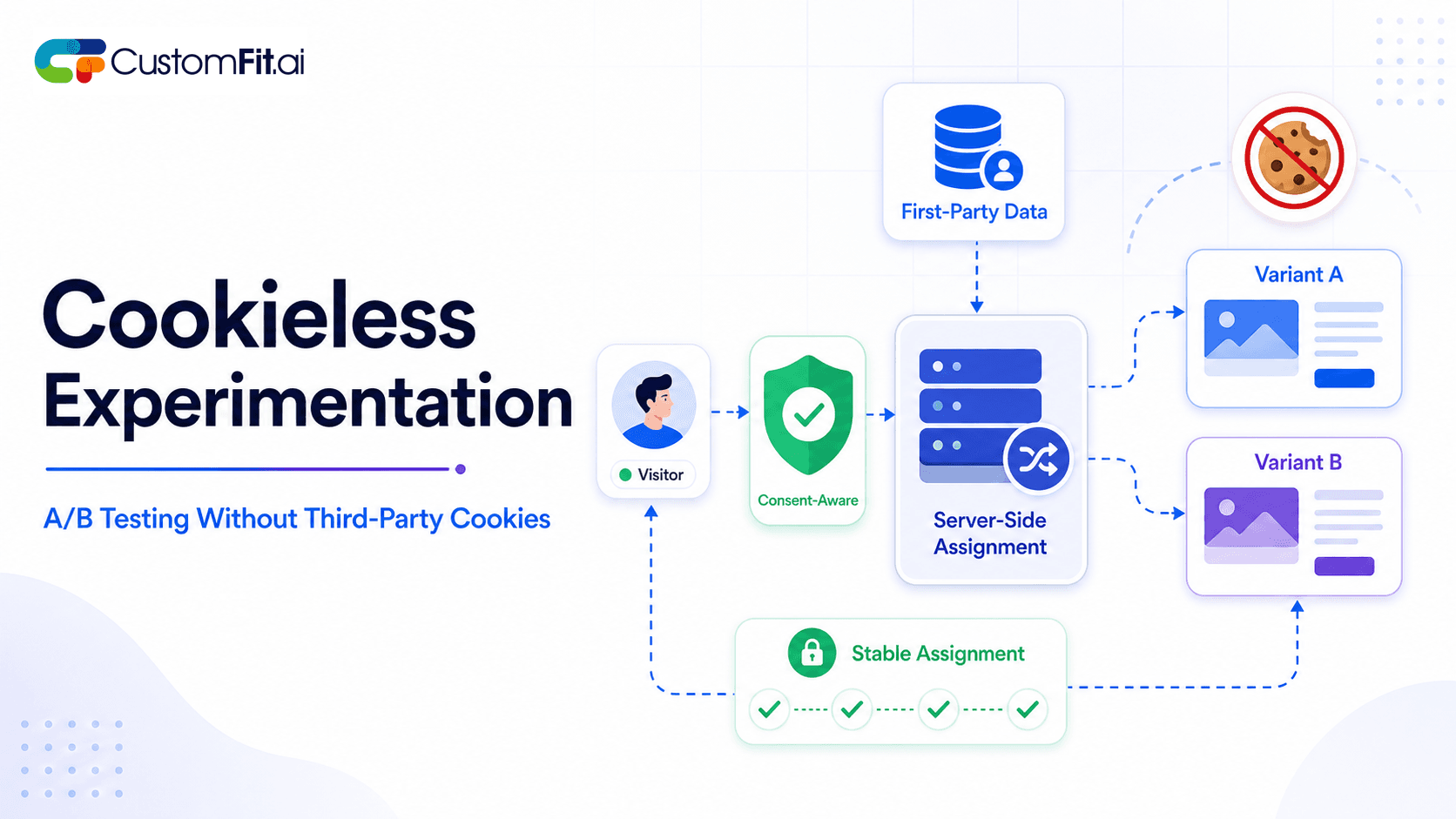
How to run cookieless A/B testing correctly in 2026 - first-party data, GDPR compliant methods, and what actually changed with third-party cookies.
 ab testing
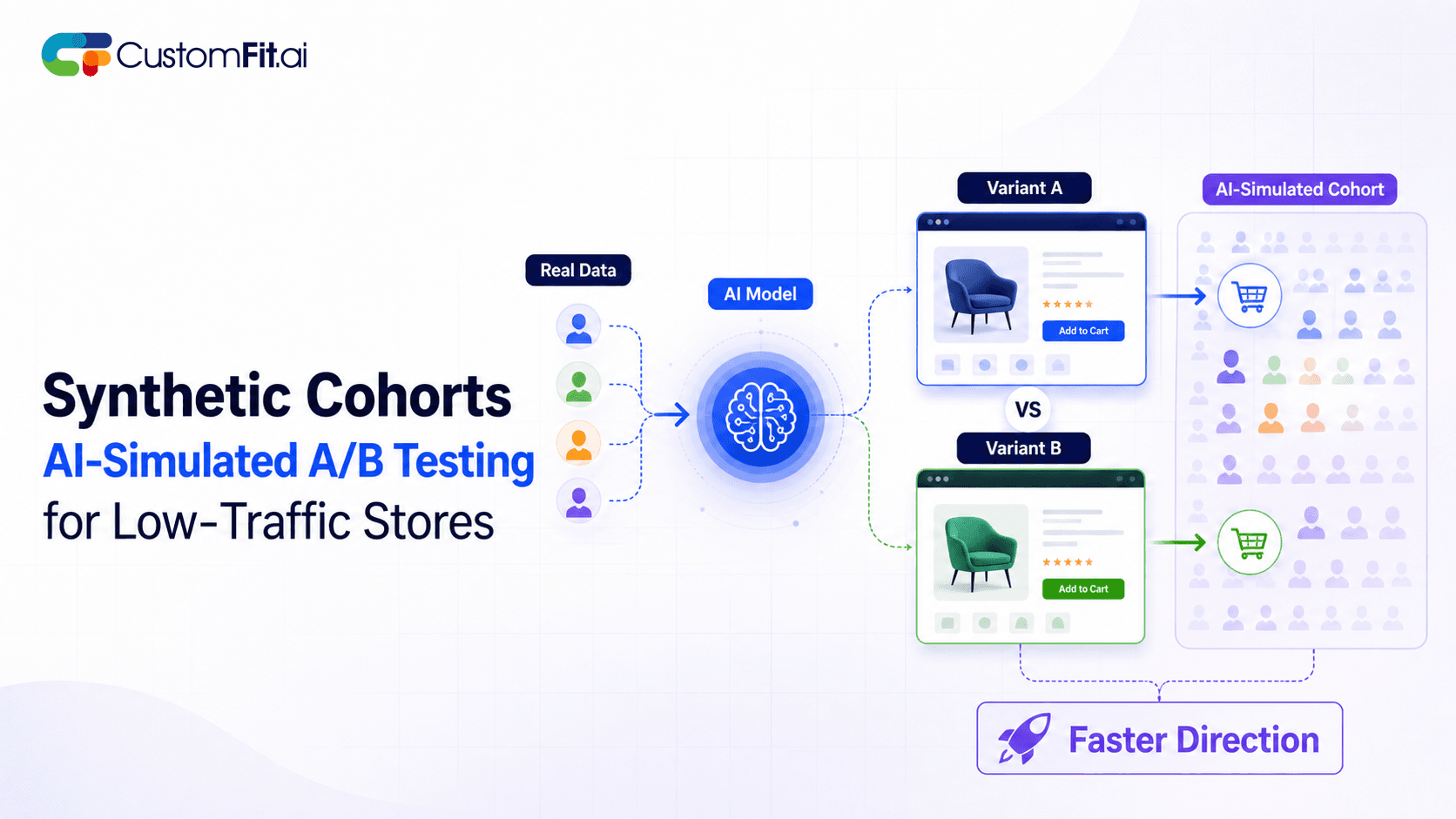
Not enough traffic to A/B test properly? Here's how synthetic cohort testing and AI-simulated experimentation help low-traffic stores test with confidence.
Run rigorous A/B tests and personalize every visit on Shopify or any storefront — no engineers required.
Your homepage is the most-visited page on your store, and for most D2C brands, the one tested least often. A single winning homepage test can lift site-wide conversion rate because it touches every visitor. These 30 A/B testing ideas cover every major element of an ecommerce homepage: hero section, navigation, social proof, personalisation, and more.
Visitors form a judgement within 3 to 5 seconds, and that judgement determines whether they browse further or bounce. For Indian D2C stores seeing 60 to 70% mobile traffic, homepage performance is especially important because mobile attention spans are shorter and scrolling behaviour differs from desktop.
Every test here is a site-wide experiment. A hero headline that increases click-through rate by 10% lifts all downstream metrics proportionally. Split testing on the homepage has the highest leverage of any test location on the site.
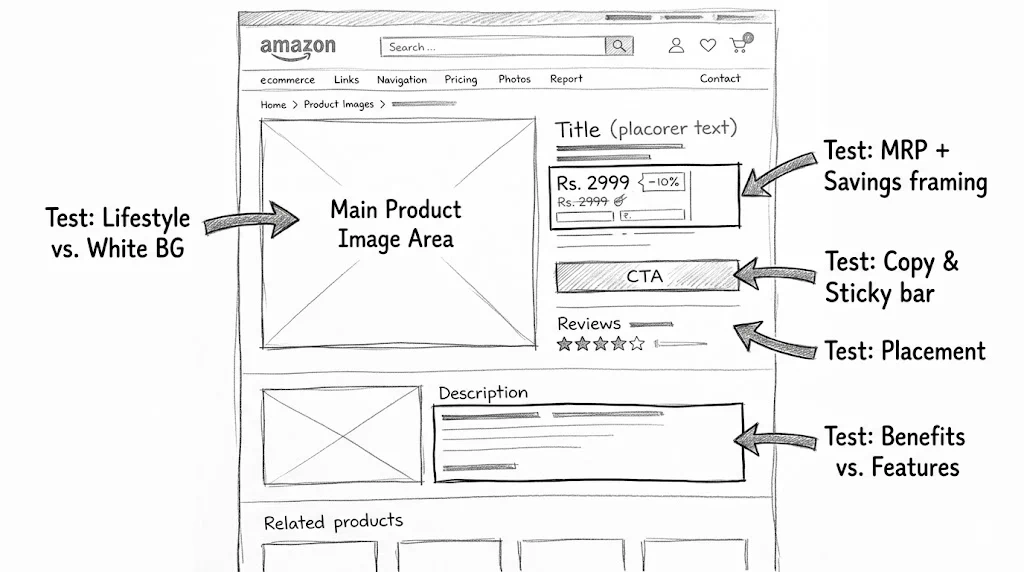
Variant A: "Discover India's Best-Selling Skincare Products" Variant B: "Clearer Skin in 28 Days, Trusted by 2,40,000 Indians"
Benefit-led headlines (what the customer gets) typically outperform product-led headlines (what you sell) by 8 to 15% on click-through rate.
Variant A: "Shop Now" Variant B: "Find My Perfect Product" Variant C: "Start With Our Best Seller"
"Shop Now" is the lowest-converting generic CTA. Specific, action-oriented CTAs that promise an outcome convert 10 to 20% better.
Lifestyle and UGC-style images typically outperform packshots for beauty, food, and apparel categories.
A looping 10 to 15 second background video vs. a high-quality static hero image. Video wins in fashion and food categories; static wins in minimalist and luxury contexts.
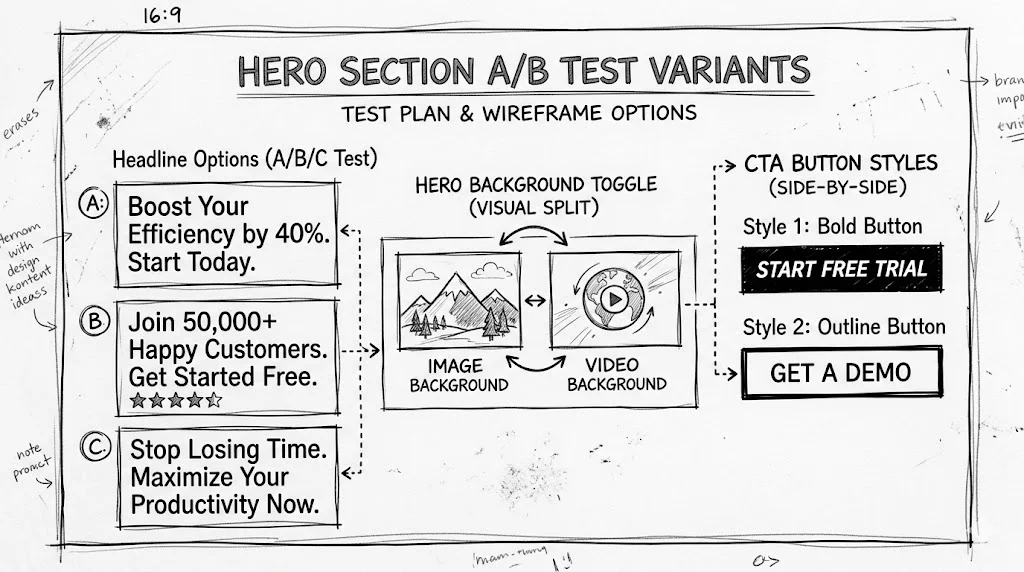
Variant A: No trust strip above the fold Variant B: "★★★★★ 4.8 from 14,000+ reviews | Free shipping above ₹499 | Easy returns"
A trust strip above the fold reduces bounce rate by 5 to 10% for new visitors evaluating brand credibility.
Variant A: Centred headline with image behind Variant B: Split layout with image on the left and headline and CTA on the right
Split layouts often perform better on desktop; centred works better on mobile. Always segment by device.
Test your current CTA button colour against a high-contrast alternative (for example, if your brand is blue, test an orange or white CTA). Colour contrast with the background affects click-through rate more than button colour alone.
Variant A: No offer in hero Variant B: "First Order: 15% Off | Use Code NEW15" in the hero section
For acquisition-focused periods, an explicit first-order offer in the hero increases new visitor conversion by 10 to 20%.
Variant A: "Shop All Products" CTA Variant B: "Find Your Perfect Match, Take the 60-Second Quiz" CTA
For stores with complex product ranges, a quiz CTA can outperform a direct shop CTA by 15 to 25% for new visitor engagement.
During festive sales (Diwali, Republic Day sale), test a countdown timer to the end of the offer vs. no countdown. In appropriate contexts, countdown timers lift click-through by 8 to 15%.
Variant A: Category navigation: "Skincare | Haircare | Bodycare | Makeup" Variant B: Use case navigation: "For Dry Skin | For Oily Skin | Anti-Ageing | Sun Protection"
Use-case navigation outperforms category navigation for new visitors who know their problem but not your product range.
A navigation bar that scrolls with the visitor vs. one that disappears on scroll. Sticky navigation typically increases page depth and reduces bounce rate by 3 to 6%.
Variant A: Search icon (click to expand) Variant B: Full search bar visible in navigation
A visible search bar increases search usage by 20 to 30% and lifts CVR for search users by 15 to 25%, since searchers convert at higher rates.
Adding a "Best Sellers" link as the first navigation item routes new visitors to your highest-converting products before they get lost in the catalogue.
On mobile, test a hamburger menu against a tabbed bottom navigation bar with the 4 most important categories always visible. Bottom tabs typically increase category click-through on mobile.
Variant A: "★ 4.8 (14,200 reviews)" Variant B: "Loved by 14,200+ Indian customers"
Plain language social proof often outperforms star rating formatting for trust communication.
A carousel of 3 featured written reviews (with customer name, photo, location) vs. a single aggregate star rating display. Featured reviews convert better for higher-consideration categories.
Variant A: No press logos on homepage Variant B: "As featured in: Economic Times | Femina | Cosmopolitan India" logo strip
Press logo strips lift brand trust scores by 8 to 12% for first-time visitors, especially for newer brands.
Variant A: Static social proof Variant B: "847 people are shopping right now" or "243 orders placed today" live ticker
Real-time signals create genuine FOMO without manufactured urgency. They work best for high-traffic stores.
A gallery of customer before/after results vs. product photography only. Transformation galleries outperform product images for health, beauty, and fitness categories.
For visitors who have purchased before, show a personalised section: "Welcome back, Priya, your last purchase was [Product]. You might love these next."
For visitors who browsed skincare last visit, personalise the featured collection to show skincare products. Relevant product surfacing lifts engagement by 10 to 20%.
Show city-specific offers to visitors in Tier 2 and Tier 3 cities: "Delivering to Lucknow, Free shipping, no minimum order."
New visitors: "Discover Our Story, 15% Off Your First Order" Returning visitors: "New Arrivals Just for You"
Two different hero CTAs for two different audiences is one of the highest-impact personalisation tests.
During Indian summers (April to June), surface cooling/sun protection products. During monsoon (July to September), surface relevant products such as anti-humidity haircare and waterproof beauty. Seasonal relevance lifts click-through by 8 to 14%.
For visitors in non-English language states, test showing a "हिंदी में देखें / தமிழில் பார்க்கவும்" option in the header. Language preference banners increase session depth by 15 to 25% for vernacular language visitors.
Variant A: Popup at 5 seconds Variant B: Popup at exit intent Variant C: No popup
Exit-intent popups typically have 3 to 5x higher conversion rates than time-based popups, with fewer complaints and lower bounce rates.
Variant A: Bottom-right corner (standard) Variant B: Inline CTA within the hero section: "Questions? Chat with us on WhatsApp"
An inline WhatsApp CTA in the hero section drives 3 to 5x more conversations than a floating widget.
Variant A: Free shipping mentioned in footer Variant B: "Free shipping on orders above ₹499" in a persistent top bar above navigation
A persistent top bar for free shipping messaging reduces cart abandonment by 5 to 10% by setting expectations before the customer reaches the cart.
For newer brands, test including a 2 to 3 sentence "Why we exist" brand story snippet on the homepage vs. not. A brand story on the homepage increases time on site for high-quality traffic and sets purchase context.
| Test Area | Tests | Expected Lift Range |
|---|---|---|
| Hero section | 1 to 10 | 8 to 25% click-through |
| Navigation | 11 to 15 | 3 to 15% engagement |
| Social proof | 16 to 20 | 5 to 12% trust conversion |
| Personalisation | 21 to 26 | 10 to 25% relevance lift |
| Offers & engagement | 27 to 30 | 5 to 15% capture rate |
Test mobile and desktop separately. Homepage behaviour differs by device. A hero layout that wins on desktop may lose on mobile. Always segment results by device in CustomFit.ai's test reporting.
Don't test during the first week of a major sale. Traffic quality and behaviour during Diwali sale opening day is completely different from normal. Test in stable periods and deploy winners before the sale starts.
Track downstream, not just homepage. The primary metric for homepage tests is product page click-through rate, not bounce rate alone. A test that reduces bounce but sends visitors to the wrong products is still a loss.
See also: product page A/B testing ideas and ecommerce A/B testing ideas by funnel stage for the complete testing roadmap.