From the conversion glossary
Concepts referenced in this article, defined.
Concepts referenced in this article, defined.
 ab testing
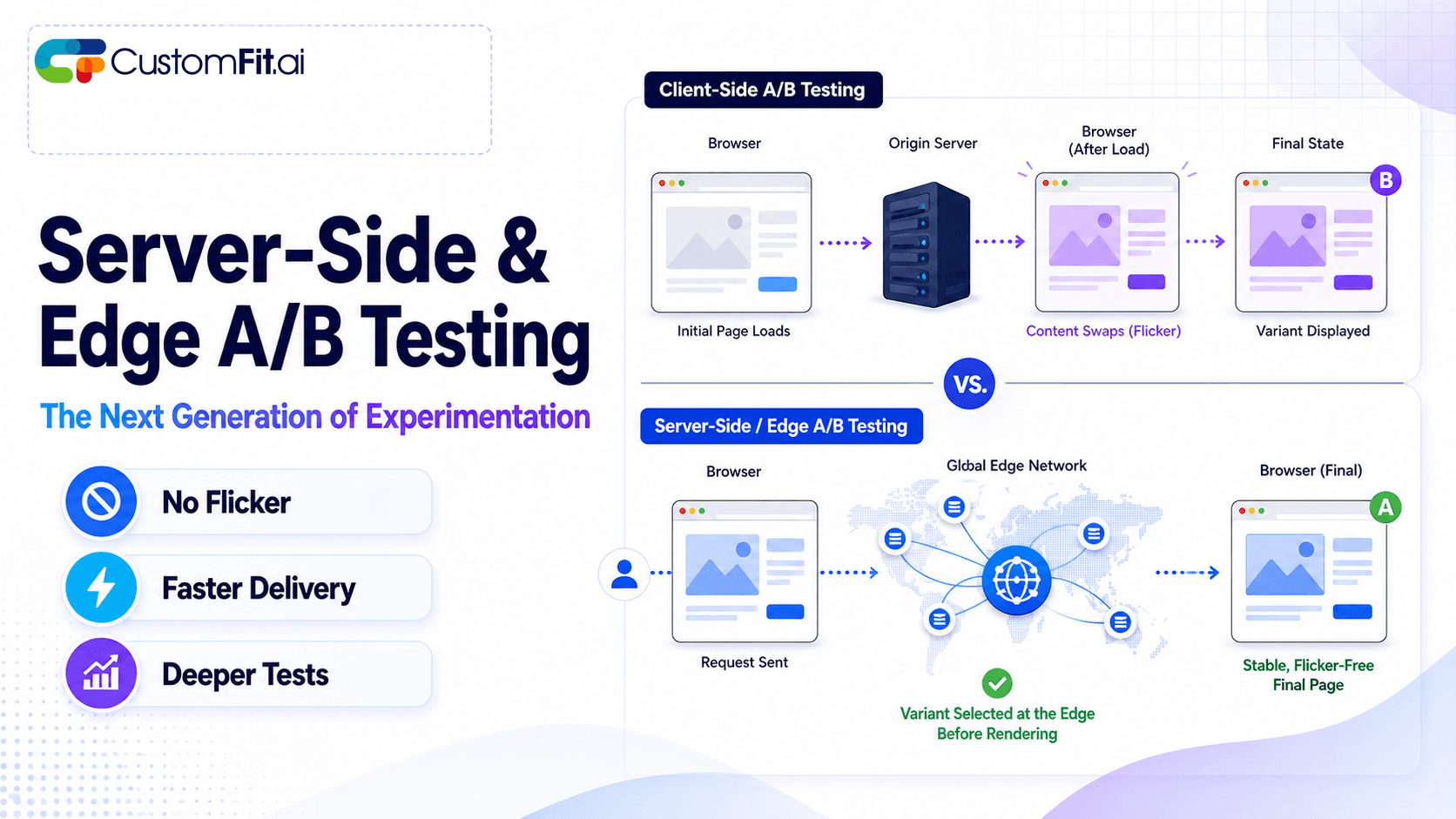
Server-side A/B testing and edge experimentation explained - how they eliminate flicker, improve speed, and where they fit vs client-side testing.
 ab testing
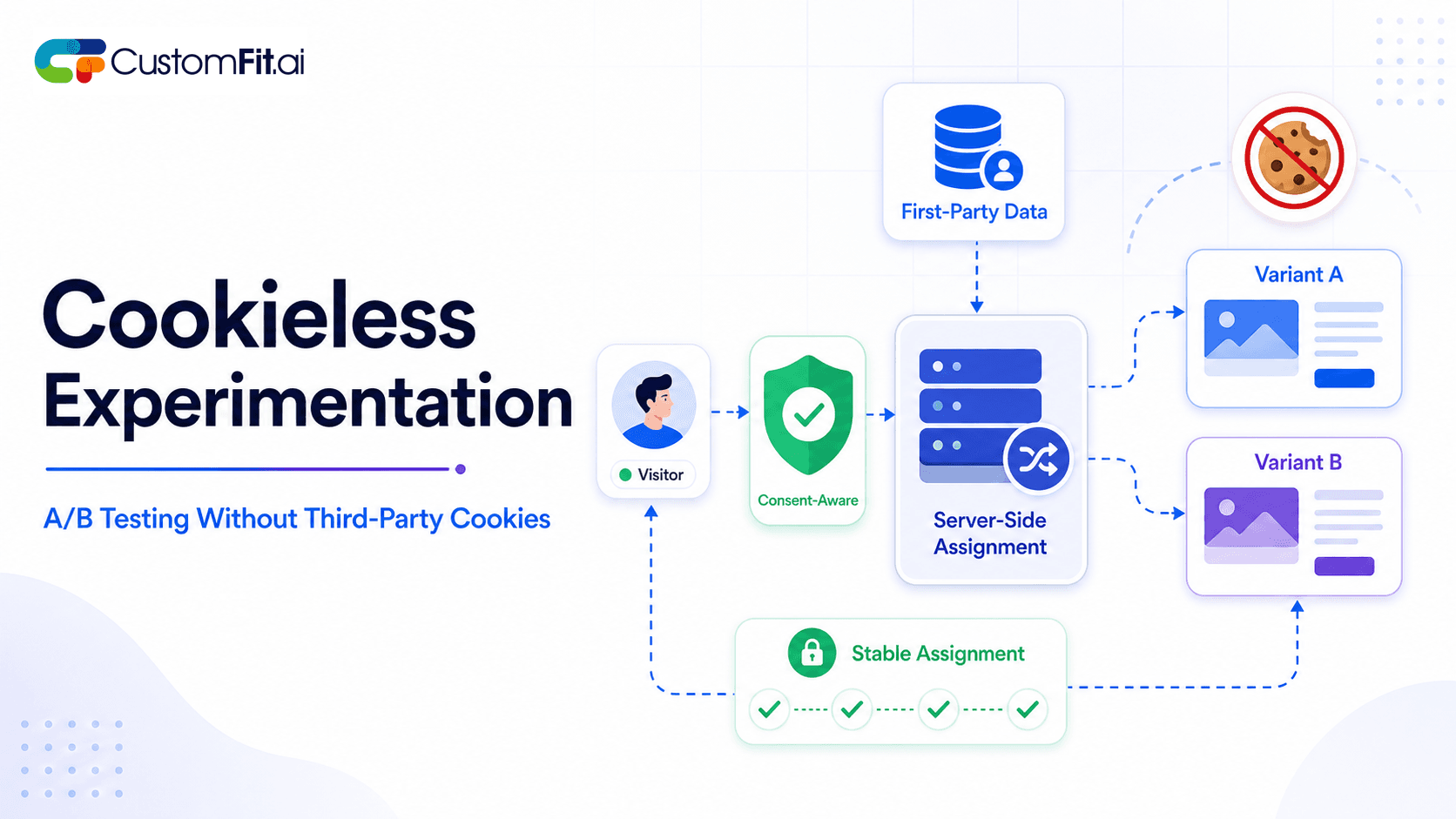
How to run cookieless A/B testing correctly in 2026 - first-party data, GDPR compliant methods, and what actually changed with third-party cookies.
 ab testing
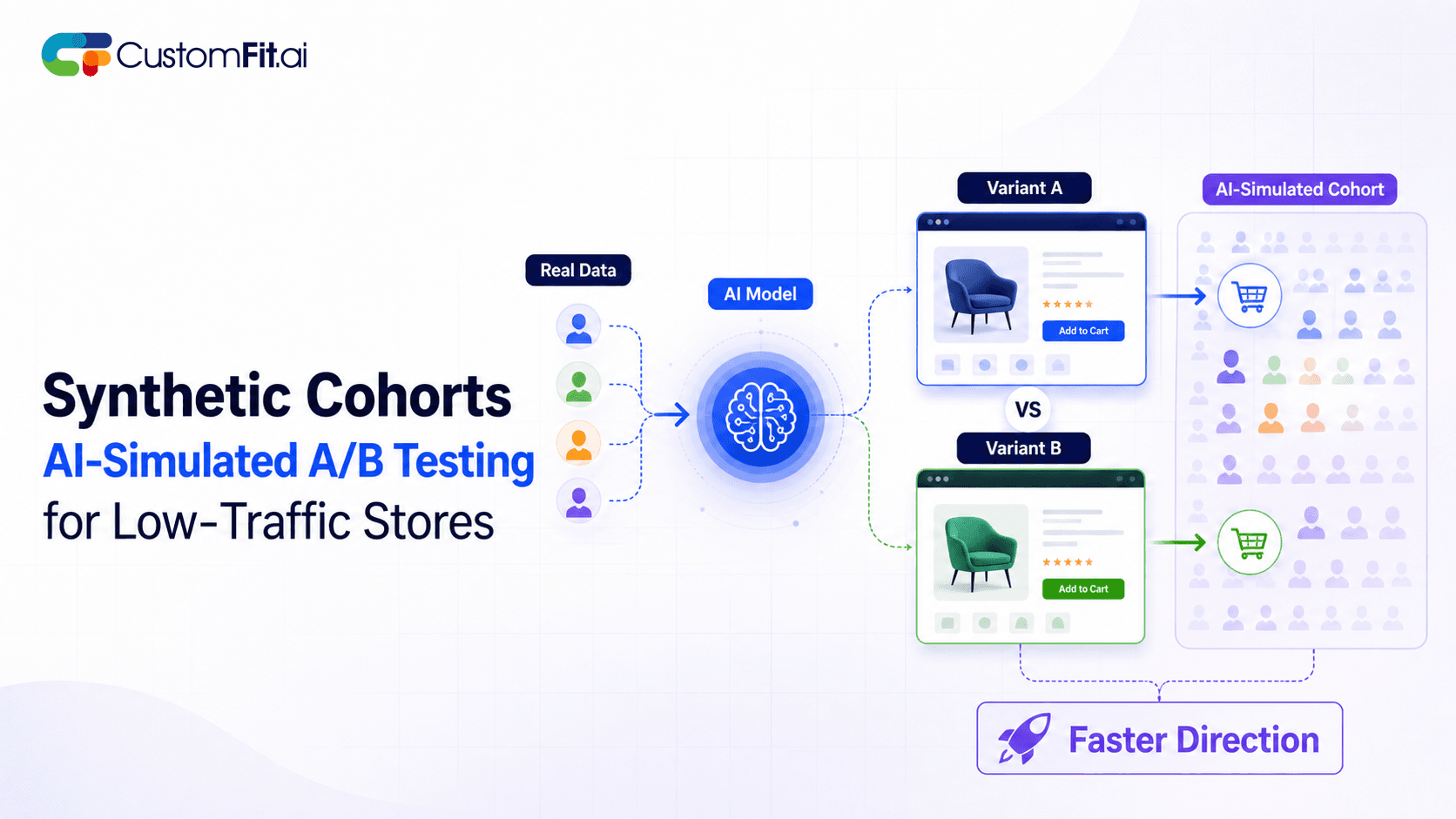
Not enough traffic to A/B test properly? Here's how synthetic cohort testing and AI-simulated experimentation help low-traffic stores test with confidence.
Run rigorous A/B tests and personalize every visit on Shopify or any storefront — no engineers required.
The product page is where purchase decisions are made. After all the effort of driving traffic — ads, SEO, social — the product page is where you win or lose the sale. A well-optimised product page is the highest-ROI asset in D2C ecommerce. These 30 A/B testing ideas cover every major element — from the CTA button that drives the sale to the review section that builds the trust to get there.
Most D2C stores have one homepage but dozens or hundreds of product pages — and product pages see the highest-intent traffic of any page type. Someone who lands on a product page from a search for "best vitamin C serum for oily skin" is far more ready to buy than someone browsing your homepage. This makes product pages the highest-ROI testing location: high intent + high traffic volume = high test velocity and high impact per winning test.
Statistical significance is reached fastest on product pages because of the volume. A high-traffic product page can conclude a test in 7–10 days. A low-traffic product page may need 21–28 days. Use your bestsellers as your primary test location and roll out winners across the range.
The copy on your "Add to Cart" button is one of the most-tested and highest-impact variables on any product page.
"Buy Now" typically outperforms "Add to Cart" for impulse and low-consideration products. "Add to Cart" outperforms for considered purchases where the buyer wants to compare before committing.
Expected lift: 3–8% CVR improvement on the winning variant.
Test your current CTA colour against a high-contrast alternative. The principle is contrast with the surrounding elements — not a specific colour. If your page is primarily white and blue, an orange or green CTA will draw attention.
Expected lift: 2–6% CVR improvement.
A larger CTA button (padding increased by 20%) on mobile vs. the current size. On small screens, larger touch targets reduce mis-tap friction and increase conversion.
Expected lift: 3–7% mobile CVR improvement.
Variant A: Single "Add to Cart" CTA Variant B: Two CTAs: "Buy Now" (primary, links to direct checkout) + "Add to Cart" (secondary)
"Buy Now" bypasses the cart and goes directly to checkout — reducing steps for committed buyers. Test this for high-intent product pages.
Expected lift: 5–12% checkout initiation rate.
A persistent "Add to Cart" bar at the bottom of the screen on mobile that remains visible as the user scrolls through the product page.
Expected lift: 8–15% mobile add-to-cart rate.
For consumable products, set the default to "Subscribe & Save 15%" and measure subscription sign-up rate vs. Variant A (one-time default).
Expected lift: 15–25% subscription rate on first purchase.
Variant A: "Add to Cart" Variant B: "Add to Cart — Only 8 Left in Stock" (with real inventory data)
Genuine stock scarcity combined with CTA urgency lifts conversion when inventory data is accurate. Never manufacture this.
Expected lift: 6–14% CVR when stock genuinely is limited.
Variant A: CTA button only Variant B: CTA button + "Free shipping on this order | Delivered in 3–5 days"
Adding specific shipping reassurance directly below the CTA reduces checkout abandonment anxiety at the moment of decision.
Expected lift: 4–9% checkout initiation rate.
The first image in your product gallery — lifestyle (in use/in context) vs. clean packshot. For most D2C categories, lifestyle outperforms packshot by 8–15% on add-to-cart rate.
Moving a product video from the end of the gallery to the first position. For high-consideration products, video first lifts engagement and add-to-cart rate.
Variant A: 4 images Variant B: 8–10 images (showing multiple angles, in use, packaging, detail shots)
More images reduce uncertainty for high-consideration purchases. Test whether additional images lift or overwhelm for your specific category.
A rotating 360° product view vs. standard static image gallery. High impact for products where shape and form factor matter (furniture, footwear, bags).
Adding images of models with different skin tones, body types, or face shapes wearing or using the product. Consistently lifts CVR by 7–14% in beauty and apparel categories.
A visual carousel of customer-submitted photos appearing above the text review section. Photo reviews from real customers convert better than brand photography in high-trust categories.
Variant A: 3 bullet points with key benefits Variant B: 200-word description with context, ingredients, and use case
High-consideration products (skincare, supplements, electronics) typically benefit from more detail. Low-consideration products convert better with less copy.
Variant A: "Contains 20% Vitamin C, Hyaluronic Acid, and Niacinamide" Variant B: "Visibly brighter skin in 4 weeks — with dermatologist-tested Vitamin C"
Benefit-led copy typically outperforms feature-led copy by 5–12% for mainstream buyers.
Product description, ingredients, how to use, shipping info, and reviews — displayed as: Variant A: Separate expandable accordion sections Variant B: Tab navigation
Accordions typically outperform tabs on mobile; tabs work better on desktop.
Keeping usage instructions on the product page vs. linking to a separate how-to page. On-page instructions reduce drop-off and reassure hesitant buyers about ease of use.
Variant A: Product name as headline ("Vitamin C Brightening Serum") Variant B: Benefit headline as primary ("Visibly Brighter Skin in 28 Days") with product name secondary
Benefit headlines perform better for unfamiliar brands. Product name headlines perform better for loyal returning buyers.
Add a short social proof statement near the CTA button:
One of these near the CTA typically lifts add-to-cart by 5–10%.
Variant A: Trust badges in product description section (below fold) Variant B: Trust badges directly below the CTA button (above fold on desktop)
Above-fold placement near the CTA consistently outperforms below-fold placement for reducing purchase anxiety.
Variant A: "Easy Returns" Variant B: "Free returns within 30 days — no questions asked. Click here to see our return process."
Specific return policy copy with a clear process link reduces purchase risk more effectively than generic "Easy Returns" language.
Variant A: Reviews sorted by "Most Helpful" Variant B: Reviews sorted by "Most Recent"
Recent reviews signal active selling and customer support. Test which sort order your audience prefers for trust building.
Adding a "Verified Purchase" badge to reviews vs. showing all reviews without verification status. Verified badges increase review credibility and CVR by 3–7%.
For stores that offer COD, adding a prominent "Cash on Delivery Available" badge on product pages for new visitors or first-time session visitors. Especially impactful for Tier 2/3 city traffic.
Variant A: Below reviews section (below fold) Variant B: Below CTA, above reviews (above fold on desktop)
Above-fold frequently-bought-together sections see 2–3x higher engagement than below-fold placements.
Variant A: Separate bundle product listing Variant B: "Build Your Bundle" configurator on the product page
Inline bundle configurators on product pages outperform separate bundle pages by 15–25% in bundle take-rate.
When a customer clicks "Add to Cart," test: Variant A: Go straight to cart Variant B: Show a quick "You might also need..." modal with 3 complementary products before going to cart
Modal cross-sells at the add-to-cart moment convert at 10–18% take-rate for well-matched complementary products.
Variant A: No wishlist option Variant B: "Save for Later" wishlist with email reminder "Your saved product is running low"
Wishlist buttons reduce immediate abandonment for window shoppers and convert via follow-up. A wishlist email sequence converts 8–15% of wishlisters to buyers within 30 days.
After a customer has scrolled to and read reviews, test inserting a second CTA button at the bottom of the review section — "Ready to Try It? Add to Cart" — to capture visitors who were convinced by reviews but haven't clicked back up to the primary CTA.
Expected lift: 3–7% add-to-cart rate from review-section visitors.
| Priority | Test | Why |
|---|---|---|
| 1 | CTA button copy and colour | High traffic, easy to implement, immediate impact |
| 2 | Sticky add to cart (mobile) | 70%+ of traffic is mobile for most D2C stores |
| 3 | Trust badge placement near CTA | High impact, zero development needed |
| 4 | Hero image: lifestyle vs. packshot | High impact on first impression |
| 5 | Subscription default | High LTV impact, one of the most valuable tests |
Run tests on your top 3 products first. These get the most traffic and will reach statistical significance fastest. Then roll out winning variants to the rest of the catalogue.
Don't test layout and copy simultaneously. If you change the page layout AND the headline copy at the same time, you won't know which drove the result. Test one thing at a time.
Mobile first. Segment all results by mobile vs. desktop. A test that wins on desktop may lose on mobile. Given 65–75% of D2C traffic in India is mobile, mobile performance is your primary metric.
Related: homepage A/B testing ideas and checkout A/B testing ideas for the full ecommerce test roadmap.