
From the conversion glossary
Concepts referenced in this article, defined.
10 A/B test ideas for tea & coffee D2C brands. Subscription defaults, tasting note copy, and sampler kit tests to lift CVR and build repeat buyers.
Concepts referenced in this article, defined.
 ab testing
A practical framework for discussing winning, losing and inconclusive A/B tests in growth, CRO and ecommerce job interviews.
 ab testing
A/B testing isn't magic. Learn about the common myths that waste traffic and skew results, plus how to run smarter tests that improve conversions.
 ab testing
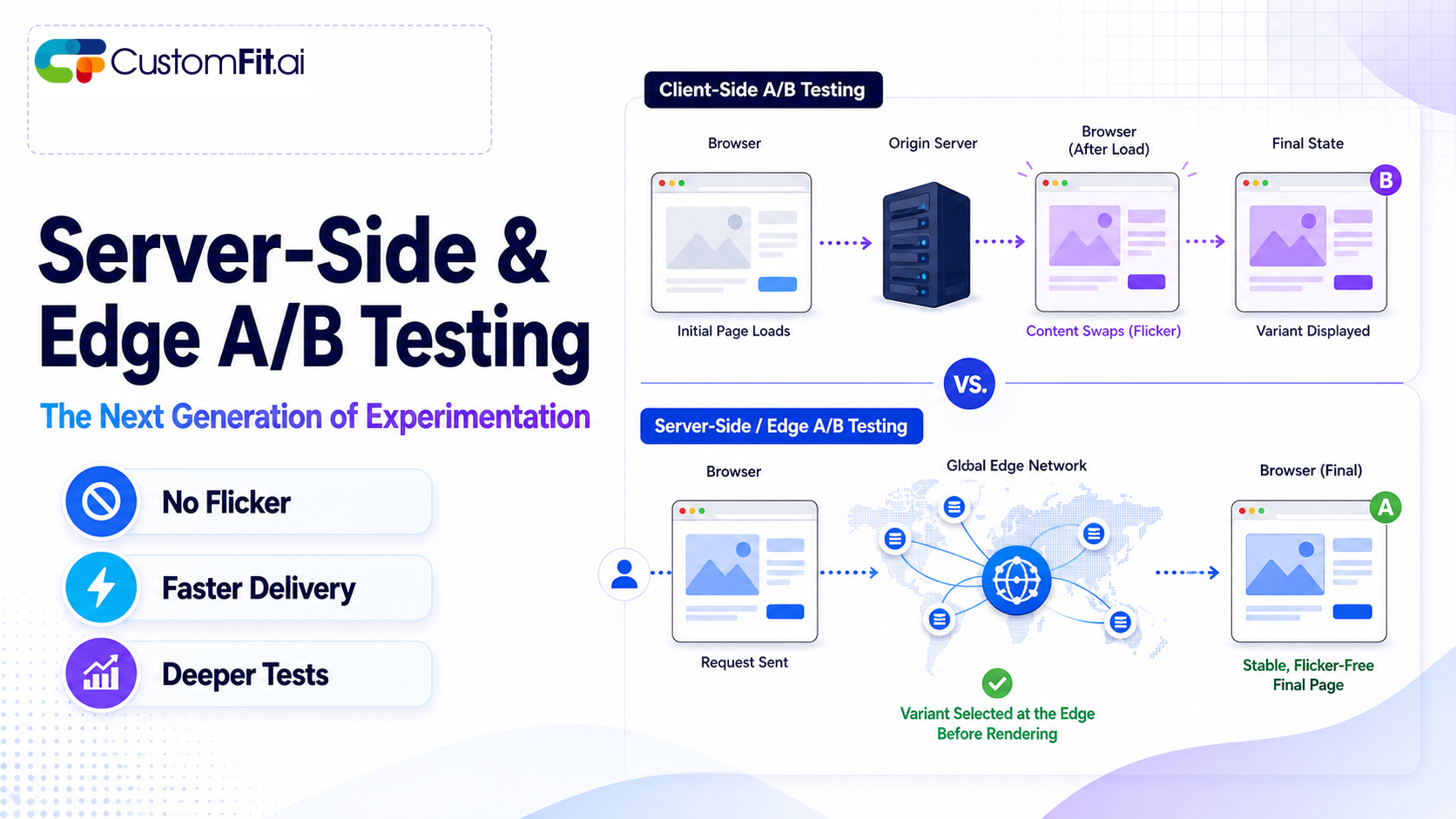
Server-side A/B testing and edge experimentation explained - how they eliminate flicker, improve speed, and where they fit vs client-side testing.
Run rigorous A/B tests and personalize every visit on Shopify or any storefront — no engineers required.
Tea and coffee are India's most consumed beverages — and among the highest-potential D2C subscription categories. Brands like Blue Tokai, Teabox, Vahdam Teas, and Sleepy Owl have demonstrated that Indian consumers will pay premium prices for single-origin, craft-roasted, or wellness-focused beverages when the brand story and product quality justify it. The challenge is converting first-time visitors who don't yet trust the product they can't taste. These 10 A/B tests address that challenge directly.
First-time buyers need to be convinced on three levels: quality (single-origin, craft process), taste fit (will I like this?), and value (is ₹699 for 100g of coffee reasonable?). Subscription buyers need a different message: convenience, consistency, and discovery. Your split testing strategy should segment by customer lifecycle stage and run separate experiments for each.

Description: For your top 3–5 bestselling products, set the default purchase option to "Subscribe & Save 15%" with free delivery, rather than one-time purchase.
Why it works: Coffee drinkers consume 1–2 bags per month with clockwork regularity. Tea drinkers refill their daily habit every 30–60 days. Pre-selecting subscription at the moment of first purchase — when motivation is highest — converts far more subscribers than asking customers to opt in later. This is the single highest-LTV test you can run.
Best for: All flagship coffee and tea products with replenishment demand.
Expected lift: 15–25% subscription sign-up rate on first purchase.

Description: Pin a "Discover Your Favourite — 5 Coffees/Teas Sampler Kit (₹399)" as the hero product on category pages for new visitors, rather than showing full-size products first.
Why it works: First-time buyers of speciality tea or coffee don't know what they'll love — Darjeeling First Flush or Assam CTC; Coorg Arabica or Araku Robusta. A low-risk sampler kit lets them taste before committing to full-size bags, converting hesitant new buyers at 2–4x the rate of full-size offers.
Best for: Speciality tea and coffee stores with diverse range.
Expected lift: 2–4x CVR for new visitor traffic; 55–65% full-size purchase rate within 60 days.
Description: Replace text-based tasting notes ("Notes of dark chocolate, stone fruit, and bright citrus acidity") with visual flavor wheel cards that map the taste profile visually, with a secondary "How it compares to what you know" section (e.g., "If you like [famous brand coffee], you'll find this more complex and cleaner").
Why it works: Flavour description is abstract to non-specialists. Visual flavour wheels and comparative references ("cleaner than X, more complex than Y") translate expertise into something a curious but inexperienced buyer can act on.
Best for: Speciality coffee, premium single-estate teas, herbal blends.
Expected lift: 7–13% add-to-cart rate improvement from engaged visitors.
Description: Add a "From the Estate" section on product pages featuring 2–3 photos from the specific tea garden or coffee farm, the farmer's name, the elevation, and the harvest method.
Why it works: Indian buyers have deep emotional connection to specific growing regions — Darjeeling tea, Coorg coffee, Munnar cardamom. Origin photography with specific human faces (the farmer, the picker, the roaster) creates a connection that justifies premium pricing and drives conversion rate.
Best for: Single-origin and estate-specific products.
Expected lift: 8–15% CVR improvement from premium-intent visitors.
Description: Add a "Best For:" section on each product page listing the primary wellness benefits with an icon: [Immunity] [Sleep] [Gut Health] [Focus & Energy] [Stress Relief] [Anti-inflammatory].
Why it works: The Indian wellness-beverage segment is driven by health-seeking behaviour. A customer searching for "tea for sleep" will respond to a clear "Best for: Sleep & Relaxation" callout far more than a flavour description. This aligns product pages with search intent.
Best for: Herbal teas, green teas, functional coffees (with ashwagandha, etc.).
Expected lift: 10–18% CVR improvement for health-motivated searchers.
Description: Add a 90-second "Perfect Cup" brew guide video directly on the product page — showing water temperature, steep time, brew ratio, and serving suggestion — embedded between the product images and the description.
Why it works: Brewing confidence is a conversion driver. A customer who doesn't know how to make a perfect French press or a proper Darjeeling first flush will hesitate to buy a premium product they might "waste." Teaching them before they buy removes that anxiety.
Best for: All speciality products, especially those with specific brew requirements.
Expected lift: 6–12% add-to-cart rate improvement.
Description: During Diwali, Pongal, Christmas, and Holi, add a "Gift This" CTA with a dedicated gifting configuration: choose 3 teas/coffees, select a gift box design, add a personalised message. Present at ₹999–₹1,999 price points.
Why it works: Tea and coffee are among the most culturally acceptable gifts in India — appropriate for family, elders, colleagues, and clients. A gift configuration tool at the product level captures gifting intent without requiring the buyer to browse a separate category.
Best for: All premium and estate products during Q4 festive season.
Expected lift: 20–30% CVR for gifting-intent visitors during festive season.
Description: Test lowering the free shipping threshold from ₹799 to ₹499 and measuring the impact on CVR and AOV, including whether lower threshold increases basket size (customers adding more to qualify).
Why it works: Tea and coffee orders are lightweight — shipping economics are more favourable than for heavy goods. If the lower threshold converts more orders, the volume gain may outweigh the shipping subsidy cost. This is a hypothesis about friction vs. unit economics.
Best for: All D2C tea and coffee stores with current free shipping thresholds.
Expected lift: 8–14% CVR improvement; need to measure AOV impact simultaneously.
Description: Add a social proof line near the Add to Cart button: "Restocked 847 times this month by subscribers" or "84% of buyers are on subscription — that's how good this is."
Why it works: Repurchase behaviour is the strongest quality signal for consumables. If existing customers are restocking, it proves the product delivers on its promise. This is word-of-mouth at scale, presented at the decision moment.
Best for: Top-selling subscription products.
Expected lift: 6–11% add-to-cart rate improvement.
Description: Create a homepage entry quiz: "Tell us about your coffee/tea drinking habits" (5 questions: when do you drink? How do you brew? What flavours do you love? Do you add milk? Any wellness goals?). Route to 3 product recommendations with explanations.
Why it works: Buyers who receive a personalised recommendation feel understood and are more likely to trust the product selection. This reduces the "which one do I choose?" paralysis and positions your brand as a knowledgeable guide rather than a catalogue.
Best for: Stores with diverse ranges across tea types, coffee origins, and wellness blends.
Expected lift: 12–20% CVR improvement for quiz-completing visitors; 15–25% higher AOV on guided selections.
| Test Idea | Difficulty | Expected CVR Lift | Best Page |
|---|---|---|---|
| Subscription default | Low | 15–25% sub rate | Product page |
| Discovery sampler kit hero | Medium | 2–4x new visitor CVR | Category page |
| Tasting notes visual cards | Medium | 7–13% | Product page |
| Origin story + estate photography | Medium | 8–15% | Product page |
| Health benefit callout | Low | 10–18% | Product page |
| Brew guide video | Medium | 6–12% | Product page |
| Festive gift box CTA | Medium | 20–30% seasonal | Product page |
| Free shipping threshold test | Low | 8–14% | Site-wide |
| Restocked by social proof | Low | 6–11% | Product page |
| Brew profile quiz | High | 12–20% | Homepage |
Build your subscription test first. For tea and coffee, subscription economics transform unit economics. A subscriber has 5–8x the LTV of a one-time buyer. This makes the subscription default test your highest-ROI experiment by a significant margin.
Segment by brewing method. A customer who uses a French press needs different products than one using a moka pot or pour-over. If you can capture brewing method preference (quiz, filter bar), personalise product recommendations accordingly.
Leverage Indian origin stories. Darjeeling, Munnar, Coorg, Araku Valley, and Nilgiri are premium signals for Indian buyers that international brands cannot compete with. Test origin-specific landing pages against generic category pages.
Time health-benefit tests with wellness seasons. January (New Year wellness goals), Navratri fasting period, and monsoon immunity season are peak moments for health-tea and functional coffee messaging. Test your health benefit callouts during these windows for maximum impact.
Related: 10 A/B test ideas for subscription box brands and ecommerce A/B testing ideas by funnel stage for complementary experiments.