From the conversion glossary
Concepts referenced in this article, defined.
Concepts referenced in this article, defined.
 ab testing
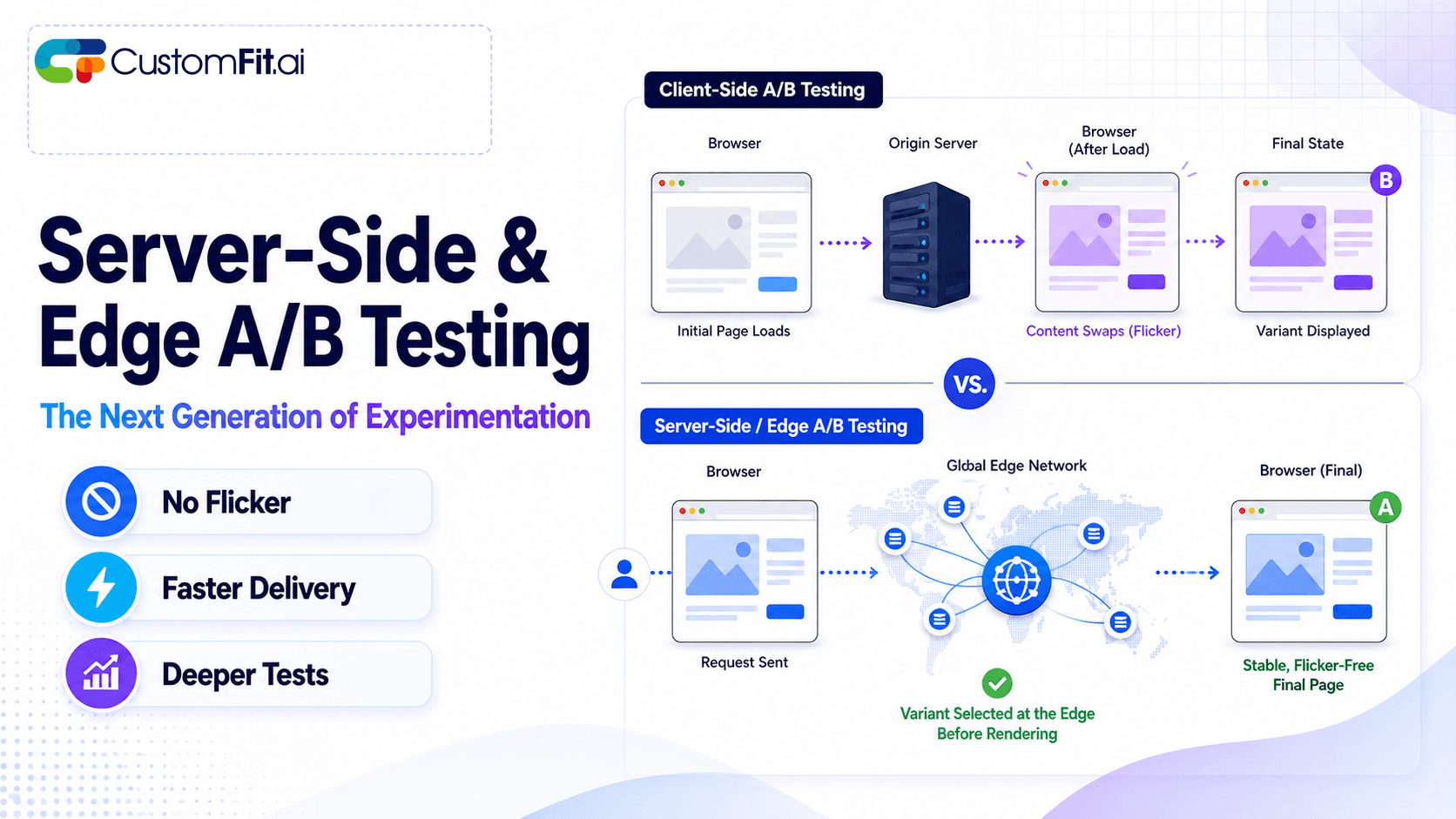
Server-side A/B testing and edge experimentation explained - how they eliminate flicker, improve speed, and where they fit vs client-side testing.
 ab testing
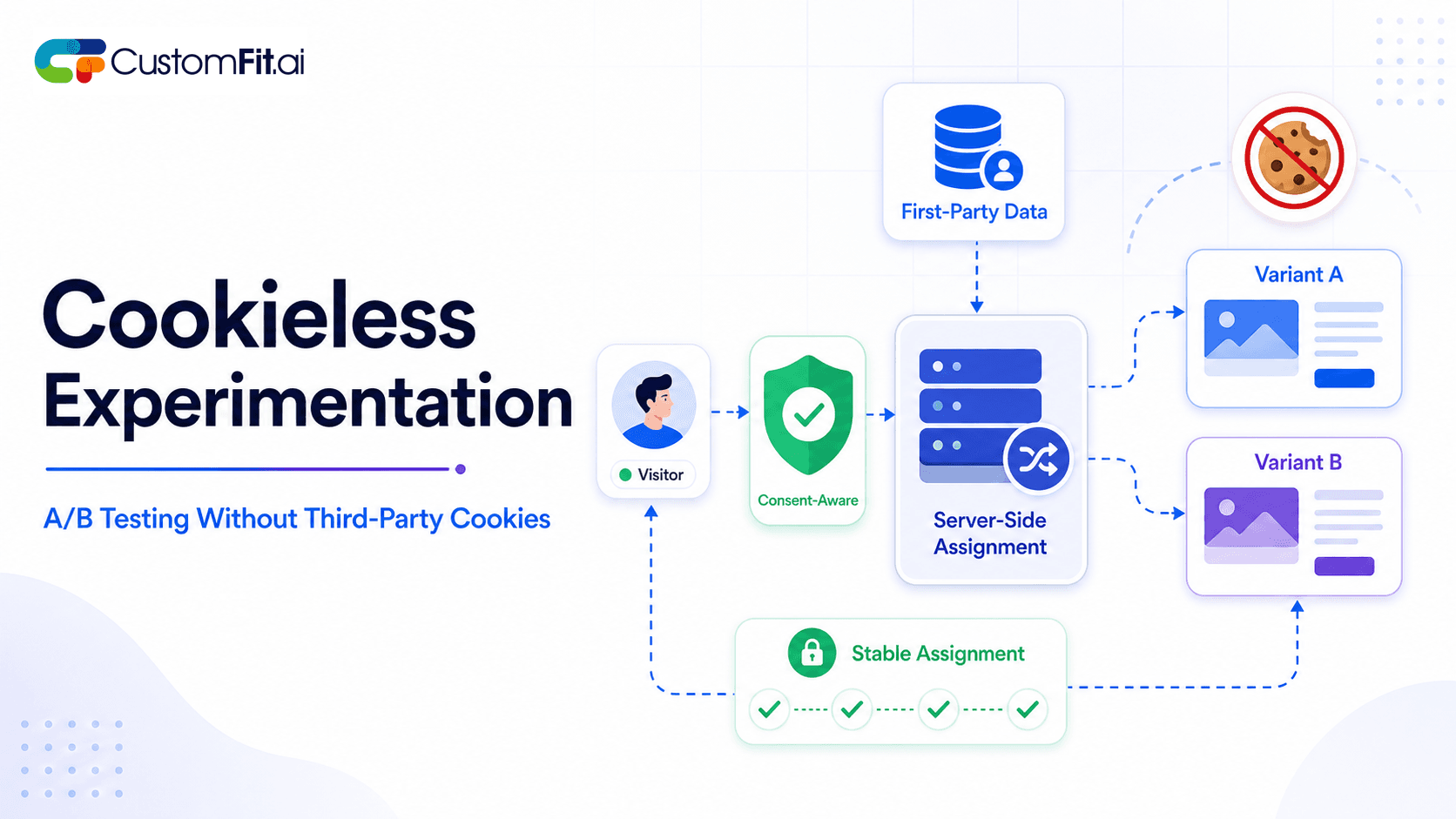
How to run cookieless A/B testing correctly in 2026 - first-party data, GDPR compliant methods, and what actually changed with third-party cookies.
 ab testing
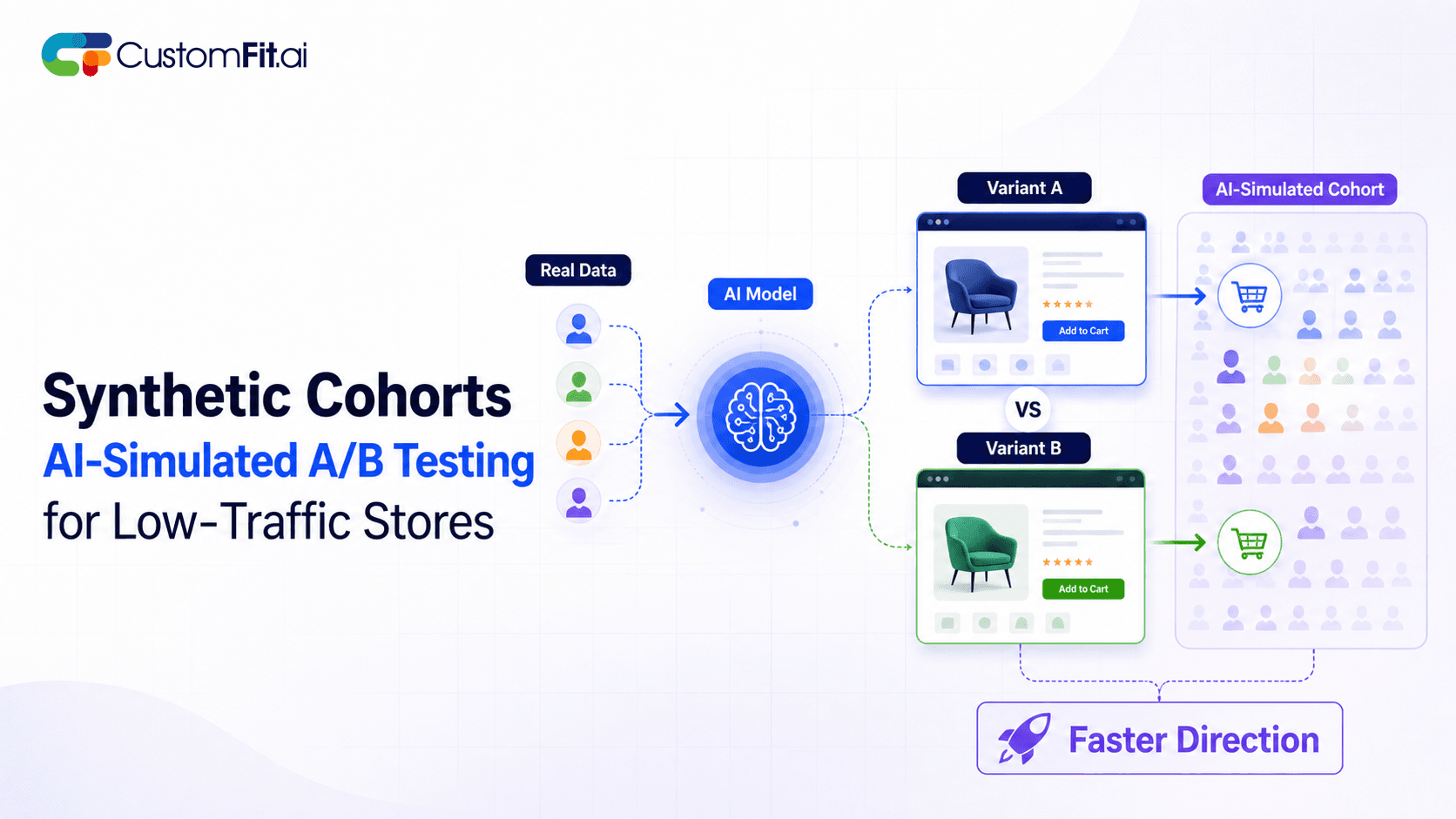
Not enough traffic to A/B test properly? Here's how synthetic cohort testing and AI-simulated experimentation help low-traffic stores test with confidence.
Run rigorous A/B tests and personalize every visit on Shopify or any storefront — no engineers required.
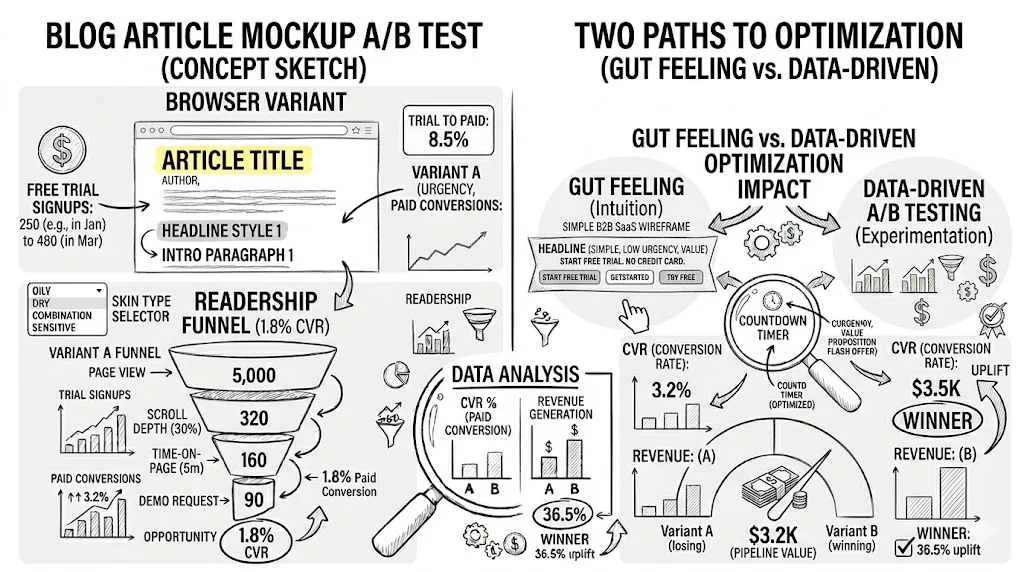
A/B testing blog content means running controlled experiments on your articles' headlines, CTA placements, content formats, and layouts to improve engagement metrics like time-on-page, scroll depth, and click-through rate — and ultimately, conversions from readers into customers. Blog content is often the largest source of organic traffic for D2C brands, yet most teams publish articles without ever testing which version actually engages their audience. A single winning headline test can improve organic CTR by 20-40%, compounding across every impression the article receives.
Blog testing has different stakes and mechanics than product page or checkout testing:
Lower direct revenue impact: Blog readers are typically in the awareness or consideration stage. A winning blog test rarely delivers immediate conversion lift; it improves the pipeline — more engaged readers, more email subscribers, more brand affinity.
Higher traffic on organic winners: A top-ranking blog post might receive 5,000-20,000 monthly visits — more than many product pages. Improvements to these pages compound at scale.
Different success metrics: Time-on-page, scroll depth, email opt-in rate, and internal link CTR matter more than add-to-cart rate.
SEO sensitivity: Unlike product pages, blog posts rank for specific queries. Title tests affect meta title CTR (which Google uses as a ranking signal), so test carefully.
Your headline determines whether someone clicks from search results and whether they keep reading after landing. These are separate decisions with separate test points:
Meta title (in search results): Test keyword-forward vs. benefit-forward vs. question format
H1 (on page): Can differ from the meta title. Test emotional hook vs. direct descriptor vs. numerical specificity
Use Google Search Console to measure CTR impact of meta title tests. Use scroll depth data for H1 impact.
Many readers decide within the first 2-3 sentences whether to keep reading. Test:
For SEO, direct answer leads that front-load the primary keyword and answer tend to win featured snippets.
The CTA that converts readers to customers or subscribers is the most directly monetizable test on a blog post.
Placement test:
Offer test:
Format test:
For D2C ecommerce, the most effective blog CTAs often connect the content topic to a specific product: "Testing your Shopify store's CTAs? CustomFit.ai makes it no-code."
List vs. prose: Does a numbered list of tips outperform narrative sections for your audience? For technical audiences (CRO managers), detailed prose often performs better. For brand/marketing generalists, scannable lists win.
Depth vs. breadth: A 2,500-word comprehensive guide vs. a 1,000-word focused answer to a specific question. Test on articles where you have flexibility and enough traffic to reach significance.
Visual density: More headers and subheaders vs. longer paragraphs. More images and charts vs. mostly text. For mobile readers (the majority of Indian content consumers), visual breaks and shorter paragraphs typically improve scroll depth.
Internal links from blog posts to product pages or other high-value content drive both SEO and conversions.
Test:
| Metric | What it signals | Tool |
|---|---|---|
| Organic CTR | Headline/meta title effectiveness | Google Search Console |
| Scroll depth | Content engagement quality | GA4, Hotjar |
| Time-on-page | Reading completion | GA4 |
| Email opt-in rate | CTA placement and offer | CRO platform |
| CTA click rate | Commercial intent conversion | GA4, CustomFit.ai |
| Bounce rate | First impression quality | GA4 |
Track all of these, but choose one as your primary metric before the test starts. Choosing based on results afterward is p-hacking.
Traffic requirements: Blog posts need a meaningful visitor base for tests to reach statistical significance. Articles with fewer than 500 monthly visits are difficult to test reliably. Focus your blog tests on your top 10-20% of posts by traffic.
SEO caution: Don't run A/B tests on canonical URL redirects — serving different content to Googlebot and users is a cloaking violation. Use proper A/B testing tools (like CustomFit.ai) that handle canonical tags correctly.
Test duration: Blog traffic is often consistent week-over-week (unlike ecommerce which has seasonal spikes). Run for 2-3 weeks minimum to capture enough data.
Segment by source: A reader who arrived via a Google search behaves differently from one who came from social or email. Segment your results by source — organic search visitors often have higher content engagement, while social visitors may have shorter attention spans.
Related reading: A/B Testing Pillar | A/B Testing Thank You Pages | Statistical Significance | Conversion Rate