From the conversion glossary
Concepts referenced in this article, defined.
Concepts referenced in this article, defined.
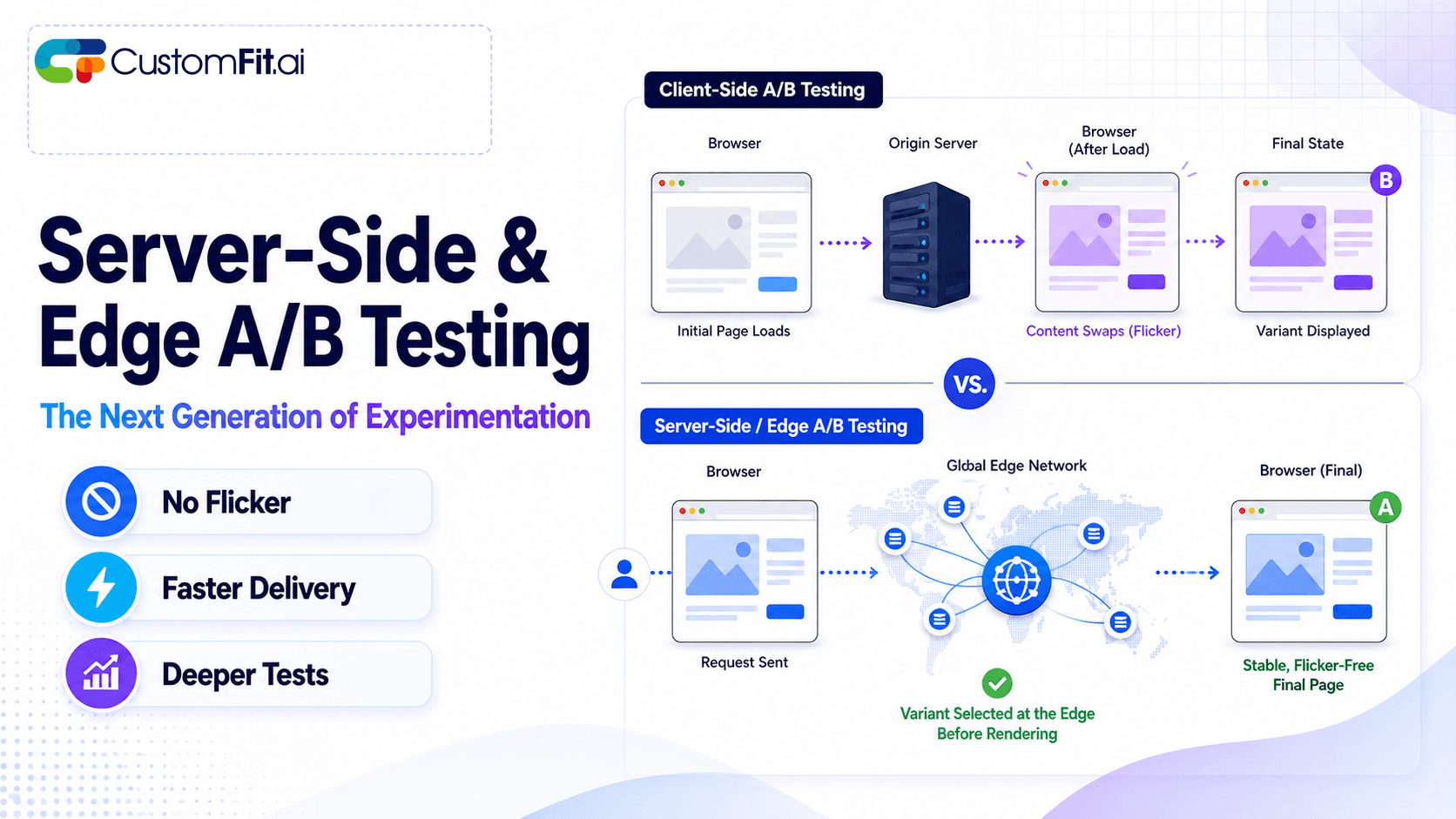 ab testing
Server-side A/B testing and edge experimentation explained - how they eliminate flicker, improve speed, and where they fit vs client-side testing.
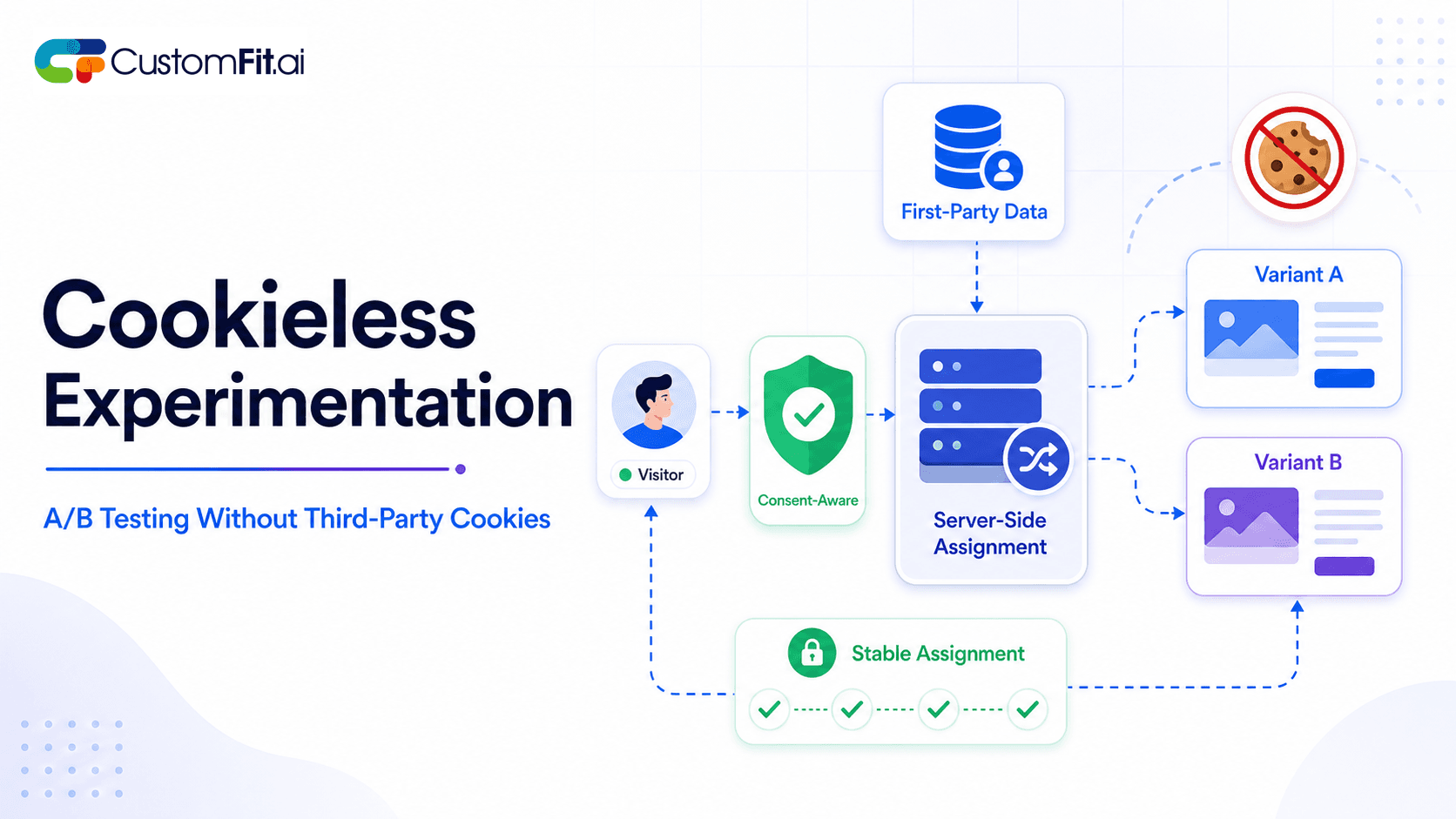 ab testing
How to run cookieless A/B testing correctly in 2026 - first-party data, GDPR compliant methods, and what actually changed with third-party cookies.
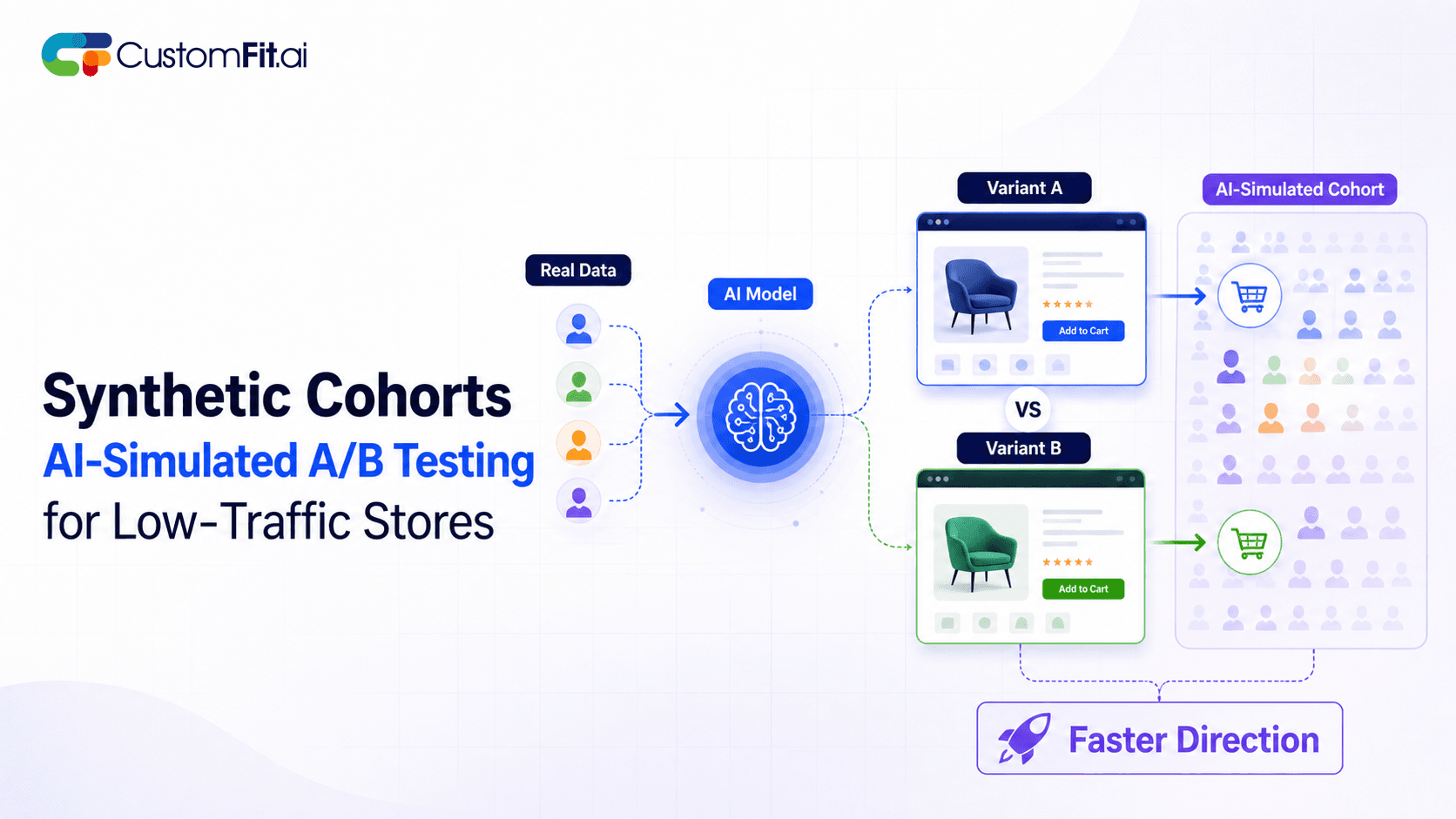 ab testing
Not enough traffic to A/B test properly? Here's how synthetic cohort testing and AI-simulated experimentation help low-traffic stores test with confidence.
Run rigorous A/B tests and personalize every visit on Shopify or any storefront — no engineers required.
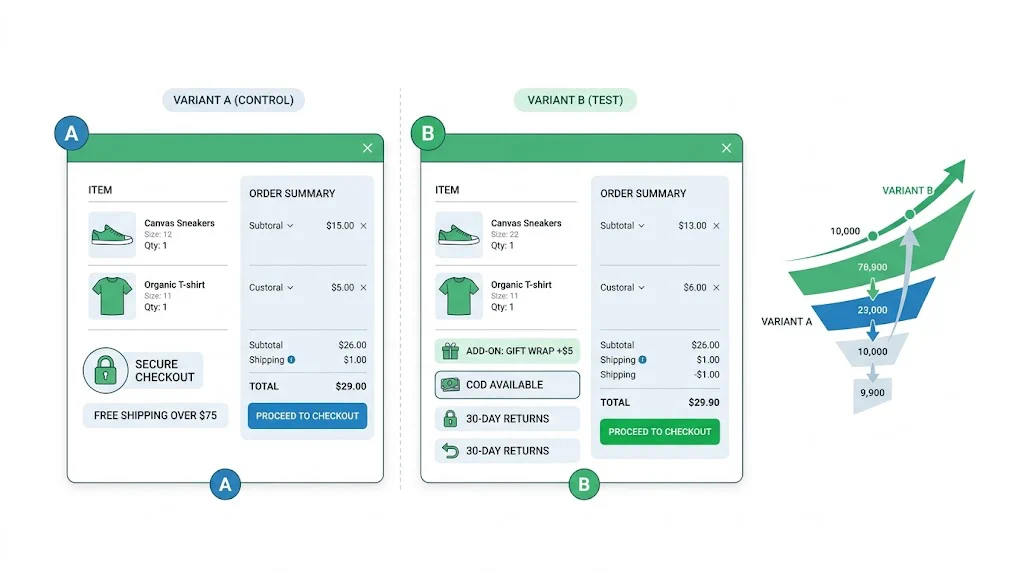
Cart pages have the highest abandonment rates of any page in ecommerce — 70–75% of visitors who reach the cart never complete purchase. That means for every 100 visitors who add a product to their cart, only 25–30 complete the order. A/B testing your cart page addresses this directly: small changes to your CTA, trust signals, or checkout flow can recover 3–10% of abandoning visitors and translate to significant revenue at scale.
For Indian D2C brands, cart abandonment has additional local context: COD-related hesitation, price sensitivity around shipping costs, and mobile checkout friction are all Indian-specific variables that reward local testing insights over copying Western CRO playbooks.
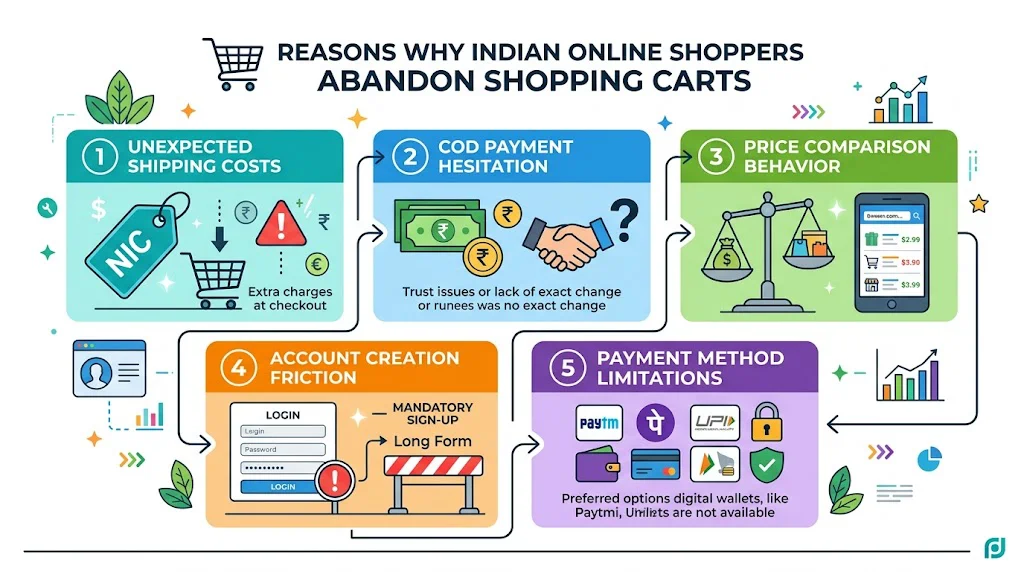
Before testing solutions, understand the causes. In Indian ecommerce, cart abandonment is driven by:
Unexpected costs: Shipping charges shown at checkout (not in the cart) are the #1 abandonment trigger globally. For Indian consumers, minimum order thresholds for free shipping (common in Indian ecommerce) are particularly important to communicate early.
COD hesitation: Some customers arrive intending to use COD but don't see it prominently offered in the cart. Lack of clear COD availability messaging causes abandonment — especially for first-time buyers on new-to-them brands.
Price reconsideration: Indian shoppers comparison-shop more extensively than Western shoppers. A visible cart item might prompt a price check on Myntra, Nykaa, or Amazon. Cart page tests that address this (guarantee pricing, comparative value framing) can reduce reconsideration abandonment.
Account creation friction: Being required to create an account before checkout is a conversion killer. Test guest checkout availability and placement.
Payment method limitation: Not showing UPI, Paytm, PhonePe, or preferred payment methods prominently enough increases abandonment among payment-sensitive buyers.
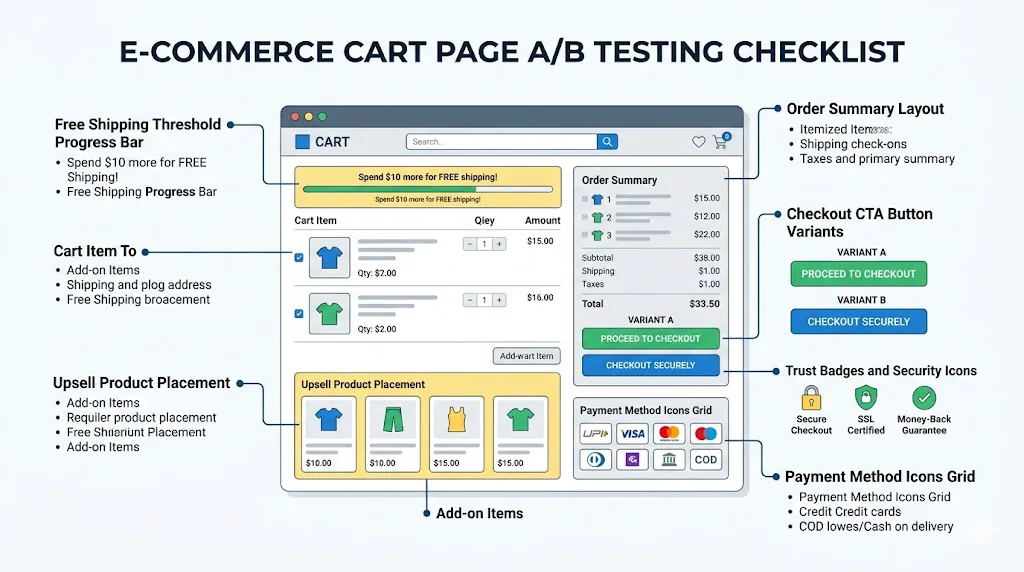
The checkout button is the most important element on your cart page.
What to test:
Copy variants:
Placement variants:
Size and design: Full-width button vs. standard width. High-contrast color vs. matching brand color.
Indian D2C finding: Adding "COD Available" to checkout CTA copy or as a trust label directly next to the CTA button consistently reduces abandonment for first-time visitors on newer D2C brands.
Cart pages need to reassure visitors that completing checkout is safe and the brand is legitimate.
What to test:
Expected finding: For newer D2C brands (under 3 years old, lower brand recognition), trust badges near the checkout CTA significantly reduce abandonment. Established brands see smaller incremental lifts from badges they don't already display.
Showing customers how close they are to free shipping is one of the most universally effective cart page elements.
What to test:
Expected lift: Free shipping threshold progress bars typically increase AOV by 8–15% for customers who see them. The key test is whether the threshold you've set is low enough to be achievable without being so low it costs you on margin.
Adding related product recommendations to the cart page can increase AOV — but must be tested carefully to avoid distracting from checkout completion.
What to test:
When to test upsells: Only after your baseline checkout completion rate is above 35% (from cart). If 70%+ of visitors are abandoning, fix the primary CTA and trust signals first.
India-specific: Bundle upsells resonate strongly in Indian ecommerce — "Complete the routine: add face wash + toner for ₹599 (save ₹150)" works better than generic "you might also like" recommendations.
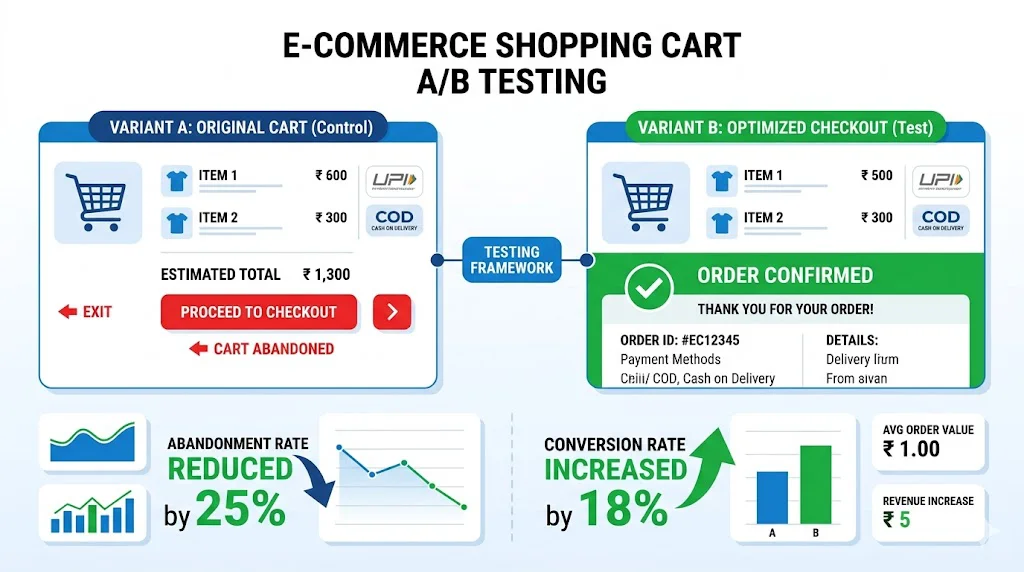
How you display items in the cart affects perceived value and confidence.
What to test:
Editable quantity format matters for Indian mobile users: +/- buttons are easier to use on small phone screens than dropdown selectors or text fields. Test this specifically for mobile cart.
Account creation is a major checkout barrier.
What to test:
Expected finding: Enabling guest checkout consistently increases checkout initiation rates by 10–25%. If you don't offer guest checkout, this should be your first cart page improvement before any A/B test.
What to test:
For Indian D2C brands selling higher-ticket items (₹2,000+): Test 0% EMI messaging prominently in the cart. This significantly reduces price-based abandonment for aspirational purchases.
Primary metric: Checkout initiation rate = (Checkout starts / Cart views) × 100
This is the most direct measure of cart page effectiveness. If a visitor views the cart and clicks "Proceed to Checkout," your cart page did its job.
Secondary metrics:
Guardrail metrics:
Fix guest checkout before A/B testing anything else — if you require account creation before checkout, this is your #1 conversion problem. Solve it, then optimize.
Test mobile and desktop cart pages separately — cart pages on mobile have different friction points (thumb-reach for CTA, small product images, keyboard input for form fields) than desktop.
Test COD messaging explicitly for new visitors — first-time visitors on new-to-them brands convert at much higher rates when COD availability is prominently surfaced in the cart.
Don't show upsells if your cart abandonment rate exceeds 70% — focus on checkout completion first. Upsells are AOV optimization, not abandonment reduction.
Test free shipping threshold levels systematically — your current threshold may not be optimally set. Test ₹100 increments around your current threshold to find the AOV sweet spot.
Personalize cart page trust signals by visitor type — new visitors need more reassurance (trust badges, COD messaging, return policy) than returning customers. Use CustomFit.ai's visitor segmentation to serve different cart layouts to each group.
Run cart page tests for 7–14 days minimum — cart visitors have higher purchase intent but shopping patterns still vary by day of week, especially for impulse purchases vs. planned purchases.
Related reading: A/B Testing Pricing Pages | Exit Intent Strategies | Urgency and Scarcity Tactics | Conversion Funnel | A/B Testing Pillar Guide