From the conversion glossary
Concepts referenced in this article, defined.
Concepts referenced in this article, defined.
 ab testing
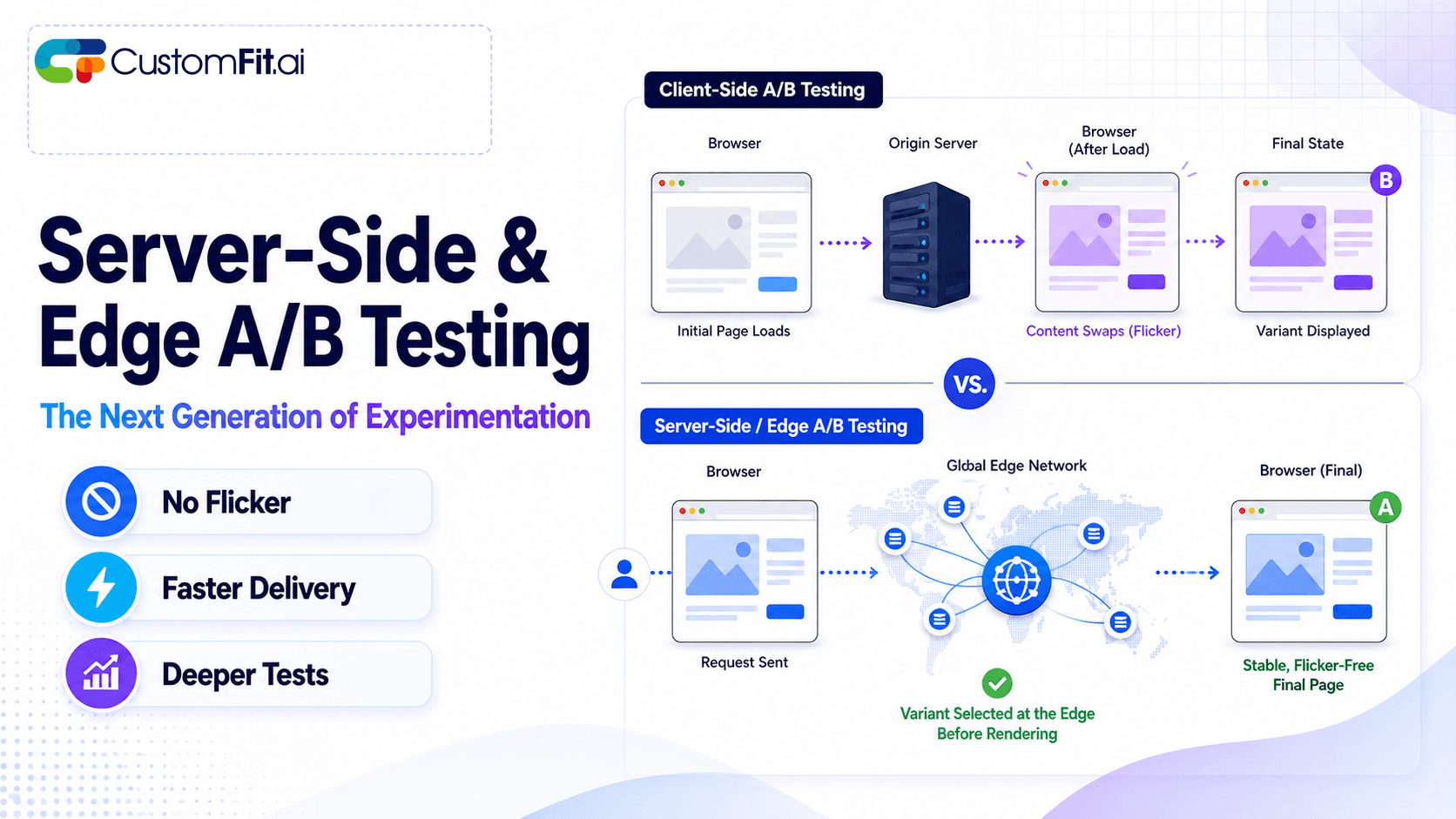
Server-side A/B testing and edge experimentation explained - how they eliminate flicker, improve speed, and where they fit vs client-side testing.
 ab testing
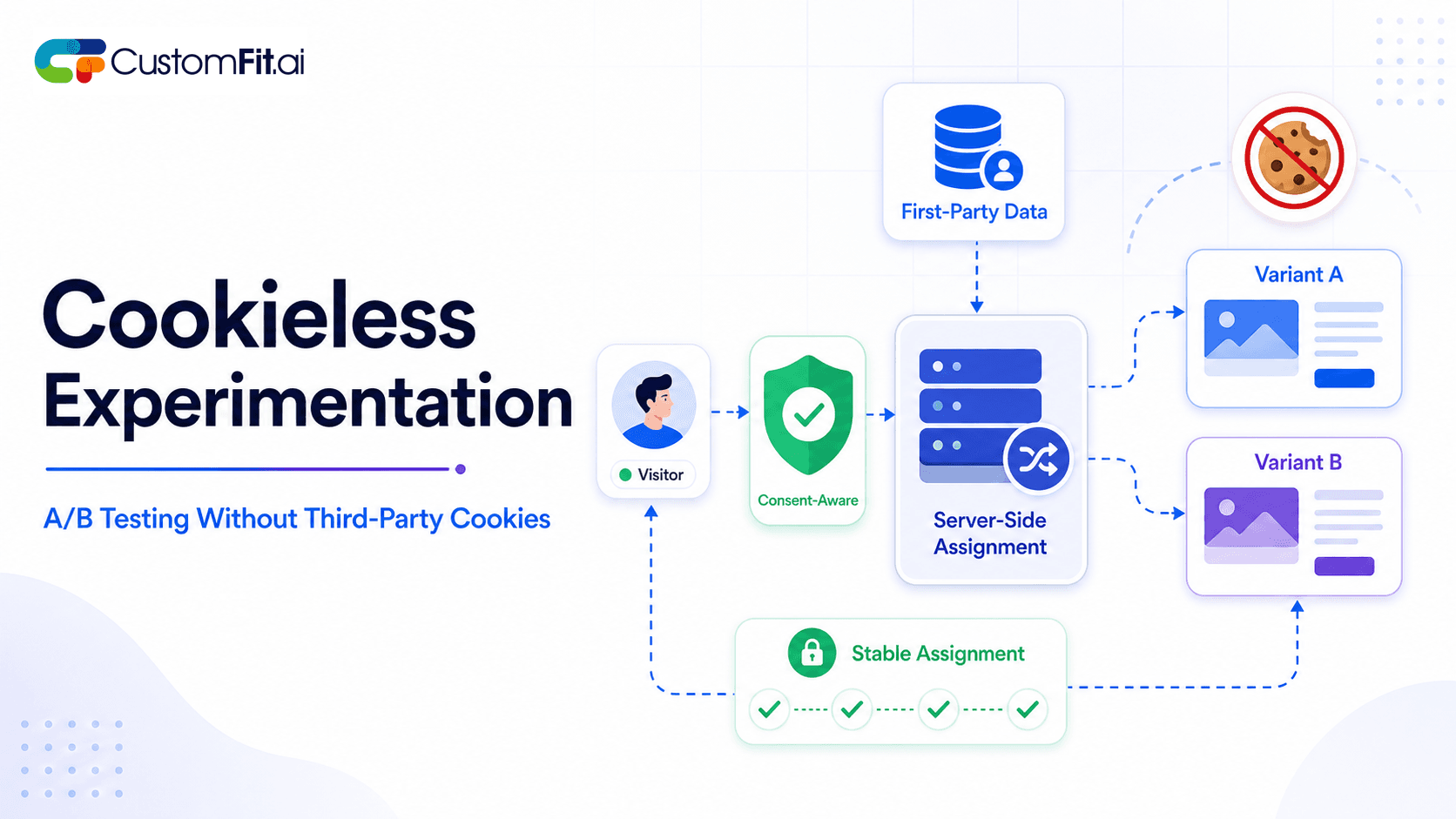
How to run cookieless A/B testing correctly in 2026 - first-party data, GDPR compliant methods, and what actually changed with third-party cookies.
 ab testing
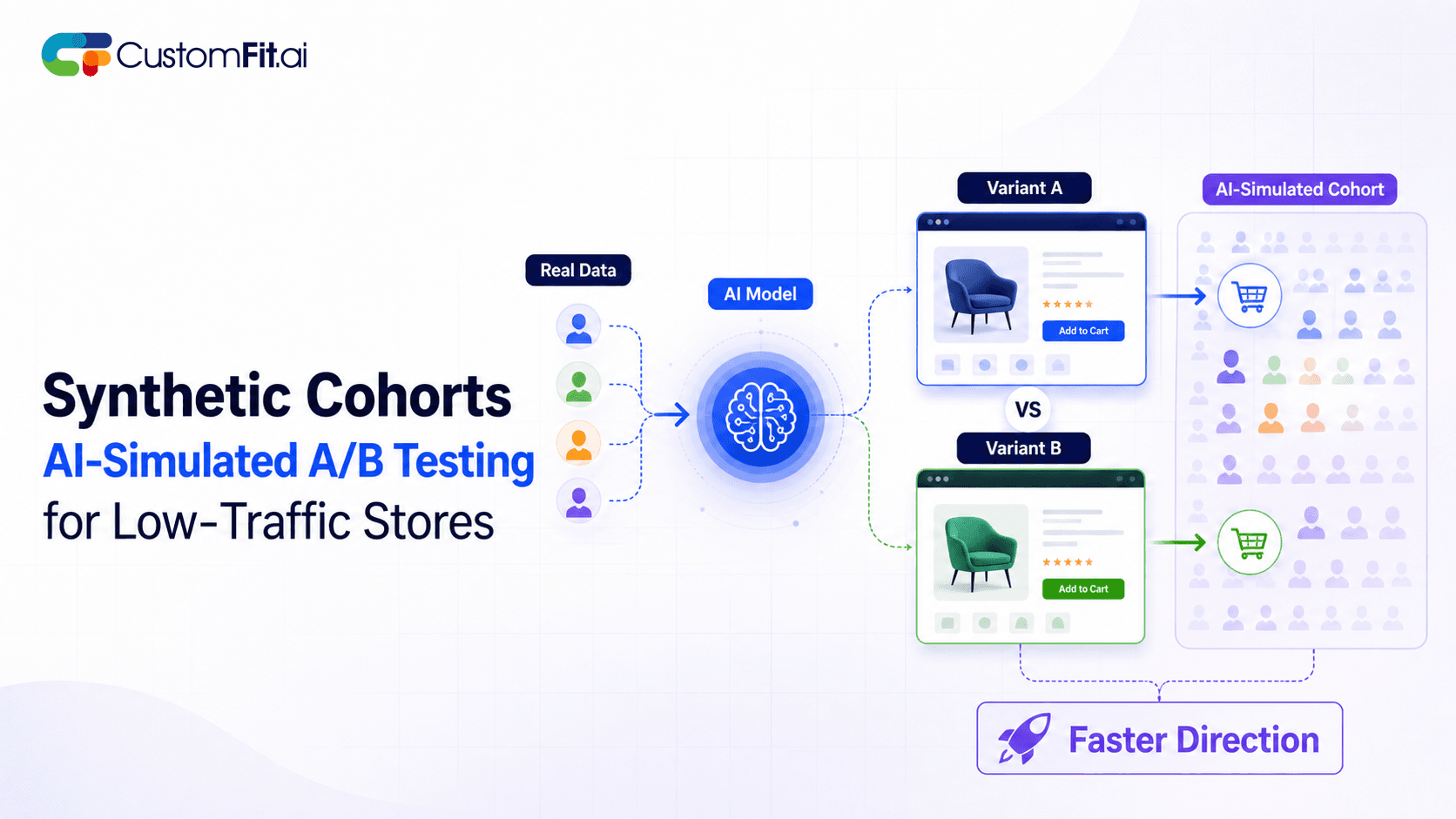
Not enough traffic to A/B test properly? Here's how synthetic cohort testing and AI-simulated experimentation help low-traffic stores test with confidence.
Run rigorous A/B tests and personalize every visit on Shopify or any storefront — no engineers required.
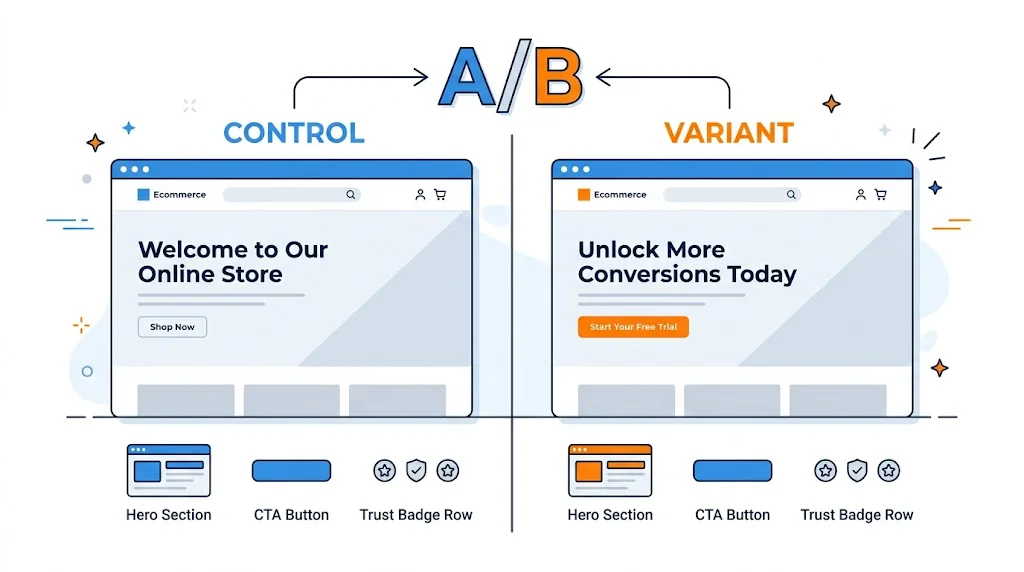
A/B testing your homepage produces the fastest, highest-impact results in your optimization roadmap because every visitor to your store sees it — even a 5% lift in hero-section engagement cascades into more product page views, more add-to-cart events, and more purchases. The most impactful homepage elements to test first are: (1) the hero headline and subheadline, (2) the primary CTA button, and (3) the trust elements visible above the fold. Brands like Mamaearth and Boat run continuous homepage tests because their homepage is where brand positioning meets purchase intent for millions of monthly visitors.
This guide gives you a prioritized homepage testing roadmap, real examples, and the exact structure to run your first test this week.
Homepage conversion rate is a multi-step metric. The homepage itself doesn't usually drive direct purchases — it drives engagement:
Your homepage test metrics should therefore track:
Don't optimize homepage specifically for add-to-cart — optimize it to move qualified visitors deeper into the funnel.
The hero section (the area visible on initial page load before scrolling) is where 90%+ of visitors form their first impression. It determines whether they bounce or continue.
Hero elements to test:
1. Headline Your headline should answer: "What do you sell and why should I care?"
Test these hypothesis pairs:
Outcome-led and specific headlines typically outperform vague brand statements for D2C skincare, beauty, and health brands.
2. Subheadline The subheadline should provide social proof, clarify the offer, or address the most common objection. Test:
3. Primary CTA Button See our detailed A/B testing CTA buttons guide for full copy and color testing frameworks. On the homepage, test:
4. Hero Image/Video
Brands like Sugar and mCaffeine consistently test hero imagery and find that South Asian models outperform international stock imagery for Indian audiences by 20–35% on engagement metrics.
The trust band below the hero (press logos, customer count, review stars) is where skeptical visitors decide whether to continue. Test:
Review presentation:
Press/media logos:
Trust badges:
The product grid or featured collection section drives the most direct path to purchase. Test:
What products to feature:
How to display them:
Collection structure:
Navigation changes have wide-ranging effects on the entire site, so test these after you've understood your homepage-to-product flow.
Navigation labels:
Search bar prominence:
Sticky header:
Top-bar banners and promotional announcement bars are worth testing during peak seasons:
1. COD Mention Above the Fold For Tier 2 and Tier 3 audiences, visible COD availability in the hero section or trust bar can significantly reduce bounce rate. Test "Cash on Delivery Available" as a trust badge vs. not showing it.
2. Hindi/Regional Language Headlines Brands targeting Hindi-speaking markets should test Hindi headlines or bilingual hero sections against English-only. Nykaa and Boat have run language-specific landing pages for north Indian traffic with significant results.
3. Festive Season Urgency During Diwali, Navratri, or Big Billion Days, test festive-themed hero imagery and copy against evergreen content. Festive variants typically see 20–40% better engagement during the peak season window.
4. Mobile Hero Layout On mobile, the hero section often collapses into a stacked layout where the CTA appears below the fold. Test a mobile-specific hero where the CTA is visible without scrolling — this single change can lift mobile CVR by 10–20%.
CustomFit.ai's visual editor makes homepage testing straightforward:
CustomFit.ai automatically tracks conversion rate, AOV, and RPV without any custom event setup.
Testing the wrong metric: Don't judge homepage tests on direct purchase rate. Judge them on click-through to product pages and ultimately on RPV.
Changing too much at once: If you change the headline, CTA, hero image, and featured products simultaneously, you can't know what caused the result. Test one section at a time, or use multivariate testing.
Ignoring mobile vs. desktop differences: Homepage layouts often differ dramatically between mobile and desktop. Segment your results and consider running separate mobile-specific tests.
Not running for long enough: Homepage tests need at least 1,000–2,000 visitors per variant for reliable results. For smaller stores, this means waiting 3–4 weeks.
Stopping at the first significant result: Statistical significance at 90% doesn't mean the result is reliable — target 95% (p-value < 0.05) before acting.