From the conversion glossary
Concepts referenced in this article, defined.
Concepts referenced in this article, defined.
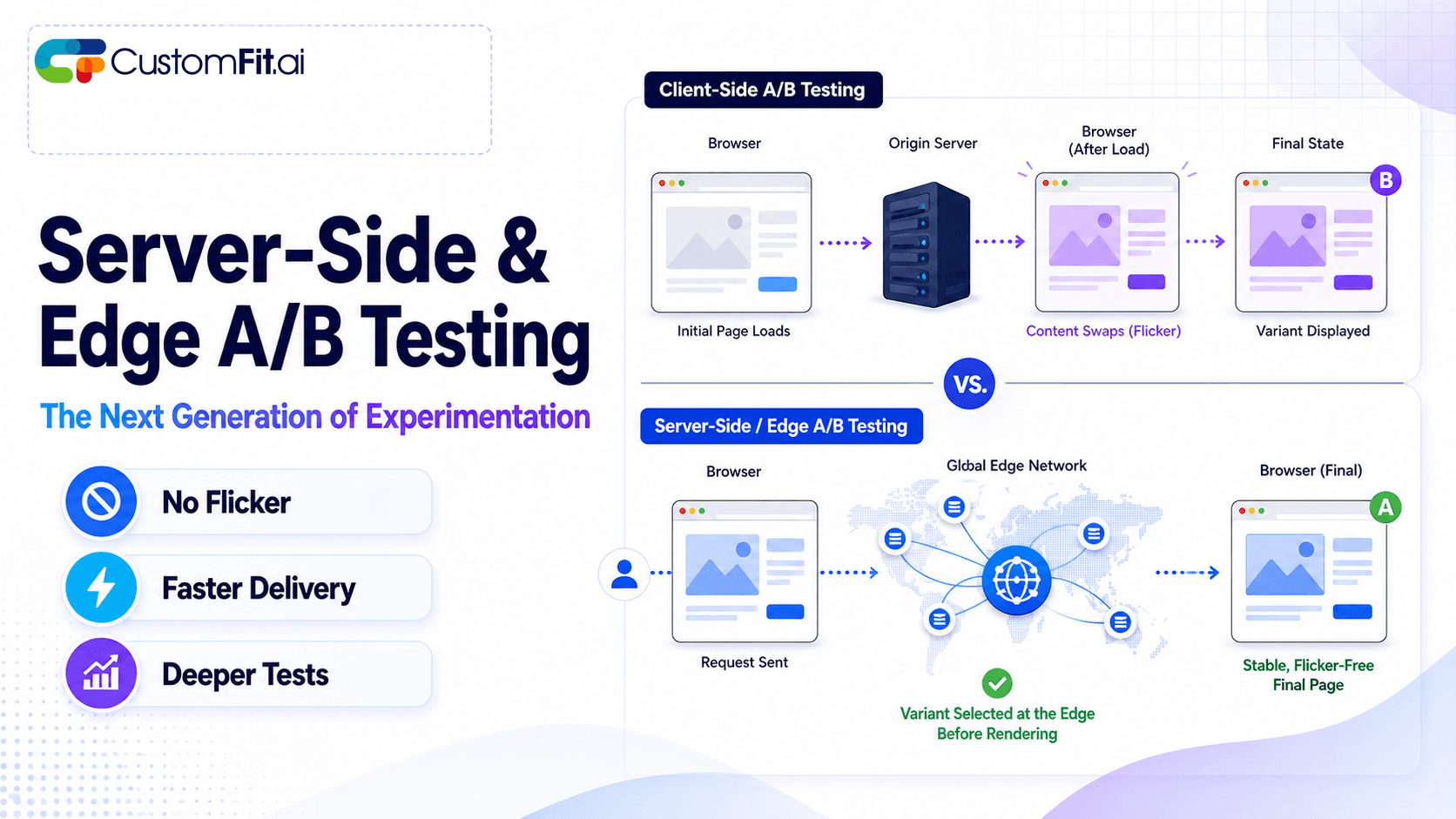 ab testing
Server-side A/B testing and edge experimentation explained - how they eliminate flicker, improve speed, and where they fit vs client-side testing.
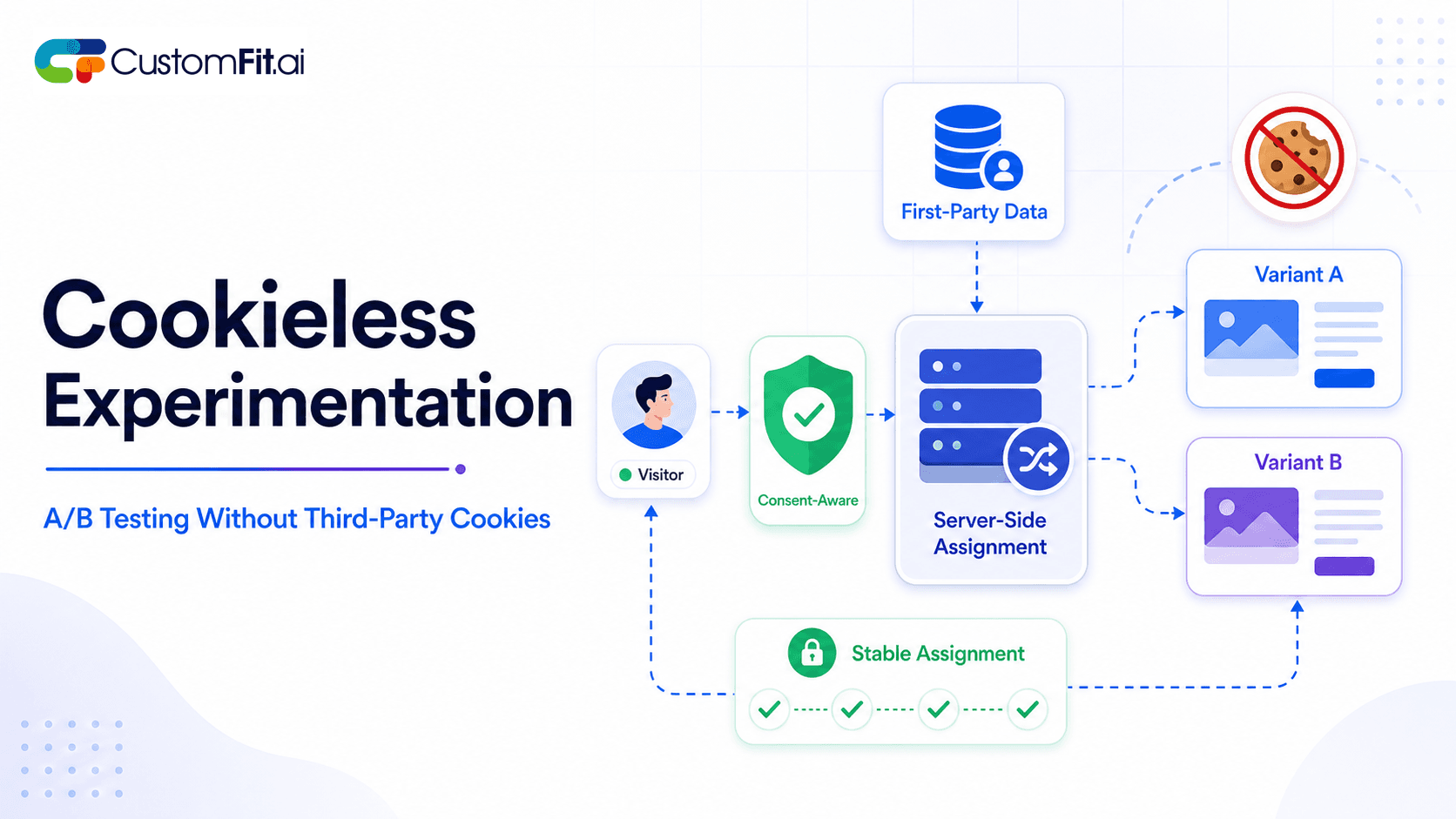 ab testing
How to run cookieless A/B testing correctly in 2026 - first-party data, GDPR compliant methods, and what actually changed with third-party cookies.
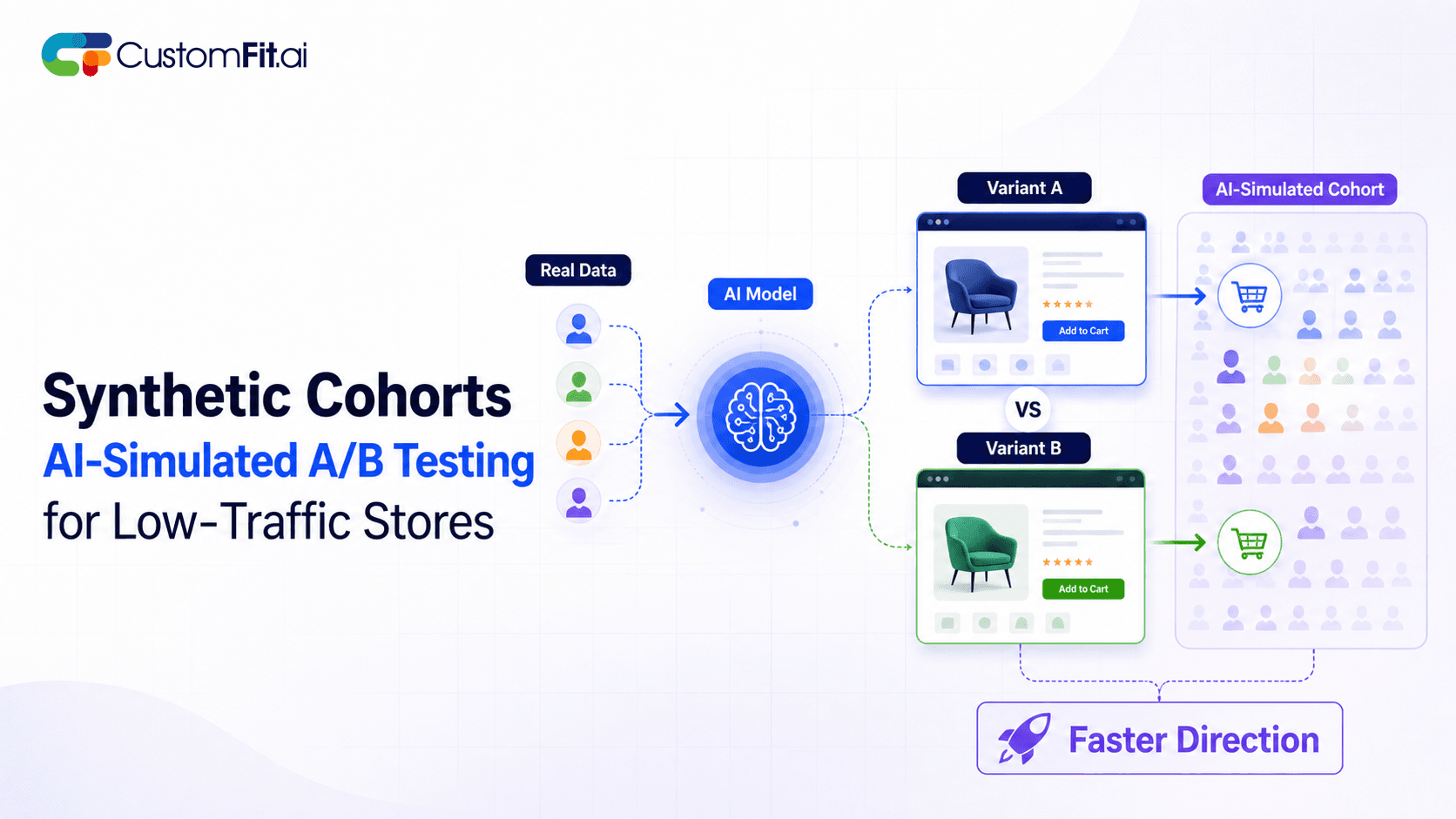 ab testing
Not enough traffic to A/B test properly? Here's how synthetic cohort testing and AI-simulated experimentation help low-traffic stores test with confidence.
Run rigorous A/B tests and personalize every visit on Shopify or any storefront — no engineers required.
A/B testing trust badges means running experiments on which security seals, guarantee statements, and social proof indicators — placed where — increase add-to-cart rate and reduce checkout abandonment. Trust badges work by reducing the perceived risk of a purchase. For D2C ecommerce brands on Shopify, the highest-impact badges address the specific anxiety your customer has: Is this product authentic? Can I return it? Is my payment secure? Testing tells you which risk is dominant for your audience and which badge language resolves it.
Indian ecommerce has a distinct trust dynamic. Cash on delivery (COD) accounts for 50-60% of orders on many D2C Shopify stores — a direct signal that buyers don't fully trust prepaid transactions with unknown brands. As brands grow, shifting buyers to prepaid reduces RTO (return-to-origin) rates and improves cash flow. Trust badges that communicate payment security and return ease can shift this behavior.
First-time buyers on a D2C site have no brand relationship. They're comparing you to Amazon, Myntra, or Nykaa — platforms with established trust infrastructure. Your trust badges need to close that gap in the 30 seconds before they abandon the product page.
Indian context: UPI and COD payment logos are high-trust signals. A visitor seeing "UPI Accepted" next to the checkout button is more confident to proceed than one seeing only international card logos. Test a UPI-focused badge cluster vs. a generic "Secure Payment" badge.
For Ayurvedic and nutraceutical brands, FSSAI and AYUSH certifications are meaningful trust signals. Test whether showing the certification logo (with text) outperforms a generic "Quality Guaranteed" badge.
Return policy anxiety is one of the top purchase barriers for first-time buyers on D2C sites. A clearly stated return guarantee near the CTA reduces perceived risk significantly. Test the specific number of days ("15 days" vs. "30 days" vs. "60 days") and the language ("Easy Returns" vs. "Hassle-Free Returns" vs. "Return in 30 Days").
Social proof quantification works better than generic claims. "Trusted by customers" is weaker than "2,40,000 verified buyers." Test specific numbers vs. rounded claims vs. no social proof badge.
COD availability as a badge — not just a payment option at checkout — communicates it proactively and can reduce bounce rate from the product page. Test whether adding a COD badge on the product page (not just in checkout) increases add-to-cart rate.
This is the highest-impact placement. The moment a visitor considers clicking "Add to Cart," they experience peak purchase anxiety. A row of 3-4 compact trust icons (secure payment, free returns, COD available) directly below the CTA button addresses this anxiety at the exact moment it peaks.
Test: Badges below CTA vs. no badges below CTA vs. badges above CTA.
Price anxiety is a specific variant of purchase anxiety. "Is this too expensive? Am I getting good value?" Trust signals near the price — guarantee statements, quality certifications, authentic product badges — justify the price before the visitor compares it to cheaper alternatives.
Test: Badge placement: below price vs. next to price vs. none.
Checkout is where prepaid conversion anxiety peaks. Showing security badges, accepted payment logos, and return guarantee reminders in the cart and checkout pages reduces abandonment. This is a different test from product page badge tests and should be run separately.
Step 1: Identify the primary anxiety Survey 20-30 customers who didn't buy: "What was your main concern?" If "authenticity" comes up, test authenticity badges. If "returns" comes up, test return guarantee badges. Don't guess.
Step 2: Choose your variant
Test one badge type or placement at a time.
Step 3: Set metrics
Step 4: Run at 95% confidence Trust badge tests typically show 5-15% lift when they address the right anxiety. At a 3% baseline CVR and a 10% expected lift at 95% significance, you need approximately 10,000 visitors per variant.
Testing unrecognized third-party seals: McAfee Secure and TRUSTe badges are less recognized in India than in Western markets. Shoppers who don't know the brand providing the seal gain no trust from the badge. Test brand-native trust statements instead.
Adding too many badges at once: A product page covered in 12 different badges looks spammy and actually reduces trust. Test 3-4 focused badges rather than a full badge wall.
Using fake countdown-adjacent badges: "Only 3 left — Order Now" is not a trust badge — it's artificial urgency. Mixing fake scarcity with genuine trust signals undermines credibility.
Not separating new vs. returning visitors: Returning visitors already trust your brand; they don't need authenticity badges as much as new visitors do. Segment your test results to understand who benefits from which badges.
Related reading: A/B Testing Pillar | A/B Testing Video vs Images | A/B Testing Banners for Ecommerce | Conversion Rate