From the conversion glossary
Concepts referenced in this article, defined.
Concepts referenced in this article, defined.
 cro
croPre-order waitlist CRO strategies that convert hype into real revenue - how to design waitlist and pre-order pages that don't lose momentum before launch.
 cro
croFirst purchase experience optimization - practical strategies to turn first-time visitors into buyers, from welcome offers to a smarter new customer funnel.
 cro
croRetail media CRO explained - how to monetize on-site ads and sponsored placements without tanking your conversion rate. A practical balance guide.
Run rigorous A/B tests and personalize every visit on Shopify or any storefront — no engineers required.
Average order value (AOV) is the most direct lever for increasing revenue per sale without acquiring more customers — and for D2C ecommerce brands spending ₹50K+/mo on ads, every rupee increase in AOV directly improves ROAS. Chargebee increased AOV by 40% using CustomFit.ai's personalized upsell recommendations, and Shopify brands consistently find that free shipping thresholds, product bundling, and strategic cross-sells deliver AOV lifts of 15–35% within the first quarter of implementation. This guide covers 15 proven AOV tactics, prioritized by impact and ease of implementation.
Most D2C brands focus almost exclusively on conversion rate. But the revenue equation is:
Revenue = Traffic × Conversion Rate × AOV
Improving AOV has the same mathematical impact as improving conversion rate. A 20% AOV increase (from ₹700 to ₹840) on 500 monthly orders = ₹70,000 additional monthly revenue — without changing traffic or CVR.
Better yet, AOV improvements and CVR improvements compound together. This is why RPV (revenue per visitor) is the best single ecommerce metric — it captures both:
RPV = Conversion Rate × AOV
When you test AOV-improving changes with CustomFit.ai, always track RPV as your primary metric. Some AOV tactics reduce CVR (by making the buy decision harder) — you need RPV to measure the net revenue impact.
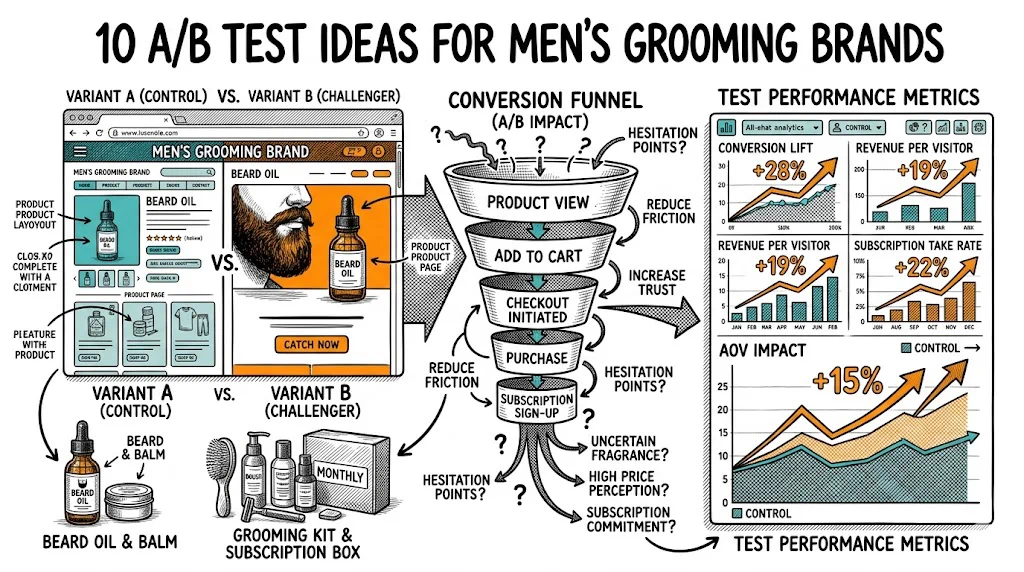
The most universally effective AOV tactic. Show visitors how close they are to free shipping — with a visual progress bar — and offer product suggestions to close the gap.
Implementation:
Expected impact: 10–20% AOV increase for most stores. Brands with AOV of ₹500–₹800 see the highest impact.
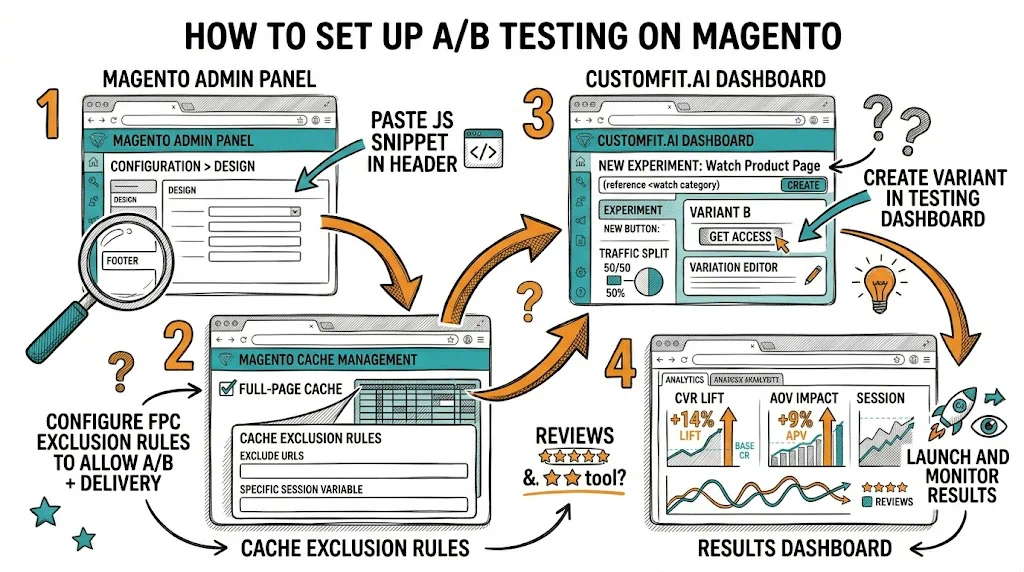
Curated bundles reduce the per-product consideration cycle (visitors only need to decide to buy the bundle, not each individual product) and increase perceived value.
Bundle types:
Pricing psychology: Show bundle price vs. total individual product price: "Bundle: ₹1,299 (saves ₹400 vs. buying separately)"
Indian D2C opportunity: Festive season gift bundles (Diwali, Valentine's Day) allow premium pricing. The Man Company's gift hampers are priced 30–40% above the sum of individual products.
Show complementary products at the right moment — when the visitor has already expressed intent to buy.
Where to cross-sell:
What products to suggest:
What not to suggest:
Chargebee achieved 40% AOV increase using CustomFit.ai's personalized cross-sell recommendations — showing the right complementary products based on cart contents and customer segment.
When a visitor has a product in their cart, show a premium version or larger size of the same product:
The cart page is an ideal upsell location because the visitor has already committed to a purchase — they're in "buying mode."
For consumable products (supplements, skincare, food), volume discounts significantly increase AOV:
Display all options together on the product page with the middle option marked as "Most Popular." The three-option format with a recommended middle choice (anchoring) reliably lifts AOV for consumables.
Indian D2C examples: Kapiva, OZiva, and similar supplement brands display buy-more bundles prominently on their product pages. Typical AOV lift: 20–35%.
Immediately after purchase, offer a complementary product that can be added with one click — without entering payment details again.
Post-purchase upsells convert at 15–25% because:
Shopify supports post-purchase upsells natively on Shopify Plus, and several apps provide this for standard Shopify.
For lifestyle and beauty brands, offering gift wrapping, personalized notes, or premium packaging as an add-on during checkout is a simple AOV increaser:
During Diwali and festive seasons, gift add-on purchase rates can reach 25–40% for beauty and lifestyle brands.
Set a minimum order value for promotions to incentivize larger baskets:
This works especially well for first-purchase discount codes: set them above your current AOV to pull up the average.
Generic "You might also like" recommendations underperform personalized ones. CustomFit.ai lets you show different cross-sells based on:
Personalized recommendations typically lift click-through on cross-sell modules by 30–50% vs. generic recommendations.
For products with regular replenishment cycles (supplements, skincare, coffee, baby products), offering a "Subscribe and Save" option:
Offer a 10–15% discount for subscription vs. one-time purchase. Make the subscription option visually prominent on the product page.
For fashion and beauty brands, "Complete the Look" or "Build Your Routine" modules show how individual products work together:
"Shop the look" modules on product pages lift both AOV and add-to-cart rate for fashion-oriented brands.
For low-cost impulse products (under ₹299), offer quantity breaks at the point of cart to lift order size:
Changing the default quantity from 1 to 2 for certain product types is worth A/B testing — some brands see 15–20% AOV lifts from this change alone.
Show customers how many loyalty points they'll earn from a larger purchase:
This is particularly effective for returning customers who already have points they want to protect and grow.
Even the best cross-sell products will underperform if presented poorly. Test:
Offer free samples of new products with orders above a threshold:
Brands like Plum and mCaffeine use free samples effectively during product launches.
| Metric | How to Track | What's Good |
|---|---|---|
| AOV | Shopify Analytics → Finance → Average order value | Baseline × 1.2+ after tactics |
| RPV | AOV × CVR | Tracks net impact when AOV and CVR interact |
| Items per order | Cart analytics | Above 2.0 is strong for most D2C categories |
| Cross-sell click rate | CustomFit.ai test analytics | 5%+ click rate on recommendations |
Always test AOV-improving changes with A/B tests — some tactics (like prominent upsells) can reduce CVR even while lifting AOV. RPV gives you the net picture.