From the conversion glossary
Concepts referenced in this article, defined.
Concepts referenced in this article, defined.
Run rigorous A/B tests and personalize every visit on Shopify or any storefront — no engineers required.
The Indian health and wellness D2C market has grown from a niche category to one of the most competitive and fastest-growing segments in ecommerce—driven by pandemic-era health awareness, ingredient-conscious consumers, and a generation that no longer trusts mass-market products with opaque formulations. Brands like Kapiva, Oziva, Wellbeing Nutrition, and Mamaearth's Ayurvedic lines have built significant businesses by combining trust signals with direct customer relationships. This guide covers what it takes to build and grow a health wellness D2C brand in India today.
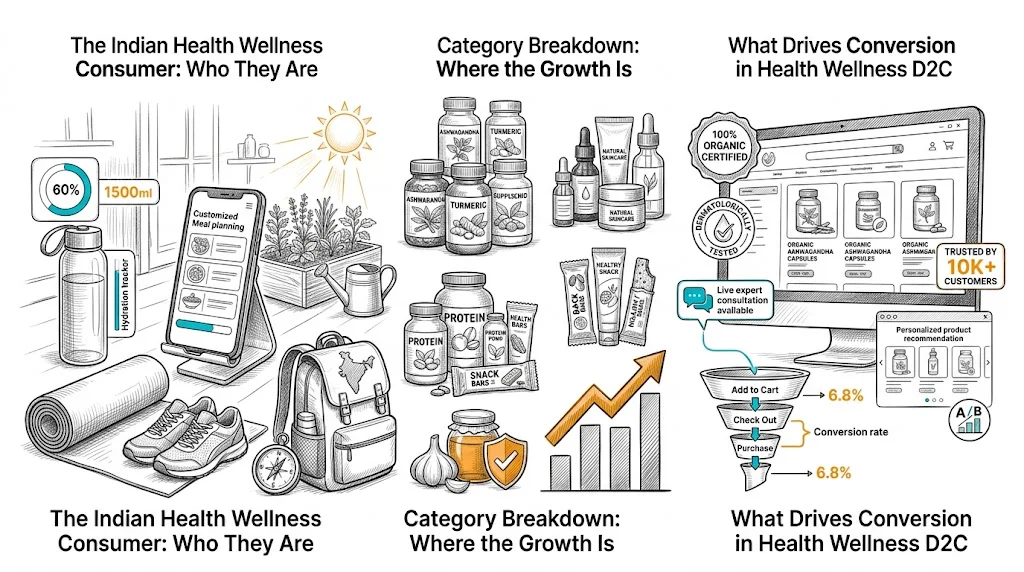
The Indian health and wellness buyer has evolved dramatically. Three years ago, protein powder was for gym-goers. Today, it's for remote workers who want sustained energy, mothers managing post-pregnancy nutrition, and college students managing stress.
Key segments driving D2C health wellness growth:
Urban millennial women (25–38): The largest and most valuable segment. Primarily interested in skin health, hair health, hormonal balance, and energy. High research intensity—they read ingredient lists, compare formulations, and trust peer reviews over brand claims.
Fitness-focused young men (22–35): Protein supplements, pre-workout, creatine, and recovery products. Brand loyalty is lower in this segment; price and formulation comparisons happen frequently.
Parents buying for family: Immunity supplements, multivitamins, and children's nutrition. Trust is paramount—certifications, clinical evidence, and ingredient simplicity are the decision drivers.
Senior buyers: Growing digital adoption among 50+ age group. Joint health, cardiac support, and Ayurvedic tonics. Often buying based on doctor recommendation; conversion requires education and reassurance.
Regional nuance: Tier-2 and Tier-3 markets are growing rapidly, but product preferences differ. Ayurvedic and Ayush-certified products often have higher trust in these markets than western supplement formats.
Nutraceuticals and Supplements
The fastest-growing category. Vitamins, minerals, probiotics, collagen, and adaptogens. Brands like Wellbeing Nutrition and Oziva have built ₹100+ crore businesses in this space.
Key conversion challenges: skepticism about efficacy, confusion between products, and return anxiety for high-ticket items. The brands winning here invest heavily in education—blogs, YouTube, WhatsApp communities—that build confidence before the purchase.
Ayurvedic and Herbal
Kapiva's 9.48% CVR improvement story is relevant here. Ayurvedic products have a trust advantage (traditional, natural) but a skepticism challenge (does it actually work?). Brands that bridge traditional positioning with clinical evidence—using HPLC testing, Ayush certification, ingredient sourcing transparency—convert better.
Festive gifting is a significant revenue driver: Chyawanprash, ashwagandha bundles, and immunity kits see 3–5x volume spikes during Diwali and winter.
Women's Health
Period care (Carmesi, Pee Safe), hormonal health, and fertility supplements. This category has high purchase intent but needs content-led funnels—many buyers are researching a problem they've never bought a product for before. Long-form content, symptom-matching quizzes, and community validation drive conversion.
Protein and Sports Nutrition
High competition, price-sensitive, and heavily influenced by fitness creators. Brands need either a formulation edge (higher absorption, cleaner ingredients) or a price edge. Quality-first brands targeting premium buyers (₹2,000+ per unit) can win on ingredient story; mass-market brands compete on price.
Mental Wellness
Emerging but fast-growing: ashwagandha, L-theanine, sleep supplements. High anxiety about side effects means trust signals are especially important. Clinical citations, doctor endorsements, and user testimonials with specific outcomes ("I started sleeping better in 2 weeks") convert best.
Health and wellness is a high-consideration category. Customers are potentially putting something in their body—the conversion barrier is higher than for a T-shirt or a face wash.
The five trust triggers that unlock conversion:
1. Ingredient transparency
List ingredients with percentages, not just names. Explain what each ingredient does. Compare your formulation to standard alternatives. Brands that do this convert significantly better with ingredient-educated buyers.
2. Certifications and testing
FSSAI approval is baseline. USDA Organic, NSF, or third-party lab testing (with certificate download links) builds additional trust. Ayush certification matters for Ayurvedic categories in Tier-2 markets.
3. Honest outcome claims
"Start seeing results in 8–12 weeks with consistent use" converts better than vague "feel the difference" language. Specificity signals honesty. Brands that over-promise and under-deliver generate returns and negative reviews that compound into long-term CVR damage.
4. Reviews with context
Generic 5-star reviews don't move health wellness buyers. "I used this for 10 weeks after my nutritionist recommended it for post-pregnancy hair loss—my shedding reduced by about 60%" is the kind of review that converts. Gather specific, contextual reviews actively.
5. Sample or starter pack availability
For products above ₹800, offering a 7–15 day trial or starter pack significantly reduces purchase anxiety. Even if the margin is thin, the LTV of a trial-to-full-size converter is excellent.
Health wellness D2C brands need longer funnels than fashion or food brands. A first-time buyer researching a hair supplement might take 3–7 touchpoints before converting.
The funnel that works:
Awareness: SEO content (symptom-led articles, "best supplement for X" comparisons), YouTube, and creator partnerships. This is where buyers discover you while researching their problem.
Consideration: Email sequence (educational, not salesy), quiz results pages, detailed product pages, and comparison tables. This is where you build trust and demonstrate category expertise.
Conversion: Personalized product page (showing the visitor products relevant to their stated concern), social proof, clear pricing with subscription option, and frictionless checkout.
Retention: Post-purchase education (how to take the product, what to expect week by week), result check-ins at week 4 and week 8, and community access.
Brands that have built this full funnel—Oziva is a strong example—see dramatically higher LTV because they keep customers engaged and informed throughout the usage period, rather than abandoning them post-purchase.
Health concern is the most powerful personalization dimension in this category. A visitor who came through a "hair fall solutions" keyword is a fundamentally different buyer than one who came through "gut health supplements."
Personalization opportunities:
CustomFit.ai enables this on Shopify without requiring developer resources—segment by traffic source, visitor behavior, and purchase history, then show relevant products and messaging to each group.
Health wellness products often have high unit prices (₹500–₹2,500 per SKU), which creates both opportunity and risk.
Bundle strategy:
Supplement bundles that address a specific outcome ("Complete Hair Health Bundle": DHT blocker + biotin + scalp oil) justify premium pricing and raise AOV. A ₹900 hair supplement becomes a ₹2,100 bundle—significantly better unit economics.
Subscription:
For consumables with 30–90 day usage cycles, subscription is the highest-LTV structure available. Offer 10–15% off for subscribe-and-save, and make cancellation genuinely easy—subscription anxiety is real and preventing it builds trust.
Free shipping thresholds:
With AOV often above ₹800–1,000, free shipping at ₹999 or ₹1,499 is an effective AOV lift. Many health wellness buyers are already near the threshold and will add an item to unlock free shipping.
Health wellness is a category where COD remains relevant, particularly for new customers and in Tier-2/3 markets. First-time buyers are more willing to try an unfamiliar supplement brand if they can pay on delivery.
COD return management:
Returns on COD health wellness orders tend to be driven by:
Reducing these requires: detailed pre-purchase education, delivery confirmation messages that reinforce the purchase decision, and a usage guidance SMS/WhatsApp sequence that starts immediately after delivery.
Links: Conversion Rate Optimization | Personalization | Lifetime Value | D2C Brand Growth Pillar | D2C Unit Economics | D2C Brands Plateau Fix