CustomFit.ai โ€” Website personalization, A/B testing and CRO for Shopify and D2C
Product
Features
โœฑ
Website Personalization
Adapt to each visitor's behavior & intent
โง–
A/B & Multivariate Testing
Rigorous experimentation
โœจ
AI CopilotNEW
Personalize with a prompt
๐Ÿค–
AI WingmanNEW
Auto-optimize toward winners
๐ŸŽฏ
AI Conversion OptimizerNEW
GPT-grade test ideas
โœŽ
No-Code Visual Editor
Drag-and-drop edit any element
โ–ฆ
Product Recommendations
Personalized recs that lift AOV
โš‘
Feature Flags
Ship safely with kill-switches
โ—ง
Chrome Extension
Edit your store in the browser
โง‰
Shopify, WooCommerce & more
All platform integrations
View all features โ†’
Use Cases
$
Price A/B Testing
Test price points to maximize revenue
โ–ฆ
Theme A/B Testing
Compare whole layouts & designs
๐Ÿ—‚
Template A/B Testing
Test whole PDP/PLP templates
๐Ÿท
Discount A/B Testing
Find the offer that converts
๐Ÿšš
Shipping A/B Testing
Thresholds, speed & copy
โœ
Content A/B Testing
Copy, images & reviews
๐Ÿ’ณ
Checkout Gateway A/B
Payments & one-click
โŒ–
Geo-Based Personalization
Per-location content & offers
โšก
Buyer-Intent Nudges
Exit-intent & retargeting
โ†”
Split-URL / Redirection
Full-page redirect tests
View all use cases โ†’
Solutions & Guides
โคข
Conversion Rate Optimization
The complete CRO guide
โง–
A/B Testing Software
Buyer's guide for D2C
๐Ÿ›’
Cart Abandonment Recovery
Win back lost carts
๐Ÿ“ฐ
Landing Page Optimization
Convert more paid traffic
S
Shopify A/B Testing
Test your store, no code
S
Shopify Personalization
Tailor the store per shopper
โ—”
First-Time Visitor Offers
Convert new shoppers with trust & offers
โ˜…
Repeat-Customer Experiences
Reward and re-engage loyal buyers
โ—Ž
Campaign-Matched Pages
Match the landing page to the ad
โŒ–
Location-Based Experiences
Currency, language & regional offers
Explore CRO โ†’
Customer stories
GIVA
+32%
conversion via personalized recs
GIVA
Mamaearth
+18%
revenue lift from PDP A/B tests
ME
The Sleep Company
+24%
AOV from product recommendations
TSC
Read customer stories โ†’
Integrations
SWsfGA+15
โœฆ
Not sure where to start?
Let AI Copilot pick your first tests

โ€œWe wake up to evidence-backed tests ready to deploy โ€” not a backlog of maybe ideas.โ€

AN
Anirudh S.
Growth ยท Chargebee
โ˜…โ˜…โ˜…โ˜…โ˜…4.8on G2 ยท 2,400+ brands
Talk to our team โ†’
Widgets
Integrations
Ecommerce & Checkout
Shopify
Shopline
Shoplazza
GoKwik
ShopFlo
Razorpay Magic Checkout
Breeze
Shiprocket
View all integrations โ†’
Analytics & Behavior
Google Analytics 4
Microsoft Clarity
Hotjar
Mixpanel
Amplitude
Heap
Adobe Analytics
Segment (CDP)
View all integrations โ†’
Engagement, CRM & More
Klaviyo
MoEngage
CleverTap
WebEngage
HubSpot
Salesforce
Slack
Meta Ads
View all integrations โ†’
CustomersPricing
Resources
CRO
โ–ค
Playbooks
Proven strategies to boost conversions
๐ŸŽ™
Interviews
D2C leaders & marketing experts
โ–ถ
Webinars
Live deep dives & product sessions
Learn
โœŽ
Blog
Tips, experiments & best practices
๐Ÿ“•
Free E-Books
Mastering personalization
๐Ÿ“–
Conversion Glossary
Every CRO term, defined
โœฆAI CopilotNEWLog inBook a demo
Start free trial
Select your platform โ€” Install in 2 minsWe'll tailor the setup
โšก Risk-free 14-day trial ยท No credit card ยท Cancel anytime
S
Shopify
Install from Shopify App Store
โ€บ
W
WooCommerce
Install the WooCommerce plugin
โ€บ
B
BigCommerce
Install from BigCommerce App Marketplace
โ€บ
SL
Shopline
Install from Shopline App Store
โ€บ
M
Salesforce / Magento
Install from the marketplace
โ€บ
SZ
Shoplazza
Install from Shoplazza App Store
โ€บ
WP
WordPress / Webflow
Install plugin or paste the script
โ€บ
โ—ง
Others
Custom-built on React, Next.js, etc.
โ€บ
Tip: pick your platform โ€” we handle the restBook a demo โ†’
Product
Website PersonalizationA/B & Multivariate TestingAI CopilotAI WingmanAI Conversion OptimizerNo-Code Visual EditorProduct RecommendationsFeature FlagsView all features โ†’
Use Cases
Price A/B TestingTheme A/B TestingTemplate A/B TestingDiscount A/B TestingShipping A/B TestingContent A/B TestingCheckout Gateway A/BGeo-Based PersonalizationBuyer-Intent NudgesSplit-URL / Redirection
Solutions & Guides
Conversion Rate OptimizationA/B Testing SoftwareCart Abandonment RecoveryLanding Page OptimizationShopify A/B TestingShopify Personalization
Explore
WidgetsIntegrationsCustomersPricing
Resources
BlogPlaybooksWebinarsInterviewsE-BooksConversion Glossary
Platforms
ShopifyShoplineShoplazzaChrome ExtensionAll integrations
Start free trialBook a demo
Homeโ€บBlogโ€บecommerce techโ€บHeadless Commerce & CRO: What You Need to Know

Headless Commerce & CRO: What You Need to Know

SJSapna JoharHead of Growth & CRO, CustomFit.aiJanuary 15, 202510 min read
On this page
  1. What Is Headless Commerce?
  2. How Headless Changes Your CRO Environment
  3. Problem 1: Traditional A/B Testing Tools and React Don't Play Well
  4. Problem 2: Server-Side Rendering Complicates Client-Side Testing
  5. Problem 3: API-Driven Content Is Harder to Test Visually
  6. Solutions: CRO Approaches That Work in Headless
  7. Option 1 โ€” Edge Experimentation
  8. Option 2 โ€” Feature Flags in the Application Code
  9. Option 3 โ€” Post-Hydration Client-Side Testing
  10. Option 4 โ€” Testing at the API/Content Layer
  11. What to Test in Headless Commerce
  12. Personalization in Headless Commerce
  13. Performance and CRO: The Headless Dividend
  14. Practical Recommendations for Indian D2C Brands
  15. Tips and Best Practices
  16. Key Takeaways
0%
Headless Commerce & CRO: What You Need to Know

From the conversion glossary

Concepts referenced in this article, defined.

Definition
What Is Headless Commerce? Definition & Guide
Definition
What Is Variant? Definition, Formula & Guide
Definition
What Is Control? Definition, Formula & Guide
Definition
What Is Core Web Vitals? Definition & Guide
Definition
What Is Infinite Scroll? Definition & Guide
โ† Back to Ecommerce Tech guide
Try CustomFit.ai

Run A/B tests and personalize your store without code. 14-day free trial, no credit card.

Start free trial โ†’
Share
XLinkedInEmail

Related articles

ecommerce tech

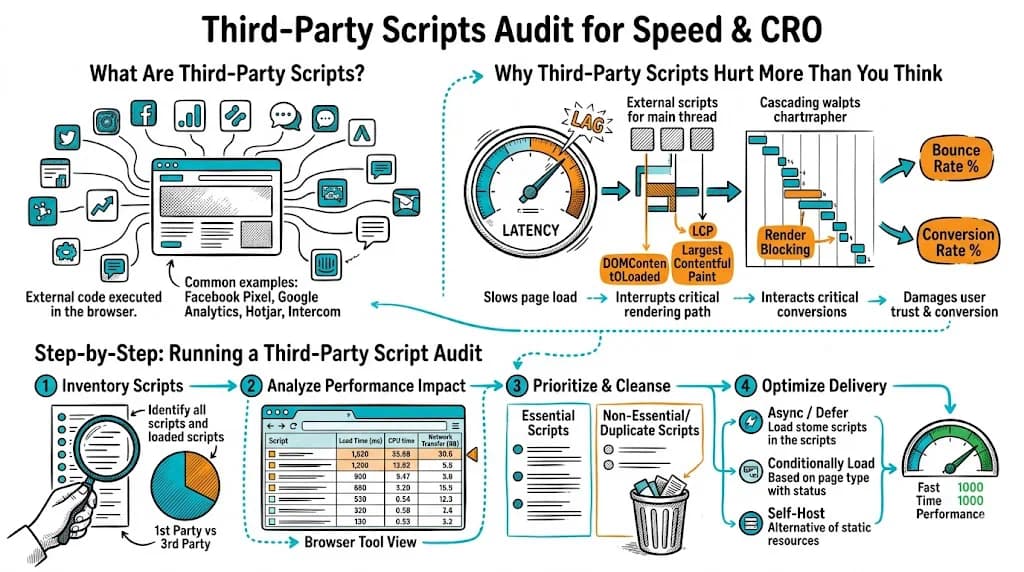
Third-Party Scripts Audit for Speed & CRO

Sapna Joharยท 10 min read
ecommerce tech

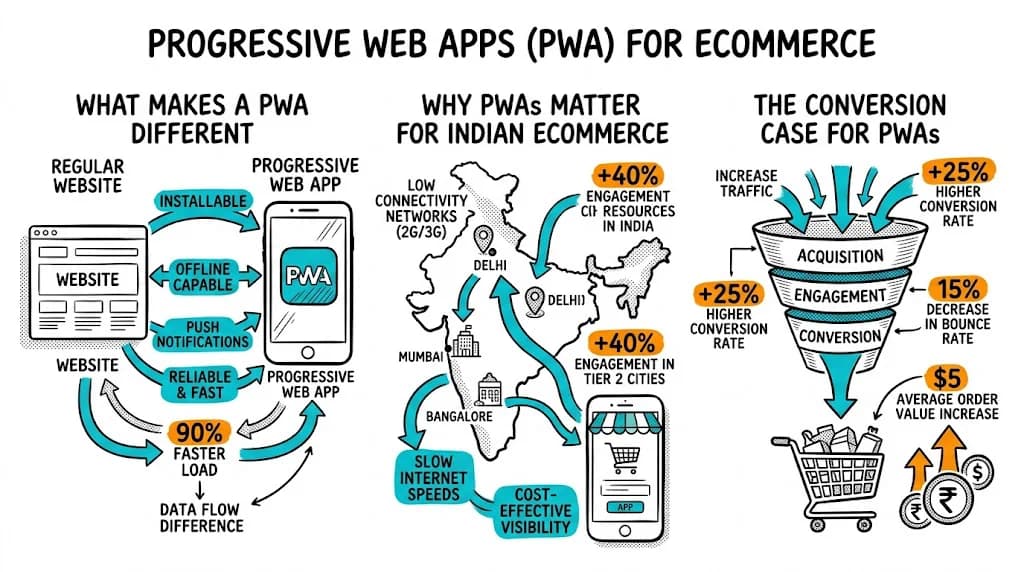
Progressive Web Apps (PWA) for Ecommerce

Sapna Joharยท 9 min read
ecommerce tech

Page Speed & Conversion Rate Correlation

Sapna Joharยท 9 min read

Start lifting conversions today.

Run rigorous A/B tests and personalize every visit on Shopify or any storefront โ€” no engineers required.

Start free trialBook a demo

Built for every D2C category

๐Ÿงด
Skincare
๐Ÿ’„
Beauty
๐ŸŒฟ
Wellness
โ˜•
F&B
๐Ÿ‘Ÿ
Apparel
๐Ÿ’
Jewelry
๐Ÿ›‹๏ธ
Home
๐Ÿผ
Baby
Live ยท Right now
Mamaearth โ€” free-shipping band +12.4% AOVGIVA โ€” festive collection page +34% revenueBellavita โ€” PDP CTA test +27.4% CVRKapiva โ€” Quiz-driven recs +9.48% CTRThe Sleep Co โ€” landing personalized 2ร— capturesPlum โ€” Returning shopper swap +18.2% CVRMamaearth โ€” free-shipping band +12.4% AOVGIVA โ€” festive collection page +34% revenueBellavita โ€” PDP CTA test +27.4% CVRKapiva โ€” Quiz-driven recs +9.48% CTRThe Sleep Co โ€” landing personalized 2ร— capturesPlum โ€” Returning shopper swap +18.2% CVR
Get in touch

Tell us about your store.

We reply within an hour during business hours. No sales pitch, no spam โ€” just answers from someone who's seen 2,400+ D2C stores.

โœ“ Reply within 1 hourโœ“ No spam, everโœ“ Free demo & setup help
โœ“ Thanks! We'll be in touch shortly.
CustomFit.ai

The all-in-one website personalization, A/B testing & CRO platform for high-growth D2C brands. Made by marketers, fueled by coffee.

in๐•โ—Žโ–ถf
Product
  • Features
  • A/B Testing
  • Personalization
  • AI Copilot
  • AI Wingman
  • AI Conversion Optimizer
  • Feature Flags
  • Widgets
  • Integrations
  • ROI Calculator
Platforms
  • Shopify
  • Shopline
  • Shoplazza
  • Salesforce
  • Chrome Extension
  • All Integrations
Resources
  • Blog
  • Playbooks
  • Webinars
  • GrowthFit Interviews
  • Free E-Books
  • Conversion Glossary
  • Case Studies
Compare
  • vs VWO
  • vs Optimizely
  • vs Google Optimize
  • vs Mutiny
  • vs Intelligems
  • vs Shoplift
  • vs AB Tasty
  • vs Convert
  • vs Kameleoon
Company
  • About Us
  • Partners
  • CustomFit Awards
  • Recognition
  • Contact
  • Privacy Policy
  • Terms & Conditions
ยฉ 2026 CustomFit.ai ยท Valley Monks Pvt Ltd ยท Made by marketers, fueled by coffee, and obsessed with conversions.
SOC 2 Type II ยท GDPR ยท CCPA ยท ISO 27001

Headless commerce decouples your storefront from your commerce backend, giving developers full control over frontend performance. That speed advantage should translate into better conversion rates โ€” but only if your CRO practice keeps pace with the new technical environment. A/B testing and personalization work differently in headless, and brands that assume their existing CRO tools will "just work" often discover otherwise after launch.

What Is Headless Commerce?

Traditional ecommerce platforms (Shopify, Magento, WooCommerce) give you a frontend and backend bundled together. Templates are rendered server-side, and customization lives within the platform's theme system.

Headless commerce breaks that bundle:

  • Backend (commerce engine): Handles products, inventory, cart, checkout, payments. Shopify, Magento, BigCommerce, or a custom backend.
  • Frontend (presentation layer): A separate JavaScript application โ€” typically Next.js, Nuxt.js, or Gatsby โ€” that pulls data from the backend via APIs and renders it independently.

The two layers communicate through APIs. The frontend developer has complete control over HTML, CSS, JavaScript, and rendering strategy.

Why brands go headless:

  • Dramatically faster page loads (better Core Web Vitals, especially LCP and FID)
  • Full design freedom without theme constraints
  • Ability to build omnichannel experiences (same backend powering website, app, kiosk)
  • Developer workflow improvements (modern JavaScript ecosystem)

The trade-off: Headless implementations are technically complex, expensive to build, and require ongoing developer resources. They make sense for brands doing โ‚น50 crore+ annually with a dedicated engineering team, or brands where the standard platform's speed limitations are measurably hurting revenue.

How Headless Changes Your CRO Environment

This is where many brands get blindsided. They invest in a headless rebuild for speed, launch successfully, and then find their CRO tools misbehaving.

Problem 1: Traditional A/B Testing Tools and React Don't Play Well

Legacy A/B testing tools work by fetching a base page, running JavaScript to manipulate the DOM, and serving the modified version to a portion of visitors. This approach was designed for server-rendered pages.

Headless frontends (React, Vue, Next.js) work differently:

  • The page is rendered on the client side after JavaScript hydrates
  • DOM elements may not exist when the testing tool's JavaScript fires
  • React's virtual DOM can overwrite changes made by the testing tool's DOM manipulation

Result: test variants flicker, load incorrectly, or don't render at all.

Problem 2: Server-Side Rendering Complicates Client-Side Testing

Next.js and similar frameworks often pre-render pages on the server (SSR) or at build time (SSG). Client-side testing tools run after the HTML arrives in the browser. This timing mismatch means the test variant loads after the original content has already been rendered โ€” causing a visible "flash" as the content swaps.

This is not just a user experience problem. It contaminates your test data: visitors who saw the flash are exposed to both control and variant, making statistical results unreliable.

Problem 3: API-Driven Content Is Harder to Test Visually

In a headless setup, product data, prices, and content often come from an API call at render time. A visual editor that lets you "click and change text" on a DOM element will not work for API-driven content โ€” the text will be overwritten the next time the component fetches from the API.

Solutions: CRO Approaches That Work in Headless

Option 1 โ€” Edge Experimentation

Edge experimentation runs A/B test assignment at the CDN/edge layer before the page is delivered to the browser. When a visitor requests a page, the edge function (Cloudflare Worker, Vercel Edge, AWS Lambda@Edge) determines their variant assignment and serves the appropriate version.

Advantages:

  • No flicker โ€” the correct variant is in the HTML from the start
  • Works with SSR and SSG
  • Fast โ€” runs before the page reaches the browser

Disadvantages:

  • Requires developer setup
  • More complex to implement and debug
  • Limited visual editing capabilities

Option 2 โ€” Feature Flags in the Application Code

The engineering team builds A/B tests directly into the frontend application using a feature flagging library (LaunchDarkly, Statsig, GrowthBook). The test variant is determined in the application logic, not by a JavaScript overlay.

Advantages:

  • No flicker
  • Works perfectly with React/Vue component architecture
  • Highly flexible โ€” can test anything in the application

Disadvantages:

  • Every test requires a developer to implement
  • Slower testing velocity โ€” marketing cannot self-serve
  • Ties CRO to engineering sprint cycles

Option 3 โ€” Post-Hydration Client-Side Testing

Some modern A/B testing tools are designed to work after React hydration completes. They use React-aware DOM selectors and fire after the component tree is stable.

Advantages:

  • Marketer-friendly visual editing is partially preserved
  • Easier setup than edge experimentation
  • Works for most test types

Disadvantages:

  • Some flicker risk remains for above-the-fold elements
  • May conflict with React's reconciliation algorithm for complex components

CustomFit.ai's implementation works in this mode and is compatible with headless frontends where the snippet is loaded after component hydration.

Option 4 โ€” Testing at the API/Content Layer

For headless stores where content comes from a CMS (Contentful, Sanity, Prismic), you can run experiments at the content layer โ€” delivering different content blocks to different visitor segments via the CMS's preview or variant content features.

This is content testing, not page-level A/B testing, but it handles a large subset of typical ecommerce tests: hero copy, product descriptions, landing page headlines.

What to Test in Headless Commerce

The testing roadmap for headless stores mirrors traditional ecommerce, with a few additions specific to the headless context:

Standard tests (same as any ecommerce):

  1. Homepage hero โ€” message, CTA, visual
  2. Category page โ€” product sort order, filter visibility, bundle placement
  3. Product page โ€” description length, image gallery order, CTA placement
  4. Cart โ€” cross-sell placement, trust signals, COD visibility
  5. Checkout โ€” form field order, delivery option display

Headless-specific tests: 6. Page transition speed vs conversions: Does using client-side navigation (no full page load on category browse) improve CVR vs traditional navigation? 7. Lazy loading threshold: At what scroll percentage should product images load? Test different thresholds and their impact on add-to-cart. 8. Infinite scroll vs pagination: Does infinite scroll on category pages improve CVR or increase scroll-without-purchase behaviour? 9. Component render order: Does showing the price and CTA before the image gallery (common in mobile headless layouts) improve or hurt CVR? 10. Progressive disclosure: Does collapsing product descriptions on mobile and expanding on click improve or hurt purchase intent?

Personalization in Headless Commerce

Personalization is actually easier to implement well in headless commerce than in traditional platforms โ€” if your engineering team builds the right hooks.

API-level personalization: The backend can return personalized product rankings, recommendations, and content blocks based on user segment. The frontend simply renders what the API returns. No DOM manipulation required.

Edge-level personalization: Run a user identification function at the edge that injects segment data (new vs returning, geo, device) as cookies or headers. The frontend reads these and renders appropriate variants.

Client-side personalization (post-hydration): CustomFit.ai and similar tools read browser signals (UTM parameters, cookies, on-page behaviour) and modify the rendered DOM. Works for most personalization use cases without requiring backend changes.

For Indian D2C brands on headless, the most impactful personalizations are:

  • COD visibility based on IP geo (tier-2/3 city detection)
  • Festival-specific homepage banners (Diwali, Navratri, Raksha Bandhan) without a backend deploy
  • Price display in โ‚น with local context for visitors from different regions
  • Language-specific content for regional audiences (though this typically requires a translation layer)

Performance and CRO: The Headless Dividend

The primary reason to go headless is speed. Here is what speed improvements mean for CRO:

  • A 1-second improvement in LCP (Largest Contentful Paint) correlates with 2โ€“5% CVR improvement on mobile (Google/Deloitte research)
  • Pages with LCP under 2.5 seconds convert at significantly higher rates than pages above 4 seconds
  • FID (First Input Delay) โ€” the responsiveness of the first interaction โ€” is particularly important for ecommerce where the first meaningful action is often an add-to-cart tap on mobile

A headless rebuild done well can take LCP from 4+ seconds to under 2 seconds. On a store doing โ‚น5 crore/month with 70% mobile traffic, that speed improvement alone may add โ‚น25โ€“50 lakh in monthly revenue โ€” before any traditional CRO testing.

The key word is "done well." Poorly implemented headless builds with bloated JavaScript bundles can be slower than the Shopify theme they replaced.

Practical Recommendations for Indian D2C Brands

For brands considering going headless:

  • Benchmark your current Core Web Vitals before and after โ€” headless is expensive and the speed gain must be measurable.
  • Plan your CRO tooling before launch. Don't assume your existing A/B testing tool will work โ€” test it on a staging environment.
  • If your team lacks in-house Next.js expertise, the TCO of headless (development + maintenance) typically doesn't make sense below โ‚น50 crore annual revenue.

For brands already headless:

  • Implement CustomFit.ai or a similar post-hydration testing tool for marketer-led experiments.
  • Build feature flags for the 3โ€“5 tests your team will always want to run (homepage hero, product page layout, cart cross-sell).
  • Use edge personalization for high-impact, low-frequency changes (geo-based COD, seasonal banners).

For brands on traditional platforms considering CRO:

  • Headless is not a prerequisite for great CRO. A well-optimized Shopify store with CustomFit.ai can achieve outstanding results.
  • Focus on CRO first, headless later โ€” if your CVR is below 3%, the CRO gains from testing on your current platform will exceed the speed gains from a headless rebuild.

Tips and Best Practices

  • Test for flicker before shipping any A/B test in your headless environment. A visible content swap harms both user experience and data integrity.
  • Build your CRO tooling into the headless architecture โ€” don't retrofit it. Define your testing and personalization approach before the build starts.
  • Edge functions for geo-based personalization are worth the engineering investment for Indian D2C โ€” COD visibility by city tier is a reliable CVR lift.
  • Measure Core Web Vitals before and after CRO changes in headless. Some heavy personalization implementations can hurt the performance gains that made headless worthwhile.
  • Avoid infinite scroll unless tested. It increases engagement metrics (pages per session, time on site) but does not reliably increase CVR โ€” and makes it harder for visitors to navigate back to previously viewed products.

Key Takeaways

  • Headless commerce improves performance (speed โ†’ CVR) but requires CRO tools built for React/JavaScript frontends.
  • Traditional DOM-manipulation A/B testing tools flicker or fail in headless โ€” use post-hydration, edge-based, or feature-flag approaches instead.
  • The biggest CRO wins in headless are often the speed gains themselves (LCP < 2.5s) plus standard ecommerce tests (hero, product page, cart).
  • Personalization is more powerful in headless: API-layer personalization delivers tailored experiences without DOM manipulation.
  • For most Indian D2C brands below โ‚น50 crore, CRO on a traditional platform delivers more ROI than a headless rebuild.

Related reading:

  • Ecommerce Tech Pillar
  • CRO Pillar
  • PWA for Ecommerce
  • Conversion Rate
  • Average Order Value