From the conversion glossary
Concepts referenced in this article, defined.
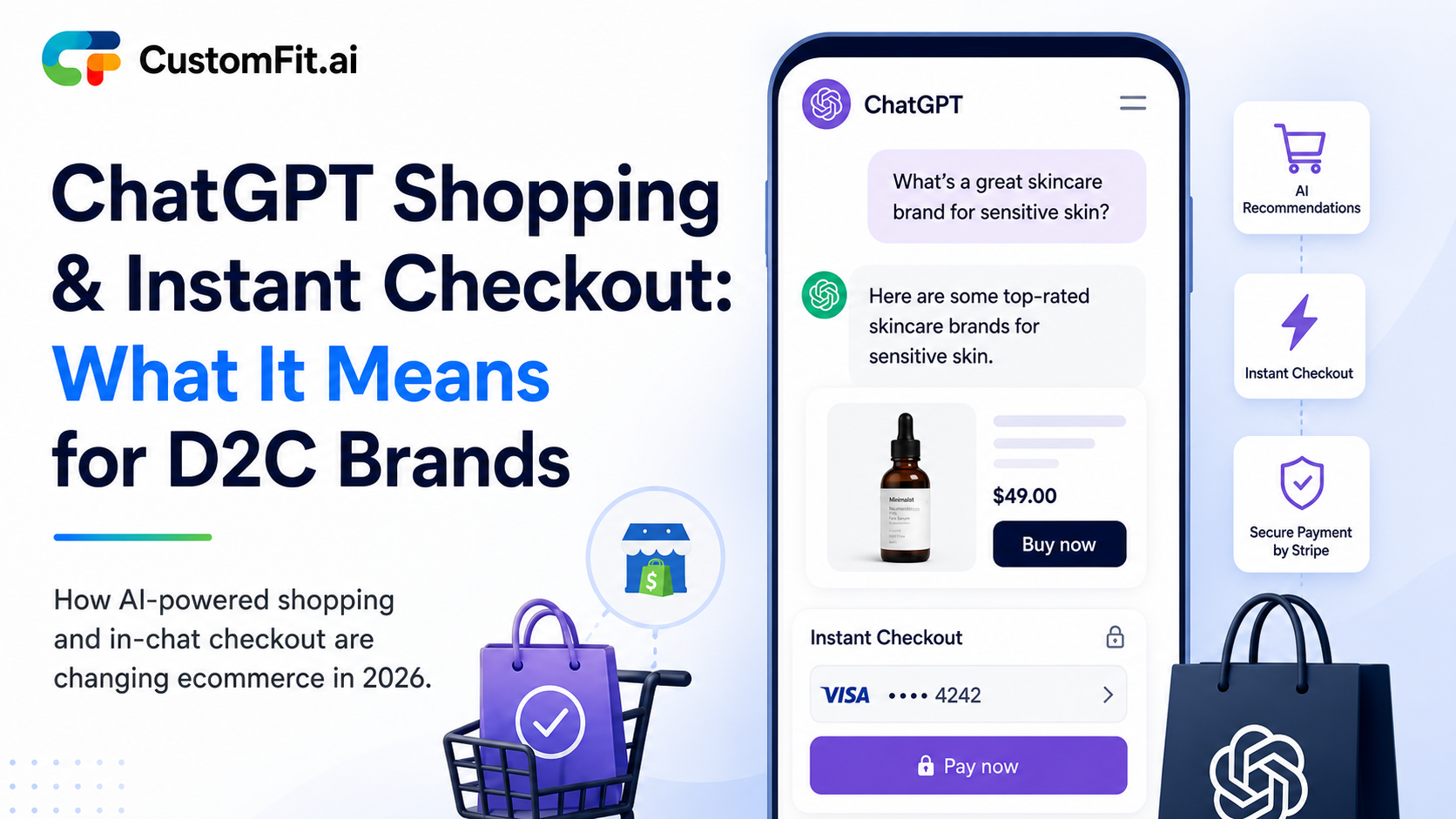
What ChatGPT shopping and Instant Checkout mean for D2C brands - how the AI agent purchase flow works, what changed in 2026, and how to prepare.
Concepts referenced in this article, defined.
 ai ecommerce
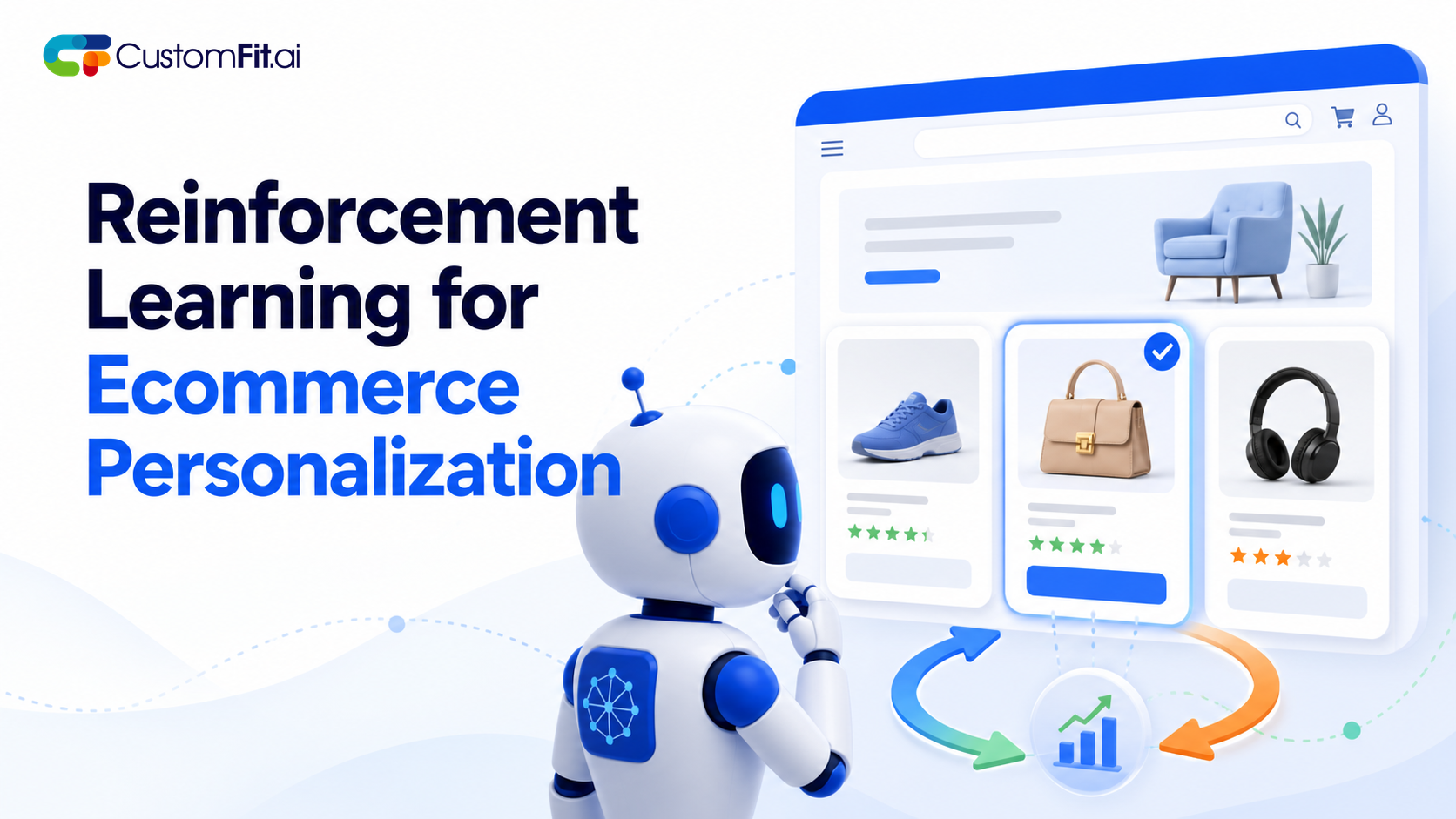
How reinforcement learning personalization works for ecommerce - self-learning targeting that improves with every visitor, and how it differs from rules.
 ai ecommerce
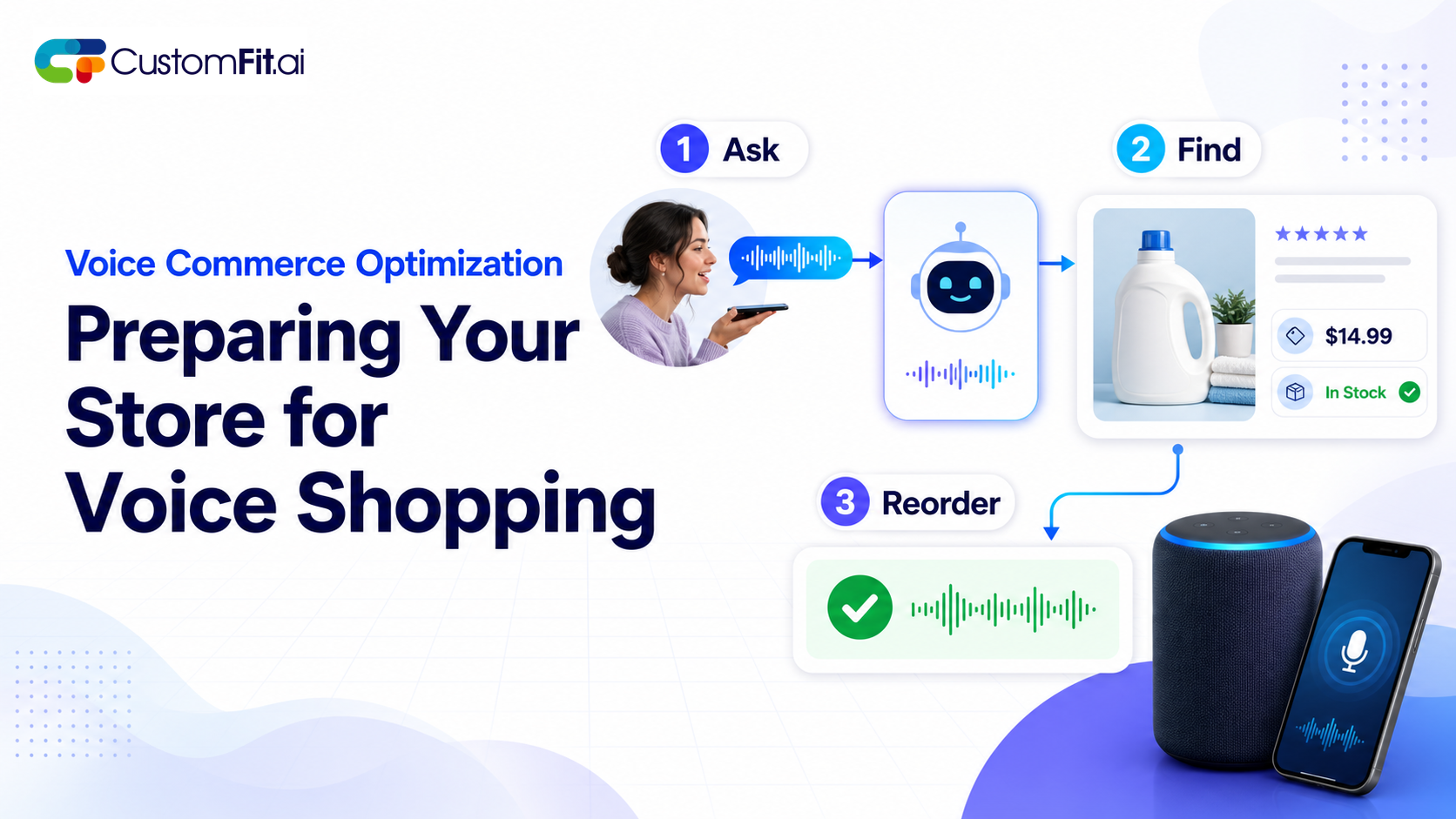
A practical guide to voice commerce optimization - how to prepare your product pages, catalog, and UX for Alexa, Siri, and voice-first shopping.
 ai ecommerce
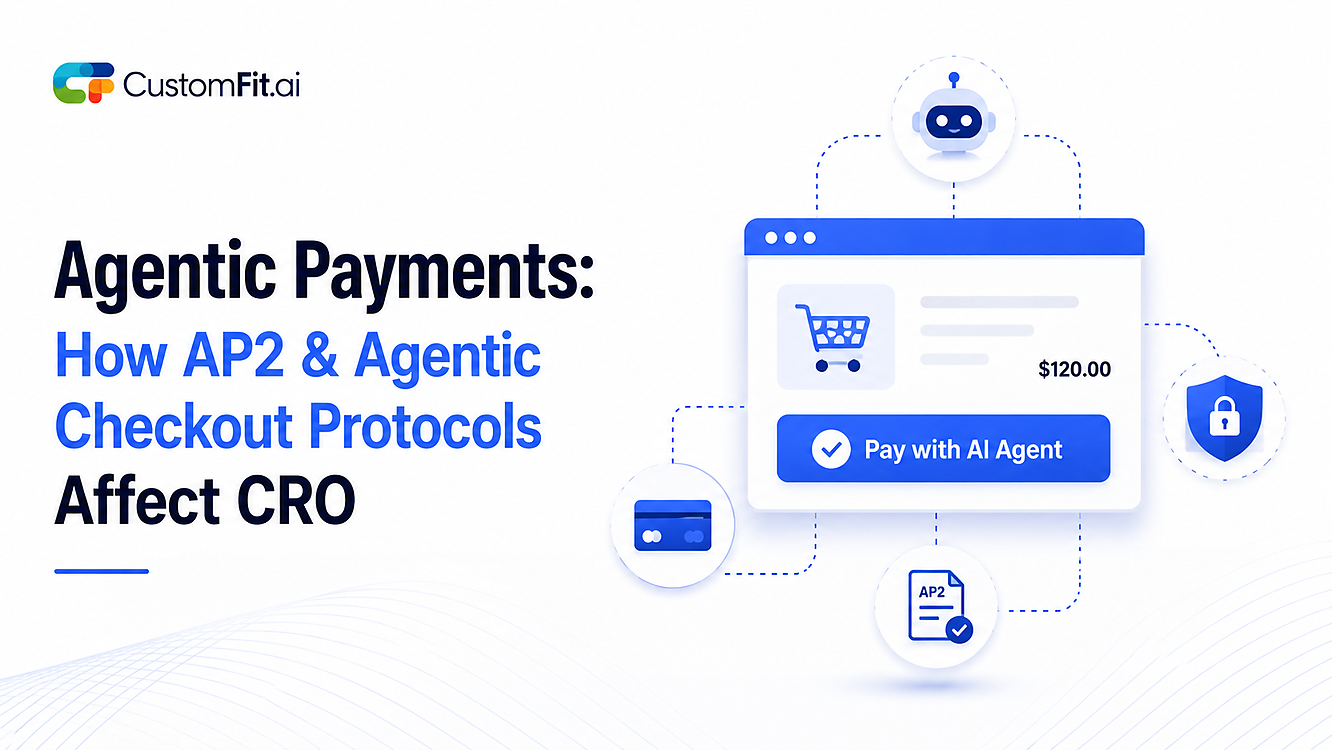
How agentic payments and Google's AP2 protocol are changing checkout and what ecommerce brands need to know about AI agent payment authorization and CRO.
Run rigorous A/B tests and personalize every visit on Shopify or any storefront — no engineers required.
Somewhere between "what should I get my mom for her birthday?" and an actual purchase, ChatGPT quietly became a shopping channel. Not a search engine that sends people to stores - a place where hundreds of millions of people now ask for product recommendations and, increasingly, buy directly.
If you sell direct-to-consumer, this isn't a future trend to keep an eye on. It's live, it's evolving fast, and D2C brands that understand how it works have a real head start over the ones treating it as a gimmick.
OpenAI has been building commerce into ChatGPT in stages. It started with product recommendations pulled from across the web, ranked by relevance rather than paid placement. Then came OpenAI Instant Checkout - a feature that let U.S. users complete a purchase from an Etsy seller and, later, Shopify merchants without leaving the chat window at all.
The purchase flow ran on something called the Agentic Commerce Protocol (ACP), built jointly by OpenAI and Stripe. In plain terms: a user asks for a product, ChatGPT surfaces options, the user picks one, and checkout happens inline using a payment method already saved to their account - no redirect and no separate login.
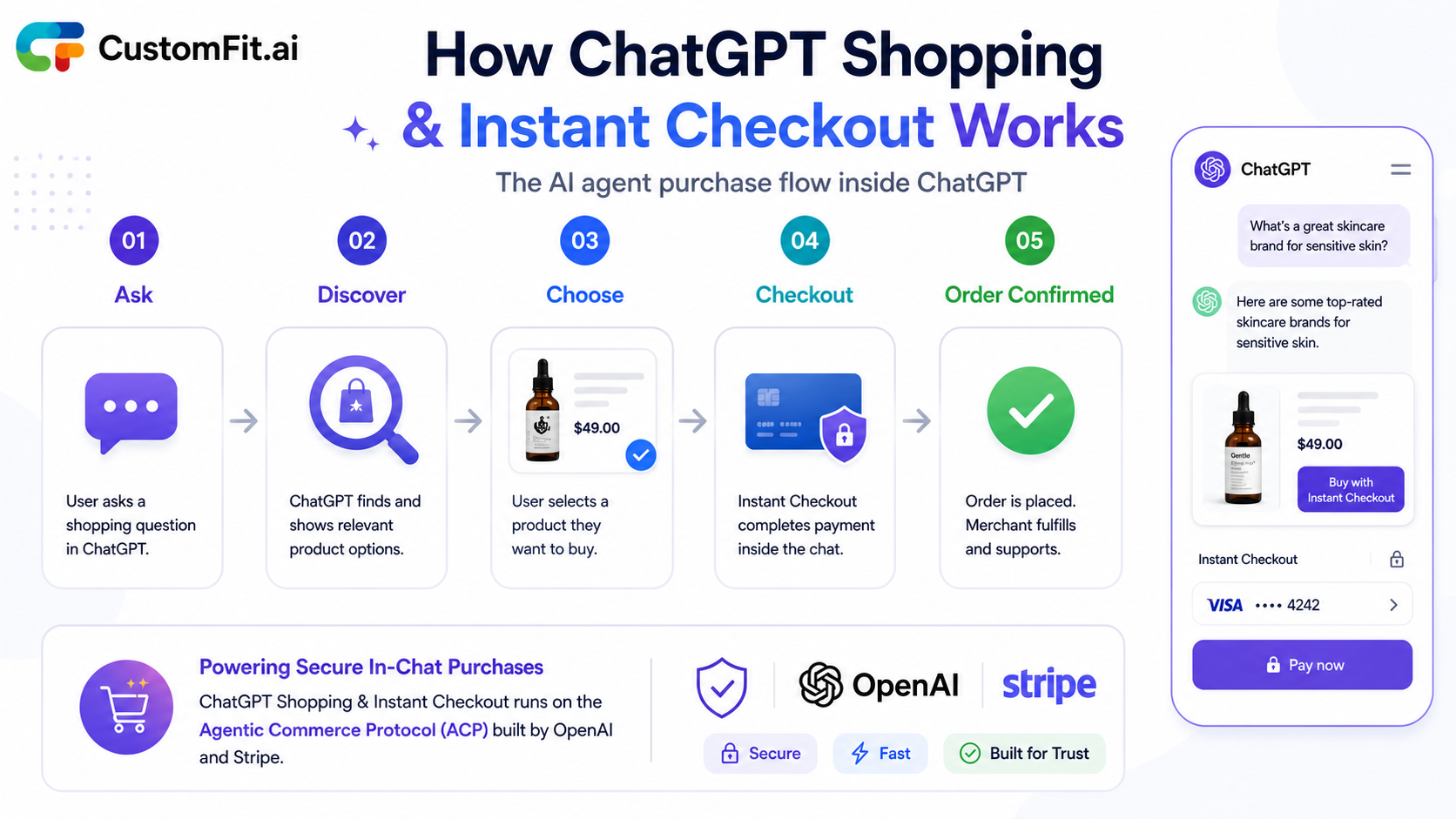
Here's the part worth knowing if you last looked at this months ago: Instant Checkout's first version handled single-item purchases only, and by early 2026 OpenAI had already started shifting strategy - moving away from pure in-chat checkout toward dedicated retailer apps inside ChatGPT instead.
The direction is still the same - transactions completing inside the conversation, not on your website - but the exact mechanics are still being worked out in real time. This is a genuinely new category, and the specifics will keep moving for a while yet.
The practical takeaway for a D2C brand: don't build your entire strategy around one specific checkout flow. Build around the underlying shift that ChatGPT is a discovery and purchase surface now, not just a research tool.
D2C brands compete on story, ingredients, fit, and trust signals that live on their own website - reviews, founder content, comparison pages. When a purchase happens inside a chat window, a lot of that context can get compressed into a few lines the AI generates about your product. If those lines are wrong, outdated, or missing entirely, you've lost the thing that usually wins you the sale.
This is also a rare moment where smaller brands aren't automatically at a disadvantage. Ranking in ChatGPT's shopping results depends on product data quality and availability, not ad budget. That means a well-run D2C store can genuinely outperform a much bigger competitor with sloppier product feeds.
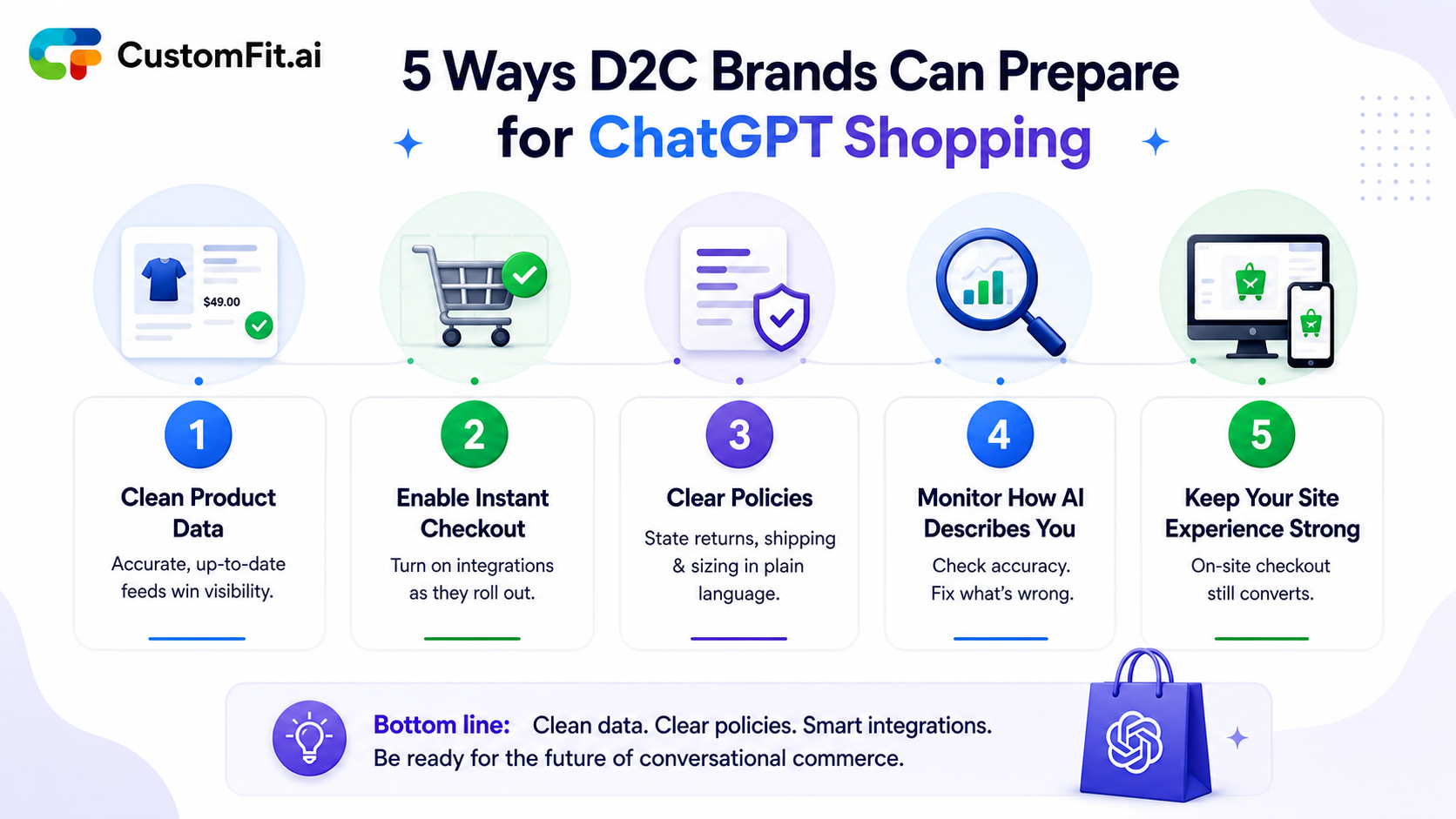
Get your product feed in shape. Whether you're on Shopify or another platform, your product feed - price, availability, variants, and images - needs to be accurate and current. ChatGPT commerce integration pulls from structured data. An outdated feed is invisible or, worse, wrong.
Shopify has been rolling this out to its merchant base. Check your platform's app or admin settings periodically. This is an area where "coming soon" has been turning into "available now" for different merchant tiers throughout 2026.
Returns, shipping windows, and sizing need to be stated in plain, factual language somewhere structured because that's what gets pulled into a conversational commerce checkout summary. Vague policy pages create bad AI-generated summaries.
Ask it directly: "Recommend a [your category] brand like [yours]." See if you show up and whether what it says is accurate. This is the closest thing to a rank check you have right now.
Most shoppers still won't buy entirely inside a chat window for a while yet. A strong on-site checkout remains your primary channel - this is additive, not a replacement.
The biggest one is waiting for the "final version" of this feature before doing anything. The protocol details are still moving, but the underlying requirement - clean, accurate, structured product data - was already the right thing to fix regardless.
The second mistake is assuming this only matters for huge brands like the early launch partners. Smaller Shopify merchants have been added to these programs steadily since launch.
ChatGPT shopping for ecommerce is still taking shape, but the direction is clear: more purchases are starting, and some are finishing, inside a conversation instead of on a search results page.
D2C brands that keep their product data clean, their policies clear, and their platform integrations turned on will be ready no matter which exact checkout mechanics win out.
It launched with Etsy sellers and has been expanding to Shopify merchants in stages, including well-known D2C names. Availability varies by region and platform, so check the settings available through your ecommerce provider for the latest rollout information.
No. Under the Agentic Commerce Protocol model, the seller still makes and retains the sale, handles returns, and provides customer support.
Product feed accuracy. Price, stock status, and variant details need to match reality in real time. Nearly every AI shopping surface - ChatGPT, Perplexity, and Google AI Overviews - pulls from the same category of structured data, so fixing this once pays off everywhere.
Not entirely, and not soon. Most shopping research and plenty of purchases still happen on-site. Treat ChatGPT shopping as a new, additional channel worth preparing for, not a reason to deprioritize your own store's experience.