From the conversion glossary
Concepts referenced in this article, defined.
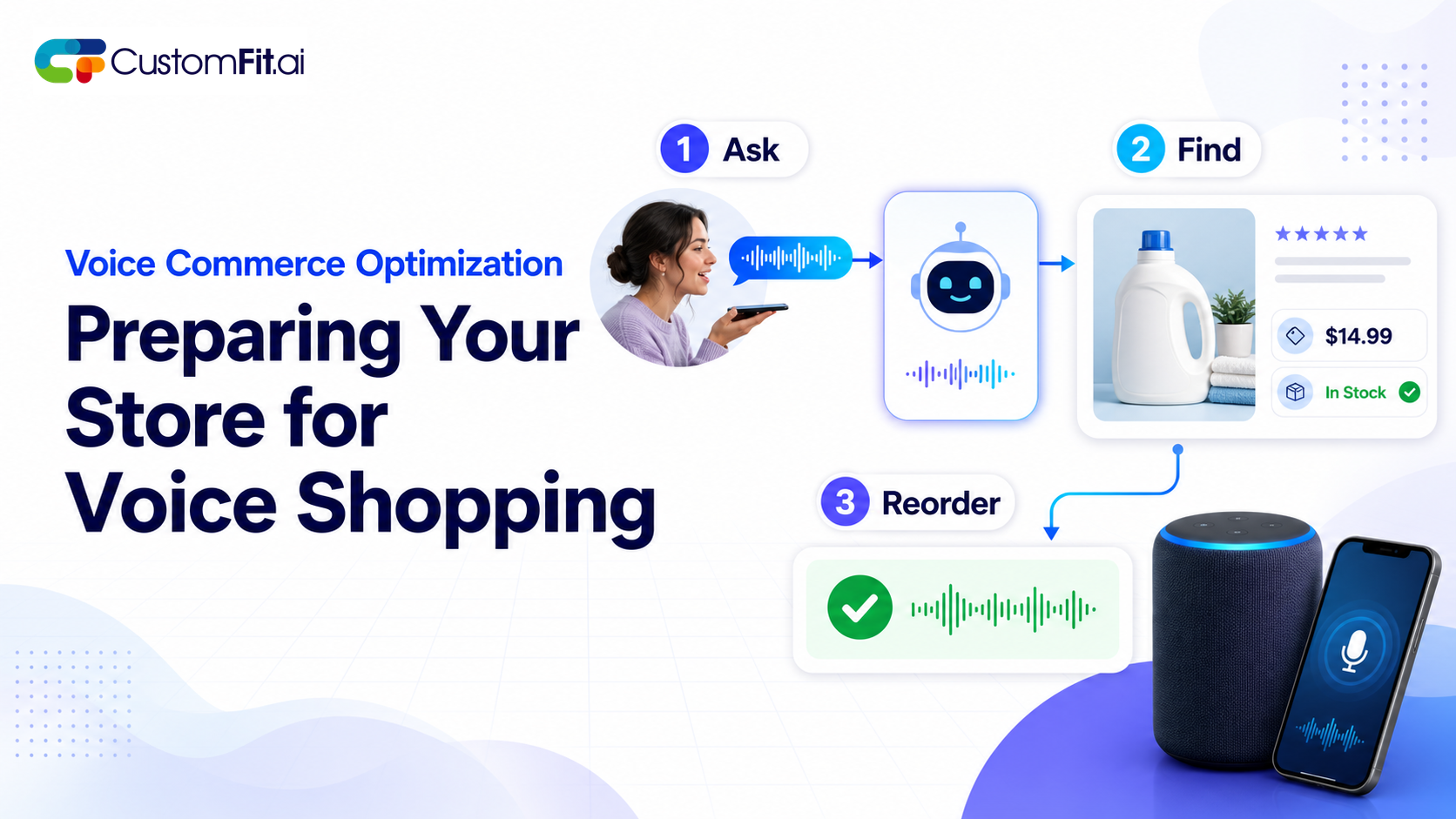
A practical guide to voice commerce optimization - how to prepare your product pages, catalog, and UX for Alexa, Siri, and voice-first shopping.
 Yuvraj Singh6 min read
Concepts referenced in this article, defined.
 ai ecommerce
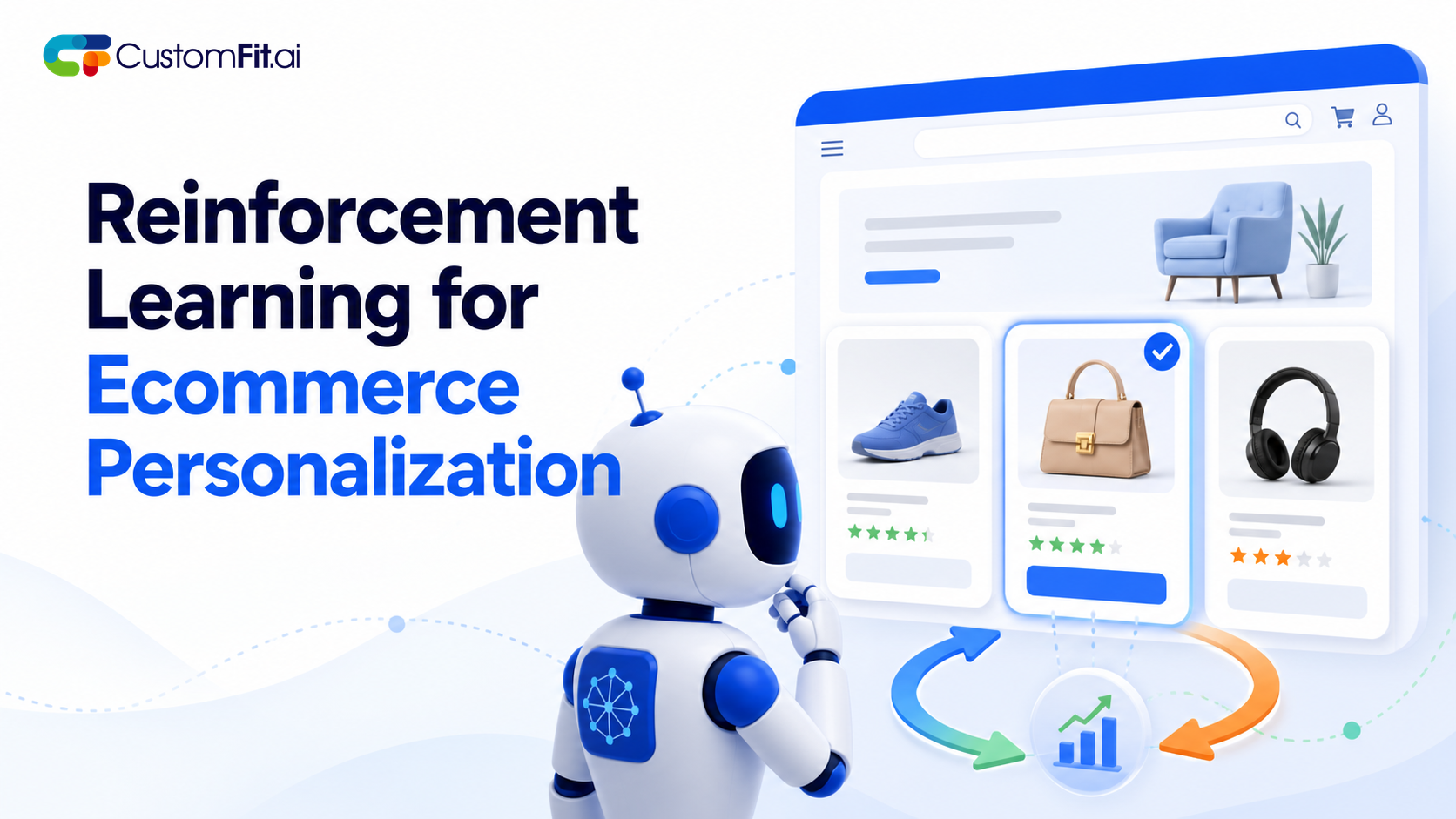
How reinforcement learning personalization works for ecommerce - self-learning targeting that improves with every visitor, and how it differs from rules.
 ai ecommerce
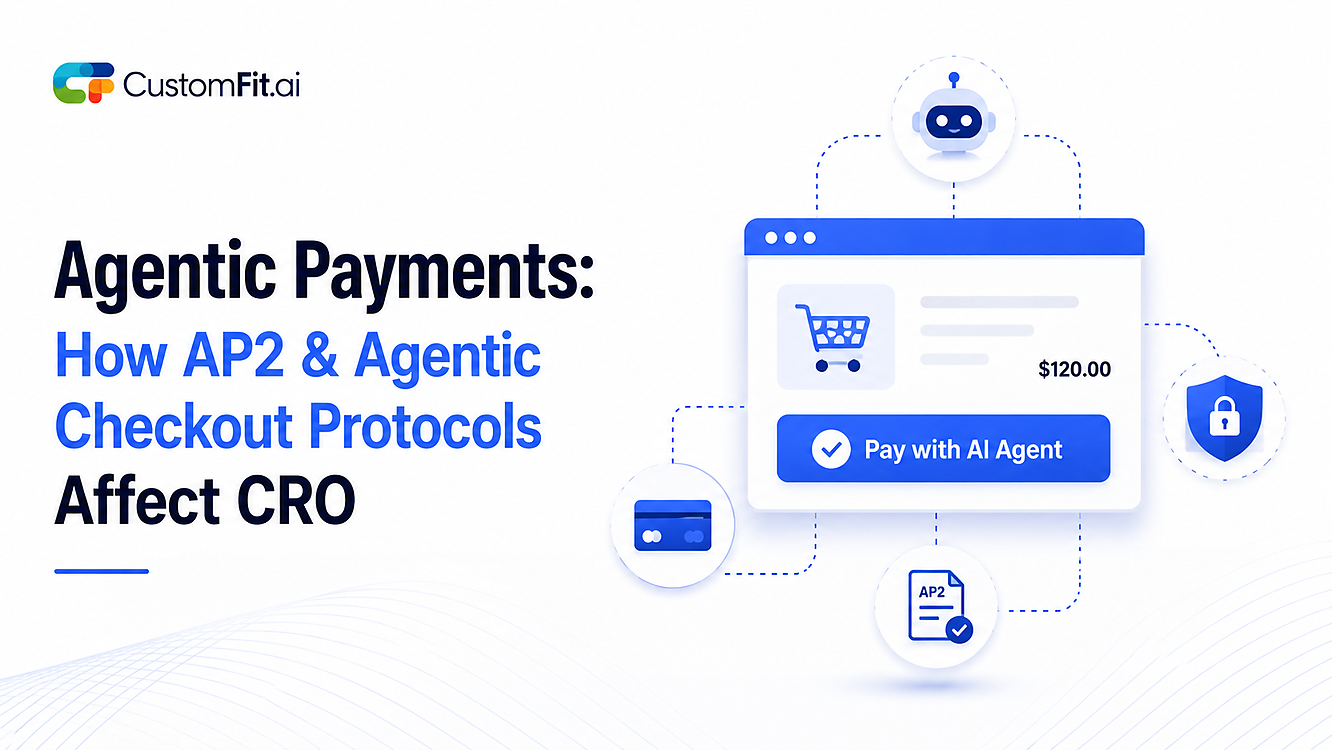
How agentic payments and Google's AP2 protocol are changing checkout and what ecommerce brands need to know about AI agent payment authorization and CRO.
 ai ecommerce
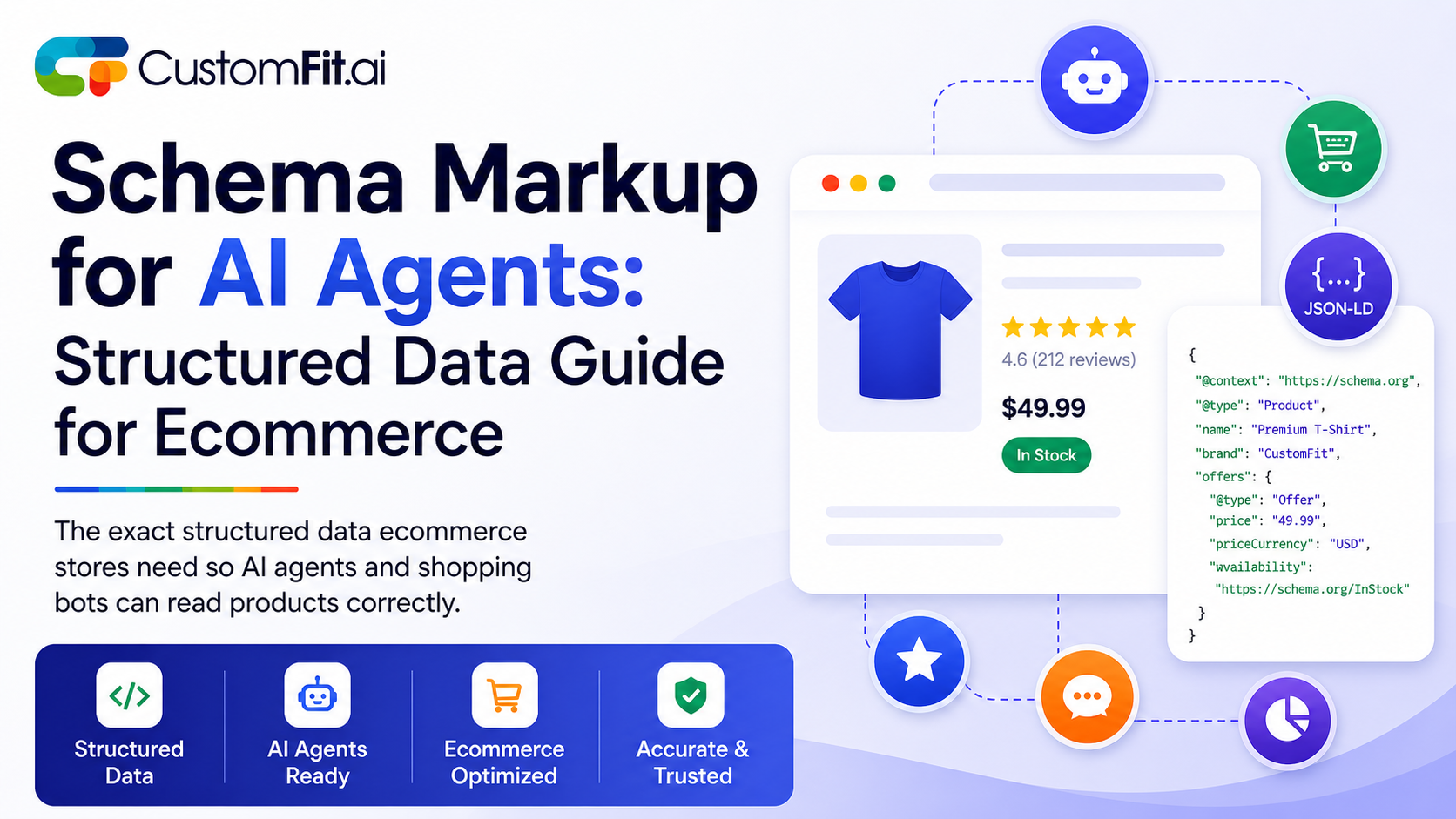
A practical schema markup for AI agents guide - the exact structured data ecommerce stores need so LLMs and shopping bots can read products correctly.
Run rigorous A/B tests and personalize every visit on Shopify or any storefront — no engineers required.
"Add more paper towels to my cart." "Reorder the dog food I got last month." Voice shopping has quietly operated in many households for years, mostly for repeat, low-consideration purchases. What has changed is the sophistication of modern AI-powered voice assistants: they can hold a real back-and-forth conversation about a product, not merely execute a single pre-set command.
Voice commerce optimization is not yet the dominant way most people shop, and it is unlikely to replace visual browsing for considered purchases anytime soon. But in the categories where it does appear - replenishment, simple reorders, and quick decisions - it is worth understanding how it works and where a store may already be losing invisible sales.
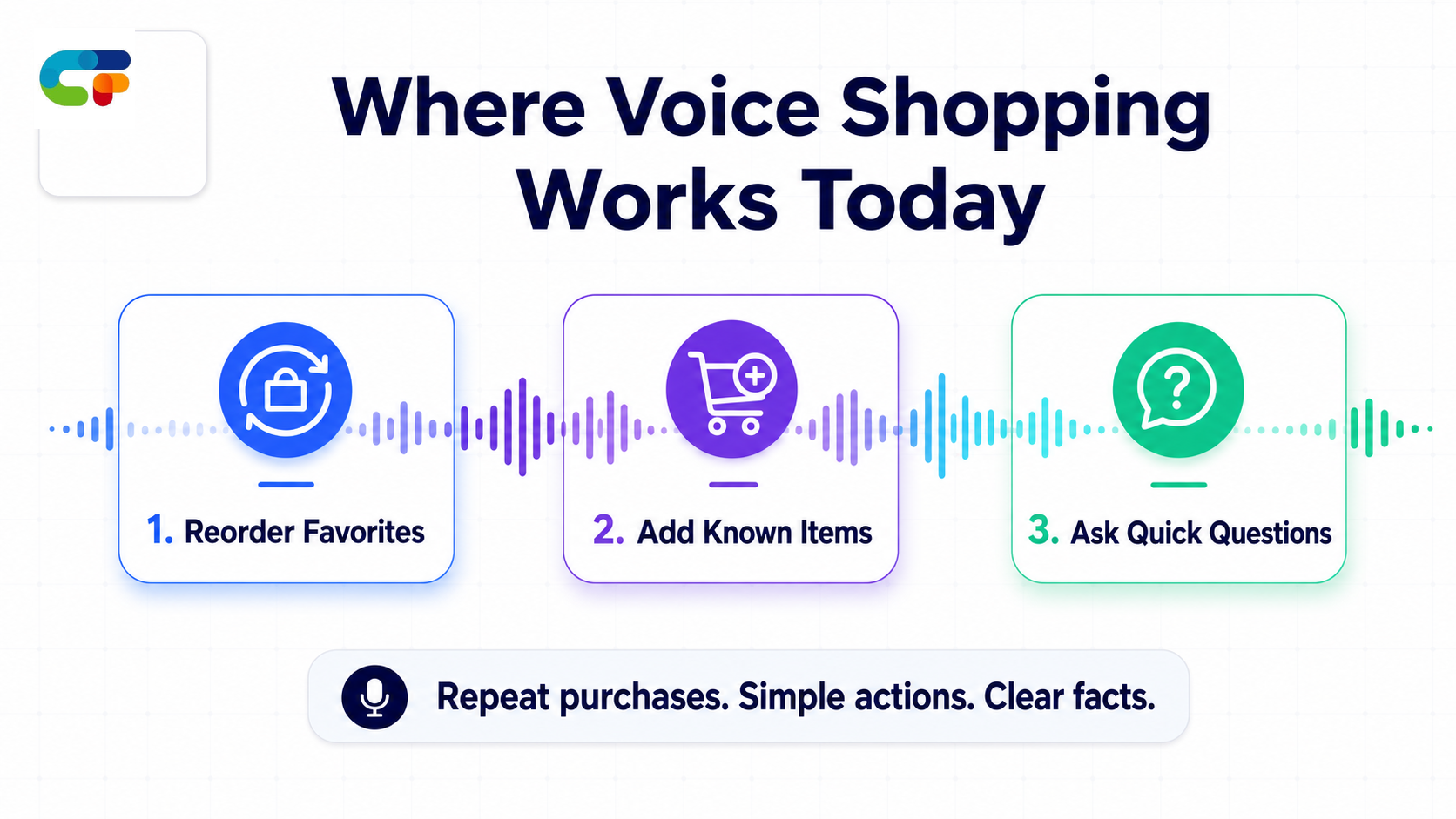
Voice-search ecommerce activity clusters around a few patterns: reordering something purchased before, adding a known item to a list or cart, and asking a quick factual question such as "Is this in stock?" or "How much is this?" while doing something else.
It is much less common for someone to discover and evaluate a brand-new product entirely through voice. Comparing five options by ear is simply a worse experience than comparing them visually.
That means voice-assistant optimization is not primarily about winning cold discovery. It is about helping existing customers and habitual searches find the right product cleanly, while avoiding losses on quick factual queries that are increasingly answered aloud rather than on a screen.
Voice assistants and AI shopping agents depend on much of the same underlying data: structured product information, clear pricing, and accurate availability. When a voice assistant evaluates options, it works much like an AI agent reading a page, except that the final answer is spoken rather than displayed.
That spoken output leaves little room for ambiguity. A shopper can glance at a slightly confusing product page and still piece it together visually. A voice assistant has to say the answer aloud. If product data is inconsistent or key facts are not clearly structured, it either gives the wrong answer or skips the product.
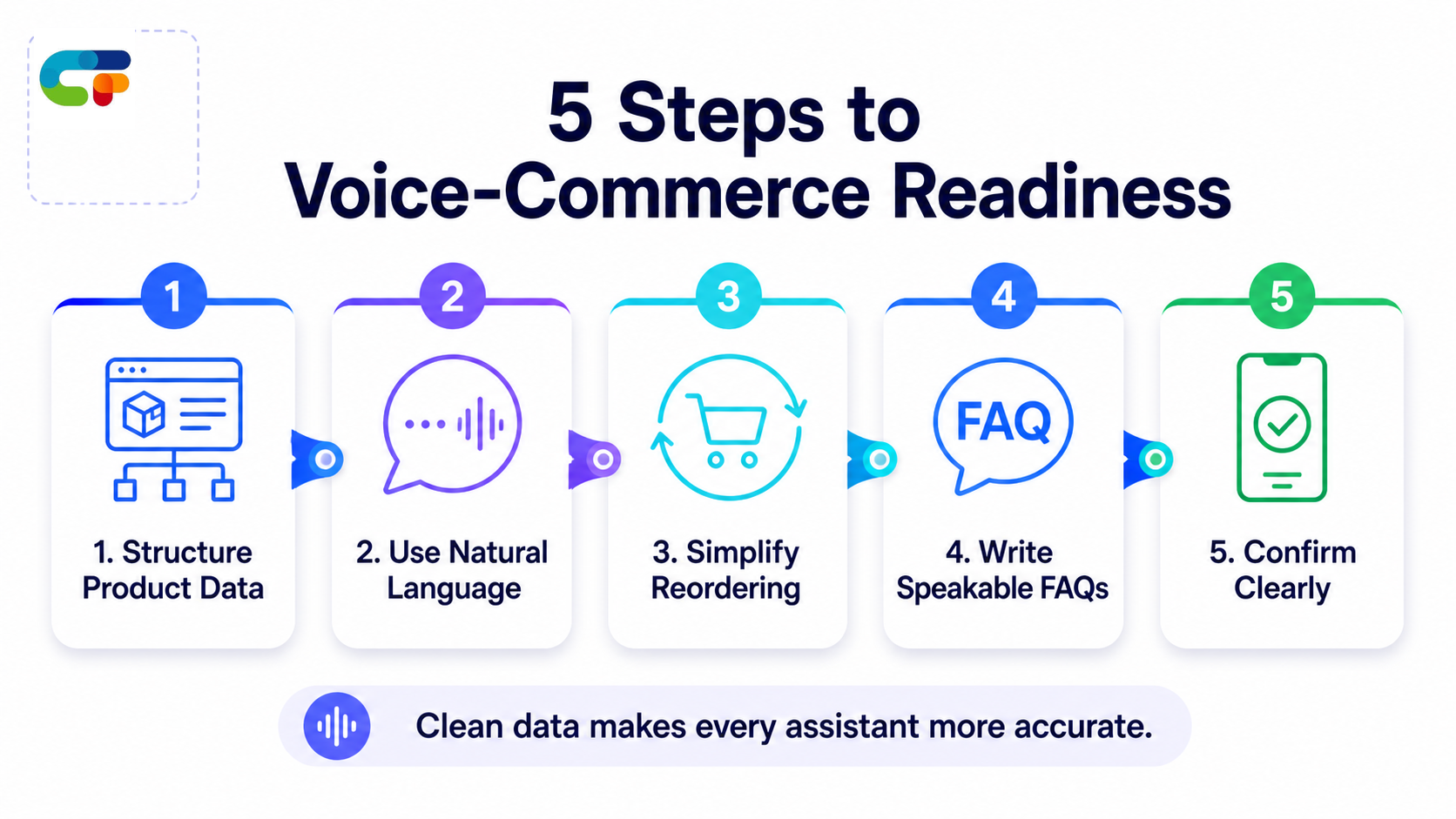
Most shoppers still are not discovering brand-new, considered purchases such as furniture, electronics, or fashion primarily through voice. Building an elaborate custom voice skill for a small catalog is therefore unlikely to justify the engineering effort.
The higher-value move for most stores is ensuring that the structured data and FAQ content they already need for AI search and agent readiness also work when read aloud. If those foundations are implemented well, they usually will.
The most common mistake is treating voice commerce as a novelty feature rather than a natural extension of the structured-data work most stores already need for AI search visibility.
The second is assuming voice shopping matters only on smart speakers. A large share of voice-search ecommerce activity happens through phone-based assistants during ordinary browsing, not only through dedicated speaker hardware.
Voice commerce optimization is not a separate discipline from AI readiness. Most ecommerce brands already need clean structured data, accurate facts, and clear FAQ content to serve both.
The stores that get real value from voice shopping are not necessarily the ones building elaborate custom experiences. They are the ones whose underlying product data is clean enough that any voice assistant reading it can provide the right answer.